Specs are compiled from manufacturer listings and verified buyer reviews and can change over time — please confirm the key details on the product page before buying.
Before you buy anything, understand the trap: a mini XLR is not a smaller XLR. It is a different connector with a different pin count in a different housing, and it will not plug into a standard XLR socket no matter how hard you push. Every cable here solves that exact mismatch by putting a standard 3-pin XLR on one end and a mini XLR (often called TA3) on the other. What you are really choosing between is which direction the signal travels, how long the run is, and how well the shielding keeps hiss and radio interference out of your recording. Get those three right and the rest is detail.
This guide is built by comparing the manufacturers’ published specifications and the patterns across verified customer reviews, so you get each pick’s real strengths and trade-offs instead of marketing spin.
Some entries here are flexible stand-ins rather than the exact model you typed into the search bar — the nearest same-type connector serves the identical purpose. Read the direction note on each one before you order, because a male-to-female cable only mates correctly one way. Below are the picks worth your money on the XLR to Mini XLR front, ranked by what they actually do on a rig.
Your mic ends in a full-size XLR plug, your camera only takes a mini XLR, and nothing connects. Each cable here swaps one end for the other so your camera, headphones, or mic chain finally links up, and this shortlist covers the xlr to mini xlr adapters built to survive daily plugging.
Top Picks


How To Choose an XLR to Mini XLR Cable
The most common mistake in this category is ordering the wrong direction. A cable printed “mini XLR male to XLR female” sends signal from a full-size female mic into a mini male input — the reverse of what a “XLR male to mini XLR female” cable does. Before anything else, look at the jack on your device and the plug on your mic, then match the genders.
Direction first: which end goes where
A standard XLR microphone ends in a male 3-pin plug, and the socket on a camera or mixer that accepts it is female. A mini XLR input on a cinema camera is the opposite — a female socket waiting for a male TA3 plug. Work out which of those two you own before you buy, because no adapter fixes a gender mismatch on its own.
Cable length and where the slack lives
A 1-foot cable is an adapter, not a run — it sits between a rig-mounted receiver and the camera input without a loop of spare cord to snag. A 16-inch or 25-foot cable is a genuine run that lets you place the mic away from the body. Longer is not automatically better: every extra length of any cable is more copper for interference to ride on, which is why shielding quality matters more as the length grows.
Gauge, copper, and shielding explained
Gauge is the wire thickness, and a lower number means thicker copper. Here the picks run 20 AWG and 24 AWG — 20 AWG is the thicker conductor of the two, which is why the 20 AWG build feels a bit beefier in the hand. “4N oxygen-free copper” means copper refined to remove oxygen so the signal travels with less resistance. The braided or spiral shield layer is the mesh that keeps radio-frequency and electromagnetic noise out, and that is your defence against the buzz you hear when a phone sits near an unshielded cable.
Side-by-Side Comparison
| Model | Best For | Connector Direction | Length | Wire Gauge | Amazon |
|---|---|---|---|---|---|
| JOLGOO Mini XLR Male to XLR Female★ Best Overall | BMPCC cinema rigs | Mini XLR male to XLR female | 1 ft | 24 AWG | Amazon |
| SiYear Mini XLR Male to XLR FemaleMost Versatile | Longer mic runs | Mini XLR male to XLR female | 5 ft / 1.5 m | — | Amazon |
| JOMLEY Mini XLR to XLR Cable | Thicker conductor build | Mini XLR male to XLR female | 1 ft | 20 AWG | Amazon |
| SiYear 3 Pin XLR Male to Mini XLR Female | Headphone and mixer feeds | XLR male to mini XLR female | 5 ft / 1.5 m | — | Amazon |
| JOLGOO XLR Male to Mini XLR Female | AKG and Pioneer headphones | XLR male to mini XLR female | 1 ft | 24 AWG | Amazon |
| Kondor Blue 16-Inch TA3 Cable | On-rig cinema audio | Mini XLR male to XLR female | 16 in | — | Amazon |
| Audix CBLM25 | Long install runs | Mini XLR female to XLR male | 25 ft | — | Amazon |
Detailed Reviews
1. JOLGOO 1 Feet Mini XLR Male to XLR Female Adapter Cable
Our pick — 4.5+★ from 550+ verified ratings; the strongest balance of quality and price.
The short cinema-rig adapter that quietly does the one job you hired it for.
Your camera takes a mini XLR input and your mic ends in a full-size 3-pin XLR plug, and this cable bridges them without a coil of spare cord dangling off the cage. One end is a male mini XLR (TA3, the small 3-pin connector many cinema cameras use) and the other is a female standard XLR. It runs a short 1 foot, which is exactly right when the receiver or mic sits inches from the camera body. Its 24 AWG oxygen-free copper conductor is shielded to keep hum and radio buzz out of dialogue. The 24k gold-plated pins resist corrosion through months of repeated plugging.
What wins people over is the fit and finish — quality is the aspect the buyer conversation returns to again and again, and the consistency shows in connectors that seat firmly without a fight. The compatibility list is genuinely broad too: Blackmagic Pocket Cinema Camera 4K and 6K, Video Assist 4K, Sharp 8K Cam, plus Rode, Sennheiser, Sony, Movo, Tascam, Audio Technica, Lectrosonics, Pyle pro and Azden gear. One hard reminder from the manufacturer that trips up first-timers: one end is a 3-pin mini XLR, not a regular-sized XLR, so check your socket before ordering.
At 0.04 kg it is the lighter of the two cables we compared on weight, and lighter than the SiYear 3-pin male-to-mini-female by a clear margin. That matters on a gimbal or a shoulder rig where every strand of cord adds up. The flexible PVC jacket and strong-toughness wire let it bend around a cage corner without kinking.
Where this one earns its keep
- Shielded 24 AWG oxygen-free copper keeps hum out of dialogue
- 24k gold-plated connectors resist corrosion across repeated plugging
- Short 1-foot run sits clean on a cinema camera cage
- 0.04 kg build stays out of the way on a gimbal
Before you click buy
- One end is a mini XLR, not a full-size XLR — wrong-socket orders happen
- 1 foot is an adapter, not a run; a mic placed away from the body will not reach
Made for: anyone rigging a Blackmagic 4K or 6K who wants a tidy short bridge between a standard XLR mic and the camera’s mini XLR socket.
The honest catch: if your mic lives on a boom or a stand several feet away, the 1-foot length simply will not stretch.
2. SiYear Mini XLR Male to XLR Female Cable 5FT
Five feet of breathing room when the mic does not want to sit on the camera.
This one is about length. The SiYear runs 1.5 meters — about five feet — which is enough to put a lavalier or a handheld mic on a stand and still reach the camera’s mini XLR input. The connector arrangement is a male mini XLR on one end and a full-size female XLR on the other, so it does the same conversion as the short adapter above but with slack to spare. Oxygen-free copper conductors carry the signal, and an OFC spiral shield wraps around them to reject electromagnetic and radio-frequency interference.
Where the extra length becomes a liability rather than a help: a five-foot cable needs managing, and an uncoiled loop near a light stand is a snag waiting to happen. It is also the heavier of the two by weight — 0.06 kg against the 0.04 kg of the short Jolgoo — which you feel when the cable is hanging off a camera cage rather than lying flat.
The compatibility story is solid and familiar: Blackmagic Pocket Cinema Camera 4K, Video Assist 4K, and Sharp 8K Cam all appear on the supported list. It also crosses over to mixers, amplifiers, equalizers, compressors, crossovers, digital decoders and professional microphones, so it is not a camera-only cable. If your rig is static and the mic needs room, this is the sensible reach. If everything stays body-mounted, a shorter piece is cleaner.
Straight read: a solid reaching cable that trades the tidiness of a 1-foot adapter for a working 5-foot span — right for a static rig, fussier on a moving one.
Reach for this if: your mic sits on a stand or a boom and you need real distance, and you are fine coiling the slack between takes.
Pass on it if: the whole setup is body-mounted — extra cord is just one more thing to snag.
3. JOMLEY Mini XLR Male to XLR Female Cable 1ft
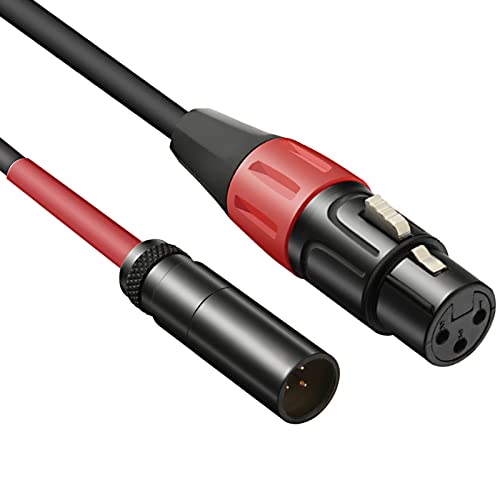
Thicker copper than most short adapters, plus a strap so it does not vanish in the bag.
The number to notice here is 20 AWG. Gauge is wire thickness, and a lower number means a thicker conductor — so the JOMLEY’s 20 AWG copper is beefier than the 24 AWG copper found on the Jolgoo adapters above. For you that means less electrical resistance along the signal path, which in a short camera-to-receiver hop keeps the feed clean. It is a male mini XLR to female full-size XLR cable, one foot long, built around 4N oxygen-free copper with a shielding layer to block electromagnetic and radio-frequency interference.
You plug it in and shoot if you own one of the listed bodies: Blackmagic Pocket Cinema Camera 4K, Blackmagic Video Assist 7-inch 4K, and Sharp 8K Cam all appear in the spec sheet, and the connector type is the familiar 3-pin mini XLR to standard XLR. The rubber braided jacket is flexible enough to route around a cage. High-quality polyethylene insulation (a plastic layer around the wire) is what the maker says protects the high-frequency response, so dialogue keeps its detail.
Small touches earn their keep in a production bag. A reusable Velcro strap ships with the cable so you can bundle it after a shoot instead of fighting a tangle. The connectors are 24k gold-plated, which resists corrosion and keeps the contact clean over time. My only real caution is the same one that applies across this whole category: confirm the direction before you order, because a mini male to XLR female cable only mates one way.
The spec that counts: 20 AWG is the thickest conductor in this round-up, and it is the practical reason this one feels substantial in the hand.
Right call when: you want thicker conductor build in a short body-mounted adapter and the tidy Velcro strap appeals for storage.
Think twice if: you need reach — one foot is the limit here, same as most short adapters.
4. SiYear XLR Male to Mini XLR Female Cable 1.5M

Running the signal the other way — full-size male XLR into a mini female jack.
Read the direction carefully here, because it is the mirror image of the cables above. This SiYear is a full-size 3-pin XLR male plug on one end and a mini XLR female jack on the other — the manufacturer flags plainly that it is not a regular XLR male to XLR female cable. That makes it the right piece when your source terminates in a standard male XLR and your destination wants a mini female socket. It is 1.5 meters long, so it also gives you a working span between the two ends.
The conductor is oxygen-free copper with an OFC spiral shield, the same approach the other SiYear cable in this list uses for its interference rejection. In plain terms, that spiral shield is a wrap that stops stray radio and electromagnetic noise from riding into your audio, which is what keeps a run from picking up a hum. It is built for mixers, amplifiers, equalizers, compressors, crossovers, digital decoders and professional microphones feeding into cameras, so it is not solely a camera-cage accessory.
Weight lands at 0.07 kg, the heaviest of the three we compared directly — heavier than the short Jolgoo by a noticeable margin, mostly because there is more cable to carry. That is not a flaw; it is the cost of a five-foot reach. Ordering the wrong gender is the real risk with this category, and because this one converts in the less common direction, double-check your sockets before checkout. Get that right and it does its job without drama.
Why it belongs on the shortlist
- Handles the reverse direction many shoppers actually need
- OFC spiral shield rejects radio and electromagnetic interference
- 1.5-metre span works for mixer, amp and camera feeds alike
Worth knowing
- Mirror-image direction means it is easy to order the wrong gender
- At 0.07 kg it is the heaviest of the three compared directly
Best suited to: setups where a standard male XLR plug needs to land in a mini XLR female socket, on runs up to the 1.5-metre mark.
The trade-off: heavier and longer than a short adapter, so it is not the pick for a tight body-mounted rig.
5. JOLGOO XLR Male to Mini XLR Female Adapter Cable 1 Feet

A headphone specialist in a category full of camera cables — and it knows it.
Most of the cables here exist to feed a camera; this one exists to feed your ears. One end is a full-size male XLR and the other is a 3-pin mini XLR female, so your detachable headphone cable reaches a mini XLR source. The compatibility list names headphone models directly: AKG K240, K240S, K240MK II, K141, K171, K181, Q701, K702, K271s, K271 MKII, M220 and Pioneer HDJ-2000. If you are adapting a detachable headphone cable, this is the exact shape you need, not a general-purpose mic cable doing double duty.
The build is the same professional recipe Jolgoo uses across its line: 24 AWG 4N oxygen-free copper with shielding, and 24k gold-plated connectors that resist corrosion for a stable contact. The pin fit is a specific strength — the maker’s wording is that the connectors always seat correctly, never too tight or too loose. Anyone who has fought a stiff mini connector knows why a correct-seating pin matters more on this small plug than on a full-size XLR.
Here is the catch, and it is the same one the shorter Jolgoo carries: a 1-foot cable is built to sit at a desk or a headphone splitter, not to stretch across a studio floor. The flexible PVC jacket and strong-toughness wire let it route tidily near a desk setup without kinking. If your headphones already end in mini XLR and your amp ends in standard XLR, this is a decisive fit. If you need a long run, look at the Audix instead.
what separates it: genuine headphone compatibility — AKG and Pioneer — rather than a camera cable you happen to reuse.
Buy it for: adapting AKG or Pioneer detachable-cable headphones to a standard male XLR source in a desktop setup.
Skip if you need: any real length — one foot keeps this at the desk, not across a room.
6. Kondor Blue Mini XLR TA3 Male to XLR Female Cable

The one built like a piece of rigging, not a spare part in a drawer.
Sixteen inches of reach is what makes this cable different. A mini XLR male (TA3) to XLR female cable at 16 inches is long enough to let a full-size XLR mic or a field mixer sit on a cage while its output reaches the camera’s mini XLR input — the exact scenario run-and-gun shooters fight with a short adapter. It is compatible with Blackmagic Pocket Cinema Camera 4K, 6K and 6K Pro, plus Canon EOS C70-style mini XLR setups. Shielded construction (a layer that blocks electrical interference) protects the signal for clearer dialogue and less noise on set.
The build is where this one earns its premium tier. The jacket is ultra-durable nylon braided, designed for constant rigging, packing and daily production use rather than the occasional plug. Reinforced connectors add strain relief exactly where cables typically fail — at the point the wire meets the plug. At 1.76 ounces it is light enough to hang off a camera without dragging the rig off balance. The maker backs it with a lifetime warranty, which tells you how confident they are in the strain relief.
Two honest notes size the whole picture. Durability and length both draw mixed feedback from buyers — most owners find it built to last and the length spot-on for their rig, while a smaller group wishes it ran a few inches longer or had a sturdier run. That is the shape of a real-production cable: the ones who need exactly 16 inches love it, and the ones who need 22 inches should have bought a longer piece. What earns the most praise is outright quality, with functionality close behind.
The rigging reality: nylon braid and reinforced connectors are aimed at people who coil and pack this cable every single day.
The right fit for: cinema-rig owners who want a 16-inch TA3-to-XLR run built for daily abuse, with a lifetime warranty behind it.
One honest caveat: if your rig geometry runs long, measure first — some owners found 16 inches a touch short for their layout.
7. AUDIX CBLM25 Mini XLR Female to XLR Male Cable — 25 Foot
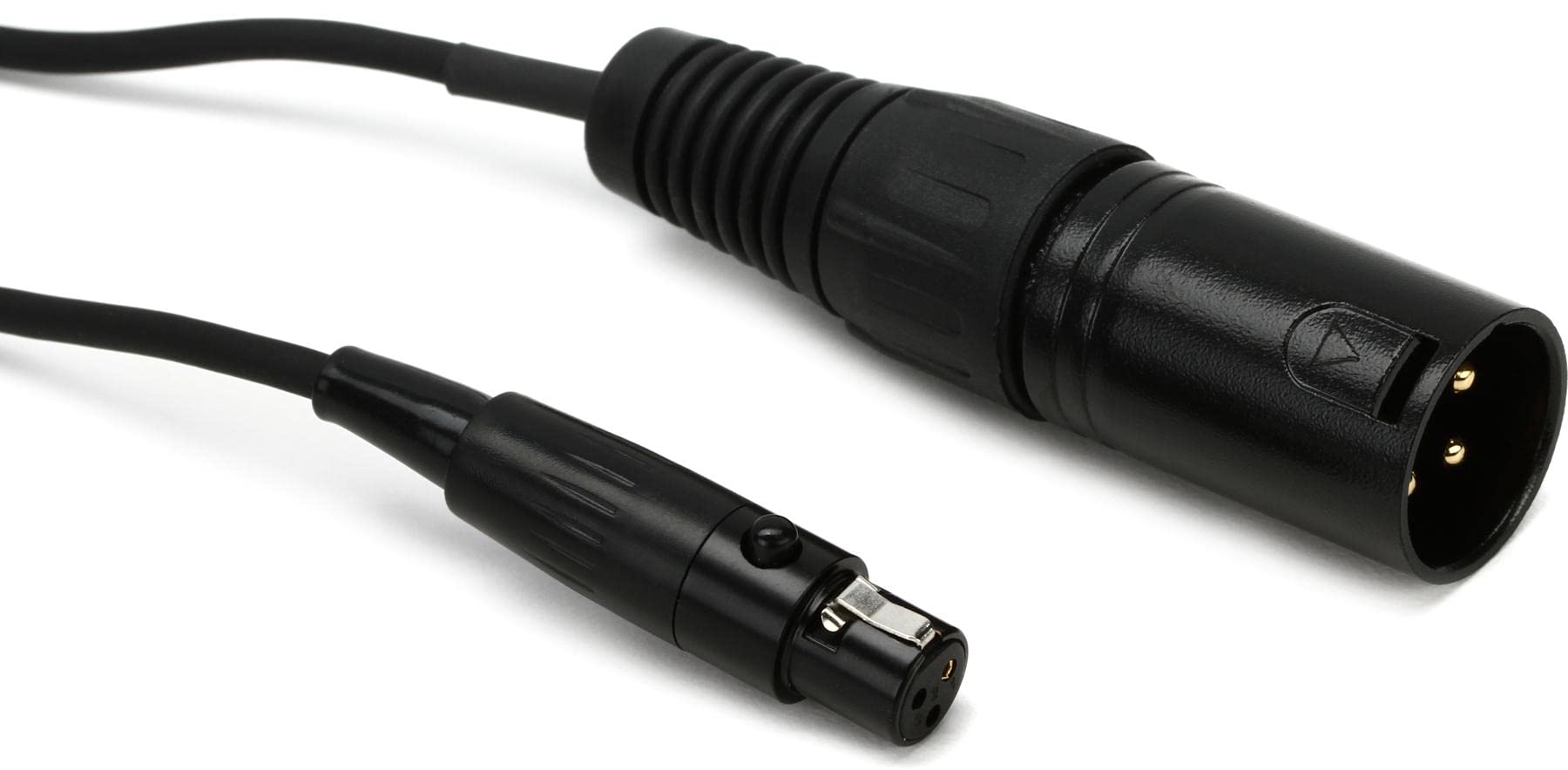
Twenty-five feet of reach for the installs where the mic simply cannot move.
The number does all the talking here: 25 feet. When a mic is fixed in place and the mixer or interface sits across a room, a 1-foot adapter is useless and a 16-inch cable falls short — the Audix CBLM25 reaches. It is a mini XLR female to XLR male cable, made for Audix’s own “The Micros” series microphones but useful wherever that connector direction is what you need. It also takes a mini XLR female signal into a standard XLR male plug, the mirror direction of most camera cables here.
The practical buyer profile is opposite to the camera-rig crowd. This is for a stage, a lectern, a boardroom, or a fixed studio set where the run stays put and nobody coils it into a bag between takes. It fits well with installations like a Crown PCC160 boundary mic, and the buyer conversation consistently lands on the same word: it works, and it is regarded as a solid deal for the length you get. Functionality and value are the two things the reviews return to.
Two cautions worth stating plainly. A 25-foot cable is a permanent-run tool — it is not what you reach for on a moving rig, and it will not tuck neatly into a small kit. And this is a niche direction, female mini XLR to male standard XLR, so confirm that matches your source and destination before ordering. For a stationary install that needs genuine distance, it is the right tool and very little else competes.
Why it earns a slot
- 25-foot length reaches across a room for fixed installs
- Built for Audix “The Micros” mics and other mini-XLR-female sources
- Regarded as strong value for the length you get
The fine print
- A permanent-run cable, not a rig or travel piece
- Female-mini-to-male direction is niche — verify your sockets first
Go this way when: you are wiring a lectern, stage or boardroom where the mic is fixed and the run is long.
Not the one for: a camera rig or a travel kit — 25 feet is a lot of cord to manage on the move.
Know the Specs
Mini XLR vs Standard 3-Pin XLR
A standard 3-pin XLR is the familiar chunky circular mic connector. A mini XLR — often labeled TA3 — carries the same balanced audio in a much smaller housing, so it fits the compact inputs on cinema cameras and some headphone cables. They are different sizes and do not interchange, which is why these cables exist with a standard end and a mini end to bridge the two. Always confirm which end is male and which is female before ordering.
Wire Gauge and Oxygen-Free Copper
Gauge measures conductor thickness, and a lower number means thicker wire. The picks here run 20 AWG and 24 AWG — 20 AWG is the thicker, more resistance-resistant build, 24 AWG the lighter one. “4N oxygen-free copper” (OFC) is copper refined to strip out oxygen so the signal travels more cleanly. Together with a shielding layer that blocks radio and electromagnetic noise, these are the specs that decide whether your run stays quiet or picks up a hum.
Common Questions
Is a mini XLR the same as a regular 3-pin XLR?
How do I know which direction my mini XLR cable needs to be?
Will this kind of cable work with my Blackmagic Pocket Cinema Camera?
Does a longer XLR to mini XLR cable lose audio quality?
What does the number in AWG mean on a mic cable?
Can I use a mini XLR to XLR cable for headphones?
Will gold-plated connectors actually make a difference?
Are these cables okay for indoor and outdoor use?
Is a braided jacket worth it over a standard PVC one?
Can I run a lavalier or lapel mic through a mini XLR cable into a camera?
The Bottom Line
For most people rigging a cinema camera, the JOLGOO 1 Feet Mini XLR Male to XLR Female Adapter Cable is the one to buy — its 24 AWG oxygen-free copper, gold-plated pins and tidy short run make it the clean bridge between a standard XLR mic and a mini XLR input. If you need genuine reach for a mic on a stand, the SiYear 5-foot covers it; and if you are adapting detachable headphones instead of a camera, the JOLGOO XLR male to mini XLR female is the exact shape you want. One honest nudge: for daily on-set abuse, the Kondor Blue’s nylon braid and lifetime warranty are worth the step up. Whichever you pick, check the connector direction first — it is the one thing no cable can fix for you.
How we choose
We do not accept paid placement. Every pick is matched to a real buyer and a real use-case; we do not hands-on test units.
Sources
Specifications: manufacturer listings and product documentation. Review insights: verified customer reviews, as of November 2026. Pricing: not shown on this page (it changes often); check the current price via the retailer link.
As an Amazon Associate, Tactical Gear Guy earns from qualifying purchases. This does not affect which products we feature.