Specs are compiled from manufacturer listings and verified buyer reviews and can change over time — please confirm the key details on the product page before buying.
If your last hard hat sat on your head like a thimble, a bigger sweatband won’t fix it. You need a helmet built to reach a 63cm head circumference. That number is the whole story: a real XL hard hat has to clear your crown without pinching the sides. Only a shell rated for that size keeps the suspension off your skull during a full shift. Below are the three extra-large options worth your money, sorted by what each one does best.
This guide is built by comparing the manufacturers’ published specifications and the patterns across verified customer reviews, so you get each pick’s real strengths and trade-offs instead of marketing spin.
You will see which shell clears a 63cm head with room to spare, which one runs a ratchet that reaches a size 8.5, and which vented design keeps air moving on a hot site. These are the three finalists for the best XL hard hat, judged on sizing range, suspension and impact class rather than brand noise.
Top Picks
How To Choose The Best XL Hard Hat
A hard hat that is too small does not just feel bad. It sits higher on your head than it should, and the suspension stops doing its job. Your buying decision depends on three numbers and one rating: the head circumference the shell is built for, the type of impact coverage, and the class of electrical protection. Get those right and the rest is comfort.
Start with the centimeter range, not the letter X
“XL” is a marketing word until you see the number beside it. A helmet listed for 58-63cm covers a genuinely large head, while a one-size shell that claims 53-63cm has to stretch its suspension to reach the top of that range. Measure around your head just above the ears and compare that figure to the listed range before anything else. If you wear your hair thick or in a wrap, aim for the upper half of the range, not the bottom.
Type I versus Type II impact coverage
Type I means the helmet is tested for a blow straight down on top of the head — a dropped tool, a low beam. Type II adds a side-and-offset impact test, so a strike at an angle is also covered. On a busy site with overhead work happening around you, the wider coverage is the reason some helmets cost more. Both types here meet recognized standards; the question is how much coverage your job actually puts you under.
Class C, Class E, and getting air to your scalp
Vented helmets are Class C, which means they are not built to protect you from electrical contact — the vents are open by design, and that is what makes them cooler. A solid shell in Class E is the safer call around live wiring. If your work is hot and dry, the vents earn their place. If you are anywhere near energized equipment, treat the vented shell as a comfort tool, not a shield.
Side-by-Side Comparison
| Model | Best For | Head Size Range | Impact Type | Vented | Amazon |
|---|---|---|---|---|---|
| STUDSON SHK-1 Full Brim Vented★ Best Overall | Best overall for large heads on hot sites | M/L 53-59cm; L/XL 58-63cm | Type II | Yes (Class C) | Amazon |
| Texas America Safety Jumbo Cap | Big heads, tight budget, dreadlocks | Fits sizes 7 to 8.5 | Type 1 | No (Class E) | Amazon |
| STUDSON SHK-1 Vented (Gold) | Comfort and coverage with a lower profile | L/XL 58-63cm | Not listed | Yes | Amazon |
Detailed Reviews
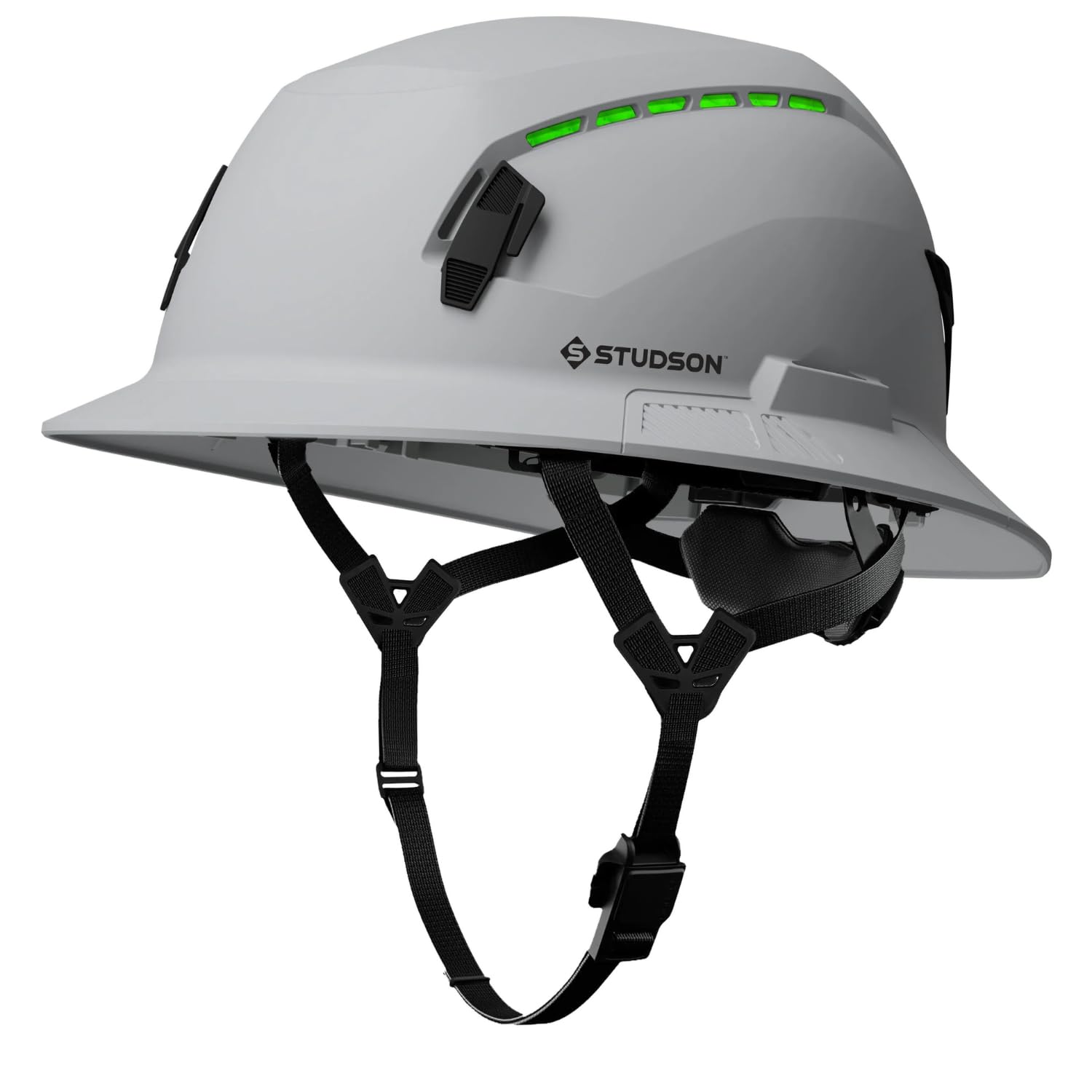
1. STUDSON SHK-1 Full Brim Vented Safety Helmet
Our pick — 4.5+★ from 350+ verified ratings; the strongest balance of quality and price.
The full-brim shell that reaches a 63cm head and still breathes through a hot afternoon.
Here is the number that decides it for a big head: the L/XL shell is listed for 58-63cm, and the M/L covers 53-59cm. If your tape measure lands north of 60cm, you want the L/XL, and you get a shell designed to sit there rather than a suspension cranked to its limit. It is the crowd favorite of the three at 4.5+ stars across 350+ ratings, and build quality is what earns that standing.
The construction is where this helmet separates itself. Koroyd and TwICEme are listed for 360-degree coverage against falling objects and angled impacts, and the shell borrows components from extreme-sports gear rather than the bare minimum a jobsite demands. It meets ANSI/ISEA Z89.1 as a Type II helmet, which covers the offset and side impacts a standard top-drop test ignores. Venting is generous — the vents move real air, which is the whole point of a Class C shell.
Fit adjustment runs through a Perfect Fit system with adjustable dials, so you can dial in snug or slightly loose and lock the stability you want. The closure is magnetic, which means no fumbling with a chinstrap one-handed in gloves. There is also an NFC emergency contact chip built in — tap a phone to it and your emergency details surface. That is a real convenience on a site where nobody carries a paper emergency card.
Where the SHK-1 pulls ahead
- L/XL rated to 63cm, so a genuinely large head gets a proper shell fit
- Type II coverage tested for angled and side impacts, not just a top drop
- Magnetic closure is quick to fasten with gloves on
- Adjustable dials let you set the fit precisely and keep it there
- NFC emergency contact chip is a rare feature in safety headwear
What to weigh before you buy
- Vented Class C shell is not the choice for live electrical work
- The dial adjusters draw the most split feedback of any feature on this helmet
- Full brim is bulkier to stow than a cap style
Wear this if: your head measures in the upper 50s to 63cm and you want the widest impact coverage on a hot, dry site.
Look past it if: the job puts you near energized wiring, where the open vents are the wrong tool.
2. Texas America Safety Company Cap Style Hard Hat
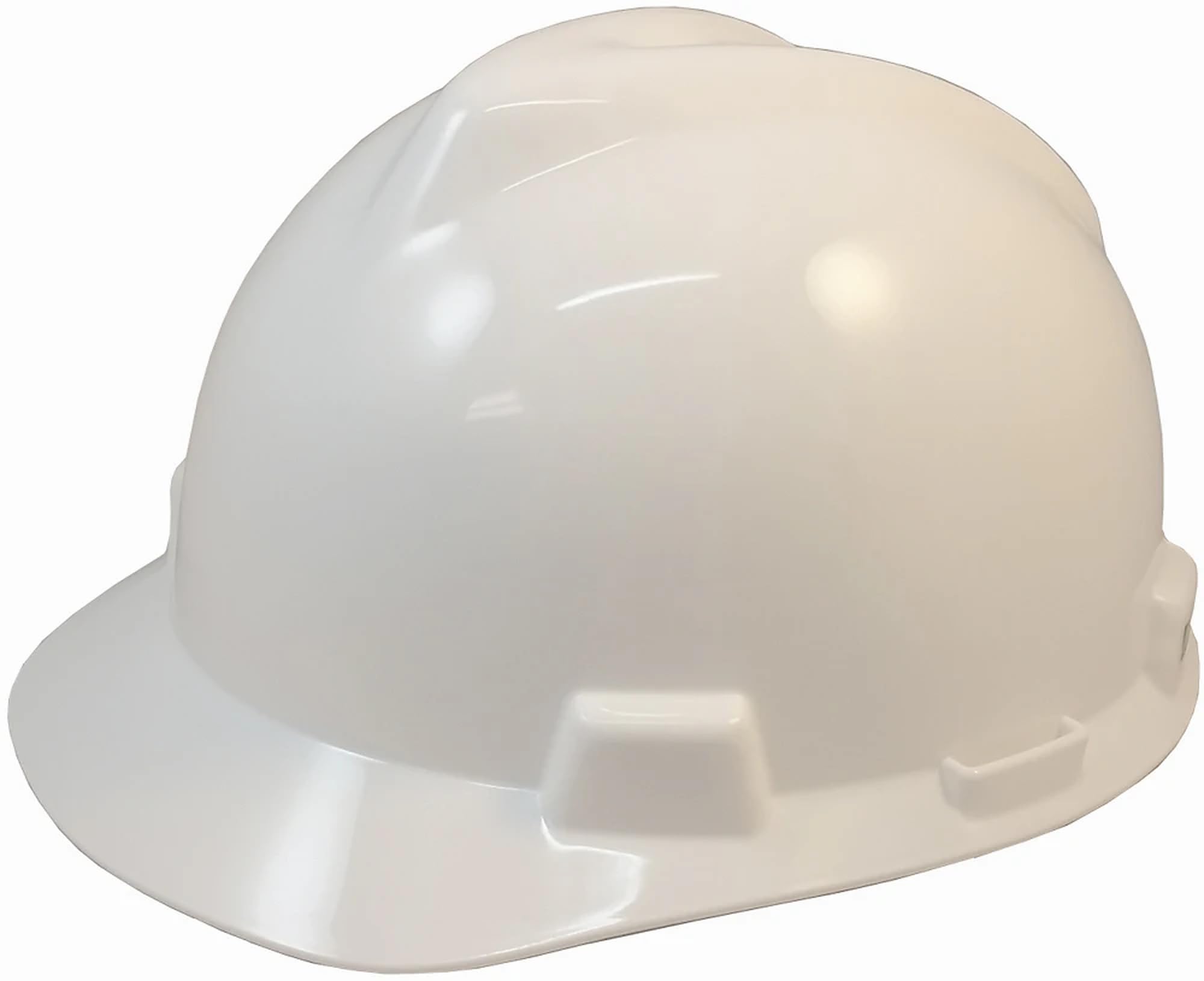
A solid polycarbonate cap that swallows a size 8.5 head without breaking your budget.
This cap reaches where a lot of helmets give up. The large 4 point FasTrac ratchet suspension (a dial system that tightens the fit) fits head sizes 7 through 8.5, so you get a secure fit without pressure points. The shell is cut with a wide cap profile meant for bigger heads. It meets ANSI Z89.1-2014 as a Class E Type 1 hard hat (electrical protection up to 20,000 volts) and also meets Canada CSA Z94.1-15 Type 1. The electrical class is the difference here: the solid unvented polycarbonate shell is the one you want near live wiring.
Fit is what makes this one land for people other helmets have failed. It sits comfortably over dreadlocks and thick hair, because the ratchet opens wide and the shell has room for both. Polycarbonate brings durability without much weight on your neck, and you can wear the whole thing reversed when you need a clear view up. A safety tote comes in the kit and can sling over your shoulders like a backpack, so the helmet rides along instead of sitting in a truck bed.
The straightforward read: this is the safest value on the list for a big head. You get ANSI Type 1 Class E protection, a ratchet that reaches 8.5, and a carry tote, all in a made-and-assembled package aimed at industrial sites. For daily protection on an industrial site, it does the core job without the extras.
The honest trade-off: Type 1 covers top-of-head impact only — it is not tested for angled or side strikes the way a Type II shell is. There are no vents, so a hot day will feel hotter. Treat it as a solid, unfussy workhorse for the trades.
Right choice when: your hat size runs 7 to 8.5 and you need Class E electrical protection at an entry-level cost.
Reconsider if: you work directly under angled overhead hazards or need airflow more than you need solid-shell electrical class.
3. STUDSON SHK-1 Vented Safety Helmet (Gold)

Same SHK-1 platform in a lighter-profile vented cut — comfort first, brim second.
Fill this one up front with the weight: the helmet is listed at 0.75 kg, and that is why it sits so lightly through a long shift. It comes in L/XL for 58-63cm heads, so the large-head sizing is handled the same way as the full-brim version above. Where the two diverge is the brim — this is the vented SHK-1 in a lower-profile shell, finished in gold, and people pick it for comfort more than for the wider visor.
The protection story is 360-degree coverage from falling objects, and reviewers praise its build quality and comfort together. Ventilation is the daily payoff: air moves through the shell, so your head stays cooler and you keep your focus longer. The magnetic chinstrap is easy to fasten one-handed, and the buckle closure holds where you set it. At 0.75 kg there is less weight dragging on your neck by hour eight.
The physical spec that earns its keep: a 0.75 kg shell is a figure you feel every hour. On a ladder or under a low deck, a lighter helmet means less fatigue and a neck that is not stiff at the end of the day, and the vented build adds airflow on top of that.
The fair caveat: appearance is the most debated thing about this helmet — the gold finish draws split opinions, and some buyers find the price steep for a vented shell. It is also not the pick if you need a wide full brim to shade your face or keep rain off your neck. Judge it as a comfort helmet, and the finish conversation stops mattering.
It beats the field on: light-in-the-hands comfort and airflow for a 58-63cm head, at 0.75 kg with a magnetic strap.
But skip the gold: if you need the bill of a full brim for sun or weather, or you want a solid electrical-rated shell.
Know the Specs
Head Circumference Range (cm)
The centimeter range printed on the listing is the honest measure of whether a helmet is really extra-large. A shell rated to 58-63cm has the interior room for a big crown without cranking the suspension to its last notch. Measure around your head just above the ears; if you land in the top couple of centimeters of a range, size up to the larger shell. That is why the L/XL 58-63cm and the size 7 to 8.5 ratchet fit are the numbers that matter most in this category.
Impact Type and Electrical Class
Type I protects against a straight-down blow on top of the head. Type II adds side and angled impacts, wider coverage for a busier site. Class C means the helmet is vented and not built to block electrical contact. Class E means a solid shell rated for electrical protection. Pick the class by your actual work: hot and dry favors vents, energized equipment favors a solid shell. Those two ratings decide more about your safety than the shape of the brim.
Common Questions
How do I know if a hard hat is actually big enough for my head?
Will the Jumbo Large Size cap fit over dreadlocks or thick hair?
What is the difference between Type I and Type II hard hat protection?
Can I wear a vented hard hat around electrical equipment?
Does a full brim hard hat block more sun than a cap style?
How much does the STUDSON SHK-1 vented helmet weigh?
What is the NFC chip in the STUDSON SHK-1 Full Brim for?
Can a jumbo hard hat be worn backwards?
Is a ratchet suspension better than a dial fit for a large head?
Do any of these XL hard hats come with a way to carry them?
The Bottom Line
For most people hunting a genuinely large shell, the STUDSON SHK-1 Full Brim Vented is the one to order. It reaches 63cm on the L/XL shell, it covers angled and side impacts as a Type II helmet, and it vents hard enough to keep a hot day tolerable. If you need electrical class and a big-head fit at an entry-level cost, the Texas America Jumbo delivers Class E Type 1 protection and a ratchet that opens to size 8.5, with a tote in the box. And if comfort is your deciding factor, the lighter 0.75 kg STUDSON SHK-1 Vented is the shell you will forget you are wearing — rated 4.0+ stars across 250+ ratings.
How we choose
We do not accept paid placement. Every pick is matched to a real buyer and a real use-case; we do not hands-on test units.
Sources
Specifications: manufacturer listings and product documentation. Review insights: verified customer reviews, as of November 2026. Pricing: not shown on this page (it changes often); check the current price via the retailer link.
As an Amazon Associate, Tactical Gear Guy earns from qualifying purchases. This does not affect which products we feature.