Specs are compiled from manufacturer listings and verified buyer reviews and can change over time — please confirm the key details on the product page before buying.
Most helmets are built around an average head, so if yours measures 61 cm or more around the crown, you already know the routine: the dial maxes out, the shell rides high, and the side pads dig in after twenty minutes. The picks below are the extra-large shells that actually clear a big head — measured in circumference, not guessed from a size tag. One note before you scroll: this list matches by real head size, so a couple of picks are the nearest large-fitting model in that family rather than the literal letters “XL” on the box. Each one still clears a genuinely big head, and every entry says exactly which size range it covers.
This guide is built by comparing the manufacturers’ published specifications and the patterns across verified customer reviews, so you get each pick’s real strengths and trade-offs instead of marketing spin.
Fit comes first, then the safety tech and the vent count. Below you’ll find the shell sizes in centimetres, what each helmet is certified to, and which one suits a commute versus a trail day — all in plain English so you can pick once and ride. Here is the shortlist of the best XL bike helmet for a genuinely large head.
Top Picks

How To Choose The Best XL Bike Helmet
The single number that decides whether a helmet works for you is your head circumference in centimetres — the distance around your forehead and the widest part of the back of your skull, measured with a soft tape. Everything else is secondary until that number fits. A shell that squeezes leaves pressure points within minutes, and a shell that floats will shift on a rough descent.
Start with your circumference, not the size letter
Wrap a tape measure around your head about an inch above your eyebrows, keep it level, and note the centimetres. A large head typically lands at 59 cm and up. Compare that figure directly to a helmet’s stated range — the picks here span roughly 59–63 cm at the top end. If you sit near the ceiling of a range, the dial still has room to tighten; if you sit near the floor, expect a snugger default fit.
The dial at the back is your fine-tune
Almost every helmet here uses a rear dial — a twist knob that tightens a cradle around the back of your skull. That dial is what turns a “close enough” shell into a locked-in fit. Look for a dial you can turn with one hand while wearing the helmet, and check that the cradle grips low on the back of your head rather than high up.
Rotational protection: MIPS and Koroyd explained
MIPS (Multi-directional Impact Protection System) is a thin low-friction layer inside the shell that lets the helmet slide slightly against your head during an angled hit. Koroyd is a honeycomb-like material that crushes on impact to absorb energy while letting air through. Neither replaces the basic shell-and-foam build — they add a layer of protection on top of it. Several picks below carry one or both.
Vents and airflow for real rides
Vent count tells you how many openings feed air through the shell; internal channelling decides whether that air actually crosses your scalp. A commuter riding ten minutes at a time needs far less airflow than someone grinding up a fire road in summer. The picks here range from 18 to 21 fixed vents, and one adds a brow pad designed to pull sweat away from your eyes.
Side-by-Side Comparison
| Model | Best For | Stated Size Range | Weight | Rotational Tech | Amazon |
|---|---|---|---|---|---|
| BATFOX LA303 Mountain Bike Helmet★ Best Overall | Big-head riders on a budget | XL: 61–63 cm | 13.76 oz | EPS liner + polycarbonate shell | Amazon |
| Wildhorn Corvair MTBTrail Ready | Trail riding with a dial fit | L/XL | — | ABS shell + foam liner | Amazon |
| LAZER Tonic KinetiCoreFeatherweight Pick | Lightest pick for long rides | — | 240 g | KinetiCore crumple zones | Amazon |
| Triple Eight Gotham MIPS | Skate-to-bike crossover | L/XL: 59–61 cm | 1.5 lb | MIPS | Amazon |
| Bell 4Forty MIPS | Mountain riding with MIPS Evolve | — | 1.6 lb | MIPS Evolve | Amazon |
| Overade Plixi Fit | Commuting and stowing in a bag | L/XL: 59–62 cm | 700 g | EPS liner + ABS shell | Amazon |
| Lumos Ultra | Night visibility with turn signals | — | 390 g | Select models feature MIPS | Amazon |
| Smith Persist | Road riding with Koroyd coverage | — | 10.56 oz | MIPS + Zonal Koroyd | Amazon |
| Smith Engage MIPS | Technical trail with deep coverage | — | — | MIPS + Zonal Koroyd | Amazon |
Detailed Reviews
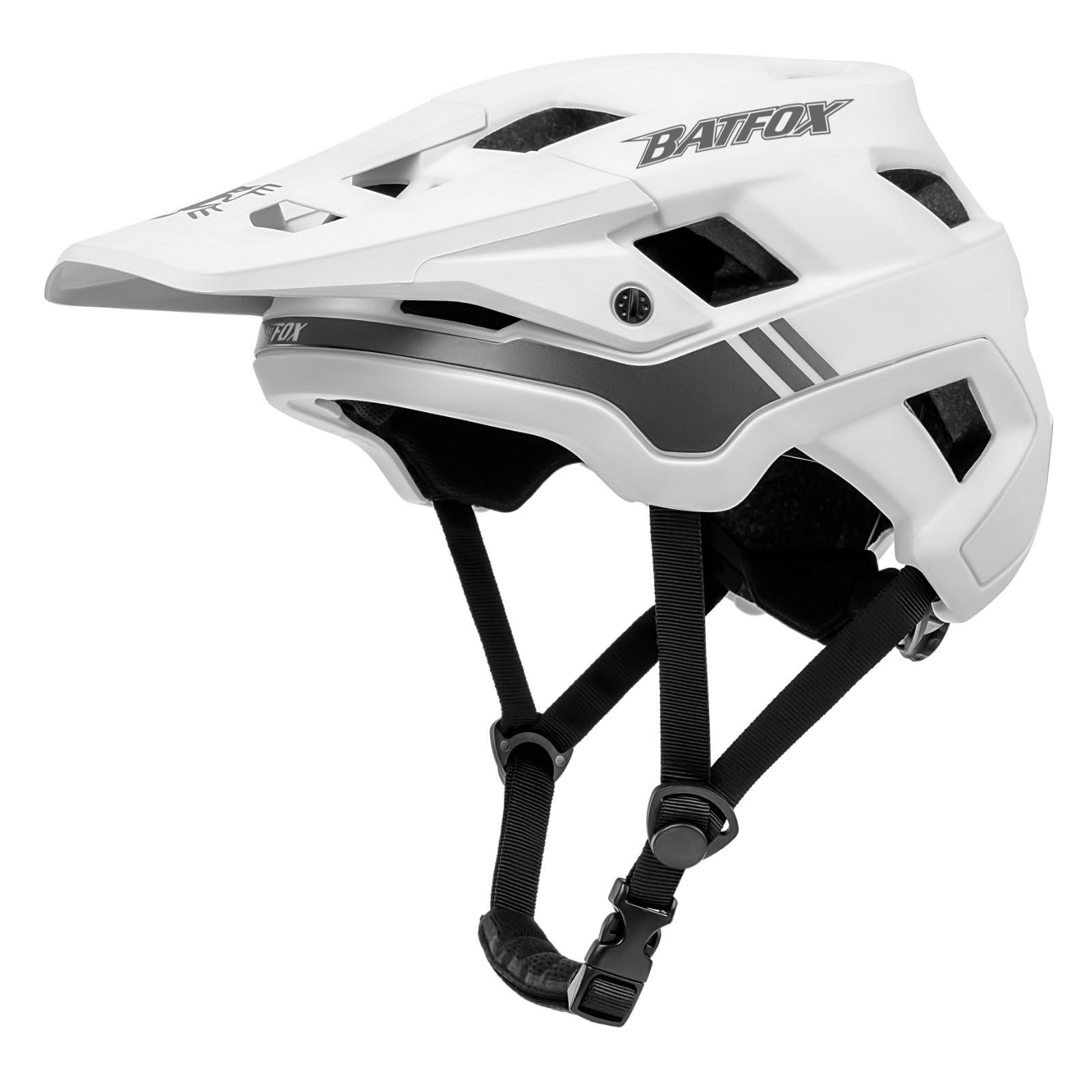
1. BATFOX LA303 Mountain Bike Helmet
Our pick — 4.5+★ from 700+ verified ratings; the strongest balance of quality and price.
A true XL shell listed in plain centimetres, so you can check your own head against it
The sizing here is the whole reason this one leads. BATFOX publishes three ranges — M at 54–58 cm, L at 58–61 cm, and XL at 61–63 cm — which means the largest shell is built for a 24.02–24.8 inch head. That top end beats the Triple Eight Gotham’s L/XL ceiling of 59–61 cm on paper. If the tape says you are over 61 cm, this is one of the few shells that states your number outright.
You get a polycarbonate outer shell fused to an impact-absorbing EPS foam liner (EPS is the crushable foam that carries most of the energy in a hit). It is certified to the U.S. CPSC bicycle standard, ASTM F1447, and the E.U. CE standard. Around the shell, 18 wind-tunnel vents with internal channelling move air over your scalp on long summer miles. Padding and the chin pad both come out for washing, and a big visor blocks sun and grit.
What wins people over across the review pages is the build quality, with fit close behind — the dial does its job and people report the helmet sits light enough to forget. It weighs 13.76 ounces, so a big shell without a brick feel. The honest catch is that this is a foam-and-shell design with no rotational slip layer — you get solid impact foam, not MIPS. If angled-impact tech is your priority, spend more on the Bell or the Smith picks below.
Where it earns its keep
- The stated XL range runs all the way to 63 cm, the widest ceiling on this list
- Certified to CPSC, ASTM F1447 and E.U. CE — three alphabets, one shell
- 18 wind-tunnel vents with internal channelling for warm-weather rides
- Washable, removable padding plus a chin pad and a big sun visor
Where it gives ground
- No MIPS or rotational slip layer — plain polycarbonate over EPS foam
- Single colourways to choose from, so style is not the selling point
Buy this one if: your tape measure reads past 61 cm and you want a certified helmet with a stated range that actually includes you.
Spend up if: you ride fast technical descents and want a rotational layer inside the shell.
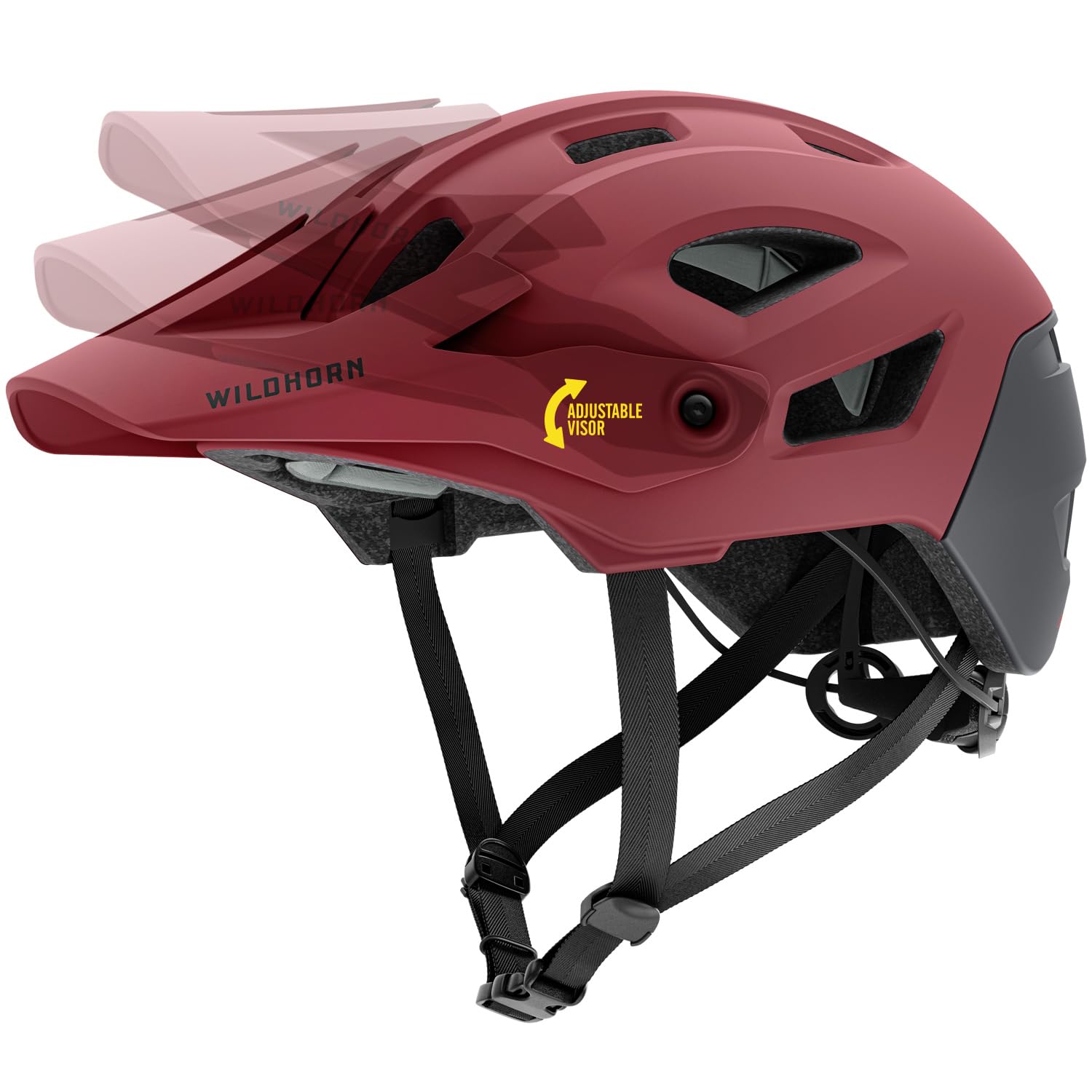
2. Wildhorn Corvair MTB Bike Helmet
Built for trail chatter and fast descents, with a dial that tightens in seconds
The finish is what people notice first here — an ABS outer shell (a tough moulded plastic that shrugs off scuffs) that looks sharper than the trail-grade price suggests. Appearance is the thing buyers bring up more than anything else about this one, and the fit follows close behind. The twist knob at the back is the detail that keeps coming up: one hand, a couple of turns, done.
For airflow, Wildhorn runs multiple vents feeding internal channels, so air circulates on a warm climb rather than sitting against your scalp. The integrated visor tilts to cut glare and knock down trail debris. Certified to CPSC 16 CFR 1203 for cycling use — the U.S. standard aimed squarely at bike helmets.
Set against the Bell 4Forty above it, this is the lighter-spirited trail helmet with a simpler shell build. The trade-off worth knowing: the strap adjustment is the one part of the fit people find fiddly, so give yourself a few extra minutes on the first setup to get the straps sitting flat under your ears. Once the straps sit flat under your ears, the fit stays put.
Where it shines: the L/XL sizing and the rear dial make this an easy reach for a larger head, and the adjustable visor earns its place on sun-blasted trail days.
Set-up patience: budget time for the strap routing — the dial is quick, the straps take a little longer.
Reach for this if: you want a trail helmet that looks the part and dials in fast on a big head.
Look elsewhere if: you must have a rotational protection layer — this one runs shell and foam without MIPS.
3. LAZER Tonic KinetiCore Bike Helmet
At 240 grams, this is the lightest shell in the lineup — and you feel it on hour three
The headline figure is the weight: 240 grams. That is a helmet you stop noticing on a long road day. KinetiCore is the reason it can be that light — instead of adding a separate slip layer, LAZER moulds cone-shaped crumple zones directly into the EPS foam, so the energy-absorbing structure is built into the shell itself.
Fit is the aspect that wins people over here, with quality right behind it. The rear adjustment knob dials in a precise hold, and the vents keep your head cool on climbs. The polycarbonate outer shell takes the scrapes. On a multi-hour road or gravel ride, 240 g means less neck fatigue than a heavier shell.
The trade-off is coverage versus weight: a 240 gram shell is a road-and-gravel shape, not a deep-coverage trail bucket, and the sizing is not published in centimetres on this listing, so check the size chart carefully if you sit at the very top of the XL range. Treat KinetiCore as its own approach to impact energy rather than assuming it matches MIPS.
The weight story: 240 g is a genuinely light build for an adult cycling helmet, and it is the reason this one earns a slot for long-distance riders.
Check the chart: without a centimetre range printed here, confirm your head measurement against the size table before ordering.
Best match for: road and gravel riders who log long hours and feel every extra gram by the end.
Not the one for: a rider who wants a deep-coverage trail shell and published centimetre sizing.
4. Triple Eight Gotham MIPS Helmet

One shell that clears the bike, the skateboard and the roller derby track
The L/XL size covers 59–61 cm (23.2–24 inches) — the smallest ceiling among the true XL options here, so read the tape before you commit. What you get in return is range of use: this helmet is certified to the U.S. CPSC bicycle standard, ASTM F1447 for recreational bicycling and roller skating, and ASTM F1492 for skateboarding and trick roller skating. Three certifications, one shell.
MIPS sits inside to help reduce rotational forces on angled impacts, and a reflective rear dial lets you fine-tune the fit — a nice detail after dark. Two sets of fit pads ship in the box so you can tune the hold, and the chin strap uses a side-release buckle. At 1.5 pounds it is a touch lighter than the Bell at 1.6 pounds by the numbers, and the ABS outer shell brings that skate-helmet solidity.
The honest note is bulk, and fit, at the extreme end: people who sit right at the 61 cm ceiling can find the L/XL snug, and the shape reads chunkier than a road shell. Sit at 59–60 cm and it is a secure, do-everything buy.
The crossover argument
- Triple-certified: CPSC for bikes, ASTM F1447 and ASTM F1492 for skating
- MIPS layer inside to help reduce rotational forces
- Reflective rear fit dial plus two sets of pads in the box
Size it right
- The L/XL tops out at 61 cm — a big head may need the next pick instead
- Bulkier skate-helmet profile than a road or trail shell
Choose it if: one helmet has to cover your bike and your skateboard, and your head lands at 59–61 cm.
Measure first if: you are past 61 cm around the crown.
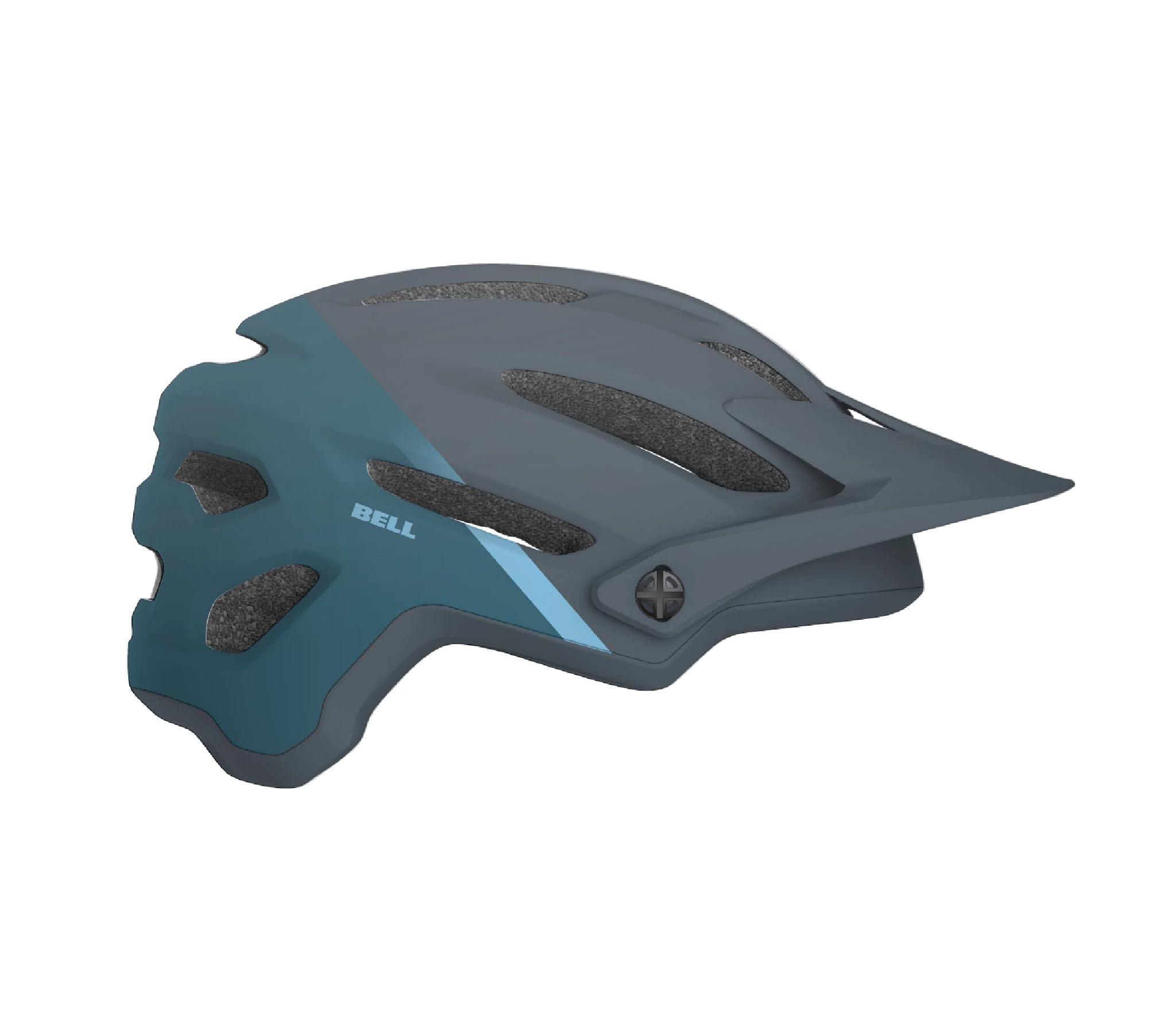
5. Bell 4Forty MIPS Bicycle Helmet
The MIPS layer is built into the retention cradle, so the safety tech sits tight to your head
Bell’s approach with MIPS Evolve is to fold the slip plane into the retention system itself rather than bolting on a separate liner. The result is a more compact shell that sits closer to the skull — and a rubber-overmoulded dial that grips well enough to turn even with gloves on. At 1.6 pounds it is a hair heavier than the Triple Eight Gotham at 1.5 pounds, but the design is aimed at riders who want the safety layer without extra bulk.
Sweat Guide padding is the detail to notice: the brow pad is shaped to pull moisture away from your forehead and away from your eyewear, so glasses stay clearer on a humid climb. The visor tilts for sun protection and gives goggles somewhere to sit when you switch from climbing to descending. Quick-adjust fasteners keep the straps flat and properly positioned under your ears.
Fit is what people praise here, with the build quality a close second — the shell accommodates genuinely large heads when you pick the right size, though the sizing itself is not published in centimetres on this page, so cross-check the size table against your own measurement. Owners describe it as a helmet you forget you are wearing.
The integration point: MIPS Evolve sitting inside the retention cradle is the standout, and it is why this one feels closer to the head than a bolt-on slip layer.
Sizing homework: no centimetre range printed here, so confirm your measurement against the chart before you buy.
Go with this if: you want rotational protection built into the cradle and a dial you can work with gloves on.
Skip the guesswork if: you need a stated centimetre range before ordering — measure against the chart first.
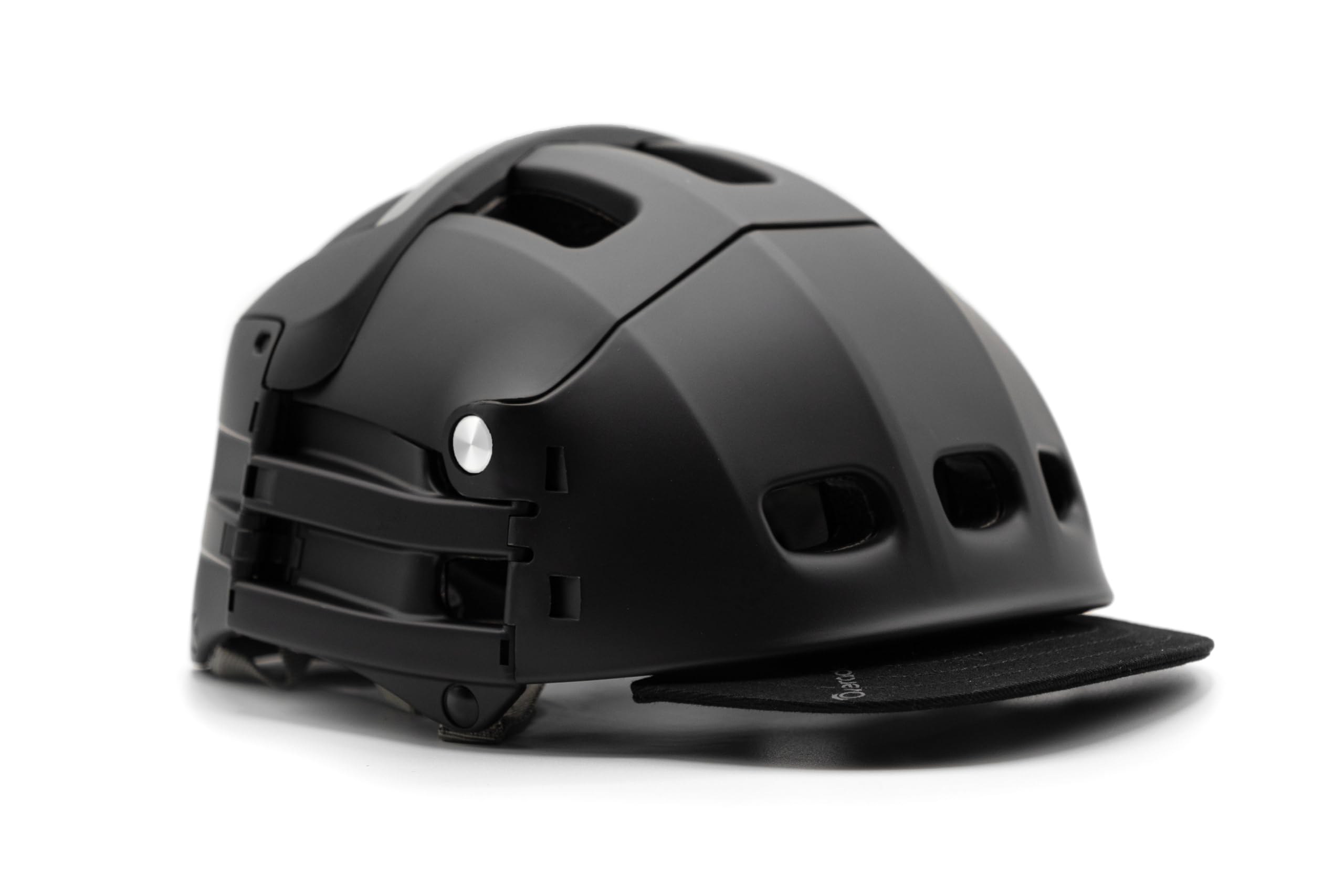
6. Overade Plixi Fit Foldable Helmet
The helmet that collapses into the footprint of a paperback and lives in your bag
Foldability is the entire point of the Plixi Fit, and it is what people talk about most. Its patented folding system is designed to cut the helmet’s volume when folded, so it drops into a small backpack, a bag, or a purse. For a city rider, an e-bike commuter or a kick-scooter user, folding small enough for a bag is the difference between owning a helmet and carrying it.
Safety is not sacrificed for the trick: the ABS outer shell meets the U.S. CPSC bicycle helmet standard, with an EPS liner underneath doing the impact-absorbing work. The L/XL size fits 59–62 cm (23.25–24.5 inches), which clears a genuinely big head, and the lockable dividers plus the adjustable fit system hold it steady. Extra pads come in the box to tune the hold.
At 700 grams it is a heavier pack than the 240 gram LAZER, so this is an urban-mobility helmet, not a weight-weenie road shell. The front brim comes off, and a visor and cover are sold separately to add weather protection. Buy it for the fold-flat storage and its CPSC bicycle certification.
Convenience first: a helmet that folds small enough to live in your everyday bag is a helmet you actually wear, and the L/XL 59–62 cm range covers big heads.
The weight factor: 700 g is heavy for a cycling helmet, so expect a solid, bulky commuter feel in exchange for the folding.
Made for: city commuters and scooter riders who want a certified helmet they can carry without a separate bag.
Not for: road riders chasing the lowest possible weight.
7. Lumos Ultra Bike Helmet

Built-in lights and rear turn signals so drivers see your move before you make it
Front and rear LEDs sit inside the shell, TÜV-certified for 360° visibility so you show up in a driver’s mirror at night. The rear turn signals fire from the included wireless Remote Lite mounted on your bars, telling the car behind which way you are heading. Pair a Lumos Remote (sold separately) and you can enable automatic brake lights and synchronised flashing with compatible Lumos lights.
The built-in rechargeable system runs on USB-C and gives up to 10 hours of battery life, though runtime varies by lighting mode and usage — run the brightest mode and expect less. Brightness and modes are adjusted through the Lumos app. The helmet meets the U.S. CPSC bicycle helmet standard, and select models feature MIPS, so check which version you are buying. It weighs 390 grams.
What people value most is the fit, with the visibility close behind — the lights do what they promise, and the turn signals are the detail that catches drivers’ attention. Battery life is the recurring mixed note: heavy lighting users will want a charge routine. For commuting and night riding, the 360° LEDs and wireless turn signals are the standout feature here.
The night-ride edge: TÜV-certified 360° LED visibility plus wireless rear turn signals is a genuine safety feature for dark commutes.
Charge habit: up to 10 hours of battery varies by mode, so bright-mode commuters need to plug in regularly.
Point this at: commuters and night riders who want drivers to see them and to signal their next turn.
Skip if: MIPS is a must for you and you cannot confirm which version you are buying.
8. Smith Persist Cycling Helmet

Road-raced DNA with a honeycomb energy layer and a brow that keeps your glasses clear
Two safety systems sit inside this shell: MIPS for rotational forces and Zonal Koroyd, a lightweight honeycomb material that crushes on impact while letting air through. It is certified to the U.S. CPSC bicycle standard, plus CE EN 1078 and AS/NZS 2063 — three regions, one helmet. At 10.56 ounces it lands in the featherweight end of the list.
Airflow comes from 21 fixed vents, and the AirEvac system is shaped to work with Smith eyewear — the air path pulls heat and moisture away so your glasses stay clear rather than fogging on a climb. The rear dial fine-tunes the fit. In plain terms, this is a road shell with a dial fit that stays locked in on a fast lunch ride or a weekend 60-miler.
Fit and quality are the two things that stand out to owners, with lightness close behind — the kind of helmet you forget is on. Set against the Bell 4Forty, this one leads on vent count (21 to Bell’s published design) and adds Koroyd alongside MIPS, so it is the more protective road-first pick. The catch: there is no centimetre range printed on this listing, so confirm your head measurement against the size table.
The dual-protection case: MIPS plus Zonal Koroyd is the most layered safety build here, and 21 vents keep a road ride cool.
Sizing check: no stated centimetre range on the page, so match your measurement to the chart before you order.
Your pick when: road miles and clear glasses matter, and you want MIPS and Koroyd working together.
Think twice if: you want a published XL centimetre range to buy against.
9. Smith Engage MIPS Cycling Helmet
 Check Price on Amazon
A mountain shell that drops lower on the back of your head than a road lid
Built for berms, rock gardens and flowy rollers, the Engage carries the same dual protection as the Persist — MIPS plus Zonal Koroyd — and meets the U.S. CPSC bicycle standard along with CE EN 1078 and AS/NZS 2063. The difference is the shape: this is a mountain-bike helmet with deeper rear coverage, and owners notice it sits further down the back of the skull, which is exactly where a trail spill can land.
Cooling comes from 20 fixed vents and an Ionic+ lining that activates with sweat to control odour, plus lightweight single-layer webbing that keeps the chin strap low-bulk. The visor adjusts into two positions — tilt it down for sun, up for goggle clearance. The rear dial gives the same easy fine-tune as its road sibling.
Quality is what owners praise most, with fit right behind it — this is the most solidly-built mountain shell on the list, and the price reads fair for the materials. The honest trade is coverage versus vent count: 20 vents versus the Persist’s 21 is a minor difference, but the deeper shell runs warmer on slow, technical climbs than a pure road lid.
Trail-day strengths
- MIPS plus Zonal Koroyd, with CPSC, CE EN 1078 and AS/NZS 2063 certification
- Deeper rear coverage that sits lower on the back of the head
- Two-position visor and Ionic+ sweat-activated odour control
What to weigh up
- 20 vents and a deep shell run warmer on slow technical climbs
- No published centimetre range on this listing — check the size table
For the trail rider: technical terrain riders who want deep coverage and two impact systems in one shell.
Consider the road sibling if: you ride mostly pavement and want maximum airflow instead.
Know the Specs
Head Circumference And Size Range
This is the number that decides your fit — the distance around your forehead and the widest part of your skull, in centimetres. A shell with a stated ceiling that sits below your measurement will not fit well on any dial setting. On this list, ranges top out between 61 cm (Triple Eight’s L/XL) and 63 cm (the BATFOX XL), with the Overade reaching 62 cm. Always measure with a soft tape, level above the eyebrows, before comparing.
MIPS, KinetiCore And Koroyd
These are three ways of dealing with impact energy beyond the basic shell and foam. MIPS is a low-friction layer that lets the helmet slide slightly against your head on an angled hit. KinetiCore moulds crushable cone zones into the foam itself. Koroyd is a honeycomb material that crushes to absorb energy while air passes through. None of them is a magic word — check the certification that ships with the helmet (CPSC, ASTM, CE EN 1078) alongside the tech name.
Vent Count And Airflow
Vent count is the number of openings on the shell; internal channelling decides whether air actually travels across your scalp or just enters and stalls. The picks here run from 18 to 21 fixed vents. More openings tend to help on a hot climb, but a deep-coverage trail shell will still run warmer than a thin road lid even with a similar count.
Weight In Grams And Pounds
Weight matters most on long rides, where a heavy shell tires your neck. On this list the spread is wide: the LAZER Tonic is 240 g, the Smith Persist is 10.56 ounces, and the folding Overade is 700 g. A lighter helmet is not automatically better — the folding and skate-style models carry extra material for a reason. Weigh lightness against the feature you actually want.
Common Questions
How do I know if my head needs an XL bike helmet?
Will a helmet marked L/XL actually fit a 62 cm head?
Is MIPS worth having on an XL bike helmet?
What is the difference between MIPS, KinetiCore and Koroyd?
Can I wear a folding helmet on a real bike commute?
Do more vents always mean a cooler ride?
How long does a helmet LED battery last on a night ride?
Can I swap the padding or wash the liner?
Which certifications should an XL bike helmet carry?
Does a heavier helmet offer more protection?
The Bottom Line
The strongest all-round answer for a genuinely large head is the BATFOX LA303, because it publishes an XL range all the way to 63 cm and clears the U.S. CPSC, ASTM F1447 and E.U. CE standards. If you want the safety layer inside the shell, the Bell 4Forty folds MIPS Evolve into the retention cradle, and the Smith Persist layers MIPS with Koroyd for road miles. For a helmet that lives in your bag, the Overade Plixi Fit folds down and still fits 59–62 cm.
If your tape reads past 61 cm, skip any shell whose printed range tops out at 61 cm and buy one that lists your measurement.
How we choose
We do not accept paid placement. Every pick is matched to a real buyer and a real use-case; we do not hands-on test units.
Sources
Specifications: manufacturer listings and product documentation. Review insights: verified customer reviews, as of November 2026. Pricing: not shown on this page (it changes often); check the current price via the retailer link.
As an Amazon Associate, Tactical Gear Guy earns from qualifying purchases. This does not affect which products we feature.