Specs are compiled from manufacturer listings and verified buyer reviews and can change over time — please confirm the key details on the product page before buying.
If you own an Xbox One X, you already have a console built to push 4K games — the missing piece is usually the screen. A 4K panel with a fast refresh rate (how many times per second the screen redraws, measured in hertz) is what turns a smoothed-over picture into the crisp, responsive image the console was made for. Below are nine TVs that genuinely do that job, ranked so the strongest all-rounder sits first.
This guide is built by comparing the manufacturers’ published specifications and the patterns across verified customer reviews, so you get each pick’s real strengths and trade-offs instead of marketing spin.
You will see exactly what each panel does with a 4K signal, where the motion handling lets you down, and which sets quietly skip the gaming features that matter. Here is how to pick the right Xbox One X 4K TV without paying for specs your console will never use.
Top Picks

How To Choose The Best Xbox One X 4K TV
The Xbox One X outputs a 4K picture natively, so the TV’s job is to show that signal cleanly without softening it or smearing it during fast action. Two numbers decide most of that: the panel’s real refresh rate and whether the HDMI ports can carry a high-bandwidth 4K feed. Everything else is comfort and convenience.
Start with the real refresh rate, not the marketing figure
A native 120Hz panel redraws the picture 120 times a second, which keeps a fast camera pan readable instead of blurry. Watch for inflated “motion rate” labels that describe processing tricks rather than the panel itself. If a listing states a native refresh rate in hertz, treat that as the honest number.
Check the HDMI version before you assume 4K gaming works
HDMI 2.1 ports carry enough bandwidth for 4K at high frame rates, and they also enable ALLM (auto low latency mode, which flips the TV into its low-delay game setting the moment you switch input). A set with only older HDMI ports will still show 4K, but it can cap how smooth and how responsive the picture feels.
Decide between Mini-LED and OLED for your room
Mini-LED sets use thousands of tiny backlights behind the screen, which pushes brightness high enough to fight daytime glare. OLED lights each pixel individually, so blacks go truly dark — but the brightest highlights usually top out lower. A bright living room with big windows tends to favour Mini-LED; a dimmed room rewards OLED’s contrast.
Side-by-Side Comparison
| Model | Best For | Screen Size | Native Refresh | Panel Type | Amazon |
|---|---|---|---|---|---|
| Samsung 50″ QN90F Neo QLED★ Best Overall | Best all-round 4K gaming set | 50 inches | Up to 165Hz | Neo QLED Mini-LED | Amazon |
| TCL 55″ T7 Series QLEDBest Value | Budget-friendly 120Hz entry | 55 inches | 120Hz | QLED (Direct LED) | Amazon |
| Roku 65″ Plus SeriesBiggest Screen | Big screen, simple software | 65 inches | — | QLED Mini-LED | Amazon |
| Toshiba 65″ Z670R Mini-LED | Motion-first console gaming | 65 inches | 144Hz | QLED Mini-LED | Amazon |
| iFFALCON 65″ 65U85 MiniLED | Four full-bandwidth HDMI 2.1 ports | 65 inches | 144Hz | Mini-LED | Amazon |
| Hisense 55″ U7 (55U7SG) | Bright-room gaming with glare control | 55 inches | 165Hz | Hi-QLED Mini-LED | Amazon |
| Sony 65″ BRAVIA 2 II | PlayStation-style processing on a big panel | 65 inches | — | LED (direct backlit) | Amazon |
| Sony 55″ BRAVIA 5 Mini LED | Creator-calibrated movie and game picture | 55 inches | — | Mini-LED | Amazon |
| Samsung 65″ S90H OLED | Deep-black OLED gaming in a dark room | 65 inches | Up to 165Hz | OLED | Amazon |
Detailed Reviews
1. Samsung 50-Inch Class Neo QLED 4K QN90F Series
Our pick — 4.5+★ from 350+ verified ratings; the strongest balance of quality and price.
A 50-inch Neo QLED that feeds your console up to 165Hz and shuts out window glare.
Fast pans and quick turns stay sharp because this panel accepts up to 165Hz in VRR gaming (a variable refresh rate that matches the screen’s redraw speed to the console’s output). That 165Hz means the screen can redraw up to 165 times a second when the console asks for it. For an Xbox One X pushing a 4K image, that headroom keeps motion from smearing into a blur. It sits above the TCL T7’s 120Hz ceiling, so rapid motion stays legible for longer before the panel runs out of frames.
A lamp or a bright window behind you won’t wash the picture out, thanks to a Glare Free treatment — useful if your console sits in a living room you cannot black out. The NQ4 AI Gen2 processor analyses each scene and lifts brightness to reveal detail in dark corners. Its 128 neural networks upscale 1080p games and streams toward a cleaner 4K image.
The honest catch is the size. At 50 inches this is the smallest panel in the group, and the Toshiba Z670R gives you 65 inches by comparison — a real difference if you sit far back from the screen. The stand also spreads to a 20.4 inch base width and 8.7 inches of depth, so measure your media unit before you commit. What wins people over here is the combination of anti-glare glass and smooth motion, and the crowd backs it: 4.5+ stars across 300+ ratings.
What earns the top spot
- VRR gaming runs up to 4K at 165Hz for tear-free fast action
- Glare Free screen holds up beside windows and lamps
- Built-in Gaming Hub and Alexa mean no extra streaming box
- Bluetooth 5.3 handles wireless headsets and soundbars without dropouts
Where it asks you to compromise
- 50 inches is the smallest screen on this list
- The 20.4 inch stand footprint needs a wide, deep surface
Reach for this if: you game in a bright room and want the smoothest motion the group offers on a panel that fights reflections.
Measure first: the 50-inch size is a real step down from the 65-inch sets here if you sit far from the screen.
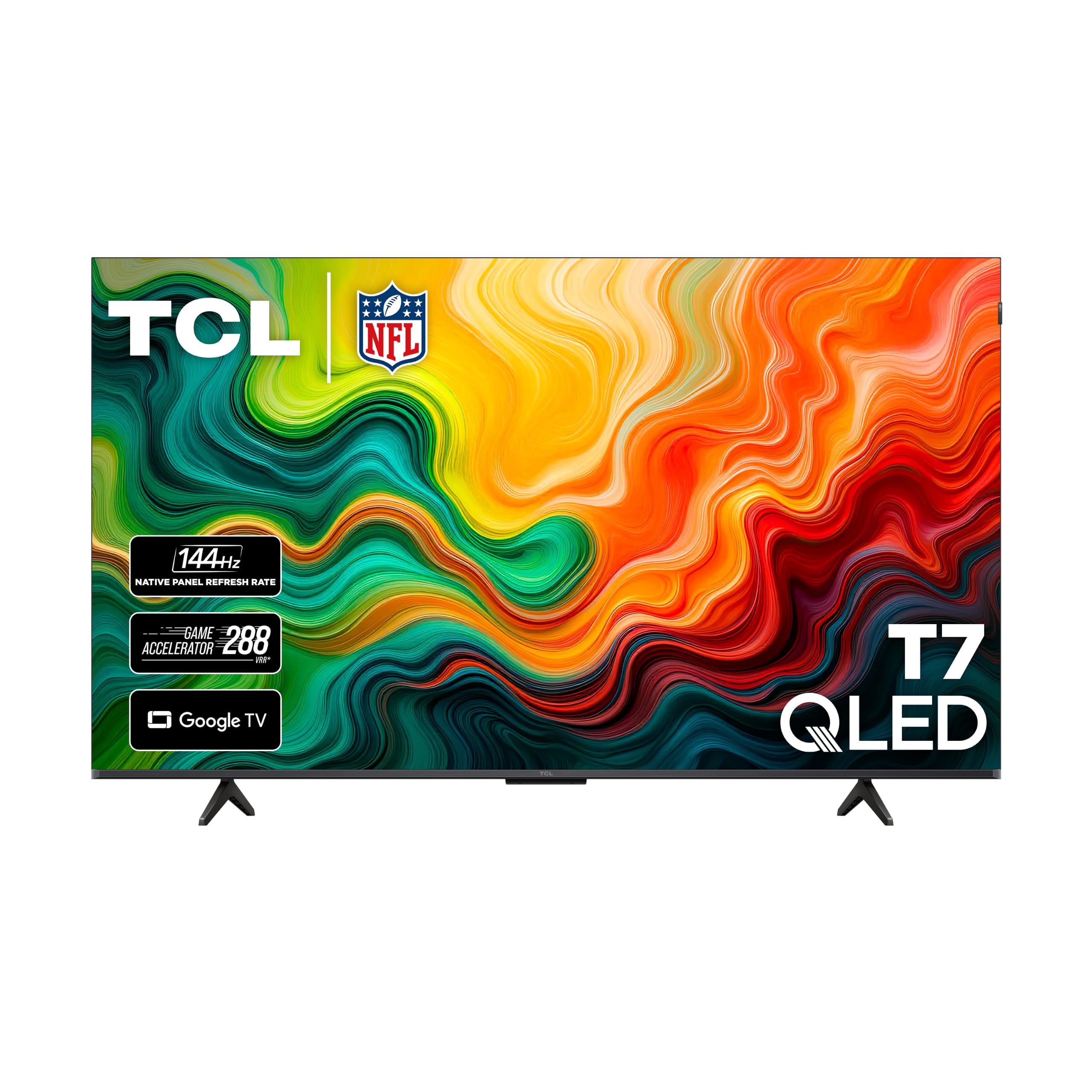
2. TCL 55 Inch T7 Series 4K 120Hz QLED Smart Google TV
Proof that a genuine 120Hz panel and four HDMI ports do not need a premium budget.
If you want the core gaming specs without paying for extras, the T7 is the set to study first. It runs a 120Hz panel refresh rate — the screen redraws 120 times a second, keeping fast-paced games and live sports free of motion blur. Its 240Hz variable gaming refresh rate tightens that further when the console’s frame output fluctuates, so the image stops juddering during heavy scenes. Quantum Dot colour covers nearly the entire DCI-P3 colour space, a wide standard that keeps on-screen colour rich rather than washed.
Around the back you get four HDMI inputs, one of them with eARC (the audio return channel that sends full-quality sound to a soundbar or receiver on a single cable). That is more than enough for a console, a streaming stick, and a soundbar at the same time without a switcher. The AIPQ Pro processor and HDR PRO+ with Dolby Vision, HDR10+ and HLG handle brightness mapping scene by scene, and Wi-Fi 5 plus Google TV keep the streaming side responsive. Build quality is what carries the reputation here — it is the most-praised trait on this set, well ahead of picture and value.
The part to weigh up is reliability. A minority of buyers report the set shutting off at random, so treat a stable power supply and a firm return window as sensible precautions. It is also Direct LED rather than Mini-LED, which means fewer dimming zones and softer contrast in dark scenes than the QN90F above. Reach for it when value and a fast panel are the priority.
Why it earns its slot: a true 120Hz panel, four HDMI inputs and Dolby Vision at the budget tier is a genuinely rare combination.
Trade-off to know: Direct LED backlighting gives darker scenes less punch than the Mini-LED sets here, and the random shut-off reports are worth taking seriously.
Suits the value hunter: you get a fast, colourful 55-inch panel with the port count a console setup needs.
Less ideal if: you demand Mini-LED contrast or need a fault-free experience out of the first box.
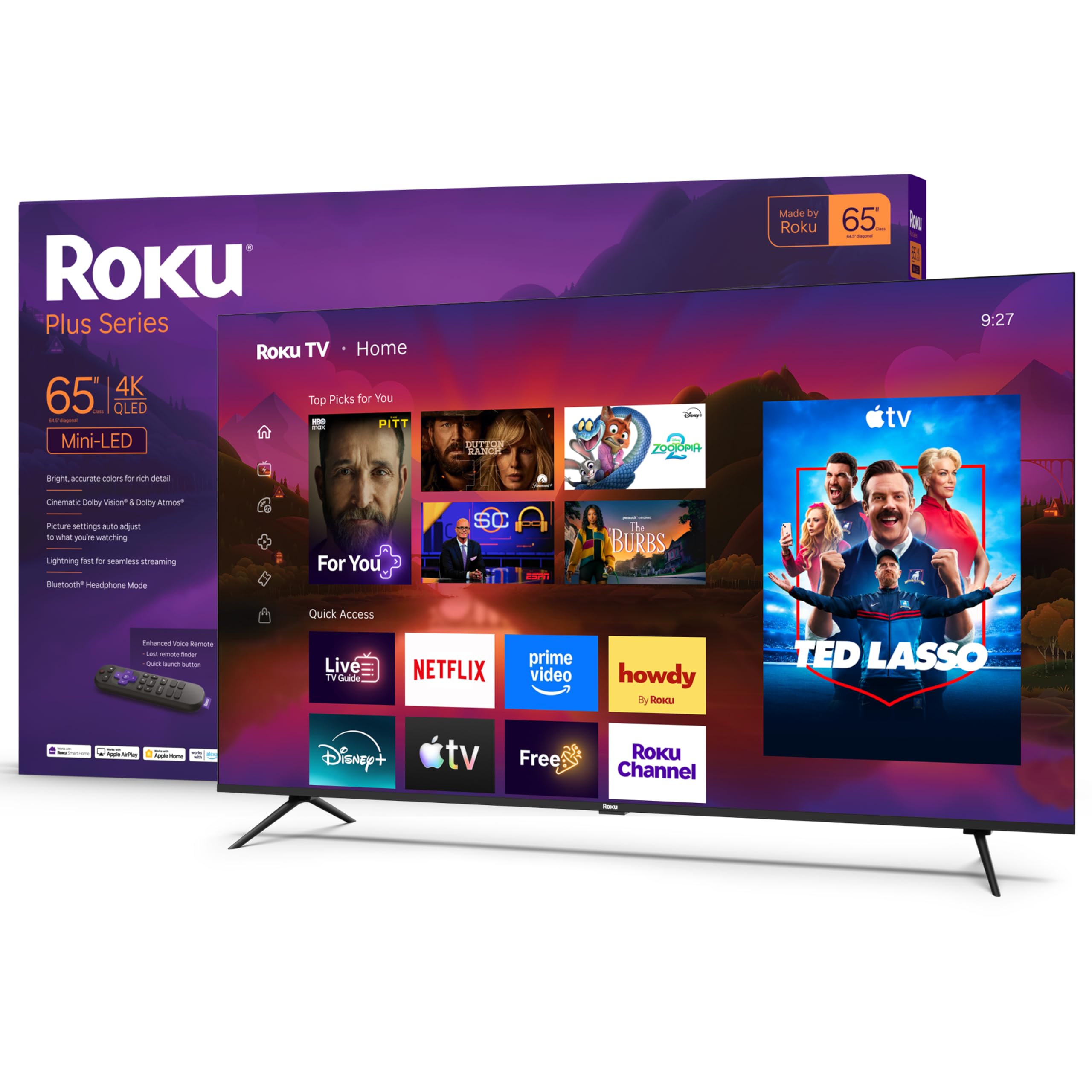
3. Roku 65-Inch Plus Series Smart TV – 4K QLED Mini-LED
A 65-inch Mini-LED that pairs deep blacks with the least complicated software on the list.
Screen size is the headline: at 65 inches this set gives you a noticeably larger picture than the 50-inch Samsung QN90F, which matters if your couch is set well back. Mini-LED backlighting with a QLED layer produces strong colour and Dolby Vision highlights, and the panel is rated for a high contrast ratio, which is the gap between the darkest black and the brightest white it can show. Deep blacks are what buyers bring up most about the picture, and it is easy to see why on a dark game level.
The software is where Roku genuinely separates itself. Setup takes minutes, the home screen is uncluttered, and the enhanced voice remote can be pinged from the couch when it vanishes — a lost-remote finder that saves a real headache. There is a built-in subwoofer driven by Dolby Atmos, and Bluetooth Headphone Mode lets you play late without waking the house. Unlike the TCL T7 with its four inputs, this is a simpler port array, so check you can plug your console and soundbar in without juggling.
Two honest notes. The base width is just 13.1 inches — the narrowest stance in this group, which can look visually top-heavy on a small unit but keeps the footprint compact. A handful of owners mention units that failed inside a few weeks, and the remote draws mixed reactions, so buy where returns are painless. The picture, though, is what most people walk away talking about.
The reasons buyers stick with it
- Mini-LED backlighting and QLED colour deliver deep blacks and vivid highlights
- Roku’s home screen is the simplest to navigate of the smart platforms here
- Built-in subwoofer with Dolby Atmos adds real bass without an extra bar
- Lost-remote finder and Bluetooth Headphone Mode are genuinely handy
The realistic downsides
- No native refresh figure is published, so hardcore 120Hz gaming specs are unclear
- A minority report early failures and mixed feelings on the remote
Reach for this if: you want the biggest panel here without a premium tag and prefer software you never have to think about.
Look elsewhere if: you need a confirmed high refresh rate for competitive gaming.
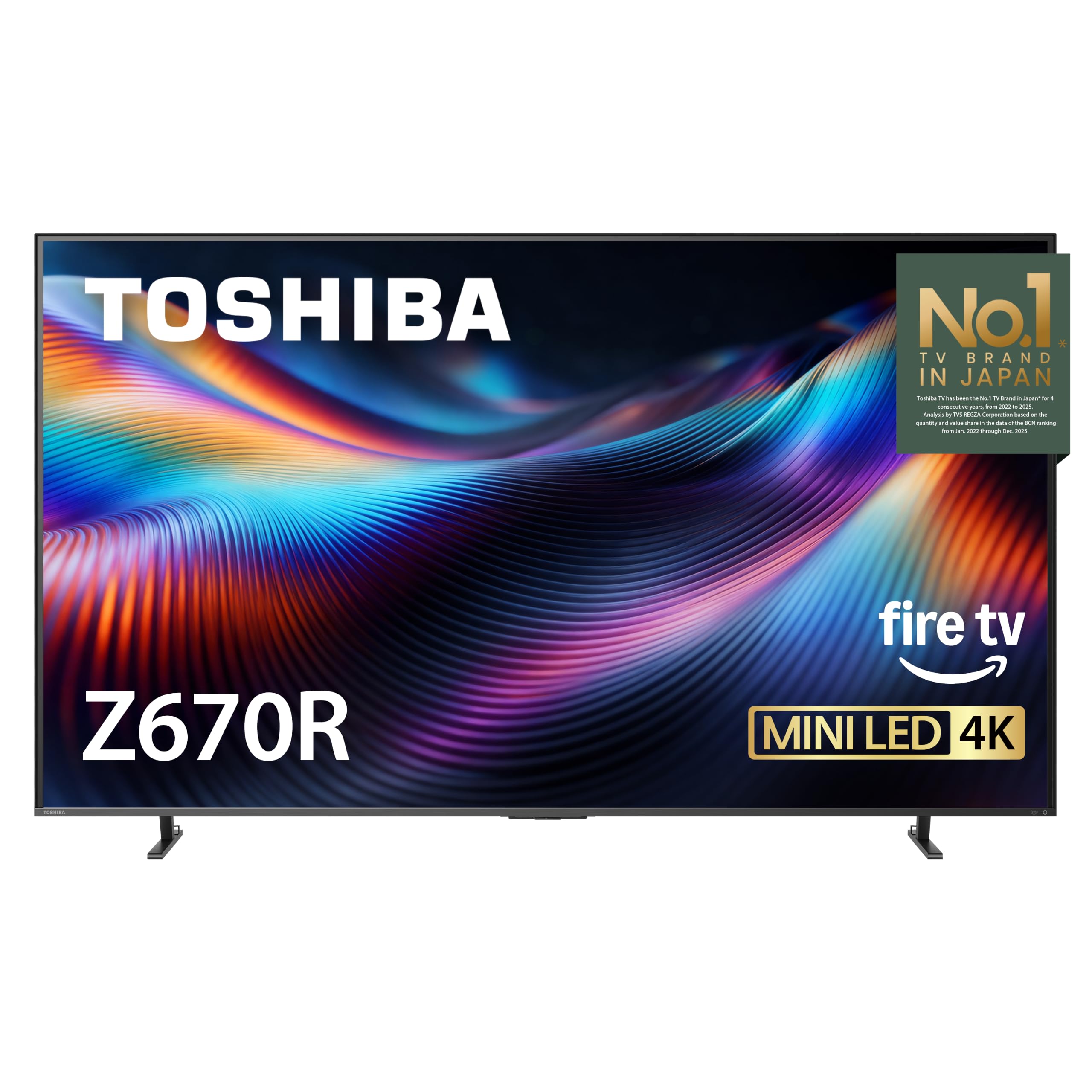
4. Toshiba 65″ Class Z670R Series Mini-LED 4K UHD Smart Fire TV
A 144Hz native panel with FreeSync Premium, built for smooth console frames on a big screen.
Here is the set for a gamer who notices judder. Native 144Hz means the panel itself redraws 144 times a second — no interpolation trick, just a fast physical display. Add AMD FreeSync Premium, VRR at 144Hz and ALLM (auto low latency mode, which drops the TV into its fastest game setting the moment you switch inputs), and the picture stays tear-free and responsive even through heavy action. That native 144Hz figure beats the TCL T7’s 120Hz panel, so rapid motion holds together better before the screen runs short.
Full Array Local Dimming and a dense Mini-LED grid push contrast hard, keeping shadows deep and highlights bright in the same frame. The REGZA Engine ZRi Gen3 processor tunes clarity and audio scene by scene, and a dedicated REGZA Bass Woofer adds low-end punch that most panels at this tier lack. The AI Light Sensor Pro adjusts brightness to your room’s lighting, which helps during long evening sessions. Smoothness and setup both earn steady praise in the feedback, and 65 inches gives you real presence in a living room.
Reliability is the trade-off to weigh honestly. While many customers note it running great, a smaller group says theirs failed within the first month, so a generous return policy is worth doing. It is also the smallest review base among the bigger sets here, so the durability picture is still forming. That said, the motion and sound quality hold up on their own merits.
The gaming case: native 144Hz, FreeSync Premium and full local dimming make this one of the fastest, most contrast-rich panels here.
Worth noting: a finite group report early failures, and there are far fewer long-term owners than the more established sets.
Pick this if: competitive smoothness and a big 65-inch Mini-LED picture are your priority.
Hold off if: you want a long track record of owner reliability before you buy.
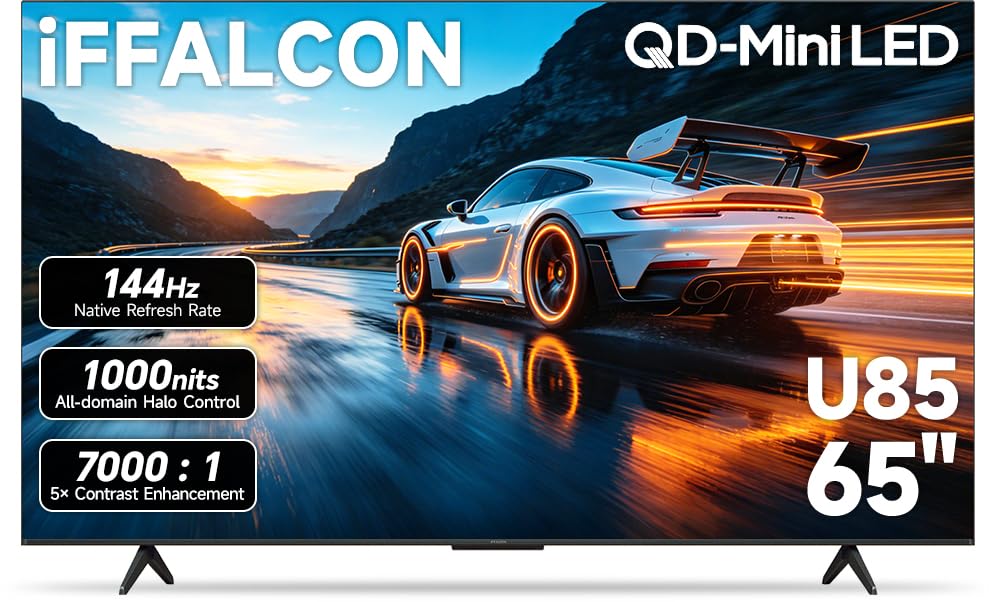
5. iFFALCON 65″ 4K MiniLED Smart TV (65U85)
Four HDMI 2.1 ports that let your console, PC and soundbar all stay plugged in.
Port count is the reason this one deserves a look. Four HDMI 2.1 inputs — two running 4K at 144Hz for consoles and gaming PCs, two more carrying 4K at 60Hz for streamers — means you never unplug anything to switch devices. The native 144Hz panel and VRR up to 288Hz handle fast action with tight motion, and FreeSync Premium Pro reduces tearing while cutting input lag. Local dimming and a stated 7000:1 contrast ratio add depth, while up to 1000 nits of HDR brightness keeps neon-lit game worlds vivid.
It is also rare for its flexibility. Google TV hotel mode, an IR blaster and IP control come standard, so you can lock menus, set default inputs and manage the display remotely — genuinely useful for an Airbnb, a small office or a fitness room. The 2.1-channel audio system pairs 2×15W tweeters with a 20W woofer for Dolby Atmos and DTS Virtual:X, and eARC on HDMI 4 passes lossless audio to an external bar. Picture quality and colour are the traits owners single out most, and the HDR handling earns specific praise.
Worth flagging: Dolby Vision and HDR10 are the HDR formats listed, so it does not advertise every format on the market. The contrast advantage over the TCL T7 is real, but the Mini-LED peak brightness sits behind the brighter Hisense and Samsung sets here. For a home-and-office screen with four modern ports, it is a smart pick.
Why this one stands apart
- Four HDMI 2.1 ports mean no juggling between console and PC
- VRR up to 288Hz keeps heavy action tear-free
- Hotel mode and IP control are unusual extras at any tier
- 50W 2.1 audio with eARC passes lossless sound to an external bar
What to keep in mind
- Dolby Vision and HDR10 are the listed formats, not the full market spread
- Peak brightness trails the brightest Mini-LED picks here
Best for the multi-device setup: console plus a PC or a receiver, all wired in at once.
Skip if: you want maximum brightness for a sunlit room.
6. Hisense 55″ U7 Mini-LED ULED 4K Smart Google TV (55U7SG)
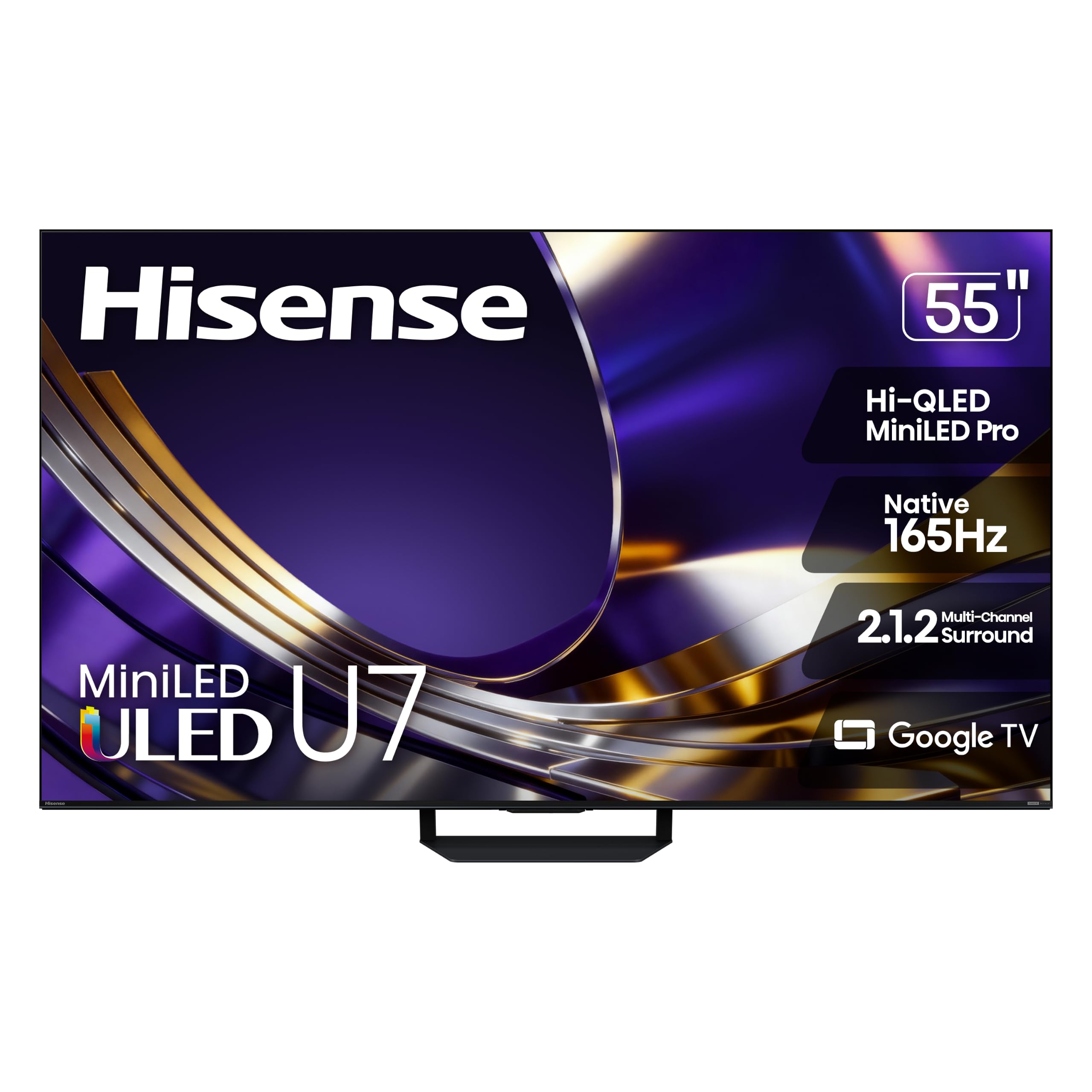
A 165Hz Mini-LED built to keep glare and blur out of a bright, busy room.
Numbers do a lot of the talking here. A native 165Hz refresh rate redraws the screen 165 times a second — the highest native figure on this list, matching the Samsung QN90F’s VRR ceiling. Thousands of Mini LED backlights, up to 3000 dimming zones and up to 3000 nits keep bright scenes punchy and dark scenes detailed. Its dual-layer anti-glare treatment fights reflections from windows and overhead lights better than single-layer designs.
For an Xbox One X sitting in a sunlit living room, that combination is close to ideal. The Hi-View AI Engine Pro continuously adjusts colour, contrast and detail, and Dolby Vision IQ reads the room’s light and fine-tunes the picture automatically. Pantone-Validated Hi-QLED colour keeps skin tones and game palettes close to intended. Sound is a genuine bonus — the Dolby Atmos output has enough body that owners describe it as phenomenal, and the set stays fast and easy to set up.
The clear limit is size. At 55 inches it is smaller than the 65-inch Toshiba Z670R and Roku — real if you want a cinematic wall-filler. Colour accuracy and brightness are its strongest traits, but HDR is Dolby Vision and HDR10+ rather than the broadest format list. In a bright room, though, this panel’s glare control is among the best on the list.
The glare-fighting appeal: dual-layer anti-glare, up to 3000 nits and thousands of dimming zones make bright-room gaming easy.
Size trade-off: 55 inches is the limiting factor if a bigger canvas is what you are after.
Choose this for: a sunlit room and a console that deserves glare control plus a 165Hz panel.
Think again if: you need a 65-inch screen or the widest HDR format support.
7. Sony 65 Inch BRAVIA 2 II K-65S20M2

Sony’s picture engine does the heavy lifting, while the 65-inch LED panel keeps the price civil.
This is the set for someone who wants image quality from processing rather than raw panel specs. The 4K Processor X1 builds a lifelike picture with rich colour and sharp detail, and 4K XR-Reality PRO upscales everything you feed it toward near-4K — so a 1080p game gets back texture and detail it lost. Motionflow XR smooths fast sports and action, and the wide colour array keeps dynamic contrast convincing. Owners describe it as a high-quality entertainment upgrade, with crisp picture and clean sound, and setup lands within minutes.
You need a substantial surface or a wall mount because the feet spread wide: at 65 inches it matches the Toshiba and Roku sets, and the base width is 47 inches. Around the back you get Bluetooth 5.3, Ethernet, HDMI, USB and Wi-Fi, so wired and wireless both work. But there is no Mini-LED or OLED backlighting here, so black levels are those of a direct-lit LED panel rather than the contrast the QN90F or S90H deliver.
The genuinely mixed part is reliability. While many reviewers point out it working great, a smaller group says theirs failed during initial setup, and the sound, Wi-Fi connectivity and reliability feedback all skew mixed. A generous return window is smart. If you value Sony’s processing on a large screen without premium pricing, though, it earns consideration.
Where it shines: the 4K Processor X1, near-4K upscaling and Motionflow XR make older content look far better than the raw panel suggests.
The honest caveat: a direct-lit LED backlight gives less contrast than the Mini-LED or OLED picks, and the reliability feedback is genuinely divided.
Reach for this if: you want a 65-inch screen with strong upscaling and easy setup.
Look to the brighter sets if: black-level contrast or a proven reliability record is your deciding factor.
8. Sony 55 Inch BRAVIA 5 K-55XR50

Thousands of Mini LEDs under Sony’s backlight control, tuned for a creator-accurate picture.
Sony’s XR Backlight Master Drive is the defining piece of engineering here. It carefully controls thousands of Mini LEDs so bright and dark areas sit side by side without washing out — the contrast you want in a game’s dim interiors and blazing explosions. XR Triluminos Pro pulls billions of colours, and the XR Processor with AI sharpens colour, contrast and clarity in real time. Studio-calibrated modes for Netflix, Prime Video and Sony Pictures CORE bring the picture close to the creator’s intent.
For a console, the set leans into cinematic depth: Dolby Vision and Atmos, IMAX Enhanced and DTS:X all supported, and XR Clear Image rebuilds lost detail in HD content. Dolby Vision HDR is a specific strength buyers call out, and the vivid colour and solid sound round it out. The stand uses a compact 16.13 inch base width and 8.38 inches of depth, which suits a narrower media unit than the wide-stance BRAVIA 2 II below it.
You are paying for Sony’s processing and backlight control, not screen area: this is a Mini-LED set at the premium tier, but the 55-inch size undercuts the 65-inch panels elsewhere. Reliability feedback is also mixed, with a portion of buyers reporting units that stopped powering on. When it works, though, the picture is among the most refined on this list.
The case for the extra spend
- XR Backlight Master Drive controls thousands of Mini LEDs for controlled contrast
- Studio-calibrated modes match creator intent on major streaming apps
- Dolby Vision, Atmos, IMAX Enhanced and DTS:X cover the cinematic formats
- Compact 16.13 inch stand footprint suits tighter furniture
Where it is less generous
- 55 inches is smaller than the 65-inch panels at similar or higher tiers
- A portion of shoppers say units that would not power on
Suits the picture purist: you want precise backlight control and creator-calibrated colour over sheer screen size.
Weigh the size: you are paying premium money for a 55-inch canvas here.
9. Samsung 65-Inch Class S90H Series OLED 4K Smart TV
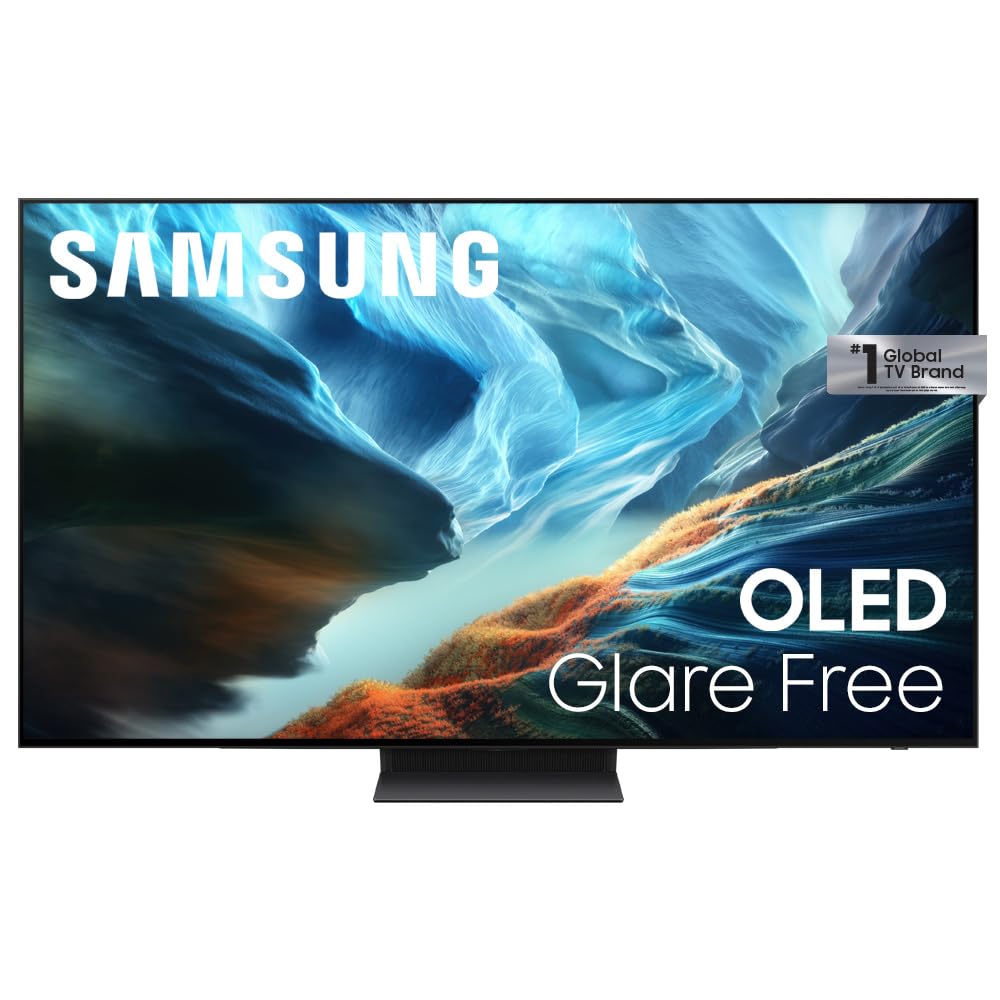
An OLED that lights each pixel on its own, with gaming motion up to 165Hz.
OLED is the whole story: each pixel makes its own light, so a black scene goes genuinely black and the contrast lands where Mini-LED panels have to work for it. Samsung’s Advanced AI enhances detail while Glare Free technology cuts reflections, and the NQ4 AI Gen3 Processor with 128 neural networks handles upscaling to 4K. On the gaming side, Motion Xcelerator 165Hz pairs with NVIDIA G-SYNC and AMD FreeSync Premium Pro so gameplay stays tear-free and low-latency even through fast turns.
Buyers praise its picture most: crisp resolution, vivid colour and depth that makes scenes feel almost 3-D. Anti-glare, easy setup and sound quality all earn steady praise too. At 65 inches it matches the largest panels here, and the compact 14.41 inch base width makes it easier to place than a wide-stance LED. Auto HDR Remastering lifts older, non-HDR content so it looks closer to HDR, which is handy across a mixed game and streaming library.
A sun-drenched room suits this screen less well than the Hisense U7 or Samsung QN90F because OLED highlights top out lower than the brightest Mini-LED sets. Reliability is also mixed, with a slice of buyers reporting a unit that only worked for a week. In a dimmed room with a console, though, that per-pixel contrast is tough to top.
The OLED payoff: per-pixel lighting delivers true blacks, and 165Hz motion with G-SYNC and FreeSync Premium Pro keeps games fluid.
Where Mini-LED wins: lower peak brightness than the brightest sets here, and some report early reliability trouble.
Made for the dark room: a 65-inch OLED that rewards dimmed lighting with true-black contrast and fast motion.
Better elsewhere if: your room blazes with daylight all afternoon.
Know the Specs
Refresh Rate in Hertz
This is how many times per second the panel redraws the image. A native 120Hz panel (120 redraws a second) keeps fast camera pans and quick turns readable, while 60Hz panels tend to blur them. Watch for inflated “motion rate” labels — they describe processing, not the panel itself. When a listing states a refresh rate in hertz, that is the honest figure to compare.
VRR and ALLM
Variable Refresh Rate syncs the screen’s refresh to the console’s frame output, so the image stops tearing and juddering when frame rates dip. Auto Low Latency Mode switches the TV into its fastest game setting the moment you change input, trimming input lag without menu-diving. Together they decide how responsive and smooth a game feels, which is more than raw resolution alone.
Mini-LED vs OLED
Mini-LED uses thousands of tiny backlights behind the screen, which pushes brightness high enough to fight daytime glare and hold punchy highlights. OLED lights each pixel individually, so blacks go truly dark but the brightest highlights usually top out lower. Pick Mini-LED for a bright, window-lit room; pick OLED for a dimmed room where contrast matters most.
HDMI 2.1 Ports
HDMI 2.1 carries enough bandwidth for 4K at high frame rates, so it is what lets a console’s fast mode actually reach the screen. Sets with only older HDMI ports still show 4K, but they cap how smooth the picture can be — and how many high-frame-rate inputs your soundbar and console can share.
Common Questions
Does the Xbox One X actually output true 4K to a 4K TV?
Is a 120Hz TV worth it for an Xbox One X?
What is VRR and does it help with console gaming?
Should I pick Mini-LED or OLED for a bright living room?
How many HDMI 2.1 ports do I need for a console setup?
Do I need Dolby Vision and Dolby Atmos support?
Will a 55-inch or 65-inch TV be better for gaming on the Xbox One X?
How do I lower input lag on a 4K TV for gaming?
Are the reports of early failures a reason to avoid any of these TVs?
What does “Glare Free” or “Anti-Reflection” actually do?
The Bottom Line
The overall pick for an xbox one x 4k tv is the Samsung 50-Inch Neo QLED QN90F — its Glare Free screen and up-to-165Hz motion suit a bright room, and it is the highest-scored set in the group. If you want a faster 144Hz panel with strong contrast, the Toshiba Z670R is the smoother, bigger alternative. And when four HDMI 2.1 ports and office flexibility matter most, the iFFALCON 65U85 is the one to reach for.
How we choose
We do not accept paid placement. Every pick is matched to a real buyer and a real use-case; we do not hands-on test units.
Sources
Specifications: manufacturer listings and product documentation. Review insights: verified customer reviews, as of November 2026. Pricing: not shown on this page (it changes often); check the current price via the retailer link.
As an Amazon Associate, Tactical Gear Guy earns from qualifying purchases. This does not affect which products we feature.