Specs are compiled from manufacturer listings and verified buyer reviews and can change over time — please confirm the key details on the product page before buying.
Buying a writing desk chair is mostly about avoiding one mistake: a chair that feels fine for the first twenty minutes and then turns your lower back into a knot by mid-afternoon. That means you want adjustable lumbar support you can actually move, a seat tall enough for your legs to reach the floor, and a base that won’t flex when you lean back to think. Everything below earns its place on those terms, and the picks are sorted so the strongest overall option sits first.
This guide is built by comparing the manufacturers’ published specifications and the patterns across verified customer reviews, so you get each pick’s real strengths and trade-offs instead of marketing spin.
Some chairs here hold 250 LBS, others 400, and one lists a seat height range from 19.5″ to 23.3″ — those numbers decide who fits where. The trick is matching your body to the spec sheet before you buy, which is exactly what this breakdown of the writing desk chair does.
Top Picks

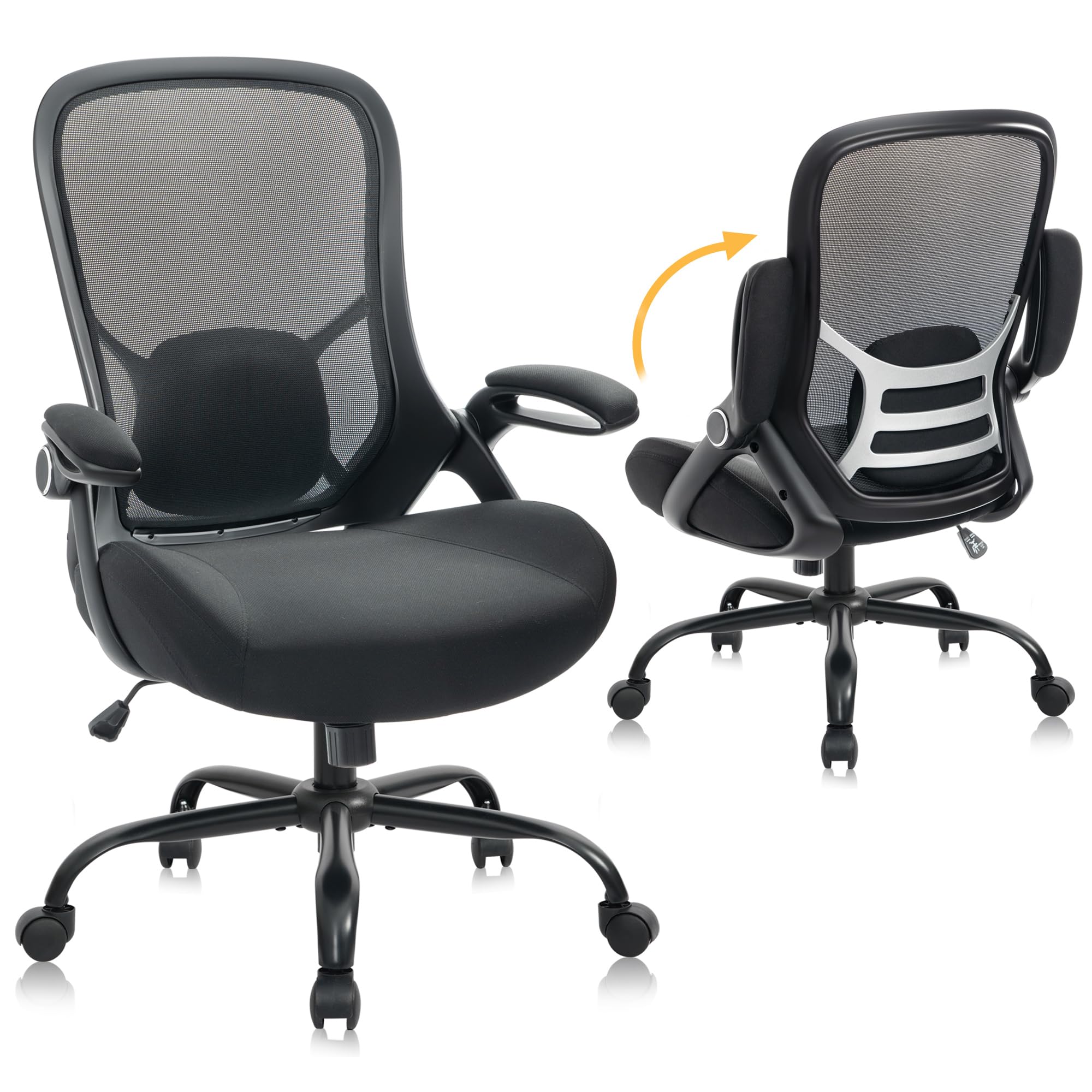
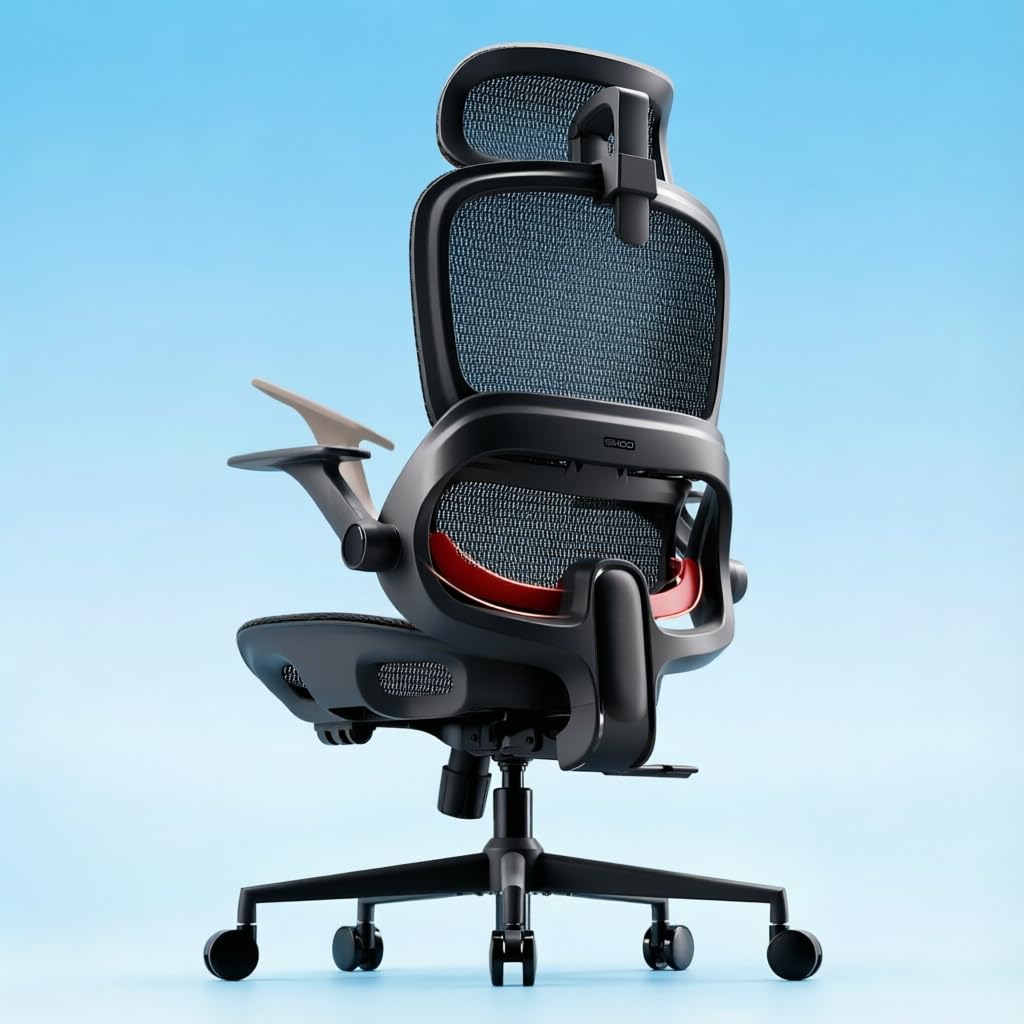
How To Choose The Best Writing Desk Chair
A writing chair is a posture tool, not a lounge seat. You sit in it upright for hours with your hands busy, so the parts that matter are the lower-back pad, the seat height, and whether the armrests let your elbows rest without your shoulders hiking up toward your ears. Get those three right and the rest is fine-tuning.
Start with the lumbar pad, then the seat height
A lumbar support is the small pad that presses into the curve of your lower back. One that moves up and down — or forward and back — lets you park it exactly where your spine wants it, which is why the adjustable-lumbar chairs here tend to hold up better over a long day than fixed-back models. Seat height matters just as much: your feet should sit flat with your thighs roughly level. A range like 19.5″ to 23.3″ suits taller sitters, while 18.1″ to 22″ fits shorter frames better.
Read the weight rating as a frame signal
A 250 LBS capacity and a 400 LBS capacity are not just about the sitter. Higher ratings usually mean a beefier gas lift and a wider base. If you plan to lean back, sprawl cross-legged, or share the chair, buy upward from your own weight rather than landing right on the limit.
Mesh or padded leather changes your day
Mesh lets air move through the back, so you stay cooler through a long stretch of writing. Padded leather and foam feel plusher on contact and wipe clean easily, but they hold warmth. Neither is wrong — pick the one that matches the room and the season you work in.
Side-by-Side Comparison
| Model | Best For | Weight Capacity | Seat Height | Backrest Width | Amazon |
|---|---|---|---|---|---|
| MOLENTS Ergonomic Office Chair★ Best Overall | All-day writing with tailored back support | — | 19.5″ – 23.3″ | 19.7 inches | Amazon |
| HYLONE 400lb Big and TallHeaviest Load | Heavier sitters who want a 5″ seat cushion | 400 lbs | — | — | Amazon |
| SIHOO B100 Mesh Office ChairCrowd Favorite | Buyers who want a proven design and a 3-year warranty | 300 lbs | — | 19.7 inches | Amazon |
| GABRYLLY Ergonomic Chair with Footrest | Napping between writing sessions | 300 lbs | — | — | Amazon |
| YFO Home Office Desk Chair | Wide, cushioned seating for long stretches | — | — | 15.8 inches | Amazon |
| NEO CHAIR Big & Tall PU Leather | Cross-legged sitters who want a footrest | 400 lbs | — | 17.91 inches | Amazon |
| Branch Ergonomic Chair | A clean-looking chair with eight adjustment points | — | — | 20 inches | Amazon |
| Branch Ergonomic Chair Pro | Fine-tuning a seated position to the inch | — | — | — | Amazon |
| Staples Dexley Ergonomic Mesh Task Chair | Cool mesh comfort on a standard office budget | 275 lbs | — | 19.17 inches | Amazon |
| BESTANO Brown Leather Desk Chair | A small vanity or reading nook | 250 LBS | 18.1″ – 22″ | — | Amazon |
Detailed Reviews
1. MOLENTS Ergonomic Office Chair
Our pick — 4.5+★ from 400+ verified ratings; the strongest balance of quality and price.
A mesh chair whose lumbar pad slides up, down, forward, and back onto your exact ache.
Here is a chair where the lower-back support is not a fixed bump. The lumbar panel slides up and down and forward and back, so you can put the pressure right where your back complains instead of where the factory guessed. That movable pad is why this pick leads the list: a fixed curve fits one body shape, and this one fits yours after about a minute of fiddling.
The seat sits at 19.5″ to 23.3″ off the floor, which is a wide band and roughly the same range as the HYLONE big-and-tall pick. Taller writers who normally end up with their knees above their hips will find a setting here that drops their feet flat. The backrest runs 19.7 inches wide, a hair wider than the Staples Dexley at 19.17 inches, so your shoulders have a little more room before your arms press against the frame.
Your forearms get three directions of travel on the armrests — up and down, forward and back, and a swivel — which matters when you swap between typing and handwriting in a notebook. The back reclines through three stops between 90° and 120°, so leaning back to read a page does not tip you into a slump. The mesh everywhere keeps air moving across your back on warm afternoons.
The full assembly is listed at 15 minutes with the included tools, and the instructions get consistent nods. The recurring caveat is the height adjustment: the mechanism draws mixed notes, so set your height once, check the gas lift holds, and you are fine.
Where it earns its keep
- Lumbar pad moves four ways for a truly personal fit
- 19.5″ to 23.3″ seat height suits long-legged sitters
- 3D armrests track your wrists instead of fighting them
- Three recline stops from 90° to 120°
Set it once and check it
- Height mechanism draws mixed reports, so test it early
- One part ships nested inside the seat — read page 05 of the manual before you panic about a missing piece
- Sliding armrest panels may not suit people who want them locked rigid
Reach for this if: you want to tune the back support to your own spine and write for hours at a stretch.
Think twice if: you prefer armrests that never budge — this one slides by design.
2. HYLONE 400lb Office Chair Big and Tall
Four hundred pounds of stated capacity and a five-inch slab of foam.
If you are a bigger sitter, most chairs ask you to trust a vague promise. This one prints the number: 400 lbs. It also lists a 28″ five-star base to widen the footprint, so the chair does not feel tippy when you shift your weight sideways. Compare that to the Staples Dexley at 275 lbs and the gap in stated load is plain.
The cushion is the second headline — 5″ of streamlined foam over the seat, paired with a breathable nylon mesh back. That 5″ of foam is meant to hold its shape through a full working day without flattening by the afternoon. HYLONE also specifies a fit range of about 5’5″ to 6’2″, which is honest and useful: outside that band you will want a different gas lift.
Assembly is listed at 30 minutes, and the flip-up arms let you shove the chair clean under the desk when the writing day ends. The seat board is FSC-Certified wood. One buyer with a heavier build reports it holding up to 285lbs without complaint, which speaks to how the frame behaves in real use rather than on a spec sheet.
Honest trade-off: the back support is the most-debated part of this chair. Some sitters find it great, others want more lean-back than it offers. If you like to stretch out and recline hard while you read, this is not the recliner you are after — treat it as an upright, supportive writing seat.
Best matched to: the sitter between 5’5″ and 6’2″ who wants a stated 400 lb rating and a thick seat.
Look elsewhere if: your idea of comfort is a deep recline — this back stays fairly upright.
3. SIHOO B100 Mesh Office Chair
The one with the track record — 4.0+ stars across 17,000+ owners.
Of everything on this list, the B100 is the model that has been through the widest number of real homes, and that volume is worth something. Fewer surprises. The design itself is a split back with elastic dynamic lumbar support, meaning the two panels flex as you shift rather than holding one rigid curve. If you rock forward to write and back to think, the support follows you instead of poking you.
Three recline angles — 110°, 125°, and 135° — cover working posture through to a proper lean-back, and the extra-wide 2D headrest handles your neck at each stop. The flip-up armrests tuck down out of the way, which is the feature that makes this practical for a compact desk: push the arms up and the chair slides under the surface. The stated capacity is 300 lbs on a reinforced frame and heavy-duty base.
Owners like the lumbar support best, with well over five hundred callouts on that one feature alone, and assembly is praised at a similar level. The B100 is tested to SGS and BIFMA standards and comes with a 3-year warranty plus 30-day returns — a longer safety net than most here. The mixed notes land on adjustability and on firmness: the seat is on the stiffer side, and if you want a soft sink-in cushion this will feel like a different philosophy.
What to know before ordering: a split-back chair is not a cushioned lounge chair, and the firmness is deliberate. Buyers who wanted a plush seat were the ones left wanting. Buyers who wanted their lower back held in place for hours got exactly that, in droves.
Choose it if: you want a heavily reviewed mesh chair with a 3-year warranty behind it.
Pass if: you need a soft, cushy seat rather than a firm supported one.
4. GABRYLLY Ergonomic Office Chair with Footrest
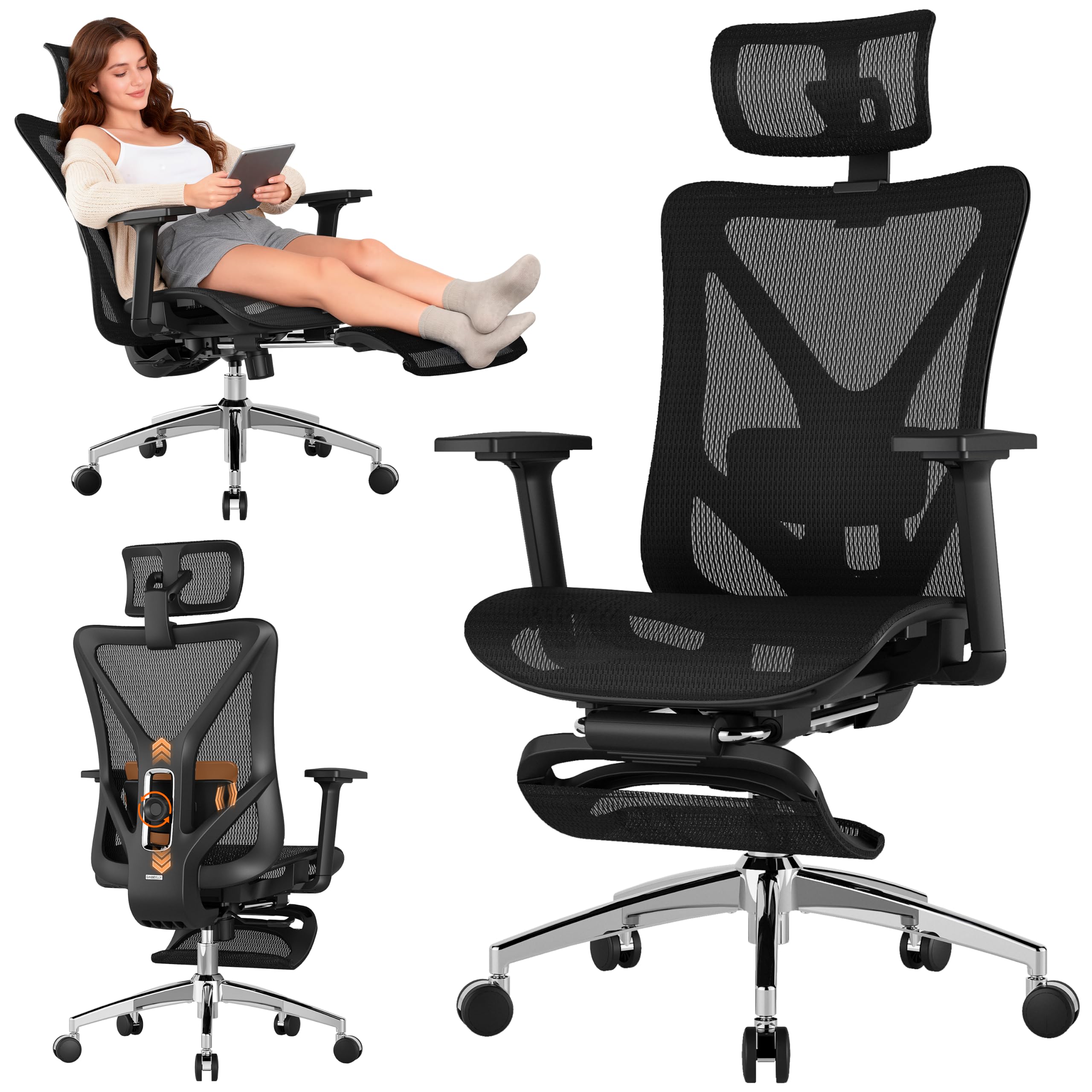
Writing chair by day, nap station when the draft is done.
Most writing chairs stop at “sit up straight.” This one pulls a steel footrest out to 18.1″ and reclines to 135° in three lockable stops, which changes what the chair is for. Finish a chapter, kick the 18.1″ footrest out, drop back to 135°, and you have somewhere to rest instead of abandoning a stiff upright for the sofa.
The lumbar pad moves 3″ up and down and 1.6″ in and out, so like the MOLENTS above it can be dialled onto your specific lower-back spot. The armrests go three ways — height, front-to-back, and side-to-side — and the mesh headrest adjusts in height, angle, and bracket position. It is rated to 300 lbs and tested to SGS and BIFMA standards.
What people rave about first is the fit and the roominess — the size gets more positive notes than any other feature, and comfort sits right behind it. There is a 27.5″ steel base under all of it, which keeps things steady even with the footrest extended. Assembly is listed at 15 to 25 minutes with the included Allen wrench and screw kit, and a 3-year parts warranty covers the hardware.
The case for stretching out
- Retractable steel footrest extends to 18.1″
- Three locked recline stops at 90°, 110°, and 135°
- Lumbar pad adjusts 3″ vertically and 1.6″ horizontally
- 27.5″ steel base holds steady with the footrest out
The one weak spot
- The casters are the least-liked part — expect to swap them if you roll hard on carpet
- Designed for sitters between 5’3″ and 6′
- All that mechanism makes it a bigger footprint than a plain task chair
Suits you when: long writing days include real breaks and you want to lean all the way back.
Skip when: you need a compact chair that tucks out of sight — the footrest and big base take room.
5. YFO Home Office Desk Chair

A 22-inch seat for writers who want room to shift around.
Seat width is where this one makes its stand: 22 inches across and 20 inches deep, which is among the most generous cushions in this group. If you cross your legs while you think, or you simply hate the sensation of a chair edge digging into your thigh, that width is the difference between fidgeting and settling in.
Under the upholstery sits a spring pack over wooden boards and soft sponge, so the cushion has some give and bounce rather than a flat slab of foam. The chair ships with rubber casters that glide quietly over wood, tile, and marble, and the maker points out that those wheels save you buying a replacement set later.
The clever bit is that the armrests are optional. Fit them for a standard writing setup, or leave them off and use the chair as a cross-legged seat. Owners single out the looks and the build quality more than anything — the appearance gets well over a hundred positive notes and quality leads the whole list. Assembly earns praise too, with precise instructions cited.
The catch worth knowing: the lumbar support and seat size draw mixed reactions. Some sitters love the roomy feel and the back support; others found the seat wider than they wanted and the back less supportive than expected. If a snug, firmly-pressed back is what you need, check the 15.8-inch backrest width against your shoulders before you commit.
It is the right call if: you want a wide, cushioned seat and the option to run it without arms.
Rethink it if: you rely on a firm lower-back push — this back reads softer.
6. NEO CHAIR Big & Tall PU Leather Office Chair

Wingback padding and a 400 lb rating in olive green leather.
A writing study does not have to look like a call centre. This chair wears a wingback shape in olive green PU leather with a matching throw pillow, and it backs the look with a 400 lbs rating on a reinforced steel base and an SGS-certified gas lift. That is the same stated load as the HYLONE, delivered in a much more traditional silhouette.
The seat is wide and padded with high-density foam over pocket springs, built so you can sit cross-legged without your knees fighting the arms. The backrest reclines from 90° to 135° and locks at almost any point along that arc, and a retractable footrest swings out when you want to read lying back. Nylon casters and a 360° swivel handle the moving around.
Quality is the thing buyers keep returning to — more than eighty callouts on build alone, with comfort and assembly next in line. Setup is quoted at 15 to 30 minutes with all hardware in the box. The backrest measures 17.91 inches wide, so it cradles a narrower shoulder line than the 20-inch Branch, which is note if you are broad across the back.
Weighing it up: leather and foam run warmer than mesh over a long afternoon at the desk. In exchange you get the plusher, more upholstered feel that no mesh chair here matches, plus the footrest for breaks. It is a room-warmth trade, not a comfort flaw.
Made for: the writer who wants an executive-looking chair, a 400 lb rating, and a footrest for reading breaks.
Not for: hot rooms and long unbroken sessions — the PU leather holds heat where mesh sheds it.
7. Branch Ergonomic Chair Pro
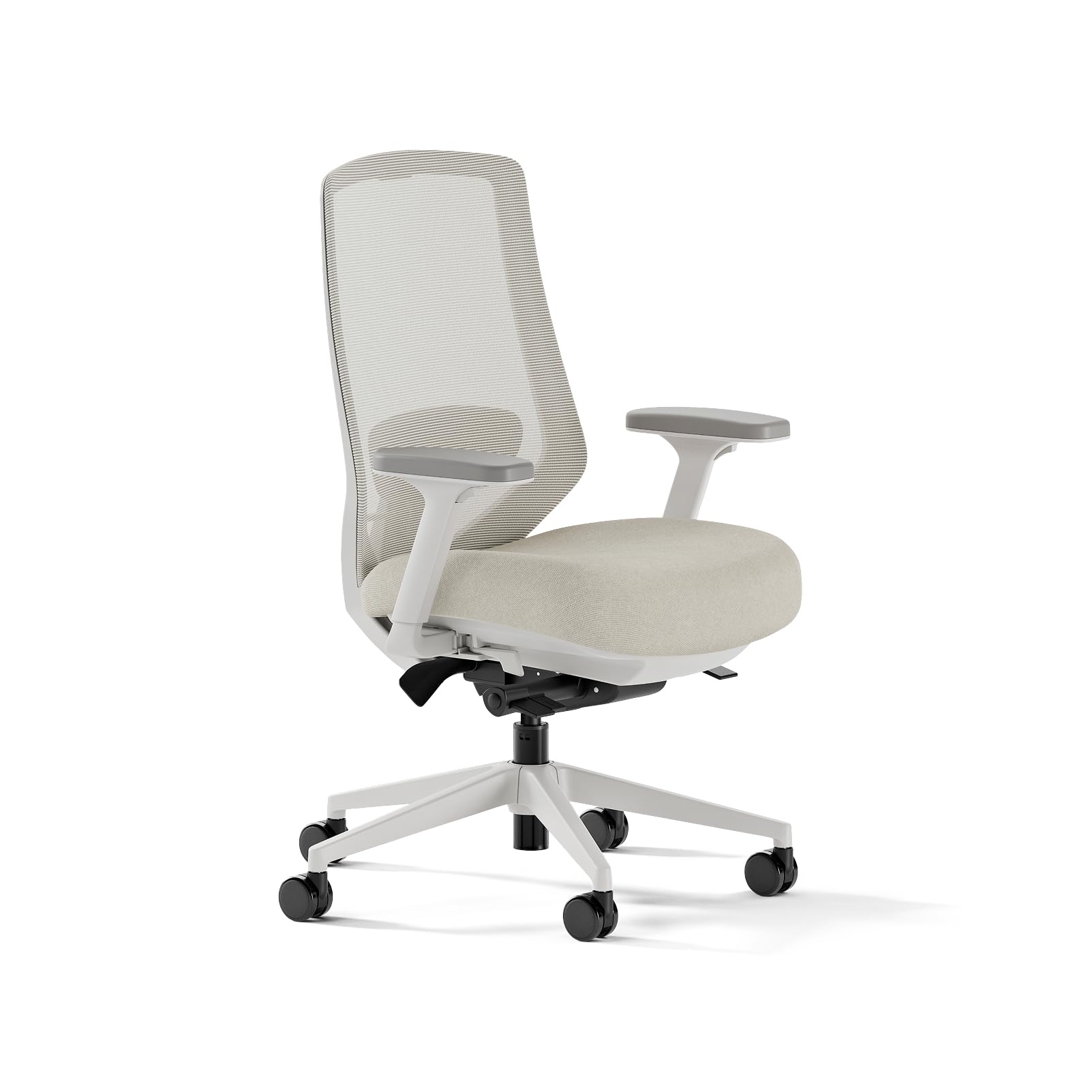
Fourteen dials to land your posture exactly where you want it.
This is the pick for the sitter who has never found a chair that quite sits right. Eight points of adjustment made the standard Branch notable; the Pro takes that to 14, and the arms alone move five ways — height, width, depth, pivot, and pad position. If you switch between typing on a keyboard and writing longhand in a notebook, that range lets your elbows land in two different comfortable spots without you shifting the whole chair.
The lower-back cushion is padded and adjusts vertically, so it tracks up and down your spine rather than sitting fixed at one height. Tilt tension is smooth and the seat has a forward-tilt setting, which is the posture that keeps you perched slightly forward over a page instead of sagging back into the frame. A molded high-density foam seat is built to hold its shape rather than compress flat.
Owners describe it as well built and easy to assemble, and the 14 adjustment points earn direct praise as genuinely simple to dial in for correct posture. It suits a home office well, and the aluminum frame gives the whole thing a planted feel. The seat is firm and shaped, not plush — that is the deliberate choice behind the support.
The honest limit: all that engineering is aimed at correct posture, not softness. If you want to melt into a chair at the end of the day, the firm molded foam and forward-tilt setting will feel built for work, not lounging. The standard Branch down the list shares the same posture-first approach for less complexity.
Worth it for: anyone who has struggled to fit a chair to their body and wants to tune every angle.
Wrong pick if: you want a soft, sink-in seat to relax in rather than a firm posture tool.
8. Branch Ergonomic Chair

Eight adjustment points in a shape that looks good in a study.
If the Pro above is the workshop version, this is the version designed to sit in a room you actually show people. The sand-colored mesh and aluminum frame read clean and minimal, and the 20-inch backrest is the widest of anything here — wider than the 19.7-inch SIHOO and MOLENTS backs. Across the shoulders, that width translates to less pressure at the edges of your back.
You get eight points of adjustment across the seat height, seat depth, backrest, and armrests, which is enough to dial in posture without a manual in your lap. The seat slides in and out, so shorter and taller sitters can both find a depth that does not press behind the knee. Breathable mesh handles long summer sessions, and the contoured foam cushioning is shaped rather than flat.
Materials are the standout — high-quality construction gets the most praise of any feature, closely followed by how clearly the assembly instructions read. Buyers also appreciate the color, which is a real consideration for a chair that lives in a home study rather than an office. The caveat to name plainly is durability: the hydraulic cylinder has been the part to fail for a small set of owners, some within the first weeks. The maker’s support is the route when that happens.
A fair read: most buyers report a solid chair that holds up, but the gas lift is the one component with a mixed record. That is worth knowing rather than ignoring, and worth checking in the first month while any return window is still open.
Right for you if: you want a genuinely good-looking mesh chair that adjusts eight ways for a home study.
Consider carefully if: you want long-term reliability above all — the gas lift is the part to watch.
9. Staples Dexley Ergonomic Mesh Task Chair
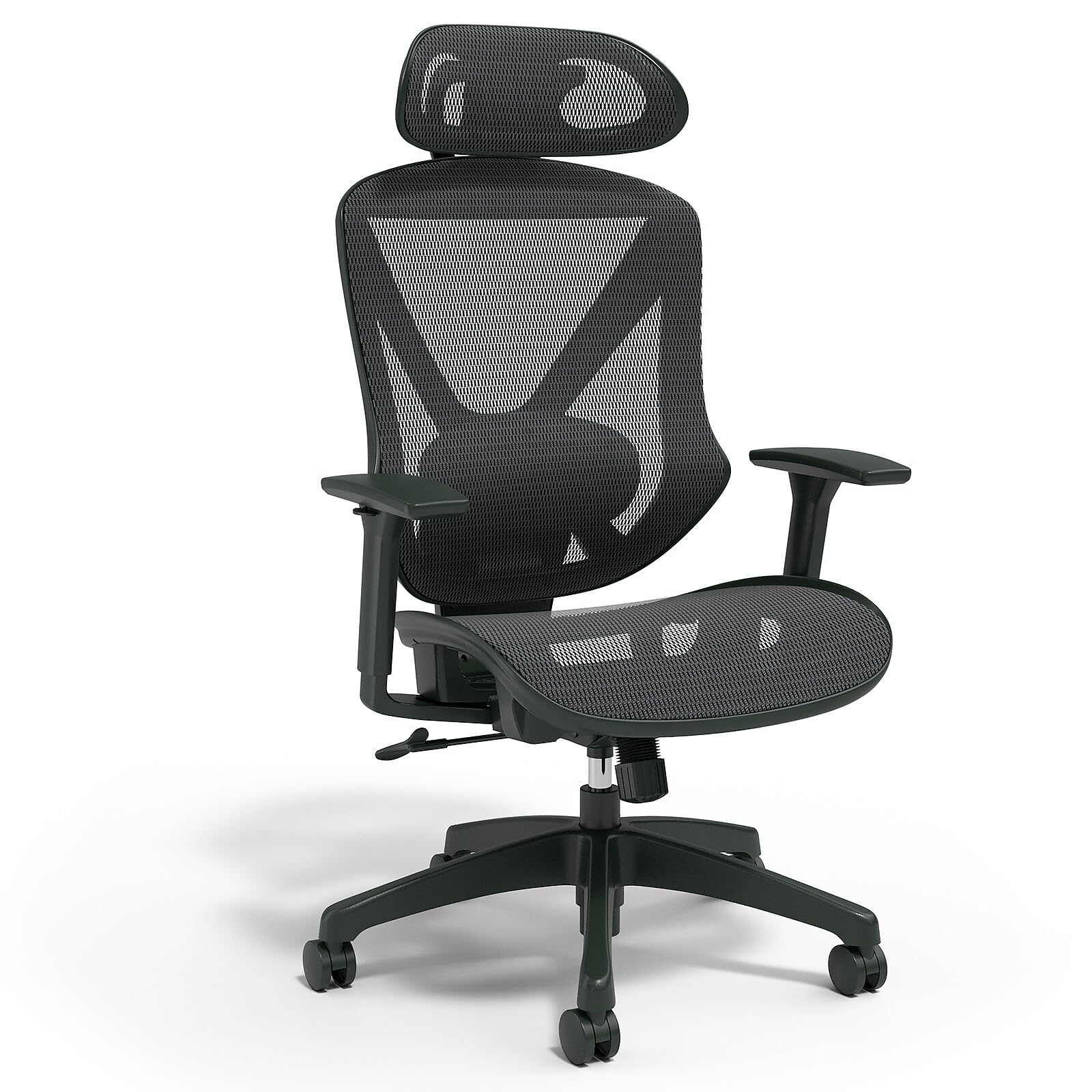
A high-back mesh chair with a headrest that actually moves.
Plenty of budget chairs slap a headrest on and fix it in one spot. This one lets you change both the height and the angle, which is more than most of the field does at any price — the MOLENTS, SIHOO, and Branch picks all skip the headrest entirely. If you like to lean back and rest your neck between paragraphs, that adjustability earns its place.
The support is rated to 275 lbs for 5 to 10 hours of daily use, an honest working figure rather than a bragging one. Ventilated black mesh runs across both the seat and the back, and it meets or exceeds ANSI/BIFMA standards — the same testing family the SIHOO and GABRYLLY quote. The backrest measures 19.17 inches wide, a touch narrower than the MOLENTS at 19.7 inches.
Owners rate the quality and comfort nearly level with each other, with both drawing strong positive notes, and the adjustable lumbar pad gets credit for easing the day. The swivel-tilt mechanism gives you a 3-position tilt lock and adjustable tilt tension, so you control how much resistance you feel when you lean. A 5-year manufacturer limited warranty sits behind it — a longer cover than most here.
Where it needs care: adjustability is the debated side of this chair. The headrest moves nicely, but the seat height and the armrests draw mixed remarks. If you are picky about armrest height, set them before assembly is fully tightened and check the fit before you commit to the setup.
Pick it when: a moving headrest and a long warranty matter more to you than fancy armrests.
Be wary if: armrest height is critical to your setup — that is the part people push back on.
10. BESTANO Brown Leather Desk Chair

A compact brown leather chair for a vanity or a reading corner.
Not every writing chair lives in a home office. This one is built for a desk tucked into a bedroom, a vanity, or a narrow nook where a full-size task chair would crowd the space. The brown PU leather over sponge padding gives it a warm, classic look that sits comfortably in both traditional and modern rooms, and the five casters roll easily from carpet to hard floor.
Its seat height adjusts from 18.1″ to 22″, the same window as its 250 LBS stated capacity. It swivels a full 360° with fixed high arms and a 16.7-inch back. Compare the load to the HYLONE’s 400 lbs and you can see what this chair is and is not — it is a lighter-duty seat for a lighter-duty job, sized for a spare room rather than a full workday.
The strength here is the look. Appearance is the leading positive feature by a wide margin and the color is the thing most often called out, with comfort close behind and a firm seat that helps hold posture. Assembly draws praise for being quick and simple with basic tools. The back support and the size both draw mixed reactions — if you are tall or want a deep, full-size seat, size up.
What it does well
- Brown PU leather finish that looks exactly as pictured
- 360° swivel with fixed high arms
- Seat height moves from 18.1″ to 22″
- Quick assembly with basic tools
What to plan around
- 250 LBS capacity is the lowest stated load here
- 16.7-inch back and a compact seat suit lighter, shorter frames
- Back support divides opinion — check it against a long day before you rely on it
Ideal for: a small vanity or spare-room desk that needs a warm, good-looking seat.
Not ideal for: a heavier sitter or someone who needs a full-size back for eight-hour days.
Know the Specs
Adjustable Lumbar Support
This is the pad that presses into the small of your back. When it moves up and down, or forward and back, you can plant it on the spot that actually aches rather than the spot the factory chose. A fixed curve fits one body shape; an adjustable pad fits yours. For long writing sessions, a lumbar pad with travel is the single most useful feature on the chair.
Seat Height Range
Seat height is measured from the floor to the top of the cushion. You want your feet flat and your thighs roughly level. A range like 19.5″ to 23.3″ serves taller sitters, while 18.1″ to 22″ suits shorter frames. If you sit at the very top of a chair’s range, you have no headroom left, so check the upper number against your own leg length.
Weight Capacity
Weight capacity is the stated load the chair is built to hold safely. A 250 LBS rating and a 400 LBS rating signal a difference in gas lift and base strength, not just what the sitter weighs. Buy upward from your own weight if you lean back, sit cross-legged, or share the chair — leaving headroom keeps the frame from flexing under you.
Mesh vs PU Leather
Mesh is a woven fabric that lets air pass through the seat and back, so you stay cooler through a long afternoon. PU leather is a synthetic coated upholstery that feels plusher and wipes clean with a cloth, but it holds warmth against your back. Choose mesh for hot rooms and long unbroken sessions; choose PU leather for a warmer, more upholstered feel.
Common Questions
What seat height should I look for in a writing desk chair?
Is an adjustable lumbar support worth it over a fixed back?
How much weight capacity do I actually need?
Will a mesh chair keep me cool during a long writing session?
Are 3D armrests better than fixed arms for writing?
Can a big and tall chair fit a shorter person?
Is a reclining writing chair with a footrest a good idea?
How long should assembly take on these chairs?
What does the BIFMA certification on a desk chair actually mean?
Should I choose a high-back or a mid-back chair for writing?
The Bottom Line
For most writers, the winner is the MOLENTS Ergonomic Office Chair because its lumbar pad moves four ways and it gives you a 19.5″ to 23.3″ seat height that tall sitters can actually use. If you have a heavier build and want a stated 400 lb rating with a 5″ cushion, the HYLONE big and tall chair is the one to reach for. And if you want the reassurance of a design that thousands of homes have already lived with, the SIHOO B100 earns that trust with 4.0+ stars across 17,000+ owners. The MOLENTS pairs that four-way lumbar pad with the widest seat-height band here, so it is the safest place to start if you want support you can tune.
How we choose
We do not accept paid placement. Every pick is matched to a real buyer and a real use-case; we do not hands-on test units.
Sources
Specifications: manufacturer listings and product documentation. Review insights: verified customer reviews, as of November 2026. Pricing: not shown on this page (it changes often); check the current price via the retailer link.
As an Amazon Associate, Tactical Gear Guy earns from qualifying purchases. This does not affect which products we feature.