Specs are compiled from manufacturer listings and verified buyer reviews and can change over time — please confirm the key details on the product page before buying.
Most wristband health trackers fail for one boring reason: you stop trusting the numbers. The strap gets uncomfortable overnight, the app nags you to subscribe, or the heart rate reading goes haywire mid-run. A band only works if the strap disappears on your wrist and the sleep and heart-rate data still holds up after a week of wear. This guide sorts the genuinely useful band-form trackers — the slim, screen-light, continuous-wear kind — from the ones that end up in a drawer by week three.
This guide is built by comparing the manufacturers’ published specifications and the patterns across verified customer reviews, so you get each pick’s real strengths and trade-offs instead of marketing spin.
Match the band to your week: a lifter needs rep and recovery tracking, a poor sleeper needs overnight staging, and a step-counter needs a morning readiness nudge. Every pick below is judged on strap comfort, battery honesty, and how much the app asks of you, so you can find the best wristband health tracker for the way you really live.
Top Picks
How To Choose The Best Wristband Health Tracker
A 24-hour band lives or dies on strap comfort overnight and on whether its sleep and heart-rate data holds up. Everything else — sports modes, notifications, fancy watch faces — is secondary. Pick the strap and sensor behavior first, then worry about extras.
Strap comfort decides whether you keep wearing it
The band material and width control how much you notice it overnight. A slim silicone strap in the 10 to 18 millimeter range rides flat against the wrist and rarely catches on a sleeve. Nylon or knit bands breathe better in heat but can hold sweat. If you sleep with an arm under a pillow, a lighter band in the 16-gram range stays out of the way far better than a bulky case.
Screen or no screen changes your whole relationship with it
A screenless band forces you into the app for every reading, which cuts down on wrist-tapping at 2 a.m. and can mean multi-week battery life. A band with a small display gives you steps and heart rate at a glance but usually asks for a charge every week or so. Pick the screenless band if you want multi-week battery, or the small display if you want steps at a glance.
Battery claims and subscription costs both count
Battery figures quoted by makers range from a few days up to 30 days on a single charge. Read the fine print on whether advanced insights sit behind a paid membership — a free app with fewer charts can beat a subscription band you resent paying for monthly. Water resistance matters too, so check whether the rating covers splashes only or full swimming.
Side-by-Side Comparison
| Model | Best For | Battery Life | Water Rating | Form Factor | Amazon |
|---|---|---|---|---|---|
| WHOOP 5.0★ Best Overall | All-day recovery and sleep insight | 14+ days | IP68 (with PowerPack) | Screenless band | Amazon |
| Leuceira Smart Bracelet (2 Bands)Best Budget Starter | Budget all-rounder with cycle tracking | — | 5ATM | Slim band, 10.5 mm | Amazon |
| Efolen Smart BraceletBest for Style | Light everyday wear and style | 5–7 days | Daily splash resistant | Slim band, 18 mm | Amazon |
| Herz P1 Smart Band | Long battery, no subscription | 30 days | 1ATM | Screenless band | Amazon |
| Fitbit Inspire 3 | Balanced health tracking on a budget | 10 days | — | Slim band | Amazon |
| Amazfit Helio Strap | Strength training and HYROX prep | 10 days | — | Band (Renewed) | Amazon |
| Fitbit Charge 6 (Google) | Google apps on your wrist | 7 days | — | Band with display | Amazon |
| Fitbit Charge 6 (B0CHN2F11G) | Readiness and sleep analysis | 7 days | Water resistant | Band with display | Amazon |
| Fitbit Charge 5 | Full health dashboard with GPS | 7 days | — | Band with display | Amazon |
Detailed Reviews
1. WHOOP 5.0 Screenless Wearable
Our pick — 4.0+★ from 650+ verified ratings; the strongest balance of quality and price.
No screen, no tapping at midnight, and roughly two weeks between charges.
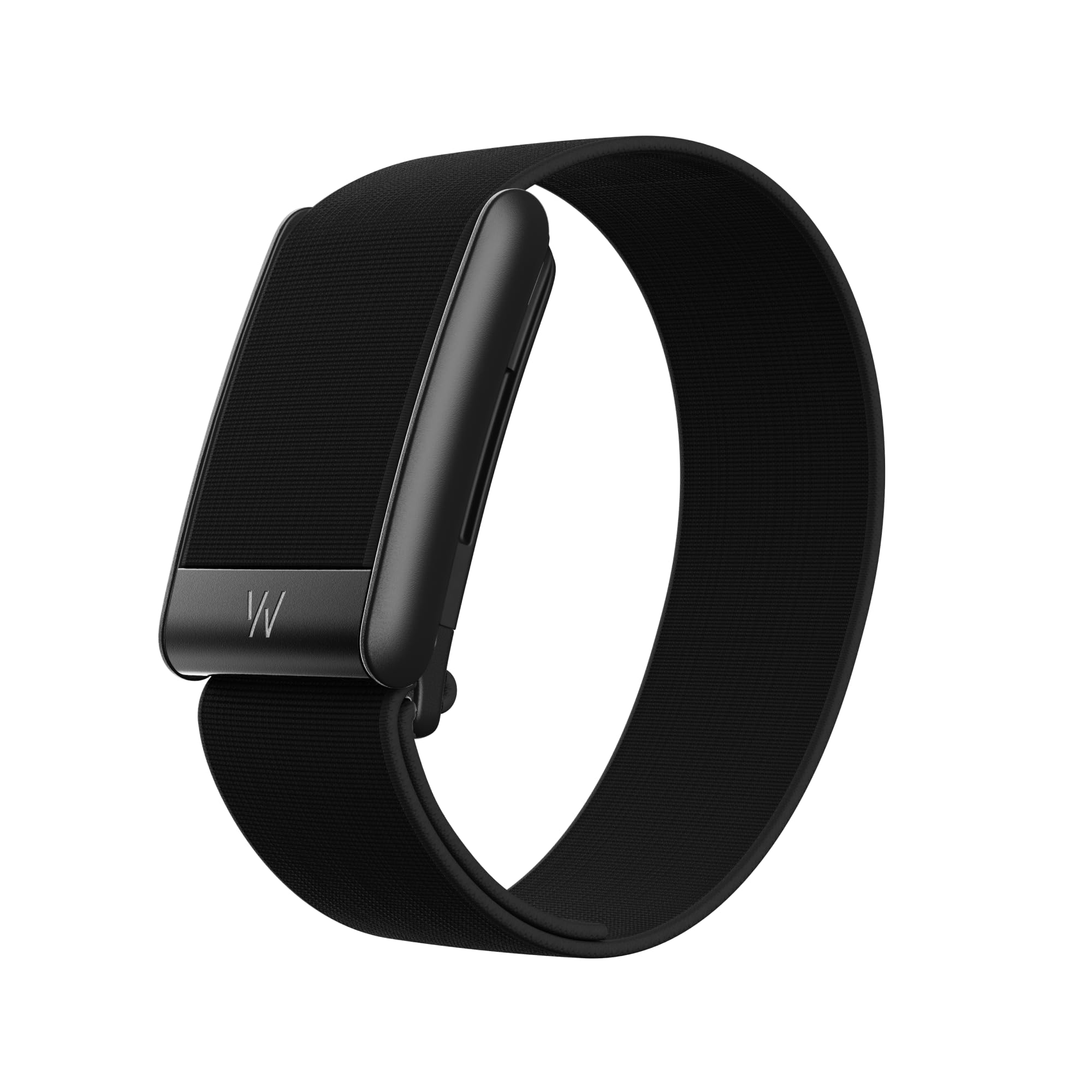
WHOOP takes the most different approach of anything here: there is no display at all. You strap it on and it samples heart rate continuously, day and night, without you starting or stopping any workout mode. That continuous read is what feeds the Recovery score, the Strain score and the nightly sleep breakdown. The band itself weighs 3.84 ounces, sits on a nylon CoreKnit strap, and is comfortable enough to wear overnight, which is the whole point of a sleep tracker you never take off.
The battery figure is the one that changes your habits — 14 days or more on a charge, which means you are not fighting a nightly charging routine. If you add the waterproof Wireless PowerPack it charges on your wrist, rated IP68 water-resistant up to 10 meters for 2 hours, so a lap in the pool or a rainy run does not force it off your arm. The 12-month membership is the headline of the purchase, and the app turns 140+ metrics into plain guidance; it tracks 160+ daily behaviors in the WHOOP Journal so you can see what alcohol, travel or a hard training block does to your recovery.
What actually wins people over is the sleep picture. The band stays on all night because it is screenless and light, so it logs REM, deep and light sleep, plus sleep need and sleep debt, rather than guessing from a gap in the data. You also get women’s health insight tied to cycle phases and symptoms. The catch is that the membership is the engine — the device is included with the subscription, and there is no version where you buy the band once and walk away. A fair number of buyers question that ongoing value, and the data reliability draws split opinions, with some finding it works brilliantly and others hitting dropouts. It is still the strongest overall pick thanks to a solid score across a healthy base of owners.
What the band gets right
- 14+ days of battery means charging is an afterthought, not a nightly chore.
- Screenless design keeps it on overnight, so sleep stages and sleep debt are actually captured.
- Deep metric depth with AI coaching and 160+ tracked behaviors.
- Waterproof wireless charging on the wrist keeps tracking during a top-up.
Where it asks more of you
- The membership model is the purchase, so ongoing value is the thing to weigh.
- Heart rate and recovery readouts get mixed reliability feedback.
- No screen at all means you check the app, not your wrist.
Built for: the person chasing recovery and sleep quality who wants a band with no display and no daily charging.
Think twice if: you refuse a subscription — this is a membership product, not a one-time gadget.
2. Leuceira Smart Bracelet 2 Bands
The 10.5 mm strap that nearly disappears — and shrugs off a swim.
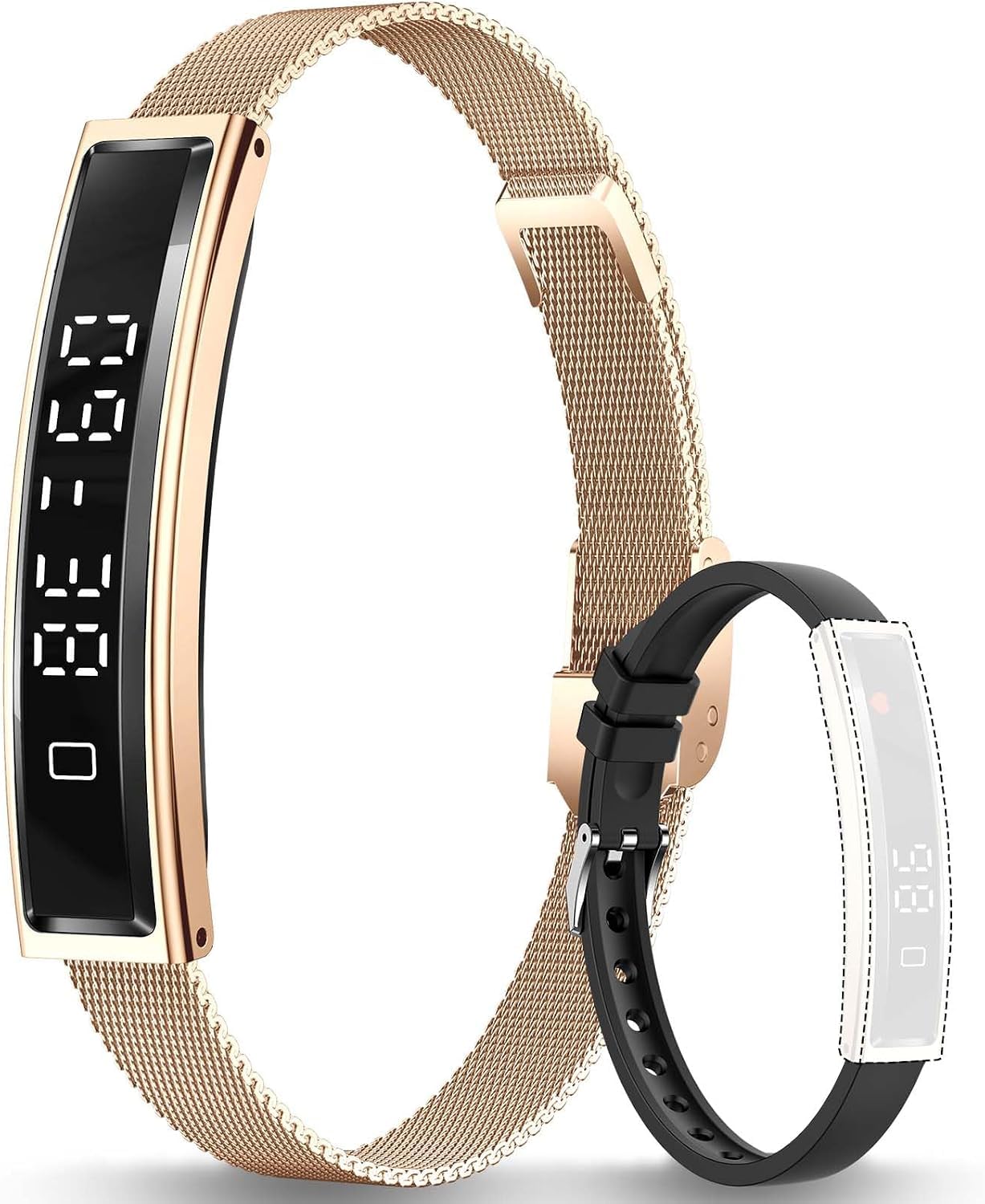
If you want a tracker you genuinely forget you are wearing, the strap width matters. At 10.5 millimeters, this band is dramatically slimmer than the Efolen below at 18 millimeters — that 71% wider Efolen band is a noticeably chunkier presence on the wrist. At 16.5 grams this one rides almost weightless, and the 5ATM waterproof rating means it stays on through hand washing, showers, sweaty training and shallow-water swimming. That is a serious rating for a budget band that you would otherwise expect to cost far more.
For everyday use it covers the ground you would want: 24-hour heart rate and stress tracking, all-day steps, and multiple exercise modes for cycling, tennis, skiing, jogging, yoga and gym work. There is sleep tracking with lifestyle tips attached, plus female menstrual-cycle recording with predicted ovulation windows and advance reminders. You also get small conveniences like shake-to-shoot photos. It pairs over Bluetooth with iOS 11.0 and above and Android 6.0 and above, but not with a PC, iPad or tablet.
This is a starter tracker, not a specialist device: the 18 mAh battery means frequent charging. The 18 milliamp-hour battery is small, so you will charge it more often than the big-battery bands, and the cycle-tracking language leans hard on “relieving discomfort,” which is marketing rather than a promise you should build a buying decision on. Think of it as a low-risk entry point that looks better than its tier suggests and handles water far better than you would expect.
The size argument: the 10.5 mm width and 16.5 g weight are the real selling points here — a band this slim and light is the one you forget overnight.
Reach for this if: you want maximal slimness and a swim-safe rating at the entry tier.
Look elsewhere if: long stretches between charges are non-negotiable — the small battery will send you back to the cable more often.
3. Efolen Smart Bracelet
A 16.5-gram band with a zinc-alloy bezel that reads like a real bracelet.
The design is the reason to consider this one. You get two straps in the box — a magnetic strap and a silicone strap — so you can swap from casual to dressy without a second device. The refined zinc alloy bezel sits well above the usual plastic-case look. At 16.5 grams it is nearly weightless, which matters if you wear a band overnight tracking sleep stages.
On the health side, a high-performance optical sensor monitors heart rate, blood oxygen and stress around the clock, then tracks awake, light and deep sleep at night for an analysis of your rest. There are 12 sports modes covering running, cycling, swimming, hiking and gym training, plus water resistance for hand washing, rain and heavy sweat. Magnetic charging fills it in 2 hours, with 5–7 days of normal use and up to 15–20 days on standby.
Worth knowing: the appearance wins people over, and that zinc-alloy finish looks costlier than it is — but battery life draws split opinions, and the band is strictly splash-and-sweat rated rather than swim-ready. This is a looker for daily wear and sleep monitoring, not a rugged training partner.
Style-first read: two swappable straps and a metal bezel make this feel like jewelry you track with.
Wear it if: you want something that looks like a bracelet and tracks sleep and heart rate overnight.
Pass if: you swim laps — the water resistance here stops at splashes and sweat.
4. Herz P1 Smart Band

One charge a month, and no monthly bill to open up your own health data.
The 30-day battery is the standout spec, and the 175 milliamp-hour cell backs it up. When it finally needs a top-up, the magnetic charger gets it back to full in under an hour. That combination turns this into a low-maintenance tracking band you charge about as often as you change a razor blade — you barely think about it. The free Herz App adds no subscription fee, so every chart you get is a chart you keep.
It monitors heart rate, sleep, stress, SpO₂ (blood oxygen) and temperature continuously, and connects over Bluetooth 5.4 to iOS and Android. Three straps are in the box — a silicone strap plus two adjustable Velcro straps in short and long lengths — so you can dial in the fit. The water rating is 1ATM, though, meaning it handles rain, sweat and splashes only. Do not swim in it.
Reliability is the weak point: a meaningful share of feedback describes units failing within a couple of weeks. The band is a thin, lightweight screenless tracker that looks simple and comfortable, but a meaningful share of feedback describes units that stop working within a couple of weeks. That is a real risk for the buyer weighing a bargain against the battery promise. If you get a good unit, the 30-day battery and free app are genuinely appealing. Strong comfort, wearable price tier, but not the safest bet in this lineup.
Battery, plainly: 30 days per charge and a free app make this the lowest-maintenance pick here.
The risk to weigh: reliability feedback is weak, with some units failing quickly, so buy with the return window in mind.
Consider if: a month between charges and no subscription are your top two priorities.
Skip if: you need proven long-term reliability — this is the least consistent pick on the list.
5. Fitbit Inspire 3
Ten days of tracking, two band sizes in the box, and a gentle nudge to move.
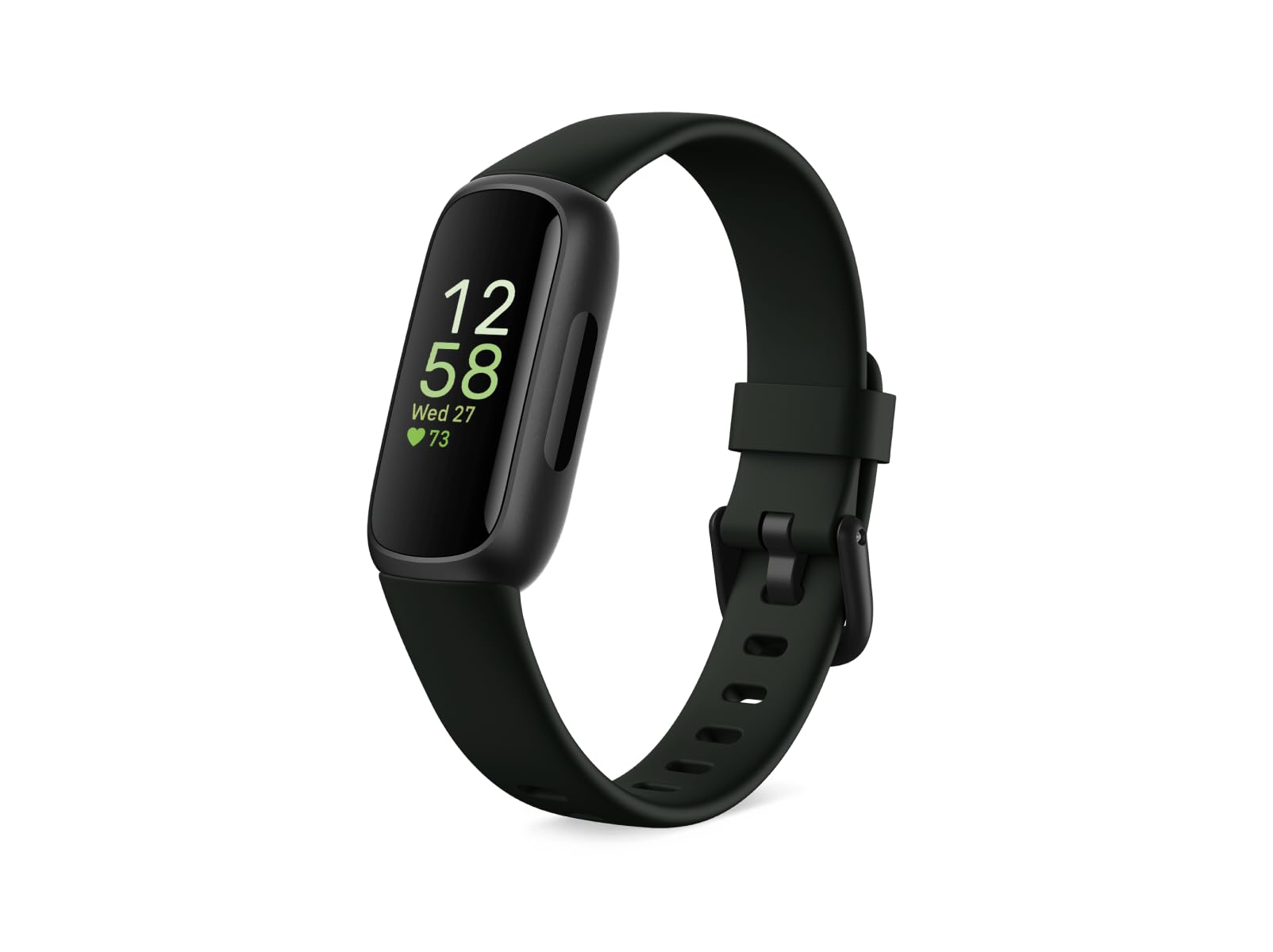
Fitbit’s Inspire 3 hits the practical middle ground. You get 10 days of battery per charge and a 2-hour recharge, so the charging routine is weekly rather than nightly. Both small and large bands ship in the box, which removes the guesswork of fit on arrival. It pairs with Apple iOS 16.4 or higher and Android 11.0 or higher.
The health lineup is broad for a slim band: 24/7 heart rate, a Daily Readiness Score, Active Zone Minutes, all-day activity and 40+ exercise modes with automatic workout detection. Round it out with a daily Stress Management Score, mindfulness and breathing sessions, irregular heart rhythm notifications, SpO₂, menstrual health tracking and a detailed nightly Sleep Score with a vibrating smart-wake alarm. Automatic sleep tracking means you never press a button to start monitoring overnight.
It is easy to set up, straightforward to read, and the step tracking is solid — that is the pattern owners describe. The trade-off is that the app nudges you toward the premium tier for the deepest coaching, and reliability stories are split, with a few units quitting early. For most people wanting a balanced, dependable health band from a big brand name, this is the safest all-rounder.
The sensible middle: two bands in the box, 10-day battery and a full health dashboard make this the low-drama choice.
Caveat: the very best coaching sits behind the premium tier, so expect upsell prompts in the app.
6. Amazfit Helio Strap

A band that counts your reps and sets — not just your steps.
Most bands treat the gym as an afterthought. The Helio Strap goes the other way. It is built around strength training and HYROX race prep, tracking reps, sets and rest periods in the gym, and it adds an exclusive HYROX Race mode for structured race training. The Zepp App shows post-workout insights including VO₂ max, training load, effect and recovery time. There are 27 sports modes in total.
Round-the-clock health tracking covers heart rate, blood oxygen, stress and sleep continuously, with accurate heart-rate data during training. The 232 milliamp-hour battery delivers up to 10 days per charge. If you also wear an Amazfit smartwatch, the two work together through the Zepp App to capture uninterrupted data, whether you wear both or one at a time. Data syncs out to Strava, TrainingPeaks, adidas Running and komoot.
Two things to know. First, this listing is a renewed unit, which is why a serious training band lands at a friendlier tier — buy with the renewal and return details clear. Second, there is no built-in GPS, so outdoor route mapping depends on your phone. For the lifter who wants rep counts and recovery readouts rather than step badges, the strength focus is the whole reason to pick it.
Why lifters gravitate to it
- Rep, set and rest tracking built in — rare among wristbands.
- HYROX Race mode and strength-focused post-workout insights.
- 10-day battery keeps it on through a training cycle.
- Free-to-use Zepp App syncs with Strava and TrainingPeaks.
What to factor in
- No GPS, so outdoor routes rely on your phone.
- Renewed listing — check the warranty terms before buying.
- Value perception is split among buyers.
Pick it for: gym work where rep counts and recovery time tell you more than a step goal.
Skip it for: phone-free outdoor runs — there is no GPS inside this band.
7. Google Fitbit Charge 6 Fitness Tracker (Obsidian / Black)

Turn-by-turn Maps and tap-to-pay on a wristband, not a watch.
This is the Fitbit for people who live inside Google’s world. The Charge 6 adds Google essentials to a slim band: turn-by-turn directions from Google Maps on your wrist during a run, and tap-to-pay with Google Wallet for a snack stop on the go. It also links to compatible exercise machines like treadmills and ellipticals to read your heart rate in real time, and supports YouTube Music controls.
The tracking core is solid — calories, Active Zone Minutes, Daily Readiness, 40+ exercise modes, built-in GPS, all-day activity and 24/7 heart rate with automatic workout detection. You get a stress management score, a nightly Sleep Score and a Smart Wake alarm. Battery runs 7 days with a 2-hour recharge. A Google Health Premium trial is included, with Gemini-built coaching on the paid tier.
What people love about this band is the overall build quality — it feels like a serious piece of kit. The honest caveat is the battery picture, which is split: some run a full week, others find themselves charging daily. GPS accuracy gets mixed reviews too, and a share of users report sync trouble with their phones. If Google Maps and Wallet on your wrist matter to you, this earns its spot; if a rock-solid week of battery is the priority, weigh that carefully.
The Google advantage: Maps directions and Wallet payments turn a fitness band into a day-to-day tool.
The battery question: 7 days is the spec on paper, but real-world feedback splits between weekly and daily charging.
Go for it if: you want Google Maps and Wallet on a band and already pay in the Google ecosystem.
Look elsewhere if: you want battery life you never think about — this one asks more of you.
8. Fitbit Charge 6

A week of tracking, a readiness score each morning, and sleep analysis done right.
This Charge 6 variant is tuned for the buyer who wants to know how recovered they are before a workout. The Daily Readiness Score tells you whether to push or take it easy, and the in-depth sleep analysis breaks down your night. A 7-day battery covers the week, and the band is water resistant for rain or shine. Both small and large bands are included, and it connects over Bluetooth to iOS 15+ and Android 9.0+ phones.
Built-in GPS lets you see pace and distance without your phone, and the integrated Google apps mean Maps and Wallet are a tap away. It is the same hardware family as the Charge 6 above, so if Google apps are not your priority the readiness and sleep side is the better reason to choose this listing — it wears the same 22 mm silicone strap and keeps the 7-day battery claim.
The thing everyone likes is how easy it is to use and how well the sleep monitoring reads. The split comes on reliability and battery — some report a full week between charges, others see the battery fail or the device quit after a month. Treat the readiness score as the daily anchor, and keep the return window in mind. For most buyers who want a simple readiness readout, that is a fair bargain.
Morning ritual: the Daily Readiness Score turns your band into a coach that says “rest” or “go” before you lace up.
Made for: the training-minded buyer who wants a readiness score and sleep analysis each morning.
Think twice if: you have no patience for a band that may need a reset — battery and reliability stories vary.
9. Fitbit Charge 5

The widest health dashboard, and a color touchscreen built to be read in daylight.
The Charge 5 crams the most health tooling into a band: an EDA sensor for on-wrist mindfulness sessions that feed a daily Stress Management Score, high and low heart rate notifications, and a compatible ECG app. The Health Metrics dashboard tracks SpO₂, heart rate variability and skin temperature variation — the deepest readout of any pick here. A Daily Readiness Score tells you whether to train or recover (with Premium), and built-in GPS records outdoor pace and distance without your phone.
The color touchscreen is described as two times brighter than Charge 4 in daylight, so reading it on a sunny run is genuinely easier. Battery runs up to 7 days, varying with use, with an 8-hour charge time. A 6-month Premium membership is included for new and returning users who activate within 60 days. Note the ECG app is available in select countries and not intended for people under 22. The band fits wrists from 5.1 to 6.7 inches (small) and 6.7 to 8.3 inches (large), with a stainless-steel band and deployant clasp.
The device quality is the bright spot — it feels well made and the sleep tracking earns praise. The caveat is durability: a meaningful pattern in feedback describes units that fail, and battery life that stops holding a charge becomes a daily-charging problem over time. With a huge base of owners, this remains a popular band for people who want the broadest health menu. Just go in with the warranty and return policy understood.
The health depth: ECG, EDA stress sessions, SpO₂ and skin temperature put this at the top of the menu.
The long-haul question: durability and battery lifespan are the recurring worry for a device meant to live on your wrist for years.
Choose it if: you want the widest health dashboard in a band and a screen readable in bright sun.
Weigh the risk if: you expect years of service — long-term durability is the honest unknown here.
Know the Specs
Water-resistance ratings explained
A rating like 1ATM means splash resistance — rain, sweat and hand washing, but not swimming. A 5ATM rating adds shallow-water swimming to the list. IP68 is a dust-and-water ingress rating that, on some premium power packs, is rated for up to 10 meters for 2 hours. Buy the rating your habits need: 1ATM for splashes, 5ATM if you swim.
What battery days actually mean
Quoted battery life ranges from 5–7 days up to 30 days in this category. A longer figure usually reflects a smaller, screen-light design that does less. A band with a bright color touchscreen and GPS tends toward the shorter end. Treat the quoted days as a charging interval: notifications and GPS workouts shorten it.
Heart rate and recovery scores
A wristband reads heart rate optically from the pulse in your wrist. Heart rate variability (the timing between beats) is one of the clearer signals of recovery and feeds readiness scores. These are consumer wellness readings, not medical-grade measurements, and should not be used to diagnose anything.
Form factor and strap width
A screenless band forces you into the app but tends to run for weeks on a charge. A slim display band gives you data at a glance but needs weekly charging. Strap width matters for comfort and fit — a 10.5 mm band sits lighter than an 18 mm one. Silicone and nylon both work; pick based on heat and sweat.
Common Questions
Do I need a screen on a wristband health tracker?
What does 5ATM mean for a fitness band?
How often will I have to charge a wristband tracker?
Does a band like the WHOOP require a monthly subscription?
Will these bands work with both iPhone and Android?
Can a wristband track my sleep accurately?
Is a wristband tracker better than a smartwatch for steps?
Do these bands track blood oxygen and stress?
Can I wear a screenless band in the shower or pool?
Which band is best for strength training rather than running?
The Bottom Line
The strongest pick for most people is the WHOOP 5.0, because a screenless band with 14+ days of battery is the one that actually stays on your wrist overnight — and that is where the sleep and recovery data comes from. If you want a familiar name with a full health dashboard and no subscription pressure, the Fitbit Inspire 3 is the safest all-rounder, with two bands in the box and a 10-day charge. And for the lifter counting reps rather than steps, the Amazfit Helio Strap is the one to reach for. Whichever you pick, go in clear on one thing — the right wristband health tracker is the one you forget you are wearing.
How we choose
We do not accept paid placement. Every pick is matched to a real buyer and a real use-case; we do not hands-on test units.
Sources
Specifications: manufacturer listings and product documentation. Review insights: verified customer reviews, as of November 2026. Pricing: not shown on this page (it changes often); check the current price via the retailer link.
As an Amazon Associate, Tactical Gear Guy earns from qualifying purchases. This does not affect which products we feature.