Specs are compiled from manufacturer listings and verified buyer reviews and can change over time — please confirm the key details on the product page before buying.
You want a tracker you strap on once and forget about. The right pick depends on one question: do you want a screen to glance at, or a screenless band that pushes everything to an app? A wrist worn fitness tracker either stays on your arm for months or ends up in a drawer by week three. The difference is rarely the sensor. It is battery life, band comfort, and whether the thing nags you to charge it every night.
This guide is built by comparing the manufacturers’ published specifications and the patterns across verified customer reviews, so you get each pick’s real strengths and trade-offs instead of marketing spin.
Some of these run three weeks between charges while others want a top-up every few days, and that single gap shapes how you actually live with them. Below you’ll find the full breakdown of the best wrist worn fitness tracker for every kind of wrist and routine.
Top Picks


How To Choose The Best Wrist Worn Fitness Tracker
Start with the number of days you are willing to go between charges. A tracker rated for 21 days covers a work trip and a weekend without packing a cable. One rated for 5 to 10 days is still workable, but it asks for a routine — usually a Sunday top-up while you shower.
Screen or no screen
A screen lets you check your heart rate mid-workout without pulling out your phone. A screenless band like the Fitbit Air skips that glance entirely, which means nothing glows on your wrist during a meeting or at 2 a.m. If you mostly read your numbers later in an app, the screen is weight and battery drain you do not need.
The comfort numbers that actually matter
Band width drives how the tracker sits on your wrist — 18.2 millimeters is a slim band that disappears under a sleeve, while 22 millimeters carries more surface area and reads more like a watch. Band material matters too: silicone handles sweat and swimming, fluoroelastomer resists oils and stays grippy, and stainless steel looks dressier but is not what you want against skin for a 10-mile run.
Water ratings, decoded
An IP68 rating means the tracker handles rain, sweat and hand-washing — not hot water or seawater. A 10 ATM rating is built for swimming and pressure at depth. Pick according to whether your wrist gets wet on purpose or just gets splashed.
Side-by-Side Comparison
| Model | Best For | Battery | Band Width | Water Rating | Amazon |
|---|---|---|---|---|---|
| HOMOGO Smart Watch for Women★ Best Overall | All-day wear with calls | 300 mAh | — | IP68 | Amazon |
| MorePro Fitness TrackerBest Value | Feature count on a tight budget | 230 mAh | 20 mm | IP68 | Amazon |
| Xiaomi Mi Smart Band 10Longest Between Charges | Weeks without a charger | 21 days | 22 mm | — | Amazon |
| Google Fitbit Inspire 3 | Simple everyday step and sleep tracking | 10 days | — | — | Amazon |
| Google Fitbit Air | Screen-free, sleep-friendly wear | 5 days | 18.2 mm | 50 m | Amazon |
| Garmin vívoactive 5 | GPS training with recovery insight | 11 days | — | — | Amazon |
| Withings ScanWatch Light | Watch looks, month-long battery | 30 days | — | — | Amazon |
| Garmin Instinct 3 Solar | Rugged outdoor use with solar charging | 28 days | 22 mm | 10 ATM | Amazon |
| Polar Street X | City runs with route guidance | 10 days | — | 50 m | Amazon |
Detailed Reviews
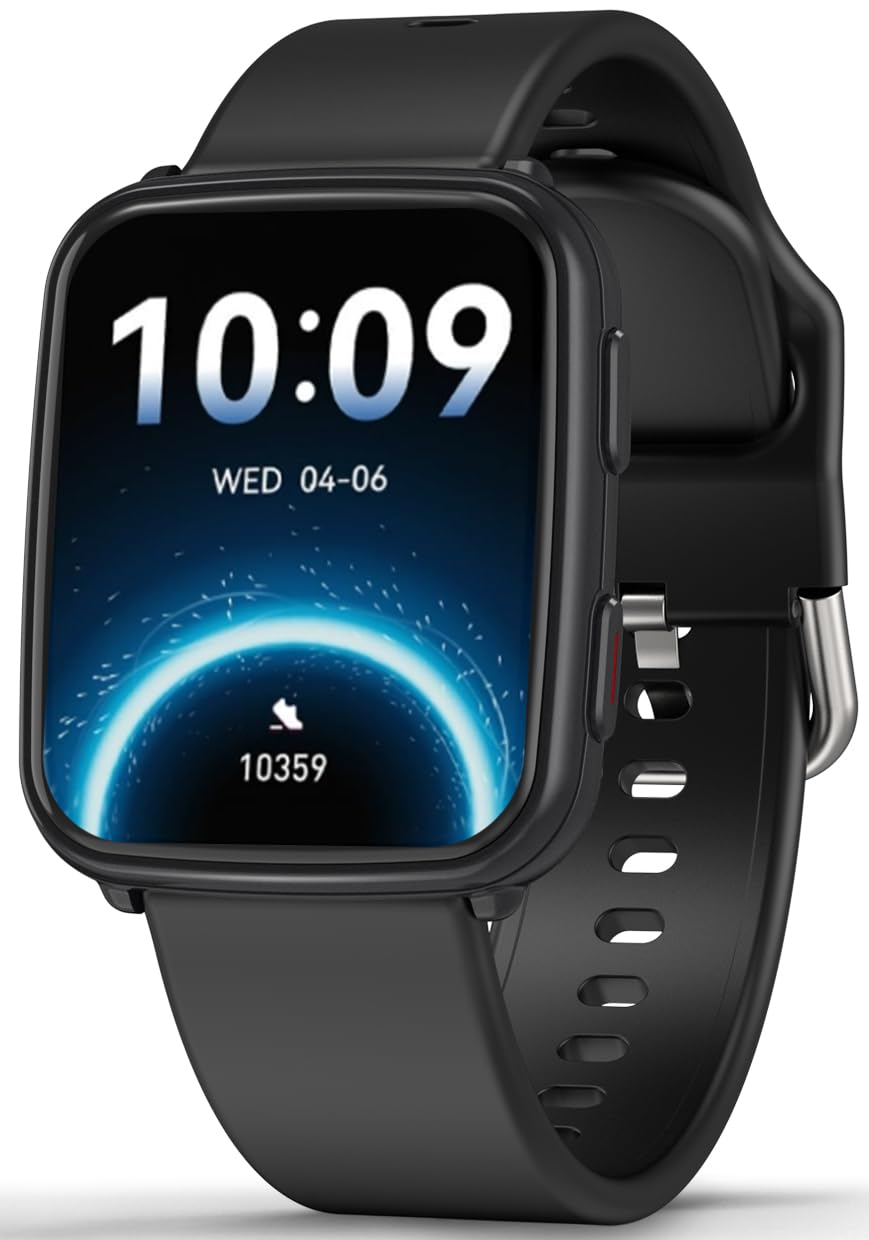
1. HOMOGO Smart Watch
Our pick — 4.5+★ from 400+ verified ratings; the strongest balance of quality and price.
Two bands in the box and a 300 mAh battery that shrugs off the charger for days.
If you want one wrist device that goes from a work meeting to a gym session without a costume change, this is the pick. The 300 mAh battery is the largest capacity on this list and it shows — owners routinely describe it running for days between charges. That capacity is why it leads: a tracker you don’t have to think about is a tracker you actually keep wearing.
The 1.83-inch HD touchscreen is the other headline. A bigger display means caller names, message previews and your step count are all readable at a glance rather than squinted at. It handles 100+ sports modes with auto-detection for walking and running, so the everyday stuff logs itself. Calls come through the watch with noise reduction, and you can store 20 contacts and dial straight from your wrist.
What wins people over beyond the specs is the styling. The box includes a stainless steel band and a silicone band, so you swap between dressy and sweat-ready in seconds. The IP68 rating covers rain, sweat and hand-washing — just keep it out of hot water and seawater. The trade-off is one to know before you buy: this is a look-and-feel-first device, so the fitness app depth is shallower than a Garmin or Fitbit’s, and the health metrics are informational rather than training-grade.
Where it pulls ahead
- 300 mAh battery is the biggest capacity on this list
- Two bands included — steel for work, silicone for sweat
- 1.83″ HD touchscreen keeps notifications readable
- Bluetooth calling with 20 stored contacts
Honest limits
- IP68 covers splashes, not hot water or ocean swims
- Fitness insight depth sits below dedicated sports watches
Go for this if: you want a smartwatch that looks put-together and still logs your workouts, with calls on your wrist.
Look past it if: you need VO2 max, recovery scores or multi-band GPS for structured training.
2. MorePro Fitness Tracker
A feature sheet that reads like it costs twice as much, on a 230 mAh cell.
The pitch here is simple: how much tracker can you strap on without spending real money. You get 120+ sport modes, a 230 mAh battery, IP68 protection and a 20 millimeter silicone band that sits slim on the wrist. The battery recharges in about 2 hours and runs up to 7 days on normal use, or 15 days on standby. Compare that to the Fitbit Air’s 5 days and you are getting more wrist-free days for less outlay.
Where the MorePro earns its place is the sheer spread of what it does. It logs steps, distance, calories, heart rate and training time in real time. There is cycle tracking with period, ovulation and pregnancy modes, over 200 watch faces, and a DIY face you build from your own photo. Daily tools include sedentary and drink-water reminders, weather, music and camera control. For a first tracker, that is a lot of surface area for the money.
The catch is the health accuracy ceiling. The blood pressure and SpO2 readings are on-demand check-ins, not clinical measurements, and the listing itself says it is not for medical use. Sleep tracking is split into deep, light and wake-ups — useful trend data, not a lab result. At 20 millimeters the band is the narrowest of the three we can compare directly, 10% slimmer than the Xiaomi’s 22 millimeters, which many find more comfortable overnight. If you want a broad feature set to start tracking habits, this delivers more per dollar than almost anything here.
What the spec sheet buys: 120+ sport modes, 200+ watch faces and a 2-hour charge that holds for up to 7 days — a beginner’s whole toolkit in one wristband.
The ceiling to accept: blood pressure and SpO2 are convenience readings, and the manufacturer states the device is not for medical use.
Reach for this if: you are starting a fitness habit and want maximum features at entry-level money.
Step up instead if: you need training-grade GPS or coaching that adapts to your recovery.
3. Xiaomi Mi Smart Band 10 (2025) Global Version
Three weeks on a single charge, on a screen that stays legible in direct sun.
Twenty-one days. That is the number that makes this band the one to beat on battery — more than double the Fitbit Inspire 3’s 10 days, a gap owners feel as “I forgot where I put the charger.” The 1.72-inch AMOLED display is the other draw. AMOLED means each pixel lights itself rather than relying on a backlight, so blacks stay true and the whole panel sips power. Xiaomi pairs it with 1500 nits HBM brightness, which is the peak-brightness figure for readable outdoor viewing, so message previews survive a sunny walk.
The physical details are equally deliberate. The screen-to-body ratio climbs from 66% to 73% thanks to 2.0mm bezels, so more of the face is actual display. The 22 millimeter fluoroelastomer band is the widest we can compare directly — 10% wider than the MorePro’s 20 millimeters — and that extra surface area keeps the band from digging in during a run. A high-precision electronic compass tracks swimming direction, and the HyperOS 2 interface keeps the touch response smooth.
One thing to plan around: the Xiaomi Fit app only reads the metric system. If you think in pounds and inches, you connect the Fit app to Google Fit and read your numbers there instead. That is a small software hop, not a hardware problem. The band has the largest owner base here by a wide margin, and the wearer consensus is that it rivals watches costing several times as much. What you give up is GPS — workouts rely on your phone’s signal.
The strongest case: 21 days of battery, a 1500-nit AMOLED screen and a 22 mm band, for a band you will forget you are wearing.
The honest gap: imperial units need a hop through Google Fit, and there is no built-in GPS.
4. Google Fitbit Inspire 3 – Midnight Zen/Black
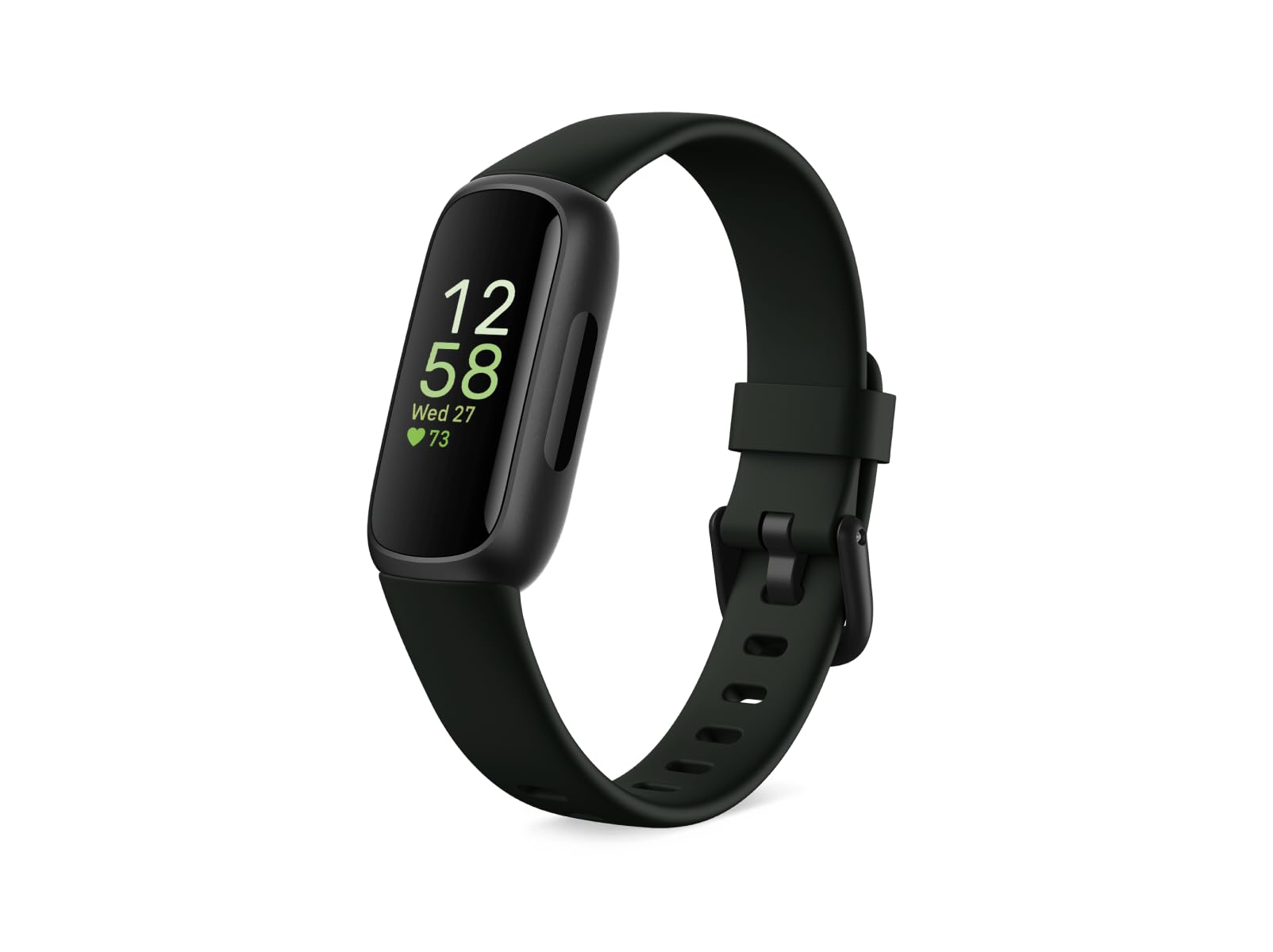
The tracker that tells you when to push and when to back off, without a screen you’ll obsess over.
Setup is the thing people notice first with the Inspire 3 — it pairs and starts feeding you numbers without a manual. From there the Daily Readiness Score becomes the habit: it reads your activity, sleep and heart rate together and tells you whether today is a push day or a rest day. Active Zone Minutes count the effort that actually moves your heart rate into a working range, and 40+ exercise modes with automatic exercise tracking catch the walks and rides you did not think to log.
The health side goes further than step counts. You get irregular heart rhythm notifications, SpO2 readings, menstrual health tracking and a resting heart rate figure. Sleep tracking happens automatically, scores your night, and a smart wake vibrating alarm nudges you out of the wrong sleep phase. Battery is 10 days with a 2-hour charge — more than enough for a week of work and a weekend away.
The recurring note in the review pages is charging. Some units reportedly stop taking a charge after a couple of months, which is why battery reliability is the mixed signal here rather than the tracking itself. It is not universal, but it is the thing to watch if you buy one. For everyone else, this remains the friendliest on-ramp to real fitness data — and it is less than half the Xiaomi’s 21-day battery run at 10 days, which just means a weekly habit.
Why people stick with it: the Daily Readiness Score and Active Zone Minutes turn raw numbers into a daily instruction you can act on.
The one to watch: a handful of units reportedly stop charging after a short spell — pay attention to the charge behaviour early on.
Best fit for: someone who wants guidance more than a spec sheet, and a tracker that tells them what to do next.
Less ideal if: you want multi-week battery or a screen you can read without your phone.
5. Google Fitbit Air – Screenless Activity Tracker, Obsidian
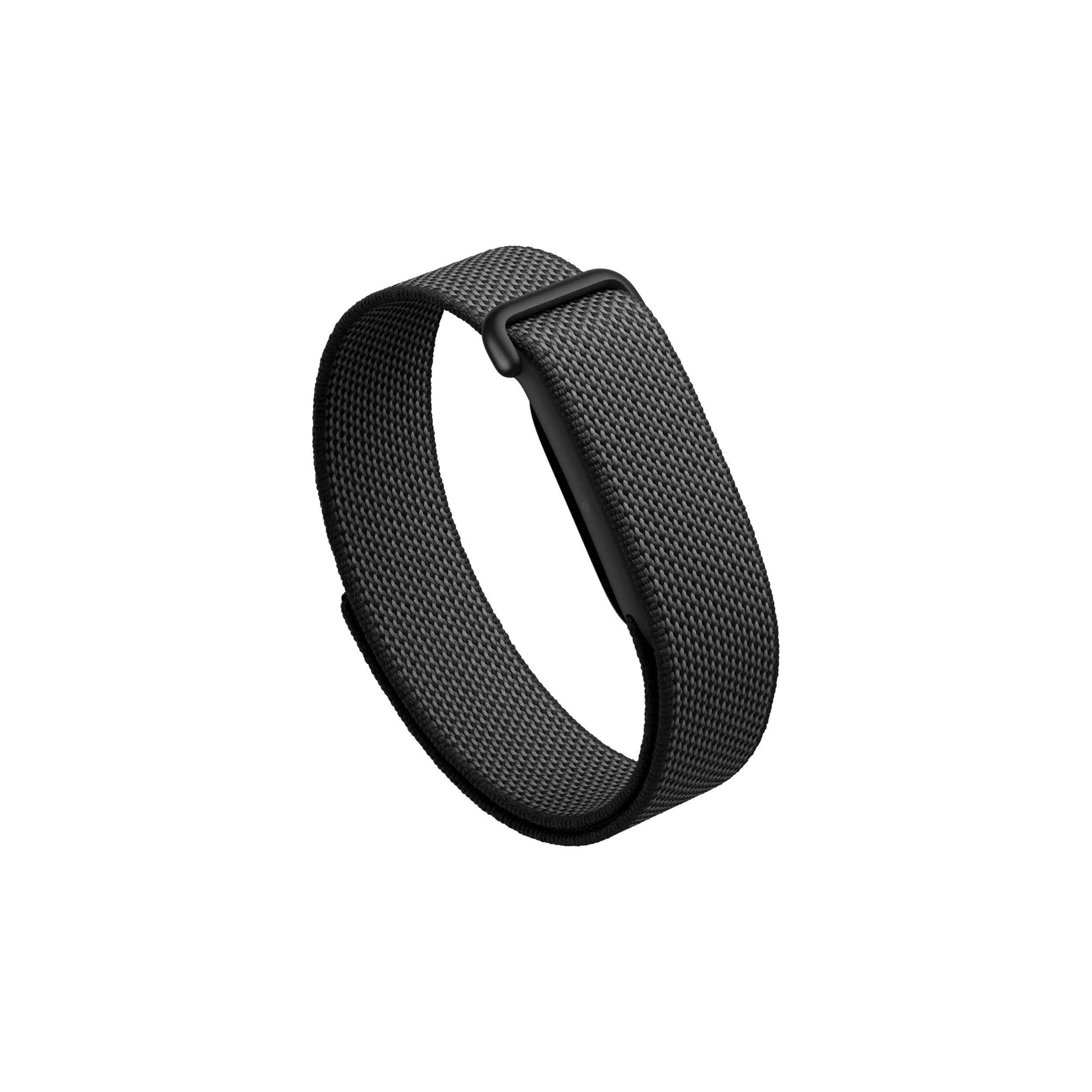
No screen, no glow at midnight — just a pebble on a slim 18.2 mm band.
Sleep tracking is where a screenless band wins, and the Fitbit Air is built for it. Nothing lights up on your wrist when you roll over, and the 18.2 millimeter band is the slimmest here — narrow enough to sit under a cuff or a bracelet stack without a bulge. The micro-adjustable fit spans 130 to 210 mm, and you press the pebble in, click, and swap between a bracelet, workout band or sleep band in seconds.
The charging story is the standout spec: five minutes gets you a full day of battery. That is the fastest top-up on this list, and it means a forgotten charge is never a missed tracking day. Steady-state battery runs up to a week. Under the hood you get 24/7 optical heart rate, water resistance to 50 meters and work with Android 11.0 or higher and Apple iOS 16.4 or higher. A Google Health Premium membership adds coaching built with Gemini, and it comes with a 3-month trial.
The honest read from the crowd is that this is the most comfortable Fitbit yet — quality and comfort are what come up most. That said, a share of owners find sleep tracking, reliability, connectivity and accuracy to be mixed, so treat the data as trend lines rather than gospel. The 5-day spec versus the Xiaomi’s 21 days is a real gap: you are trading endurance for a band you barely feel, and that is a fair trade if you hate charging things.
What makes it disappear on your wrist
- 18.2 mm band — the slimmest here
- Five-minute charge delivers a full day
- No screen means no midnight glow, ideal for sleep
- Press-in pebble swaps bands in seconds
Trade-offs to weigh
- 5-day battery is the shortest on this list
- Sleep and accuracy readings land as mixed for some wearers
- No on-wrist display at all — you check data on your phone
Pick it when: you want to track sleep and daily movement without a glowing rectangle on your arm.
Think twice when: you like glancing at your heart rate mid-run or you resent a weekly charge.
6. Garmin vívoactive 5, Health & Fitness GPS Smartwatch, 42mm

The one that tells you how much energy you have left before you find out the hard way.
Body Battery is the feature that turns the vívoactive 5 into a coach rather than a logbook. It reads your sleep, naps, stress levels and workouts, then shows whether you are charged up or need rest. Add a sleep score with personalized coaching and an HRV status figure — a measure of how your heart rate varies between beats, which reflects recovery — and you get morning guidance instead of a list of numbers to interpret yourself.
On the training side, this is a real GPS watch. Built-in GPS means a run is tracked from your wrist with no phone along, and 30+ built-in indoor and GPS sports apps cover running, cycling, HIIT, swimming and golf. The AMOLED display is bright and colorful, and it weighs 1.31 ounces, light enough to forget during a long session. Battery runs up to 11 days in smartwatch mode. There is even a wheelchair mode that tracks pushes instead of steps, with handcycle activities and preloaded workouts for strength, cardio, HIIT, Pilates and yoga. Music downloads from Spotify, Amazon Music or Deezer let you run with wireless headphones and no phone.
The realistic caveat you will find in the review pages concerns sleep tracking and battery — some owners find the sleep readings inaccurate, and a smaller set report battery falling short of the 11-day figure. Neither undermines what the watch does best: a bright AMOLED screen, deep recovery insight and true GPS. If you train with intent, the vívoactive 5 hands you more useful decisions per day than the Fitbit Inspire 3, even though the Inspire 3 is simpler to get started with.
Why it earns a spot: built-in GPS, Body Battery, a sleep coach and an AMOLED screen in a 1.31-ounce body that lasts up to 11 days.
The caveat worth knowing: sleep accuracy and battery longevity draw mixed feedback, so do not buy it solely for sleep scores.
7. WITHINGS Scanwatch Light – Hybrid Smart Watch, RG White
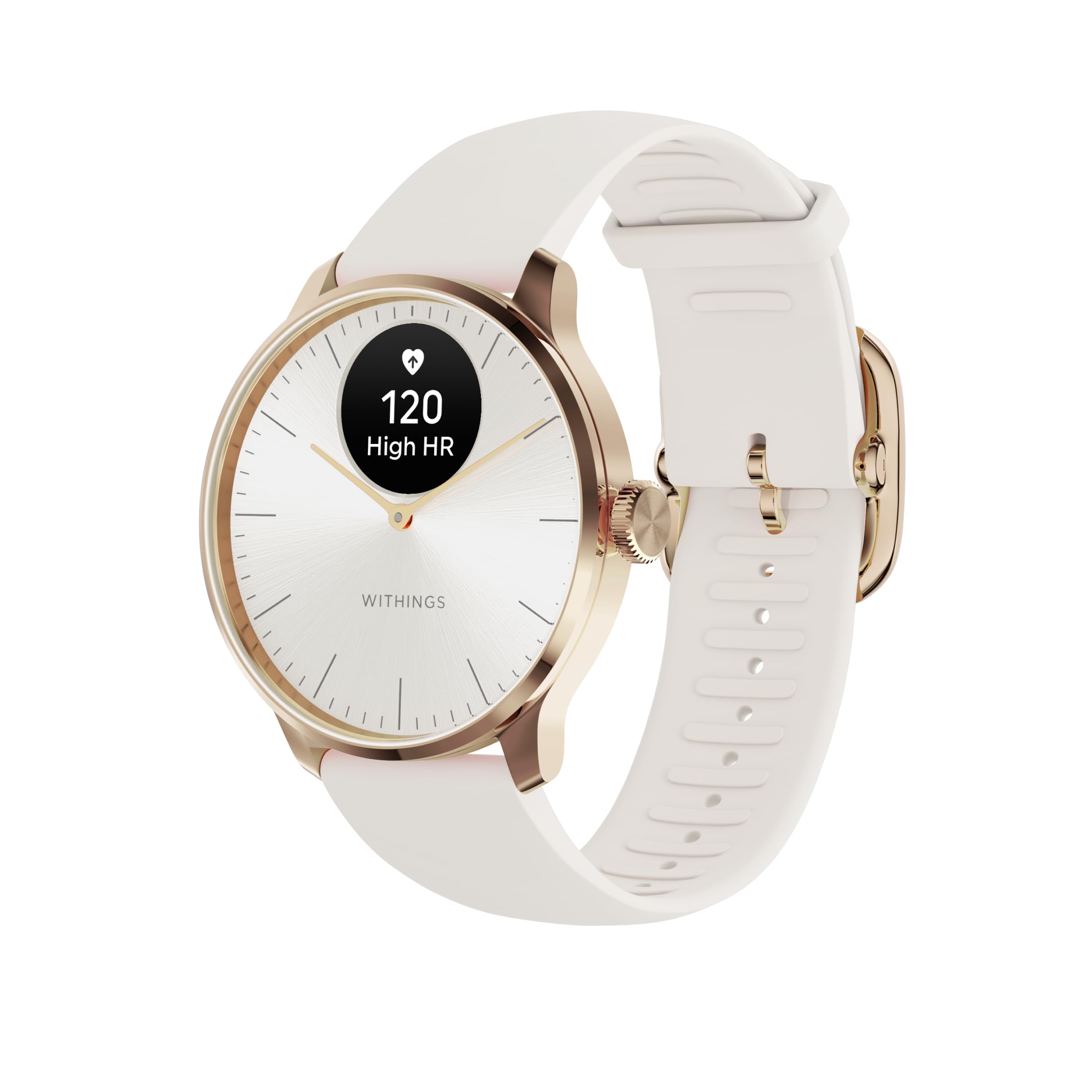
Thirty days of tracking wrapped in a stainless steel case you’d wear to dinner.
This is the tracker for the person who refuses to wear a fitness band and wants a watch. The ScanWatch Light runs 30 days per charge — the longest battery on this list, ahead of the Garmin Instinct 3 Solar’s 28 days — and it does it inside a stainless steel case with a rose gold white finish and a 37 millimeter footprint. The FKM fluoroelastomer band with a stainless steel buckle matches the dressier frame.
Under the glass it tracks what you would expect from a health-focused hybrid. Heart rate runs 24/7 with alerts when it climbs too high or dips too low, plus overnight heart rate variability for long-term trends. There is a menstrual cycle guide for logging phases, symptoms, flow and moods, sleep tracking with a Sleep Quality Score covering light and deep sleep plus interruptions, and 40+ activities with heart rate zones. Fitness Level comes via VO2 max, which estimates how efficiently your body uses oxygen during hard effort, and connected GPS pulls route data from your phone. Withings’ HealthSense OS runs on-device machine learning to serve metrics on the watch itself.
What draws people in is the appearance — it reads as a watch first and a tracker second, and owners consistently praise the look and the weeks-long battery. The mixed signals are on function: step tracking and general functionality draw split feedback, and durability and accuracy have drawn criticism. None of that changes the core appeal: if you want your tracking to look like jewelry and need charging to be a monthly errand, this is the pick. If you want a rugged training tool, look at the Instinct 3 instead.
The look-first bet: 30-day battery, stainless steel case and a 37 mm profile that passes as a dress watch on any wrist.
The trade-off to accept: step counting and accuracy see mixed to negative feedback, so buy it for the form and the longevity, not the precision.
Choose it if: you want a monthly charge and a watch that looks like a watch.
Skip the hybrid route if: you need rock-solid step counts or an all-weather training companion.
8. Garmin Instinct 3 Solar, Rugged GPS Smartwatch, 45mm

A solar lens that keeps it running indefinitely, in a case built for rocks and weather.
Unlimited battery life with solar charging is the claim, and it comes with conditions worth reading plainly: all-day wear with three hours outside per day in 50,000 lux conditions. That is a bright day outdoors, not a desk by a window. Without the sun the spec runs 28 days. Either way, the solar charging lens on the 0.9-inch display makes this the one tracker here you can take off-grid without a charger anxiety.
The build is the other half of the story. A 45 millimeter fiber-reinforced polymer case with a metal-reinforced bezel, rated 10 ATM for water pressure and tested to MIL-STD-810 for thermal and shock resistance. There is a built-in LED flashlight with variable intensities and strobe modes — a real light for finding gear in the dark. Navigation runs on multi-band GPS with SatIQ technology, plus a 3-axis compass and barometric altimeter. Health tracking includes wrist-based heart rate, advanced sleep monitoring and Pulse Ox (a blood-oxygen reading), with Garmin Pay contactless payments, incident detection and Assistance that shares your live location with emergency contacts.
The smart bit is that the Instinct 3 is as much a safety device as a fitness one. The one honest limit: with a 0.9-inch display, this is not the watch for reading long messages or admiring graphics. It is a tool, and it looks and behaves like one.
Built for weather and distance
- Solar charging lens with unlimited battery in 50,000 lux sun
- 10 ATM and MIL-STD-810 thermal and shock testing
- Built-in LED flashlight with strobe modes
- Multi-band GPS with SatIQ plus compass and altimeter
What you live with
- 0.9″ display is small for reading notifications
- Solar bonus depends on real outdoor daylight hours
Built for: hikers, trail runners and anyone who wants a tracker that survives a drop and finds the trail back.
Wrong tool if: you want a large bright screen for reading messages and watching graphics.
9. Polar Street X – GPS Running Sports Watch
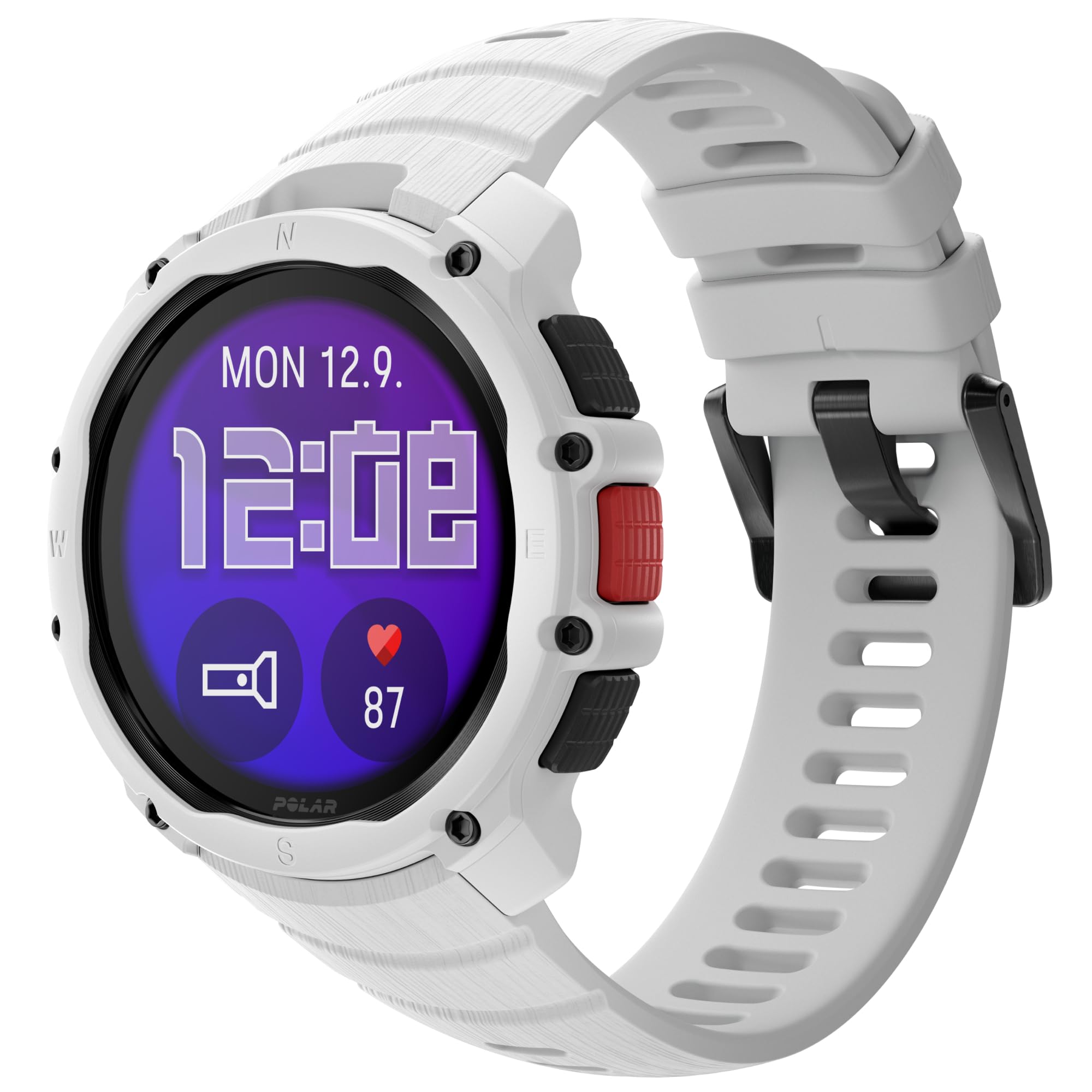
A running watch that gets you out the door and back again, at 48 grams.
Route guidance and back-to-start navigation are the two features that matter for a city run, and the Street X has both. Built-in GPS tracks distance, pace and performance, while back-to-start means a wrong turn is not a wrong day. At 48 grams it sits on the light side for a watch with a built-in flashlight and GPS — the kind of weight that fades away by the second mile. It is shock-resistant with 50-meter water resistance, so rain and gym impact are non-events.
The exercise side is broad rather than specialized. 170+ sport profiles cover running, strength, HIIT and cycling, which suits hybrid training where you lift and run in the same week. Wrist-based heart rate tracking gives real-time effort data without a chest strap. Battery is up to 10 days, or 43 hours of GPS tracking — the GPS figure is the one that matters if you run long. The AMOLED display stays bright, and 32 MB of memory holds the essentials.
One thing to set expectations on: this is a newer listing with a modest review base behind it, so the track record is shorter than the Garmin and Fitbit offerings here. That does not make it a riskier watch in use — it simply means fewer long-term data points yet. For a runner who wants route guidance, GPS and a light body without paying premium-watch money, the Street X covers the ground a runner actually asks for.
Suits you if: you run cities and trails and want GPS plus back-to-start navigation on a 48-gram wrist.
Not your watch if: you want a long review record to lean on or large on-wrist maps.
Know the Specs
Battery life in days
This is the single spec that decides whether you keep wearing a tracker. A rating in days tells you how often you will plug in — 21 or 30 days means a monthly habit, while 5 or 10 days means a weekly one. On a wrist tracker the battery also has to power heart rate sensors and a screen, so a large milliamp-hour capacity (the mAh figure) does not always map straight to days of wear; the display type and sensor load matter too. For most people, choosing a device that covers your longest typical trip without a cable is the practical rule.
AMOLED versus LCD versus no screen
AMOLED means each pixel lights itself, so dark screens use less power and colours look rich — that makes it the easiest to read in sunlight when paired with a high-brightness figure. LCD is cheaper but hungrier. A screenless band skips the display entirely, which is ideal for sleep since nothing glows at night, but it pushes all your data to a phone app for viewing. Neither is better in the abstract; match the display to if you want to glance at numbers mid-workout or only review them later.
Water resistance ratings
An IP68 rating handles dust and splashes — rain, sweat and hand-washing — but the listing guidance is to avoid hot water and seawater. A 50-meter rating and above covers swimming and pressure. A 10 ATM rating goes further for water sports and depth. If your wrist gets wet on purpose, buy the higher rating; if it only gets rained on, IP68 is enough.
Band width and material
Band width in millimeters changes how the tracker sits — an 18.2 mm band feels slim and tucks under sleeves, while a 22 mm band spread the pressure wider and can be more comfortable on longer runs. Material decides sweat behaviour: silicone is the everyday workhorse, fluoroelastomer resists oils and holds grip, and stainless steel is the dress option that is not built for a sweaty session.
Common Questions
Will a wrist worn fitness tracker work with both my iPhone and an Android phone?
How many days can I realistically go between charges?
Can I wear a tracker in the shower or swimming pool?
Is a screenless tracker better for sleep tracking?
Do I need built-in GPS or can I rely on my phone?
How accurate are blood pressure and blood oxygen readings on a wrist tracker?
What is the difference between AMOLED and LCD on a fitness tracker?
How wide should a fitness tracker band be for sleeping and running?
Do these trackers include menstrual cycle tracking?
Can I answer calls directly from a wrist tracker?
The Bottom Line
For most wrists, the wrist worn fitness tracker to buy first is the HOMOGO Smart Watch for Women — the 300 mAh battery outlasts everything else here, and the two included bands mean it goes from desk to workout without a swap. If battery is the only thing you care about, grab the Xiaomi Mi Smart Band 10 and enjoy 21 days between charges. And for anyone heading off-grid, the Garmin Instinct 3 Solar with its solar charging lens is the one to reach for. Pick the battery figure that matches your charging routine, and the rest falls into place.
How we choose
We do not accept paid placement. Every pick is matched to a real buyer and a real use-case; we do not hands-on test units.
Sources
Specifications: manufacturer listings and product documentation. Review insights: verified customer reviews, as of November 2026. Pricing: not shown on this page (it changes often); check the current price via the retailer link.
As an Amazon Associate, Tactical Gear Guy earns from qualifying purchases. This does not affect which products we feature.