Specs are compiled from manufacturer listings and verified buyer reviews and can change over time — please confirm the key details on the product page before buying.
You want a recorder that lives on your wrist so you never dig for a phone mid-meeting. The short answer: the Gem Wearable AI Voice Recorder is the strongest all-round pick for most people, because it records up to 20 hours on a charge, stores up to 300 hours of audio, and turns conversations into written summaries in 153 languages. The catch is that “wrist watch digital voice recorder” covers two very different gadgets — a true smartwatch that records, and a slim audio bracelet that records only — and buying the wrong one is the usual mistake.
This guide is built by comparing the manufacturers’ published specifications and the patterns across verified customer reviews, so you get each pick’s real strengths and trade-offs instead of marketing spin.
Wrist wear is the whole point here, so fit matters as much as storage: check the band range before you buy, since one pick fits wrists 5.9–8.7 in and another runs 5.5–8.7 in. Below, you’ll find the details that separate a gadget you actually wear from one that sits in a drawer, including what each model does with your audio afterward — a deciding factor for anyone weighing a wrist watch digital voice recorder.
Top Picks
How To Choose The Best Wrist Watch Digital Voice Recorder
A wrist recorder only earns its place if you forget you’re wearing it — and if it still captures the room when you’re not holding a phone. That narrows the field fast. Match your wrist size, your recording hours and your file format before you look at anything else.
Start with wrist fit, not features
Band ranges on these devices vary more than you’d expect, so measure your wrist with a soft tape before you buy. One model covers 5.9–8.7 in (150–220 mm) and another runs 5.5–8.7 in (140–220 mm) — small gaps, but enough to make a tight fit on a slim wrist. Also check whether the band is standalone or replaces an Apple Watch band. These are two totally separate products with the same name.
Recording hours vs. storage hours
These are not the same thing, and confusing them is the top beginner error. Recording hours measure how long the battery keeps the microphone alive on one charge. Storage hours measure how much audio the memory holds before you transfer files. A device can claim 30 hours of recording but hold far less depending on bitrate. Read both numbers, then check the format — WAV files eat far more room than MP3.
What noise reduction really buys you
Noise reduction is not magic. On these recorders it means a processor that filters background hum, crowd chatter or air conditioning so voices sit forward in the file. Adjustable levels (some offer settings 1–7) let you dial it up in a loud canteen and down in a quiet office. Higher bitrates — 3072Kbps is the ceiling on two picks here — keep more of the original voice texture, so a lecture sounds like a person, not a phone call.
Do you want transcription or raw audio
Some wrist recorders just save files you deal with later. Others transcribe and summarize the conversation for you, sometimes in more than 100 languages. Transcription is a huge time-saver for meetings and interviews; it also usually means a companion app and, on some plans, a monthly minute allowance. Decide which you actually need. If you only want a clean audio file for later listening, skip the AI layer entirely and save complexity.
Side-by-Side Comparison
| Model | Best For | Record Time | Storage | Wear Style | Amazon |
|---|---|---|---|---|---|
| Gem Wearable AI Voice Recorder (Standalone)★ Best Overall | All-round meetings and interviews | 20 hours | 4 GB (up to 300 hours audio) | Standalone wristband | Amazon |
| Gem Wearable AI Voice Recorder (Apple Watch Co-Wear)Best for Apple Watch Owners | Apple Watch owners who want one strap | 20 hours | 4 GB (up to 300 hours audio) | Co-wear Apple Watch band | Amazon |
| Maxee AI Smart Watch Voice Recorder | Recording plus fitness and health tracking | 30 hours | — | Smartwatch strap | Amazon |
| AI Digital Voice Recorder (MZKDFDW) | Multilingual transcription on the go | 100 hours | 136 GB | Wristband, clip or pendant | Amazon |
| 16GB Mini Voice Activated Recorder (NSRLO) | Quick one-touch catch-all recording | — | 16 GB | Wristband, lanyard, keychain, magnet | Amazon |
| 4-in-1 Digital Voice Recorder (NSRLO, 32GB) | Higher bitrate plus bigger storage | — | 32 GB | Wristband, lanyard, keychain, magnet | Amazon |
| 32GB Audio Voice Bracelet (bluedery) | Offline recording, no WiFi or Bluetooth | 30 hours | 32 GB | Wristband with LCD | Amazon |
Detailed Reviews
1. Gem Wearable AI Voice Recorder
Our pick — 4.5+★ from 50+ verified ratings; the strongest balance of quality and price.
The recorder you forget you’re wearing until the meeting is already summarized.
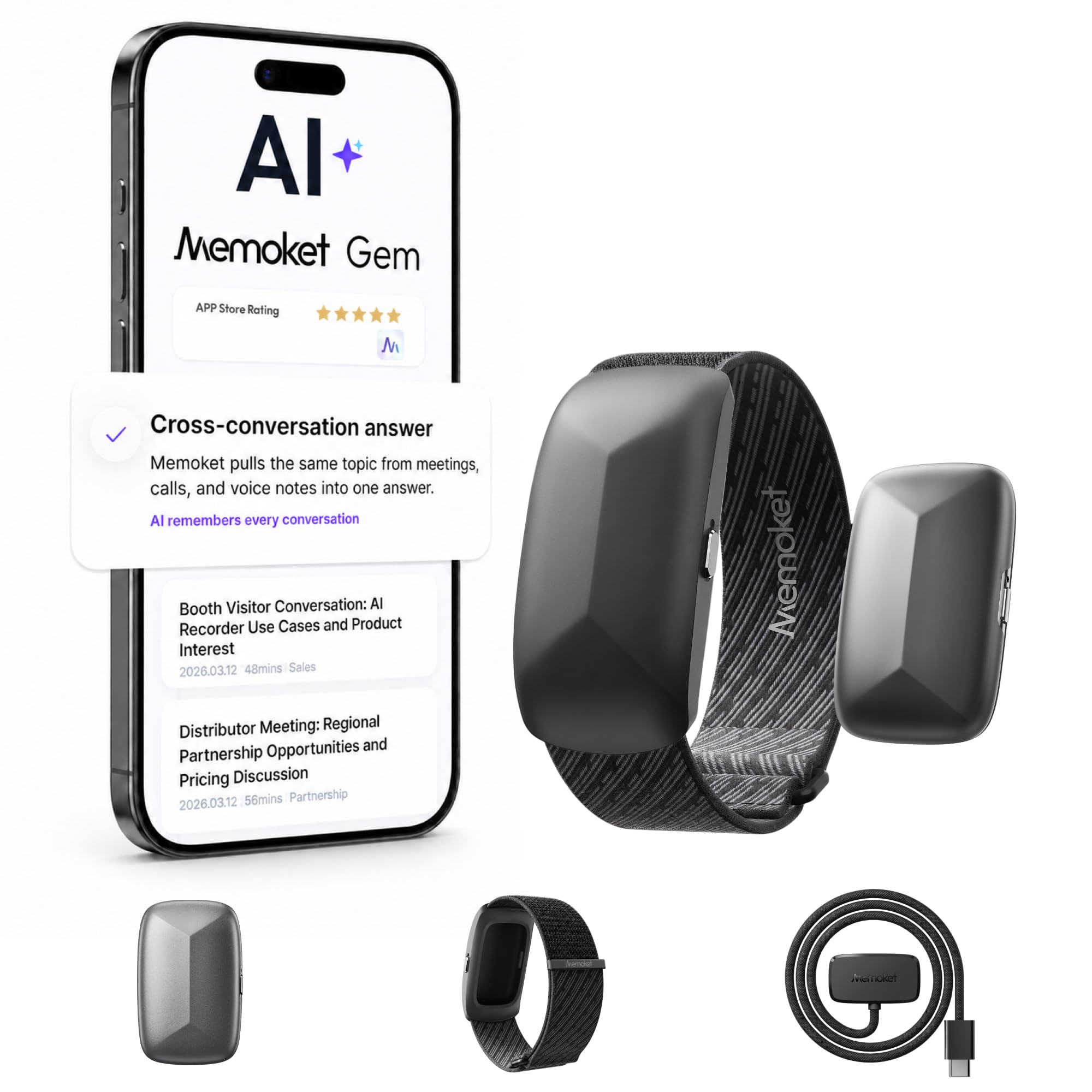
This is the pick for the person who walks into a client call with nothing in their hands. Gem is a standalone wristband — no Apple Watch required — that sits at just 0.4 oz (11 g), so it feels closer to a fabric band than a gadget. Press and hold the record button and it starts capturing; a red LED and tactile feedback tell you it’s live. The band fits wrists from 5.9 to 8.7 in (150 to 220 mm), so measure before you order.
Where it pulls away from the pack is what happens after. It records up to 20 hours on a charge and holds up to 300 hours of audio on the device itself, then transcribes in 153 languages and regional variants and hands you a summary, key decisions and action items. Noise-reducing microphones reach conversations up to 16.4 ft (5 m) away, which covers a normal conference table. The free Starter Plan includes 300 transcription minutes per month — roughly 5 hours — and you don’t need a paid plan to use it.
What wins people over is the recording-and-summarizing job itself: it’s so much smoother than phone apps that it makes the day-to-day easier rather than adding a new chore. Accuracy shows up in how well it captures a live conversation and connects points from one meeting to the next, and the soft band stays comfortable across a long day. The takeaway is a wristband that quietly does the note-taking for you. The honest trade-off: it’s IPX5-rated against sweat and rain only, so swimming and showers are out. And if you have an Apple Watch you never take off, the standalone band means a second strap on the other wrist — the co-wear edition exists for exactly that reason.
Where it pulls ahead
- 20 hours of recording per charge and up to 300 hours of audio stored on the wristband
- Transcription in 153 languages with AI summaries, key decisions and action items
- Only 0.4 oz (11 g) on a soft band, with a free Starter Plan included
What to weigh first
- IPX5 sweat and rain resistance only — not for swimming or showers
- A separate accessory if you want to wear it as a pendant or clip
Best fit for: anyone who wants meetings transcribed and summarized with zero phone in hand.
Think twice if: you live in an Apple Watch and want both on one strap — pick the co-wear edition instead.
2. Gem Wearable AI Voice Recorder Apple Watch Bands
One strap for the watch you already wear and the recorder you keep forgetting to bring.
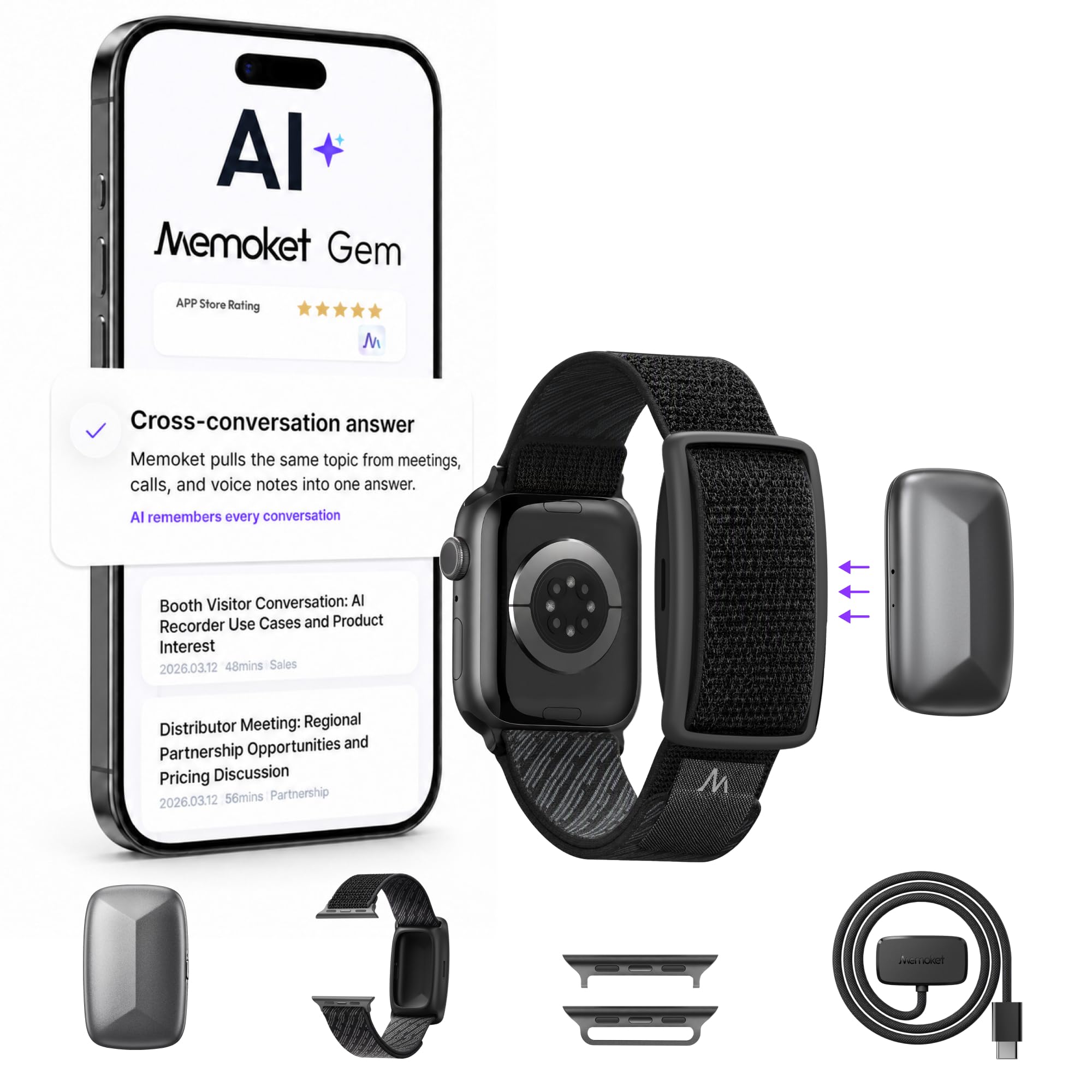
The single line that decides this purchase: the included co-wear strap replaces your Apple Watch band, with Gem fitted into it. Your Apple Watch clips into the same strap, so you get both on one wrist. It fits Series 1–11, SE and Ultra in 38–49 mm cases, and the band spans wrists 5.5–8.7 in (140–220 mm). If you’re an Apple Watch owner who leaves the house with that watch and nothing else, this is the version to buy.
The recording side is identical to the standalone Gem. That means up to 20 hours per charge, up to 300 hours of audio stored on the device, and noise-reducing microphones that capture conversation up to 16.4 ft (5 m) away. Transcription covers 153 languages and regional variants, with AI summaries, key decisions and action items, plus a 10-second Brief you can skim before you walk into the next room. For storage context, this holds 4 GB — the MZKDFDW pick further down carries 136 GB — but Gem’s 300 hours of in-device audio is what most people actually use.
What earns it the higher score here is that it rides on the Apple Watch strap you already put on every morning. There’s no second device to charge on a separate dock, no mental note to grab a bracelet on the way out. The catch is the one thing no spec can fix: your Apple Watch is required and is not included, so this only makes sense if you already own one. It’s also IPX5 against sweat and rain, not swimming.
The Apple Watch advantage: a co-wear band that fits Series 1–11, SE and Ultra in 38–49 mm, holding both the watch and the Gem recorder on one wrist — the cleanest option if you’re already an Apple Watch owner.
The genuine limit: no Apple Watch means no co-wear, and the IPX5 rating keeps it out of the pool and the shower.
Reach for this if: your Apple Watch never leaves your wrist and you want the recorder to ride along.
Look elsewhere if: you wear a non-Apple watch or none at all — the standalone Gem is the same recorder without the band dependency.
3. AI Smart Watch Voice Recorder
The only pick here that’s a full smartwatch first and a voice recorder second.
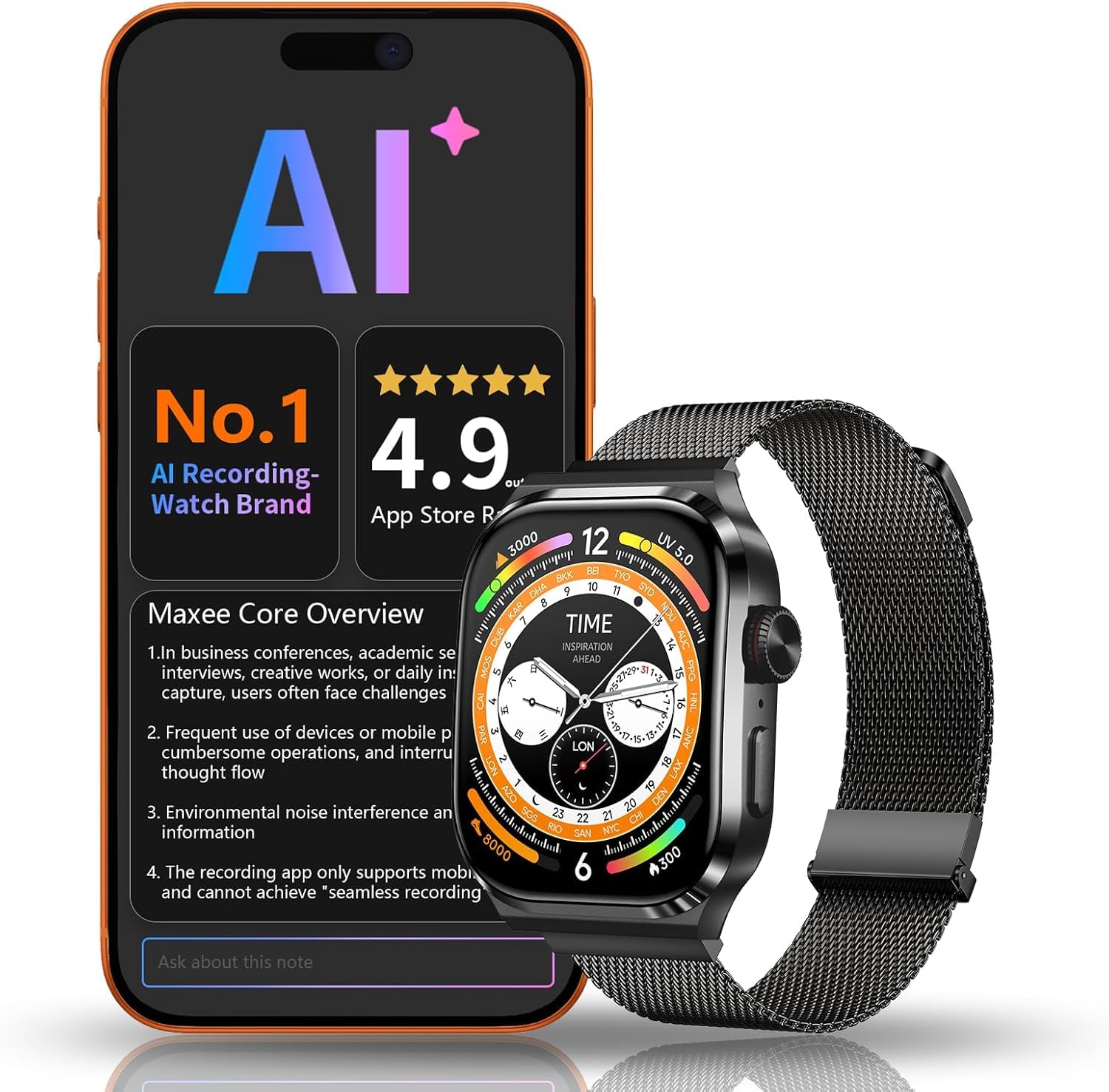
If you wanted an actual watch on your wrist — with a screen, health tracking and workout modes — this is the one that records too. The display is a 2.13-inch AMOLED panel, which is large for a watch face and makes status checks and playback controls easy to read at a glance. Press the crown button to start or stop recording instantly, no phone open up, no app hunting. Bluetooth 5.3 handles the low-latency connection to your phone.
Recording quality starts with a high-sensitivity microphone and AI noise reduction that filters wind, air conditioning and crowd noise, then captures CD-quality audio at 44.1kHz/16-bit. Transcription runs at up to 95% accuracy across 109 languages, and the AI distinguishes speakers and builds structured summaries and mind maps you can export in TXT or Markdown. On top of recording, you get 82 sports modes and 24/7 health monitoring including real-time heart rate, blood oxygen and sleep. Privacy is handled by local storage with optional encrypted cloud sync, and the device carries ISO 27001 certification.
Battery is the headline for long days: up to 30 hours of continuous recording, and a fast-charge top-up where 10 minutes of charging provides 1 hour of recording. That’s a meaningful edge over the Gem pick, which tops out at 20 hours per charge. The practical catch is the one every smartwatch faces — a bigger screen and always-on health tracking mean you’re charging a watch, not just a wristband. It’s also note the listing text mentions 135 languages in its title while the feature copy says 109; treat the transcription language list as the safer figure.
Why it stands out
- Up to 30 hours of continuous recording, with 10 minutes of charging giving 1 hour of recording
- 44.1kHz/16-bit audio capture with AI speaker separation and summaries
- 2.13-inch AMOLED screen, 82 sports modes, heart rate, SpO2 and sleep tracking
Where it asks more of you
- A full smartwatch means more charging than a bare wristband
- Transcription language count appears differently in the title and the feature copy
Pick this one when: you want the recorder to double as your daily watch with fitness and sleep tracking.
Pass it by when: you only need audio capture — a bare wristband is lighter and simpler.
4. AI Digital Voice Recorder Mini
An enormous 136 GB of storage for anyone who records everything and deletes nothing.
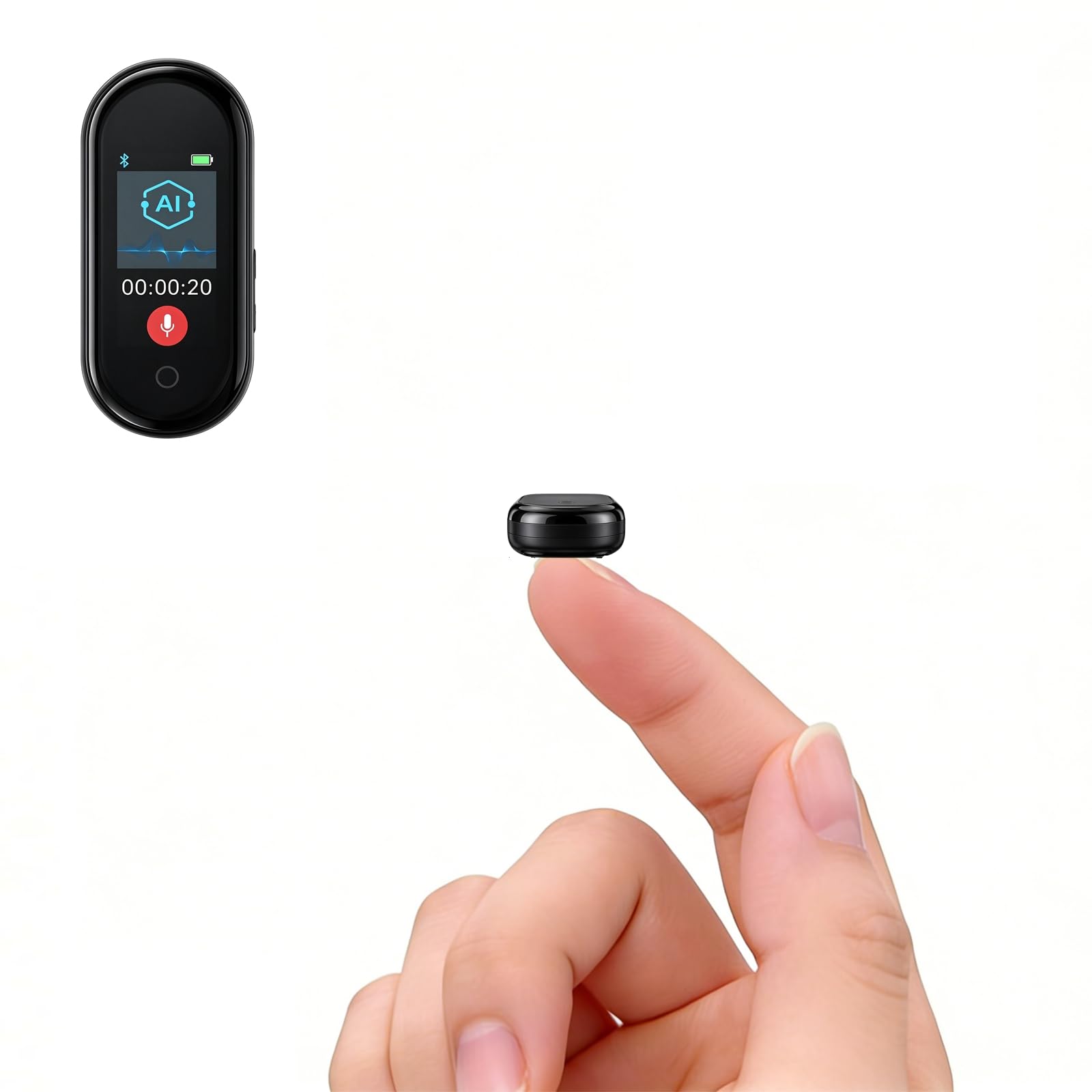
Storage is the defining number here, and it’s not close. This pick carries 136 GB of built-in memory, against 4 GB on either Gem model — a real difference when you record long sessions and rarely get around to clearing files. It also quotes up to 100 hours of battery life and up to 9,800 hours of digital recording time, so a multi-day trip doesn’t force a transfer. One device, three ways to wear it: slide it into the wristband, clip it to a notebook or lapel, or hang it on the lanyard as a pendant.
The AI layer is the second reason to look at it. It transcribes speech to text, distills key takeaways, generates mind maps and offers 24+ professional templates covering meeting summaries, action items, sales reports and diary entries. Live translation covers 256+ languages and dialects, and photo translation reads signs, menus and documents from your phone camera. Exports come out in TXT, PDF or Markdown and share by chat, email or link. Recording is one slide to power on and go, with voice-activated recording that starts on sound and pauses during silence, plus low-battery auto-save and password protection. The display is a 0.96-inch full-color panel.
This is the pick for international work, fieldwork or academic research where the recording is constant and the language changes. The trade-off is a smaller screen than the Maxee smartwatch and a body that’s built to be discreet rather than looked at — 3.2 ounces with a 0.96-inch display means it’s a status checker, not a browsing device. Treat the 136 GB as the figure you’re buying; the recording-time claims are generous and best read as headroom, not a daily target.
Why it earns a spot: 136 GB of built-in memory and a 100-hour battery claim make it the capacity king of this list, and the 256+ language live translation plus 24+ summary templates give it real workhorse ability.
Know before you order: the 0.96-inch display keeps it discreet but minimal for reading anything beyond status.
Made for: travelers, researchers and multilingual meetings where storage and translation matter most.
Not for: anyone who wants a big readable screen — the Maxee smartwatch leads there.
5. 16GB Mini Voice Activated Recorder, 3072Kbps Noise Reduction
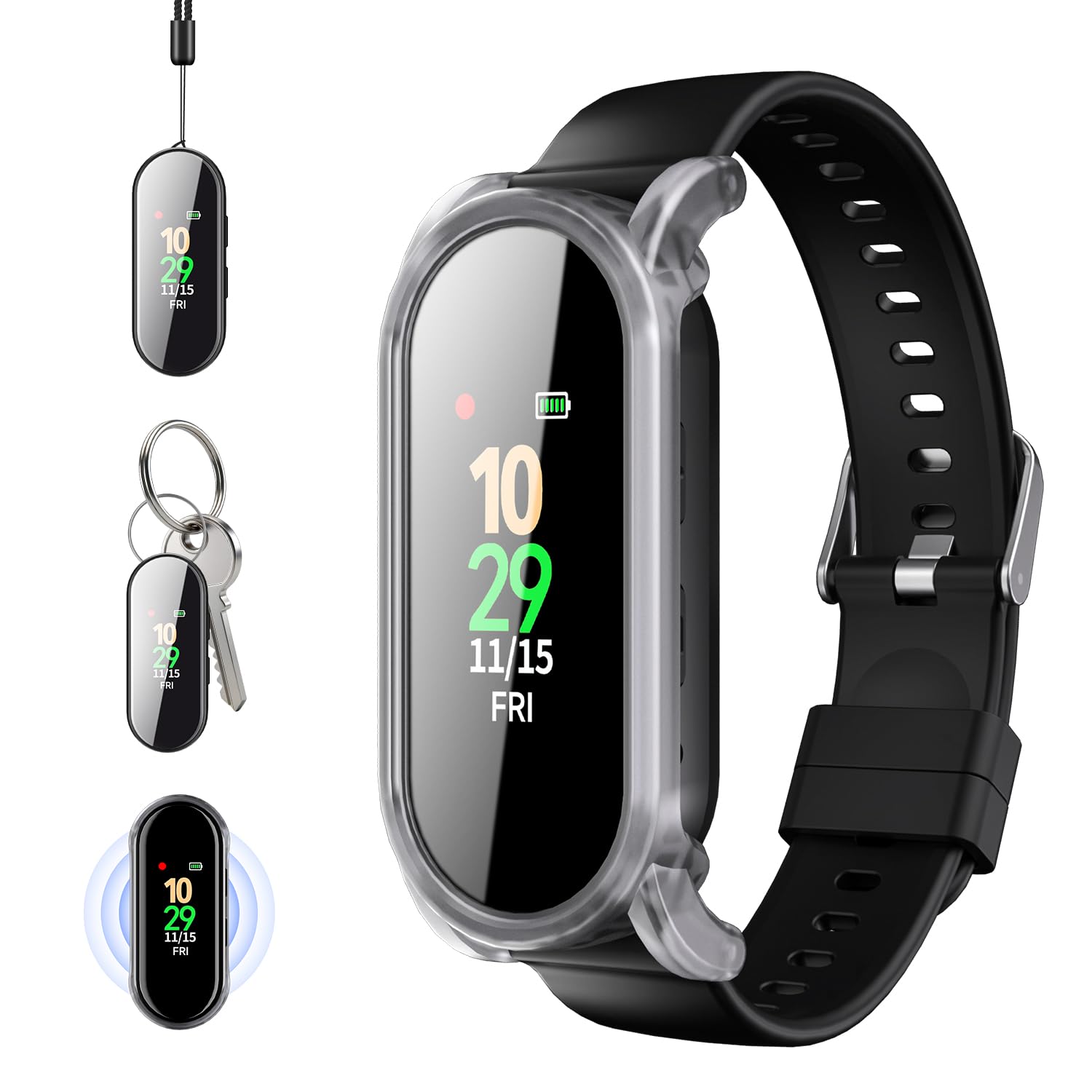
One press and it’s already recording — built for the moments you can’t set up first.
For catching a comment in passing, the one-touch design is the whole appeal. Press the button and the device powers on and starts recording in the same motion, so impromptu conversations and quick pieces of information don’t get away. The bitrate tops out at 3072Kbps, which keeps voices, instruments and other sounds close to their original texture. A built-in DSP acoustic processor handles noise reduction at adjustable levels from 1 to 7, so a noisy canteen or a classroom with background chatter can be dialed down to focus on the target voice.
Wear options outnumber most on this list. It snaps into a wristband, hangs from a lanyard, clips to a keychain or attaches magnetically to iron surfaces like a notebook or fridge. The body is premium metal in a one-piece construction, which is the right call for something carried daily. Storage is 16 GB, and if you want more of the same, the 32GB NSRLO version sits right behind it in this list. Playback supports MP3, WAV, APE, FLAC and WMA, with a 3.5 mm headphone jack for wired listening during breaks.
What sells it is the audio-first focus: no AI layer, no app, no subscription — just a clean high-bitrate recording that lands on a computer over USB-C. The trade-off is that 16 GB fills faster than you’d think when you record at high bitrate, so plan on regular transfers or step up to the 32 GB sibling. It also won’t auto-transcribe anything, so the typing is still on you.
The strongest reasons
- 3072Kbps recording quality with DSP 3.0 noise reduction adjustable across levels 1–7
- One-touch operation that powers on and records in the same press
- Four ways to wear: wristband, lanyard, keychain or magnetic clip
The fair caveats
- 16 GB runs out faster at high bitrate than at lower settings
- No transcription — you get audio files, not typed notes
Best served: anyone who wants the best raw audio without an app or subscription in the way.
Better elsewhere: if storage matters more than bitrate, the 32 GB version is the natural step up.
6. 4-in-1 Digital Voice Recorder 32GB
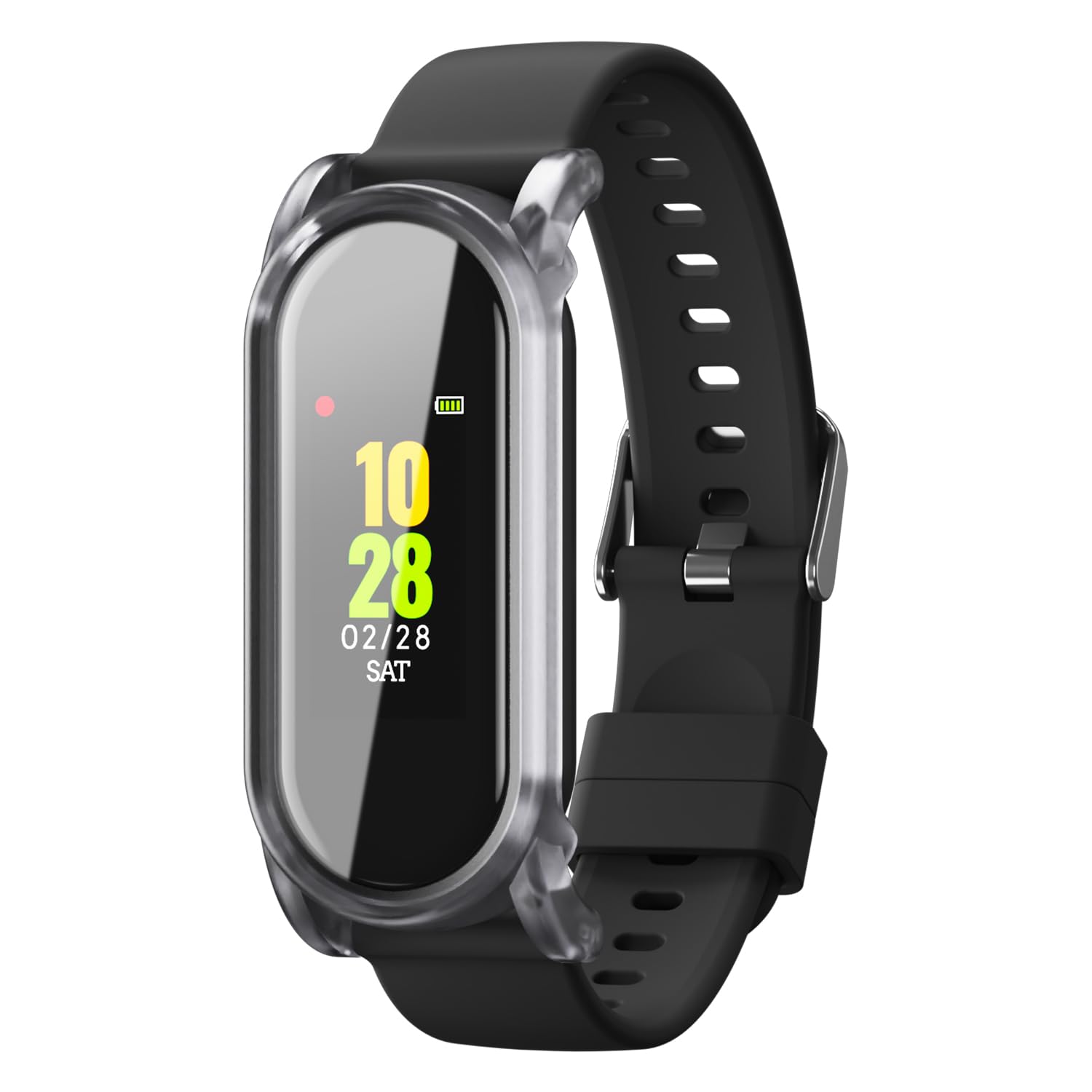
32 GB of storage versus 16 GB on its closest sibling, same high-bitrate core.
This is the direct answer to the storage question in this list. The 16 GB NSRLO recorder just above fills up at high bitrate; this version raises that to 32 GB and keeps the same 3072Kbps ceiling. If you record long lectures or full workdays and hate transferring files, that’s the number worth paying attention to. The DSP 3.0 noise reduction with adjustable levels from 1 to 7 carries over too, so a busy conference room can be tamed without changing your workflow.
Carry options are the same four: wristband, lanyard, keychain or magnetic clip on iron surfaces. One press powers it up and starts recording, and playback handles MP3, WAV, APE, FLAC and WMA through the 3.5 mm headphone jack. The body is one-piece metal, so it survives being dropped in a bag, and it looks like a far more expensive piece of gear. File transfer runs over USB. It’s the pick for the person who wants the high-quality audio path plus the room to keep it, and the storage bump is the only real change from its sibling.
The honest trade-off is identical: no AI transcription, no summaries, no app. If you want typed notes, this isn’t it — the Gem or Maxee picks do that job. But as a pure, high-bitrate audio recorder you can wear, it covers more ground per charge of storage than the 16 GB version. That’s a practical fit for students recording back-to-back lectures or field workers logging a full day.
The case for it: 32 GB of storage paired with 3072Kbps recording and adjustable DSP 3.0 noise reduction ends up being the value answer if you record at high quality and long duration.
The honest gap: it’s an audio-first tool — no transcription, no AI summaries, no companion app.
Go for it if: you want the sharper audio of the 3072Kbps path with 32 GB of storage versus 16 GB on the sibling.
Skip the upgrade if: 16 GB already covers your typical session length — the core recording is the same.
7. Voice Recorder Watch 32GB

No apps, no pairing, no cloud — just a wristband that records for a long time.
This one trades AI features for straight-ahead hardware, and that’s the point. You get 32 GB of storage and support for up to 30 hours of high-quality recording, so a full day of lectures or meetings fits in one charge. A 1.44-inch LCD screen gives you clear navigation for settings and playback, and the wristband design is discreet enough to wear without a second glance. The bluedery recorder keeps things offline by design — no WiFi, no Bluetooth.
Noise reduction handles crowded rooms, and voice-activated recording auto-starts when sound is detected and pauses into storage-saving mode when it’s quiet. Beyond recording, it plays MP3 and WAV, runs a timer and alarm, supports multiple languages and protects your files with password protection. File transfer runs over USB 2.0 to a computer. If you’ve ever worried about a cloud-connected recorder keeping your audio somewhere you can’t see, that offline architecture is the whole reason to pick it.
The real trade-off is the missing convenience layer: no Bluetooth means no phone app, no auto-transcription and no syncing — you plug into a computer and move files the old way. That’s a plus for some buyers (privacy, simplicity) and a friction point for others. The 30-hour recording claim on 32 GB is generous, so lower the bitrate or expect to transfer more often than the sticker suggests. For the money, it’s a lot of offline wear-and-record capability built around one job.
What it does well
- 32 GB of storage and up to 30 hours of recording per charge
- Fully offline: no WiFi and no Bluetooth, so nothing leaves the device
- 1.44-inch LCD screen plus password protection and voice activation
Where it’s limited
- No Bluetooth or app, so transcription and cloud sync are off the table
- Transfer needs a computer over USB 2.0
Right for: privacy-first buyers who want a simple, price-friendly wristband that records for hours.
Wrong for: anyone expecting auto-transcription or phone-app control.
Know the Specs
Recording time vs. storage
Recording time is how long the battery keeps the microphone running on one charge — 20 hours on the Gem models, 30 hours on the bluedery bracelet. Storage is how much audio the memory holds, and it’s sized separately: 4 GB on the Gems, up to 136 GB on the MZKDFDW pick. These two numbers rarely line up because a lower bitrate lets the same memory hold more hours. Check both, and match storage to how often you actually transfer files to a computer.
Bitrate (Kbps) and noise reduction
Bitrate measures how much data the recorder writes per second — 3072Kbps is the ceiling on the NSRLO picks here, and it keeps voices closer to their original texture than a low-bitrate file does. Noise reduction is the filter that pushes background sound down so a conversation stands out. Adjustable levels, like settings 1–7 on the NSRLO models, let you go strong in a loud room and gentle in a quiet one. Both matter more than the marketing copy implies.
Wrist fit and wear styles
Wrist size decides whether a band disappears or pinches. The Gem models span 5.9–8.7 in and 5.5–8.7 in respectively; anything inside that range should sit flat. Wear styles vary too — some models snap into a wristband, others clip to a lapel, hang from a lanyard or magnetically attach to a notebook. A multi-wear model like the MZKDFDW offers all three, while the Maxee is a fixed smartwatch strap.
Transcription and language support
Transcription turns recorded speech into typed text. Language coverage varies widely across this list — 153 languages on the Gem, 109 on the Maxee, 256+ on the MZKDFDW. Most transcription depends on a companion app and sometimes a monthly allowance: the Gem Starter Plan includes 300 transcription minutes per month for free. If typed notes matter to you, confirm the language support and the plan before you buy.
Common Questions
Can I actually wear a voice recorder as a watch all day?
Does the Gem recorder need an Apple Watch?
Is the bluedery recorder better because it has no WiFi or Bluetooth?
How many languages can each recorder transcribe?
Will a wrist recorder capture a conversation across a meeting table?
How long does the battery actually last when recording?
Do I need a paid subscription to use the Gem recorder?
Can I wear a wrist recorder in the shower or while swimming?
What’s the difference between 3072Kbps audio and a standard recording?
The Bottom Line
For most people, the wrist watch digital voice recorder winner is the Gem Wearable AI Voice Recorder, Standalone — 20 hours per charge, 300 hours of audio stored on the wristband, transcription in 153 languages, and a free Starter Plan that covers 5 hours a month. If you already live in an Apple Watch, the Gem Apple Watch co-wear edition puts the same recorder on the strap you never take off. And if you want a full smartwatch with a 2.13-inch AMOLED screen and 30 hours of recording, the Maxee AI Smart Watch is the one that does both jobs. If you only need raw, offline audio recording, the bluedery 32GB voice bracelet handles a full day without any cloud in the loop. Start with the pick that matches how you actually wear your wrist — standalone band, Apple Watch co-wear, or full smartwatch — and everything else is details.
How we choose
We do not accept paid placement. Every pick is matched to a real buyer and a real use-case; we do not hands-on test units.
Sources
Specifications: manufacturer listings and product documentation. Review insights: verified customer reviews, as of November 2026. Pricing: not shown on this page (it changes often); check the current price via the retailer link.
As an Amazon Associate, Tactical Gear Guy earns from qualifying purchases. This does not affect which products we feature.