Specs are compiled from manufacturer listings and verified buyer reviews and can change over time — please confirm the key details on the product page before buying.
Hand-wringing a wet towel is the part of laundry nobody misses — sore wrists, a soaking floor, and clothes that still drip hours later. A clothes wringer solves that with two rubber rollers and a crank: you feed the fabric through, the rollers squeeze the water out, and the item comes out damp instead of dripping. The picks below mount to a tub, table, or sawhorse, and each earns its spot for a different job.
This guide is built by comparing the manufacturers’ published specifications and the patterns across verified customer reviews, so you get each pick’s real strengths and trade-offs instead of marketing spin.
What separates a wringer that lasts from one that rattles loose is roller width, clamp behavior, and how the frame handles a heavy load. The comparison table below lines up roller width, clamp type, and frame material so you can match a unit to your laundry volume and mounting surface. Every pick here is a manual wringer for anyone done with sore wrists and dripping floors.
Top Picks

How To Choose The Best Wringer for Clothes
A wringer is a simple machine, but the small differences decide whether it saves you time or makes a mess. Here are the four points that matter when you are shopping for one.
Roller width sets your pace
Wider rollers swallow a towel in fewer passes. A 12-inch roller handles most household laundry fine, while a 14-inch roller feeds a beach towel or chamois through faster. Anything narrower forces you to work in strips, which slows the whole job down.
Clamp direction decides where it can live
Most wringers clamp to a flat edge. Some let you rotate the clamps so they grip a vertical surface or an angled rim. If you plan to mount to a round bucket or a washbasin, check that the brackets swivel or can be repositioned — a fixed clamp on a curved tub is the most common reason a wringer feels unstable.
Roller material and bearings handle the wet work
Nitrile rollers stay grippy when soaked and resist wear better than soft rubber. Bronze bushings soaked in oil keep the shafts turning smoothly even after years of damp laundry. Both are worth asking about, because the rollers and shafts are what actually do the squeezing.
Frame coating versus rust
A powder-coated or zinc-undercoated steel frame holds up to constant water far better than bare steel. For an outdoor or damp-basement wringer, that coating is what keeps rust from spotting the frame.
Side-by-Side Comparison
| Model | Best For | Roller Width | Weight | Frame Material | Amazon |
|---|---|---|---|---|---|
| Northwood Calliger Clothes Wringer★ Best Overall | All-round home laundry | 12 in | — | All-steel frame | Amazon |
| The Great American Wringer Co Black Coated SteelLong-Haul Build | Long-haul durability | 12 in | 5.08 kg | Alloy steel with zinc undercoat | Amazon |
| Dyna-Jet Heavy Duty BL-44 | Wide-towel and car-wash duty | 14 in | 5.06 kg | Steel | Amazon |
| Wisemen Heavy Duty Industrial | Heavy commercial use | — | 11.92 lb | Black coated plain steel | Amazon |
| Hand Wringer Black and Stainless Steel | Budget entry to wringing | — | 6 lb | Black coated steel | Amazon |
| Upgraded Clothes Wringer Rubber Rollers | Delicates and variable loads | — | — | Stainless steel | Amazon |
| Clothes Wringer Rubber Rollers Gray | Small spaces and RVs | — | — | Metal and plastic | Amazon |
Detailed Reviews
1. Northwood Calliger Clothes Wringer 12-Inch
Our pick — 4.5+★ from 550+ verified ratings; the strongest balance of quality and price.
The one that clamps to almost anything, then squeezes a full load dry.
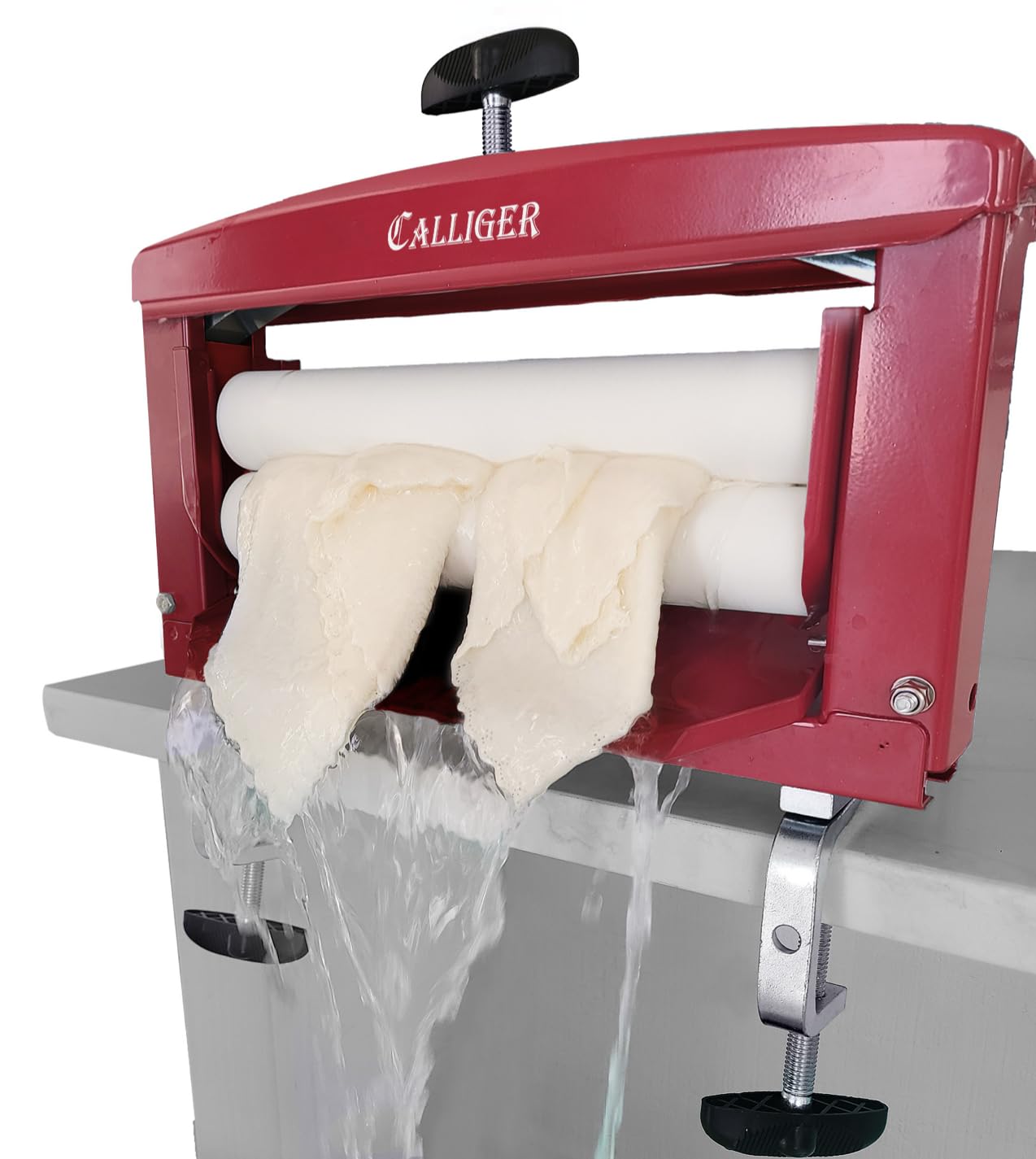
The Northwood Calliger earns the top spot because of one feature few rivals offer: a clamp system that rotates to grip either a horizontal surface or a vertical one. That means you can bolt it to a tabletop, a counter, a sawhorse, or the rim of a washbasin and it still sits steady. If your laundry setup moves around the house, this is the pick that goes with it.
The 12-inch roller width takes a pair of jeans or a towel in a couple of passes, and the all-steel frame and roller shafts stand up to a full wash-day cycle without flexing. Dry time is where it wins people over — laundry comes off these rollers damp rather than dripping, so a line or rack finishes the job much sooner than a hand-twisted load. Its 4.5+ star rating across hundreds of reviews backs that up, with buyers repeatedly citing the steel frame and the shorter drying time.
Two honest limits. It is heavy, and the consensus on weight is genuinely mixed — several buyers describe it as monstrously heavy, which matters if you plan to stow it between washes. Clamp stability is also the most-mentioned gripe, so take the time to seat the clamps on a solid edge rather than a thin one. Neither issue changes what the tool does; both mean you should plan a permanent or semi-permanent mount rather than a floating setup.
What earns it the top spot
- Rotating clamps grip horizontal or vertical surfaces — tables, counters, washbasins, sawhorses
- 12-inch rollers handle thin and thick fabric, plus chamois towels and sponges
- All-steel frame and roller shafts built for frequent use
- Removes enough water that drying time drops noticeably
What to plan around
- Heavy — budget a fixed spot for it rather than stowing it each time
- Needs a sturdy edge under the clamps; a flexing surface feels unstable
- Wider than the 15.35-inch overall footprint of the gray MADONGLI, so measure your mounting gap first
Reach for this if: your laundry spot changes or you want one wringer that works on a tub, a table, or a sawhorse.
Think twice if: you need to pack it away after every wash — the weight makes that a chore.
2. Great American Wringer Co Model Hand Wringer
Built for the buyer who wants to mount it once and forget it for years.
This is the corrosion-focused build. The frame starts with a zinc undercoat under the black top coat, so a scratch or a drop exposes zinc rather than bare steel — the layer that stops rust from spreading. Add black nitrile rollers and oil-impregnated bronze bushings, and you have a wringer designed around water exposure rather than against it. Durability is what owners praise most here, and the bronze bushings are the quiet reason why the crank keeps turning smoothly.
Compared with the Northwood Calliger, this one runs a 12-inch roller too — the same width — but sits heavier at 5.08 kg versus the Calliger’s spec sheet. It is only marginally heavier than the Dyna-Jet at 5.06 kg, so the real divider is the coating system and the nitrile rollers rather than brute mass. For a basement or a garage install that gets splashed weekly, the zinc layer is the head start you want.
The trade-off is real: this is a heavy unit, and the consensus calls it very heavy, so mounting it over a tub edge needs a bracket setup that can carry that load. Rust resistance gets mixed feedback even here, which tells you the coating helps but no steel wringer is maintenance-free. The maker’s own advice — scrub the rollers before first use — is worth following. Width runs 12 inches; if you want wider, the maker points to an 18-inch model rather than stretching this one.
This frame fights rust better than bare steel: a zinc undercoat plus a black top coat gives it a corrosion head start that bare or lightly finished steel does not get, so it holds up in a damp basement. The bronze bushings (sleeves that let the shafts spin freely) keep the rollers turning in damp conditions.
Where it asks for help: it is one of the heavier units here, and it still needs a sturdy mount — treat the bracket as part of the purchase, not an afterthought.
Suits: a permanent laundry-room or garage install where water and splashes are routine.
Less ideal for: anyone who wants to carry the wringer between rooms — the weight argues against it.
3. Dyna-Jet Heavy Duty Chamois/Towel Wringer BL-44
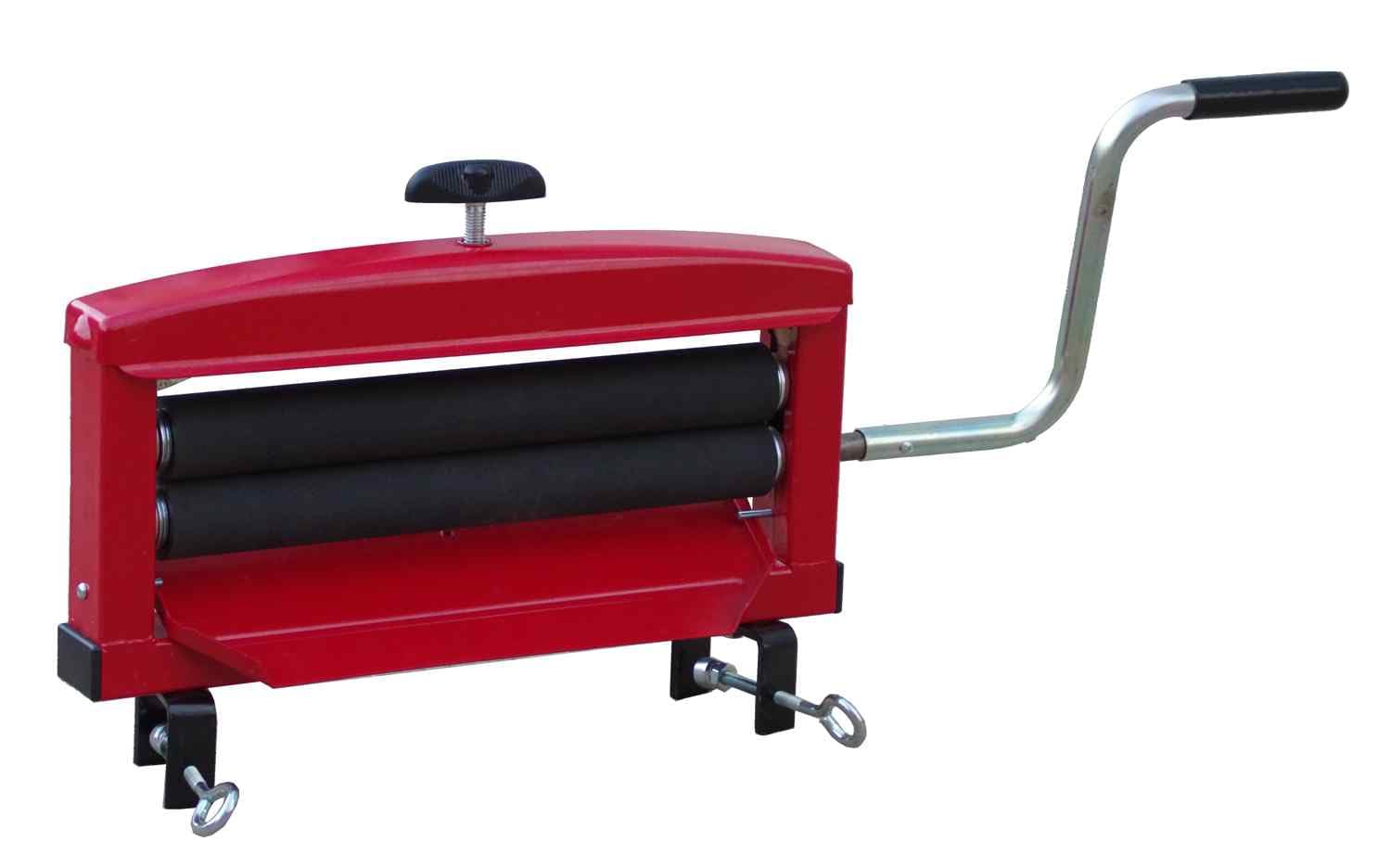
The widest rollers here — 14 inches of nitrile that swallow a beach towel in one pass.
Width is the whole point of the Dyna-Jet. At 14 inches, its rollers are wider than the 12-inch rollers on the Northwood Calliger and the Great American Wringer Co models, so large items feed through faster with fewer strips. The rollers themselves are 1¾ inches in diameter and built from nitrile, a rubber that resists water and wear better than softer compounds. Oil-impregnated bronze bearings keep the shafts free-turning, and the swiveling mounting brackets can be moved closer together or farther apart to fit round tubs and buckets as well as flat edges.
This is a wringer for people whose laundry list includes car-wash chamois, boat rags, pool towels, and dish towels — the bulky, heavy-when-wet stuff. The larger rollers feed those through with less tugging than a narrow unit and pull more water out on each pass, so drying time shrinks. The maker assembles it in the USA with imported components and keeps American-based phone support, which is a genuine draw if you want a person on the line rather than a form.
The catch: those swiveling brackets only work if your mounting point can carry the load, and at 5.06 kg the unit is in the same heavy class as the Great American model. Round tubs and buckets work, but a flimsy rim will not. Also size your expectations on the crank — the rollers do the squeezing, but a wide, soaked chamois still needs a steady, two-handed feed.
The width advantage: 14-inch nitrile rollers versus 12-inch rollers on the Calliger and Great American picks — a measurable edge for anyone wringing towels, chamois, or boat rags.
The mounting caveat: swiveling brackets fit round tubs and buckets, but the support underneath has to be genuinely sturdy to handle the unit’s 5.06 kg.
Best fit: car detailers, boat owners, and households with a steady stream of thick towels.
Look elsewhere if: you only wring light shirts — the extra width is more tool than you need.
4. wisemen Heavy Duty Hand Clothes Wringer

Made for car detailers and washing services, where the wringer runs all day.
Read the use cases on this one and the design makes sense: car detailers and washing services. The frame is black-coated plain steel, the rollers are nitrile, and the build is pitched at commercial duty rather than the occasional towel. It shortens drying time on clothes, towels, and swimwear, and it takes the water out of chamois and rags used on washed cars.
Compare it to the Dyna-Jet and a clear split appears. The Dyna-Jet also targets chamois and car-wash duty with 14-inch rollers, but this Wisemen is heavier at 11.92 pounds, which points to a beefier frame for a shop that wrings items back-to-back. If your wringer is a tool you use on a job rather than a weekend appliance, that extra mass is the reason to pick it.
That same weight is the honest catch. At 11.92 pounds it wants a permanent, bolted-down or heavy-bench mount, and moving it around is not a one-hand job. It is a shop tool, not a fold-away — if your setup changes weekly, a lighter unit makes more sense.
The shop-ready angle: coated plain steel and nitrile rollers in an industrial build, sized for detailers and washing services that cycle items continuously.
Weight to respect: 11.92 pounds needs a sturdy, permanent mounting point — plan for a bench, not a flimsy table edge.
Pick it for: a car-detailing operation or a busy laundry that runs the wringer all day.
Skip it for: a light household setup or a wringer you plan to carry and stow.
5. Hand Wringer Black and Stainless Steel

The classic hand wringer that squeezes fabrics hard — if you can pin it down.
The effectiveness is the reason this one keeps selling. It takes water out of fabrics effectively and owners treat it as a value buy — it does the core job of squeezing a wet item down to damp. Two finishes are sold under this listing: a durable black coated steel, and a solid stainless steel. Only the stainless model is actually stainless; the black model is coated regular steel. Know which one you are ordering before it ships.
Stability is where the honest caveat sits. The consensus on stability is the negative thread — this unit is described as incredibly difficult to affix to a stable surface, so the mounting bracket deserves as much attention as the wringer body. Durability opinions are mixed too, with some frames holding up and others showing rust after the second use. A wipe-down and dry after each session is worth the thirty seconds.
Consider it as a starter or secondary wringer: one for a vacation rental, a cabin, or a backup when the machine dies. It is the least expensive path here, and the core squeezing mechanism works. If this is your primary wringer for years of heavy laundry, though, the Great American model’s zinc-coated frame is the more corrosion-resistant route.
Why it earns a spot: effective water removal from a plain, inexpensive hand wringer — it does the central job without extra features you may not need.
The mounting hurdle: fixing it to a stable surface is the recurring frustration, and rust shows up on some frames. Dry it after every use.
Good for: a cabin, rental, or backup wringer where the job is occasional and the budget is tight.
Not the one for: a damp basement and daily all-season use — a coated, zinc-undercoated frame handles moisture better.
6. Upgraded Clothes Wringer, Rubber Rollers Heavy Duty Gray

Dial the roller pressure down for silk, up for blankets — the adjustable pick.
The feature that matters here is the pressure knob. You set roller tightness to match what you are wringing — gentle on delicates, tighter on bulky loads. The rubber roller surface carries a patterned shape that adds grip on wet fabric, so even a slick silk blouse feeds through rather than sliding. The stainless steel body holds up to wet use, and the clamp rotates to match the work surface.
Setup is the other headline: it unfolds and locks into place, with no complicated install, and fits workbenches of various widths and thicknesses. That makes it a good fit for a renter or a small-space setup where the wringer moves between surfaces. The maker claims it lifts more moisture out than hand twisting, and the patterned rubber roller is what grips the fabric to do it.
The honest limit is the clamp-to-surface dependency. On a wide bench it sits well; on a thin or curved edge, you will be fiddling with the clamp position to get it firm. It is a good all-round choice for mixed loads, not the best for someone wringing heavy chamois all day — the Wisemen and Dyna-Jet hold that territory.
The control you get
- Pressure knob sets roller tightness — gentle on delicates, firm on heavy loads
- Patterned rubber roller surface adds grip on wet fabric
- Rotating clamp adapts to different work surfaces
- Unfolds and locks in seconds, no complicated installation
- Stainless steel build for wet conditions
The limits to weigh
- Clamp grip depends on the bench edge you give it
- Not the pick for continuous heavy chamois or commercial duty
Choose it when: your loads are mixed — silks one day, blankets the next — and you want pressure control.
Choose another when: you need one unit locked to a bench for heavy daily use.
7. Clothes Wringer, Rubber Rollers Heavy Duty Gray

A compact wringer for apartment closets and RV storage — small footprint, real squeeze.
Space is the design brief here. This unit is built to fit apartments, RVs, and camping setups where a full-size wringer has nowhere to live, and it clamps where you need it. The crank handle extracts excess water from laundry, and the surface of the rubber roller is patterned to increase friction with the clothes and drain water better than a smooth roller.
Compare it to the Northwood Calliger on footprint and the sizing question is clear. This MADONGLI measures 15.35 inches long by 8.06 wide, while the Calliger is a different build at a 12-inch roller width with its own overall length. If your mounting surface is narrow, measure the gap before ordering — the clamp fits a flat edge and the compact body is the reason it lives in an RV cabinet.
The honest note is that the compact body and the high-quality metal components with a two-year manufacturer warranty are a fair value, but this is not a heavy-volume tool. Car-wash duty, daily apartment laundry, and camping are the intended uses. If you are wringing beach towels for a family of five, a wider roller will save you passes.
The small-space case: a compact body that mounts in an RV, apartment, or camping setup, plus a patterned roller for better grip and a two-year manufacturer warranty.
The pacing caveat: compact size means more passes on bulky items — fine for light loads, slower for a full family wash.
Made for: an RV, a small apartment, or a camping kit where the wringer has to fit in a tight spot.
Maybe not for: high-volume family laundry — a wider roller cuts the pass count.
Know the Specs
Roller Width
Roller width is the length of the rubber cylinders that grab the fabric, measured in inches. A 12-inch roller handles a folded shirt in one pass but needs two on a full towel. A 14-inch roller takes the same towel in one. Wider is faster on bulky items, but a wide roller also needs a wider mounting point. If your surface is narrow — an RV counter, a small tub rim — check the body length before buying.
Roller Material and Bearings
Nitrile is a rubber compound that stays grippy when wet and resists wear. Patterned rollers add texture that grips slippery fabric, which matters for silk and synthetic blends. Bearings matter just as much: oil-impregnated bronze bushings keep the roller shafts turning freely through years of damp use, so the crank does not seize or get stiff. Both are worth confirming before you buy.
Clamp Type and Mounting
The clamp is what holds the wringer to your surface. Fixed clamps work on a rigid flat edge; rotating or swiveling brackets fit vertical faces, round tubs, and buckets. Whatever style you pick, the surface underneath has to be rigid — a flexing board or a thin rim makes the wringer feel unstable as you crank. Mount it once, firmly, and the tool performs the way it was designed to.
Frame Coating and Rust
Water and steel are a long-term problem. Powder coatings give a hard outer layer, and a zinc undercoat adds a second line of defense — if the top coat scratches, the zinc protects the underlying steel. For a wringer that lives in a damp basement, a garage, or outdoors, that coating is the difference between a tool that lasts and one that spots with rust.
Common Questions
How wide are clothes wringer rollers and does width matter?
Can a clothes wringer mount to a round bucket or tub?
Do clothes wringers rust after a few uses?
Is a wringer safe for delicates like silk?
How much water does a wringer remove compared to hand twisting?
How heavy is a hand clothes wringer?
What is the difference between black coated steel and stainless steel wringers?
Can I use a clothes wringer for car-wash chamois and boat rags?
Does a clothes wringer need electricity or a water hookup?
How do I keep the wringer rollers working smoothly over time?
The Bottom Line
For most households, the wringer for clothes winner is the Northwood Calliger Clothes Wringer. Its rotating clamps let you mount it on a table, a tub rim, or a counter, so you can wring right where you wash. Its all-steel build handles a full load without flexing. If you want the most corrosion-resistant frame for a damp basement, grab the Great American Wringer Co model with its zinc undercoat. And for car washes, pool towels, and chamois, reach for the Dyna-Jet BL-44: its 14-inch rollers feed bulky items through in fewer passes.
If you are upgrading from hand twisting, the Calliger is the safest first buy: 4.5+ stars across 500+ owners, and its rotating clamps let you mount it wherever you wash.
How we choose
We do not accept paid placement. Every pick is matched to a real buyer and a real use-case; we do not hands-on test units.
Sources
Specifications: manufacturer listings and product documentation. Review insights: verified customer reviews, as of November 2026. Pricing: not shown on this page (it changes often); check the current price via the retailer link.
As an Amazon Associate, Tactical Gear Guy earns from qualifying purchases. This does not affect which products we feature.