Specs are compiled from manufacturer listings and verified buyer reviews and can change over time — please confirm the key details on the product page before buying.
Short answer: for most home training spaces, the IncStores Tatami tiles get the basics right — 7/8-inch closed-cell EVA that stays firm under a takedown and wipes clean after groundwork. But “best” depends on one thing above all else: how thick your foam is and how well the surface grips a sweaty bare foot. Get thickness or grip wrong and every drill turns into a slip risk. Get both right and the garage becomes a room you actually train in.
This guide is built by comparing the manufacturers’ published specifications and the patterns across verified customer reviews, so you get each pick’s real strengths and trade-offs instead of marketing spin.
Below you’ll find ten mats sorted by what they actually do well — interlocking tiles, roll-ups, inflatables, and foldables — each measured on thickness, surface grip, and storage footprint so you can match one to your space. The right wrestling mats for home setup starts with knowing your floor and your training style before you buy.
Top Picks


How To Choose The Best Wrestling Mats for Home
Buying a mat for the house is not the same as buying a gym mat. You are living on this floor, storing it in a closet, and rolling it out in a room with a low ceiling and a washing machine in the corner. Three things decide whether you end up training on it or tripping over it: thickness, surface material, and how it comes apart for storage.
Thickness: the number that decides how hard you land
A thicker mat absorbs more impact, and that matters most on takedowns. A 1.2-inch mat handles drills and groundwork well, while a 1.5-inch mat adds extra cushioning for repeated takedowns. Inflatable designs can reach 4 inches, which is a different animal entirely — softer, bouncier, and better suited to technique work than hard throws. Whatever the number, dense closed-cell foam will feel firmer underfoot than a soft foam pad, and that firmness is a feature for grappling, not a flaw.
Tiles, roll-ups, or inflatables
Interlocking tiles snap together into a permanent-feeling floor and store as a stack of squares. Roll-up mats give you one continuous surface you can roll away in seconds. Inflatables win on portability but need a pump and a few minutes of setup before every session. Match the format to how often you train and where the mat sits between sessions.
Surface grip and cleanup
A textured vinyl or tatami top holds a bare foot better than a smooth finish, and sweat is the enemy of every mat. Look for a surface you can wipe down with a damp cloth and mild soap. A mat that grips when dry but slides under sweat forces you to hold back mid-drill.
Side-by-Side Comparison
| Model | Best For | Thickness | Material | Footprint | Amazon |
|---|---|---|---|---|---|
| IncStores Tatami Foam Tiles★ Best Overall | Best overall for home gyms | 0.78 in | EVA foam | 16 tiles, 2’x2′ each | Amazon |
| Meister X-Thick 1.5″ MatsDeepest Cushion | Softest landing for takedowns | 1.5 in | EVA foam | 10 tiles, 40 sq ft | Amazon |
| FINCOME 1.2″ BJJ MatRoll-Up Value | Budget-friendly roll-up | 1.2 in | XPE foam | 118″ x 79″ | Amazon |
| VVELIKE Inflatable 10×10 | Moving between rooms | 4 in | PVC | 10 x 10 ft | Amazon |
| KaoShan 4″ Inflatable with Pump | Fastest inflatable setup | 4 in | Dual-layer PVC | 118″ x 118″ | Amazon |
| KaoShan Roll-Up 1.2″ | Two-piece storage | 1.18 in | XPE foam, PVC cover | 118″ x 118″ | Amazon |
| Dollamur Flexi-Roll | Premium compact roll-up | 1.25 in | Polyethylene, vinyl | 5′ x 10′ | Amazon |
| Great Call Ready Roll | Marked competition circle | 1.25 in | Cross-linked polyethylene, vinyl | 10 x 10 ft | Amazon |
| Meister FlexFloor | Pro-grade training surface | 1.25 in | Vinyl over cross-linked foam | 10′ x 10′ | Amazon |
| GYMMALL Foldable 10’x10′ | Folds flat, no rolling | 1.2 in | XPE padding, PVC surface | 120″ x 120″ | Amazon |
Detailed Reviews
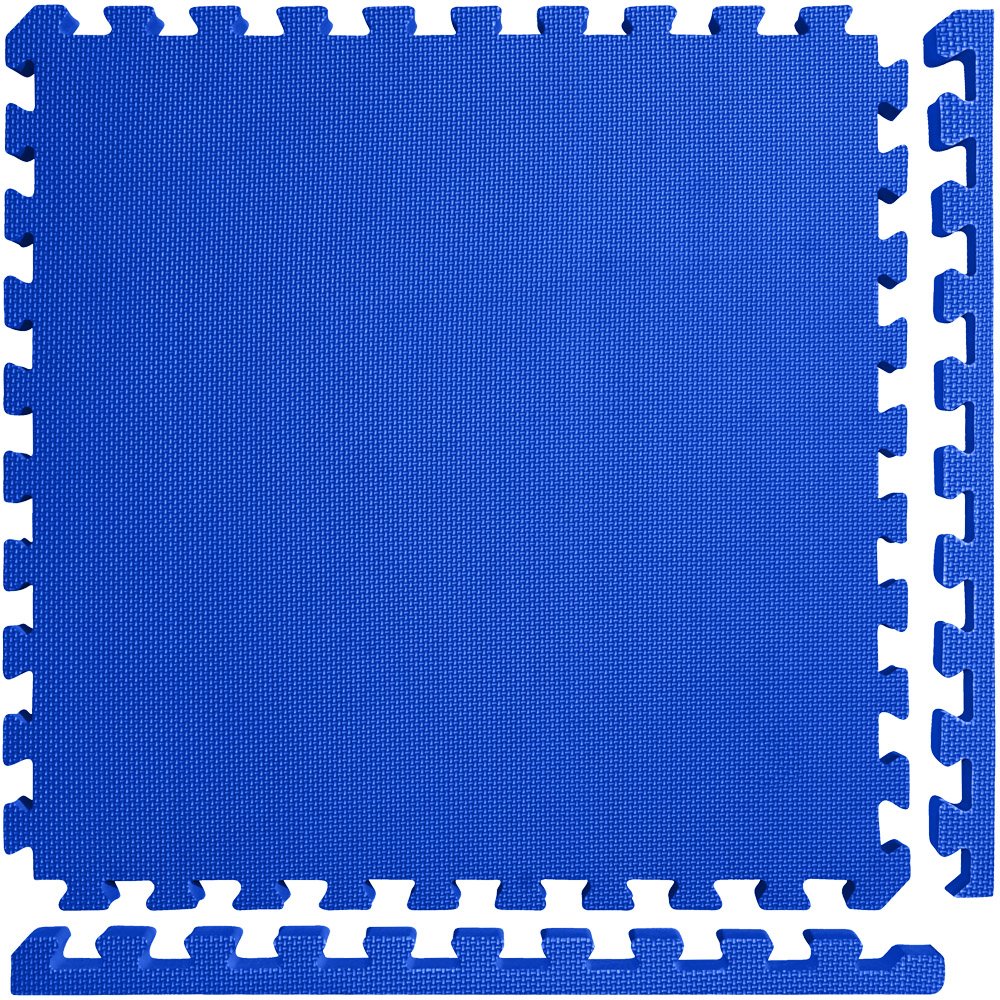
1. IncStores 7/8 Inch Thick Tatami Foam Flooring Tiles
Our pick — 4.5+★ from 600+ verified ratings; the strongest balance of quality and price.
The tatami-textured tile set that turns an empty room into a dojo without a permanent build.
What wins people over here is the build quality of the foam itself — 7/8 inch closed-cell EVA, which is a dense rubbery foam that springs back instead of crushing flat. That firm-but-forgiving feel is exactly what you want when a takedown puts your hip on the floor. The 2’x2′ squares in a black and grey checkered pattern cover a home gym in minutes with no adhesive and no tools.
Each tile is 0.78 inch thick and waterproof, so a spilled bottle or a sweaty session wipes clean with a damp cloth. The 16-tile set gives you a workable floor area, and the reversible colorway lets you swap the look when you rearrange the room. Assembly is tool-free — tiles press together snugly and stay put under bare feet and shoes alike.
The honest catch is the surface. These tiles are slick under a fast, sweaty movement, and heavy equipment left in one spot can leave dented patches in the foam. Neither ruins the mat, but if you plan to drop a heavy rack on it, cushion the feet. For drills, light grappling, and a room that doubles as a playroom, it is the most balanced tile pick here.
What earns the top spot
- 7/8 inch closed-cell EVA gives a firm, springy landing surface
- 16 interlocking 2’x2′ tiles assemble with no glue or tools
- Waterproof top wipes clean between sessions
Where it asks for care
- Smooth surface gets slick when feet are wet
- Heavy equipment can leave dents in the foam
Go for it if: you want a reversible, tool-free floor that handles drills and cleans up fast.
Ease off if: your training is mostly barefoot sparring at full speed on a damp floor.
2. Meister X-Thick 1.5″ Interlocking EVA Foam Mats
Forty square feet of the thickest tile foam you can reasonably lay down in a garage.
Meister builds these tiles at 1.5 inches thick in 100% non-toxic EVA foam, and that extra depth is the whole pitch. Takedowns and throws land on a softer bed than a 7/8 inch tile offers — the X-Thick is roughly double the foam depth of the IncStores tile above. Each tile measures 24″ x 24″ for 4 square feet, and ten tiles give you 40 square feet total. Ten tiles at 29.5 pounds for the set makes this a floor you shift in one go, not a tile-at-a-time puzzle.
The surface is an anti-slip T-pattern that holds both bare feet and shoes, and it is fully reversible so you can flip colors or mix sets for a custom floor pattern. Border pieces ship in the box to finish the edges, which keeps the perimeter from curling. Cleaning is a wipe-down because the foam is waterproof throughout.
The trade-off is firmness. The dense foam supports you, but it does not have the sink-in softness some people expect from a thick pad. If you want a plush landing for rolling, that stiffness takes getting used to. If you want a stable surface that does not swallow your foot on a sprawl, this is the balance point.
Soft-landing verdict: at 1.5 inches, this is the thickest interlocking tile pick on the list, and the T-pattern grip means you are not sliding mid-drill.
One thing to expect: the foam reads firm underfoot — great for push-off, less plush for prolonged ground work.
This one wins if: your sessions lean toward takedowns and you want maximum cushion under a stable surface.
Pick something else if: you want a surface that yields softly rather than pushes back.
3. FINCOME Wrestling Mat 1.2″ Thick Jiu Jitsu Mat XPE Foam
A single continuous roll that goes down flat and rolls up into a corner.
This is one mat, not a set — a single 118″ x 79″ surface in black. It layers a textured top for grip over a high-density XPE foam core that soaks up impact, then a base that keeps the whole thing flat. At 1.2 inches thick, it is built for technique drills, form practice, light sparring, and youth training rather than full-speed takedown work.
The water-resistant surface wipes clean with a damp cloth and mild soap, which makes after-session cleanup a quick job. When you are done, the whole mat rolls up for storage or carries to a different training spot. That roll-up design is the reason it stays easy to live with in a small house.
The catch is the size and the price point for a single piece — it covers one training zone, not a full room. It also reads on the firm side of the cushioning range, a balance that suits groundwork and drills but not a plush landing pad. For a beginner claiming one corner of a room, a single 118″ x 79″ roll beats piecing tiles together.
Reasons it earns a spot
- One continuous 118″ x 79″ surface with no tile seams
- Rolls up for storage or transport in one piece
- Water-resistant top wipes clean with mild soap
Before you commit
- Covers one training zone, not a full room
- Firm feel rather than plush cushioning
Reach for this if: you want a no-fuss single roll for drills and technique sessions.
Look elsewhere if: you need to cover a large room or want a soft landing for repeated throws.
4. VVELIKE Inflatable Wrestling Mat, 10×10 FT
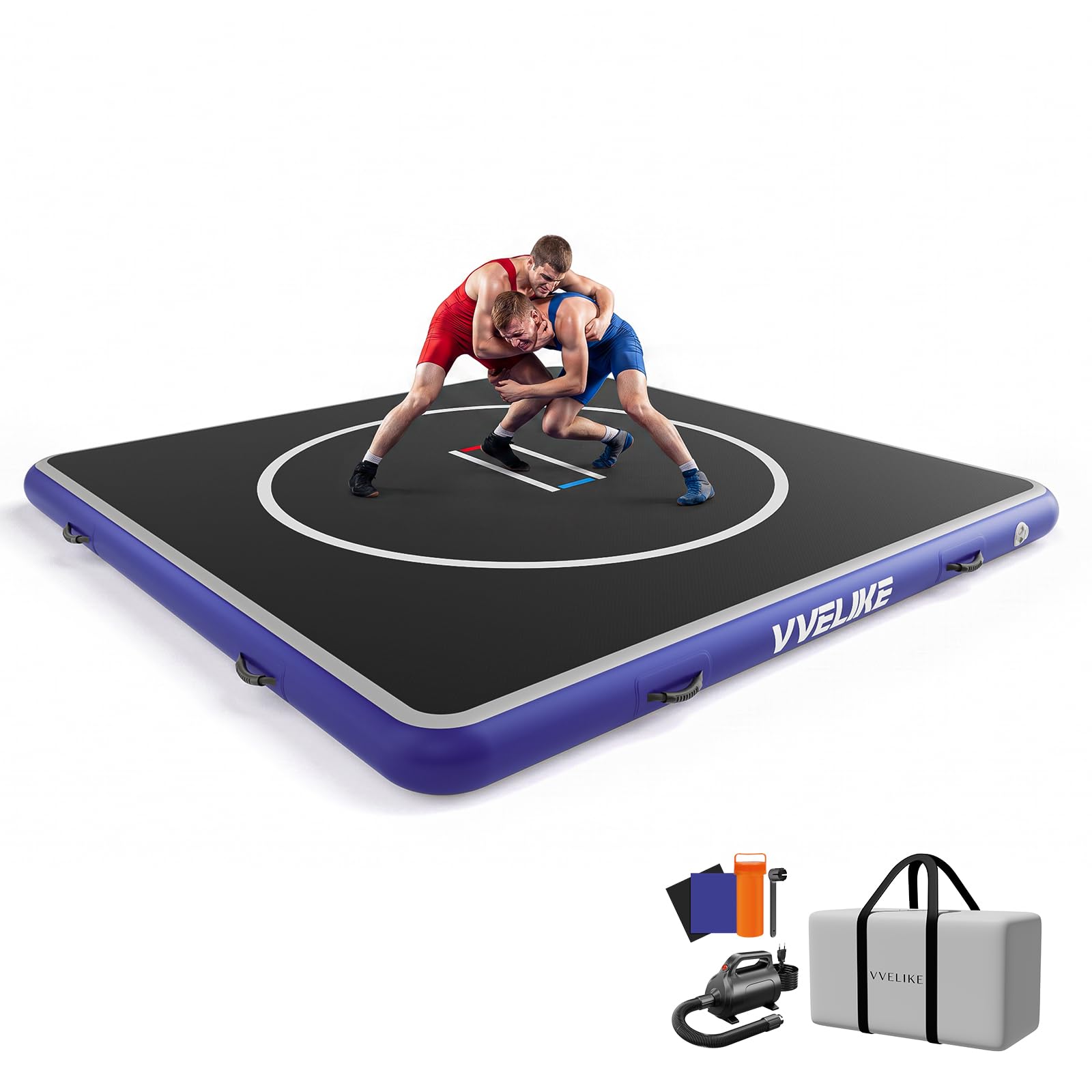
Ten by ten feet of inflatable floor that moves from garage to backyard without a truck.
Space is the whole reason this exists. A 10×10 FT mat gives you room for double-leg shots, single-leg takedowns, sprawls, and ground movement without running into a wall. The durable PVC construction gives a smooth surface, and when you are finished you deflate it, fold it, and the room is yours again.
Inflatable means it is portable in a way a foam roll-up is not. You can shift it between the garage, the backyard, and an open living space without rearranging furniture permanently. The downside that comes with the design is setup time — you need to inflate before each session and give it a few minutes before it is ready.
Compared with the 4-inch KaoShan pump model below, this one ships without a pump in the listed specs, so factor in whether you already own a high-volume inflator. For a family that needs a 10×10 FT play-and-train area gone by dinner, the pump-and-deflate routine is a fair trade.
Where it shines: the 10×10 FT footprint and PVC surface make it a genuine training area that packs down for storage.
What to plan for: inflation is not instant, and you supply your own pump.
Suits you well if: your training space has to be a living space most of the time.
Think twice if: you want a floor you can train on the second you walk in.
5. KaoShan Inflatable Wrestling Mat
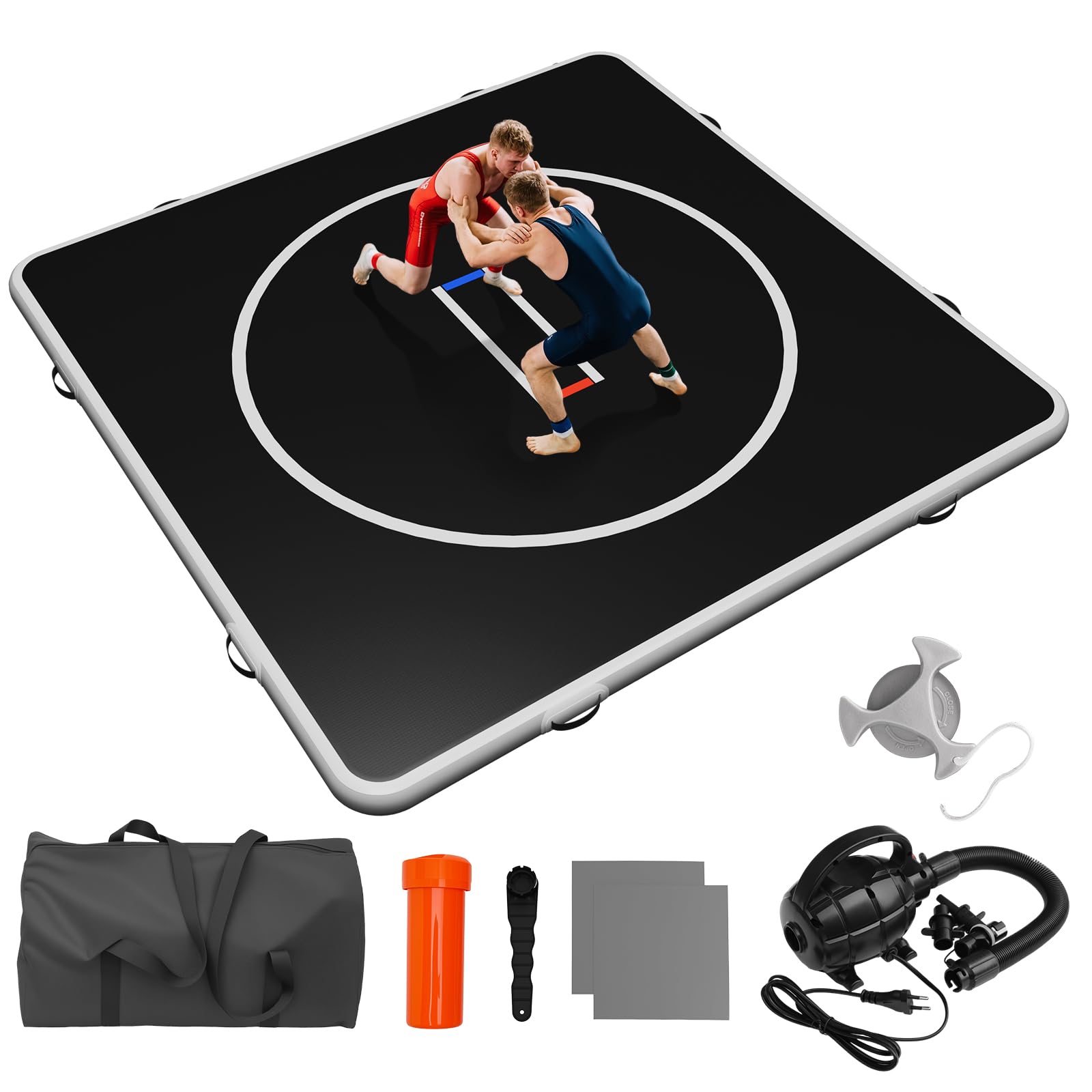
The 4-inch inflatable that goes up in about the time it takes to lace your shoes.
You get a mat you will actually use daily, not one that stays folded in the corner, because the included 600W pump (with a US plug and hose) inflates or deflates it in about 2-3 minutes each. The 4-inch thickness is the deepest cushion on this list, so takedowns land softly.
The surface is dual-layer PVC with a 1.2 mm drop-stitch core, and drop-stitch means the mat holds a flat, rigid shape under pressure rather than ballooning like an air mattress. The textured grip helps maintain footing, and you can add or release air to make it firmer or more cushioned. Once inflated, it stays ready for several days under normal use.
Moving and storing it is easy thanks to the included kit: side handles for repositioning, a bag for the deflated mat, plus 3 adapters, a replacement valve, repair patches, and a valve tool. The catch is weight — the 10 x 10 ft size comes in around 55 pounds, so it takes two people to move. The same model also comes in a smaller 5 x 10 ft and a larger 13 x 13 ft version, so pick the size that matches how many people train.
The case for the pump model
- 600W pump inflates or deflates in about 2-3 minutes
- 4-inch drop-stitch core gives a flat, firm landing
- Complete kit with bag, adapters, and repair patches
Facts to weigh
- Around 55 pounds at the 10 x 10 ft size
- Needs a power outlet to inflate
The right call if: you want the deepest inflatable cushion and the fastest pump-driven setup.
Not the right call if: you need a mat you can lift and move alone.
6. KaoShan Roll-Up Wrestling Mat, 1.2″ XPE Foam
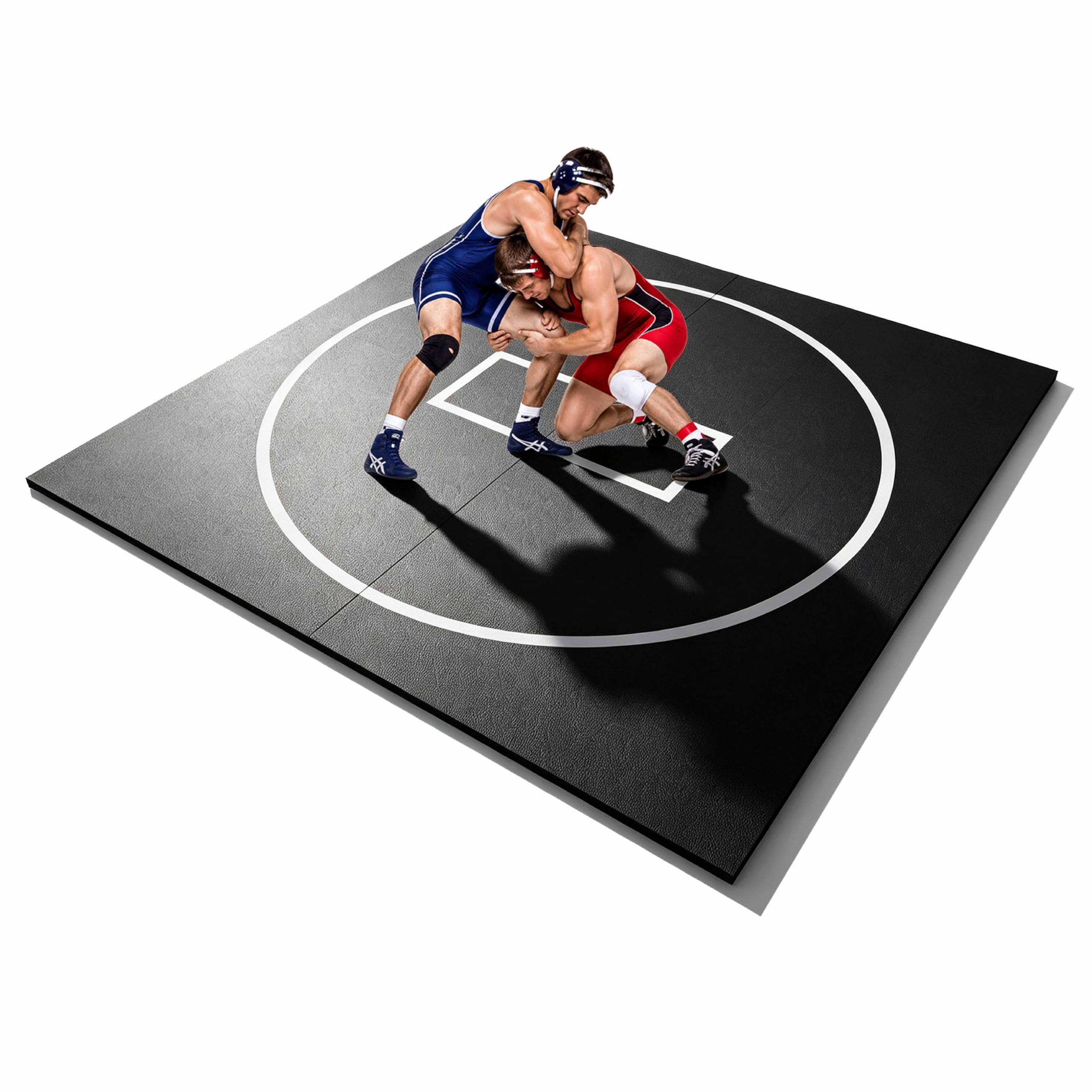
Two manageable halves that join into one training floor and split apart for the closet.
Handling is where this mat pulls ahead of a single giant roll. Two sections connect with a hook-and-loop fastener to form the full 118″ x 118″ training area, then separate for easier carrying and storage. Each half is lighter than the assembled 55 pounds, and the two pieces ship in separate packages for easier delivery.
The build is 1.2-inch XPE foam under a waterproof non-slip PVC cover. XPE foam is a dense, resilient foam that cushions takedowns and falls while staying firm enough for ground work. The PVC top handles sweat and moisture and wipes clean after a session, and it comes in black, red, blue, and gray to match your room.
The one thing to plan for is the center seam — where the two sections meet is a joint, not a continuous surface. That is fine for most drills, but if you train right over that line you’ll notice the transition. Also note the two-package shipping means the halves may arrive on different days. That is a minor inconvenience, not a defect.
The handling advantage: splitting into two pieces is what makes a full-size mat realistic for a garage with a low storage shelf.
Small thing to know: the hook-and-loop join is a seam you may feel underfoot.
Built for you if: you need a full-size mat that two people can move without strain.
Better options exist if: you want a smooth surface and plan to store one continuous roll.
7. Dollamur Wrestling Mat for Home, 5’x10′

Competition-grade foam and vinyl, cut down to a size that fits a spare room.
Dollamur uses the same foam and vinyl family as its full-size competition mats, and that shows in the numbers. The 5′ x 10′ mat is 1.25 inches thick with a 24oz vinyl surface that the maker says will not crack or peel and never needs re-conditioning. The foam is athletic-grade closed-cell cross-linked polyethylene, a material that rebounds after impact instead of compacting.
The FLEXI-Roll feature is the practical part. Unroll it and you have a training area; roll it up and the mat measures less than 17″ in diameter, stands 60″ tall, and weighs 20 lbs. That is a genuinely portable package for a mat this size. It covers wrestling, jiu jitsu, BJJ, yoga, and strength work with kettlebells and resistance bands.
The catch is coverage. At 5′ x 10′, this is a single-lane training zone — great for solo drills, technique reps, and strength sessions, but not a full sparring floor. If you need room for two people at speed, the Meister FlexFloor below covers 10′ x 10′ for that job.
Why it holds up
- 1.25-inch closed-cell foam matches competition-mat materials
- 24oz vinyl surface designed not to crack or peel
- Rolls to under 17″ in diameter and weighs 20 lbs
The honest limits
- 5′ x 10′ covers one lane, not a sparring floor
- Premium build puts it in the higher tier
Ideal for: solo drills and strength work on a surface built like a competition mat.
Not ideal for: full-speed partner sparring that needs a bigger floor.
8. Great Call Athletics Ready Roll 10 ft x 10 ft Wrestling Mat

A full ten-by-ten floor with the competition circle already printed on it.
This is the mat for someone who wants to drill like they are in a wrestling room, not just lay down padding. The 10 x 10 ft surface carries a full 8 ft white circle and a center starting box on smooth black vinyl, so every drill starts in position and every finish happens in bounds. The PrecisionPrint markings are the feature that earns this its place.
Under the vinyl sits a 1.25-inch closed-cell cross-linked polyethylene foam core — the same class of material used in real wrestling-room floors — for a firm, responsive feel on shots, sprawls, and takedowns. Setup is a two-section Ready Roll design: two 5 x 10 ft sections roll out flat and roll back up for storage, and taping the center seam with mat tape gives one solid surface.
The bonded vinyl top wipes down with mat cleaner after each session. The trade-off is that the seam is real until you tape it, and the mat weighs 22 pounds so it moves in two pieces. If you train solo or in pairs and want printed markings to train toward, this is a strong pick.
The standout: a printed 8 ft circle and center box mean your drills have a target, not just open floor.
Do this first: tape the center seam with mat tape so the two sections act as one surface.
Choose this if: printed competition markings matter to how you drill.
Pass if: you would rather not deal with a taped center seam.
9. Meister FlexFloor Wrestling Mat 10ft x 10ft Roll-Up

The 100-square-foot training floor with a surface built to take grappling abuse.
Three specs do the work here. The vinyl surface is 50mil thick and textured — that is a heavy-duty coating that grips both bare feet and shoes without feeling abrasive during grappling. Under it sits a triple-layer 1 1/4″ (3.2cm) cross-linked foam pad for generous cushioning and high resiliency, so it springs back after each takedown. And the assembled mat covers 10′ x 10′ — 100 sqft of sparring and practice space.
Setup and teardown suit a home gym: the two-section roll-out design has matching halves, so you can roll the assembled mat out of the way or separate and store it in seconds. An overlapping 2″ wide hook-and-loop connector flap (a Velcro-style strip) joins the halves into an almost smooth finished surface — a cleaner join than a bare seam. The mat also comes printed with an 8′ diameter circle and center starting lines.
At 25 pounds it is manageable for one person to shift. The catch is that a full-size 10′ x 10′ floor needs the room to hold it — this is not a mat you unfold in a hallway. If you have a garage or basement bay, the surface quality and the 100 sqft footprint make it the most capable training floor on this list.
Why it earns the premium tier
- 50mil textured vinyl for grip under bare feet and shoes
- Triple-layer 1 1/4″ foam with high resiliency
- 100 sqft with an 8′ circle and starting lines printed
What it asks of you
- Full 10′ x 10′ floor needs dedicated room
- Higher-tier build puts it at the top of the range
Worth it if: you have the floor space and want a surface that holds up to real grappling.
Not for you if: your training area is a tight spare room.
10. GYMMALL Wrestling Mat 10’x10′, 1.2″ Thick Foldable XPE

No rolling, no wrestling with a stiff mat — this one folds up like a blanket.
If you have ever fought a roll-up mat back into a storage bag, this is the answer. The foldable design eliminates rolling entirely, so storage is a matter of folding and placing it in a corner or cabinet. The mat still gives you a 120″ x 120″ training area at 1.2 inches thick, with a high-density foam base that cushions impact and a PVC leather surface that resists wear and tear.
The printed markings are abrasion-resistant, so the competition-standard position pattern stays visible through prolonged use. The anti-slip PVC surface is treated to resist scratches and wipes clean instantly, resisting sweat and odors — a real plus when the mat shares a room with the family. Assembly is modular: align the edges and press firmly along the seams to connect sections.
The 37 pounds of weight is the thing to know, and the fold lines are where the mat bends, so expect a slight transition along those creases. It covers wrestling, BJJ, MMA, judo, boxing, yoga, and gymnastics, making it the most versatile single mat here for a household that trains different ways. For a family that needs the floor back fast, this is the pick.
Real-world win: folding instead of rolling turns a five-minute cleanup into a thirty-second one.
Trade-off to expect: the fold lines create slight seams you may feel underfoot.
Best fit for: households that train in several styles and need the floor back quickly.
Skip the fold if: you want a crease-free continuous surface.
Know the Specs
Foam Thickness and Density
Thickness is measured in inches or fractions, and it decides how much impact the mat absorbs. A 1.2-inch mat handles drills and ground work, while a 1.5-inch mat adds cushioning for repeated takedowns, and inflatables can reach 4 inches. Density matters just as much — closed-cell foam is dense and springs back, which feels firm underfoot but holds up to grappling better than a soft pad that compresses.
Surface Material and Grip
The top surface is what your skin actually touches. Textured vinyl, tatami-patterned EVA, and treated PVC all aim to hold a bare foot or a shoe without feeling abrasive. A waterproof top that wipes clean with a damp cloth keeps sweat and odor from settling in. Smooth surfaces grip well when dry but can get slick quickly when wet, so check the finish before you commit.
Common Questions
How thick should a home wrestling mat be?
Are interlocking foam tiles good enough for wrestling?
Can I use a wrestling mat on carpet?
How do I clean a wrestling mat after training?
Is an inflatable wrestling mat as good as foam?
How much space do I need for a 10×10 wrestling mat?
Do these mats work for BJJ and jiu jitsu as well as wrestling?
Are wrestling mats safe for kids to play on?
How do I store a wrestling mat in a small room?
Will heavy gym equipment dent a foam wrestling mat?
The Bottom Line
For most homes, the wrestling mats for home winner is the IncStores Tatami Foam Tiles, because it covers the three things a home floor needs: firm cushioning, fast assembly, and easy cleanup. That comes from 7/8 inch closed-cell EVA (a dense foam that resists water), 16 interlocking 2’x2′ tiles, and a waterproof top. If you want maximum cushion under a takedown, grab the Meister X-Thick 1.5″ Mats, which add real depth over the winner’s tile foam. And for a full-size floor with a pro-grade surface and printed markings, reach for the Meister FlexFloor — its 50mil textured vinyl (a thick, grippy plastic top layer) and 100 sqft footprint make it the most capable training surface here. One honest nudge: the IncStores set is the crowd favorite for a reason — it holds a 4.5+ star average across hundreds of owners — so if you are unsure where to start, that is the safe buy.
How we choose
We do not accept paid placement. Every pick is matched to a real buyer and a real use-case; we do not hands-on test units.
Sources
Specifications: manufacturer listings and product documentation. Review insights: verified customer reviews, as of November 2026. Pricing: not shown on this page (it changes often); check the current price via the retailer link.
As an Amazon Associate, Tactical Gear Guy earns from qualifying purchases. This does not affect which products we feature.