Specs are compiled from manufacturer listings and verified buyer reviews and can change over time — please confirm the key details on the product page before buying.
If you only remember one thing: a wren house lives or dies on its entrance hole size. A wren is a tiny bird, and a hole that is even slightly too wide lets in house sparrows and starlings that will take over the box. Most of the houses below use a hole sized right for wrens, plus the extras that keep babies alive — ventilation, drainage, a predator guard, and a rough interior so chicks can climb out. Pick the one that matches your mounting spot and how much seasonal cleaning you will actually do.
This guide is built by comparing the manufacturers’ published specifications and the patterns across verified customer reviews, so you get each pick’s real strengths and trade-offs instead of marketing spin.
The picks below split into cedar, pine, and recycled poly builds, and each one solves a slightly different problem. Here is how to sort through the wren bird houses that actually work for small cavity nesters.
Top Picks


How To Choose The Best Wren Bird Houses
Wrens are cavity nesters, so they are not looking for a pretty ornament. They want a small dark box with a tight door, hung in a spot with cover. Get the hole size and the hanging spot right and the rest is ventilation and cleaning.
Start with the entrance hole, not the paint job
The size of the opening decides who moves in. A hole around 1-1/8 inch suits wrens and Carolina wrens while making it hard for bigger birds to squeeze through. Houses in this list run from 1-inch to 1.18-inch openings, and every one of them is in the wren range. Skip anything noticeably wider, because sparrows will claim it first.
A metal guard ring around that hole does real work. Without one, a determined squirrel or woodpecker can chew the wood wider over a season, and once the opening grows the wrong birds move in. A reinforced plate keeps the door at its intended size.
Ventilation, drainage, and an escape route for chicks
A sealed wooden box turns into an oven in July. Air vents near the top let heat and moisture out, and drain holes in the floor stop rain from pooling around the nest. Interior grooves or a small ladder under the door give chicks something to grip as they climb toward daylight. Those three details separate a house that fledges a brood from one that does not.
Cleaning access you will actually use
Old nests have to come out at the end of the season. A side door, a removable roof, or a lift-out panel makes that a thirty-second job. A house screwed shut and meant to be opened with a screwdriver tends to stay dirty. If you plan to hang more than one box, pick models with the same style of latch so the routine stays simple.
Which wood holds up where you live
Cedar is the traditional choice because it resists rot on its own. Pine is lighter and often carbonized or heat-treated for weather resistance. Recycled poly lumber is the set-and-forget option — it will not crack, rot, or fade, and you never have to repaint it. All three work; the trade-off is hanging weight and how much upkeep you want.
Side-by-Side Comparison
| Model | Best For | Entrance Hole | Material | Clean-Out Access | Amazon |
|---|---|---|---|---|---|
| SISTERBIRD Wren Bird House (Red)★ Best Overall | Best overall for most yards | 1-1/8″ | Wood (cedar) | Side door, metal latch | Amazon |
| Kingsyard Cedar Hanging Bird HouseHeavyweight Build | Heavyweight cedar build | 1-inch | Cedar Wood, Metal | Removable roof | Amazon |
| Glitzhome Rustic Cottage Bird HouseBest Looking | Curb appeal plus function | 1.18″ | Solid wood | Rear clean-out panel | Amazon |
| Kingsyard Recycled Poly Bird House | Wet climates and zero upkeep | 1.1-inch | Recycled Poly Lumber | Side cleanout door | Amazon |
| Wild Wings Farmhouse Wren House | Gift-ready farmhouse looks | 1-1/8″ | Cedar Wood | Clean-out door | Amazon |
| Gtongoko Hanging Wren Bird House | Tight budget, full feature set | 1-1/8″ | Wood | Clean-out door | Amazon |
| Woodlink Audubon Traditional Wren House | Set-and-leave nesting box | Wren-specific | Cedar Wood | None (screwed shut) | Amazon |
| Audubon Wren Bird Hse Red Cedar | Simple classic cedar box | Wren-specific | Cedar Wood | Screwed construction | Amazon |
| Dreyoo Hanging Wren House (Black) | Rustic look, removable floor | 1-1/8″ | Pine Wood | Removable bottom panel | Amazon |
Detailed Reviews
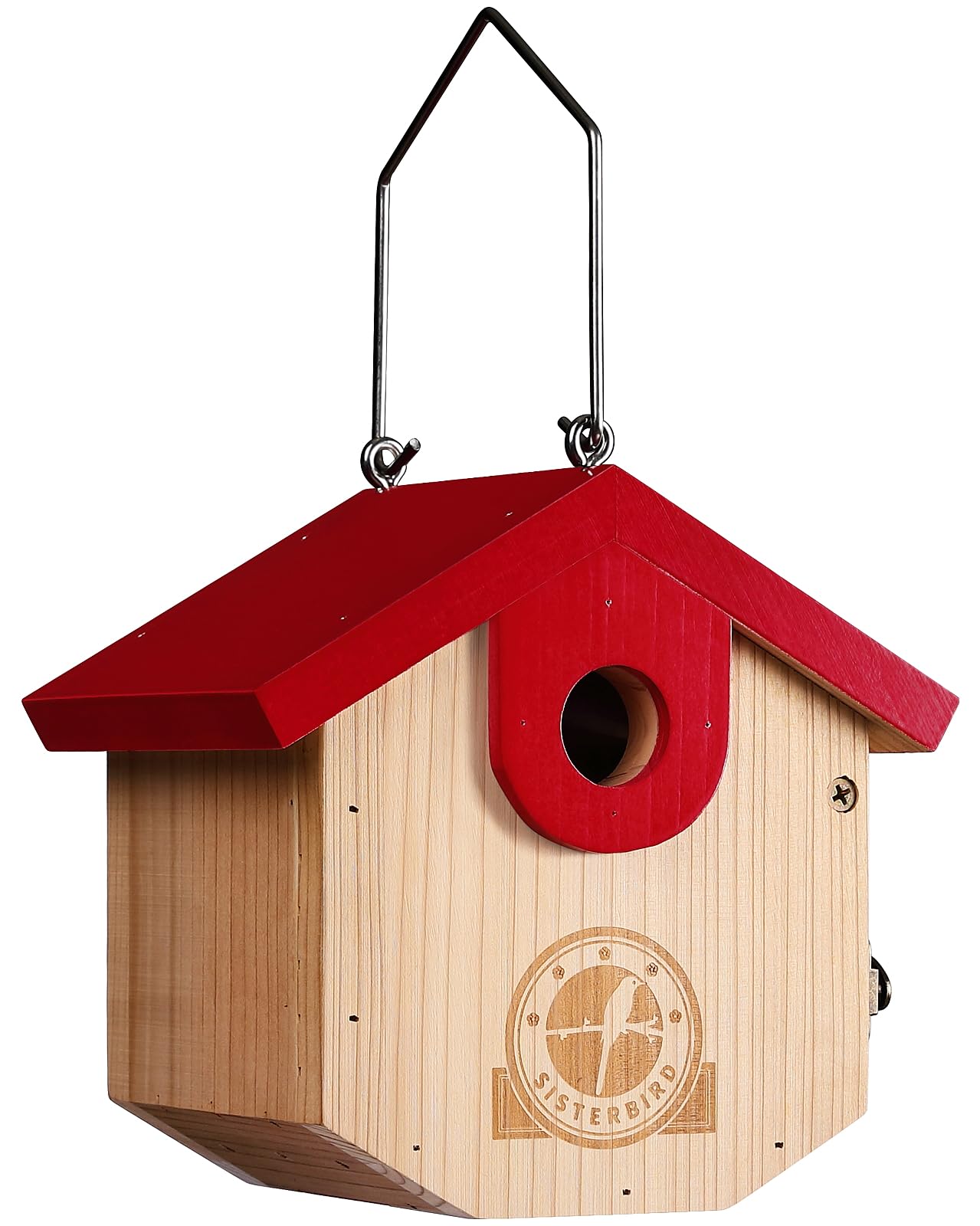
1. Wren Bird Houses for Outside, Bird House Warming Gifts, Red
Our pick — 4.5+★ from 600+ verified ratings; the strongest balance of quality and price.
Five little ladders under the door are the detail that gets chicks out alive.
This cedar box from SISTERBIRD handles the most situations of any house here, and owners back that up with 4.5+ stars across 600+ reviews. The entrance measures 1-1/8 inch — the balance for wrens and Carolina wrens that keeps bigger birds from squeezing in. A hole protector ring (a metal guard around the opening) stops a squirrel from gnawing it wider over a season, so the opening stays the right size year after year.
what separates it is the escape route. Five fledging kerfs (shallow grooves cut into the wood) run up the side of the entry hole, giving young birds a grip as they climb toward the light. That solves a real problem — chicks that cannot reach the opening and die inside the box. Three air vents on top and six drain holes in the floor let the house breathe and dry out, so it does not cook in summer heat or flood in the rain.
Cleaning runs through a side door held by a metal latch fixed with four screws. Here the door stays shut but swings wide when you want it. The hanging hook is heavy-duty 304 stainless steel, which is the chew-proof, wear-proof grade rather than plain coated wire.
Against the Gtongoko below, this box measures 7.06″ wide by 5.5″ deep by 6.62″ high versus the Gtongoko’s 7.71″ width and 5.91″ depth — so if your hanging spot is tight, measure first. The sloping, widened roof sheds rain well, and the U-shaped floor imitates a real nest cup. Cedar does the rot resistance on its own, so you can leave the paint off entirely.
What earns the top spot
- Five fledging ladders give chicks a real way from the start
- Metal latch and four screws beat the twist-lock closures on cheaper boxes
- Three top air vents plus six floor drain holes keep the nest dry
- 304 stainless hanging hook resists chewing and wear
Where it asks a little of you
- Larger footprint than several picks here — check your branch clearance
- It arrives fully assembled, so there is no flat-pack saving to chase
Reach for this if: you want one box that covers hole size, predator protection, ventilation, and chick escape without adding anything.
Measure first if: your hook or branch sits in a cramped corner — this is one of the wider bodies on the list.
2. Kingsyard Cedar Hanging Bird House
At 2.1 pounds of solid cedar, this one does not swing in the wind like a paper box.
Hang this in an exposed, windy spot and the 2.1-pound cedar body holds it steady. A 2.1-pound cedar body stays put in a gust where a light pine box starts spinning, and the corner ventilation holes in the bottom panel keep air moving through the nest. The entrance measures 1-inch, the tighter end of the wren range, with a reinforced metal plate around it that holds the opening at its intended size.
The roof comes off via a metal handle rather than a side door. That is a genuinely easy cleaning routine — lift, dump the old nesting material, set it back — and it is what wins people over here. Cedar and metal construction means the entry area will not rot or splinter, and the classic profile hangs from branches, hooks, or garden structures equally well.
The honest caveat is water. Drainage sits in the mixed column, so if your yard gets driving rain against the box, check that the corner holes are clear and consider a slightly sheltered branch. A few owners also report durability issues over time on the cedar, which is worth knowing before you commit to a fully exposed mounting point. The 1-inch hole is also snug — great for wrens, tighter than the 1-1/8 inch boxes if you are hoping to attract slightly larger visitors.
Why the weight matters: a 2.1-pound cedar house resists wind sway far better than lightweight alternatives, which keeps the nest calm during spring storms.
Pairing note: the removable roof means you can do a full seasonal clean without touching a screwdriver, so this suits anyone hanging multiple boxes across a big yard.
Suits: yards with open mounting spots where a heavy, wind-stable cedar box earns its keep.
Think twice if: your hanging point takes direct rain, since drainage is the known weak spot on this model.
3. Glitzhome Rustic Cottage Bird House 9″ H
A nine-inch cottage with hand-painted detail that still gets the bird basics right.
Most people hang a wren box where they can see it, so the cottage styling counts. This Glitzhome runs 5.5″ long by 4.5″ wide by 9″ high in a distressed cottage style, and the sturdiness is what owners talk about most — it holds up through the seasons and keeps its shape in weather. At 1.1 pounds it is light enough to hang from a single metal hanger on a tree or porch hook.
The functional side is all there. The entrance is 1.18 inch, sized for bluebirds, wrens, and chickadees, and a removable clean-out panel sits on the back so seasonal clearing takes a moment. Solid wood construction does the durability work, and the maker backs it with a one-year warranty.
The trade-off is color. The retro palette reads differently in person than on screen — some find the finish closer to a muted green than the bright tone they expected. Paint quality is the other mixed note, so if you want a specific shade to match your trim, look at the color carefully before you commit. None of that touches the bird side of the job.
Looks that carry their weight: rich 3D cottage detailing and hand-painted finish make this the pick you would actually put on a front porch, not just a back fence.
The color question: the distressed palette is the recurring gripe — order with a realistic expectation of a weathered, muted tone rather than a saturated one.
Best for: visible mounting spots where a decorative cottage earns its place alongside the nesting function.
Not your pick if: exact color match to your house matters — the distressed finish varies more than the photos suggest.
4. Kingsyard Recycled Poly Lumber Bird House
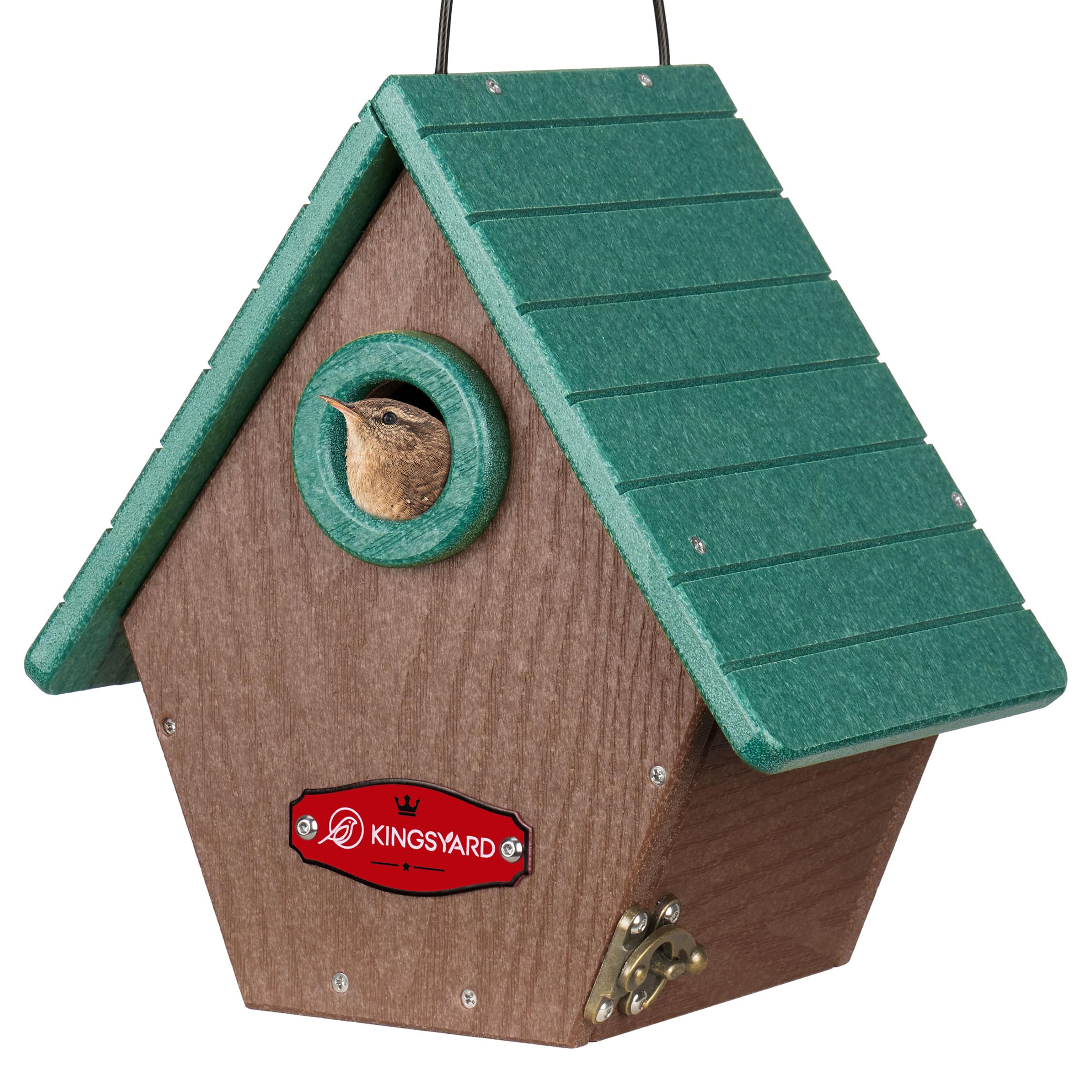
No rot, no cracking, no repainting — this is the box you hang and forget.
Cedar and pine need periodic attention. This Kingsyard sidesteps that entirely with recycled poly lumber, a material built to resist cracking, rotting, and fading through season after season. Hang it in a wet climate or a spot that takes full sun and the poly lumber does not crack, rot, or fade. The entrance measures 1.1 inch, sized for wrens and chickadees, with a reinforced guard around it that keeps the opening from being widened.
Details are thoughtful. Bottom ventilation holes move air through the nesting area, and the side cleanout door opens for old nesting material without fuss. The quality of the build is what stands out most — it feels solid in the hand and stays looking fresh through the season rather than weathering into gray. At 4.9″ deep by 7.4″ wide by 7.8″ high, the proportions suit small cavity nesters closely.
The thing to weigh is the material itself. Poly does not age the way cedar does, and some birders want the natural look of wood in the garden. The hanging hardware is also the mixed note here, so check your mount is secure before you trust it in a wind-exposed spot. If neither bothers you, this is the longest-lived pick on the list.
The set-and-leave case: recycled poly lumber is the only body here that will not crack, rot, or fade, which means no annual repaint and no replacing the box after a few winters.
Know before you hang: the hanging point is the soft spot — reinforce or double-check your hook, and accept that you are trading wood-grain looks for durability.
Choose this if: you want a wren house that survives wet winters and never needs refinishing.
Look elsewhere if: natural wood is part of the appeal — poly will always read as synthetic in the garden.
5. Wild Wings WWLH2-DECO Farmhouse Wren House, White
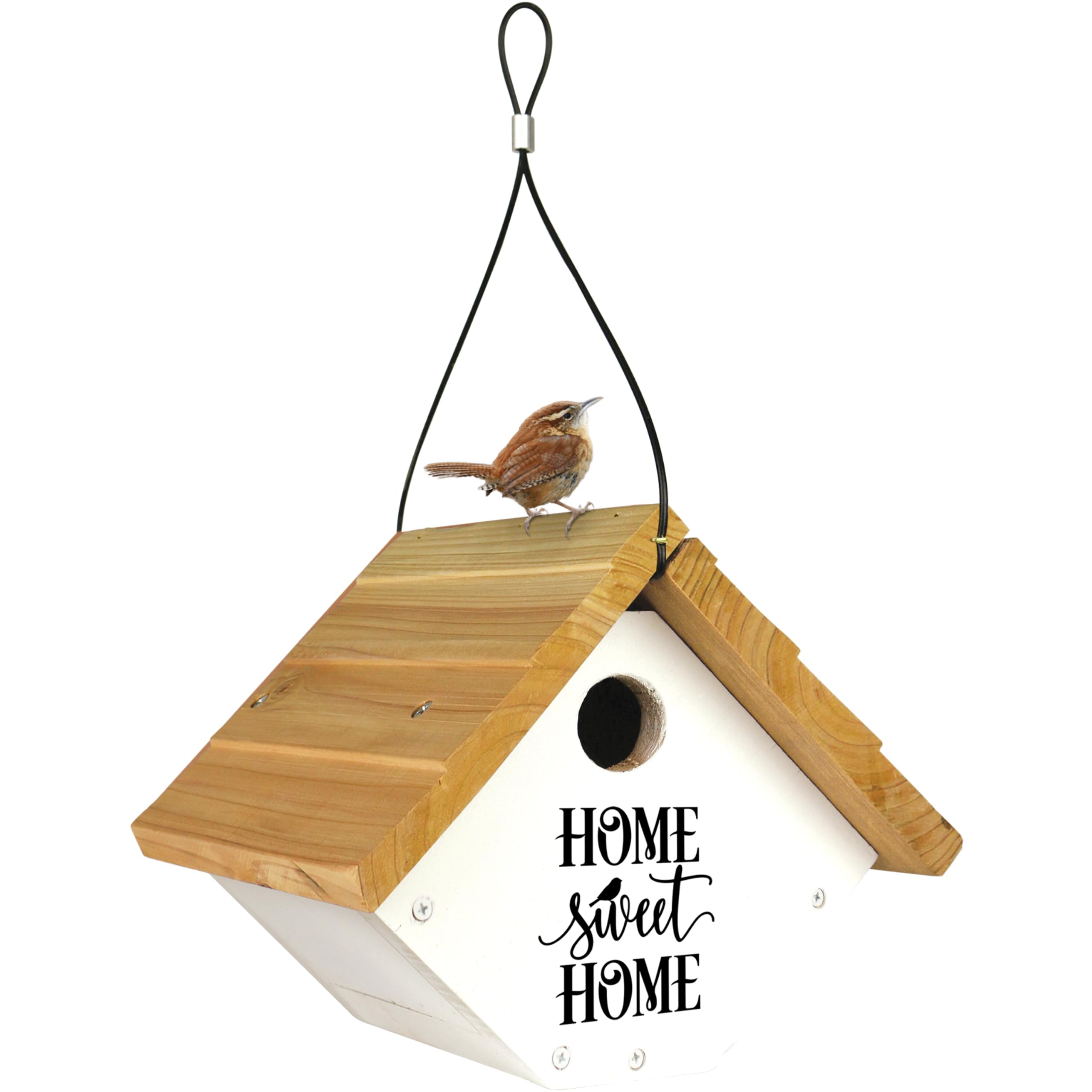
Whitewashed sides and a stained roof — the wren box that doubles as a porch accent.
Farmhouse styling is the hook here: white-washed cedar sides with a stained roof and tray in a palette that sits comfortably on a modern porch. Build quality is the part that carries it — premium cedar, screwed together, with a clean-out door that opens wide for quick seasonal clearing. Air vents run through the wall and floor openings so the nesting space stays breathable.
The entrance is 1-1/8 inch, which keeps out sparrows and larger birds while inviting wrens and chickadees. A vinyl-coated steel hanging cable is included, and the cedar body handles rot resistance on its own — no paint needed on the raw wood. It hangs easily from a branch or hook and arrives ready to mount.
The one thing to watch is the finish. Durability is mixed in the feedback, with the front peeling as the recurring note, so a spot with less direct weather exposure will treat it better. That is a finish issue, not a structure issue — the box itself holds up, and the cedar underneath is sound.
The gift angle: a whitewashed farmhouse look plus a ready-to-hang cable makes this the easiest one to hand to a gardener or bird watcher as a present.
Weather note: the painted front is the weak link — hang it under a little cover and the finish will hold far longer.
Pick it for: a housewarming or garden gift where looks matter as much as the nesting spec.
Shelter it if: your mounting spot is fully exposed — the whitewashed front is what peels first.
6. Gtongoko Hanging Wren Bird Houses for Outside with 1-1/8″ Entrance
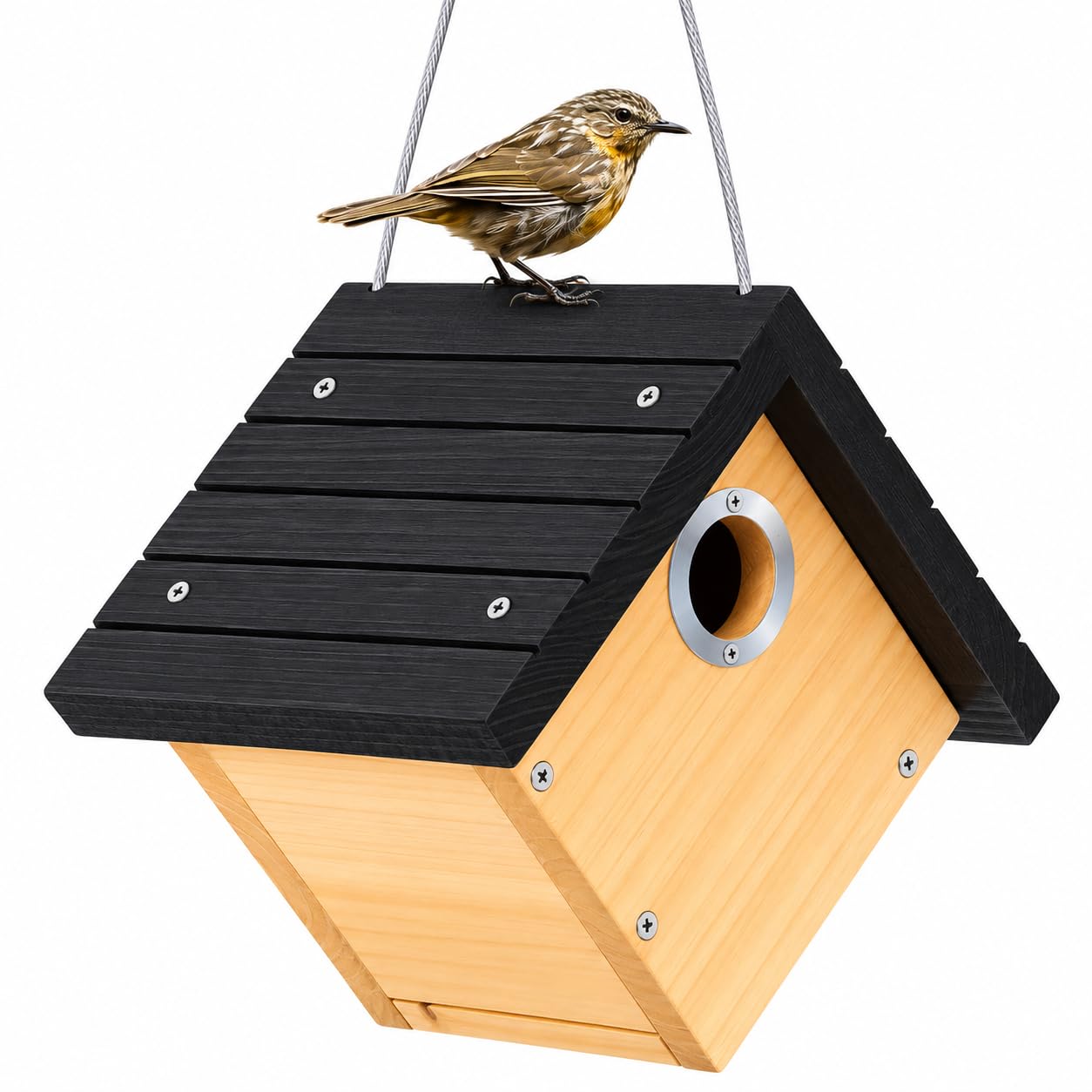
Entry-level money, but the predator guard and climbing grooves are not entry-level features.
Small spend, full checklist. This Gtongoko packs a reinforced metal guard, interior climbing grooves, a clean-out door, and air vents into a 1-1/8 inch wren box — the full set that usually shows up on pricier models. Soild wood construction does the frame work, and the cedar is high enough quality that it should last for years, which is what makes this the value play on the list.
The climbing grooves are the quiet hero. Young wrens get a stable grip to climb toward the entrance as they mature, which directly supports fledging instead of leaving chicks stuck at the bottom. The hanging design works on trees, shrubs, garden hooks, bird house poles, or shepherd hooks, and shaded locations are what wrens naturally prefer anyway.
The catch is fit and finish. Entrance hole size, bird attraction, and accessibility all land in the mixed column — this is a functional box, not a pretty one, and the opening runs sized for wrens but not necessarily generous for anything bigger. At 7.71″ wide by 7.76″ high by 5.91″ deep it is a compact body, so it suits shrub-level hanging over a grand tree mount.
The budget math: you get a metal predator guard and climbing grooves at the low end of the range, which is unusual — most budget boxes skip at least one of those.
Expectation setting: the opening and the general finish are plain, so buy this to fledge birds, not to decorate a pergola.
Made for: first-time wren hosts who want the safety features without spending much.
Pass if: you want a decorative box for a visible spot — this one prioritizes function over looks.
7. Woodlink Audubon Traditional Wren House Model NAWREN
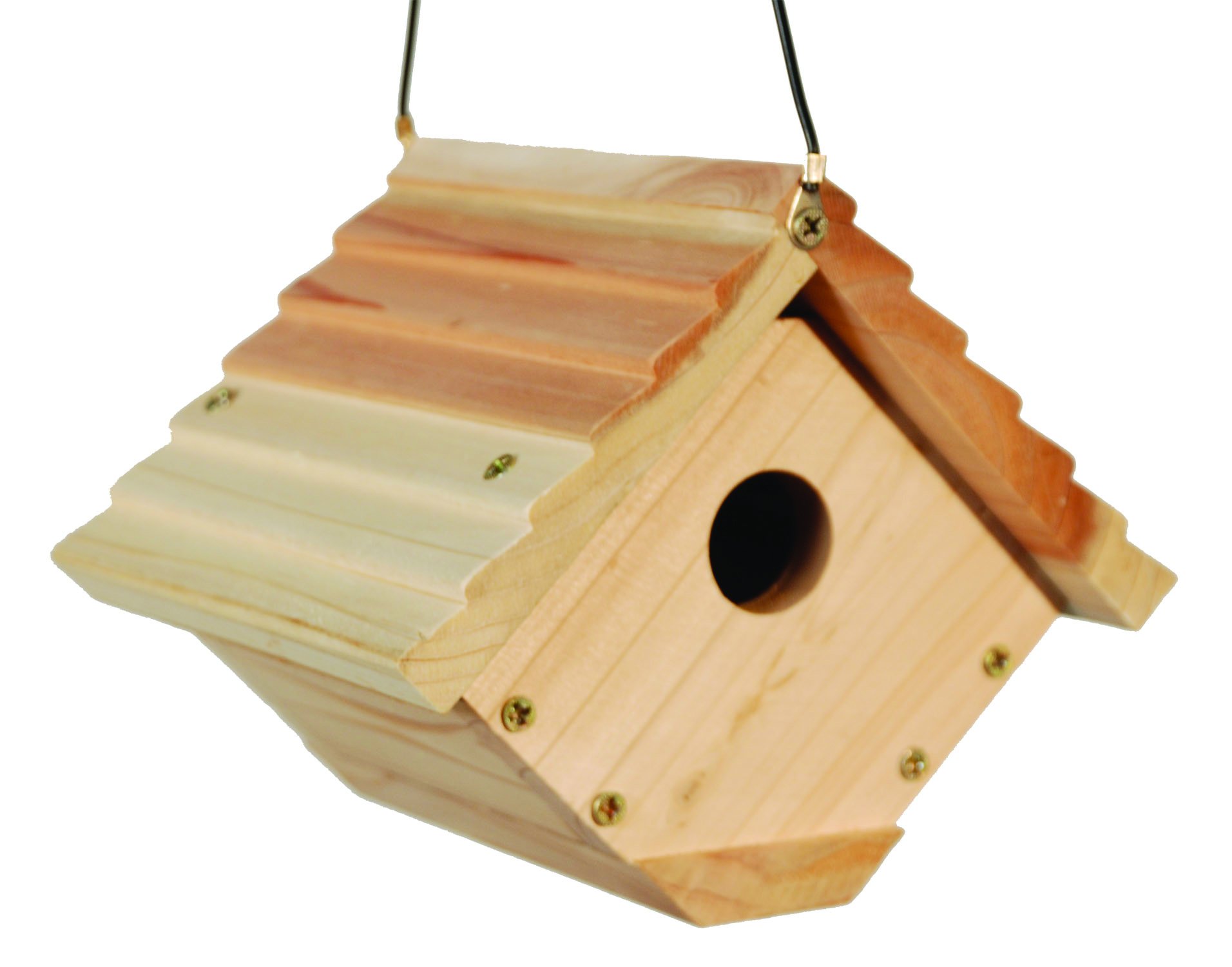
Built to birding specifications in natural cedar — and screwed shut, for better or worse.
This is the traditionalist’s box: natural cedar, heavy cable, screwed construction, sized to birding specifications rather than to a decorative trend. At 14.4 ounces it carries real substance for its footprint of 6″ deep by 7″ wide by 5″ high, and it hangs from small branches or hooks without fuss. The entrance is sized specifically for wrens so larger birds cannot get in.
What people love is how quickly birds move in. Nesting within days of hanging is the recurring story, which tells you the box is dark, tight, and correctly placed for wren taste. Construction is screwed rather than stapled, so the frame holds its shape. For a bird house, the fastest measure of success is occupancy, and this one delivers.
Here is the trade-off you should know before buying. There is no way to open it up — no door, no removable panel — so cleaning means unscrewing the base or leaving the old nest in place. The wood also runs rough in places, and a few report cracking over time. Neither stops it from attracting birds; it just means this is a hang-it-and-leave-it box rather than a maintenance-friendly one.
The occupancy story: birds nesting within days is the strongest signal a wren house can give, and this simple cedar box is built specifically to invite it.
The maintenance catch: sealed construction means no easy seasonal clean-out — decide up front whether you are fine leaving spent nests until the box is fully taken down.
Right for you if: you want a no-frills cedar box that wrens take to fast and you do not mind a sealed body.
Think it over if: end-of-season cleaning is part of your routine — this box was not designed for it.
8. Audubon Wren Bird Hse Red Cedar

The lightest cedar box here — 12.64 ounces of straightforward wren housing.
Where the Woodlink above weighs 14.4 ounces, this Audubon cedar house comes in at 12.64 ounces, so it swings more easily from a thin branch and is simpler to reposition. It arrives fully assembled with an attached cable, which means hook it up and you are done. The hole is sized specifically for wrens and blocks larger birds from entering.
Red cedar handles the weather on its own, and there is an air ventilation gap at the top plus drainage slots at the bottom — the two details that keep a nest from turning muggy or wet. Screwed construction with a heavy cable means the frame and the hanger are both built to stay put. At 6.8″ deep by 7.1″ wide by 6.25″ high, it is a roomy box for a small bird. Valued for looking good without fuss, and quality is what buyers talk about first.
Cleaning is the friction point. The box is closed with screws, so getting inside means turning them out, and that is enough to put some people off a full seasonal clean. Construction feedback also splits — solid on some units, lighter on others. Red cedar is naturally rot-resistant, so the wood itself is not the worry; the access is.
Weight advantage: at 12.64 ounces against the Woodlink’s 14.4 ounces, it hangs more gracefully from springy branches and is easier to lift down.
The access cost: screwed-shut construction makes the seasonal clean a screwdriver job — factor that into how many boxes you plan to hang.
Good for: anyone who wants classic red cedar and the lightest hang on this list.
Skip if: you clean your boxes every season and want a door — this one closes with screws only.
9. Dreyoo 1 Pack Wren House Pine Wood

A budget pine box with a floor that drops out — the cleanest routine of the value picks.
Pine gets a bad rap for rot, so Dreyoo carbonizes the surface at high temperatures to make it weather resistant. The result is a rustic black box at 7.09″ deep by 6.89″ wide by 6.3″ high — comparable to the SISTERBIRD’s 5.5″ depth and 6.62″ height, so a slightly deeper body for the money. A stainless steel ring around the 1-1/8 inch entrance stops larger birds getting in and takes the wear off the pine.
The cleaning design is the standout. Rather than a side door, the bottom panel lifts out on an easy-open latch, so you can clear old nesting material from underneath without reaching in blind. Air vent gaps at the top keep the space breathable. Hang it from a tree limb with the heavy cable and you have a working wren box that attracts wrens, chickadees, and other small cavity nesters.
One honest flag: durability is the weakest note in the feedback, including the hanging wire coming apart on some units and boxes not lasting beyond a season. That is worth taking seriously if you hang in an exposed, windy spot. The rest of the build — construction quality and value — is where this pick earns its place.
The smart detail: a removable floor panel makes seasonal cleaning quicker than unscrewing a door, and the carbonized pine surface resists weather better than raw pine.
Worth knowing: the hanging wire is the recurring weak point — swap in a stronger cable or mount it out of the wind to get multiple seasons from it.
Consider it: as a starter box where the easy-open floor makes maintenance simple and the carbonized pine handles a season outdoors.
Look up the list if: you want long-term durability in a windy yard — the hanging wire is the part most likely to fail first.
Know the Specs
Entrance hole diameter
The single most important number on a wren house. Wrens are small cavity nesters, so an opening around 1-1/8 inch fits them while keeping out starlings and most sparrows. Anything noticeably wider invites the bigger birds that will evict wrens. The picks here range from a 1-inch opening to a 1.18-inch one — all within the safe wren band.
Predator guard
A metal plate or ring set around the entrance. It stops squirrels and woodpeckers from chewing the wood wider, which would let bigger birds in over time. It also adds durability at the spot where the box takes the most wear. A wren house with a guard keeps its intended hole size the whole season.
Fledging grooves or ladders
Small notches or ramps on the inside below the entrance. Chicks that cannot grip smooth wood can get stuck at the bottom of a box after hatching. Grooves give them a foothold as they climb toward daylight. It is a small detail and a real one.
Ventilation and drainage
Air vents near the top let heat and humidity out of the nesting space; drain holes in the floor stop rain from pooling in the nest. Together they keep the space dry and breathable, which is what a brood needs through a hot summer.
Clean-out access
Old nesting material carries mites and moisture, so the box should open for a seasonal clear. Side doors, removable roofs, and lift-out bottom panels are all easier than a screwed-shut body. If a box has no door, plan to take it apart for maintenance.
Cedar vs pine vs recycled poly
Cedar resists rot naturally and needs no finish. Pine is lighter and often heat-treated or carbonized to resist weather. Recycled poly lumber will not crack, rot, or fade at all. Heavier boxes sway less in wind; lighter boxes are easier to hang and reposition.
Common Questions
What entrance hole size do wrens need?
Can I hang a wren house on a shepherd hook or a pole?
Do wren houses need a predator guard?
How do I clean a wren house at the end of the season?
Will a wren house attract house sparrows or starlings?
Is cedar better than pine for a wren bird house?
Why do some wren houses have grooves or ladders below the door?
Does a hanging wren house need ventilation and drain holes?
How long should a wren house last outside?
Where is the best place to hang a wren house?
The Bottom Line
For most yards, the wren bird houses pick that covers the most ground is the SISTERBIRD cedar box. It pairs a 1-1/8 inch entrance with a stainless guard, three top vents, six drain holes, and five fledging kerfs — the full checklist in one ready-to-hang frame. If you want a heavier cedar body that shrugs off wind, reach for the Kingsyard cedar house. And for a garden where the box never needs refinishing, the Kingsyard recycled poly house is the one that outlasts the weather.
How we choose
We do not accept paid placement. Every pick is matched to a real buyer and a real use-case; we do not hands-on test units.
Sources
Specifications: manufacturer listings and product documentation. Review insights: verified customer reviews, as of November 2026. Pricing: not shown on this page (it changes often); check the current price via the retailer link.
As an Amazon Associate, Tactical Gear Guy earns from qualifying purchases. This does not affect which products we feature.