Specs are compiled from manufacturer listings and verified buyer reviews and can change over time — please confirm the key details on the product page before buying.
If you are buying a wrecking bar, the short answer is this: a bar is only as good as its two ends and the steel between them. The claw has to slide under a nail head without slipping, the chisel has to bite into a board seam, and the shaft has to stay straight when you lean on it with your whole body. Get those right and a board that fought a sledgehammer comes up on the first pry. Get them wrong and you get a bent bar, a bruised knuckle, and a board that still will not budge. This guide sorts the real wrecking bars from the ones that just look the part.
This guide is built by comparing the manufacturers’ published specifications and the patterns across verified customer reviews, so you get each pick’s real strengths and trade-offs instead of marketing spin.
Below you will find eight bars rated on length, steel, weight, and how they actually handle prying and nail pulling, so the right bar lands in your hands the first time you order. Every pick here is a genuinely usable wrecking bar tool for demolition, remodeling, or a disaster kit.
Top Picks


How To Choose The Best Wrecking Bar Tool
A wrecking bar does one job: it turns your body weight into a prying force at the tip. Everything that matters about a bar flows from that single idea. So the buying decision is really about matching three things to your work — the length, the steel, and the shape of the two working ends. Here is what to weigh before you pick one.
Match the bar length to the leverage you actually need
A longer bar gives you more reach and more leverage, which makes stubborn boards and buried nails give way with less grunt from you. A 36-inch bar is the standard all-round length for floors, pallets, and framing. A 24-inch bar is easier to swing in tight spots and easier to stow in a truck or a closet. And a long specialty bar like a 58-inch model is built for deep prying in automotive and industrial work where you need to reach far and lean hard.
Check the steel, because this is where cheap bars fail
The steel and the forging decide whether the bar stays straight under load. Forged high-carbon steel and drop-forged steel are the two constructions worth having. A forged bar is shaped under heat and pressure as one piece, so it resists bending when you load the tip. A bar made from softer or pieced-together steel will flex and eventually take a permanent bend. If a listing does not say the bar is forged, treat that as a warning sign.
Look at the claw and the chisel separately
Each end of a wrecking bar does a different job. The claw end pulls nails, and a slotted or beveled nail slot lets you trap a nail head so it comes out clean instead of tearing through the wood. The chisel end splits and lifts, and a beveled or hardened edge bites into a seam better than a blunt one. Bars that give you both a nail puller and a hardened prying edge cover far more jobs than a one-end bar.
Side-by-Side Comparison
| Model | Best For | Length | Weight | Steel | Amazon |
|---|---|---|---|---|---|
| Spec Ops Tools 30″ Demo Bar★ Best Overall | All-round demolition and nail pulling | 30″ | 6.4 lb | High carbon steel | Amazon |
| Olympia Tools 36″ Wrecking BarBest Value | Long-reach prying on a budget | 36″ | 4.94 lb | S45c carbon steel | Amazon |
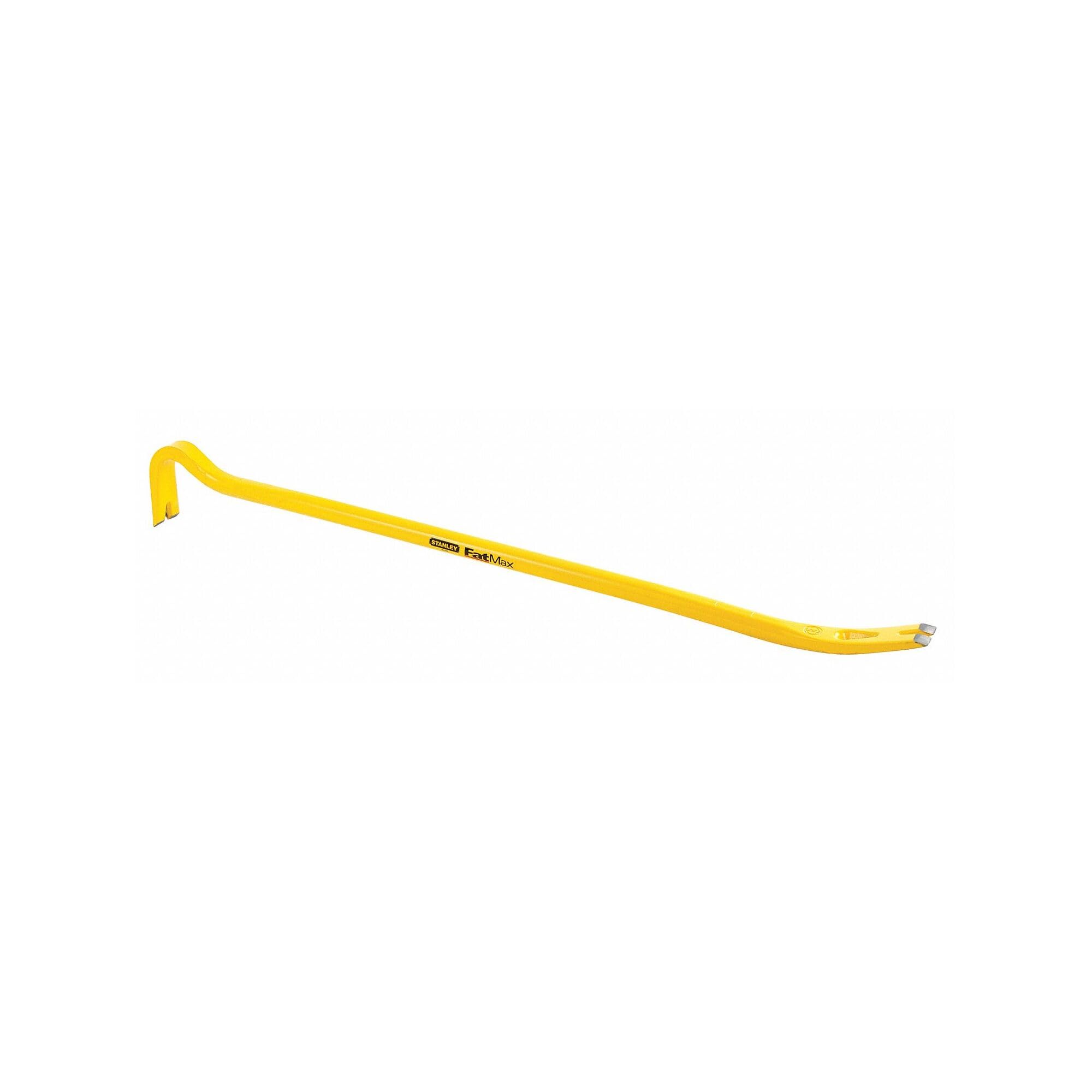
| STANLEY 36 in Wrecking Bar (55-104)Jobsite Workhorse | Pallet busting and disaster kits | 36 in (914mm) | — | Forged high carbon steel | Amazon |
| STANLEY Fubar 1kg Utility Bar (55-119) | Compact pry, split, and hammer | — | 2.2 lb | Forged steel | Amazon |
| GreatNeck WR24 Wrecking Bar | Tight-space prying and striking | 24 in | 3.25 lb | Drop forged steel | Amazon |
| Roughneck Gorilla Bar ROU64407 | Low-profile claw work on flat surfaces | 610mm (24in) | 4.43 lb | Forged high-grade steel | Amazon |
| Fiskars Pro IsoCore 30″ Wrecking Bar | Shock control during heavy striking | 30″ | 5.8 lb | Forged steel | Amazon |
| Mayhew Tools Dominator Pro 58″ | Deep automotive and industrial prying | 58″ | 9.32 lb | Hardened alloy tool steel | Amazon |
Detailed Reviews
1. Spec Ops Tools 30″ Demo Bar
Our pick — 4.5+★ from 3,000+ verified ratings; the strongest balance of quality and price.
A 30-inch, 6.4-pound demo bar that levers up floor boards and pulls nails in one pass.
The 30-inch length and 6.4-pound heft are the two numbers that decide this bar’s place at the top. That weight is 6.4 pounds versus the 2.2 pounds of the STANLEY Fubar further down this list, and in a wrecking bar weight is not a penalty — it is stored energy. When you drop this bar’s head onto a floor seam, the mass does the breaking instead of your shoulders. The 30-inch shaft then gives you enough reach to lever a board up without stooping into a back-breaking crouch.
What wins people over is the steel and how it is built. The bar is heat-treated high-carbon steel in a multi-leverage shape, so it gives you more than one prying angle from the same tool. The beveled end is precision-honed and sharp, which means it slides into a tight gap instead of skating off the surface. And it carries multiple nail pullers, so you can trap an old nail head and pull it clean. Owners describe nail pulling as quick and easy on this bar, which is exactly what you want when you are stripping a deck full of rusty nails.
There is a grip detail worth knowing, because it is the difference between one board and a whole afternoon. The handle has a shock-absorbing grip built for extreme weather, so the sting from a hard strike fades instead of ringing up your arm. Spec Ops also drop-tests this bar from 100 feet as a durability check, and backs it with a limited lifetime warranty. Owners back that up: 4.5+ stars from 3,000+ reviews is the strongest rating on this list.
Where this bar earns its keep
- The 6.4-pound mass breaks seams and boards without you swinging hard — mass does the work
- Heat-treated high-carbon steel in a multi-leverage shape gives you more than one prying angle
- Multiple nail pullers plus a sharp beveled end handle nails and gap-jamming in one tool
- Shock-absorbing grip takes the sting out of repeated hard strikes
What to weigh before ordering
- At 6.4 pounds it is a two-hand tool — this is not the bar you toss in a small tool bag for quick jobs
- Durability is the mixed note in owner feedback, so treat bending force at the tip with some respect
- The 30-inch length gives less reach than a full 36-inch bar for deep framing work
Pick this for: anyone stripping floors, trim, drywall, or decking who wants one bar to do the whole job.
Think twice if: you need a bar that lives in a small kit and gets carried all day — the weight will wear on you.
2. Olympia Tools 36″ Wrecking Bar
A full 36 inches of leverage that will not roll off the sawhorse.
Here is the value case in one number: 36 inches of bar for a price that lands near the bottom of this list. That length is the same reach the STANLEY 36 in bar offers, and it measures 36 inches versus 24 inches for the GreatNeck further down. More length means more leverage at the tip, so a tight board comes up with less effort from you. The bar is 3/4 of an inch in diameter and forged from single-piece S45c carbon steel, so it is one solid piece rather than parts joined together.
The hexagon body is the detail people notice first. A six-sided shaft will not roll off a bench or a truck bed the way a round bar does, and the hex shape also transfers your torque into the tip with less twist. That adds up to control, which is what you want when you are splitting a seam and do not want the bar kicking sideways. One end is a beveled chisel for splitting and lifting, and the opposite end is a high-visibility slotted claw for pulling nails. Between the two, you can strip and pull with one tool.
Functionality is what this bar is known for, and durability runs a close second in owner feedback — the bar holds up rather than bending under load. The rust-resistant powder coating keeps it looking right through damp job sites. The honest trade-off is reach versus control: at 36 inches this bar is long, so it is less nimble in tight corners than a 24-inch tool. It also comes in six sizes from 12 inches up to 48 inches, so if this length is too much bar for your work, you can step down the range.
The buy signal: full-length leverage and a forged one-piece body are exactly the things budget bars usually skip, and this bar does not skip them.
The honest limit: length is a trade — great for reach, less handy in a cramped crawlspace.
Reach for this if: you want maximum leverage for the least money and mostly work in open floors and framing.
Look elsewhere if: your jobs happen in tight spaces where a shorter bar gives you better control.
3. STANLEY 36 in Wrecking Bar 55-104
The 36-inch forged high-carbon bar that has been breaking down pallets for decades.
This is the bar most people picture when they hear “wrecking bar,” and the 36-inch length is why. The body is forged high-carbon steel built for repeated use, and the polished tips help the ends penetrate and pry rather than skate. It is the classic shape done properly.
What owners keep coming back to is durability. The bright yellow powder coat is not just for show — it holds up to scrapes and drops, and it makes the bar easy to spot on a cluttered site or in a dim garage. The tri-lobe design supports a secure grip so your hand does not slip when you load the bar. Reviewers call this one a workhorse for breaking down pallets and for the general demolition that comes with a remodel.
The size is a quiet selling point too. Owners mention it fits well in a trunk, which is exactly where a lot of people keep a wrecking bar — as part of a home disaster prep kit. That is a real use case for this length: long enough to be useful, short enough to store. One thing to know: the listing does not publish a weight figure, so you are buying this on length and steel rather than on heft. The limited lifetime warranty against material and workmanship defects covers the realistic worries.
Why it sells: a proven forged-steel bar with a finish that survives site abuse and a color you can find in the dark.
Before you commit: no weight spec is published, so buyers who judge a bar by how it swings in the hand should expect to be surprised either way.
Made for: pallet busting, remodel tear-out, and keeping in a trunk as part of a disaster kit.
Not your bar if: you need a compact tool for tight indoor work — this length wants room.
4. STANLEY Fubar 1kg Functional Utility Bar (55-119)
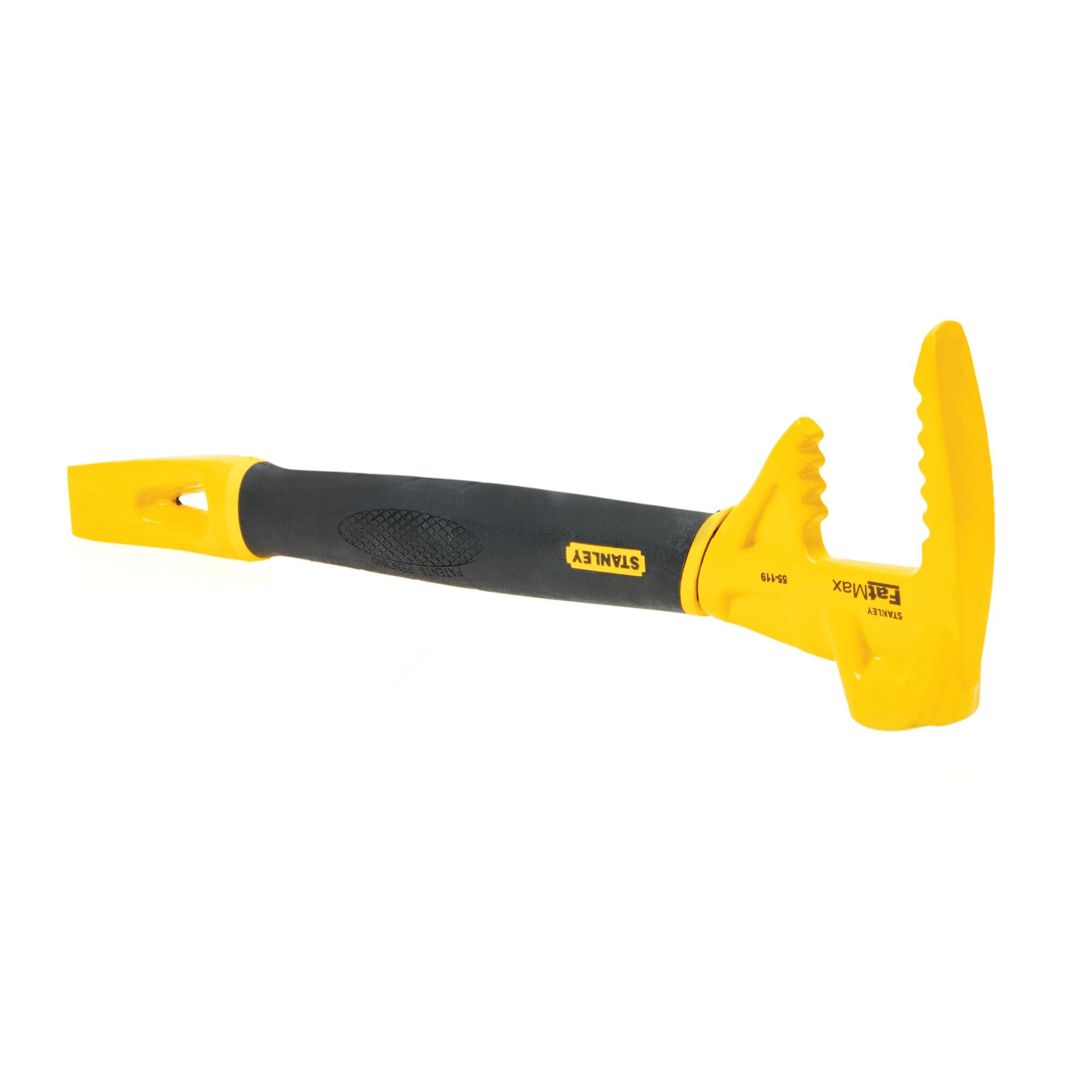
Four demolition jobs in one hand-sized bar that weighs just 2.2 pounds.
Most wrecking bars do two things. This one does four: pry, split, bend boards, and strike. The jaw is sized for 2X lumber, so it grabs a standard framing board and gives you leverage and control when you are pulling two-by material apart. There is a beveled nail slot for pulling and prying nails, and the head is beveled for striking. All of that comes in a forged steel body that weighs 2.2 pounds — versus 6.4 pounds for the Spec Ops bar at the top of this list, which is the whole point of a utility bar you carry onto a roof or up a ladder.
Versatility is the reason people pick this one, and it shows in the way owners use it. It gets mentioned as handy for hammering tent pegs and for tweaking two-by frames into place — jobs that are not strictly demolition but fall to whatever heavy tool is within reach. That range is the value here: one compact bar that covers prying, nail pulling, and a bit of hammering instead of three separate tools in the bag.
The catch is scale. At 2.2 pounds this bar does not carry the mass to smash through stubborn material the way a 6.4-pound demo bar does, so it is a control and versatility tool, not a wrecking ball. It is also forged as one piece for durability in repeated tear-out work. If you want a bar that lives in a tool belt and handles the odd stubborn board, this is the shape to buy.
What it brings to the job
- Four functions in one bar: prying, splitting, board bending, and striking
- The 2X lumber jaw grabs framing boards for controlled removal
- Only 2.2 pounds, so it carries easily to roofs, ladders, and tight sites
- One-piece forged steel resists bending in repeated use
Where it bows out
- Light mass means less smashing force than a full demo bar on really stubborn material
- The board-grabbing jaw is sized for 2X lumber, so it is not a general-purpose grab for every board thickness
- Compact length limits deep-reach levering compared with 30-inch and longer bars
Suits you if: you want one light bar that pries, pulls, bends, and taps, and you value portability over raw force.
Skip it for: heavy tear-out where you need mass to break boards loose.
5. GreatNeck WR24 Wrecking Bar
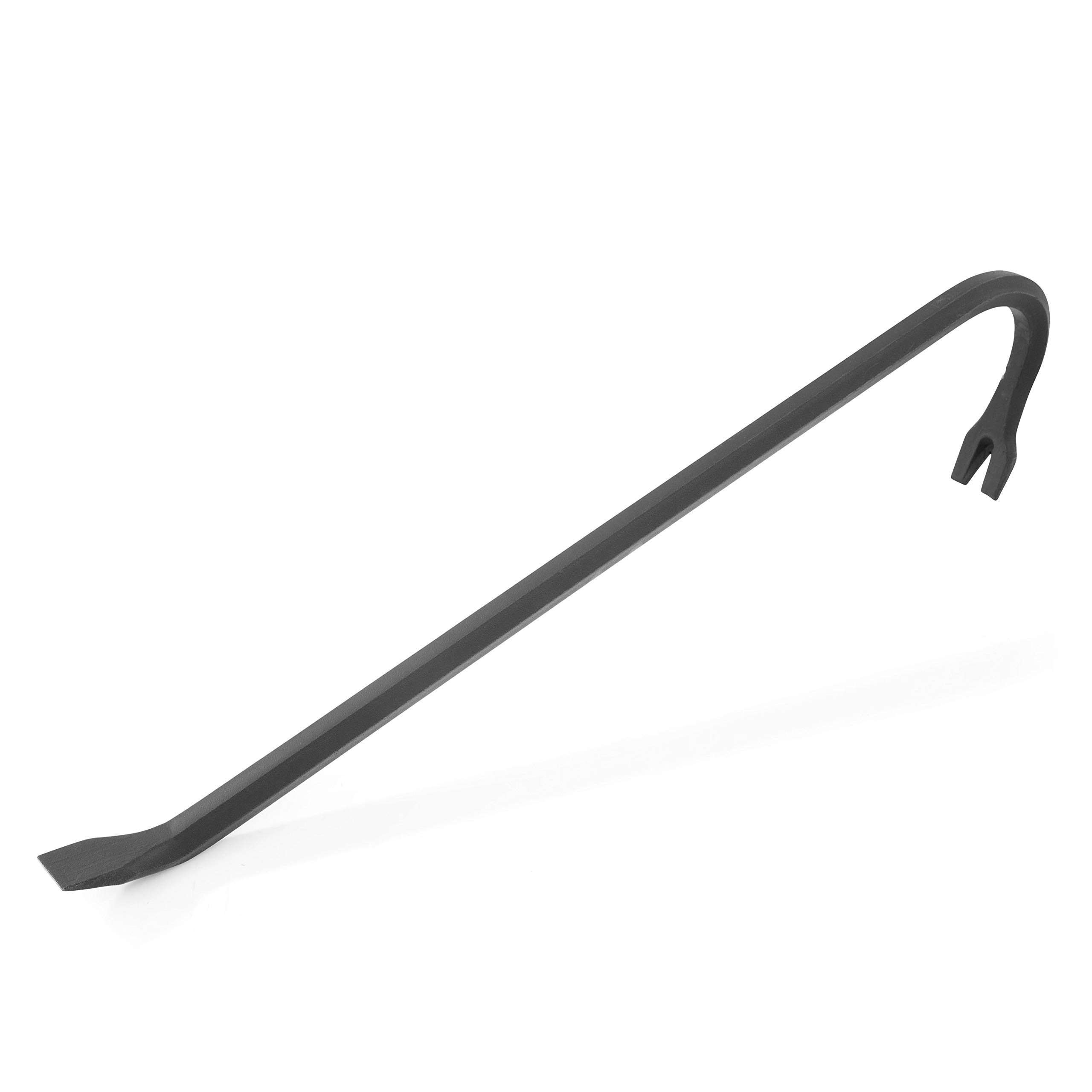
Twenty-four inches of drop-forged steel for the jobs that will not fit a long bar.
A 24-inch bar is the right tool when a 36-inch one is too much bar for the space. That is the trade this GreatNeck makes against the STANLEY and Olympia 36-inch bars above: less reach, but far more maneuverable in a crawlspace, under a cabinet, or between joists. At 3.25 pounds it is heavier than the compact Fubar but lighter than the big demo bars, so it swings with enough authority to lift a board without wearing out your arm.
The steel is the strong point. This bar is drop forged and then hardened and tempered, which is the process that gives a bar its spring and its resistance to permanent bending. It has a slotted nail puller on one end and a hardened prying edge on the other, so pulling and prying are both covered. The hexagon body gives you more control than a round shaft because it will not twist or roll under load. A painted finish resists rust, which matters if the bar lives in a damp basement or a garage.
Owners rate the build quality highly and describe it working well for prying up wooden boards. The one thing to decide before you buy is size. Owners are split on it — some find the 24-inch length perfect, and a few find it too big for certain projects. That is not a flaw in the tool; it is a hint that you should match length to your work. If your jobs are small and precise, go shorter; if you need reach, look to the 36-inch bars.
Where it shines: hardened, tempered, drop-forged steel in a length short enough to work where long bars cannot reach.
Decide this first: size is the make-or-break call on this bar, so measure your tightest workspace before you order.
Good match for: tight-space prying under cabinets, between joists, and in small remodels where a long bar will not fit.
Wrong size if: you are chasing deep-reach leverage on big framing — get a 36-inch bar instead.
6. Roughneck Gorilla ROU64407 Gorilla Bar® 610mm (24in)

The bar whose claw slides under boards that stop every ordinary pry bar flat.
The shape is the whole story with the Gorilla Bar. Its low-profile claw is designed to fit further under the work piece, which is exactly what you need when a board is sitting flat on a floor and there is almost no gap to start from. Slide this claw in, and you get the first bite that a thicker claw cannot find. The bar-to-claw angle is set so you can work close to a flat surface and still get leverage, and Roughneck says that angle boosts leverage power.
The bar is drop forged and heat treated for strength, and the oval profile is not only for looks — it adds structural strength while giving your hand a more comfortable grip than a round shaft. The broad heel spreads the force so it is less likely to dent the surface you are prying against. The tips are polished to reduce friction, so they drive in more easily, and a powder coating resists corrosion. There is a beveled nail remover for pulling embedded nails, and the claw has a nail remover slot.
At 610mm, or 24 inches, and 4.43 pounds, this bar sits between the light compact tools and the heavy demo bars. Roughneck markets it as a substitute for a wrecking bar, nail puller, ripping bar, or utility bar, and the low-profile claw backs that claim up. The honest note is that this listing publishes no customer review text to sort through, so you are judging it on the published spec and design. What the spec tells you is that this bar is built for the awkward first-inch of a pry, where most bars fail.
The design that earns it a spot
- Low-profile claw gets under flat-lying boards where thicker claws cannot start
- Oval profile adds strength and gives a more comfortable grip than a round shaft
- Broad heel spreads force to protect the surface you are prying against
- Polished tips reduce friction for easier penetration
Keep this in mind
- At 24 inches it gives less leverage than the 36-inch bars on this list
- No customer review text is published for this listing, so the case rests on the spec and design
- The specialized low-profile claw is a fit for flat-surface work, not deep framing tear-out
Best for: flat-surface prying where a board sits tight to the floor and you need that first gap.
Not the one if: you need reach and force for big structural tear-out rather than delicate first-inch prying.
7. Fiskars Pro IsoCore 30″ Wrecking Bar

A 30-inch bar built to take the sting out of every strike you land.
The number that separates this Fiskars from the rest of the list is the shock control. It uses a patented IsoCore shock control system that the maker says absorbs impact and transfers two times less shock and vibration than standard crowbars. That is a manufacturer claim, but the point is concrete: slam this bar down on a wedged demo edge and less of the jolt reaches your hands and wrists. For anyone swinging all afternoon, that is the difference between a sore arm and a usable one tomorrow.
The grip is the other part of that comfort story. It is a textured non-slip handle with strategic grip zones and an insulated sleeve, designed to keep your hand locked in and reduce overstrike damage. The bar is forged steel for heavy-duty work, and it covers a wide range — prying, bending, straightening, chiseling, and striking with a wedged demo edge for maximum striking force. At 5.8 pounds it has enough mass to lean into a pry, and the long handle gives you the leverage to make it count.
Owners describe it as able to tear down almost anything in a residential demolition, and they like how it feels in the hand — comfortable enough that the grip can stand in for gloves. The mixed note is leverage, which owners do not all agree on, so if maximum lever arm is your top priority you may prefer the 36-inch STANLEY or the Spec Ops bar at the top. If comfort and reduced vibration during heavy striking matter more, this is the bar built for exactly that.
The standout: a shock-control system built specifically to cut vibration and hand fatigue during repeated striking.
The trade-off: leverage is the one point owners disagree on, so do not buy this expecting the longest lever on the shelf.
Choose this if: you strike hard and often and want a bar that spares your hands and wrists through the day.
Consider another pick if: your job is pure leverage on stubborn framing and comfort runs second.
8. Mayhew Tools 14120 Dominator Pro Pry Bar, Red, 58″ Curved

Fifty-eight inches of American-forged steel for the prying jobs other bars cannot reach.
This is the longest and heaviest bar on the list, and both of those are on purpose. The 58-inch curved blade gives you reach and controlled leverage for heavy-duty prying and lifting, and the 9.32-pound weight means the bar can lean into a stubborn part without you fighting it. The curved blade shape is built for prying in curved and awkward spaces — the kind of work you run into on a vehicle. It is forged in the USA, and the shaft is a hardened and tempered alloy sheet that runs from the cutting edge through the handle, so the force you apply at the tip is carried all the way back through the tool.
The finish is practical: a black oxide coating resists rust and corrosion, which matters for a bar that spends its life around oil pans, bearings, axles, and fuel injectors. The handle is a patented two-composite ergonomic design built for a secure grip, and owners note that the larger grip helps spread pressure across the palm — a real benefit when you are bearing down on a bar this long. Mayhew is clear about where this tool belongs: automotive, industrial, and mechanical work rather than home framing.
Owners say it is better made than truck-tool pry bars and that it holds its shape rather than bending. That durability is the payoff of the reinforced alloy shaft. The catch is obvious from the numbers: 58 inches and 9.32 pounds is a bar for serious space and serious work. It is not a tool you carry in a small bag or swing in a closet. If your prying happens on vehicles and heavy machinery, this is the bar; if it happens on pallets and drywall, look to a shorter bar above.
Built for the long pry: a hardened and tempered alloy sheet running the full length of the bar keeps the tip from folding under heavy load.
Check your workspace: the length and the weight are tools for open, heavy work — they will feel like a liability in a tight home project.
Made for: automotive, industrial, and mechanical prying where reach and mass are the whole point.
Not the right call if: your work is pallets, trim, and drywall — you would be carrying far more bar than you need.
Know the Specs
Length and leverage
Length is the single biggest lever you have in choosing a bar. A longer bar multiplies the force you apply at the tip, so a board that will not move with a short bar will lift with a long one. On this list, lengths run from 24 inches up to 58 inches, and the general rule is longer for reach and force, shorter for tight spaces. A 36-inch bar is the all-round standard, a 24-inch bar is the space-saver, and a 58-inch bar is the heavy-reach tool for automotive and industrial work.
Steel and forging
The steel and how the bar is made decide whether it stays straight under load. Forged high-carbon steel, drop-forged steel, and hardened and tempered alloy steel are the markings of a bar built to take a bend and spring back. When a listing names one of these, you are getting a bar where the tip will hold under force. When it does not, you are gambling on the steel — and a bent bar is a useless bar.
Claw and chisel ends
The two ends of a wrecking bar do different jobs, and a good bar gives you both. The claw pulls nails, and a slotted or beveled nail slot lets you seat a nail head so it pulls out instead of tearing the wood. The chisel splits and lifts, and a beveled or hardened edge starts a seam that a blunt edge cannot find. A low-profile claw gets under flat-lying boards; a thicker heel spreads force so you do not crush the surface you are prying against.
Weight and grip
In a wrecking bar, weight is stored energy that breaks seams for you. A heavier bar puts more mass behind each strike and each pry, so the bar does the work instead of you. That said, weight has to be carried and swung, so a bar that lives in a tool bag should stay light. Grip matters as much as weight: a textured or contoured handle, a shock-absorbing grip, or an oval shaft makes a bar comfortable enough to use without gloves, especially on a long demolition day.
Common Questions
What length wrecking bar should I buy for home demolition?
Is a wrecking bar the same as a pry bar or a crowbar?
Will a forged steel wrecking bar bend under heavy prying?
Can a wrecking bar pull nails as well as a hammer claw?
What is the difference between a 24-inch and a 36-inch wrecking bar?
Do I need a shock-absorbing handle on a wrecking bar?
Can a wrecking bar damage the surface I am prying against?
Is a curved pry bar better for automotive work?
How heavy is too heavy for a wrecking bar I will carry around?
Will a longer wrecking bar let one person move heavier material?
The Bottom Line
For most people, the winning wrecking bar tool is the Spec Ops Tools 30″ Demo Bar, because it pairs 6.4 pounds of mass with heat-treated high-carbon steel and multiple nail pullers in one tool that covers floors, trim, and framing. It is the strongest-built bar on this list with the deepest owner track record. If you want full 36-inch leverage for less money, the Olympia Tools 36″ Wrecking Bar is the value play. And for automotive and industrial prying where reach is everything, the Mayhew Tools Dominator Pro is the long-reach specialist worth owning.
How we choose
We do not accept paid placement. Every pick is matched to a real buyer and a real use-case; we do not hands-on test units.
Sources
Specifications: manufacturer listings and product documentation. Review insights: verified customer reviews, as of November 2026. Pricing: not shown on this page (it changes often); check the current price via the retailer link.
As an Amazon Associate, Tactical Gear Guy earns from qualifying purchases. This does not affect which products we feature.