Specs are compiled from manufacturer listings and verified buyer reviews and can change over time — please confirm the key details on the product page before buying.
If you are shopping for wrap around headphones, the thing that actually decides whether you love them is not sound — it is whether the band stays put on your head when you move. Every pick below wears its band behind your head instead of over the top, so your ears stay open to traffic, gym announcements and the person next to you. One honest note before we start: this list uses flexible, human-like matching for that behind-the-head wearing style, so not every pick is the exact model number you typed in — the nearest same-type fit serves the same purpose, and we say so on each one.
This guide is built by comparing the manufacturers’ published specifications and the patterns across verified customer reviews, so you get each pick’s real strengths and trade-offs instead of marketing spin.
We break down battery hours, the water-and-sweat rating, the weight in grams and whether the frame bends or cracks under pressure. Below you will find the full rundown on wrap around headphones, sorted so the strongest all-rounder sits at the top and the specialist picks follow.
Top Picks

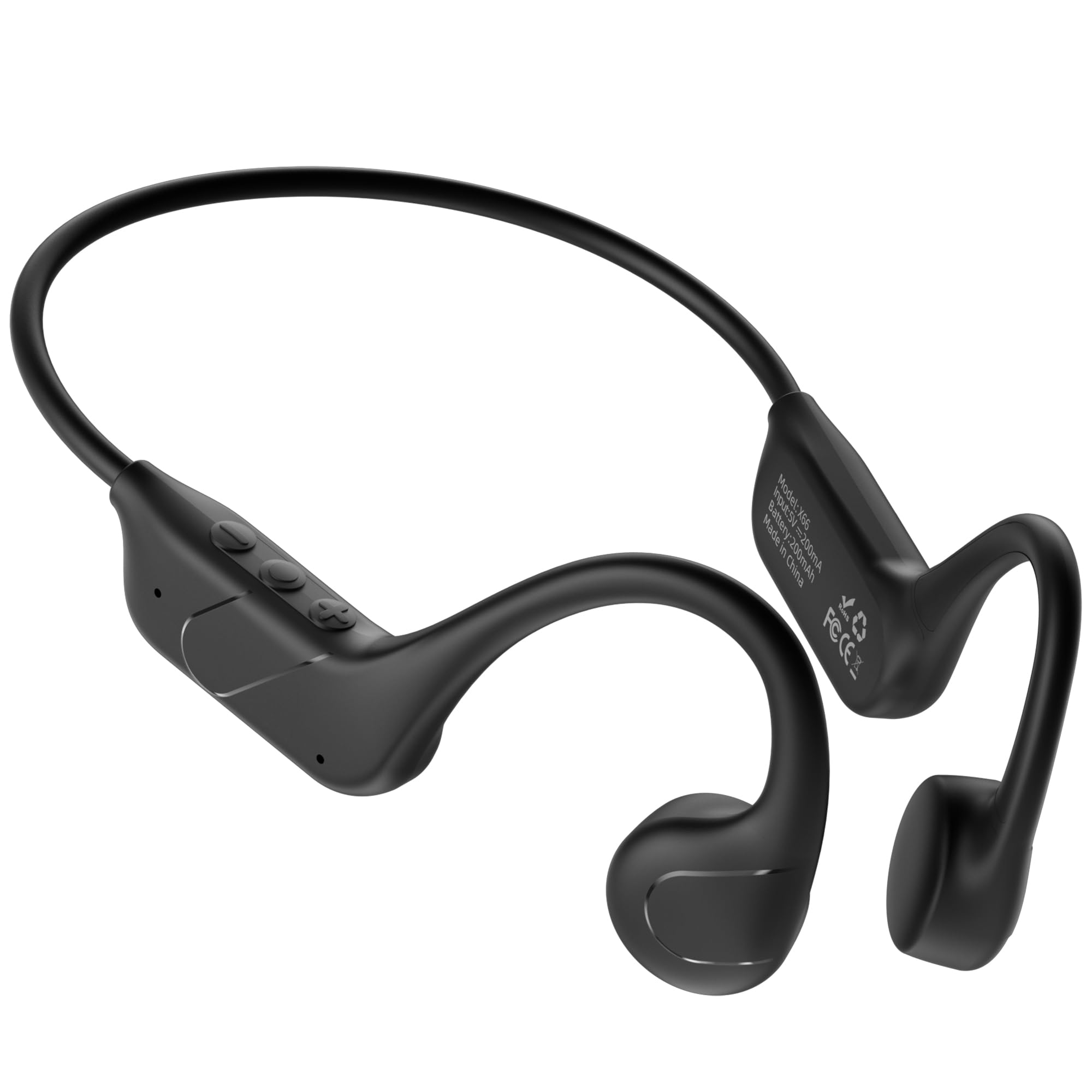

How To Choose The Best Wrap Around Headphones
The band is the whole point. A wrap around design hooks behind your skull so the earpieces rest outside your ears, and that changes what you should check before you buy. Start with fit and clamping pressure, because a band that is too tight gives you a headache after an hour, while one that is too loose slides down your neck mid-run.
Match the wearing style to your activity
If you run on open roads or share a gym floor, an open-ear or bone conduction model keeps your ear canals free so you hear a car or a coach coming. If you mostly sit at a desk or lift indoors, a dynamic-driver behind-the-neck pair gives you fuller bass without needing your ears covered. Decide where you will wear them first, then shop the spec sheet.
Read the water rating honestly
An IP rating (Ingress Protection — two digits that grade dust and water) tells you how much sweat and splash a headset shrugs off. A higher second digit means better water resistance, but almost none of these bands are built for swimming, so treat any pool use as outside the design.
Judge playtime against charge time
A big playtime number is only useful if the recharge is quick enough to fit your routine. Look at both: a long playtime with a slow top-up means you plan your week around the charger, while a modest playtime with a fast top-up keeps you moving.
Side-by-Side Comparison
| Model | Best For | Playtime | Water Rating | Weight | Amazon |
|---|---|---|---|---|---|
| MJOFFIN Bone Conduction★ Best Overall | All-rounder for runners | 10 hours | IP55 | 22g | Amazon |
| Gavhaio Bone ConductionTop Performer | Long gym sessions | — | IP54 | 28g | Amazon |
| Yomdud Bone ConductionQuick-Top-Up Pick | Quick top-ups | 10 hours | IPX5 | 29g | Amazon |
| RTUSIA Small Bluetooth | Glasses wearers | 12 hours | — | — | Amazon |
| Soundbot Behind the Neck | All-week battery | 20 hours | — | — | Amazon |
| JBL Endurance Pace | Tough outdoor use | 10 hours | IP68 | — | Amazon |
| Kinivo BTH240 Pro | Marathon playtime | 30 hours | — | — | Amazon |
| Williams Sound HED036 | Wired reliability | — | — | — | Amazon |
Detailed Reviews
1. MJOFFIN Bone Conduction Waterproof Headphones
Our pick — 4.5+★ from 350+ verified ratings; the strongest balance of quality and price.
At 22g, this band disappears on your head and still hooks on through a sprint.
At 22g, this MJOFFIN band is the lightest set here, and that is why it holds the top spot. The frame is titanium, a springy metal that bends and springs back instead of snapping, so the band clamps behind your head without digging in. Because it is a bone conduction set, the audio travels through your cheekbones and your ear canals stay open — you hear the music and the car behind you at the same time.
Bluetooth 6.0 is the newest wireless standard here, and the difference shows against the older picks. Compare it to the Soundbot below: version 6 versus version 4 on that one. The MJOFFIN also claims a 33-foot wireless range, a hair beyond the Soundbot’s 32.8 feet, which matters when you leave your phone on a gym bench and walk to the rack.
Recharging is the part owners tend to notice. A full charge takes about 1.5 hours and buys you up to 10 hours of listening — and that 1.5-hour top-up is where it beats the Ogogrs bone conduction set below, which carries a stated 10-hour charge time. IP55 means sweat and light splashes are fine for running, cycling and gym work, though swimming is explicitly outside the design. It is a confident everyday sport pick with one clear limit.
What earns the crown
- 22g on a flexible titanium frame — light enough to forget, springy enough to survive a gym bag
- Bluetooth 6.0 gives it the newest wireless link in the lineup
- Roughly 1.5 hours to full charge against up to 10 hours of playback
- IP55 shrugs off sweat and light splashes on runs and rides
The honest limits
- Not built for swimming or long water immersion
- Bone conduction leaves bass lighter than a sealed in-ear pair
- The 33-foot range is barely ahead of the Soundbot’s 32.8 feet
Reach for this if: you want one light open-ear band for running, cycling and the gym floor, and you value a quick recharge.
Think twice if: you plan to swim laps in them — the IP55 build is for sweat and splashes only.
2. Gavhaio Bone Conduction Headphones
Thirteen-millimeter drivers push fuller low-end out of an open-ear band that never blocks your ears.
Open-ear headphones have a reputation for thin bass, and Gavhaio attacks that directly with 13mm bone conduction drivers — the vibrating pads that send sound through your cheekbones. Bigger drivers usually mean more surface to move air, and the listing pairs them with an tune acoustic structure for added low-frequency punch and reduced sound leakage. The 28g wraparound frame is a few grams heavier than the 22g MJOFFIN up top, and the flexible build keeps it steady through movement.
The connectivity story here is strong. Bluetooth 6.0 pairs fast, the 33-foot range is generous, and it carries multipoint pairing so the band can hold two devices at once. There is a 50-millisecond audio latency figure (the delay between picture and sound) — low enough that video and calls stay in sync. IP54 covers sweat and light splashes, which is the right zone for workouts and commuting, not for swimming.
What buyers respond to most is the overall build, with sound quality right behind it as the second thing they call out. The band arrives with noise-reducing earplugs and a silicone fit strap in the box, so you can tune how much of the world you let in. Good value gets mentioned too, which fits a headset that spreads features across the whole package rather than one headline number.
The case built on details: 13mm drivers, Bluetooth 6.0, multipoint pairing and 50ms latency make this the most feature-complete open-ear band in the group. The 28g frame splits the difference between the 22g MJOFFIN and the 29g Yomdud below.
Pick this one for: all-day office wear that shifts straight into a workout — multipoint handles laptop and phone without repairing.
The trade-off: IP54 is a step below the IP55 on the top pick, so heavier splashes are more of a question mark.
3. Yomdud Bone Conduction Headphones
Ten minutes on the cable buys a full hour of music — the emergency feature you use on the way out the door.
The headline here is the top-up: a 10-minute fast charge gives you 1 hour of playback, and a full charge is declared at about 1.5 hours for up to 10 hours of music. Bluetooth 5.4 brings fast pairing and a 33-foot range, and IPX5 keeps sweat and rain off the electronics during workouts.
At 29g on an open, non-in-ear design, the pitch is about relieving ear pressure on longer sessions. The package supports laptops, tablets, phones, smart speakers and car audio systems over Bluetooth, so it moves between desk and road without fuss. Push-button controls mean you feel the click rather than hunt for a touch panel.
The open-ear sound wins people over — being able to hear music and still catch what is happening around you is the point of the design. Where it gets honest, the reliability picture is mixed. A portion of listeners report units that do not charge properly or drop their Bluetooth link at random, so treat the charging routine as something to check in the first week rather than assume.
Why the boost matters: a 10-minute charge for 1 hour of use is a real save when the alternative is sitting out your run. The 29g weight and IPX5 rating keep it in the sport lane, and Bluetooth 5.4 beats the Soundbot’s version 4 by a wide stretch.
The follow-up question: is a lower battery number a problem? Not if you use the fast charge — 10 hours with a 1.5-hour fill stacks up fine against the 10-hour Gavhaio. Just verify the connection in week one, because the connectivity reports are the mixed part of the story.
The fit: a strong choice if charging slips your mind and you want an open-ear band that recovers fast.
Worth a second look: if rock-solid Bluetooth is your non-negotiable, the MJOFFIN’s Bluetooth 6.0 above is the safer bet.
4. RTUSIA Small Bluetooth Wrap Around Headphones
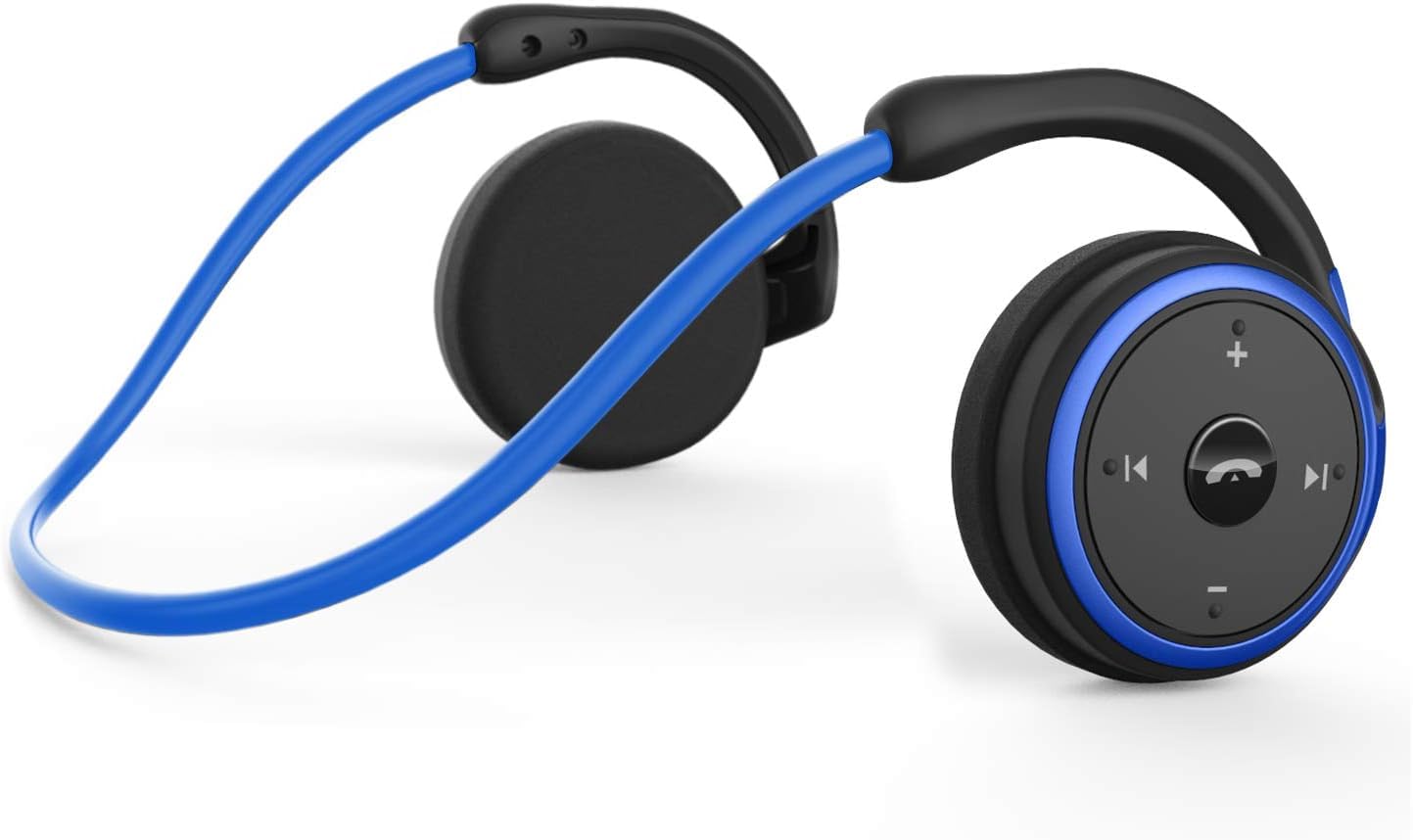
The band that rests outside your ears and slips under a hat — the answer for people who cannot stand earbuds.
This is a dynamic-driver set, not a bone conduction one, so the earpieces rest outside your ears rather than inside the canal. If earbuds leave your ears sore or keep falling out on the treadmill, that alone changes the experience. Wearing glasses alongside is comfortable because nothing is jammed into the ear, and you can lie with your head on a pillow or wear a hat over the band.
Battery is the other strong suit at a stated 12 hours, and the RTUSIA arrives charged and ready. Four control buttons live on the right earpiece — call pickup, volume, and track skip — each marked with a raised dot so you can find them by touch. Calling runs in stereo and the sound stays close to what you get holding a phone to your ear. Sound quality is what buyers praise most, with battery life the next thing they single out, and the value read is a recurring plus.
Here is the unavoidable honesty: the fit is the mixed part. Some heads find it sits perfectly and stays put; a chunk of buyers find the sizing geared to smaller heads and too snug for an average adult skull. If you have a larger head, measure the expectation before you commit — otherwise the 12-hour battery and glasses-friendly shape make a genuinely comfortable sport band.
A clear-eyed read: the 12-hour battery and outside-the-ear fit are the reasons to buy, and the four-button control with raised dots is easier to operate on a run than the two-button in-ear design. The fit sizing is the honest caveat, worth checking against your head size.
Go for it if: you wear glasses, hate the plugged-ear feeling, and want a hat-friendly band that runs a full week between charges.
Look elsewhere if: you have a larger head and need a looser, adjustable band — the sizing here runs snug for some owners.
5. Soundbot Behind the Neck Headphones

Twenty hours of music on one charge — twice the run time of the 10-hour bone conduction picks.
Soundbot’s playtime is the number that carries this pick. You get up to 20 hours of music streaming and up to 25 hours of hands-free calling, a full day-and-a-half of listening between charges. Against the MJOFFIN and Gavhaio bone conduction sets it holds a clear lead on endurance — 20 hours versus their 10 — which is what makes it the pick for people who hate hunting for a cable.
The trade-off is charging speed and the wireless generation. A full charge takes 3 hours, slower than the 1.5-hour refill on the top pick. The Bluetooth version is 4, older than the version 6 in the MJOFFIN, and the 32.8-foot range sits just shy of the 33 feet on the Gavhaio. A dynamic driver delivers the audio, and voice-command support lets you answer calls or skip tracks without reaching for your phone at the gym.
What buyers agree on is clean sound and battery life that keeps going — that part is the settled verdict. Fit and connectivity are the mixed half of the story: the band stays snug for many, while some note it slipping off an ear or the Bluetooth dropping out. For a long gym session or a commute where 20 hours of battery runs the show, it does the job.
The endurance argument: up to 20 hours of music and 25 hours of calls wins on paper against any 10-hour bone conduction band here. Pair that with the wrap-around secure-fit design and it is a real all-week headset.
The question you should ask: can you live with a 3-hour charge and Bluetooth 4?
Made for: commuters and gym regulars who want to charge once and forget it for days.
Skip the upgrade if: Bluetooth 6.0 and a fast 1.5-hour refill matter more to you than sheer hours.
6. JBL Endurance Pace Open-Ear Sport Headphones
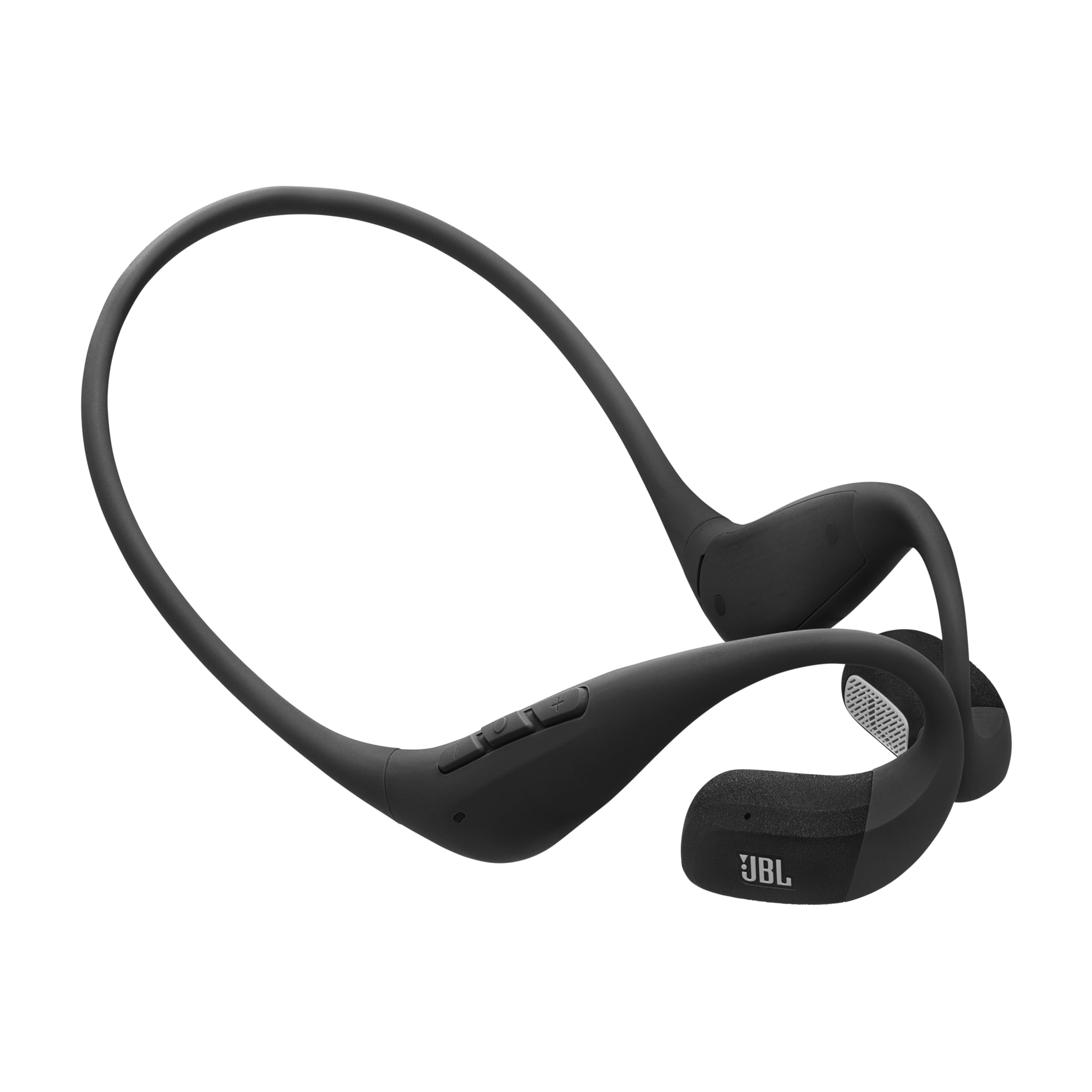
IP68 means salt water, sand and dust are fair game — the toughest rating on this list.
Where the bone conduction bands stop at IP54 or IP55, the JBL carries an IP68 rating (the highest water-and-dust protection grade here), so surf, rain, sand and sweat all fall inside what it is built to handle. The memory-wire neckband is titanium-based and keeps its shape, so you can stuff it in a bag and slide it on later without bending it out of fit.
Sound comes from an 18x11mm dynamic driver tuned with JBL OpenSound, which keeps your ear canal open so you hear your surroundings while listening. Two beamforming mics (small mic arrays that focus on your voice) handle calls and cancel ambient noise, so a call on a breezy jog comes through clearly. Playtime is up to 10 hours, and a 10-minute charge gives another 4 hours. One thing to know before buying: the charging cable is not included.
The audio quality is the part people consistently enjoy. The fit is the honest counterweight — some wearers find it comfortable, while a share note it becomes uncomfortable over long stretches, because the 3.5+ rating reflects that mixed picture. For water-heavy outdoor work and a tough frame, it earns its place as the rugged option.
Built for the elements
- IP68 water and dust rating — tougher than the IP54/IP55 bands here
- Up to 10 hours of music, or a full workday on calls
- 10-minute charge delivers 4 more hours of playback
- Titanium memory-wire neckband keeps its shape
Where it gives
- Charging cable is not in the box — you supply your own
- Fit is the mixed note; some find long-wear comfort a stretch
Bring this one: surf, sand and rainy runs, where the IP68 rating leaves everything else on this list behind.
Weigh this first: you will need your own USB cable, and long sessions test the fit.
7. Kinivo BTH240 Pro Bluetooth Headphones

Thirty hours of talk time on a swiveling earcup frame with a two-year warranty behind it.
Thirty hours of music and talk time is the biggest playtime figure in this lineup, and it pairs with a two-year warranty and lifetime US customer support. The swivelable earcups swing to fit your ears on a lightweight behind-the-head frame meant to stay put through a workout. A scratch-resistant finish and a water-resistant build are there to take the wear of daily gym trips and travel, and a hard case ships in the box for carrying.
Control is all onboard: a built-in mic takes calls, and keys handle play, pause, track skip and volume without pulling out your phone. Bluetooth 5 with a 10-meter range pairs with iPhone, Android phones, iPads, tablets, laptops and PCs on A2DP, so it slots into almost any setup. Thirty hours is a real figure against the 10-hour bone conduction bands, though it trades the open-ear awareness for a fuller in-ear sound.
The honest read: this one earns its keep on 30 hours of playtime and a two-year warranty, not on universal comfort. The sound and the fit draw mixed feelings, and a chunk of owners find the band too small for an average adult head. The quality and comfort notes follow the same mixed pattern. Buy it for the hours and the two-year cover; check the sizing if you have a larger head.
Weighing the hours: 30 hours is double the 15-hour range of a typical week’s workouts, and the two-year warranty is the longest backing in the group. The trade is fit — the mixed reviews circle head sizing.
The right buy for: long-haul travellers and heavy talkers who want the longest battery and the strongest warranty coverage.
Not ideal if: you have a larger head or want the open-ear awareness of the bone conduction picks.
8. Williams Sound Stereo Behind the Head Headphones HED036

No battery, no pairing, no dropouts — a wired rear-wear band that just plugs in and plays.
Every other pick here runs on Bluetooth and needs charging. This one does not. Williams Sound builds a wired rear-wear stereo pair with a 3-foot cord that plugs into a 3.5mm jack, so there is no pairing step and nothing to recharge before a session. The behind-the-head band is lightweight with on-ear padding, and the driver covers a 20 Hz to 20 kHz frequency range — the full band of human hearing — so vocals and detail stay clean.
It is the pick for anyone who has fought a dropped connection or a dead battery at the wrong moment. With no wireless link there is nothing to reconnect, and the retractable cable handling keeps the cord tidy in a drawer. It is also the choice for listening through a device with a headphone jack — a TV, a radio receiver, an older laptop — where Bluetooth is not an option.
The sound quality and the secure, stay-put fit are what buyers talk about most, and the build draws a comparison to hearing-aid hardware for tidy construction. The one honest limit is the cord length: 3 feet is short for reaching across a room, and several owners find it too short for their setup. A 90-day warranty covers the early window.
The no-fuss angle: a 3.5mm jack, on-ear padding and a 20 Hz to 20 kHz range mean clean sound with zero charging. The retractable cable keeps the 3-foot cord under control, though the length is the practical snag.
A solid match for: plugged-in listening at a desk, a TV or a receiver, where a dead battery is never the plan.
Check this first: the 3-foot cord is short — measure the distance from your seat to the jack before you buy.
Know the Specs
Battery Playtime vs Charge Time
Playtime is how long the band runs on a single charge; charge time is how long it takes to fill back up. A 20-hour playtime is the largest here, but a 3-hour refill means planning. A 10-minute fast charge on some picks gives you an hour of music, which suits a forgetful routine better than a big number you never top off. Read both figures together.
IP Ratings Explained
An IP rating is two digits: the first for dust, the second for water. IP54 and IP55 handle sweat and light splashes; IP68, the highest here on the JBL, handles sand, salt water and dust. None of these are built for swimming, so a pool remains outside the design even at IP68.
Bone Conduction vs Dynamic Drivers
Bone conduction drivers send sound through your cheekbones, so your ear canals stay open to traffic and conversation — good for street running. Dynamic drivers sit at or over the ear for a fuller low-end but can block the world out. Pick by whether safety awareness or bass weight matters more to you.
Bluetooth Version & Range
A higher Bluetooth version means newer pairing and a more stable link, but it is not everything. Versions here run from 4 up to 6, and range figures sit between 32.8 and 33 feet — one or two paces of phone-to-headset distance. Version 4 on the Soundbot still connects fine; it is simply older tech than version 6.
Common Questions
What does wrap around headphones actually mean?
Can I swim in IP68 wrap around headphones?
Will behind the neck headphones stay on while running?
Do bone conduction headphones leak sound for people nearby?
How long does the battery last on these wrap around headphones?
Can I wear these wrap around headphones with glasses?
What is the difference between bone conduction and a regular driver band?
Why is the wired Williams Sound version listed here?
Do these need a phone app to control the sound?
What Bluetooth range do these wrap around headphones offer?
The Bottom Line
For most buyers, the wrap around headphones winner is the MJOFFIN Bone Conduction Headphones because it balances 22g titanium comfort, Bluetooth 6.0 and a 1.5-hour recharge against up to 10 hours of playtime, all in an IP55 band that stays put through a run. If you want fuller low-end and multipoint pairing across two devices, reach for the Gavhaio Bone Conduction Headphones with its 13mm drivers. For all-week endurance and the longest warranty, the Kinivo BTH240 Pro hands you 30 hours and two years of cover. And if you want the toughest water rating on the list, the JBL Endurance Pace carries an IP68 build for surf and sand.
The one honest nudge: the top pick is the lightest band here at 22g and the only one pairing Bluetooth 6.0 with a 1.5-hour recharge — if that combination matches your routine, start here.
How we choose
We do not accept paid placement. Every pick is matched to a real buyer and a real use-case; we do not hands-on test units.
Sources
Specifications: manufacturer listings and product documentation. Review insights: verified customer reviews, as of November 2026. Pricing: not shown on this page (it changes often); check the current price via the retailer link.
As an Amazon Associate, Tactical Gear Guy earns from qualifying purchases. This does not affect which products we feature.