Specs are compiled from manufacturer listings and verified buyer reviews and can change over time — please confirm the key details on the product page before buying.
Most running shoes fail you in the same boring way: the fit is slightly wrong, so every mile turns into a negotiation with your own foot. The nine pairs below cover the real spread of what works — cushioned cruisers for long slow days, firmer shoes for tempo work, and stability builds for feet that roll inward. If you want the short answer, the Under Armour Ascend is the crowd favorite at 4.5+ stars across 300+ owners, and it costs less than most of the field here.
This guide is built by comparing the manufacturers’ published specifications and the patterns across verified customer reviews, so you get each pick’s real strengths and trade-offs instead of marketing spin.
Fit beats foam every time, so start with the shape of the shoe and the width you actually need. Below you get the plain-English read on drop, cushioning, and sizing quirks so you can stop returning shoes. Here is the honest breakdown of the world’s running shoes.
Top Picks


How To Choose The Best World’s Running Shoes
Buying running shoes is a fit decision first and a spec decision second. You can own the fanciest foam on the shelf and still hate the shoe if the toe box pinches or the heel slips. So work through these four things in order, and you will land on the right pair far faster.
Get the fit right before anything else
Your longest toe should sit roughly a thumb’s width from the front of the shoe, and your heel should stay locked when you push off. Running shoes are usually bought a half size up from your dress shoe because feet swell over a long run. Pay attention to width notes too: some models in this list run narrow, and the fix is sizing up rather than hoping the upper stretches.
Match the cushioning to your miles
A soft, tall midsole — the foam layer between your foot and the ground — soaks up impact on long easy days, which is why the Gel-Cumulus 27 runs on PureGEL and FF BLAST PLUS. A firmer, lower shoe feels quicker and gives you more feedback for tempo runs and intervals. Neither is better; they are tools for different sessions. If you run the same pair for everything, a middle-of-the-road cushioning level is the safer call.
Know if you need stability
If your ankle rolls inward as you land, a shoe with a dedicated guidance or stability system — like the GT-1000 14’s 3D GUIDANCE SYSTEM — helps keep the ride smooth. If your foot lands neutral, a stability shoe mostly just adds weight and firmness you did not ask for. Think about how your current shoes wear on the outer heel — heavy wear there is a hint note before you buy.
Weight and drop are the quiet deciders
Two shoes can look identical on the shelf and feel completely different after five miles. A lighter shoe (weighed here in pounds) tires your legs less, which matters on longer efforts. Heel-to-toe drop changes how much your calf and Achilles work. If you are moving from a tall, soft shoe to a lower one, phase it in slowly rather than switching on race day.
Side-by-Side Comparison
| Model | Best For | Cushioning Focus | Stated Weight | Fit Note | Amazon |
|---|---|---|---|---|---|
| Under Armour Men’s Ascend | Everyday value runner | All-round comfort build | — | Fit praised most | Amazon |
| Nike Men’s Quest 6 | Pavement training miles | Increased midsole height | — | Midfoot band lock | Amazon |
| ASICS Women’s GT-1000 14 | Women needing guidance | FF BLAST midsole | 1.44 pounds | Fit praised most | Amazon |
| ASICS Men’s Gel-Cumulus 27 | Long easy miles | PureGEL shock absorption | — | True to size, extra toe room | Amazon |
| Nike Men’s Journey Run | All-day standing and walking | Extra heel cushioning | — | Some say runs small | Amazon |
| New Balance Fresh Foam X 880 V15 | Wide feet, long days | Fresh Foam X midsole | 3 pounds | Great for wide feet | Amazon |
| Saucony Endorphin Speed 5 | Tempo and race pace | Light and springy build | 1.48 pounds | Fit praised most | Amazon |
Detailed Reviews
1. Under Armour Men’s Ascend Running Shoes
A first-pair runner where the fit, not the foam, does the heavy lifting.
Here is the pair that wins on the numbers: 4.5+ stars, the highest score on this entire list. That score is built on the thing runners feel first — the shape of the shoe on the foot. Fit is the quality owners talk about most, followed closely by comfort, and people who buy these generally feel they got their money’s worth.
What that means in real life is simple. You lace them up, the toe box sits right, and nothing digs in after mile three. That is a surprisingly rare thing at the entry end of the shelf, and it is why this pair is easy to recommend to someone buying their first serious running shoe.
What it is not: a plush, tall-stack cruiser for marathon distance. The build here is a straightforward men’s running shoe with a clean upper and no exotic foam name attached. If your goal is a dependable daily pair for the gym, the pavement, and the occasional 5K, this sits right in the middle of the pack on everything and near the top on fit.
The case for the Ascend
- Highest rating of any shoe on this list at 4.5+
- Fit is the standout strength, so fewer returns and blisters
- Comfort holds up as an everyday running and walking shoe
Where it stops short
- No foam or stability technology called out for long-distance work
- Men’s sizing only, so women need to size down in men’s sizes
Reach for this if: you want the best-loved daily runner here without spending much.
Look elsewhere if: you need a dedicated stability shoe or a plush long-run cruiser.
2. ASICS Men’s VERSABLAST 4 Running Shoes
<
A road shoe that locks your foot down the tighter you pull the laces.
The Quest 6 has one feature that solves the most common running-shoe annoyance: a midfoot band that grips your foot harder as you tighten the laces. If you have ever felt your heel lift or your arch slide mid-run, that band is the fix. Underneath, Nike raised the midsole height for a softer, more responsive ride, and the rubber outsole adds traction on wet pavement.
Owners describe these as comfortable enough to wear all day, and the shoe’s nice-enough looks mean it does not scream “running shoe” at the office. Quality ranks as the top strength, with comfort and appearance close behind. Sizing runs true for most people.
The honest limitation is durability — the outsole wears for some owners faster than they expect. Treat these as a training shoe for the road rather than a trail beater, and they hold up fine.
The secure-fit read: that midfoot band is the detail that separates this from a generic road shoe — it lets you dial in the lock instead of accepting whatever the upper gives you.
Pick this for: regular pavement training where you want an adjustable, secure fit.
Weigh it against: a shoe built for grit if the mixed durability notes concern you.
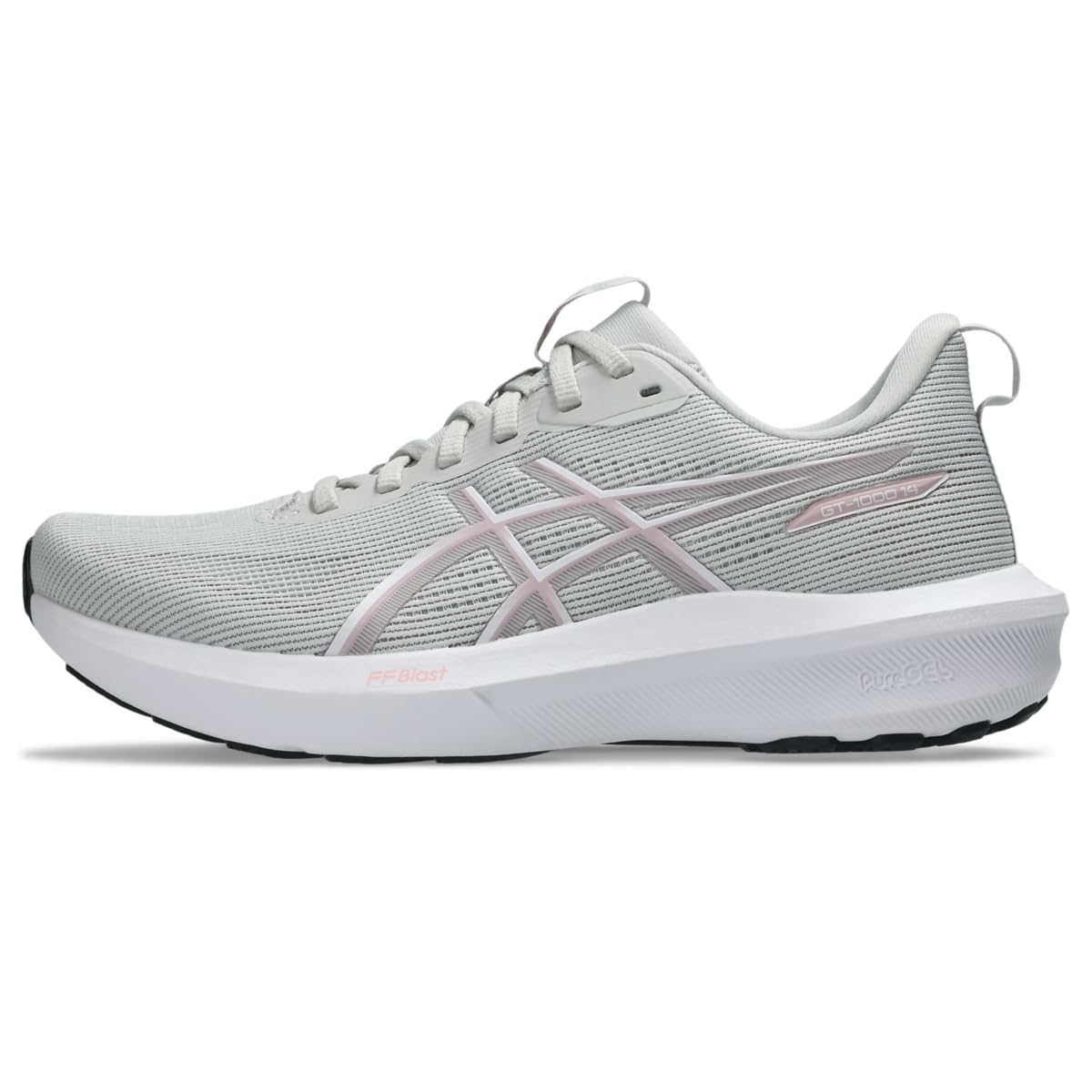
3. ASICS Women’s GT-1000 14 Running Shoes
The women’s shoe that pairs a cloud-soft foam with a stability system to keep the ride straight.
This is the pick for a woman who wants a smooth, guided ride on the road. The GT-1000 14 pairs an updated FF BLAST midsole — a foam that gives a soft, energized bounce — with ASICS’s 3D GUIDANCE SYSTEM, which boosts stability so the shoe guides your foot rather than letting it wander. The upper, lining, and insole are lightweight polyester, and the outsole is synthetic rubber.
Fit is the quality that stands out most to the women wearing these, which is what you want from a shoe you run in daily. Arch support and cushioning follow, and owners describe the cushioning as feeling good from the first wear rather than needing a break-in period. At 1.44 pounds, it is light enough to forget about.
Durability is the mixed note here. Some owners find these hold up well and others notice faster wear, so think of them as a shoe for regular miles rather than an everyday-everything beater. If you run road and want a stability assist without a heavy build, this is the fit.
What earns its place
- FF BLAST midsole delivers a soft, bouncy ride
- 3D GUIDANCE SYSTEM adds stability for a steadier stride
- Lightweight polyester upper, 1.44 pounds overall
What to weigh up
- Durability notes are split between long-lasting and faster-wearing
- Women’s sizing only — men need a different model
Built for: the woman who wants soft cushioning and a steady, guided stride on road miles.
Skip if: you are chasing maximum outsole life over a long training block.
4. ASICS Men’s Gel-Cumulus 27 Running Shoes
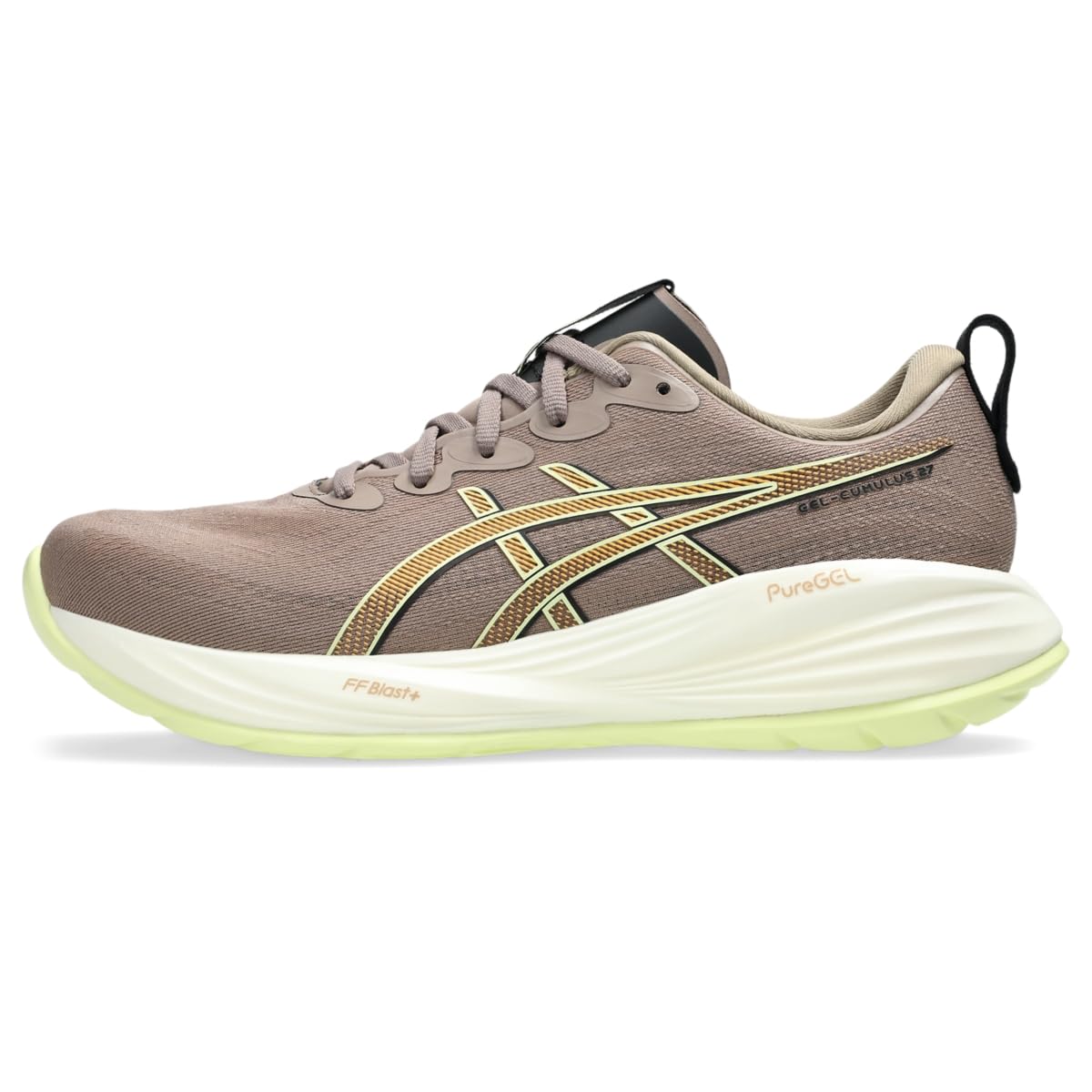
A cushioning-first cruiser built for the long, quiet miles.
ASICS designed the Gel-Cumulus 27 for anyone who wants extra cushioning underfoot. Two technologies do that work: PureGEL, a gel unit that absorbs shock so less of the landing reaches your joints, and an FF BLAST PLUS foam midsole paired with a FluidRide outsole. The result is a smooth, forgiving ride you can stay in for a full run.
Comfort and fit both get heavy approval from owners, and the fit notes are specific — true to size with extra toe room, which is exactly what long-mile runners want. Heel stability draws praise too, so your foot stays put when fatigue sets in. People wear these for jogging and walking alike.
Cushioning this generous is not overdone — it does not feel mushy. The trade-off is lifespan: some buyers report the shoe will not carry them past a few hundred miles before the foam flattens. Run in them as intended, though, and they deliver calm, cushioned miles.
The shock-absorption angle: PureGEL is the headline here, and it is why long-distance runners reach for this shoe over a firmer, faster build.
The right shoe for: long, easy runs where comfort and shock absorption matter more than speed.
Know going in: the foam softens up over miles, so plan your replacement earlier than a firmer shoe.
5. Nike Men’s Journey Run Road Running Shoes
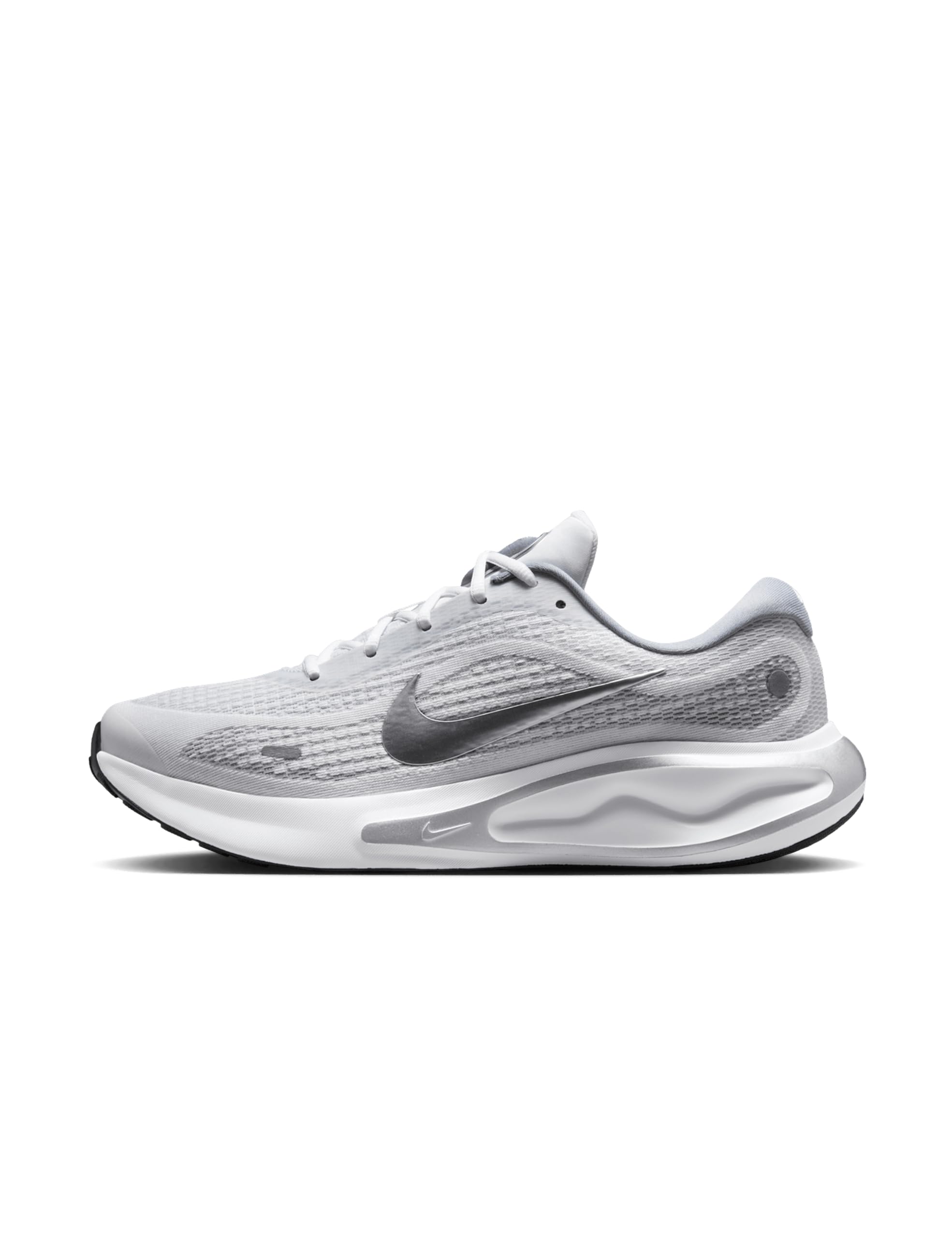
Cushioned enough to stand in all day, grippy enough to run the road.
The Journey Run stacks extra cushioning in the heel and adds a soft tongue and collar, so the comfort is concentrated where your foot lands and where the shoe meets your ankle. An engineered mesh upper keeps the foot secured, and a rubber outsole gives it traction for road miles. If you are on your feet for long shifts and still want a proper running shoe, this is the crossover.
Owners describe the feel as walking on memory foam, and the support holds up across long hours. Looks are the trait that gets the most positive attention here, so this shoe does not look out of place in casual wear. Comfort and fit follow closely behind.
Watch the sizing. Some find these run small, so if you sit at the top of a size, going up half a step is worth considering. Get the size right and it is a comfortable, do-everything shoe for the running-curious and the standing-all-day crowd.
Where the cushioning lives: the heel is the focus here with the soft tongue and collar cradling the ankle — ideal for the walk-run rhythm of a busy day.
Your pick if: comfort across a 12-hour day matters as much as your evening run.
Guard against: ordering your usual size without checking the small-sizing notes.
6. New Balance Men’s Fresh Foam X 880 V15

The roomy everyday cruiser built for wide feet and long days.
Where this shoe earns its keep is width and comfort. The structured engineered mesh upper holds your foot securely while the Fresh Foam X midsole delivers a soft, forgiving ride. Owners with wide feet are the loudest fans — this is a shoe that fits them properly rather than squeezing. Arch support and cushioning get steady approval, and the ride feels cloud-soft underfoot.
Be aware of the weight. The 880 V15 lists 3 pounds on the spec sheet, which is the heaviest figure on this list. That heft comes from a structured, supportive build — a deliberate choice for all-day wearability rather than a sprint shoe. If you run long and slow, the extra substance feels stable; if you are chasing pace, it is a lot of shoe.
Durability gets mixed feedback: some owners mention it holds up well across long days, while others notice faster wear. For a wide-footed runner logging steady everyday miles, this is among the most comfortable pairs on the page.
Why wide-footed runners like it
- Fresh Foam X midsole gives a soft, cushioned ride
- A structured upper that accommodates wider feet well
- Arch support and cushioning both earn approval
The honest downsides
- At 3 pounds, the heaviest listed weight here
- Durability feedback is mixed across owners
Worth it for: wide-footed runners who want soft cushioning for long, steady days.
Think twice if: you want a light shoe for speed work — the 3-pound build is a lot to carry.
7. Saucony Men’s Endorphin Speed 5 Sneaker

Built for tempo, happy on long training days too.
Saucony built the Endorphin Speed 5 as an up-tempo shoe — the kind you reach for on interval days and race-pace efforts. It is light at 1.48 pounds, and owners describe it as incredibly light with stability and support that hold up on quick work. Fit is the biggest strength, and comfort is close behind, which keeps the speed shoe from feeling punishing.
The surprising part is versatility. People wear this for long, moderate training sessions and tempo runs alike, so it is not locked to race day. Cushioning is good enough for walking too, which makes it a more useful shoe than its timing on paper suggests.
Durability and speed performance both divide opinion, so the honest read is this: it is a performance shoe tuned for fast efforts, and treating it as your daily-mile beater will wear it out faster. If you have a second shoe for easy days, the Speed 5 will shine on the sessions that count.
The tempo read: a light, stable shoe that thrives at pace — its strength is that it does not feel like a specialized race shoe once you slow down.
Best matched to: runners who do tempo work and want one shoe for fast sessions and long moderate days.
The caveat: it is a performance-first build, so do not expect it to survive as your everyday pair.
Know the Specs
Midsole foam and what it means for your feet
The midsole is the foam layer between your foot and the ground, and it does two things: cushions the landing and springs back on push-off. Names like FF BLAST PLUSTM, Fresh Foam X, and PureGEL are different foam formulas, each tuned either softer for comfort or firmer for speed. A cushioned shoe like the Gel-Cumulus 27 absorbs more of the landing, which eases long slow days but feels sluggish on tempo work. A responsive foam (like the VERSABLAST 4) returns energy for a quicker feel, but cushions less on heavy landings. Match the foam to how you run most.
Weight in pounds and why it decides your legs
Weight is listed here in pounds, and it is one of the clearest predictors of how a shoe will feel over mileage. A shoe at 1.44 pounds like the ASICS VERSABLAST 4 lets you pick your feet up easily on the tenth mile; a 3-pound shoe like the Fresh Foam X 880 V15 sits heavier on your legs but brings a more structured, supportive build. Neither is wrong. If you do long, slow distance, the cushion and structure can be worth the weight. If you run intervals and tempo, lighter shoes tend to feel quicker and less fatiguing over the same distance. Look at the weight column before you buy — it tells you more than any marketing copy.
Stability and overpronation in plain words
Overpronation means your foot lands on the outer heel and then rolls inward, adding strain to the ankle and shin on every stride. A stability shoe adds guidance under the arch or along the sides to keep that inward roll in check. The GT-1000 14 uses ASICS’s 3D GUIDANCE SYSTEM, and the Gel-Kayano 33 is built specifically for overpronators. If your foot lands neutral, a stability shoe mostly adds firmness and weight you do not need, so choose the neutral build instead.
Heel-to-toe drop and toe room
Drop is the height difference between the heel and the toe of the shoe. Drop changes how much your calf and Achilles stretch on every stride. A taller drop feels easier on the calf; a lower one works the calf more. Toe room is the other half of fit: a roomy toe box like the Gel-Cumulus 27’s is easier on bunions and wide feet. Check both together — a roomy forefoot plus a drop you can handle is where comfortable running lives.
Common Questions
How do I know if I overpronate and need a stability shoe?
Should I buy running shoes a half size bigger than my normal size?
What is the difference between a cushioning shoe and a stability shoe?
How long do running shoes last before the foam wears out?
Can I run and walk in the same shoe?
Is a heavier running shoe better for wide feet?
What does heel-to-toe drop mean and does it matter?
Are lightweight shoes like the Endorphin Speed 5 good for long runs?
Do I need a separate shoe for race day and training?
How do I break in new running shoes without getting blisters?
The Bottom Line
After all nine, the smartest buy is the Under Armour Men’s Ascend — the best-loved, best-priced daily runner here, with a fit that keeps blisters off the list. If your week mixes running and walking, the ASICS VERSABLAST 4 gives you that crossover at 1.44 pounds. For long, cushioned miles, reach for the Gel-Cumulus 27, and for wide feet, the New Balance 880 V15 earns the space. The one honest nudge: the Ascend’s 4.5+ rating is the highest bar on this list, so if fit is your main worry and budget is a constraint, that is the safest starting point.
How we choose
We do not accept paid placement. Every pick is matched to a real buyer and a real use-case; we do not hands-on test units.
Sources
Specifications: manufacturer listings and product documentation. Review insights: verified customer reviews, as of November 2026. Pricing: not shown on this page (it changes often); check the current price via the retailer link.
As an Amazon Associate, Tactical Gear Guy earns from qualifying purchases. This does not affect which products we feature.