Specs are compiled from manufacturer listings and verified buyer reviews and can change over time — please confirm the key details on the product page before buying.
You want one answer: which prebuilt tower holds high frame rates without needing a rebuild in a month. The HP OMEN 40L is the most balanced machine here. Its 20-core Intel Core i7-14700F and 32GB of DDR5 memory (fast RAM for smooth multitasking) handle gaming, streaming, and editing at once. That combination is why it tops this list. Below are ten more towers sorted by what they do well, from 1080p budget picks to RTX 5080 monsters.
This guide is built by comparing the manufacturers’ published specifications and the patterns across verified customer reviews, so you get each pick’s real strengths and trade-offs instead of marketing spin.
What separates these towers is graphics card memory, processor core count, and cooling setup. Each pick below is broken down in plain terms, spec by spec. These are the picks that genuinely earn a place on a shortlist of the worlds gaming computer contenders.
Top Picks
How To Choose The Best Worlds Gaming Computer
Most buyers focus on the processor name and ignore the graphics card, then wonder why 1440p feels choppy. On a prebuilt tower, the GPU (graphics card) does the heavy lifting for frames. Its video memory — the dedicated RAM on the card — decides how much texture detail it can hold before it starts swapping and stuttering. Start with the GPU, then check the CPU, memory, and storage.
Graphics card memory sets your resolution ceiling
A card with 6GB of video memory is built for 1080p play, and a 1920×1080 maximum resolution in the spec sheet confirms that intent. Step up to 8GB and you get comfortable 1440p headroom, which is the 2560×1440 figure listed on several towers here. The 16GB cards in this list are the ones aimed at 4K and heavy ray tracing, where textures and lighting effects eat memory fast.
Processor cores decide whether you can stream while you play
Six cores handle a game and a chat app comfortably. Eight cores give you room to run a stream encoder, a browser, and a game at the same time. The 20-core chip in the top pick is a different class entirely — that headroom is what makes 4K video editing and 3D rendering realistic on the same machine you game on.
Memory and storage: DDR5 versus DDR4, and why NVMe matters
DDR5 is the newer memory generation and runs at higher speeds than DDR4, so app switching and large game worlds feel snappier. Capacity matters just as much: 16GB is a working minimum for modern titles, and 32GB lets you keep a dozen browser tabs open behind your game. For storage, an NVMe SSD (a stick-shaped drive that plugs straight into the board) cuts load screens dramatically compared with an older hard drive.
Cooling and power supply: the quiet specs that bite later
Air cooling with a good fan layout is fine for mid-range builds and keeps noise low. The hottest chips benefit from a liquid AIO loop, and a 360mm radiator is the largest of the sizes listed here. Check the power supply rating too — an 80 PLUS Gold unit is the efficiency tier that several premium towers here carry, and it tells you the builder did not cut corners on the part feeding your GPU.
Side-by-Side Comparison
| Model | Best For | Graphics Card | CPU | Memory / Storage | Amazon |
|---|---|---|---|---|---|
| HP OMEN 40L★ Best Overall | All-round gaming and editing | 6GB GDDR6 dedicated | Intel Core i7-14700F, 20 cores | 32GB DDR5 / 1TB SSD | Amazon |
| Olialia RTX 3060 Ti1440p Bargain | 1440p on a tighter budget | RTX 3060 Ti, 8GB GDDR6 | AMD Ryzen 5 5500, 6 cores | 16GB / 512GB SSD | Amazon |
| ZYNEEX RTX 30501080p Starter | 1080p starter tower | RTX 3050, 6GB GDDR6 | AMD Ryzen 5 5500, 6 cores | 16GB DDR4 / 1TB NVMe SSD | Amazon |
| YAWYORE RTX 5060 | Streaming and multitasking | RTX 5060, 8GB GDDR7 | AMD Ryzen 7 5700X, 8 cores | 32GB DDR4 / 1TB NVMe | Amazon |
| CyberPowerPC RTX 5060 Ti | High-end frames on a mid budget | RTX 5060 Ti, 8GB GDDR7 | AMD Ryzen 7 8700F, 8 cores | 16GB DDR5 / 1TB SSD | Amazon |
| KOTIN RTX 5060 Ti | Upgrade-friendly build | RTX 5060 Ti, 8GB GDDR7 | AMD Ryzen 7 8700F, 8 cores | 32GB DDR5 / 1TB NVMe | Amazon |
| Alienware Aurora RTX 5070 | Quiet 4K-capable gaming | RTX 5070 | Intel Core Ultra 7 265F | — | Amazon |
| MSI Codex Z2 | Large game libraries | RTX 5070, 12GB | AMD Ryzen 7 8700F, 8 cores | 32GB DDR5 / 2TB SSD | Amazon |
| Skytech RTX 5070 Ti | High-refresh 1440p | RTX 5070 Ti, 16GB GDDR7 | AMD Ryzen 7 9800X3D | 32GB DDR5 / 2TB SSD | Amazon |
| Alienware Aurora RTX 5080 | 4K ray tracing flagship | RTX 5080, 16GB GDDR7 | Intel Core Ultra 9 285 | — | Amazon |
| STORMCRAFT Phantom | Top-tier everything | RTX 5080, 16GB GDDR7 | AMD Ryzen 7 9800X3D | 32GB DDR5 / 2TB NVMe | Amazon |
Detailed Reviews
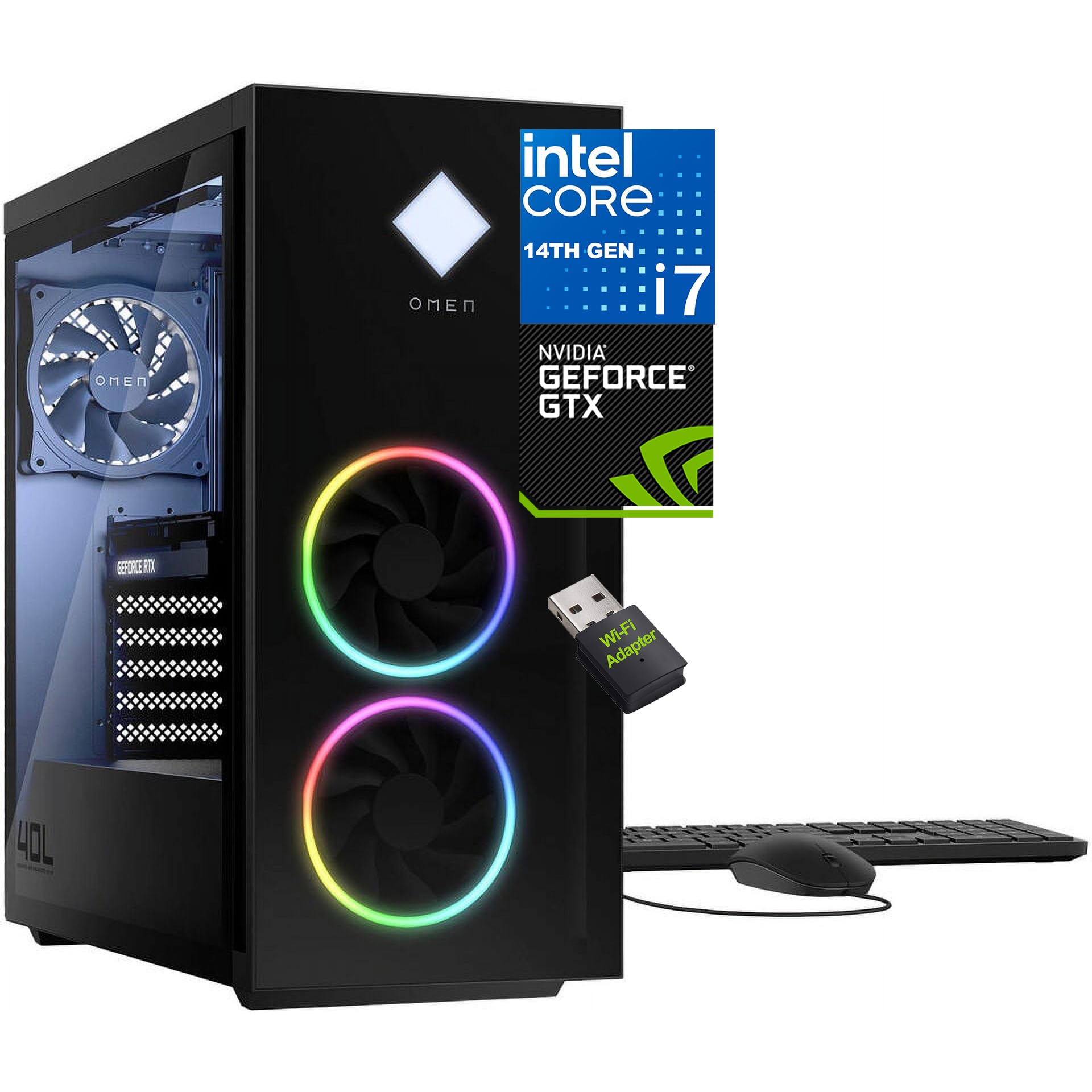
1. HP OMEN 40L Gaming Desktop
Our pick — 4.5+★ from 150+ verified ratings; the strongest balance of quality and price.
Twenty cores in the tower that quietly does gaming, streaming, and editing without a rebuild.
This is the pick for the buyer who does not want two machines. The Intel Core i7-14700F runs 20 cores and 28 threads. Its 33MB L3 cache (the chip’s own scratchpad for data it reaches for constantly) is more than double the 16MB on the Ryzen 5 5500 tower below. That cache and core count let 4K video editing and 3D rendering sit comfortably next to your game library.
Memory is 32GB of DDR5, the newer high-speed generation, paired with a 1TB PCIe Gen4 NVMe SSD. In practice, the Gen4 drive cuts load screens to seconds, and 32GB of DDR5 keeps a dozen browser tabs open behind Discord without stutter. The chassis is microATX with an Intel Z790H chipset, a tempered black glass front, and a side cover lock so the parts stay where you put them. An active fan-sink cooling setup with 4-pin fan control keeps the internals from cooking during long sessions.
Around back you get 6 USB 3.2 Gen 2 Type-A ports at 10 Gbps, 2 USB 3.2 Gen 1 Type-C ports at 5 Gbps, gigabit Ethernet, and three audio ports for 5.1 surround. Four USB ports sit up front for a headset and controller. A 600W power supply feeds the system, and it ships with Windows 11 Home already installed.
Where this tower wins
- 20-core i7-14700F with 33MB L3 cache handles editing and streaming alongside gaming.
- 32GB DDR5 memory plus a 1TB Gen4 NVMe SSD keeps load screens out of your way.
- Six rear 10 Gbps USB ports and gigabit Ethernet cover a full desk of peripherals.
- Quiet operation and simple setup are the two things buyers bring up again and again.
The honest trade-offs
- The graphics card carries 6GB of VRAM, so this is a 1080p and mid-1440p machine, not a 4K racer.
- Wireless networking arrives as a USB WiFi adapter rather than a built-in card.
Buy this one if: you edit, stream, or run heavy apps in the same session as your games and want the CPU to never flinch.
Look past it if: you plan to game at 4K with ray tracing — the 6GB graphics card is the wrong tool for that job.
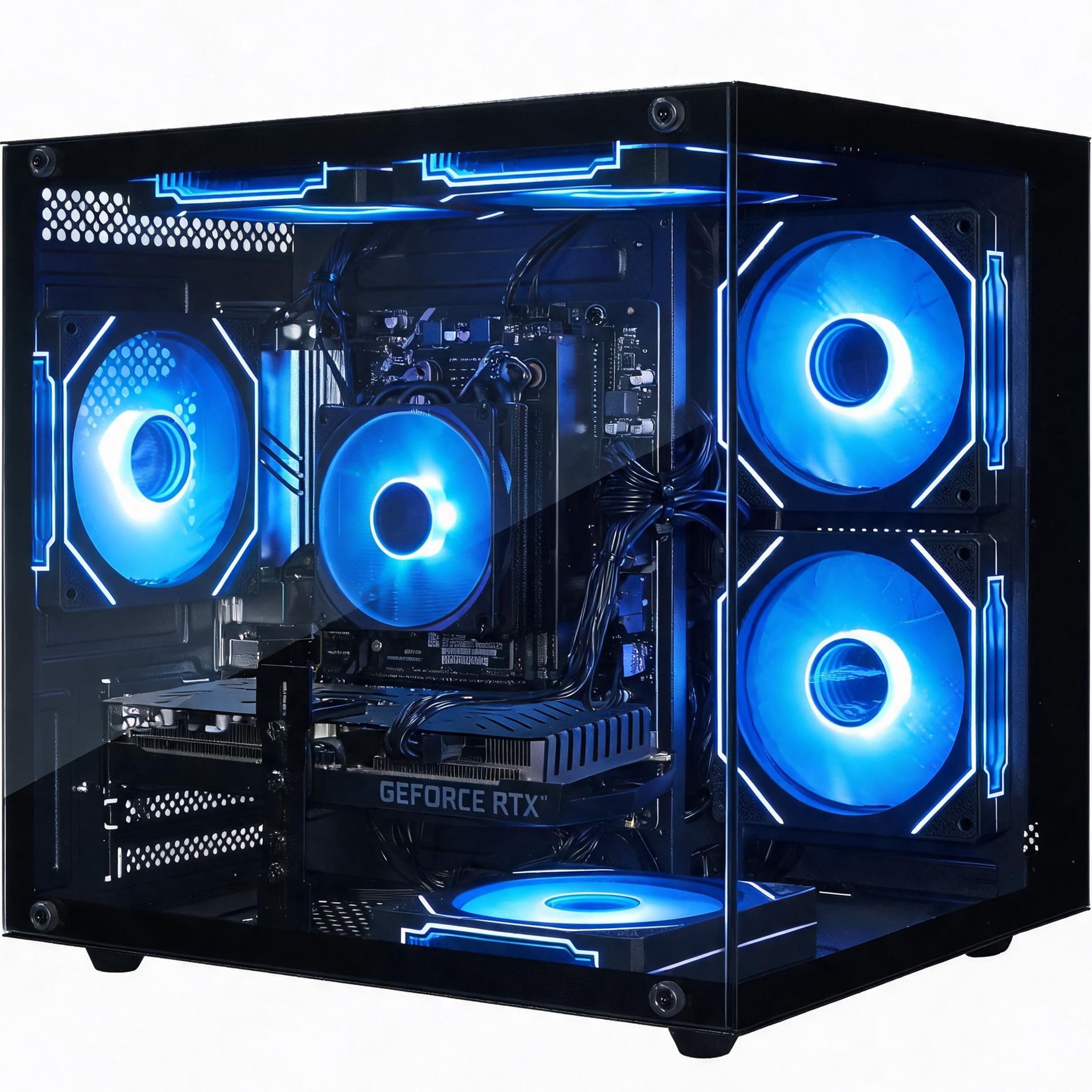
2. Gaming PC Prebuilt, RTX 3060 Ti, AMD Ryzen 5 5500, 16GB RAM
The 1440p shortcut for anyone who wants smooth frames without stretching the budget.
The RTX 3060 Ti here is the reason this tower matters. It carries 8GB of GDDR6 memory and a 2560×1440 maximum resolution, which is 33% more pixels of headroom than the 1920×1080 ceiling on the RTX 3050 build that follows. The maker claims 60+ FPS at 1440p with DLSS (an upscaling trick that renders at a lower resolution and sharpens it back up), so hold it to that number.
Behind the card sits an AMD Ryzen 5 5500 with 6 cores and 12 threads, clocked up to 4.2GHz, working with 19MB of cache. Memory is 16GB of fresh RAM and storage is a 512GB SSD. The look is a dual-chamber mid-tower with dual tempered glass panels, six adjustable RGB fans, and an RGB CPU cooler. Ventilated top and side panels with built-in dust filters keep airflow moving while the noise stays low.
Windows 11 comes pre-installed, and the rear panel offers HDMI plus DisplayPort outputs for multi-monitor setups alongside high-speed Ethernet. The build carries a 1-year manufacturer warranty with repairs and replacements handled in the United States.
What the card buys you: 8GB of GDDR6 and a 1440p resolution ceiling put this in a different league from a 1080p starter tower, for buyers who already own a 1440p monitor.
Where it asks patience: the 512GB SSD fills quickly if you keep several large AAA titles installed at once, so plan on adding storage later.
Reach for this if: your monitor is 1440p and you want the cheapest route to smooth frames on it.
Choose something roomier if: you install five or six big games at a time — 512GB of storage will not hold them.
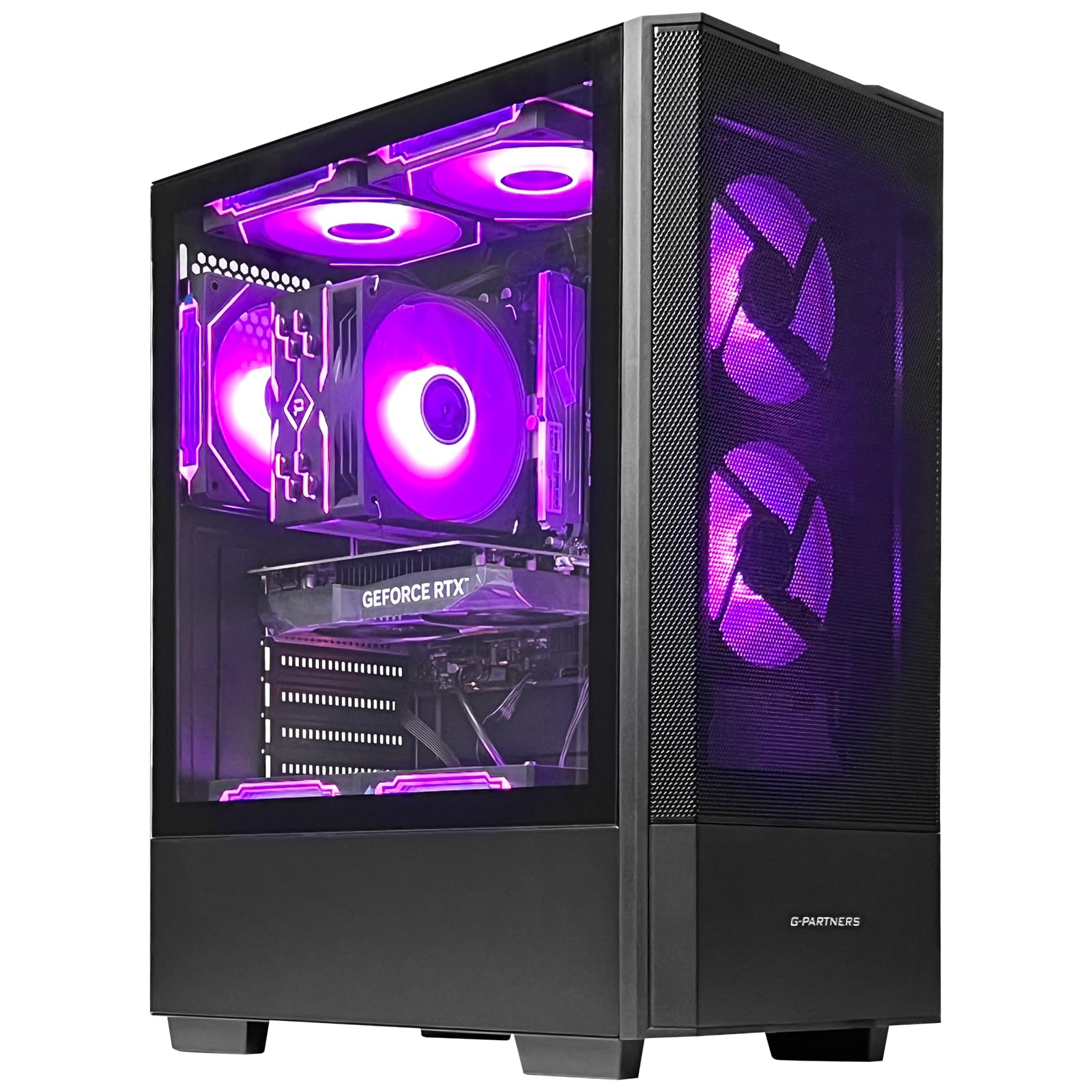
3. Prebuilt Gaming Desktop PC
A terabyte of fast storage and a 1080p ray-tracing card for the first-timer.
The first thing to know about this ZYNEEX tower is that it is a plug-and-play machine. It arrives with Wi-Fi built in and Windows 11 ready, and the setup process is the thing buyers talk about most after the performance itself. A first-time desktop owner can be in a game the same evening, cable and boot drive handled.
The GeForce RTX 3050 carries 6GB of GDDR6 memory (graphics RAM) and tops out at 1920×1080 resolution, so plan on a 1080p monitor. It supports ray tracing (the lighting technique that makes reflections and shadows look real), and 1080p high-frame-rate play is the target. what separates it from the 1440p-capable tower above is that resolution ceiling — 1080p versus 2560×1440 — while it counters with double the storage.
Storage is a 1TB NVMe SSD, which is a lot of fast space at this tier and means your whole library fits from day one. Memory is 16GB of DDR4 at 3200MHz, and the CPU is the same AMD Ryzen 5 5500 with 6 cores and 12 threads running up to 4.2GHz. An ARGB air cooling system with multiple fans keeps temps and noise steady through long sessions. HDMI and DisplayPort outputs give you flexible monitor choices, and extra USB ports are there for your peripherals.
Why it earns its spot: a 1TB NVMe SSD is the standout here — most towers at this level make you add storage, and this one does not.
The catch to weigh: 16GB of DDR4 and a 1080p maximum resolution mean this is a starter build, not something you grow into at 1440p.
Best first desktop: you are moving up from a laptop or console and want a roomy 1TB drive with zero setup fuss.
Not the one for: a 1440p or 4K monitor owner — the resolution ceiling lands at 1080p.
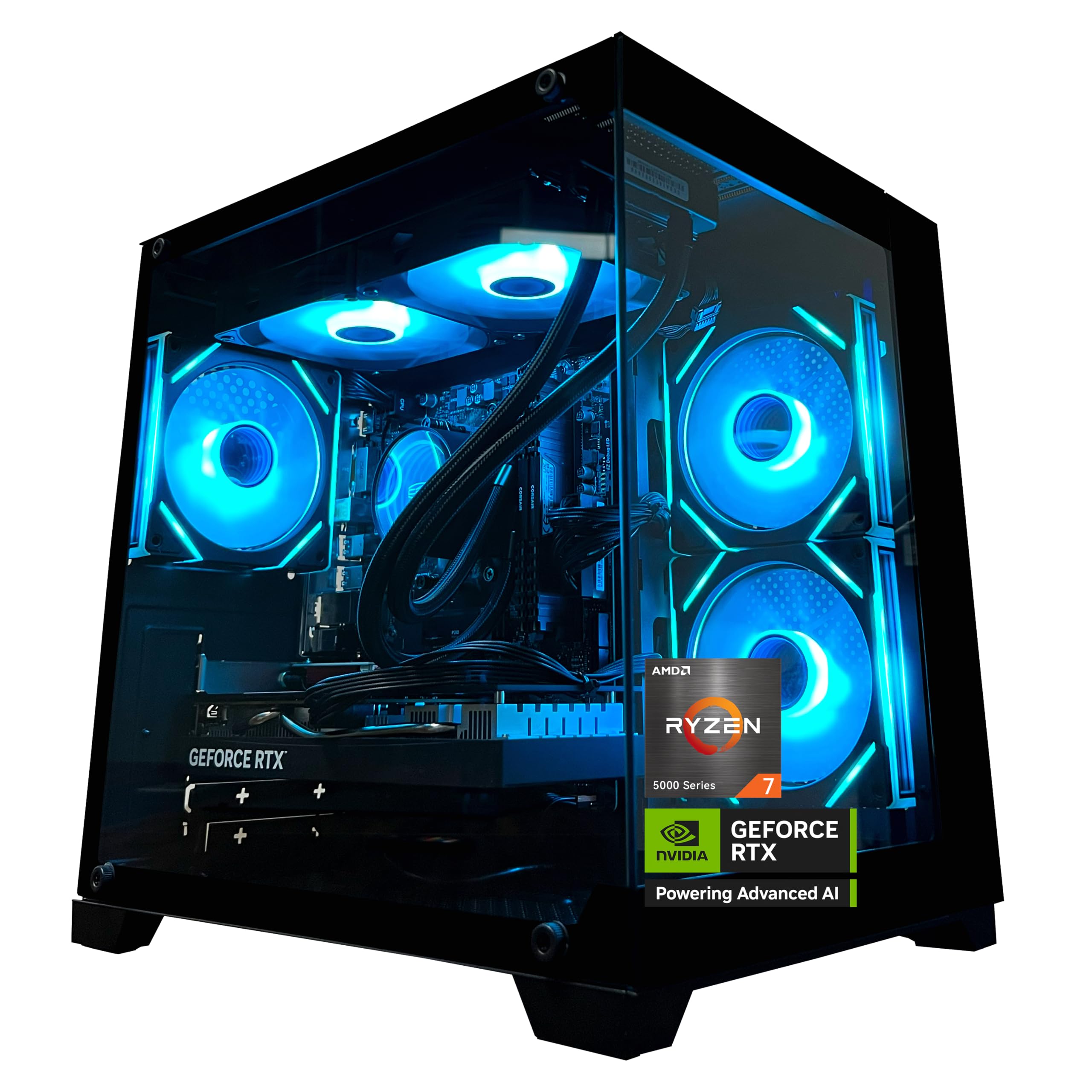
4. Gaming PC Ryzen 7 5700X
Eight cores, a 5060 with DLSS 4, and enough memory to keep the stream encoder fed.
If your plan is to play and broadcast at the same time, the core count here is the number that matters. The AMD Ryzen 7 5700X runs 8 cores and 16 threads up to 4.6GHz, and clock for clock that beats the 4.1GHz CyberPowerPC below on raw speed. The GeForce RTX 5060 carries 8GB of GDDR7 — the newest, fastest memory type on this list — with DLSS 4 multi-frame generation, ray tracing, and Reflex 2 latency reduction support.
Memory is 32GB of DDR4 at 3200MHz in a 16GB-by-2 configuration, and storage is a 1TB M.2 NVMe drive. A 650W 80 PLUS Bronze power supply (the efficiency rating tier) feeds it all, sitting on an MSI B550M-A PRO motherboard for stability. Cooling comes from a liquid cooler with ARGB fans and a remote control, so you can set the lighting without opening software. Built-in Wi-Fi and Bluetooth cover your peripherals and network connection without a cable run.
Owners describe it as running smoothly from the start and handling AAA titles at high and medium settings, and the lighting is a genuine talking point — vivid, colorful, and easy to dial in.
The core-count case: 8 cores and 16 threads at 4.6GHz give you the headroom to run a game plus a stream encoder without either one choking.
Honest note: the graphics card carries 8GB, so this is a strong 1440p machine rather than a 4K one.
Fits you well if: you stream, record, or keep a heavy chat and browser running while you play.
Look elsewhere if: you need 4K ray tracing — go up to one of the 16GB cards further down.
5. CyberPowerPC Gaming PC
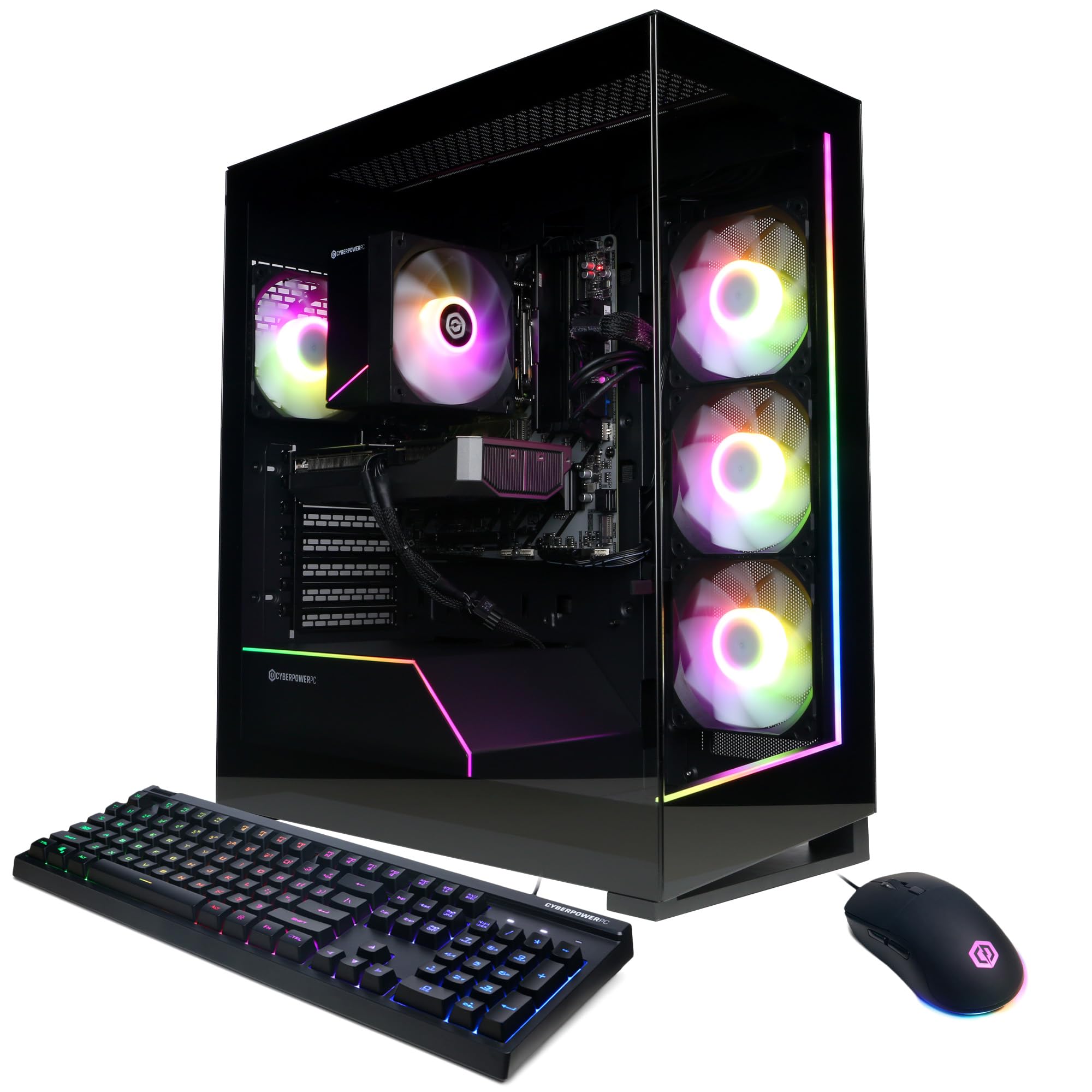
The 5060 Ti build that keeps a full desk of peripherals connected without a hub.
Here is the cleanest way to see the value: this CyberPowerPC carries the RTX 5060 Ti with 8GB of GDDR7, where the OMEN up top carries 6GB. That is 33% more graphics memory in this tower, and it is the difference between a card that can push high-end settings and one that asks you to dial back. The graphics memory is also where it beats the HP on paper, even though the HP wins the CPU fight outright.
The processor is an AMD Ryzen 7 8700F with 8 cores on the AMD B850 chipset, running at 4.1GHz. Memory is 16GB of DDR5, and storage is a 1TB PCIe 4.0 NVMe SSD, so boot times and game loads stay short. Connectivity is the headline feature beyond the card: two USB-C 3.2 ports, four USB-A 3.2, two USB-A 2.0, one LAN port, WiFi 6, Bluetooth 5.3, and 7.1 channel audio. A keyboard and mouse are included, and the tempered side panel shows off the custom RGB lighting inside.
Owners describe it running every game they throw at it without stuttering, and the build quality reads as solid rather than flimsy. The 1-year parts and labor warranty comes with free lifetime tech support.
Port count, not just frames: WiFi 6, Bluetooth 5.3, and six high-speed USB ports mean a webcam, capture card, headset, and controller all connect at once.
Balance to notice: 16GB of DDR5 is the lighter memory load on this list — fine for gaming, tighter if you keep dozens of tabs open behind your game.
Pick it when: you want the 5060 Ti’s graphics headroom plus the richest port selection in the lineup.
Skip the upgrade path if: you run memory-hungry creative apps — 16GB fills faster than the 32GB towers here.
6. KOTIN Gaming PC Desktop
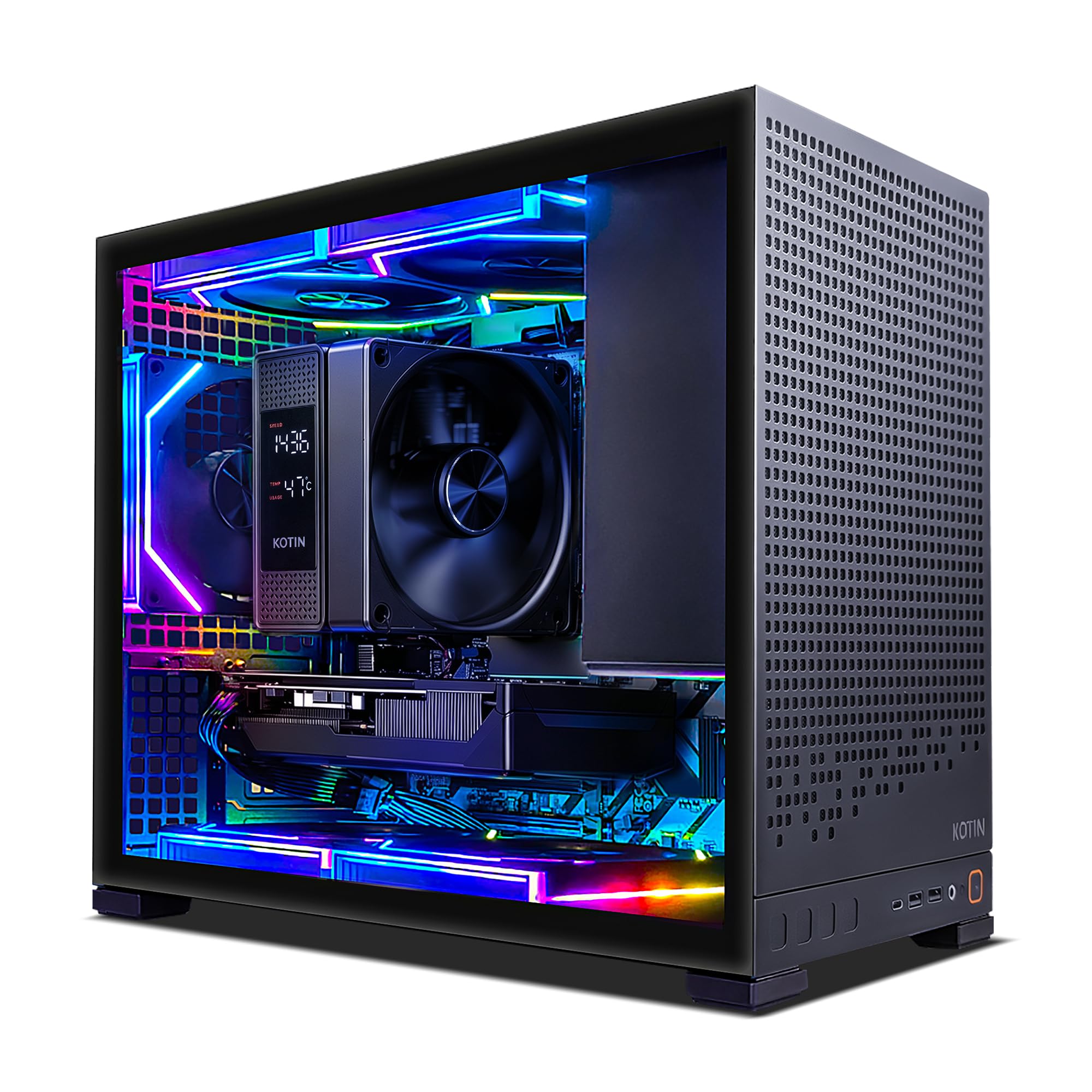
Four memory slots and three SSD slots — a tower that plans for your next two upgrades.
Most prebuilts are sealed boxes you outgrow. This KOTIN is the opposite: four DDR5 DIMM slots and three M.2 SSD slots mean you can double your memory and stack additional drives later without replacing the machine. It ships with 32GB of DDR5 and a 1TB PCIe Gen4 NVMe SSD already installed, so the headroom for multitasking, browser tabs, and game launchers is there from day one.
The graphics card is the RTX 5060 Ti with 8GB of GDDR7, supporting DLSS 4 and ray tracing, and the processor is the Ryzen 7 8700F. Its 5GHz maximum speed is the fastest of the 8700F builds on this list, edging the CyberPowerPC’s 4.1GHz. A 650W 80 PLUS Gold power supply — a step above the Bronze tier — sits behind it.
Cooling is a CPU air cooler with six copper heat pipes and a digital temperature display, working with five 120mm ARGB fans. Owners describe it running games like GTA V and World of Warcraft smoothly, and even juggling multiple games at once. WiFi 6 and Bluetooth handle wireless, and it arrives assembled and tested in the USA with Windows 11 Home plus a 1-year limited warranty.
Built to grow: four memory slots and three M.2 slots are the reason to pick this over the near-identical CyberPowerPC build.
Setup heads-up: connect your monitor to the graphics card ports on the lower rear row, not the motherboard ports above, or you get a blank screen.
Choose it if: you want a 32GB DDR5 build you can expand rather than replace in two years.
Not necessary if: you never plan to open the case — the cheaper 8-core towers do the same gaming job.
7. Alienware Aurora RTX 5070
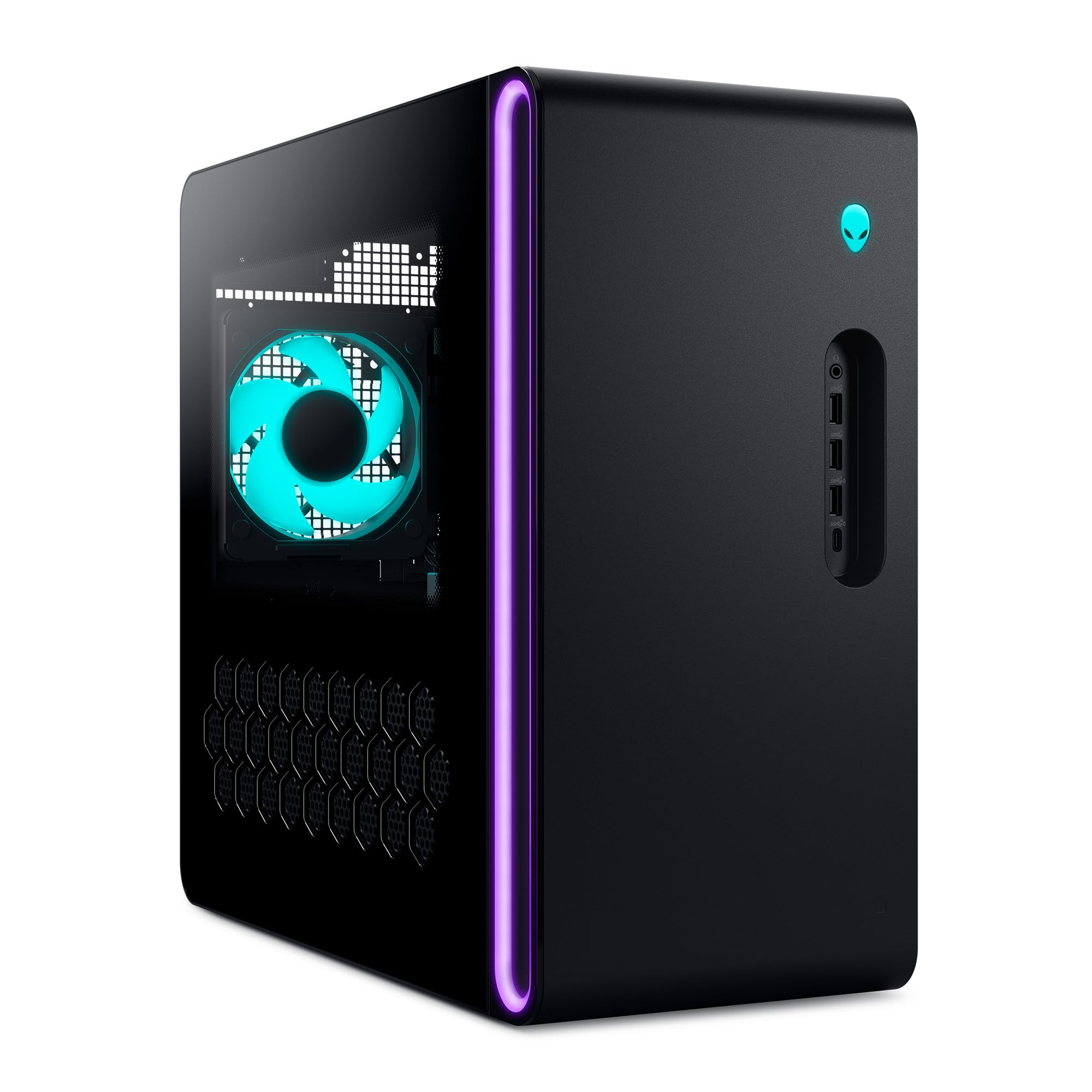
Blackwell graphics behind tempered basalt black, tuned to stay quiet while it works.
The RTX 5070 here is built on NVIDIA’s Blackwell architecture, and it pushes this tower to a 3840×2160 maximum resolution — proper 4K. On the processor side the Intel Core Ultra 7 265F runs up to 5.3GHz and matches the OMEN’s top clock speed exactly, though the OMEN holds a 20-core layout against this one. Quieter operation and staying cool under load are the two things buyers keep coming back to, and the matte basalt black chassis with AlienFX lighting zones and stadium lighting looks the part.
Alienware Command Center software lets you set lighting across the ecosystem, switch performance modes between power states, and save custom profiles for your whole game library. Dell’s 1-year onsite service is the standout support promise — a technician comes to you if a warranty issue cannot be resolved remotely.
The one wrinkle worth knowing is that owners have flagged storage capacity as tighter than they hoped and the listed specs as not always matching what arrived. Buy with the configuration clearly confirmed.
The quiet-4K argument: a 4K-capable RTX 5070 that stays cool and quiet under load is the whole reason this sits in the premium tier.
Worth confirming first: check the exact storage and memory of the listing you order, since buyers report spec details that did not line up.
This suits you: you want 4K frames and a nearly silent tower with onsite support behind it.
Think again if: you need to expand storage heavily — the installed capacity is on the lean side for a premium build.
8. msi Codex Z2 Gaming Desktop

Two terabytes and 12GB of video memory for a library that keeps growing.
If your Steam library is already a problem, start here. This MSI Codex Z2 pairs an RTX 5070 with 12GB of graphics memory — more on-card memory than the 8GB towers earlier on this list — and a 2TB SSD (solid-state drive for fast loading and storage), so both texture headroom and file space are generous. The AMD Ryzen 7 8700F handles 8 cores and 16 threads up to 5.0GHz, keeping up with AAA play, streaming, and background tasks together.
The RTX 5070 uses NVIDIA’s Blackwell architecture, so rasterization and ray tracing both get a real step up from the previous generation. Memory is 32GB of DDR5 sitting behind the processor. Cooling is handled by an ARGB fan air cooler plus four system fans — three in front pulling cool air in, one at the rear pushing heat out. RGB lighting cycles through presets from a button on the case, and MSI Center software takes it further.
The good news from owners is that it performs flawlessly with their games and stays quiet doing it, and the setup is straightforward. The honest part is reliability: the vast majority are trouble-free, but there are reports of units that stopped working within days. The odds are strongly in your favor, and the warranty is there if you land on the wrong side of them.
The storage-and-VRAM story: 2TB of SSD plus 12GB of graphics memory is the most library-friendly pairing in this tier.
The reliability reality: failures are the exception, but they do show up in the reviews — buy from a seller with a clean returns process.
Made for you if: you keep several large games installed and want 12GB of VRAM without climbing to the flagship tier.
Lean elsewhere if: absolute reliability confidence outweighs specs for you — the Skytech below leans harder on proven performance.
9. Skytech Gaming PC Desktop
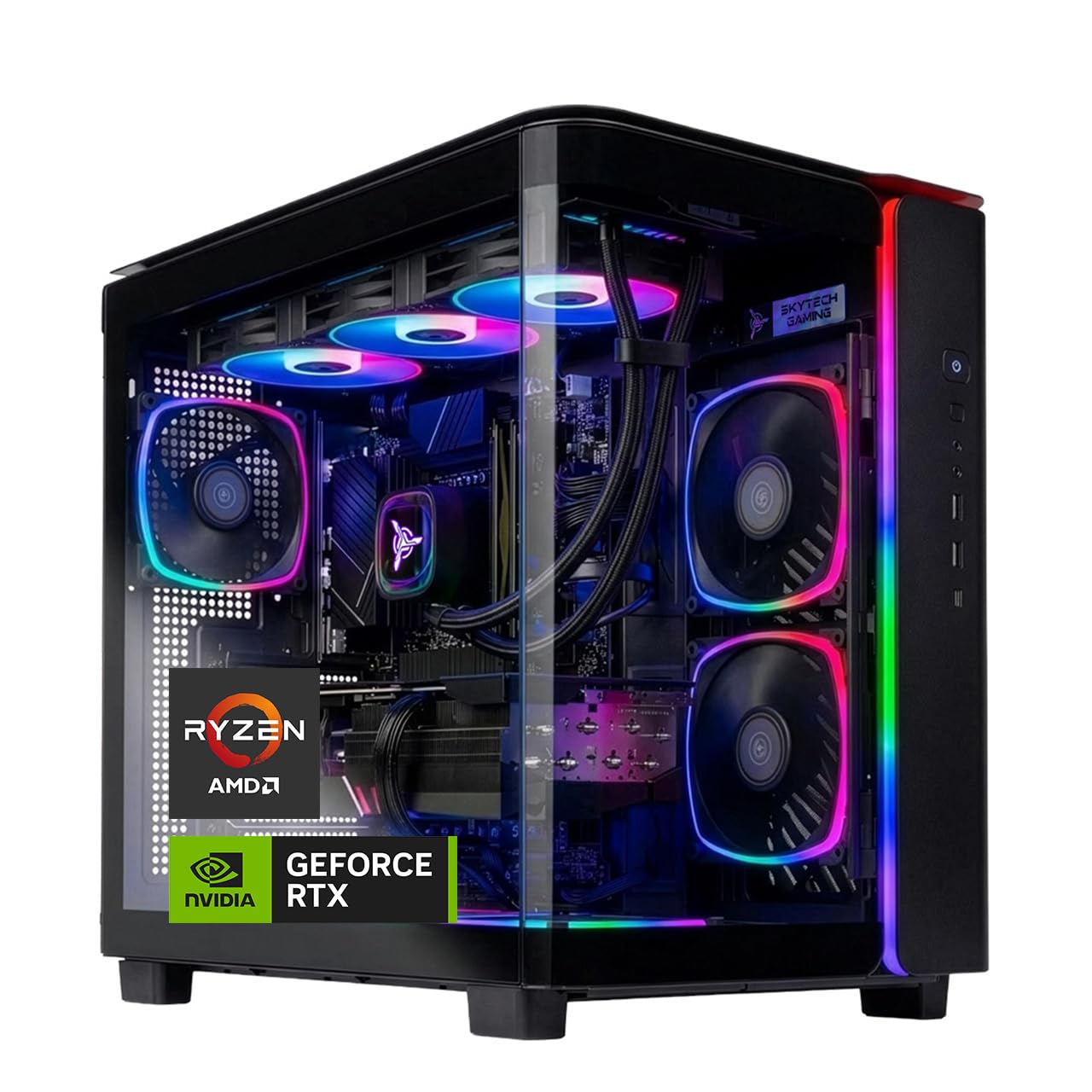
The X3D chip and 16GB of GDDR7 built for high-refresh 1440p play.
This Skytech is where the build swings for 1440p at high refresh rates. The RTX 5070 Ti carries 16GB of GDDR7 — double the 8GB on the CyberPowerPC and KOTIN towers — and the AMD Ryzen 7 9800X3D runs 8 cores with a 5.2GHz turbo boost. Storage is 2TB of Gen4 NVMe, which the maker pitches as up to 30x faster than a hard drive, paired with 32GB of DDR5 at 6000MHz.
Cooling is the standout engineering choice: a 360mm AIO liquid cooler with ARGB fans, the largest radiator size on this list. The thinking is simple — keep temps down and the chip never hits its thermal limit and slows itself. The King 95 case in black shows it all off, and the build is assembled in the USA with a 1-year parts and labor warranty plus free technical support. A keyboard and mouse come included, and Windows 11 Home is installed.
Owners mention strong performance, and the value question splits both ways — some find it well worth the outlay, others call it expensive for what it is.
What the extra VRAM open up: 16GB of GDDR7 alongside the 9800X3D is what makes high-refresh 1440p with ray tracing realistic here.
The honest counterpoint: value is the mixed note in reviews — if raw 1440p frames are the goal, the 5060 Ti towers earlier get close for less.
Right for you if: you chase high refresh rates at 1440p and want the cooling to never hold the chip back.
Better spend elsewhere if: 60 FPS at 1080p is your target — this is more tower than that needs.
10. Alienware Aurora RTX 5080

A 76MB cache, a Core Ultra 9, and the RTX 5080 for ray-traced 4K.
The Intel Core Ultra 9 285 is the fastest-clocked chip in this whole group at 5.6GHz, and it carries 76MB of cache — more than double the 33MB on the OMEN. That pair is aimed squarely at 4K ray tracing and heavy multitasking, and the NVIDIA GeForce RTX 5080 with 16GB of GDDR7 backs it up. The 240mm heat exchanger (the radiator in the optional liquid cooling loop) keeps temperatures down through long sessions. AlienFX lighting and stadium lighting zones are here as well, with Command Center software for profiles and performance modes.
Owners describe it running games great, staying quiet, and feeling well built, and they consider it worth the outlay. The honest note is cooling: some say it stays cool, others point out it is not liquid cooled as described, so decide before you buy whether the air-cooled configuration is fine for you. Dell’s 1-year onsite service still covers you if a warranty issue arises.
This is the tower for someone who wants the RTX 5080 tier and does not mind confirming the exact cooling option on the listing.
The raw-power read: 5.6GHz, 76MB of cache, and 16GB of GDDR7 add up to the strongest CPU-plus-GPU pairing below the very top of this list.
Check before ordering: confirm the cooling configuration — customers note the liquid cooling not always matching the description.
For the 4K buyer: you game at 3840×2160 and want the 5080 paired with the fastest-clocked chip here.
Not for you if: the description accuracy issue bothers you — confirm the config or look at the STORMCRAFT below.
11. STORMCRAFT Phantom RTX 5080 Gaming PC
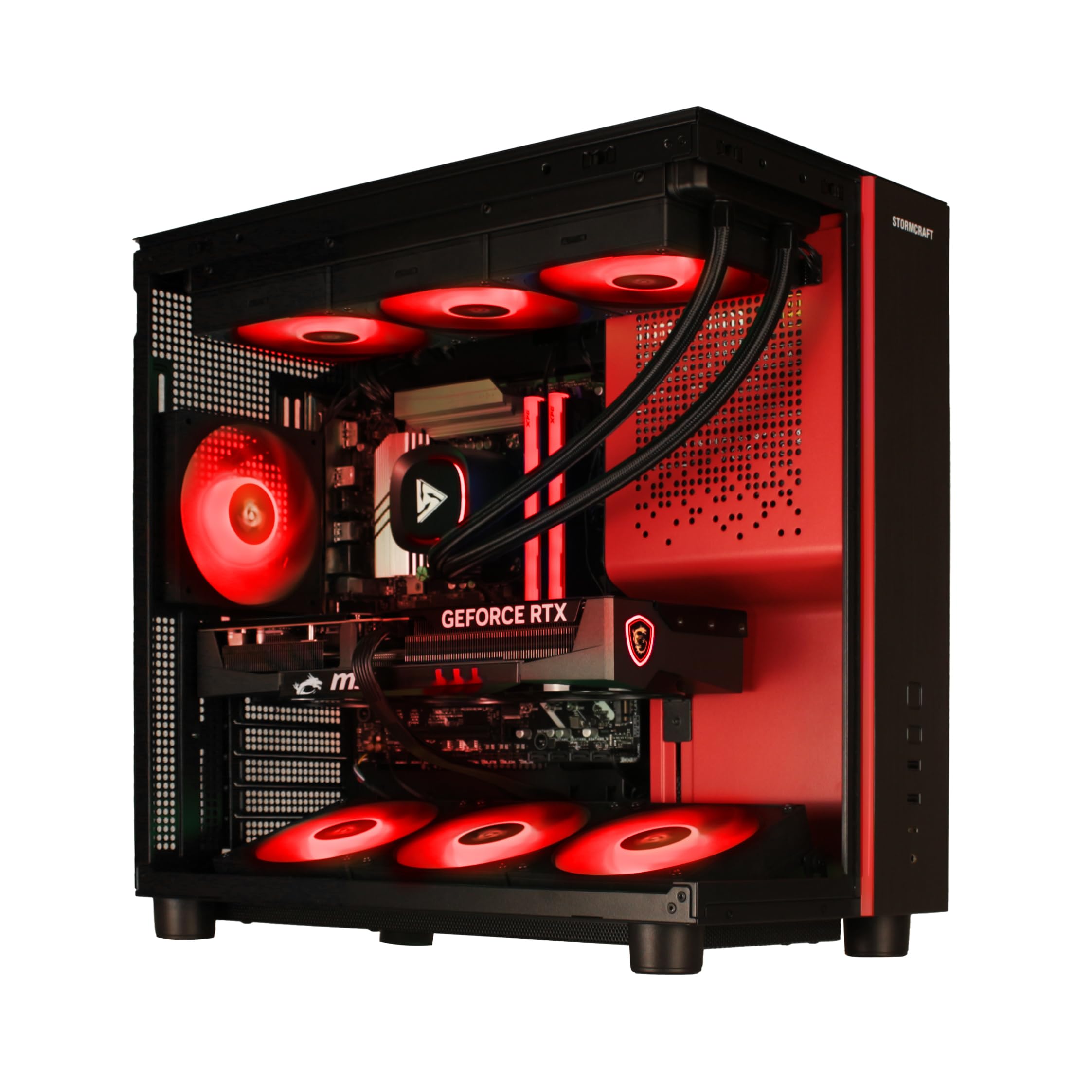
Every premium part in one tower: 5080, 9800X3D, 850W Gold, and 96MB of cache.
Nothing on this list covers as many bases in one box. The AMD Ryzen 7 9800X3D runs 8 cores and 16 threads up to 5.2GHz and carries 96MB of cache, the largest cache figure here by a wide margin over the 33MB OMEN. The RTX 5080 with 16GB of GDDR7 handles the graphics side, and memory is 32GB of DDR5 at 6000MHz with RGB lighting. Storage is 2TB of Gen4 NVMe, so a large library fits without a second drive.
A 360mm AIO liquid cooler with seven ARGB case fans keeps the internals cool, and an 850W 80 PLUS Gold power supply is the highest-capacity, highest-efficiency unit in this lineup. Bluetooth, LAN, USB, and Wi-Fi cover connectivity, and the machine comes with a keyboard and mouse plus Windows 11 Home. The warranty is the most generous here: 2 years parts, 3 years labor, 1 year shipping, and free lifetime technical support, assembled in California.
Owners say it beats their old machine and runs as expected, with setup as simple as plug and play. They also call it good value for what is inside, which is high praise for a tower carrying this much hardware.
Why it takes the crown of the lineup: a 96MB cache, an 850W Gold supply, seven fans, and a 3-year labor warranty are the premium details that separate it from everything else.
One thing to weigh: it is the top of the price range, so only worth it if you will actually use the 5080 and that cache headroom.
Perfect when: you want the best of every part — 5080, 9800X3D, 360mm liquid, and the longest warranty coverage in the lineup.
Only consider it if: you game at high resolution and will use the performance, or the premium tier is simply out of reach.
Know the Specs
Graphics card memory (VRAM)
VRAM is the RAM built onto the graphics card itself, and it holds the textures, lighting, and detail you see on screen. More VRAM means the card can render richer scenes without dropping detail. A 6GB card is comfortable at 1080p, an 8GB card takes 1440p in stride, and a 16GB card is the tier for 4K and heavy ray tracing. When a card runs out of VRAM it swaps to slower memory and frames stutter — which is the exact choppiness buyers are trying to avoid.
Processor cores and cache
Each core is an engine that can work on its own task, andthreads are the tasks divided among those cores. More cores and threads mean you can run a game, a stream encoder, and a browser without either one slowing down. Cache is the chip’s own fast scratchpad, and a bigger cache (33MB on the OMEN, 76MB on the Alienware flagship, 96MB on the STORMCRAFT) keeps the CPU from waiting on slower memory. Clock speed, given in GHz, is how fast each core works, but cores and cache often matter more for multitasking than raw speed alone.
DDR5 versus DDR4 memory
System memory holds everything your machine is actively working on — your game, your browser, your streaming app. DDR5 is the newer generation and runs at higher speeds than DDR4, so switching between programs feels quicker and large game worlds load more smoothly. Capacity is just as important: 16GB is a working minimum for modern titles, and 32GB gives you room to keep tabs and apps open behind your game. The towers here split between the two generations, so check which one a build carries before you compare price tiers.
NVMe storage speed
An NVMe SSD is a stick-shaped drive that plugs directly into the motherboard, and it reads data far faster than a traditional spinning hard drive. That speed is why boot times shrink to seconds and open-world games stop showing long load screens. A Gen4 NVMe drive (the fourth generation of that interface) moves data faster still, and several towers here pair 1TB or 2TB of it with the system. More capacity simply means you can keep more large games installed before you need another drive.
Cooling: air versus liquid AIO
Air cooling pushes heat away with fans and metal fins, and it is quiet and dependable for mid-range builds. A liquid AIO (all-in-one) loop moves heat through a sealed pump and radiator, and a larger radiator — 240mm or 360mm — sheds more heat. The hottest chips in this lineup use the 360mm loops. The point is keeping the processor off its temperature limit so it does not throttle during a long session.
Power supply efficiency
The power supply feeds every component, and its 80 PLUS rating is a measure of how efficiently it converts wall power. Bronze is the entry tier and Gold sits above it, wasting less energy as heat. Wattage capacity matters too — a 600W or 650W unit is plenty for a mid-range build, while an 850W Gold unit is the kind of headroom a top-tier graphics card likes. A well-rated supply is one of the quiet signs a prebuilt was not built to a corner-cutting budget.
Common Questions
Do I need 32GB of RAM or is 16GB enough for gaming?
Is 8GB of graphics memory enough for 1440p gaming?
Can I upgrade a prebuilt gaming PC later?
How long does a gaming desktop stay fast enough for new games?
Should I connect my monitor to the graphics card or the motherboard?
Do these gaming desktops come with Windows installed?
Is a liquid cooler better than air cooling in these builds?
What is the difference between the RTX 5070 and the RTX 5080 in these towers?
How much storage do I need for a large game library?
Do these towers include Wi-Fi or do I need an Ethernet cable?
The Bottom Line
Out of this whole lineup, the worlds gaming computer that best balances everything is the HP OMEN 40L — a 20-core i7-14700F with 33MB of cache and 32GB of DDR5 that games, streams, and edits without asking you to pick one. If raw graphics headroom per dollar is what you’re after, the CyberPowerPC RTX 5060 Ti gets you 8GB of GDDR7 (the newest graphics memory) and the richest port selection on this list for mid-range money. And when nothing but the top tier will do, the STORMCRAFT Phantom stacks the RTX 5080, the 9800X3D, 96MB of cache, and a 3-year labor warranty into one tower.
Worth knowing: the HP OMEN carries 450+ ratings to the CyberPowerPC’s under 200, but the OMEN holds the higher score, so the two are closer than the counts suggest. Buy the OMEN if multitasking matters most, the CyberPowerPC if frames per dollar is your yardstick, and the STORMCRAFT if you want to stop comparing and start playing at the highest settings.
How we choose
We do not accept paid placement. Every pick is matched to a real buyer and a real use-case; we do not hands-on test units.
Sources
Specifications: manufacturer listings and product documentation. Review insights: verified customer reviews, as of November 2026. Pricing: not shown on this page (it changes often); check the current price via the retailer link.
As an Amazon Associate, Tactical Gear Guy earns from qualifying purchases. This does not affect which products we feature.