Specs are compiled from manufacturer listings and verified buyer reviews and can change over time — please confirm the key details on the product page before buying.
Buying a processor for a gaming or work build is simpler than the spec sheets make it look. The chip that matters most for smooth frame rates is the one with a big pool of cache — the fast memory built right into the processor so it stops waiting on your RAM. That is why the AMD Ryzen 7 9850X3D, with 104 MB of cache, tops this list for most gamers. Below you get eleven desktop processors compared on the things that actually change how a PC feels day to day: cores, threads, cache and socket.
This guide is built by comparing the manufacturers’ published specifications and the patterns across verified customer reviews, so you get each pick’s real strengths and trade-offs instead of marketing spin.
Before you spend a cent, you want to know where each chip wins, where it runs warm, and which socket it locks you into. The right pick depends on matching cores and cache to your workload — here are the chips worth your money on the worlds cpu market today.
Top Picks

How To Choose The Best Worlds CPU
A processor is the part of your PC that does the thinking, and picking the wrong one means either wasted money or a machine that stutters in the games and apps you care about. Instead of chasing the biggest number on the box, match three specs to your build: cache, core layout and socket.
Start with cache, not clock speed
Cache is the small, ultra-fast memory inside the chip itself — think of it as a workbench right next to your hands instead of a toolbox across the room. A chip with 104 MB of cache can keep far more of a game’s active data close by, which is why big-cache designs often hold higher frame rates than chips with higher clocks but smaller caches. If gaming is the goal, cache size is the number to circle first.
Match cores to what you actually run
Cores are the individual workers on the chip, and threads are the task lanes each worker can juggle. A 4-core chip is fine for office work and everyday browsing. Video editing, 3D rendering and running virtual machines want 12, 16 or more cores so the work splits across many lanes at once. More cores only help if your software can use them — a game that leans on one or two threads gains nothing from 24 cores.
Check the socket before anything else
The socket is the physical slot on your motherboard, and every chip only fits certain ones. AMD’s AM4 boards take older Ryzen parts, AM5 takes the newest, and Intel’s LGA1700 covers its 12th through 14th Gen chips. Buy a chip for the wrong socket and you are shopping for a new motherboard too, so confirm your board’s socket before you order.
Plan for cooling and power
Some chips ship with a cooler in the box and some do not, which changes your total build cost. High-core parts also draw more power and throw more heat, so a chip rated at 280W TDP (thermal design power — roughly how much heat it sheds) needs a serious cooler and a strong power supply. A chip that runs cool out of the gate saves you fan noise and cooler spend.
Side-by-Side Comparison
Every row uses the same three measures so you can scan trade-offs at a glance. Cache is the built-in fast memory; cores and threads are the worker count and task lanes; and socket tells you which motherboards the chip fits.
Detailed Reviews
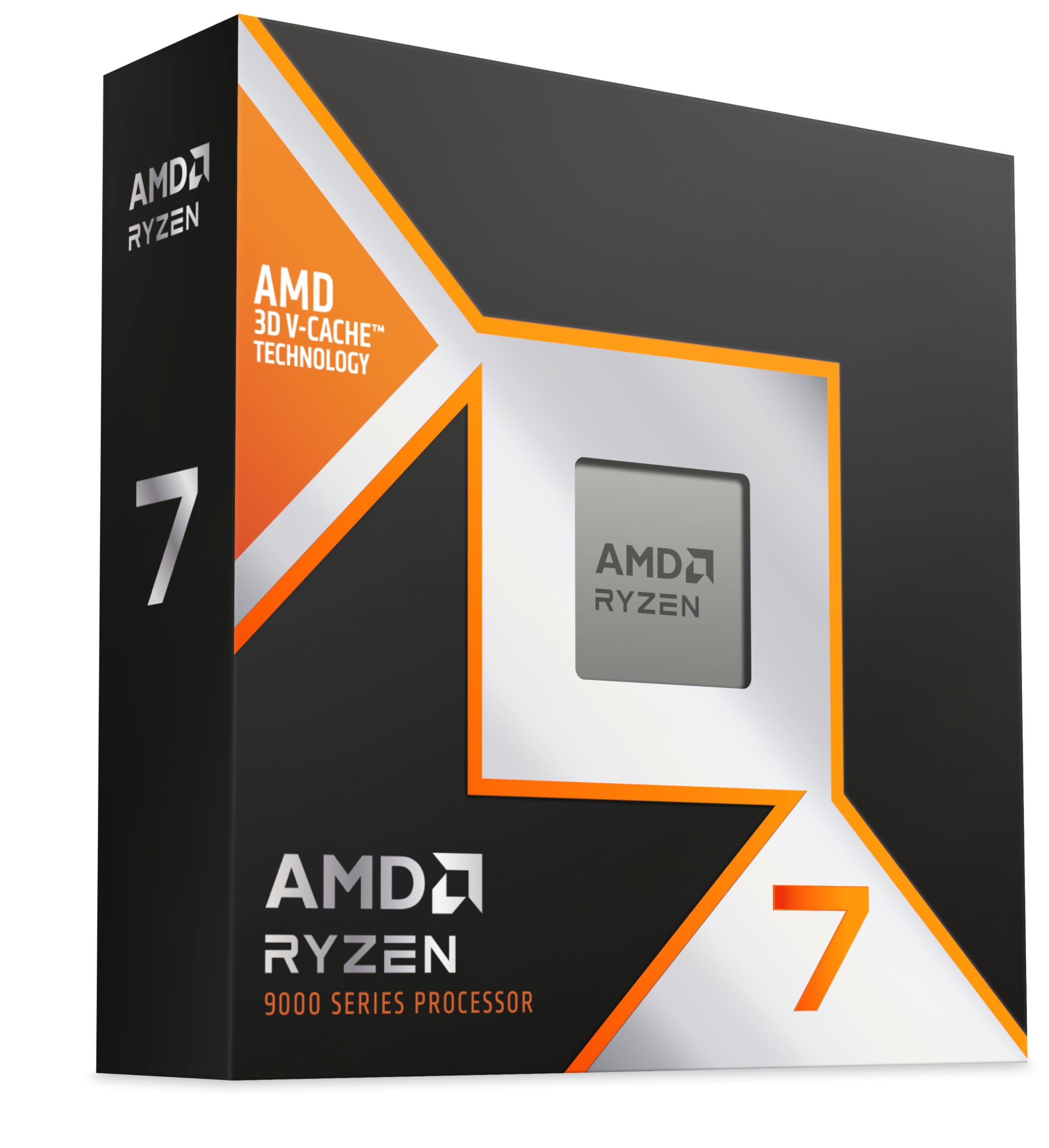
1. AMD Ryzen™ 7 9850X3D Desktop Processor
Our pick — 4.5+★ from 550+ verified ratings; the strongest balance of quality and price.
The 104 MB cache monster that keeps frame rates from dipping when the action gets heavy.
This is the pick for anyone building or upgrading a gaming rig who wants the smoothest frames possible without stepping up to a fire-breathing top-end chip. Its 104 MB of cache is the biggest pool in this group outside the Threadripper, and that is what wins it the crown. For context, Intel’s i5-14600K ships with 20 MB — the Ryzen 7 9850X3D holds 5.2 times as much fast on-chip memory, which is exactly the buffer a game leans on when it streams in new scenery.
The 8 cores and 16 threads are the sensible middle ground: enough to keep a game and a stack of background apps running together. What wins people over is raw performance, and the heavy-cache design is why. The one thing to know going in is power draw — some owners find it thirstier than expected, so pair it with a decent cooler and a stout power supply rather than a bargain-basement one.
Heat itself is not a red flag here. It runs at manageable temperatures, which means a normal tower cooler keeps it in line.
What earns it the top spot
- 104 MB of cache — the largest gaming-focused pool in this lineup
- 8 cores and 16 threads run a game plus background apps comfortably
- Runs at manageable temps, so a standard tower cooler is enough
Where it asks more of you
- Mixes in higher power draw than some buyers expect
- 8 cores is ample for gaming but modest for heavy rendering work
Built for: the gamer who wants high, steady frame rates and a chip that plays nicely with a normal cooler.
Look past it if: your day job is 3D rendering or video exports where core count matters more than cache.
2. Intel Core i7-14700KF Gaming Desktop Processor
Twenty cores that game hard and still chew through a video export without breaking a sweat.
You get 20 cores split into 8 Performance-cores (the fast workers for games and foreground apps) and 12 Efficient-cores (background helpers that handle streaming, chat and updates). With 28 threads, this is the chip for the person who games and edits on the same machine. It supports both DDR5 and DDR4 memory, and it is open up for overclocking if you like to push it.
The head-to-head that matters: it packs 20 cores against the Intel i3-12100’s 4, so heavy multitasking is simply not in the same league. It also brings 33 MB of cache and a max turbo of up to 5.6 GHz. What pulls people toward it is gaming — plenty of owners see a big frame-rate lift in the titles they already play.
Here is the honest catch. Cooling and stability are a coin flip depending on your setup — some report it runs hot, and it benefits from a real cooler rather than a stock one. Note that the “KF” means no built-in graphics, so you need a separate graphics card to get a picture. Treat a solid cooler as part of the budget, not an afterthought.
The two-part value read: as a gaming-and-work chip, the 20 cores and 28 threads go a long way. But you are paying premium-tier money, and buyers split on whether that price is justified for their workload.
One more thing: this fits LGA1700 boards, so confirm your motherboard socket before ordering.
Reach for it when: you want one chip that games and spans heavier productivity in the same build.
Skip the pairing if: you plan on a small cooler — this one wants serious airflow.
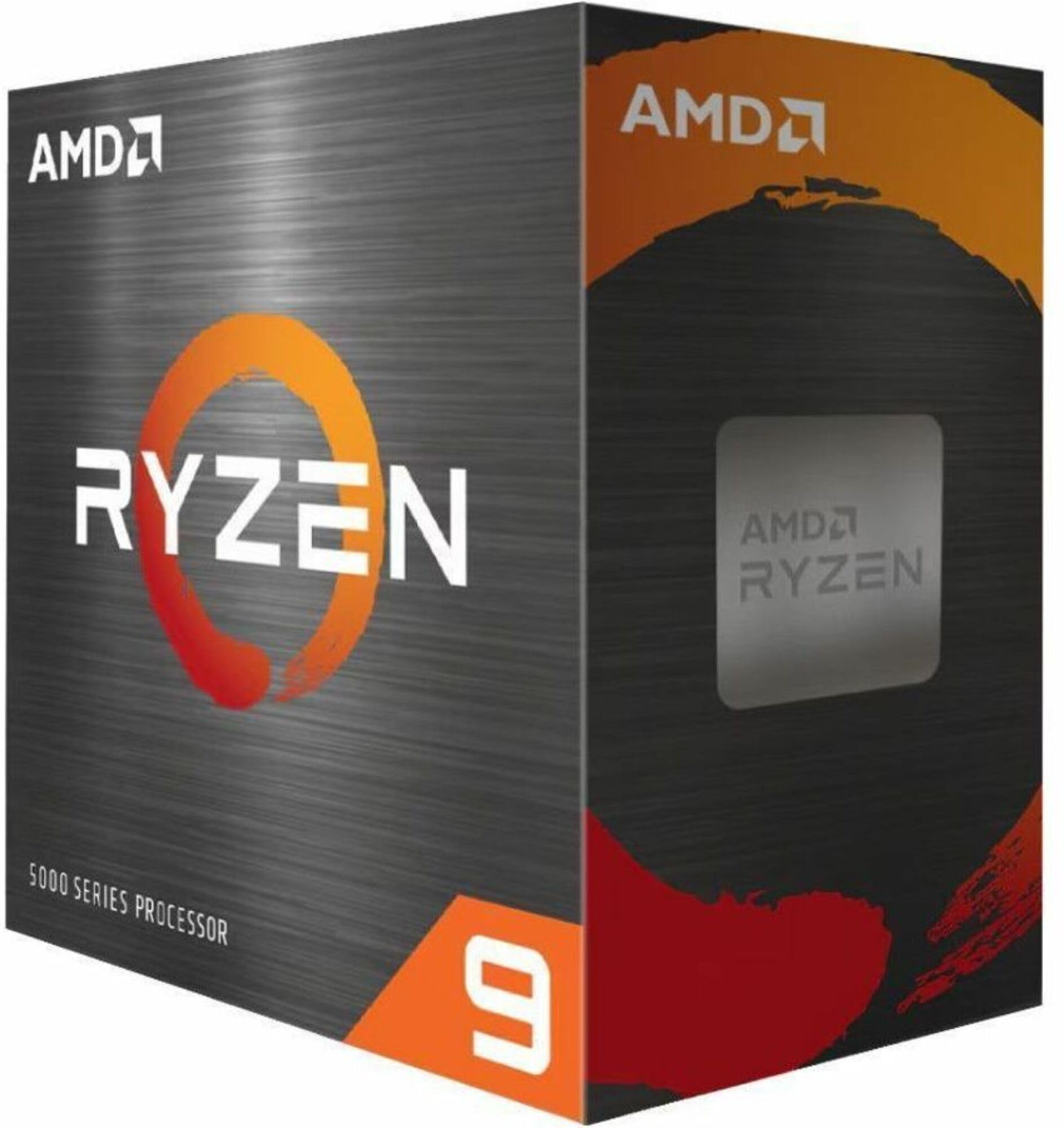
3. AMD Ryzen™ 9 5900XT 16-Core, 32-Thread Desktop Processor
Sixteen cores on the older AM4 platform — the cheap route into serious rendering muscle.
If you already own an AM4 motherboard, this chip is a straight drop-in upgrade that hands you 16 cores and 32 threads without a full platform rebuild. That thread count is what content creators chase — video renders, code compiles and 3D jobs split across all those lanes at once. It also carries 72 MB of cache and 4.8 GHz max boost, and it is open up for overclocking.
Compare its cache to the Intel i3-12100’s 12 MB and the gap is stark — 72 MB versus 12 MB, six times the fast memory on tap. Buyers tend to talk about performance and value, and that combination is why this chip punches well above its older-platform status. Installation is straightforward and it holds a steady temperature under load.
The catch you need to plan for: no cooler is in the box, and the listing calls out aftermarket cooling. Budget for one, because the temperatures are the mixed part of the story — some find it runs warm when pushed hard. On the AM4 platform, that is the trade-off for this many threads at this tier.
Where it wins: 16 cores and 32 threads omulti-threaded work
What you give up
- Gaming is not its strongest suit, and buyers report so
- Premium-tier cost divides opinion on value
The right buy when: rendering, editing or AI workloads are your priority and a cool-running, stable chip matters.
Keep looking if: your main goal is gaming — grunt here is aimed at creators.
4. AMD Ryzen 9 9900X3D 12-Core Processor

A 140 MB cache pool that pairs gaming punch with real creation headroom.
Only the Threadripper’s 140 MB cache matches this Ryzen 9 9900X3D in raw cache size, and it does it with 12 cores instead of two dozen. That is the trick: 140 MB of fast memory keeps games and big creative files fed without needing a monstrous core count. Power users see games jump straight to high frame rates, and it installs without fuss.
If you edit video and then wind down with a game, this chip’s 12 cores are the balance — plenty of threads for the export, more than enough for the play session. It is AMD’s top-tier money, so value weighs on your workload. The cooling story is mixed: some owners mention it keeps temperatures under control, others find it runs hot. That is the honest variable, so give it a real cooler.
Compared with the Ryzen 7 9850X3D, this chip trades some gaming-focused cache-to-c splits opinion. Some see it as strong value for gaming on AM4, others feel a chip this age should cost less. It fits AM4 boards, which is the whole point — no new motherboard, no new memory. Just know that if you are starting from scratch, other picks here give you a fresher platform.
The upgrade-path argument: 100 MB of 3D V-Cache on an existing AM4 board is the least disruptive way to lift gaming frames without touching the rest of your build.
The install caution: that cooler and thermal pad need patience — rush it and you will be reseating the chip.
For the AM4 holdout: owners sitting on an older socket who want a fast gaming bump without a rebuild.
Not for a fresh build: if you are starting clean, a newer platform makes more sense.
5. AMD Ryzen Threadripper 3960X 24-Core Processor

Twenty-four cores built for designers who measure a job in minutes, not hours.
This is the heavy-lift specialist of the group. You get 24 cores and 48 threads, a 140 MB cache, 4.5 GHz max boost and a base clock of 3.8 GHz. For serious designers and 3D artists, that means files that used to grind can turn around fast — a 3D scanner file can be handled in minutes. It runs quad-channel DDR4 with 88 total PCIe 4.0 lanes, which is a lot of high-speed expansion for storage and accelerators.
Compare i exactly that rebuild.
TDP and Cooling
TDP (thermal design power) is roughly how much heat the chip sheds, and it drives your cooler and power-supply choice. A 280W part like the Threadripper needs serious cooling; a 125W chip is far easier to live with. Several chips here ship with no cooler at all, so read the listing — a missing cooler changes your build cost.
Common Questions
Will the AMD Ryzen 7 9850X3D fit my existing motherboard?
Is big cache better than high clock speed for gaming?
Do I need a separate cooler for these CPUs?
What does the KF or F suffix mean on Intel chips?
What does 3D V-Cache actually do?
Can the Threadripper 3960X run in a normal desktop build?
Is the Ryzen 9 5900XT worth it over a newer chip?
Which CPU here is best for both gaming and video editing?
Will the Core Ultra 9 285K game as well as it works?
What is DDR5 versus DDR4 and does it matter to my build?
The Bottom Line
For most people building a gaming PC, the winner is the AMD Ryzen 7 9850X3D because its 104 MB of cache keeps frame rates steady without demanding a monstrous cooler, and and 4.5+ stars across 560+ owner reviews backs that up. If you game and edit on the same machine, reach for the AMD Ryzen 9 9900X3D and its 140 MB cache. Creators who render all day will get more from the Intel Core Ultra 9 285K, which stays cool while it works. And if you are on an older AM4 board, the Ryzen 7 5800X3D lifts your gaming without a rebuild.
How we choose
We do not accept paid placement. Every pick is matched to a real buyer and a real use-case; we do not hands-on test units.
Sources
Specifications: manufacturer listings and product documentation. Review insights: verified customer reviews, as of November 2026. Pricing: not shown on this page (it changes often); check the current price via the retailer link.
As an Amazon Associate, Tactical Gear Guy earns from qualifying purchases. This does not affect which products we feature.