Specs are compiled from manufacturer listings and verified buyer reviews and can change over time — please confirm the key details on the product page before buying.
Buying a baseball bat is really a certification decision before it is a performance decision. If your league hands you a stamp requirement — USSSA, USA Baseball, or BBCOR — most of the bats on this page are already out of the running for you. Get the stamp right first, then pick the barrel, the drop and the swing weight that suits your hitter. The nine picks below cover every one of those stamps, and each one has a real, specific reason to be here.
This guide is built by comparing the manufacturers’ published specifications and the patterns across verified customer reviews, so you get each pick’s real strengths and trade-offs instead of marketing spin.
The market splits into youth USA and USSSA bats, senior league composites, and BBCOR bats for high school and college ball. Each has its own barrel rules and feel, so the right pick depends on the league you actually play in. Below is the full breakdown of all nine picks, sorted by certification.
Top Picks


How To Choose The Best World’s Baseball Bat
The fastest way to buy the wrong bat is to pick it by colour and barrel length before checking the stamp. A baseball bat only has to do two jobs: pass your league’s certification check, and feel manageable in your hitter’s hands for a full season. Everything else is preference layered on top of those two.
Start with the certification stamp, not the spec sheet
USSSA bats carry the USSSA stamp, USA bats carry the USA Baseball mark, and BBCOR bats are the alloy and composite models used in high school and college play. A USSSA bat will not pass a USA Baseball check and vice versa, so confirm the stamp your league requires before you look at a single barrel.
Most youth travel and league programs fall under USA Baseball or USSSA rules. Older divisions and high school programs move to BBCOR, which is a completely different construction standard.
Match the drop to the hitter, not to the marketing
Drop is the number you subtract from the bat’s length in inches to get its weight in ounces. A -10 bat is 10 ounces lighter than its inch length; a -5 is 5 ounces lighter. Younger and smaller hitters usually do better with a bigger drop because a lighter bat is easier to swing fast, while stronger hitters can move up toward -5 or -3 for more mass behind contact.
Decide between composite and alloy barrel
A two-piece composite bat like the Easton Hype FIRE separates the barrel from the handle with a connection piece. That tends to soften vibration and broaden the balance, at the cost of a break-in window and more careful handling in cold weather. A one-piece alloy bat like the Rawlings Clout AI feels stiffer on contact and needs no break-in, which suits hitters who want instant feedback.
Side-by-Side Comparison
| Model | Best For | Certification | Barrel Width | Length | Amazon |
|---|---|---|---|---|---|
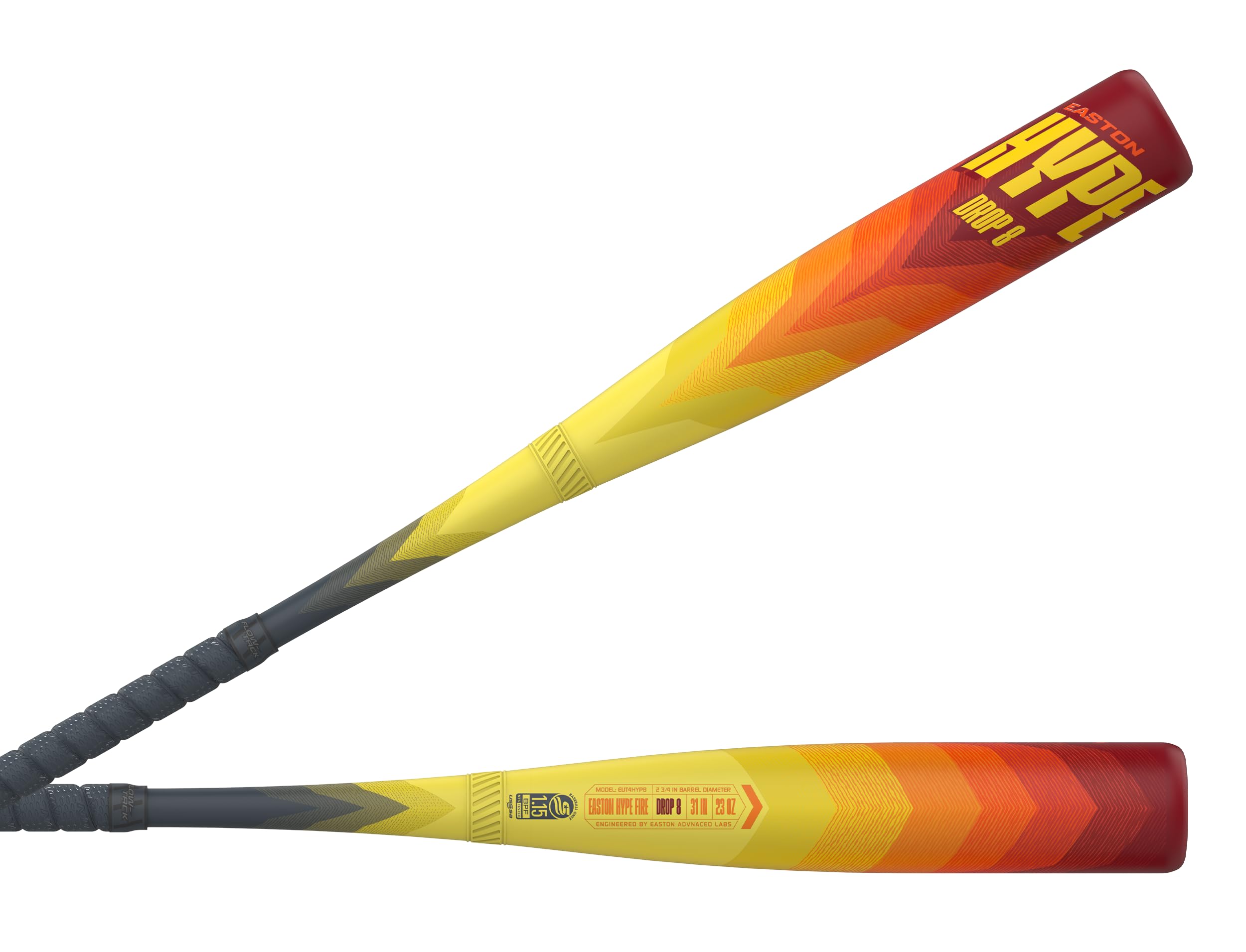
| Easton Hype FIRE★ Best Overall | Elite travel ball hitters | USSSA | 2.75 in | 31 in | Amazon |
| Marucci CATX CompositeBest Value | Senior league on a value budget | USSSA | 2.75 in | 31 in | Amazon |
| Marucci CATX2 Senior LeagueSmoothest Feel | Reduced sting on mishits | USSSA 1.15 BPF Stamp | 2.75 in | 30 in | Amazon |
| Louisville Slugger Select PWR | USA Baseball hybrid fans | USA | 2.63 in | 29 in | Amazon |
| Victus Vibe Pencil | Young developing hitters | USA Baseball | 2.63 in | 28 in | Amazon |
| Axe Avenge Pro 3 Hybrid | Young players wanting an axe handle | USA | 2.63 in | 32 in | Amazon |
| Warstic Bonesaber Alloy | Contact-focused youth hitters | USA | 2.63 in | 30 in | Amazon |
| Rawlings Clout AI | High school BBCOR hitters | BBCOR | 2.63 in | 32 in | Amazon |
| Rawlings ICON | Power hitters who want composite feel | BBCOR | 2.63 in | 34 in | Amazon |
Detailed Reviews
1. Easton Hype FIRE Baseball Bat
Our pick — 4.5+★ from 150+ verified ratings; the strongest balance of quality and price.
A travel-ball composite built to throw the barrel around without losing control.
The strongest overall travel-ball bat on this list is the Easton Hype FIRE, a two-piece composite with a conneXion Max connection — the joint that links handle to barrel and is designed to soak up sting before it reaches your hands. That joint is why it earns its keep for USSSA hitters. Contact feels clean rather than harsh, and the energy you put into the swing gets pushed back toward the barrel instead of buzzing into your palms.
The barrel is a redesigned TCT composite built longer and lighter, which widens the balance for a hitter still learning to find the middle. The handle carries an OptiFlex profile tuned for the flex an elite travel-ball athlete generates — meaning the handle gives slightly at load and snaps back at contact. At a listed 1.4 pounds and 31 inches long with a 2.75-inch barrel, swing weight runs light, and the manufacturer credits a lower MOI — a measure of how much effort it takes to turn the bat — with faster bat speed.
What buyers consistently praise is the pop off this barrel, and the balance gets called out for how well it sends balls into the gap. Durability is the honest split, though: some units hold up fine while others have cracked early in front-toss use, so treat a composite like this as a game bat and keep it out of cold-weather cage work. Sizing and stamp are the real gate — this is the bat for a committed USSSA travel-ball kid whose family wants top-end feel and can live with careful handling.
Where the Hype FIRE delivers
- Light swing weight and low MOI support quicker bat speed and better barrel control
- ConneXion Max joint cushions handle vibration so mishits sting less
- Redesigned TCT composite barrel widens the balance for more forgiving contact
- OptiFlex handle flex tuned for strong travel-ball swing mechanics
What to weigh before you commit
- Composite durability is a real split — some units fail early in front-toss use
- Needs care around cold-weather hitting, as two-piece composites generally do
- USSSA only, so it is the wrong bat for a USA Baseball or BBCOR league
Suits: a USSSA travel-ball hitter who wants premium barrel feel and is willing to protect the bat between games.
Look elsewhere if: your league runs on USA Baseball or BBCOR, because the stamp will not clear check-in.
2. Marucci CATX Composite USSSA Senior League Bat
The entry-level composite that lets a young senior-league hitter feel a real barrel.
If a USSSA bat has to fit a tight budget, the CATX Composite is the pick that gives up the least. It runs a two-piece construction with an S-40 composite handle the maker says transfers more energy faster from player to ball, and an MDX multi-directional composite barrel — patterned layers built to react hard off contact. The outer locking system at the connection is the stiffest the brand offers, and it is credited with dismissing nearly all vibration on contact.
The fine-tuned barrel profile keeps the design balanced, which is what lets a developing athlete swing a large 2.75-inch composite barrel without the bat fighting back.
Owners rate the bat quality highly and many call it good value. It lists at 31 inches long and 1.3 pounds, so it sits in a light, controllable zone for senior league hitters. What buyers praise most is simply how solid the bat feels for the category, and the value angle shows up again and again in the review pages. This is a composite at a starter price, so if you want a premium barrel without the premium outlay, this is where the math makes sense.
What it gets right: a large composite barrel with a stiff connection for feel, at a price that keeps a young hitter in a real travel bat rather than a basic starter model.
What it does not change: it is still USSSA-only, and composites still want warm-weather handling.
Reach for this if: you want composite feel on a budget for a USSSA senior-league hitter.
Step past it if: your league is USA Baseball or BBCOR, because the stamp will not clear check-in.
3. Marucci CATX2 Senior League Bat
A gel-damped alloy that turns a mishit into a light bump instead of a sting.
The CATX2’s defining move is its Liquid-Gel System, and that gel sits in both the knob and the endcap — the two spots where shock actually travels through the bat. That placement is smarter than damping a handle alone, because a mishit sends vibration down the barrel to the grip and also out through the tip. Featuring that system in both places is what gives the CATX2 its reputation for a smooth, solid feel on every swing.
Marucci also built in a multi-variable wall design to expand the balance, so contact across the whole barrel stays more consistent, not just in the middle. Precision-balanced construction keeps the MOI lower for faster swing speeds, and this is an alloy handle bat rather than composite — built at 30 inches and 1.3 pounds with a 2.75-inch barrel. It carries the USSSA 1.15 BPF stamp, offered across 27/17 through 31/21 sizes.
The bat reads as well-made and is called out as ideal for a ten-year-old in the review pages, with value showing up as a repeated note. The honest limit is sizing: going too long on a still-growing hitter will cost more control than the gel gain is worth. As a brand note, Marucci was founded and run by current and former Big Leaguers, and the design here reflects that audience.
Who it fits: a ten-to-twelve-year-old USSSA hitter who feels the sting of off-centre contact and wants it gone.
4. Louisville Slugger 2025 Select PWR USA Baseball Bat

Alloy barrel bite with composite handle comfort, stamped for USA Baseball leagues.
Here is the bat that quietly solves the alloy-versus-composite argument: the Select PWR runs a two-piece hybrid, with a premium EXD alloy barrel paired to a composite handle. You get the stiff, loud alloy face at contact and a damped handle that takes the sting out, because the VCX2 connection lets the barrel and handle move independently through the swing. The elastomeric joint at the centre is what does that work.
At 29 inches and a listed 1.2 pounds with a 2.63-inch barrel, this is the lightest bat in this group by weight, and that lines up with its balanced swing weight — the maker pitches it as the combination of speed and power. The SPD-Gen2 endcap is built from lightweight composite to keep the barrel lively at the tip, and it carries USA Baseball certification plus a cushioned LS Pro Comfort Grip with added tack.
The barrel gives you a larger balance than the composite CATX above in terms of face coverage, and the alloy keeps the break-in question moot. One thing to sort before you buy: figure out which drop you need, because the model line spans -10, -8 and -5 and the same name means very different weights depending on which one you get.
The core argument: an alloy barrel gives immediate, crisp feedback with no break-in, while the composite handle and VCX2 joint handle the vibration so your hands stay comfortable across a long tournament.
The catch: you must confirm the drop and length combination against your hitter before ordering, since the range runs from -5 to -10.
Best for: a USA Baseball division hitter who wants alloy response without a punishing handle.
skip it if: your league runs USSSA or BBCOR, because the USA stamp decides it.
5. Victus Vibe Pencil Baseball Bat
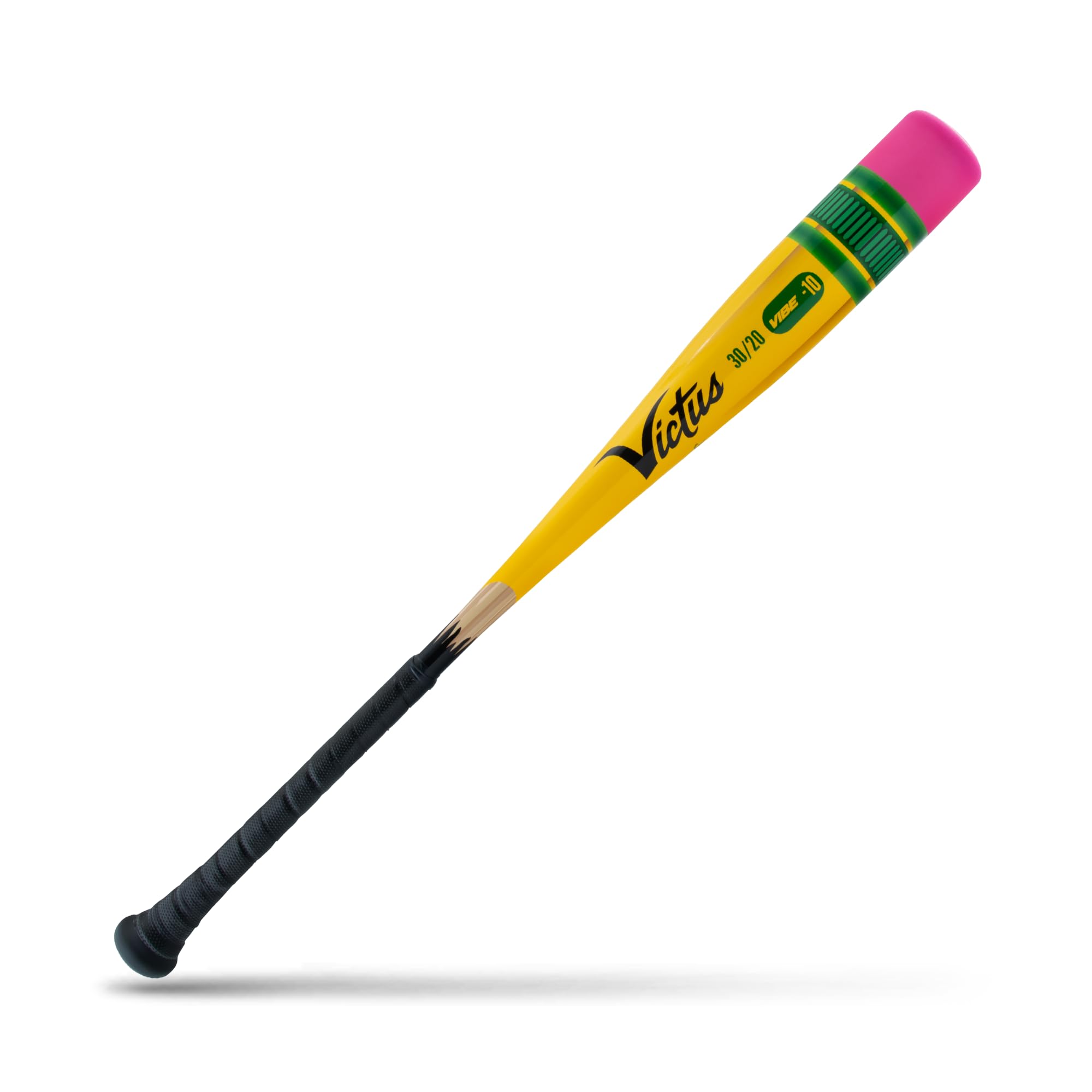
The bat an eight-year-old actually swings well, and the one parents keep recommending.
Smallest hitters need a bat that does not fight them, and the Vibe is built for exactly that. It is a one-piece VXP alloy design, so there is no connection joint to flex or composite to break in — the bat just goes when the hands go. The handle carries a vibration-reducing knob built to cut sting on mishits, which matters most at the age when a hitter is still learning the barrel.
The overall design is mid-balanced with a medium MOI, which means a young hitter can generate some power without losing the head of the bat through the zone. It runs a -10 drop across 26/16 through 31/21 sizes, and at 28 inches long with a 2.63-inch barrel it is USA Baseball certified. It also comes in a pencil finish that stands out in the dugout, if the look matters to your kid.
That look is a genuine pull for this age group, and the reviews consistently praise the quality and appearance. The one thing to plan for is growth: a 28-inch bat wants a kid of the right height to match, so measure the hitter against the size chart rather than guessing, because an oversized bat is the fastest way to ruin the swing this bat was built to support.
Why young hitters take to it
- One-piece construction needs no break-in and responds instantly
- Vibration-reducing knob softens mishits for young hands
- Mid-balanced medium MOI keeps the swing easy to control
- Distinctive look that kids are happy to carry to the plate
Honest limits
- USA Baseball certified only — not legal in USSSA or BBCOR play
- The 28-inch length suits smaller hitters, so bigger kids need a longer size
Pick it for: an eight-to-ten-year-old in a USA Baseball league who is still building confidence at the plate.
Not for: older or stronger hitters who need more mass or a USSSA/BBCOR stamp.
6. Axe Avenge Pro 3 Hybrid USA Baseball Bat

An axe-shaped handle that locks a young hitter’s hands into one consistent grip.
This one earns attention for its handle before anything else. Axe uses a patented pro standard and pro flared handle shaped for young players, so the hand finds the same spot every swing instead of sliding around a round barrel. A more consistent grip tends to mean more control, and that is the pitch here — not a bigger barrel or a longer balance.
The barrel is a CNC precision design with a variable thickness wall alloy, tuned so the metal is thick where it needs strength and thin where it needs liveliness. Armor Alloy Ultra goes through a heat treatment to flex without denting or cracking, and a Shock Suspension joint at the connection point intercepts vibration before it reaches the hands. The Hyperwhip composite cap saves weight at the tip for a faster swing and a larger barrel, and the whole build is a 3-piece hybrid at 1.3 pounds.
What buyers care about most is the build quality, and the look-and-feel of the handle gets repeat attention. The trade-off is that the axe grip starts cold — if a hitter has never swung one, give a practice window before game day, because the first at-bat won’t feel like a round-handle bat.
Underneath the shape: a real hybrid build with a variable wall alloy barrel, heat-treated for flex without denting, and a Shock Suspension joint that stops sting at the connection.
The honest caveat: the flared axe handle is a different feel from a round grip, and it takes a few swings to adapt.
Go for it if: your young USA Baseball hitter fights a wandering grip and wants a handle that enforces consistency.
Leave it alone if: the hitter is locked into a round handle and has no interest in retraining the grip.
7. Warstic Bonesaber Alloy -11 USA Baseball Bat

A -11 alloy built to feel like a light stick without giving away the barrel.
The Warstic starts from the lightest drop on this page: -11, matched to a one-piece design so the bat feels like one solid piece through the whole swing. The barrel is a 2 5/8-inch Katana2X ultra-lightweight premium alloy with a double taper — meaning it narrows in two stages toward the handle — engineered to widen the balance and add whip through the zone. For a contact hitter who wants a quick feel through the zone, that is the defining spec.
The knob gets the second look. Warstic calls its patented Pommel Precision Knob the most pro-style option on the market, and the flared shape is designed to keep the bottom hand from slipping off the end. At 30 inches and 2.63 inches wide, it carries USA Baseball certification, and the maker lists it as approved for Little League, AABC, Babe Ruth, Cal Ripken, Dixie Youth and Pony — so if your league is on that list, this bat clears it.
The honest counterpoint is the drop itself. A -11 is very light, which helps a young hitter get the bat around but trades away mass behind contact. If your kid already barrels the ball, a -10 or -8 serves them better than a lighter bat ever will.
Worth it for: a youth league contact hitter who needs swing speed more than mass, in a USA Baseball-approved league.
Think twice for: a stronger hitter already getting good contact, since a -11 may feel too light for driving the ball.
8. Rawlings Clout AI Baseball Bat
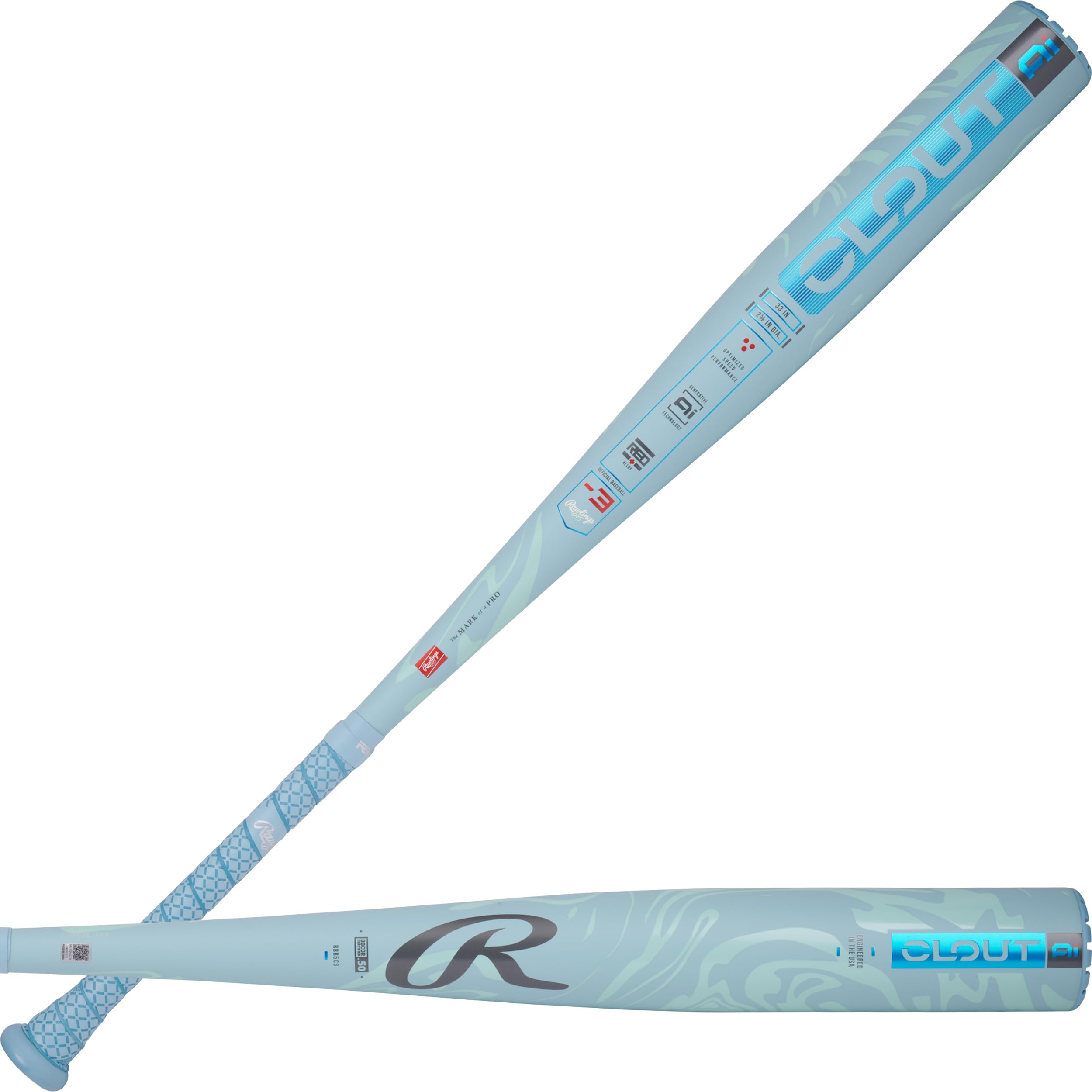
A one-piece BBCOR alloy for the high school hitter who wants instant feedback.
The Clout AI is a BBCOR bat, which is a different world from the youth bats above — a one-piece alloy build at 32 inches and 2.63 inches wide, aimed at high school and college play. Rawlings built it with Red Alloy+, the brand’s top-tier alloy, and shaped the barrel for a balance of swing weight, responsiveness and forgiveness. On a BBCOR barrel, a rigid face like this gives a clean, immediate read on contact — you know the moment the barrel is off and the moment it isn’t.
The marketing story here is AI, with the maker crediting a patent-pending AI-powered design process for the barrel shape. Take it for what it is — the part of the bat you can actually measure is the alloy, the one-piece construction, and BBCOR compliance. The -3 drop is standard for BBCOR and means the bat is heavy for its length, which is the whole point of the standard: it forces real strength into the swing rather than a light kid swinging a light bat.
If you want a BBCOR bat with a stiffer, louder feel and no break-in period, this is the one to shortlist. If your hitter is on the smaller side for a high school roster, the heavier -3 load takes some getting used to.
What you get: Red Alloy+ at the highest grade Rawlings uses, a balanced barrel, and BBCOR certification in a one-piece alloy stick that needs no break-in.
The trade-off: the -3 drop is a real weight load, and smaller hitters should expect an adjustment period.
Choose it if: you need a legal BBCOR bat and want immediate alloy feedback with zero break-in.
Look elsewhere if: you are still playing USA or USSSA ball, where BBCOR bats are not allowed.
9. Rawlings ICON Baseball Bat

The big-barrel composite for the hitter who has earned the extra mass.
The ICON sits at the top of this list as a two-piece In/Tense carbon composite BBCOR bat, and its purpose is power. The Zero-Loss collar at the joint is designed to kill sting and keep exit velocity alive on mishits by giving the balance a more forgiving edge. Where the Clout AI makes you feel every off-centre swing, the ICON’s composite body and collar absorb it — so an imperfect swing still produces a reasonable result instead of a hand-stinger.
Weight and length tell the story: 34 inches and 1.9 pounds, the heaviest and longest bat on this page. A balanced, powerful swing weight harnesses natural swing speed for better barrel control, and the carbon composite runs the full length of the bat rather than in a single zone. BBCOR certification means it is legal for high school and college play.
This is a lot of bat, and it suits a stronger, older hitter who can drive it through the zone. On a smaller high school athlete, the 34-inch length and 1.9-pound weight will feel heavy — go for the shorter length or the Clout AI instead if your hitter is on the smaller end of the roster. For the power hitter who has the build, it is a serious BBCOR composite.
Where the ICON earns its place
- In/Tense carbon composite across the full bat for a lively, consistent barrel
- Zero-Loss collar cuts sting and holds exit velo on mishits
- Balanced, powerful swing weight builds power without losing barrel control
- BBCOR certified for high school and college play
What you accept
- 34 inches and 1.9 pounds are heavy — smaller hitters will struggle to drive it
- Two-piece composite needs more careful handling than a one-piece alloy
Fits: a strong BBCOR-level power hitter who wants a forgiving composite barrel on mishits.
Too much bat for: a smaller high school hitter who needs the lighter, shorter Clout AI instead.
Know the Specs
Certification stamps (USSSA, USA Baseball, BBCOR)
The stamp is the first thing that decides whether a bat can be used, so check it before anything else. USSSA and USA Baseball bats clear youth leagues, while BBCOR bats are built for high school and college divisions. A bat without your league’s stamp is not a bad bat — it just will not clear check-in for your division.
Drop weight
Drop is the difference between the bat’s length in inches and its weight in ounces, so a -10 bat is ten ounces lighter than it is long. A bigger drop means a lighter bat that is easier to swing fast; a smaller drop means more mass behind contact. Match the drop to the hitter’s strength and bat speed, not to the biggest number on the spec sheet.
Barrel width
The barrel width — written as a fraction like 2.75 inches or 2.63 inches — is the width of the hitting face. A wider barrel generally offers more room to catch the ball, but the league standard often caps how wide a barrel can be, so the number is a useful shorthand for how forgiving the bat is likely to be.
MOI and swing weight
MOI stands for moment of inertia — a measure of how hard it is to get the bat rotating. A lower MOI means the bat turns more easily for faster swing speed; a higher MOI means more mass driving through contact. Balanced bats sit in the middle, and that middle zone is generally the most usable for developing hitters.
One-piece vs two-piece construction
A one-piece bat is a single continuous piece from knob to endcap, so contact feels crisp and there is no break-in. A two-piece bat connects barrel and handle with a joint, which reduces vibration and gives the barrel a livelier feel, at the cost of more careful handling and, on some models, a break-in window before it plays at its best.
Barrel material
Alloy gives immediate, stiff feedback and needs no break-in. Composite tends to offer a wider balance and more forgiveness on mishits. A hybrid pairs an alloy barrel with a composite handle, which lets a hitter keep the alloy response while reducing the sting travelling back into the hands.
Common Questions
How do I know which certification stamp my league needs?
What does the drop number on a bat actually mean?
Is a two-piece composite bat better than a one-piece alloy bat?
Can a youth player use a BBCOR bat?
How long does a composite bat last?
Does barrel width really matter for hitting?
Which bat is best for an eight-year-old just starting out?
Is an axe-handle bat legal in USA Baseball leagues?
Do I need to break in a composite bat?
Should a power hitter choose a balanced or end-loaded bat?
The Bottom Line
An elite USSSA travel program with a hitter who feels the ball off the barrel is the clear case for the world’s baseball bat winner, the Easton Hype FIRE — a red-hot composite under a hitter who can protect it. If the budget is the deciding factor, go for the Marucci CATX Composite, which gives you a large composite barrel at starter pricing. And if you are buying for a high school hitter who wants a forgiving BBCOR bat, the Rawlings ICON is the serious composite pick — though check the length and weight against the roster before you order, because at 34 inches it is a lot of bat.
The honest nudge: no bat here clears every league, so pick by the stamp first and the feel second. Once the stamp is settled, choose the drop that matches the hitter’s size and swing speed, and the rest of the spec sheet matters far less.
How we choose
We do not accept paid placement. Every pick is matched to a real buyer and a real use-case; we do not hands-on test units.
Sources
Specifications: manufacturer listings and product documentation. Review insights: verified customer reviews, as of November 2026. Pricing: not shown on this page (it changes often); check the current price via the retailer link.
As an Amazon Associate, Tactical Gear Guy earns from qualifying purchases. This does not affect which products we feature.