Specs are compiled from manufacturer listings and verified buyer reviews and can change over time — please confirm the key details on the product page before buying.
Here is the short answer before anything else: the camera worth buying is the one whose weakest point matches how you actually shoot. A full-frame body that nails autofocus but drains a battery in an afternoon will frustrate a wedding shooter, while a 45.7-megapixel sensor is wasted on someone who posts to a phone screen. This guide covers thirteen genuine contenders and tells you which trade-off each one asks you to accept.
This guide is built by comparing the manufacturers’ published specifications and the patterns across verified customer reviews, so you get each pick’s real strengths and trade-offs instead of marketing spin.
You will see sensor size, autofocus points, burst rates and video formats translated into plain consequences for your shooting day. The picks below are ordered so the strongest all-rounder sits first, with specialist bodies and the compact luxury option further down. My aim is simple: you finish this page knowing exactly which body to put in your bag as the World Top Camera for your own work.
Top Picks

How To Choose The Best Full-Frame Camera
Start with your lens drawer, not the body. A camera is a mount plus a sensor, and the mount decides which glass you can rent, borrow or already own. Canon EF and RF, Nikon F and Z, Sony E, Leica L — pick the system first and the body second, because bodies rotate every few years and lenses do not.
Autofocus points versus autofocus intelligence
A high point count spreads focus coverage across the frame, which matters when your subject drifts to the edge of the picture. But the smarter question is whether the camera recognises what it is looking at. Subject detection for people, animals, birds and vehicles keeps the focus box glued to an eye while you compose, and that is the feature that separates a frustrating body from a dependable one.
Resolution and what it costs you
More megapixels give you more room to crop after the fact, which is a real advantage for wildlife and event work. The trade is heavier files, bigger cards and a slower edit. A 24-megapixel sensor is plenty for social and print wedding albums, while a 45-megapixel body rewards anyone who prints large or delivers tight crops.
Burst rate, buffer and card type
Frames per second only helps if the camera can clear those frames to the card before the action moves on. Bodies that accept CFexpress cards empty their buffer faster than SD-only bodies, which is why a slower card slot can quietly cap a fast sensor. Check the card type if you shoot sport or birds.
Video needs a different checklist
For moving pictures, look at frame rate, bit depth, and whether the camera can record for long stretches without overheating. A built-in cooling fan, oversampled 4K and internal RAW recording are the specs that keep a video shooter working through a long interview or a live event.
Side-by-Side Comparison
| Model | Best For | Sensor Resolution | Autofocus Points | Mount | Amazon |
|---|---|---|---|---|---|
| Canon EOS 5D Mark IV | Weddings and events | 30.4 megapixels | 61 | Canon EF / EF-S | Amazon |
| Nikon D780 | DSLR holdouts | 24.5 MP | 51 | Nikon F | Amazon |
| Nikon Z5 II | Low-light stills and video | 24.5MP | 299 | Nikon Z | Amazon |
| Sony Alpha a7 III | Hybrid all-rounder | 24.2MP | 693 | Sony FE | Amazon |
| Nikon D850 | High-resolution landscapes | 45.7 megapixels | 153 | Nikon F | Amazon |
| Canon EOS R5 | 8K video and stills | — | — | Canon RF | Amazon |
| LUMIX S1II | Pro hybrid video | 24.1MP | 79 | Leica L | Amazon |
| Nikon Z 8 | Bird and wildlife work | 45.7MP | 493 | Nikon Z | Amazon |
| Sony Alpha 7R V | Maximum detail | 61.0 MP | 693 | Sony E | Amazon |
| Leica Q3 | One-body travel | 60MP | 256 | Built-in 28mm lens | Amazon |
Detailed Reviews
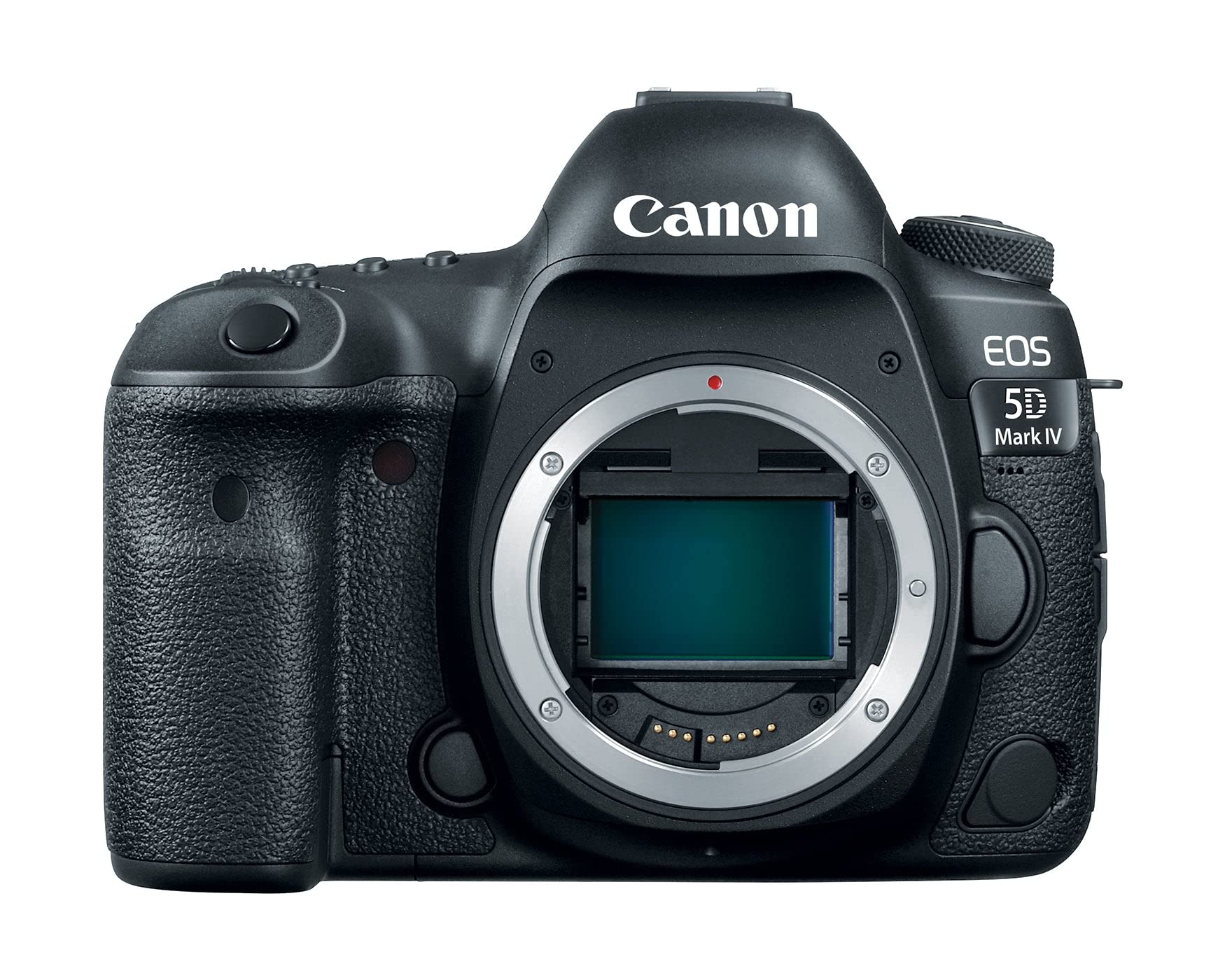
1. Canon EOS 5D Mark IV DSLR Camera (Body Only)
The working photographer’s benchmark, still earning its keep years after launch.
If your week is a mix of wedding receptions, dim venue aisles and client portrait sessions, this is the body that keeps paying you back. A 30.4 megapixel full-frame sensor (the light-gathering chip at the heart of the camera) gives you detail enough to print large and still crop a group shot. Pixel count is only half the story, though. The ISO range of 100-32000, expandable to 50-102400, is the setting that decides how bright your picture stays when the light drops.
Focusing is where this camera quietly wins people over. It carries 61 autofocus points (the small zones the camera can lock onto), and its Dual Pixel CMOS AF uses the sensor itself to track smoothly during video or live-view shooting. Compare it to the Sony a7 III’s 693 points and the Canon looks outgunned on paper. In practice the Canon’s touchscreen lets you tap the exact spot you want sharp, which is faster than scrolling through a menu mid-ceremony. The 7.0 fps burst (frames per second) is sensible rather than spectacular, and that is fine for a camera built around composed portraits rather than spray-and-pray sport.
The 4K recording at 30 or 24 frames per second handles a talking-head clip or a client testimonial without fuss, and Full HD stretches up to 60 fps when you want slow motion. Built-in Wi-Fi lets you push a finished image straight to a phone through the Canon Camera Connect app, which means you can post from the car park rather than the studio. The honest catch is the DSLR shape itself — the optical viewfinder is lovely, but mirrorless rivals offer eye-tracking that this older system cannot match. If you shoot people who move unpredictably and want the camera to find the eye for you, a mirrorless body will feel more modern.
Where it earns its reputation
- 30.4 megapixel full-frame sensor holds detail in low light across an ISO band from 100 to 32000
- 61-point autofocus with Dual Pixel CMOS AF keeps video and live-view focus smooth
- Touchscreen LCD lets you tap your focus point in an instant
- 4K at 30 or 24 frames per second, plus Full HD up to 60 fps for slow motion
What to weigh first
- Mirrorless bodies offer subject-tracking autofocus this DSLR design does not
- 7.0 fps burst is modest next to the 40 fps electronic shutter of faster rivals
Built for: working event and portrait shooters who want a dependable full-frame body with tactile controls.
Think twice if: you need eye-tracking autofocus that follows a moving subject across the whole frame.
2. Nikon D780 Body
The last DSLR many shooters will ever need to buy.
Owners rank it among the best Nikon DSLRs ever made, and the reason is unglamorous: it just works. A 24.5 MP full-frame sensor paired with the EXPEED 6 image processing engine (Nikon’s on-board computer that turns raw sensor data into a finished file) delivers clean stills and 4K UHD video without drama. It takes 51 autofocus points, well short of the Sony a7 III’s 693, but on a DSLR those points are spread across a dedicated phase-detection module that grabs focus in poor light with a certainty mirrorless bodies sometimes lack.
Manual-mode shooters gravitate to the D780 because the dials fall where fingers expect them. The one soft spot is low-light performance, which draws mixed feedback from long-term users, so budget for a fast lens if you work in dark rooms rather than relying on the sensor alone. Remoteless long exposures are a neat extra for anyone shooting night skies without a cable release in their bag.
Wireless transfer runs through the SnapBridge app, which pairs the body to a phone or tablet for quick sharing. If you already own a drawer of Nikon F-mount glass from an earlier DSLR, this is the sensible upgrade path — the lenses you have spent years collecting keep working, no adapter required.
Lens-drawer logic: a natural fit for anyone already invested in Nikon F-mount glass who wants modern processing without changing systems.
The honest limit: mixed feedback on low-light output means fast glass matters more here than on the newest sensors.
Best match: a Nikon DSLR owner with a lens collection and no appetite for an adapter.
Look further if: your work is almost entirely in near-dark conditions.
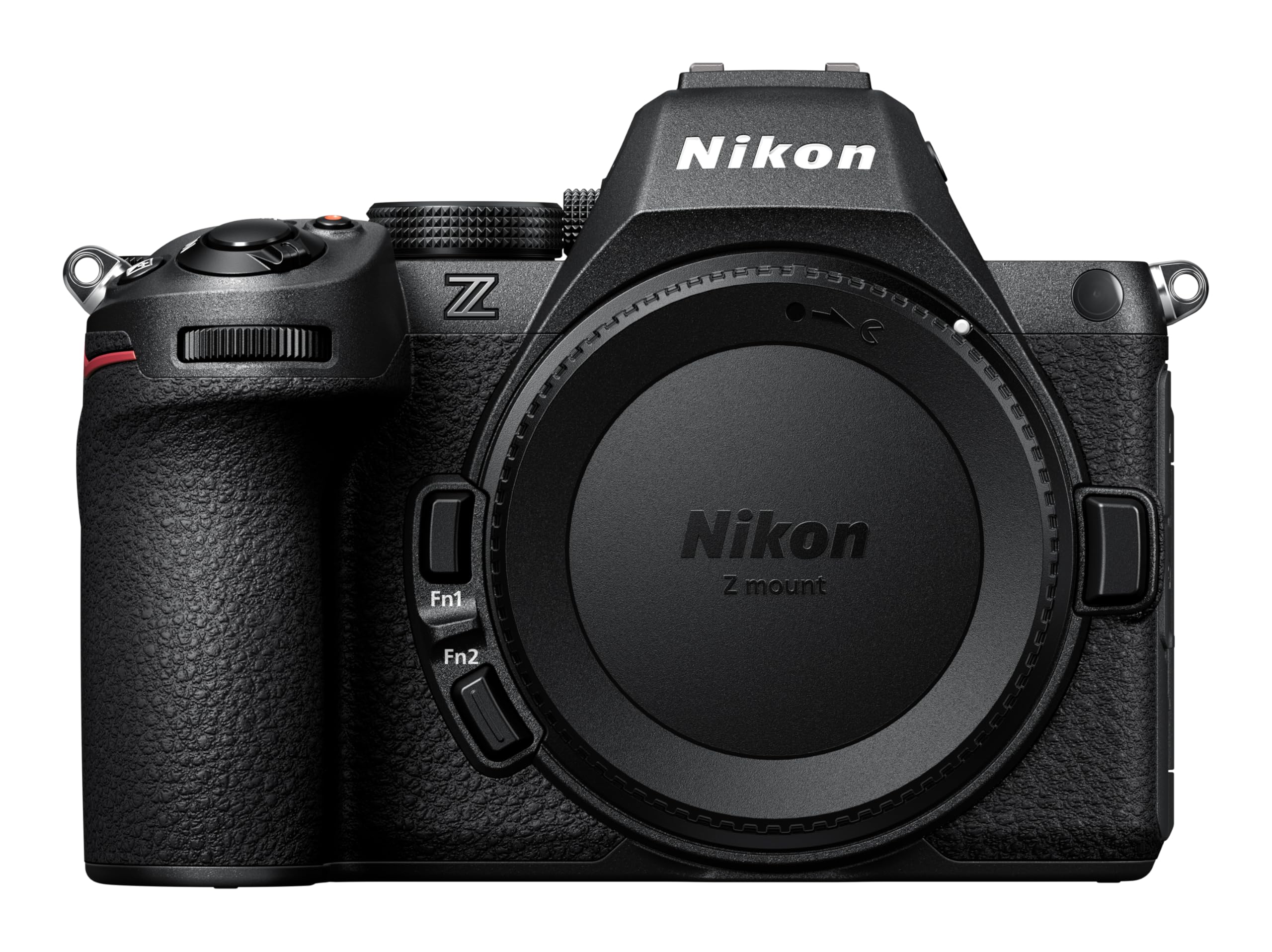
3. Nikon Z5 II Full-Frame Mirrorless Camera
A 30fps burst and near-darkness autofocus in one surprising package.
The number that stops people mid-scroll is 30fps — the Z5 II shoots up to 30 frames per second, versus the 7.0 fps of the Canon 5D Mark IV above, which is a huge jump if you chase fast action. That speed comes from the EXPEED 7 engine working with a 24.5MP BSI-CMOS FX-format sensor (back-side illuminated, a design that gathers light more efficiently). In dim rooms and after sunset it hunts focus down to -10EV, a rating that describes how little light the camera needs before autofocus gives up.
Handholding gets easier thanks to up to 7.5 stops of built-in image stabilisation, which fights the shake in your hands so you can shoot slower shutter speeds without a tripod. The autofocus recognises nine subject types — people, birds, dogs, cats, cars, bicycles, motorcycles, trains and airplanes — so it picks the target rather than asking you to steer a box. Owners call it beginner-friendly without feeling dumbed down, thanks to guided menus sitting on top of 30fps and -10EV autofocus.
Video shooters get 4K/60p capture and 12-bit N-RAW recording in-camera, plus Nikon Imaging Cloud for automatic file transfer and firmware updates. The electronic viewfinder (the little screen you look through instead of an optical mirror) hits a peak brightness of 3000 nits, so composing into bright daylight is not a squint. The catch is the lens mount: if you shoot Nikon F-mount glass from an older DSLR, you will want the FTZ adapter to keep using it.
What stands out
- Up to 30fps burst speed, versus 7.0 fps on the Canon 5D Mark IV
- Autofocus detection down to -10EV for near-dark shooting
- Up to 7.5 stops of image stabilisation for handheld work
- 9 subject types detected automatically by the autofocus system
Where it asks something of you
- Older Nikon F-mount glass needs the FTZ adapter to mount
- No built-in flash, so an external unit is a separate purchase
Suits you if: you want modern autofocus and video tools without leaving the Nikon family.
Check first: whether your existing lenses need an adapter to fit the Z mount.
4. Sony Alpha a7 III Mirrorless Camera with 28-70mm Lens

The one body that quietly does stills, video and everything between.
Sony’s a7 III packs 693 phase-detection and 425 contrast autofocus points, covering 93% of the image. Set that against the 51 points of the Nikon D780 and the coverage difference is enormous — the camera can lock onto something near the very corner of the frame. The 24.2MP back-illuminated full-frame sensor is the other engine here, delivering 15-stop dynamic range (how much detail it keeps from deepest shadow to brightest highlight) and 14-bit uncompressed RAW.
For people who move between photo and video, this is the practical choice. It shoots up to 10fps with a silent or mechanical shutter and AE/AF tracking (exposure and focus following your subject continuously), and the bundled 28-70mm f/3.5-5.6 lens covers wide group shots through to tight portraits in one piece of glass. The kit arrives with the battery, charger, strap and caps, so you can shoot the day it lands.
What owners love most is picture quality, especially the 4K video, and the autofocus speed draws recurring praise. Two things temper that: battery life and reliability both draw mixed feedback across the review pages, so carry a spare battery (the NP-FZ100 is included) on a full day. It is not a body that tolerates rough handling forever, but plenty of shooters get years of reliable service from it.
Why it earns a slot: 693 autofocus points across 93% of the frame makes composition far more forgiving than the 51 points of the Nikon D780.
Worth planning around: mixed feedback on battery life means a second NP-FZ100 pack belongs in your bag.
Pick this one if: you want one body to shoot both stills and 4K video with a lens included.
Think again if: you need a rugged body that shrugs off hard daily knocks.
5. Nikon D850 FX-Format Digital SLR Camera Body

Forty-five megapixels of landscape detail in a body that still shoots fast.
Landscape and studio photographers chase resolution, and the D850 answers with a 45.7 megapixel back-side illuminated full-frame sensor. Put that beside the 30.4 megapixels of the Canon 5D Mark IV and the Nikon leads on detail for large prints and deep crops. The sensor has no optical low-pass filter, a design choice that skips a smoothing layer so the finest textures in a scene stay crisp. The tilting touchscreen helps you frame a low-angle shot without lying on the ground.
Contrary to the idea that high-resolution bodies are slow, this one shoots up to 9 fps continuous at full resolution with full autofocus performance. It carries 153 autofocus points and handles 4K Ultra HD video, with slow motion up to 120 FPS at 1080p. Time-lapse shooters get 8K and 4K interval movies straight from the body, no separate rig needed.
The honest trade is at the edges. Performance draws a mixed read across owner feedback, and value for money splits opinion — some see a workhorse, others see a serious outlay. An occasional unit has been reported not powering on months in, so register the warranty and buy from a seller with a clean returns path. If you need maximum detail and already own Nikon F-mount glass, the D850 is the resolution king in this list’s DSLR camp.
Resolution arguments for it
- 45.7 megapixel full-frame sensor with no optical low-pass filter for maximum fine detail
- Up to 9 fps continuous shooting at full resolution with full autofocus
- Tilting touchscreen makes low and awkward angles easy to compose
- 8K and 4K time-lapse recording built into the body
The costs to consider
- Value for money draws divided opinion among owners
- An occasional unit has been reported failing to power on after a few months
Made for: landscape and studio shooters who print big and want every grain of detail.
Worth a pause if: you would rather travel light — this is a substantial body to carry.
6. Canon EOS R6 Mark II Mirrorless Camera (Body Only)
 < href=”https://www.amazon.com/dp/B08C68F2DX/?tag=tacticalge083-20″ rel=”noopener noreferrer nofollow sponsored” target=”_blank”>Check Price on Amazon
Eight-K recording in a body that also shoots forty-megapixel stills.
The headline here is internal 8K RAW recording, alongside 4K up to 120fps in all formats with autofocus active. For anyone producing client video, that resolution gives you room to punch in and reframe in the edit, and the DIGIC X processor powers it with an ISO range of 100-51200, expandable to 102400. Owners rate the 4K HQ mode as the sharpest, most cinematic setting, and it is the one most of them leave the camera in.
Autofocus earns the loudest praise, particularly eye detection that keeps a subject’s eye tack-sharp at wide apertures. It shoots up to 12 fps with the mechanical shutter or up to 20 fps with the silent electronic shutter, so it handles action as well as a slow cinematic pan. The R5 sits in the same Canon RF ecosystem as the R6 Mark II above, so glass moves between them freely.
Two things demand attention. Reliability draws mixed feedback, with some reports of a unit becoming unusable very early in its life, so register the warranty the moment it arrives. Value for money also divides opinion, which is fair given how much capability sits inside. Treat it as a serious production tool that deserves careful handling, not a casual walkabout camera.
Why video people reach for it: internal 8K RAW and 4K at up to 120fps with autofocus active covers everything from cinematic to slow-motion.
The caveat that matters: early-life reliability reports make a registered warranty non-negotiable.
Reach for this if: 8K footage and 12 fps mechanical stills both belong in your working week.
Look elsewhere if: you want the simplest, most forgiving body to learn on.
7. LUMIX S1II Mirrorless Full Frame Hybrid Camera

Built for professionals who shoot vertical and horizontal from one take.
Open gate 6K 30p recording in a 3:2 shape is the reason this body exists. Shooting that way gives you a taller frame you can crop into landscape or vertical for social without losing detail. The sensor is a partially stacked 24.1MP BSI CMOS design, and the body also handles HEIF recording and a High Resolution mode that produces 96MP-equivalent images handheld, no tripod required.
Burst shooting splits into two useful tiers. In H+ mode you get blackout-free 10 fps with AFC, which keeps the viewfinder live while you follow the action. Switch to SH Burst or SH Pre-Burst with the electronic shutter and it climbs to 30 fps for sport and wildlife. It carries 79 autofocus points, and while that number is modest next to the 693 points of the Sony a7 III, the system adds advanced AI recognition to pick the subject for you.
Video options run 6K 30p 10-bit, C4K, 4K, 3.3K and FHD, with internal 4:2:2 10-bit recording and the open gate 6K 30p 3:2 mode. It takes CFexpress Type B or SD cards, so fast media is available. Its L mount shares lenses with Leica, which softens the system-entry worry. Worth knowing: this body ships with no flash, and the stacked-sensor pro tooling is aimed at working shooters rather than beginners.
The open-gate angle: 6K 30p in a 3:2 frame lets you crop into landscape or vertical for social from one take.
Read the layout: ships with no built-in flash, and 79 autofocus points means you lean on subject recognition rather than point count.
Suits: working hybrid shooters who need one file that serves both horizontal and vertical edits.
Reconsider if: you rely on a high autofocus point count for edge-of-frame tracking.
8. Sony Alpha a7 V Full-Frame Mirrorless Camera Body

The bird photographer’s body, with 8K video folded in.
A 45.7MP stacked CMOS sensor (stacked describes a design that reads out data very fast to reduce distortion and aid speed) and the EXPEED 7 engine are the core here. Nikon’s autofocus on this body detects focus as low as -9EV and combines subject detection with 3D tracking, recognising people, dogs, cats, birds, cars, bikes, motorcycles, trains and planes. Owners single out bird photography as the standout use, citing the 45.7MP sensor’s crop headroom as the reason.
That resolution matches the Nikon D850’s 45.7 megapixels, but the Z 8 pairs it with modern mirrorless autofocus and video. It records internal 8K/60p and 4K/120p video, with 12-bit N-RAW and ProRes RAW recording in-camera. Still formats cover 14-bit RAW, High Efficiency RAW, 10-bit HEIF and JPEG. Continuous shooting tops out at 120 fps, giving you 20, 30, 60 and 120 fps options depending on the shape of your frame.
Portrait shooters get Skin Softening, Portrait Impression Balance and improved white balance, features aimed at making faces look natural without heavy editing. It takes CFexpress Type B, SD and XQD cards, so fast media is not a bottleneck. The honest catch is the price of admission — a professional body demands professional lenses, and FX glass on a Z mount means Z lenses or an adapter.
The buyer it fits: wildlife and bird shooters who want 45.7MP detail plus 3D-tracking autofocus that detects down to -9EV.
The spend to plan: a pro body means pro glass, and Z-mount lenses are their own budget line.
Made for: bird and wildlife specialists who want resolution and fast, sticky focus in one body.
Not your body if: you shoot casually and would rather put money into lenses than a flagship sensor.
9. Sony Alpha 7R V Full-Frame Mirrorless Camera Body

Sixty-one megapixels for anyone who prints large and crops hard.
Resolution is the whole point of this body. A 61.0 MP full-frame back-illuminated Exmor R CMOS sensor captures detail far beyond most full-frame cameras, and the BIONZ XR engine boosts overall processing speedPress release: Sony Announces Alpha 7R V, a New High-Resolution Full-Frame Mirrorless Camera with AI-Based…
by up to 8x according to the manufacturer. Owners praise the 61 megapixels for detail-rich files, and say the faster autofocus makes nailing focus at f/1.4 far easier. Real-time Recognition autofocus uses deep learning AI to find and hold subjects with precision.
The sensor carries 693 autofocus points, matching the Sony a7 III’s 693 but paired here with the AI recognition engine. That means subject tracking that recognises and follows whatever you point it at, rather than asking you to keep a box on a moving target. For portrait and product shooters, that is a real time-saver. Filmmaking capabilities run to 8K 24p/25p and 4K 60p (50p), so it handles video without abandoning its stills-first identity.
The practical costs sit on both sides. Value for money and versatility both draw mixed feedback, which is fair for a body that asks you to commit to its price bracket. It takes CFexpress Type A, SDHC and SDXC cards, and like the a7 V above, it ships as a body only — the lens is separate.
The resolution case: a 61.0 MP sensor gives the deepest crops in this list, keeping detail when you reframe after the shot.
What splits opinion: value for money and versatility draw mixed feedback, so buy this only if 61 megapixels is a real need.
Choose it when: your output runs to large prints, tight crops and detail-critical commercial work.
Look at the a7 III instead if: you would rather save the resolution headroom for other things.
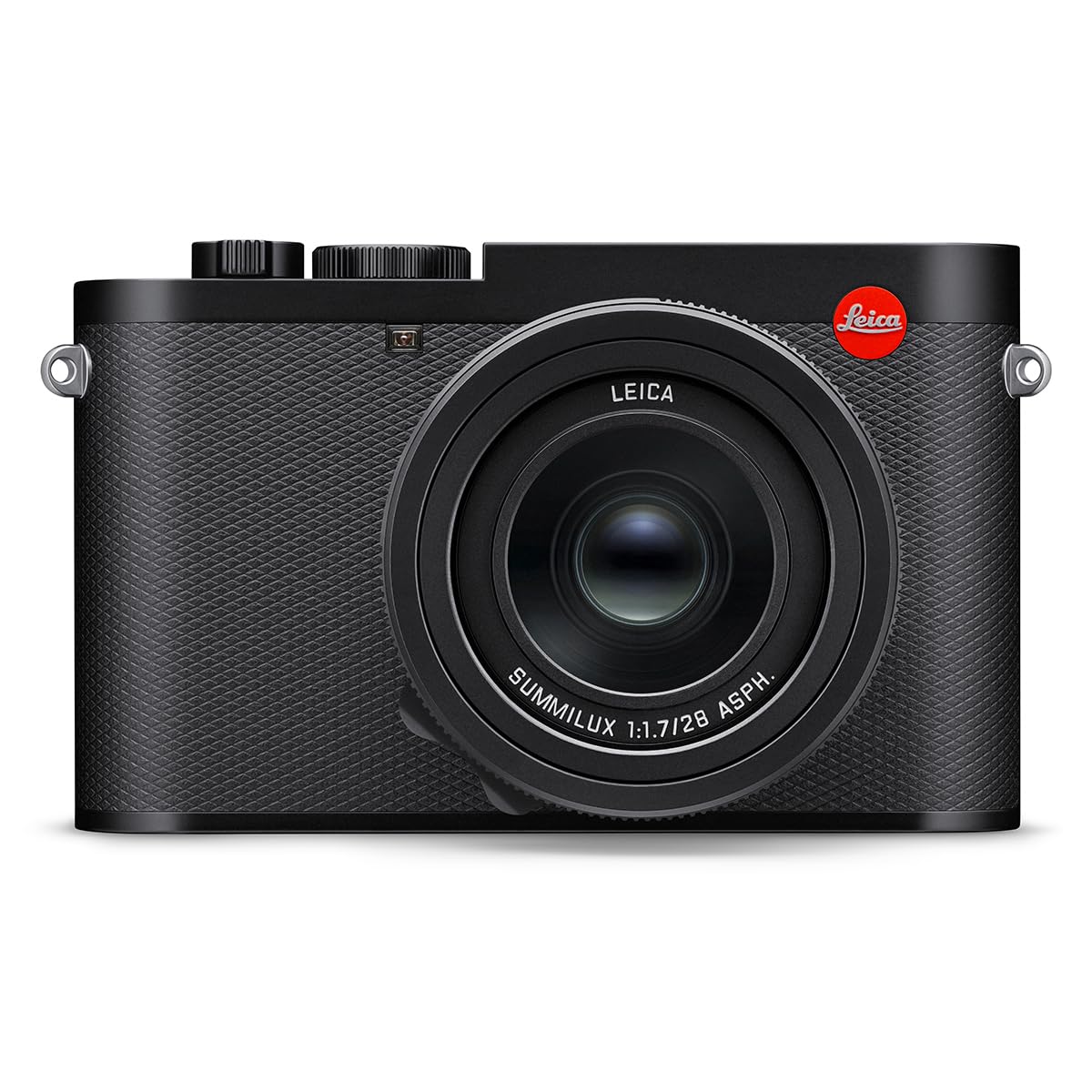
10. Leica Q3 Compact Digital Camera (Black)
One lens, sixty megapixels, and no bag full of glass to carry.
This is the camera for the traveler who is done swapping lenses on a rainy street corner. It pairs a fixed Summilux 28mm f/1.7 ASPH. lens with a 60MP BSI CMOS sensor that uses Triple Resolution Technology, and optical image stabilization keeps the frame steady in low light. The lens is built in, so there is nothing to mount and nothing to leave at home.
Framing flexibility comes from digital zoom options up to 90mm, which lets you tighten the shot without a second lens. A hybrid autofocus system combines contrast and phase detection with tracking, and it carries 256 autofocus points. The Maestro IV Processor with 8GB of memory keeps continuous shooting and image processing moving quickly.
Ownership is simpler too — it comes with the Leica BP-SCL6 lithium-ion battery, lens hood, lens cap, accessory shoe cover and leather carrying strap in the box, and FOTOS cable connectivity pairs with an iPhone or iPad. The honest catch is that a fixed 28mm lens is not for everyone: if you need reach for wildlife or tight portraits, this body cannot get you there no matter how good the sensor is. It suits the shooter who wants one beautiful object and a single focal length.
Why it travels well
- Fixed Summilux 28mm f/1.7 ASPH. lens means no lens changes and no extra bag weight
- 60MP sensor with Triple Resolution Technology for lifelike colour and detail
- Digital zoom options up to 90mm tighten the frame without swapping glass
- Hybrid autofocus with 256 points and optical image stabilization
The focal-length trade
- A fixed 28mm lens leaves you without reach for distant subjects
- The premium body costs reflect its luxury positioning
The right call for: a traveler who wants one precision object and a single focal length, nothing more.
Skip the idea if: you need zoom range for sport, wildlife or tight portrait framing.
Know the Specs
Full-Frame Sensor and Megapixels
A full-frame sensor is the light-gathering chip sized roughly like a frame of 35mm film, and it usually beats a smaller sensor in dim light and shallow-focus control. Megapixels describe how many tiny light-catchers sit on that chip. More of them give you cropping freedom and larger prints, but each file gets heavier and your computer works harder. A 24-megapixel sensor is plenty for social and standard prints, while a 45.7 or 61.0 megapixel body rewards anyone who prints big or delivers tight crops.
Autofocus Points and Subject Detection
Autofocus points are the small zones the camera can lock onto, and a higher count spreads coverage further across the frame. Point count alone does not guarantee sharp results though. Subject detection, the feature that recognises people, animals, birds or vehicles, is what keeps the focus box glued to an eye while you compose. A body with 693 points and deep-learning recognition usually out-focuses a body with more points but no recognition.
Burst Rate and Buffer Clearance
Frames per second tells you how fast the shutter can fire, but the buffer is the temporary memory that holds those frames before they write to the card. A body shooting 40 fps will stall if the card cannot clear the buffer quickly, and a body limited to 7.0 fps keeps pace with almost any SD card. If you shoot sport or birds, check both the burst rate and the card type the camera accepts.
ISO Range and Low-Light Shooting
ISO measures how sensitive the sensor is to light, and a wider range lets you keep shooting as the light fades. The trade is noise, the grainy speckle that appears at high settings. A camera that stays clean across a broad ISO band gives you more usable frames at a dim reception or an evening street scene, which is why this setting often matters more than megapixel count.
Common Questions
Will my old Canon EF lenses work on a mirrorless Canon RF body?
Is 24 megapixels enough for professional wedding work?
What does autofocus detection down to -10EV actually mean?
Do I need a camera with a built-in cooling fan for video?
What is open gate recording and why does it matter?
How many frames per second do I need for sport and wildlife?
Can I use a Nikon F-mount lens on a Nikon Z body?
Is a fixed-lens camera like the Leica Q3 limiting for travel?
What card type should I buy for a high-speed camera?
Does sensor resolution affect video quality as much as stills?
The Bottom Line
For most working photographers, the world top camera answer is the Canon EOS 5D Mark IV because its 30.4 megapixel sensor, 61-point autofocus and tap-to-focus touchscreen handle the unpredictable light of events and portraits without fuss. If fast action is your week, the Canon EOS R6 Mark II brings a 40 fps electronic shutter that leaves the 7.0 fps of that 5D Mark IV far behind. And for wildlife at distance, the Nikon Z 8 combines 45.7MP resolution with 3D tracking that detects down to -9EV. Before you commit, check the lens mount you already live in — that single decision will shape every upgrade after it.
How we choose
We do not accept paid placement. Every pick is matched to a real buyer and a real use-case; we do not hands-on test units.
Sources
Specifications: manufacturer listings and product documentation. Review insights: verified customer reviews, as of November 2026. Pricing: not shown on this page (it changes often); check the current price via the retailer link.
As an Amazon Associate, Tactical Gear Guy earns from qualifying purchases. This does not affect which products we feature.