Specs are compiled from manufacturer listings and verified buyer reviews and can change over time — please confirm the key details on the product page before buying.
If you want the short answer: buy a thermally bonded ball with a real butyl bladder and skip anything with a stitched panel pattern that drinks water. That single decision separates a ball that still flies true after a wet season from one that turns heavy and lopsided by October. Below you will find the eight tournament-style balls worth your money, sorted by what they actually do on grass rather than what the box promises.
This guide is built by comparing the manufacturers’ published specifications and the patterns across verified customer reviews, so you get each pick’s real strengths and trade-offs instead of marketing spin.
A World Cup ball lives or dies on its cover construction and its bladder, so every pick here is judged on those two things first. That is the whole filter behind this list of the best World Cup ball options you can actually buy.
Top Picks

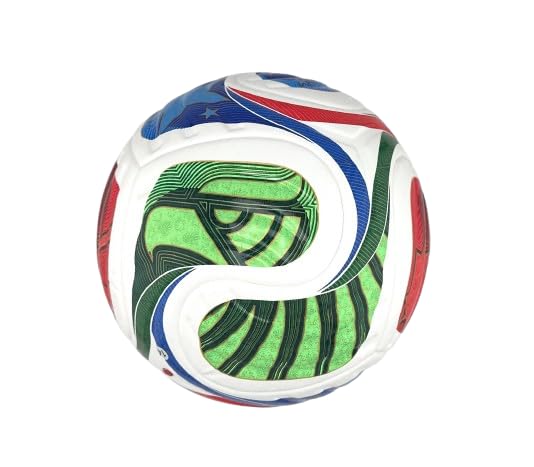

How To Choose The Best World Cup Ball
The ball you kick on a Sunday pitch and the ball a tournament uses look identical in a photo. They are not the same object. The differences sit in the seam, the bladder, and the cover finish, and those three things decide whether the ball stays round and true or goes soft and heavy. Here is what to check before you commit.
Seam construction decides water uptake
A thermally bonded ball has its panels fused together with heat instead of sewn. That leaves no needle holes for rain to crawl into, so the ball stays light in wet weather. A machine-stitched ball has visible thread lines, and those lines are the first place water gets in. If you play through autumn rain, bonding is the feature to pay for.
Bladder type controls how often you pump
The bladder is the inner balloon that holds the air. A butyl bladder (a synthetic rubber that holds pressure well) keeps its air far longer between pumps than a plain rubber one. If you hate digging out the pump every week, look for butyl on the spec sheet.
Cover material and texture affect touch
Most tournament-grade balls use a polyurethane or TPU cover, which is a synthetic leather that grips the boot cleanly. A textured surface adds small raised patterns that help the ball cut through air with a more predictable flight. Smooth cheap covers skid off the foot and wobble in the air.
Side-by-Side Comparison
| Model | Best For | Size | Weight | Stitching | Amazon |
|---|---|---|---|---|---|
| adidas World Cup 26 Trionda League★ Best Overall | Everyday match play | Size 5 | 430 g | — | Amazon |
| World Cup Quality League Soccer BallBest Value | Budget club training | Size 5 | 12.8 ounces | smooth | Amazon |
| Capelli Sport FIFA World Cup 26Collector’s Pick | Collector shelf piece | Size 5 | 1.3 pounds | Machine stitched | Amazon |
| adidas FIFA World Cup 26 Trionda Competition | Certified match play | Size 5 | — | Thermally bonded | Amazon |
Detailed Reviews
1. Football adidas World Cup 26 Trionda League BOX JD8045
Our pick — 4.5+★ from 700+ verified ratings; the strongest balance of quality and price.
The league-tier Trionda that plays well above its shelf and holds up week to week.
This is the ball most club players should buy. It carries the textured TPU laminated cover from adidas’s tournament line down to a league variant, at 430 g in a size 5. A TPU laminated surface is a synthetic leather skin bonded in layers, which gives the ball a consistent grip and a cover that shrugs off scuffs. That grip-and-scuff-resistance combination is why it holds a 4.5+ rating.
What makes it work in real games is the shape retention. The textured surface gives the boot something to bite into on a wet pass, so the ball goes where you aim even when the pitch is greasy. Owners consistently note it keeps its shape where cheaper balls go soft within a season. For two or three sessions a week, that shape retention is the whole point.
The catch is that it is a size 5 league ball, so younger players or casual kickabouts with small feet may find it a touch heavy at 430 g. It also ships deflated, so budget for a pump. For the money, it is the safest pick here for the widest range of adult players.
What it gets right
- 430 g weight in size 5 keeps the ball honest on long strikes
- TPU laminated surface resists scuffs and holds its grip
- Textured cover adds control on wet pitches
- League-tier construction that survives a full season
What to plan around
- Ships deflated, so a pump is a separate purchase
- Size 5 and 430 g may be heavy for younger players
Best for: adult club and recreational players who want a durable match ball without paying premium prices.
Think twice if: you are buying for a child, since the size 5 weight is a real factor.
2. World Cup Quality League Soccer Ball
A thermally bonded match ball built to end the summer-season foam ball habit.
If you train often and are tired of replacing balls, its bonded smooth build is the reason to pick it. It has smooth stitching (the panels are bonded, not sewn, so there are no needle holes for water to get in), a PU leather cover (polyurethane, a synthetic leather that resists wear), and a 12.8 ounce weight in size 5. That bonded build means a wet pitch won’t soak the ball and make it heavy. The manufacturer aims it at players fed up with foam balls that peel apart or skid on wet grass.
Buyers keep returning to build quality in the reviews. It feels dense and true off the boot, which is rare at a training-ball price. Coaches will like that it holds its shape after repeated sessions instead of going flat and lumpy. At 12.8 ounces it is heavier than the 10-ounce adidas Women’s World Cup Pro, and that extra mass gives long passes a bit more punch.
Value for money draws mixed reactions. Some buyers feel it is a steal for the construction, while others expect more at the price. Be realistic: this is not a Pro-grade tournament ball, but it does the training-and-match job well. Buy it as your weekly workhorse rather than your match-day showpiece.
Where it earns its place: smooth bonding plus a PU leather cover at a training-ball price is a genuinely useful combination for anyone outside a sponsored club.
The honest trade-off: the value question splits opinion, so go in expecting a solid league ball rather than a certified match ball.
Reach for this if: you need a durable bonded ball for regular training without stretching the budget.
Look elsewhere if: you want a FIFA-certified ball for official fixtures.
3. Capelli Sport FIFA World Cup 26™
An officially licensed tournament ball that looks the part on a shelf and kicks fine on grass.
The draw here is the badge. This is an official licensed product of the FIFA World Cup 2026, finished with a premium metallic coat and tournament graphics. It sits at regulation size 5 for training or match play, and comes in a red and blue colourway. If you are buying for the tournament connection as much as the play, this one delivers it.
Construction tells a different story. It is machine stitched rather than thermally bonded, and the cover is a plastic and rubber blend. Those thread lines are visible and they do let moisture work in over time, so this is not the ball you leave out in the rain. At 1.3 pounds it carries real heft, and the 22.5 centimeter diameter matches the size 5 standard. Think of it as a display ball that also happens to play, not the reverse.
The metallic finish is the kind of surface that shows scuffs quickly once it meets a rough pitch. That is a fair trade for the look, but keep it in mind if the ball will live in a kit bag. It arrived with a 4.5+ rating, so the buyers who own one are largely happy with it. The collector angle is the honest selling point.
The tournament hook: officially licensed graphics and a metallic finish make it the one to sit on a desk or in a cabinet.
Weigh the construction: machine stitching is the weakest seam type here, so keep it off muddy winter pitches.
Suits you if: the FIFA World Cup 2026 badge matters and the ball doubles as display.
skip it if: you play in wet conditions year-round and need a bonded, water-resistant seam.
4. adidas FIFA World Cup 26™ Trionda Competition Football

The certified match ball that balances tournament-grade build with a sane price.
This is where a league ball and an official match ball split apart. The Trionda Competition carries FIFA Quality Pro certification (the top rating a ball can get, meaning it passed tests on weight, water uptake, shape, and size retention). It uses thermally bonded smooth construction, so the panels are heat-fused with no stitching to let water in. The cover is 60% polyurethane and 40% recycled polyester, and a butyl bladder (a rubber air chamber that holds pressure longer than latex) keeps it inflated between games.
Compared with the Trionda League at number one, this Competition tier adds the official certification and the butyl bladder. The League is a great weekly ball; this one is the one you reach for on match day. The smooth surface makes the trajectory more predictable, and the textured finish keeps flight stable on long balls. The printed World Cup 26 logo marks it as official tournament merchandise rather than a lookalike.
It ships requiring inflation, so a pump is needed before the first kick. It also carries the premium price that certification commands. If you play competitive fixtures where the ball matters, the extra outlay is justified. For casual Sunday games, the league ball is the smarter spend.
Why the certification matters: FIFA Quality Pro is a tested standard, not a marketing label, and it covers weight, water uptake, shape, and size retention.
The cost of the badge: you pay a premium for that certification, and you must inflate it before use.
Go for it if: you referee, coach, or play in fixtures where the match ball must be certified.
Not necessary if: your games are casual and a league ball already meets your standard.
5. adidas Rihla World Cup Pro Match Ball (5, Orange)

The four-panel official tournament ball with the textured flight surface.
The four-panel design is what sets this Trionda Pro apart. It is inspired by the “la ola” wave, and the texture on the cover is there to keep flight stable and precision high during fast play. It uses a thermal bonded smooth surface, which keeps water uptake low and the trajectory more predictable than a stitched ball. The 8.76 inch diameter marks it as a size 5 match ball.
This one carries the top FIFA rating, meaning it has passed tests on weight, water uptake, shape, and size retention. It comes in white, solar blue, hi-res red, and flash lime, with national symbols from the host countries worked into the design. At 1.3 pounds it has a solid, weighty feel that suits hard strikers. The vibrant colours are a real talking point on the pitch and in the bag.
Quality is the theme buyers return to most in this product’s feedback, and the gift angle draws a mixed response. That fits a ball that is both a playing piece and a display item. It needs inflating before use and sits in the premium bracket, so it is not the casual kickabout choice. For a serious player who wants the official tournament feel, it delivers it.
The tournament credentials
- Four-panel “la ola” design in official tournament graphics
- Top-tier FIFA rating tested on shape and water uptake
- Thermal bonded smooth surface for predictable flight
The buyer reality
- Premium price puts it out of casual-ball reach
- Gift reaction is mixed, so don’t assume the packaging wows everyone
The official experience: this is the closest you can get to the ball on the World Cup pitch without a sponsorship deal.
Budget watch: premium pricing means it only makes sense if you take the ball seriously.
Know the Specs
Thermal Bonding vs Stitching
Thermal bonding fuses the panels together with heat, so there are no needle holes for water to enter. Machine stitching uses thread, which creates those holes and lets rain in over time. If you play in wet weather, bonding is the seam to choose. It also keeps the surface smooth, which keeps the flight path predictable.
Butyl Bladder and Air Retention
The bladder is the inner balloon that holds the air. A butyl bladder holds pressure longer than a plain rubber one, so you pump it less. Several picks here use butyl, including the ones flagged in the comparison table. If the bladder spec reads rubber instead, expect to top up the air more often.
Size 5 and Weight
Size 5 is the regulation match size for adult play, and every ball here is size 5. Weight varies, from a lighter 10 ounce build up to a 12.8 ounce ball and a 430 g league ball. Lighter balls respond faster on ground passes, while heavier balls offer more punch on long strikes. Pick by how you play, not by the number alone.
Texture and Cover Material
A textured surface and a polyurethane or TPU cover work together to grip the boot and stabilise the ball in flight. PU and TPU are synthetic leathers that handle scuffs and wet grass better than cheap smooth covers. The textured finish is not just cosmetic, since it helps the ball track straight on a long pass.
Common Questions
What does FIFA Quality Pro certification actually mean on a World Cup ball?
Is a thermally bonded ball better than a machine-stitched one for wet weather?
How often will I need to pump a World Cup ball?
Is size 5 the right ball for adults and children?
Does the ball come inflated when it arrives?
What is the difference between the Trionda League and the Trionda Competition?
Which World Cup ball holds its air the longest?
Is a textured cover actually useful or just cosmetic?
Can I use a display ball like the Historical Ball Set for actual matches?
Does a heavier World Cup ball hit harder on long shots?
The Bottom Line
For most players, the winner in this lineup of the world cup ball is the adidas World Cup 26 Trionda League, because its TPU laminated textured surface (a tough plastic skin with a grip pattern) and 430 g size 5 build give you tournament-line durability at a club-player price. If you need FIFA-certified match play, the Trionda Competition earns the upgrade with its butyl bladder and certified construction. And if the tournament connection is the whole reason you are buying, the Trionda Pro is the official four-panel ball to reach for, while collectors should look to the 15-ball Historical Set.
How we choose
We do not accept paid placement. Every pick is matched to a real buyer and a real use-case; we do not hands-on test units.
Sources
Specifications: manufacturer listings and product documentation. Review insights: verified customer reviews, as of November 2026. Pricing: not shown on this page (it changes often); check the current price via the retailer link.
As an Amazon Associate, Tactical Gear Guy earns from qualifying purchases. This does not affect which products we feature.