Specs are compiled from manufacturer listings and verified buyer reviews and can change over time — please confirm the key details on the product page before buying.
If your ab wheel slides sideways mid-rollout, your core never gets the work — your balance does. The fix is a wider wheel, a shaft that holds your body weight, and handles that stay put when your palms get sweaty. That is the whole job description here, and this guide sorts the field by exactly those three things so you can buy once and get rolling.
This guide is built by comparing the manufacturers’ published specifications and the patterns across verified customer reviews, so you get each pick’s real strengths and trade-offs instead of marketing spin.
The best all-rounder here carries a huge owner base, a 3.2-inch dual wheel, and a 440-pound steel shaft — the kind of simple, proven kit you can start on tonight. Below you will find the full breakdown of the best workout wheel roller options.
Top Picks


How To Choose The Best Workout Wheel Roller
An ab wheel is one of the few pieces of gym kit where a single measurement tells you most of what you need to know. Get the wheel width and the shaft material right, and the rest of the buying decision falls into place fast.
Start with wheel width, because that is your stability
A wider wheel resists tipping sideways as you extend forward. That sideways drift is what most beginners feel first, and it is why a narrow single wheel feels scarier than it needs to. Compare a 3-inch wheel against a 3.9-inch one and you can feel the difference in how forgiving the roll is at the bottom of the movement. Wider does not make it easier — it makes it steadier, so your abs do the work instead of your balance.
Then check the shaft material and the weight rating
The shaft is the axle your body weight sits on, and it is where cheap rollers fail. Stainless or alloy steel holds its shape under load; hollow plastic does not. The stated maximum weight recommendation is your quick read on that build. A roller rated to 440 pounds is telling you something different from one rated to 220 pounds, even if you weigh far less than either number.
Decide if you want rebound assistance
Automatic rebound rollers use a built-in spring to help pull you back from the extended position. That takes stress off the return phase and suits beginners building form. A plain roller gives you nothing back — you control every inch in both directions. Neither is better; they just train different things at different stages.
Look at what arrives in the box
A knee pad matters more than most buyers expect, because a rollout puts your kneecaps straight onto a hard floor. Several rollers here ship with a foam pad included, and some add a workout guide. Check the included components before you add accessories separately.
Side-by-Side Comparison
| Model | Best For | Wheel Width | Max Weight | Item Weight | Amazon |
|---|---|---|---|---|---|
| VINSGUIR Ab Roller Wheel★ Best Overall | Most home gyms | 3.2 in | 440 lb | 1.4 lb | Amazon |
| TOSAMC Ab Roller WheelBudget Contender | Budget-first beginners | 3.5 in | — | 2.5 lb | Amazon |
| Sports Research Ab WheelGrip Specialist | Hand and wrist comfort | 3 in | 330 lb | — | Amazon |
| JJM Auto Rebound Ab Roller | Spring-assisted returns | 3.9 in | 220 lb | 2.5 lb | Amazon |
| TRX Ab Wheel | Floor-safe rolling | — | 250 lb | — | Amazon |
| PALLOTH Ab Roller Wheel | Heavyweight users | — | 880 lb | 1.51 kg | Amazon |
| Uota Auto Rebound Wheel | Elbow support | — | 300 lb | 1.18 kg | Amazon |
| Tasidingster 6 Caster Ab Roller | Twisting and obliques | — | 660 lb | 4 lb | Amazon |
| WONDER CORE Slide Fit | Progressive full-body training | — | 119.7 kg | 8.4 lb | Amazon |
Detailed Reviews
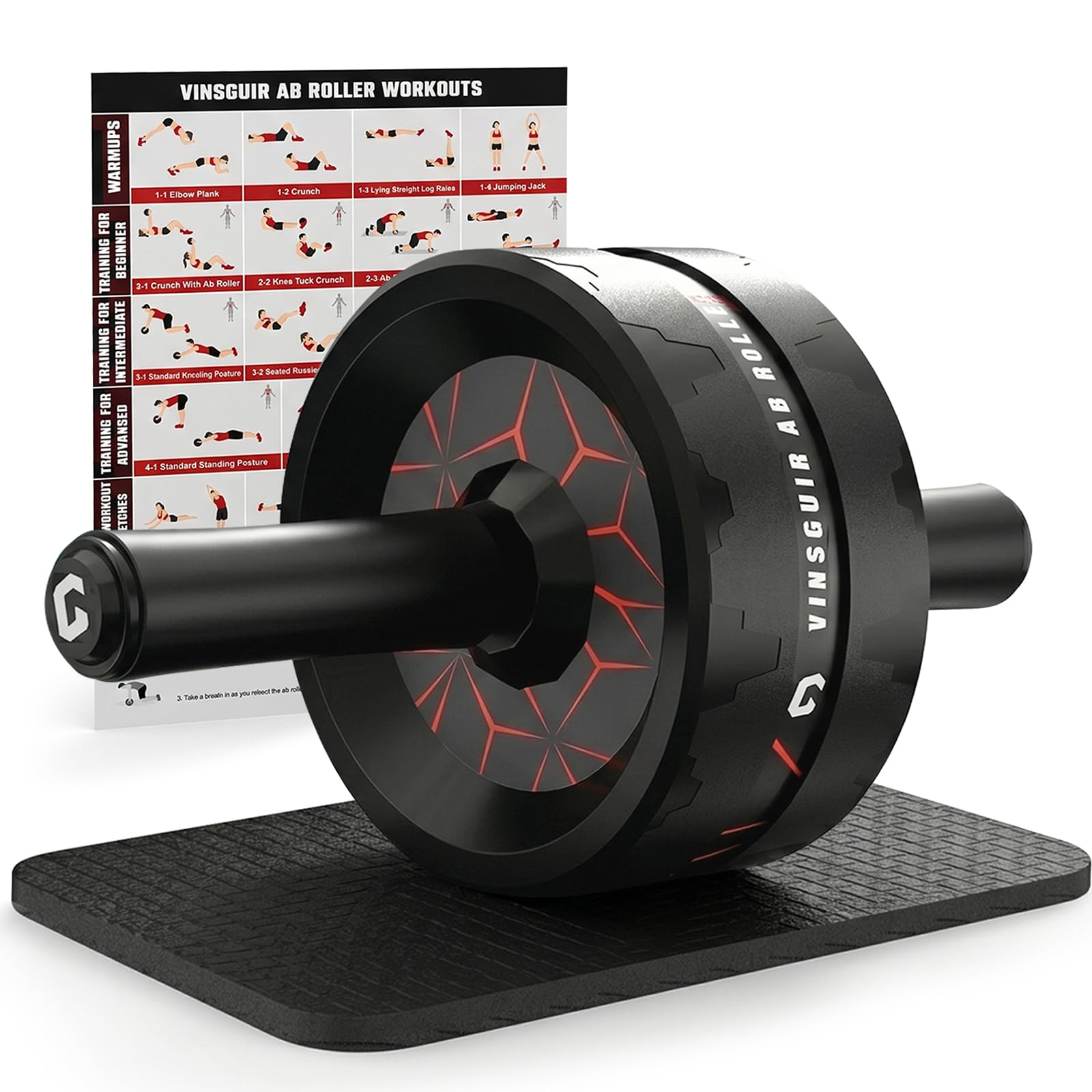
1. VINSGUIR Ab Roller Wheel with Knee Pad Set
Our pick — 4.5+★ from 23,500+ verified ratings; the strongest balance of quality and price.
Two wheels, a steel axle rated to 440 pounds, and a knee pad in the box — nothing wasted.
The number that decides this one is the 3.2-inch dual wheel. Two wheels side by side give you a wider base than a single wheel, so the roller resists drifting sideways as you push out. That is the difference between finishing a rep and bailing halfway.
Underneath that sits a high-strength stainless steel shaft rated to a maximum weight recommendation of 440 pounds, versus the 220-pound rating on the JJM auto-rebound roller in this list. If you are a heavier lifter, that headroom is the whole reason to pick this one. The EVA rubber cotton handles do their part too, giving you a non-slip grip that holds through a sweaty set. At 1.4 pounds it stores on a shelf or slides into a gym bag without a second thought, and the included knee pad keeps your kneecaps off a hard floor.
Buyers keep coming back to one point: it works. Effectiveness is the most-discussed trait in owner reviews, with value and sturdiness close behind. Owners describe a roller that takes a beating and keeps tracking straight. The mixed notes land on comfort and build quality, which usually depends on hand size and how hard you push, not a defect. It is a plain, mechanical tool, and it behaves like one.
Where it pulls ahead
- 3.2-inch dual wheel resists sideways drift during full extensions
- 440-pound stainless steel shaft — the highest rating among the twin-wheel rollers here
- 1.4 pounds, so it travels in a gym bag or tucks on a shelf
- Knee pad ships in the box, no separate purchase needed
What to weigh first
- No rebound spring — you drive the return phase yourself
- Grip feel divides opinion, mostly along hand-size lines
Built for: anyone who wants one durable roller for a home gym and does not need spring assistance.
Think twice if: you are brand new and want a roller that pulls you back out of the bottom position.
2. TOSAMC Ab Roller Wheel
A 3.5-inch wheel for entry-level money — wide enough to feel steady on your first rollouts.
This one is for the buyer who wants to try core rolling without committing much. The wheel measures 3.5 inches across, which is wider than the 3-inch Sports Research wheel below and lands between that and the 3.9-inch JJM. In practice a wider face means more contact with the floor and less wobble at the end of your reach.
Build is durable non-slip rubber wrapped around stainless steel, and there are built-in ergonomic handles with resistance. TOSAMC pitches it as friendly to novice exercisers who can dial up difficulty over time. A high-density foam knee pad comes included, and there is a 1-year manufacturer warranty behind it. The unit weighs 2.5 pounds, so it feels more substantial in the hand than a featherweight roller — which some people prefer.
The honest read: function and sturdiness are what this roller gets praised for, and the 3.5-inch width does real work for stability. Quality draws split opinions, so this is a roller to buy for the width and the low commitment rather than for a premium finish.
Go with it when: a wide wheel and a warm-up-level spend are your two priorities.
Hold off if: you want a track record built over thousands of users rather than a small pool.
3. Sports Research Ab Wheel Roller
Ergonomic grips and removable handles make this the one that disappears into a drawer afterwards.
The defining spec here is the 3-inch wheel, versus the 3.9-inch wheel on the JJM auto-rebound roller. That is the trade you are making: less floor contact and less automatic stability, in exchange for a smaller footprint and a lighter feel underhand.
The grip is what this roller does best. The handles are shaped so your palms are not fighting discomfort through a long set — buyers repeatedly report it is gentle on hands and wrists, and that you feel the burn where you want it. The handles pop out, which collapses the unit for storage and travel. Sports Research includes a foam knee pad and a workout guide that walks you through targeted core exercises. The maximum weight recommendation sits at 330 pounds, so it suits most home users.
One thing to note before you order: the 1-year warranty requires the included card to be completed, so fill it in when the box arrives. The narrower wheel also means a beginner will feel the tipping point sooner than on the 3.5-inch TOSAMC above.
Why it earns a slot: hand and wrist comfort is the reason people keep this one in rotation, and removable handles solve the storage problem cleanly.
Pick this if: your hands are the limiting factor on rollout volume and you want a roller that packs flat.
Otherwise: the 3-inch wheel rewards good form and punishes sloppy form — a fair trade, not a flaw.
4. JJM Auto Rebound Ab Roller with Kneeling Mat

The widest wheel in this lineup at 3.9 inches, paired with a spring that hauls you back out.
If the return phase is what stops you finishing sets, this is the design aimed at you. A built-in spring creates resistance on the way out and then assists on the way back, so you are not stranded at full extension with your core already spent. That is the least intimidating way to learn the movement.
You get more room to move at full reach, because the wheels measure 3.9 inches wide — the widest figure in this guide, beating the 3-inch Sports Research and edging the 3.2-inch VINSGUIR. A wider two-wheel base means less tilt and more unrestricted movement at full reach. The rollers are built for quiet operation, and the thickened non-slip rubber is there to keep the unit planted on the floor. A foam kneeling mat ships with it, and the whole thing assembles and breaks down easily enough to carry.
The catch is capacity. The maximum weight recommendation lands at 220 pounds, versus the 440-pound rating on the VINSGUIR at the top of this list. Lighter users and beginners will not notice. Heavier users should look elsewhere in this guide. The unit itself weighs 2.5 pounds, so it is easy to move around.
Suits you if: you are learning the rollout and want the widest, steadiest wheel plus a spring to bring you home.
Look past it if: your body weight sits near or above the 220-pound rating.
5. TRX Ab Wheel
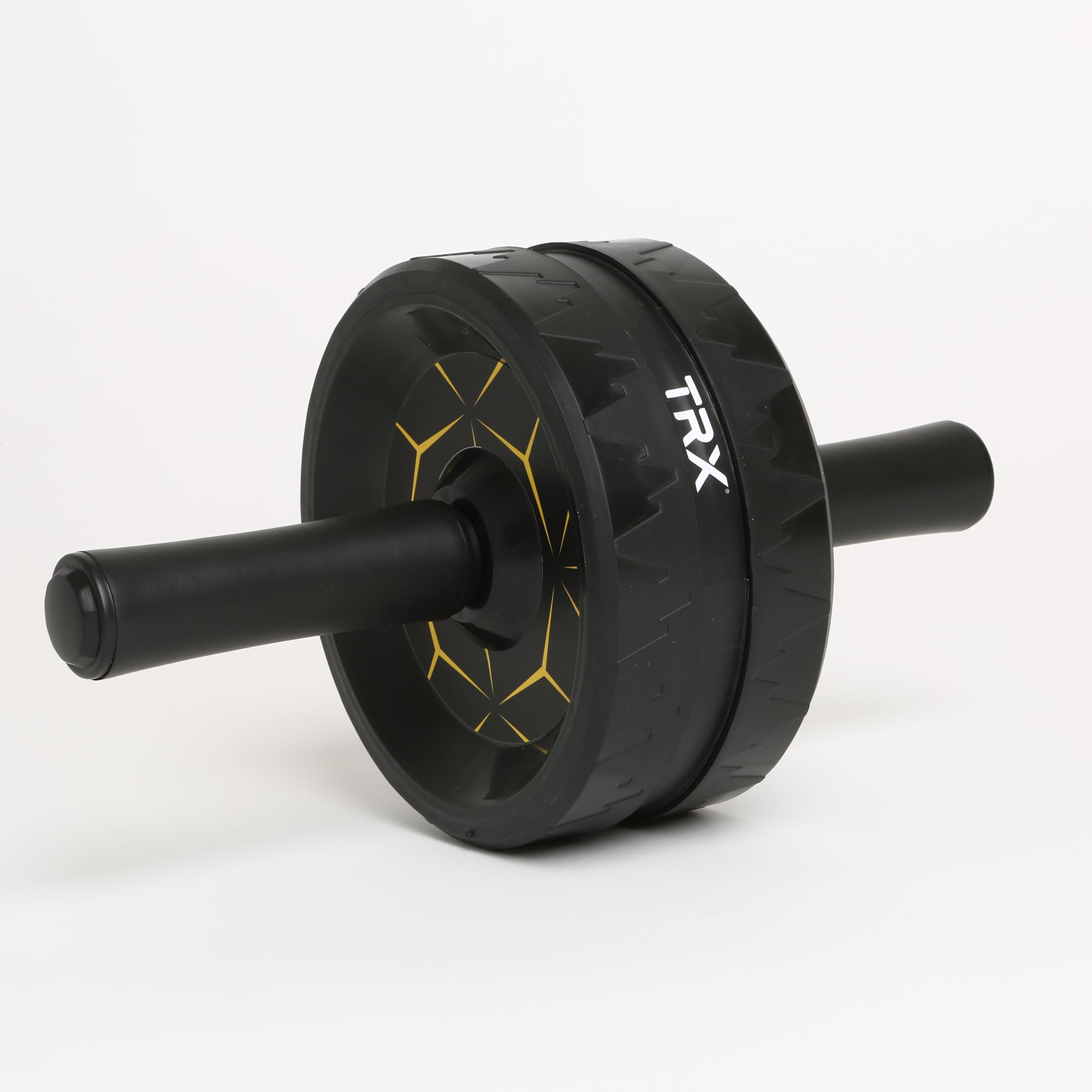
Built around one problem: a roller that scuffs your hardwood is a roller you stop using.
A textured rubber wheel rolls smoothly across hardwood, tile and gym flooring without marking it or slipping out from under you. If you train in a rented apartment or on a floor you care about, that is a spec worth paying attention to — several rollers on this list tell you nothing about surface behavior.
The wide wheel base is shaped to keep the roller tracking straight through every extension, so you are not fighting sideways wobble mid-rep. The handles are ergonomic non-slip foam, designed to stay secure when your palms are wet. TRX brings genuine credibility to the category — the brand has equipped military personnel, pro athletes and coaches for over 20 years, per its own account. The maximum weight recommendation is 250 pounds.
Fair warning on the numbers: this is the newest listing in the guide, so the track record is thin compared with the VINSGUIR or Sports Research rollers. You are buying the floor protection and the brand’s functional-training background, not a mountain of history.
The differentiator: floor-safe rolling plus a wide tracking base — a combination almost nothing else here promises in writing.
The trade-off: limited owner history, and the 250-pound rating sits below the VINSGUIR and PALLOTH rollers.
For you if: scratch-free rolling on nice flooring is non-negotiable.
Skip if: you want a long, well-worn track record before you spend.
6. PALLOTH Ab Roller Wheel

A solid steel axle rated to 880 pounds, versus 440 pounds for the VINSGUIR and 220 pounds for the JJM.
Nothing else in this guide comes close on load. The 880-pound maximum weight recommendation comes from a solid steel shaft rather than the hollow metal and plastic you find on cheaper rollers. That matters beyond the raw number: a solid axle resists deforming over years of use, so the roll stays true instead of developing a wobble.
The other genuine upgrade is the pair of high-carbon steel bearings in the hub. Most ab rollers let the shaft rub directly against the wheel, which produces a grinding noise with every rep. Bearings turn that friction into a smooth, near-silent roll. Owners consistently point to durability and build quality as the reasons they rate this one, with smoothness right behind. If you train early in the morning next to a sleeping household, the difference is immediate.
The handles are locked on by screwing them down, which stops them sliding left and right and removes a pinch point the maker calls out on cheaper designs. A TPU wheel face grips and protects hardwood or tile without the rubbing sound. Assembly is quick. It weighs 1.51 kg versus 1.4 pounds for the VINSGUIR, and that weight is the solid steel doing its job.
The engineering case
- 880-pound rating from a solid steel shaft — the highest capacity in this guide
- Two high-carbon steel bearings give a smooth, quiet roll instead of shaft-on-wheel grinding
- Screwed-on handles eliminate sliding and pinch risk
- TPU wheel face protects floors and mutes noise
Where it costs you
- 1.51 kg versus 1.4 pounds for a basic roller
- Premium-tier spend for a single-wheel design with no rebound assist
The match: heavy users, early risers, and anyone whose last roller started squealing.
Not the match: beginners who want spring assistance — this one gives you nothing back on the return.
7. Uota Automatic Rebound Abdominal Wheel

A rebound roller with elbow support built in, so your arms quit before your abs do.
The design idea is straightforward: intelligent auxiliary brakes and a built-in brake system control the steel rebound so the return is smooth rather than a snap. On top of that it doubles as a flat support station, which means you can hold a plank-style position on the same frame instead of reaching for a second piece of kit.
Wider front and back wheels keep the roll tracking and give you more control, pitched at beginners and experienced users alike. The base uses five layers of anti-slip material for noise reduction, shock absorption and wear resistance. Grips are non-slip, sweat-absorbent sponge that will not scratch your floor. Elbow support is the feature owners single out — it lifts the load off your arms so the set ends because your core is done, not your shoulders. The maximum weight recommendation is 300 pounds.
Be clear-eyed on durability. Build quality divides opinion here, and there are reports of units failing inside the first several sessions. That is not the majority story, but it is more of a concern than you will find on the PALLOTH or VINSGUIR listings. If you want the elbow support specifically, it is worth knowing going in.
What it solves: arm fatigue and uncontrolled rebounds — the two things that end beginner sets early.
Worth it when: elbow support and a braked rebound are the features you came for.
Consider the alternative: the PALLOTH if long-term build is your bigger worry.
8. Tasidingster 6 Caster Ab Roller

Six casters turn a rollout into a board you can also twist on — obliques included.
This is a different shape of tool. Instead of two wheels on a single axle, six casters sit under a board, and the 360° movement lets you roll forward and twist at the same time. That reaches the obliques, which a straight rollout mostly misses.
The surface is textured TPE soft rubber with soft knee pads, so your hands and knees are not grinding against hard plastic. Six steel bearings keep the motion quiet and smooth, and the board stands 2.54 inches high — low enough to slide under a cabinet or sofa when you are done. Capacity is generous: the maximum weight recommendation is 660 pounds, second only to the 880-pound PALLOTH here. It weighs 4 pounds, so it is a stay-at-home board rather than a bag item.
Worth flagging: with a small pool of owners behind it, this one does not have the volume of feedback the flagship rollers do. You are buying the twisting capability and the six-caster stability, and those are real differences rather than marketing language.
Choose it if: you want obliques in the rotation and a board that stows under furniture.
Weigh first: the limited owner history and the 4-pound weight if you plan to travel with it.
9. WONDER CORE Slide Fit
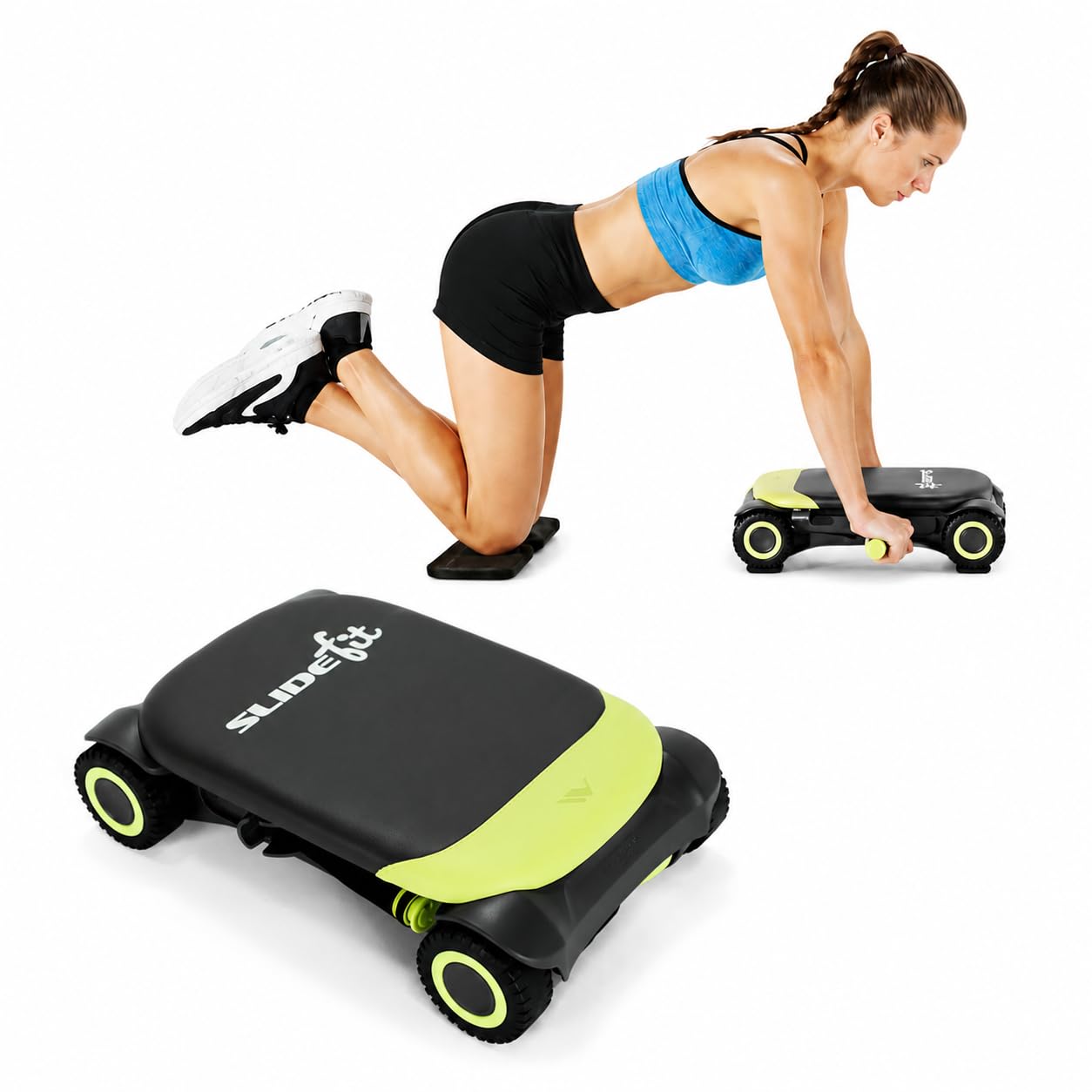
Three resistance settings, a safety brake at 5 feet, and enough frame to train your whole body.
This is the most engineered piece in the guide, and the spec that defines it is the 4-wheel rectangular frame — approved by US patent and certified by German TÜV Rheinland. The shape is what prevents the dangerous side-tip you get on a single-wheel roller, which is why this one is pitched at beginners who cannot afford a bad rollout yet.
The mechanical two-way resistance builds tension as you extend and then assists the return with control. A built-in safety brake engages automatically at 5 feet to stop over-extension before your lower back takes the load. Dual-side resistance gears let you pick between Maximum Assist for learning form, Moderate Assist, or Zero Assist for hardcore work — so it scales up as you get stronger. Beyond rollouts it handles planks, glute bridges, knee tucks and lower body slides. It supports up to 264 lbs (119.7 kg) and ships with a knee cushion mat and a workout guide.
Two apps — Wonder Core and Slide Fit — add video tutorials, workout tracking and interactive games. Owner feedback ranks quality and effectiveness at the top, and the recurring comparison is that it behaves like a serious studio machine rather than a toy. Mobility and comfort draw mixed notes, so expect the frame feel to take some getting used to. The catch is weight and price tier: 8.4 pounds means it lives in one room.
What the extra spend buys
- Safety brake that fires at 5 feet to stop over-extension
- Three resistance settings from full assist to zero assist
- 4-wheel anti-tip frame with TÜV Rheinland certification
- Supports planks, glute bridges, knee tucks and lower body slides
The honest limits
- 8.4 pounds — it stays where you put it
- Best used on hard floors or a fitness mat, per the maker’s own note
Built for: someone who wants one machine to cover core, glutes and legs and will use the assisted settings to learn.
Not built for: a gym-bag roller or a strict budget — this is a fixed home station.
Know the Specs
Wheel Width and Why It Tracks
A wider wheel spreads your weight over more floor contact, which is what stops the roller drifting sideways at full extension. The 3.9-inch JJM wheels and the 3.5-inch TOSAMC wheel give you more forgiveness than a 3-inch face. Wider does not reduce the difficulty — it removes the balance variable so your abs carry the load instead of your stabilizers.
Maximum Weight Recommendation
This figure is the maker’s stated ceiling for the shaft and frame. It is also a shortcut to build quality: a 880-pound rating from PALLOTH signals a solid steel axle, while a 220-pound rating suggests a lighter construction. Buy well above your own body weight so the axle never works near its limit. Most of these rollers are rated for users far lighter than the number suggests.
Bearings vs Direct Friction
Steel bearings sit between the axle and the wheel so they turn against each other instead of grinding. The PALLOTH uses two high-carbon steel bearings and the Tasidingster board uses six. Without them, the shaft rubs directly on the wheel and you hear it every rep. Bearings also keep the roll smooth after months of use, when a friction roller starts to drag.
Rebound Assistance and Safety Brakes
A rebound spring builds tension as you roll out and then helps pull you back. The Uota and JJM rollers use this to protect beginners during the hardest part of the movement. The WONDER CORE goes further with a safety brake that engages automatically at 5 feet. Pick a plain roller if you want to own every inch of the movement; pick a rebound design if the return is where you stall.
Common Questions
Is a two-wheel ab roller better than a single wheel?
How much weight can these ab rollers actually hold?
Will an ab wheel scratch my hardwood floor?
What does automatic rebound actually do on an ab roller?
Do I need a knee pad with an ab wheel?
How much space do I need to use an ab roller?
Are ab rollers safe for beginners with a sensitive lower back?
Can an ab roller work my obliques or just my abs?
How do I keep an ab wheel quiet during early-morning workouts?
Does an ab roller replace a full core workout?
The Bottom Line
For most home gyms, the workout wheel roller to buy is the VINSGUIR Ab Roller Wheel because it pairs a steady 3.2-inch dual wheel with a 440-pound stainless steel shaft and a knee pad in the box — a straightforward tool that holds up. If you want the widest wheel and a spring to pull you back, the JJM Auto Rebound Ab Roller is the beginner-friendly choice. And if heavy-duty build and a silent roll matter most, the PALLOTH Ab Roller Wheel is the one to reach for — the crowd favorite among these, with 4.5+ stars across 190+ ratings and an 880-pound rating nothing else here matches.
How we choose
We do not accept paid placement. Every pick is matched to a real buyer and a real use-case; we do not hands-on test units.
Sources
Specifications: manufacturer listings and product documentation. Review insights: verified customer reviews, as of November 2026. Pricing: not shown on this page (it changes often); check the current price via the retailer link.
As an Amazon Associate, Tactical Gear Guy earns from qualifying purchases. This does not affect which products we feature.