Specs are compiled from manufacturer listings and verified buyer reviews and can change over time — please confirm the key details on the product page before buying.
A workout sledge hammer is a simple decision dressed up as a hard one: you want a heavy head that swings fast, and a handle that stops the shock from travelling into your hands and elbows. The Fiskars Pro IsoCore 36″ is the easiest pick for most people, because its 10-pound head and shock-control handle make repeated slams on a tire or a pulling station far less punishing than bare steel. Everything below ranks nine real sledgehammers on head weight, handle length, and how much punishment your body absorbs.
This guide is built by comparing the manufacturers’ published specifications and the patterns across verified customer reviews, so you get each pick’s real strengths and trade-offs instead of marketing spin.
Weight, handle length and vibration control decide whether a sledge feels like a training tool or a chore. Below, every pick is judged on those three things first — and this breakdown of the best Workout Sledge Hammer explains exactly which head weight suits which job.
Top Picks


How To Choose The Best Workout Sledge Hammer
For training, a sledgehammer is not really a demolition tool — it is a weight with a long lever attached. That changes what matters. You are not chasing the biggest head you can find; you are chasing a head you can move for reps without wrecking your elbows. Here is what to weigh before you buy.
Start With Head Weight, Then Work Backwards
The head weight sets the difficulty. A 4-pound head is a starter weight you can swing at speed for longer sets. A 10-pound head turns every swing into a real strength effort. A 20-pound head is a two-handed, low-rep tool that most people should treat as a specialty option rather than a daily driver. Pick the head weight for the workout you actually plan to do, not the number that sounds toughest.
Handle Length Changes Your Leverage
A 36-inch handle gives you a longer swing arc, which means more speed at the head and more leverage — but also more room to miss. A 16-inch or 12-inch handle keeps things compact and controllable, which helps in tight spaces and short, sharp swings. If you plan to slam into a tire in your garage, a shorter handle can be easier to aim; if you want maximum momentum, go longer.
Shock Control Is A Training Concern, Not A Jobsite One
Every strike sends vibration up the handle into your hands and arms. Wood absorbs some of it naturally. Fiberglass with a rubber overlay tunes it out differently. Patented systems (Fiskars calls theirs IsoCore) go further. For high-rep training, the handle matters as much as the head — this is where a cheap plain handle will tire you out fastest.
Look For Overstrike Protection
Overstrike protection is extra reinforcement on the handle just below the head. If your swing lands short or angled, that zone takes the impact instead of a thin neck. It is the single most common failure point on a sledgehammer, so it is worth checking on any tool you plan to swing thousands of times.
Side-by-Side Comparison
| Model | Best For | Head Weight | Handle Length | Handle Material | Amazon |
|---|---|---|---|---|---|
| Fiskars Pro IsoCore 36″ Sledge★ Best Overall | All-round training and demolition | 10 lb | 36″ | Shock-absorbing composite | Amazon |
| Estwing 4-Pound Hard Face SledgeBest for Beginners | Fast, controlled reps | 4 lb | 16″ | Fiberglass | Amazon |
| Estwing Drilling/Crack Hammer B3-4LBBest for Wedge Work | Wedges and chisel work | 4 lb | — | Alloy steel | Amazon |
| Zeluga 25-350 36in. 10 Lbs Pro Sledge | Budget-friendly 10 lb swing | 10 lb | 36″ | Fiberglass | Amazon |
| Truper 10 lb Octagonal Sledgehammer | Demolition and striking | 10 lb | 36″ | Fiberglass | Amazon |
| Truper 30923 20-Pound Sledge | Maximum-force swinging | 20 lb | 36″ | Hickory wood | Amazon |
| Crescent HEADLOCK Fiberglass Sledge CSHF12 | High-rep gym-style swings | 12 lb | — | Fiberglass | Amazon |
| Groz 8 lb Steel Bar Handle 34522 | Compact, tight-space swings | 8 lb | 12″ | Steel bars | Amazon |
| Wilton B.A.S.H 16″ Sledge 20816 | Serious training investment | 9 lb | 16″ | Rubber over steel core | Amazon |
Detailed Reviews
1. Fiskars Pro IsoCore 36″ Sledge Hammer, 10 lb
Our pick — 4.5+★ from 750+ verified ratings; the strongest balance of quality and price.
A 10-pound head on a shock-eating handle — the swing you feel, not the sting.
The number that earns this the top spot is 10 pounds, and it is matched to a 36-inch handle with the IsoCore Shock Control System built into it. Fiskars states the IsoCore system transfers 2X less shock and vibration than a wood handle. For a workout tool, that is the whole argument: you can hit hard and often without your wrists telling you to stop.
That same handle is the reason you can use it for reps, not just a single smash. Length and mass are 10 pounds on a 36-inch shaft, exactly the size that gives a big swing arc while staying manageable to set up and reset between strikes.
The catch is honest and simple: at 10 pounds it is a serious training weight, so a beginner swinging cold will feel it fast. And a work tool this heavy is not cheap — the price sits above the budget sledge tier, which reflects the head mass and the shock-control engineering rather than a decorative handle. If you want something lighter to learn on, the Estwing 4-pound models below are the realistic starting point. Those wanting the best blend of head weight and vibration control for repeated slams should look nowhere else.
What earns it the crown
- 10-pound head gives real mass for slow, heavy swings
- IsoCore system claims 2X less shock and vibration than wood
- 36-inch handle builds leverage and speed into the arc
- Wedged demolition face channels debris to the sides, not back at you
- Manufacturer backs it with a lifetime warranty
Where it asks more of you
- 10 pounds is a heavy starting weight for a beginner
- Sits above the entry-level tier in cost
- The big striking face rewards accuracy — miss near the neck and you feel it
The short version: buy it if you want one hammer that trains strength and survives real demolition duty alongside it.
Think twice if: your first goal is learning swing mechanics — start at 4 pounds, then move up.
2. Estwing 4-Pound Sledge Hammer
Four pounds and sixteen inches — the sledge you can actually swing for long sets.
Compare the weight directly against the Fiskars above: this Estwing carries a 4-pound head where the Fiskars carries 10 pounds, and it runs a 16-inch handle next to the Fiskars’ 36-inch shaft. That makes it the faster, more compact option — much better suited to high-rep swings where swinging a heavy, long-lever tool would fade out after a few sets.
What it does not lack is strength. The 4-pound head is forged from alloy steel and induction hardened to 50-55 HRC, so the striking face resists denting under repeated blows. The dual-injection handle is over 70% fiberglass, with a textured rubber overlay for a secure two-handed grip. The thicker handle and rubber section below the head provide overstrike protection — exactly the spot where a mis-hit lands.
Buyers pick this sledge for its build quality first, and the bench performance follows. One honest note: several owners find the weight heavier than they expected. That is a fit issue, not a fault — a 4-pound head on a long handle feels much heavier than a 4-pound dumbbell, because the head sits at the end of a lever.
The case for the lighter swing
- 4-pound head is easy to accelerate for speed and reps
- Induction-hardened head at 50-55 HRC resists face wear
- Fiberglass-infused handle rated for strength and durability
- Overstrike protection sits right below the striking head
One thing to know before ordering
- Some owners find the swing weight heavier than expected
- 16-inch handle delivers less momentum than a long-shaft sledge
Go with this one if: you are building a rhythm and want a controlled tool you can swing hard without losing form.
Look past it if: you want maximum head mass in the swing — the Truper 20-pounder is the upgrade, at a big weight jump.
3. Estwing Drilling/Crack Hammer, 4lb Hand Sledge, B3-4LB
A one-piece steel hand sledge that takes a beaten handle and shrugs it off.
This is the tool to reach for when you are hitting a chisel, a punch, a star drill, or a wood-splitting wedge rather than a tire. It is forged in one piece from solid steel, which removes the joint where a head and handle normally meet — and that joint is where most sledges eventually fail. There is no glue line to loosen and no press fit to walk out.
Estwing rates the patented shock reduction grip at 70% impact vibration reduction. It also runs neck and neck with the Estwing 4-pound hard face above on head weight — both are 4 pounds — so the difference is in the handle construction, not the swing mass. If vibration is what bothers your hands, this nylon vinyl grip is the more cushioned of the two.
This tool is known for durability, and owners talk longest about its build quality — thanks to the steel construction and one-piece forging. The realistic note: this is a compact striking hammer, so its 4-pound head will feel light if your goal is max-effort heavy swings. It is a precision striking tool, not a mass mover. For splitting wedges and driver work, it is tough to top.
Owner verdict on toughness: this forged steel striking hammer is treated as a lifetime tool — the kind you hand down rather than replace, and the one-piece construction backs that up.
Hits the right use case: if your workout doubles as workshop or yard work, this is the model that earns its keep in both places.
Right pick for: striking work — chisels, wedges, hardened nails — where a dead-blow impact and a vibration-soaked grip matter.
Wrong pick if: your training is heavy-slug swings; the 4-pound head is the whole payload.
4. Zeluga 25-350 36in. 10 Lbs Pro Sledge and Club Hammer
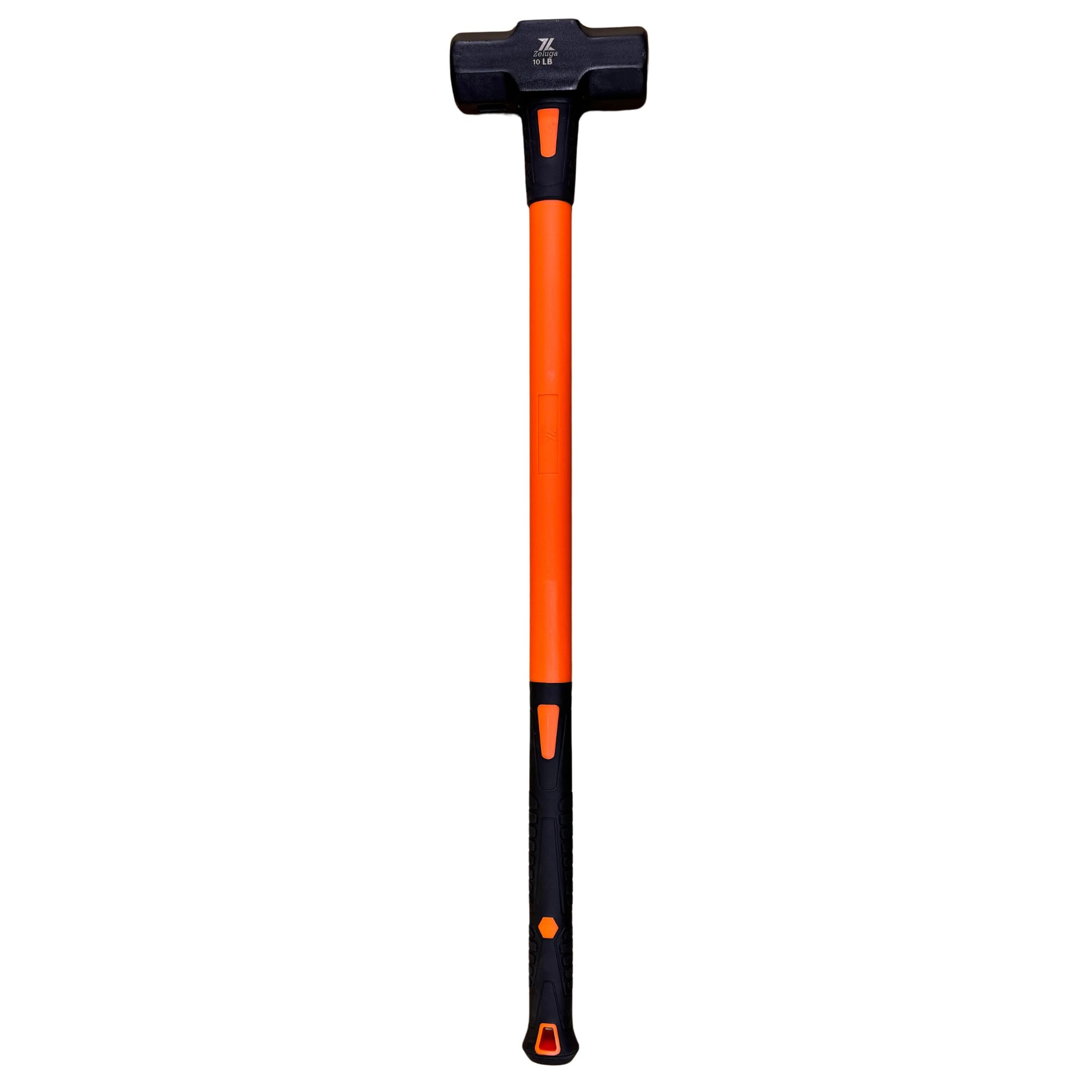
Ten pounds and a long handle, priced like an entry-level tool.
Here is the plain-value play: this Zeluga carries the same 10-pound head and 36-inch reach as the Fiskars in first place, but at a lower outlay. If your goal is a heavy-weight swing and the shock-control name badge is not something you insist on, this is the shortest path to a real 10-pound training tool.
The build backs up the weight. The head is drop-forged steel, highly polished and induction hardened, and the handle is reinforced fiberglass — corrosion-resistant, abrasion-resistant and impact-resistant. The design spreads pressure per strike, so you get accuracy without muscling every swing. The head is a forged flat style, suitable for pounding, demolishing and repair work rather than being a single-purpose training prop.
Quality is the thing that comes up again — it performs like a professional tool rather than a cut-price imitation. The honest trade-off is that at 10 pounds it is still a heavy tool, so first-timers should treat it as a progression. For a strong head-to-price ratio on a 10-pound sledge, this is the value answer.
Buy the Zeluga when: you want real 10-pound mass and a 36-inch handle without paying for a branded shock system.
Pay the extra for the Fiskars instead when: your hands complain after long sessions and you want the IsoCore handle.
5. Truper 10 lb Octagonal Sledgehammer

The fiberglass-shaft option where the handle, not just the head, gets the engineering.
Where the Fiskars ties its shock control into a composite system, this Truper puts the work into the handle construction itself. The 36-inch shaft is commercial-grade fiberglass, which removes the cracking and splintering risk that a wood handle carries while still delivering the long-lever swing you want from a big head. The 10-pound forged steel head sits at the end of it.
The precision-machined octagonal faces spread striking force evenly and resist chipping under repeated heavy blows. The grip is a double-injected non-slip rubber over a vibration-damping core, which isolates impact from the hands and keeps the tool steady even in a sweaty grip.
There is one point of honesty worth flagging. Some listings and descriptions for this Truper model cite a 12-pound figure in the weight field, while the headline spec and model naming point to a 10-pound head — worth confirming on the exact listing before you order. If 10 pounds is what you want, this delivers it on a genuinely well-built fiberglass shaft.
Why the shaft stands out: fiberglass eliminates the splinter risk that eventually ends a wood-handled sledge’s life, which is a real long-term value argument on a tool this heavy.
Prefer this if: you want a 10-pound swing with a handle built for weather and punishment rather than wood.
Skip ahead if: your priority is a branded, tested shock-reduction system — the Fiskars is the further step up.
6. Truper 30923 20-Pound Sledge Hammer, Hickory Handle, 36-Inch

Twenty pounds on a hickory handle — for the person who wants to feel every rep.
Stack this against the Estwing 4-pound hand sledge and the scale of the difference is stark: 20 pounds here versus 4 pounds there, a 5.0x gap in head weight. On a 36-inch hickory handle against the Estwing’s 16-inch shaft, you also get a 2.2x longer lever. Whatever else you say about this tool, it is not a subtle swing.
The head is induction-hardened, tempered high-carbon steel for demolition-grade impact. The handle is premium North American hickory, kiln-dried and polished for natural shock absorption. It uses a dual-wedge assembly to hold the heavy head in place, and the octagonal double faces transfer power to the target evenly. As a workout tool, the natural shock absorption of hickory is a genuine plus over a hard composite.
The honest caveat: the handle is not universally loved. Some owners dislike it, and a 20-pound head on a 36-inch handle is what several describe as comically large, with an eye that looks disproportionate to the head size. For heavy-swing training that is part of the appeal — it demands serious control. If you want a long, slow, maximal-effort rep, this is the tool that forces it.
What it’s built for: the 20-pound head makes this a heavy-swing specialist — it rewards slow, controlled reps and punishes a loose grip.
The trade-off to accept: hickory feels different in the hand and is not to every owner’s taste; and 20 pounds is a serious weight jump from the 10-pound picks above.
Reach for this if: your goal is max-effort, low-rep swings and you want the biggest head weight in this group.
Stay with a 10-pounder if: you want a training tool you can use for sets rather than single heaves.
7. Crescent 12 lb. HEADLOCK Fiberglass Sledgehammer, CSHF12
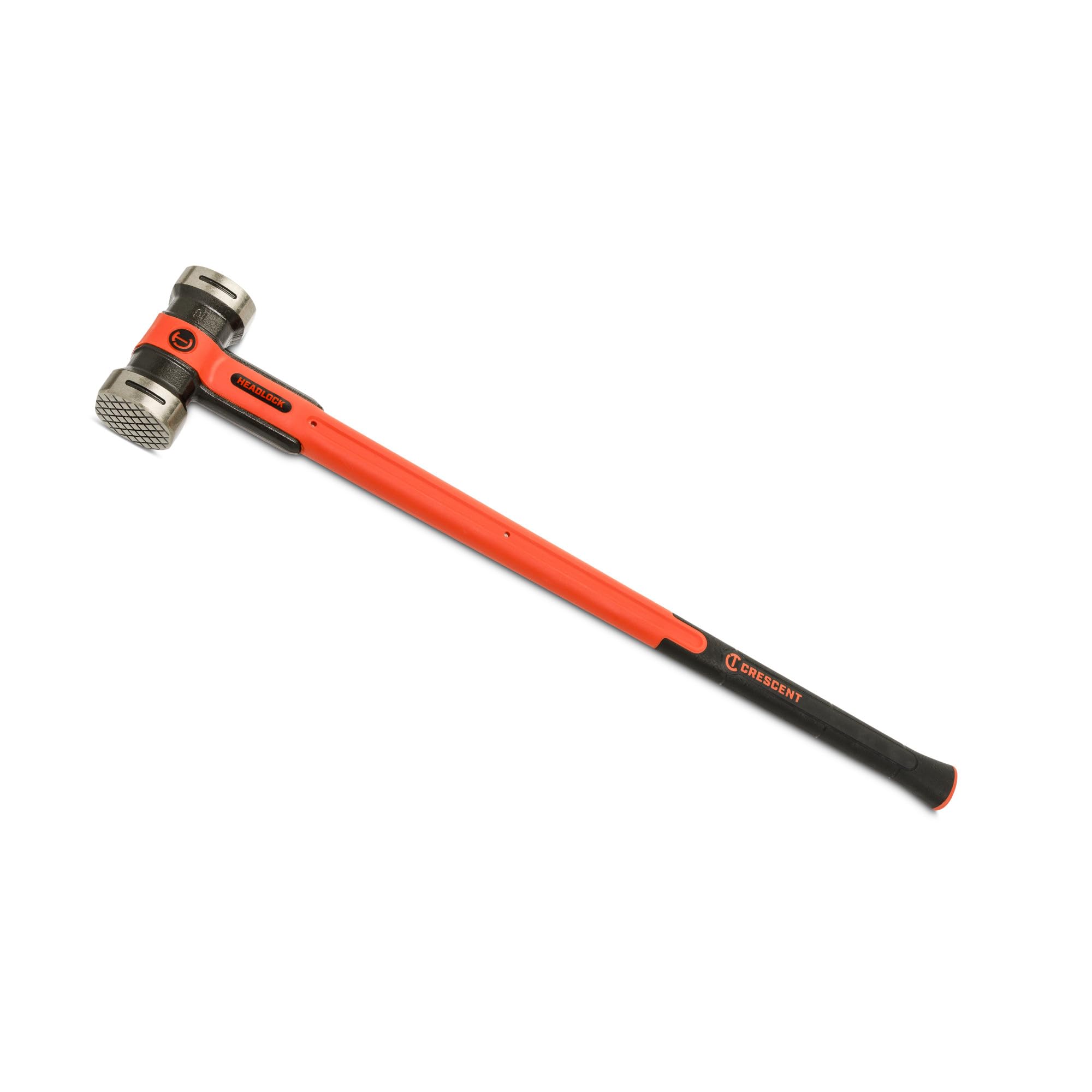
A 12-pound swing with a head system designed never to walk off the handle.
The 12-pound head here sits between the 10-pound picks and the Truper 20-pounder, making it a good step up if you have trained on lighter weights. The key engineering is the HEADLOCK system: multiple points of contact grip the sledge head, designed to stop it separating from the handle during heavy swings.
Around that head you get indestructible steel overstrike protection to defend against whatever happens when a swing lands badly. One side of the face carries a waffle pattern that grips as you strike. The handle is a full-length fiberglass core with a vibration-control design that cuts shock and vibration, finished with an ergonomic grip.
That head-securing focus is the point worth paying for. A head that loosens mid-swing is the worst failure a sledge can have, and the multi-contact lock attacks that directly. If you are swinging hard and often, that security is what lets you trust the tool at speed.
Worth buying if: head separation is your worry and 12 pounds is the mass you want.
Not the one if: you are starting out — the 12-pound head is a step up from the 4-pound learner classes above.
8. Groz 8 lb Sledge Hammer

Eight pounds on a twelve-inch steel-bar handle — short, fast and near-impossible to break.
This is the one for tight spaces and short, sharp reps. Four spring steel bars run through the entire 12-inch handle and lock to the head with steel plates, a design the maker says eliminates the most common failure point of a traditional sledge. Combine that with a forged 8-pound head, and you have a compact tool built to survive being used hard.
The head is induction hardened to 50-58 HRC to resist face wear. It sits on a forged head held by a steel locking plate system, and the maker cites BS 876, SANS 387:2014 and ANSI as the standards it is built against. The handle is ergonomic vulcanized rubber that absorbs impact vibration, with a textured non-slip surface that keeps its grip through gloves. The rubber is also rated to work from 14°F to 122°F outdoors.
The short 12-inch handle is the defining trade-off. It gives excellent control in confined areas and indoors, but you do not get the swing leverage of a 36-inch shaft. What you lose in arc you get back in control and accuracy. Quality and durability are the reasons owners value it, and durability is the second thing they reach for.
Why the length works where it counts: the 12-inch design keeps the tool controllable overhead and in tight spots, which is where a long-handle sledge becomes awkward.
A fit note, not a fault: the weight draws some mixed reaction from owners, because at 8 pounds it feels heavier in hand than the number suggests — the steel handle adds to the load.
The one for tight-space training: pick the Groz if your sessions happen indoors or in a garage with a wall close by.
Take another look at: the longer Truper or Zeluga picks if you want the arc and momentum of a 36-inch swing.
9. Wilton B.A.S.H 16″ Sledge Hammer, 8 Lb Head (20816)

The overbuilt option — engineered to survive overstrikes you shouldn’t have made.
Wilton’s B.A.S.H takes the same anti-breakage brief as the Groz above but stretches it out to a 16-inch handle, which is a more natural training length than a 12-inch stub. The headline claim is an unbreakable steel core in the handle that eliminates breaking during overstrikes — the off-target swing near the head that ends lighter tools.
The head is drop-forged at 46 HRC and finished hi-vis for easy spotting. A safety plate secures the head to the handle so it cannot dislodge, and a thick, tapered anti-vibe neck absorbs vibration to cut down on fatigue. The handle is vulcanized rubber over the core, shaped and thickened for a secure no-slip hold while striking, and there is even a lanyard hole so you can tether it.
Everything about the specification points to durability and construction, and that is exactly where owners’ confidence sits. The honest note is that the short handle length gets mixed reactions — at 16 inches it is compact rather than leverage-friendly, and that is a fit point for people who want a big arc. If you want a build that shrugs off hard wear and hands you real control, this is the premium end of the group.
What you’re paying for here
- Steel core handle built to survive overstrikes
- Safety plate locks the head against dislodging
- 46 HRC drop-forged head
- Anti-vibe tapered neck and vulcanized rubber grip
- Lanyard hole for tethering
The premium corners to weigh
- Top of this group in cost
- 16-inch handle limits swing leverage
- Length draws mixed feelings from owners who wanted a longer shaft
Buy this when: you want the toughest handle-overstrike design here and trust a compact 16-inch swing.
Hold off if: you want maximum head-leverage from a long handle — the 36-inch options deliver more arc.
Know the Specs
Head Weight
This is the number the entire purchase turns on. A heavier head means more effort per swing and more mass to accelerate. A 4-pound head lets you work fast; a 10-pound head turns each swing into a strength rep; a 20-pound head is a heavy, low-rep tool. Pick the weight for the workout you actually plan to do, not the biggest number on the shelf.
Handle Length
The handle is a lever, so length changes how the weight feels. A 36-inch handle gives a longer arc and more momentum, but needs room to swing. A 12-inch or 16-inch handle keeps the swing compact and controllable, which helps indoors or in tight spaces. Shorter handles trade momentum for accuracy and control.
Shock Absorption
Every strike sends vibration up into your hands and arms. Wood absorbs some naturally; fiberglass handles and rubber grips tune out more; purpose-built systems (such as Fiskars’ IsoCore) target it further. For high-rep training, this is what saves your elbows from fatigue.
Overstrike Protection
Overstrike protection is extra reinforcement right below the striking head. When a swing lands short or angled, that zone takes the impact. It is the most common break point on a sledge. Look for a thicker handle or a rubber overlay in that position if you plan to swing thousands of times.
Common Questions
What head weight should I start with for a workout sledge hammer?
Is a heavier sledgehammer better for training?
What is the difference between a sledgehammer and a drilling hammer?
Will a fiberglass handle break on a workout sledge?
How do I stop the shock from hurting my hands?
What size handle is best for swinging indoors or in a garage?
Can I use a workout sledgehammer for real demolition?
Do I need overstrike protection on a sledgehammer?
Is a wood handle better than fiberglass for a training sledge?
What does a head hardness rating like 50-55 HRC mean?
The Bottom Line
For most people building a training tool, the winner is the Fiskars Pro IsoCore 36″ Sledge — its 10-pound head gives real mass and its IsoCore handle is built to cut the vibration you feel on every strike. If you want a lighter, faster swing to build rhythm, grab the Estwing 4-Pound Hard Face Sledge. And for maximum head weight that forces slow, heavy reps, the Truper 30923 20-Pounder is the one to reach for.
If you already know your head weight and just want the best muscle-to-cost ratio, the 10-pound Zeluga is the quiet value move — a forged steel head and 36-inch fiberglass shaft, without paying for the branded shock badge.
How we choose
We do not accept paid placement. Every pick is matched to a real buyer and a real use-case; we do not hands-on test units.
Sources
Specifications: manufacturer listings and product documentation. Review insights: verified customer reviews, as of November 2026. Pricing: not shown on this page (it changes often); check the current price via the retailer link.
As an Amazon Associate, Tactical Gear Guy earns from qualifying purchases. This does not affect which products we feature.