Specs are compiled from manufacturer listings and verified buyer reviews and can change over time — please confirm the key details on the product page before buying.
Two very different products get sold under the same name. A workout knee pad is either a foam cushion you kneel on, or a compression sleeve you pull over your knee for squats. Pick the wrong type and you either slide around on a foam cushion during lunges or kneel on bare gym floor in a sleeve that adds no padding. Figure out which one your workout actually needs first, then buy the best version of that.
This guide is built by comparing the manufacturers’ published specifications and the patterns across verified customer reviews, so you get each pick’s real strengths and trade-offs instead of marketing spin.
Floor work calls for thickness and grip, lifting calls for compression and warmth. This breakdown separates the two categories, then ranks the cushions and sleeves worth buying.
Top Picks

How To Choose The Best Workout Knee Pads
What you kneel on and how you move on it decides your knee pad type. A hard floor and floor work call for a cushion under your knee. Heavy lifting calls for compression wrapped around it. Thickness, material, and pack size are fine-tuning after that.
Cushion or sleeve: pick your category first
A kneeling cushion is a slab of foam you place under your knees, elbows, or wrists. It is the right tool for yoga, Pilates, planks, and any pose that parks your weight on a joint over a hard floor. A compression sleeve is a tight tube of neoprene (a stretchy, rubbery foam fabric) that you pull over your knee. It is built for squats, deadlifts, and lifting, where the goal is warmth and a snug, supported feeling through the joint.
Buying a cushion when you lift, or a sleeve when you do floor work, is the most common mistake in this category. Neither one substitutes for the other.
Thickness in inches: how much foam you actually need
Cushion thickness is listed in inches or millimeters. A half-inch pad takes the edge off a studio mat. A full inch or more is what you want over hardwood, tile, or concrete, because thin foam bottoms out under a bent knee. Thicker is not automatically better, though — a very thick pad can feel wobbly under balance poses and adds bulk to your bag.
Grip, size, and how it travels
A textured or non-slip bottom keeps a cushion from creeping during a flow, and a long rectangular pad covers more floor than a small square one. Check the footprint against your mat: a 24-inch length sits over a standard mat without hanging off. If the pad lives in a gym bag, look for a foldable design or a carry bag, and note the weight in ounces if you walk to class.
Millimeters on a sleeve: the 5mm versus 7mm question
Sleeve thickness is listed in millimeters of neoprene. A 7mm sleeve is the heavier, stiffer option that suits slow, heavy squats and powerlifting. A 5mm sleeve is thinner and more flexible, which suits functional training, box jumps, and fast sessions where you still want to move freely. Neither thickness is better — 7mm suits slow heavy squats, 5mm suits fast functional work.
Side-by-Side Comparison
| Model | Best For | Type | Thickness | Footprint / Length | Amazon |
|---|---|---|---|---|---|
| Impulse Yoga Knee Pads Cushion★ Best Overall | All-round floor work | Kneeling cushion | 1 in | 24″L x 12″W | Amazon |
| Feetlu Folding Knee PadBest for Mat Yoga | Mat-based yoga | Kneeling cushion | 0.5 in | 24″L x 12″W | Amazon |
| SZKANI Compression Knee SleeveBest for Mat Sports | Mat sports and grappling | Compression sleeve | — | — | Amazon |
| Phantom Athletic Club 7mm Sleeves | Heavy squats and powerlifting | Compression sleeve | 7mm | 11″ length | Amazon |
| DMoose Knee Sleeves | Competition lifting | Compression sleeve | 7mm | — | Amazon |
| KneelyPad Kneeling Pad | Long kneeling sessions | Kneeling cushion | Memory foam cushion | 10″L x 8″W | Amazon |
| Gymreapers 5MM Knee Sleeves | Functional training | Compression sleeve | 5mm | — | Amazon |
| yflingjie Yoga Kneeling Pads (4-Pack) | Multi-room floor work | Kneeling cushion | 0.79 in | 7.9″L x 7.9″W | Amazon |
Detailed Reviews
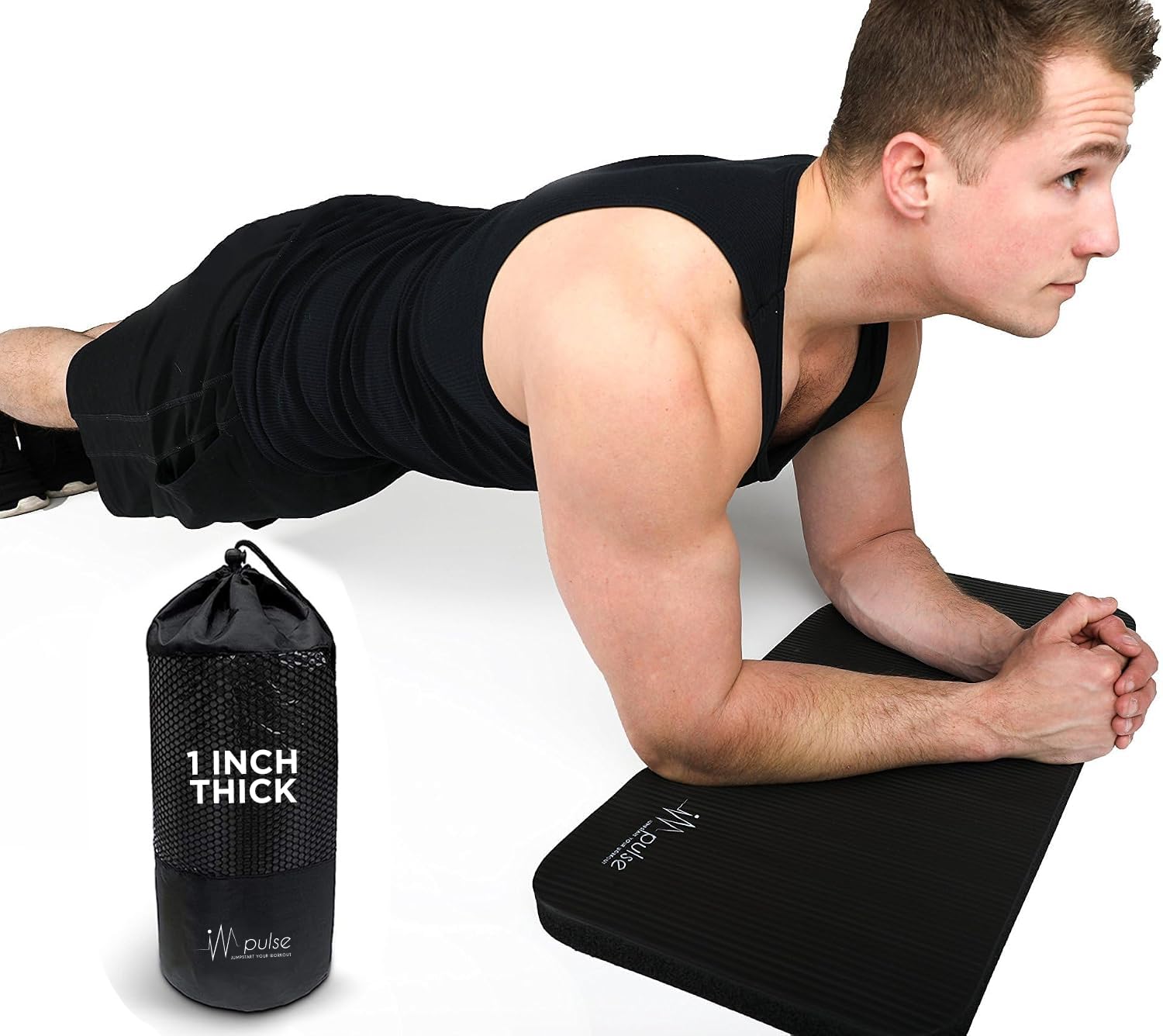
1. Yoga Knee Pads Cushion 1 Inch
Our pick — 4.5+★ from 900+ verified ratings; the strongest balance of quality and price.
A full inch of foam that turns a hardwood floor into a surface you can plank on.
The number that matters here is 24 by 12 inches. That wide slab places the pad under both knees and your elbows at once, so you are not repositioning it every time you shift from a plank to a cat-cow. The 1-inch nitrile butadiene rubber (a firm, rubbery foam) gives you a real barrier between your joints and the floor. Over tile or concrete, that inch is the difference between holding a pose and bailing out of it.
What wins people over is the overall build quality — it is the single thing this pad’s owners praise most, and the cushioning and kneeling comfort follow right behind. Impulse also dropped the old Velcro strap and now ships a breathable mesh bag instead, so the pad airs out between sessions and packs flat into a gym bag. It weighs 11.68 ounces, which is light enough to carry along without thinking about it.
The honest limit is care and longevity. This one is hand wash only, and the durability mentions on the listing are mixed rather than glowing — treat the foam well and it rewards you, toss it in a machine and it will not. If you plan to buy once and beat on the pad weekly, budget for replacing it eventually.
Where this pad earns its place
- 24″ x 12″ covers both knees and elbows in one move
- Full 1 inch of padding holds up on hard floors
- Ships with a breathable mesh bag for storage and travel
What to weigh before buying
- Hand wash only — machine cleaning is off the table
- Durability is the mixed signal in the feedback
Made for: anyone doing yoga, Pilates, planks, or sit-ups over a hard floor who wants one padded surface that covers the whole front of their body.
Think about the wash rules: hand wash only, so it suits a careful owner more than a throw-it-in-the-bag-and-go one.
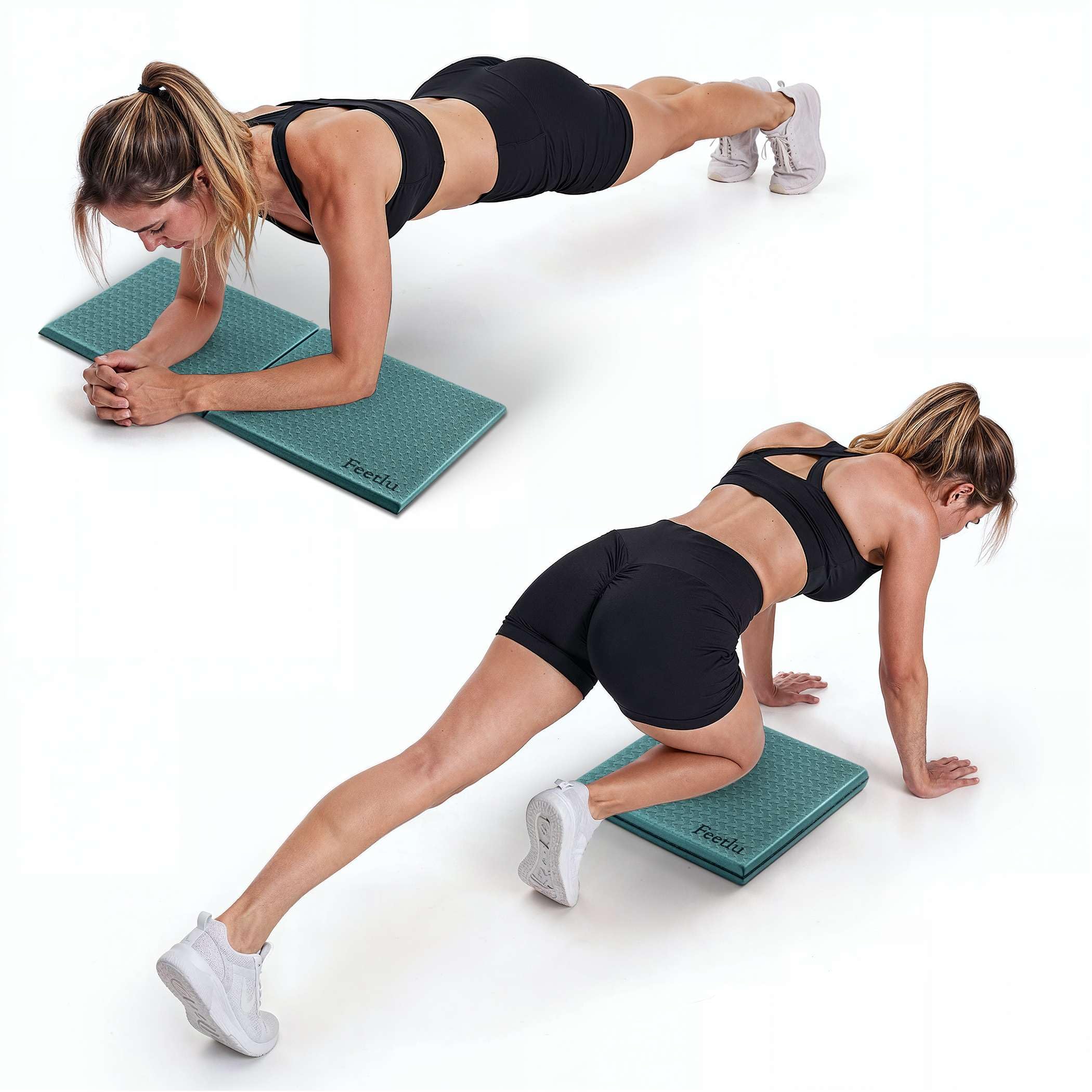
2. Yoga Knee Pad Cushion 1/2″ Thick
A half-inch rectangle that folds in half and lies flat on your existing mat.
This is the slim option. The 24 by 12 inch footprint matches a standard yoga mat edge to edge, so it stretches across the front of your mat without a lip hanging off. At a half-inch thick, it is not the deep cushion the 1.57-inch pad is — its job is to take the sting out of a studio mat, not to float you above concrete. The polyolefin elastomer foam (a springy, rubber-like plastic) is textured on the surface so it holds position during a flow.
The size is what earns the appreciation here, and the cushioning follows. It folds in half for the trip to class, and the 0.26 kg weight keeps your bag light. If your mat is already a decent thickness and you just want a softer landing for knees and elbows during a long session, this sits over the top of it neatly.
Where this one invites debate is padding depth — the thickness feedback splits between people who find it substantial and people who want more. On a hard floor, that half-inch is on the thin side and you will feel the floor through it. Over a gym mat, it feels right.
Fits your mat: 24″ x 12″ x ½” is sized to cover a standard mat’s front without bulk, and the non-slip POE surface keeps it from wandering.
Thin for hard floors: half an inch is a mat-topper, so concrete or tile will still push through.
Best matched to: studio yogis who already carry a decent mat and want a thinner pad to soften knees and wrists during class.
Keep walking if: you kneel on bare hard floors, where you will want the deeper inch-plus cushions.
3. Knee Pads Compression Leg Sleeve for All Sports, 1 Pair
A stretchy pull-on sleeve for mat sports, grappling, and any drill that scuffs knees.
The build is spandex and nylon, not neoprene, and that changes its job. This sleeve slides on rather than gripping like a thick lifting brace, and it stretches an extra 2.5 inches around the perimeter and length to cover more knee sizes. A soft silicone ripple strip runs inside to hold it against the skin. The fabric breathes and dries quickly, which matters when you are sweating through a session on the mat. At 0.11 kg, it adds almost nothing to what you already carry.
The quality of the fabric and the protection it gives are the two strengths owners keep landing on — it does its job guarding knees against mat burn during wrestling, Jiu Jitsu, and similar work. One pair covers both knees, and the nylon feels slightly cool against the skin as you pull it up.
The recurring gripe is slippage: these tend to work their way down during hard movement, and the sizing runs tight enough that some buyers find the fit fussy. Durability also divides opinion, with some sleeves holding up and others wearing faster. Pull-on sleeves live and die by matching your thigh and calf measurements to the size chart, so measure before you commit.
Why grapplers reach for it
- Spandex and nylon breathe and dry fast through sweat
- Silicone ripple strip adds grip inside the sleeve
- Stretches 2.5 extra inches to fit more knee sizes
The fit questions to settle first
- Sleeves tend to slide down during hard movement
- Sizing runs snug, so the size chart matters
Reach for this if: you train mat sports, wrestling, or BJJ and want light knee coverage that breathes.
Be ready to measure: the fit is snug and the sleeve can drift down, so check the size chart and the anti-slip strip placement.
4. 7mm Compression Knee Sleeves 2 Pack Medium

The heavyweight: 7mm neoprene that stays put through squats and deadlifts.
Seven millimeters of neoprene is the thick end of the sleeve world, and it is built to stay put under load. A single seam and an 11-inch length keep the sleeve from rolling or bunching as you squat, and the snug compression warms and stabilizes the joint without locking your movement. The maker says these are compliant with IPL, USPA, and IWF standards (three powerlifting and weightlifting rulebooks), which matters if you compete and the sleeve has to pass a gear check. You get a pair, one per knee, in sizes from small through extra large.
What owners praise most is the fit — it stays where you put it and keeps working through leg day without pinching. Comfort follows close behind, with knees feeling supported rather than squeezed during squats. The big caveat is the sizing note from the maker itself: these run snug by design, and if you are between sizes or carry larger calves or quads, you should move up.
Durability is the split signal here. Some sleeves hold up over repeated sessions, but others show wear sooner than you would like for a lifting brace at this level. That is the trade for the tight, warm feel a heavy lifter wants.
Built for the bar: 7mm of neoprene, single seam, 11-inch length — the sleeve holds its place through a full leg session.
Go up if in doubt: the maker says snug is normal, so larger calves or quads should pick the bigger size.
Suits: lifters chasing warmth and stability through heavy squats and deadlifts who want a pair of sleeves.
Skip if you need speed: at 7mm these are stiff for fast functional training, where a thinner sleeve gives you more freedom.
5. DMoose Knee Sleeves 1 Pair
Competition-ready 7mm sleeves that ship with grips and a bag in the box.
You can wear this 7mm sleeve in IPL and USPA competition (two powerlifting federations with gear checks). That approval is the headline. Inside, silicone strips (grippy inserts) hold the sleeve in place through heavy sets. Every order also includes a pair of lifting straps and a carry bag. The maker’s fit advice: measure around your kneecap with your leg extended, then size down for a tighter feel.
The support is the part owners talk about most — the sleeves keep the knee steady when the weight gets serious. Comfort, fit, and grip all land as strengths, and the stretchy material keeps them from cutting in. The color options are a welcome extra.
Durability is the one thing that splits opinion, with some sleeves proving solid and others showing their age earlier. Buy this for the support and the competition compliance, and treat the sleeves as workout gear that gets wear rather than indestructible kit.
What the box gives you
- 7mm neoprene approved for IPL and USPA
- Silicone strips hold the sleeve through heavy sets
- Pair of sleeves, lifting straps, and carry bag included
Temper your expectations on
- Durability feedback is mixed across owners
- You need a real knee measurement to size right
Pick this for: competitors who need approved 7mm sleeves and value the straps and bag thrown in.
Not your style if: you train fast and light, where a stiffer 7mm sleeve slows you down.
6. KneelyPad Kneeling Pad

A dual-layer memory foam kneeler with a handle, built for long sessions on your knees.
This is not a yoga topper — it is a dedicated kneeler. The cushion stacks a dual layer of extra-thick memory foam and high-density foam inside a neoprene cover, so it absorbs weight and keeps its shape when you press down. A strong, soft handle means you carry it by hand to the garden, the garage, or the bath. It folds in half for storage. The cover is water- and sweat-resistant and machine washable, which matters when it gets dirty from outdoor use.
Build quality is what owners bring up most, followed closely by how well it performs the job it was bought for. Comfort and knee support round out the praise — people kneel for extended stretches without the ache they would get on bare ground. The foldability is a small detail that owners clearly appreciate; it packs down quickly and the handle makes it easy to move between rooms.
The one point of debate is width. Some find the size just right, others wish it were a little wider under them. If you have broad hips or want maximum coverage under both knees, measure the 10 by 8 inch footprint against how you kneel before you order.
Built for the long kneel: dual-layer memory and high-density foam with a water-resistant cover that goes in the machine.
Measure before you commit: a handful of owners want it wider, so check the 10″ x 8″ footprint against your stance.
Made for: gardeners, cleaners, and anyone who kneels for long stretches and wants a carry-it-anywhere kneeler with a washable cover.
Pass if you want a mat: this is a single-knee cushion, not a full-body pad for yoga flows.
7. Gymreapers 5MM Knee Sleeves

The 5mm middle ground for lifters who want support without the stiffness of 7mm.
Where the 7mm sleeves in this line are stiff and slow, these are built for speed. The 5mm SBR neoprene (a denser, rubber-based foam) gives you compression and warmth while still letting you jump and move. The maker positions it as the in-between thickness: strong enough to brace the joint, thin enough to stay out of your way on box jumps and conditioning work. Reinforced stitching, bound edges, and a laminated build are there to survive daily training. Each pair is contoured to sit secure through squats and lifts.
Build quality is the standout, with owners rating these sleeves well above a competing brand they had used before. Functionality and fit follow — they stay in place and slide on easily. Comfort is solid too, and the material does not dig into the skin during long sessions.
The trade-off at 5mm is that you give up some of the warmth and stiff brace of a 7mm sleeve, so max-effort squats feel a little less locked in. Sizing also divides a few owners, so check the size guide before ordering.
Why lifters like the flex
- 5mm SBR neoprene keeps compression without locking you up
- Reinforced stitching and bound edges for daily training
- Easy to pull on and stays in place through sets
Where it gives ground
- Less warmth and stiffness than a 7mm sleeve under heavy squats
- Sizing runs tight for some owners
Right for you if: you do functional training, box jumps, and metcons where you need the sleeve to move with you.
Consider the 7mm instead if: your routine is slow, heavy powerlifting and you want maximum warm-up around the joint.
8. Yoga Kneeling Pads 2-4 Pack
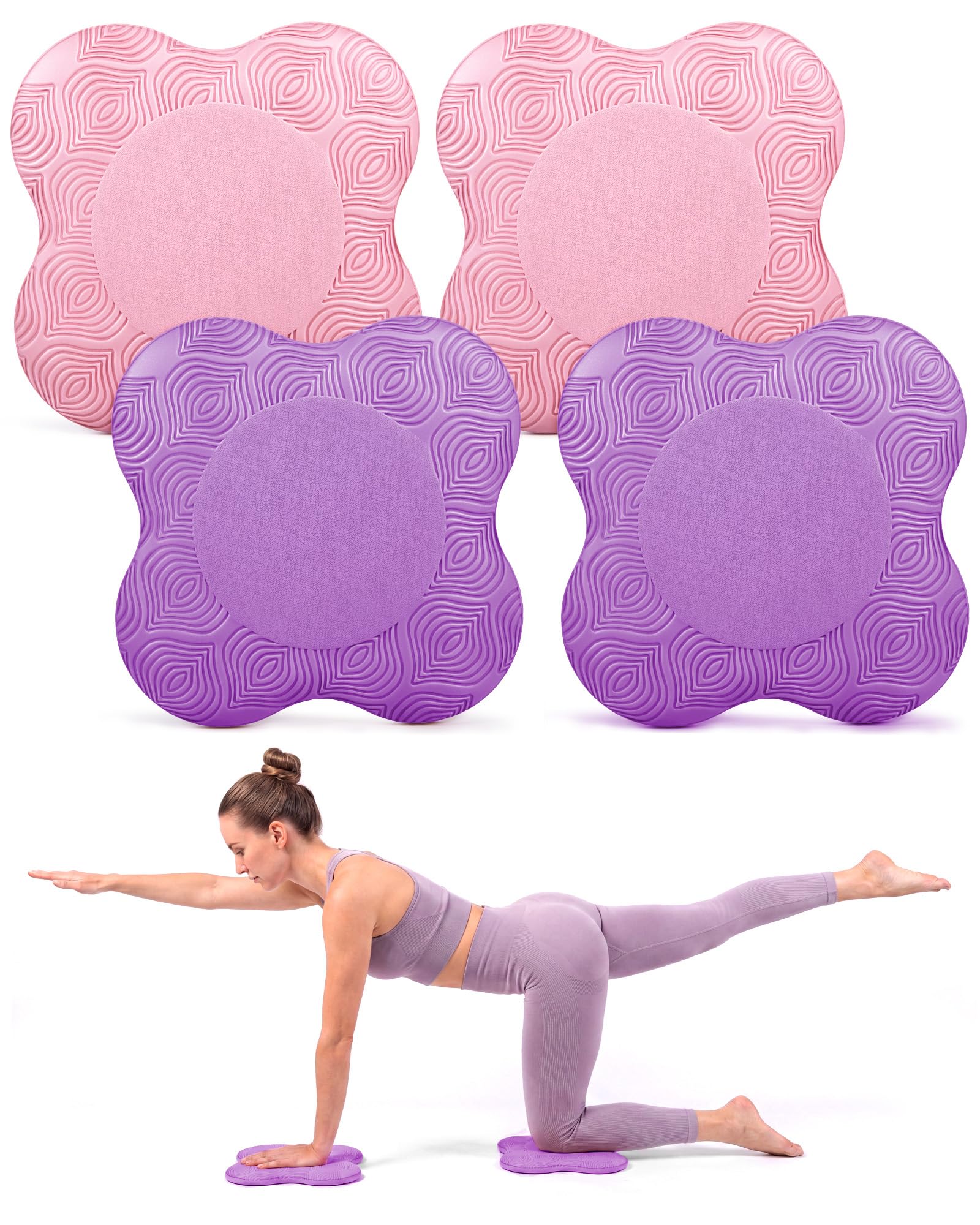
Four small TPE cushions in one set — one for each room, or one for each family member.
You get four pads for less than buying singles. Each 7.9-inch square pad is made of TPE foam (a soft, grippy, rubbery plastic) with a textured anti-slip surface. That surface stays put on hardwood, tile, or a studio mat. The four pads weigh 0.28 kg total, so they are easy to move around. The concave shape cradles your joint instead of sitting flat under it. The surface wipes clean with soapy water, so sweat does not soak in.
The kneeling support is what owners appreciate most, and the overall quality of the foam holds up well to the price. Stability is a genuine strength too — the pads do not skid around when you shift between poses. The four-pack covers a lot of ground: one for the yoga corner, one by the tub, one in the garden bag.
The catch is how soft they feel. The cushioning and comfort feedback is mixed, with the material registering as firm under some knees rather than plush. At 0.79 inches thick, they are mid-weight cushions, so pencil them in for mat work and casual kneeling more than long sessions on hard tile.
Value in numbers: four grippy TPE pads from one purchase, with a concave shape that cups the joint and a surface that wipes clean.
Firm rather than plush: the comfort and cushioning feedback is mixed, so expect a solid feel rather than a soft one.
Great for: households that want a knee pad in several spots at once — mat, tub, and garden — without buying them one at a time.
Look elsewhere if: you want deep, plush cushioning for long kneeling sessions on hard floors.
Know the Specs
Foam Thickness in Inches
On a kneeling cushion, thickness is the number that tells you how much floor you block out. A half-inch pad is a mat-topper — it softens a studio mat and little else. At around an inch or more, you have a pad that holds up over hardwood and concrete. Go much thicker and you gain cushion but lose some stability for balance poses. Pick thickness by the surface you kneel on — half an inch over a mat, an inch or more over hardwood or concrete.
Neoprene Millimeters on a Sleeve
On a compression sleeve, the millimeter figure is the thickness of the neoprene. A 7mm sleeve is thicker, warmer, and stiffer, which suits slow heavy squats where the joint wants firm support. A 5mm sleeve is thinner and more flexible, which suits fast functional training and jumping work. Both are commonly measured around the kneecap with the leg extended, so a real measurement on your own knee is the only way to size correctly.
Footprint and Coverage
Cushion size decides what you can protect in one move. A 24-by-12-inch rectangle covers both knees and elbows at once, which suits planks and push-ups. A small square around 7 or 8 inches protects one joint at a time and packs smaller. Neither footprint is wrong — a 24-inch rectangle suits planks with both knees and elbows down, a 7-to-8-inch square suits one joint at a time.
Grip, Material, and Care
Look for a textured or non-slip bottom so a pad stays where you set it, and note the material: TPE, POE, and EPE are all springy foams that resist sweat, while nitrile butadiene rubber is firmer. Care instructions matter more than people think — a pad marked hand wash only should not go in the machine, and a sleeve with a washable cover is easier to keep clean in daily use.
Common Questions
Should I wear a knee sleeve or kneel on a cushion for my workout?
How thick should a knee pad be for a hardwood floor?
What is the difference between 5mm and 7mm knee sleeves?
Can I wear compression knee sleeves for yoga or Pilates?
How do I stop my knee sleeve sliding down during squats?
Will a yoga knee pad fit on top of my existing mat?
Can I machine wash my knee pad or sleeve?
Do knee pads help with kneeling push-ups and planks?
Are 7mm knee sleeves allowed in powerlifting competitions?
How should I store my knee pads so they last longer?
The Bottom Line
For the widest range of workouts, the Impulse Yoga Knee Pads Cushion is the one to start with. Its 24-by-12-inch surface covers knees and elbows together, and the full inch of foam handles hardwood as well as a mat. If compact cushioning is your priority, the ECOESPTI Yoga Knee Pad gives you 1.57 inches of thickness in a bag you can carry to class. And for lifters, the call is between the Phantom Athletic Club 7mm sleeves for heavy slow squats and the Gymreapers 5mm pair for fast functional training. The simplest advice: a cushion for the floor, a sleeve for the bar, and let your surface and your movement pick the thickness.
How we choose
We do not accept paid placement. Every pick is matched to a real buyer and a real use-case; we do not hands-on test units.
Sources
Specifications: manufacturer listings and product documentation. Review insights: verified customer reviews, as of November 2026. Pricing: not shown on this page (it changes often); check the current price via the retailer link.
As an Amazon Associate, Tactical Gear Guy earns from qualifying purchases. This does not affect which products we feature.