Specs are compiled from manufacturer listings and verified buyer reviews and can change over time — please confirm the key details on the product page before buying.
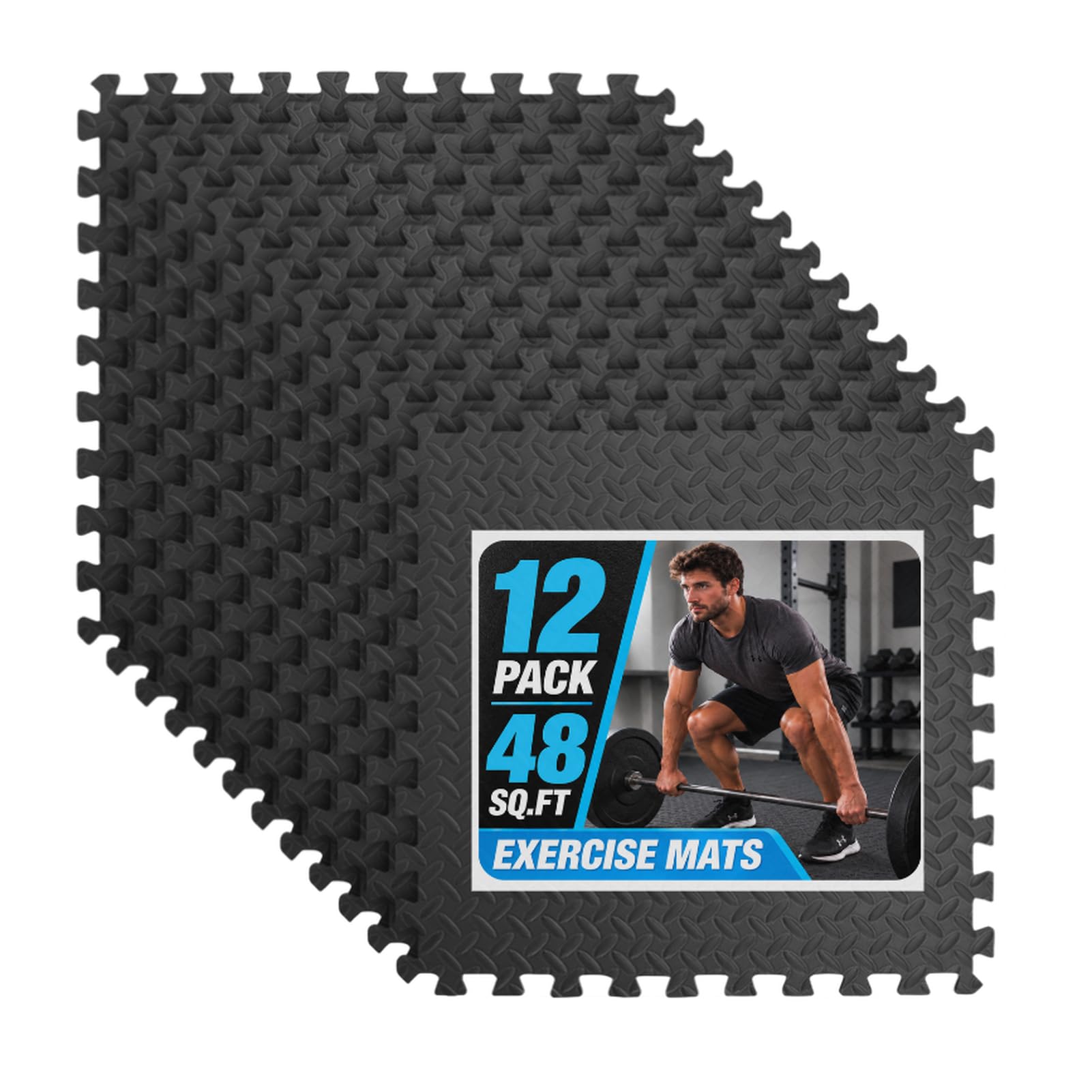
Buy the wrong set and you will know it in three ways: the tiles slide apart mid-squat, your knees feel every bit of the concrete underneath, and the foam starts shedding crumbs by week six. Buy the right one and the floor disappears under your rack, your mat, and your dropped dumbbells. The right pick is almost always the ProsourceFit Exercise Puzzle Mat, a 48 sq ft, 12-tile set in 1/2 in foam that has become the default home-gym floor for tens of thousands of owners — 4.5+ stars across 60,000+ ratings — because 48 sq ft covers a rack and bench in one connected surface.
This guide is built by comparing the manufacturers’ published specifications and the patterns across verified customer reviews, so you get each pick’s real strengths and trade-offs instead of marketing spin.
Below you will find nine interlocking sets sorted by what they actually do best: room-covering value, joint-saving thickness, rubber-topped durability for heavy iron, and compact sets for tight spaces. Each entry lists the real tile size, the true thickness, and the coverage in square feet, so you can match a floor to your room and your workout instead of guessing from a photo. Pick the one that fits your space and your knees with these workout interlocking mats.
Top Picks


How To Choose The Best Workout Interlocking Mats
Pick the floor under your rack the way you pick a barbell — by the spec that matters for your training. For most home gyms that number is thickness first, coverage second, and surface material third.
Start with thickness, not with looks
Thickness is measured from the highest point of the tile’s texture, and it decides how much shock your knees, wrists, and joints absorb. A 0.4 in tile is a thin protective skin for a garage corner. A 1/2 in tile is the everyday middle ground that handles yoga, bodyweight work, and most dumbbell sessions. A 3/4 in or 1 in tile is a joint-first choice for floor work, plyometrics, and anyone kneeling on concrete. If you plan to drop weights, thickness alone will not save the foam — a rubber-topped tile handles impact far better than plain EVA foam.
Do the square footage math before you buy
Coverage is listed in square feet, and it is simply the number of tiles multiplied by the size of each one. Twelve tiles at 24 in x 24 in gives you 48 sq ft — roughly an 8 ft by 6 ft block. Six tiles at 23.6 in x 23.6 in gives you 24 sq ft, half that footprint. Measure the area under your rack, bench, and cardio machine before you order, then add a little margin so the last tile is not fighting the baseboard. Interlocking puzzle edges only help if the covered area is big enough to sit under everything.
Plain EVA foam versus a rubber top
Most interlocking mats are EVA (ethylene vinyl acetate) foam, which is the lightweight, springy material that cushions joints and deadens noise on a hard floor. It wipes clean and connects without tools. The trade-off is that a dropped dumbbell can dent it. Rubber-topped tiles pair that foam base with a tacky rubber surface layer, which grips better, resists scuffs from heavy equipment, and holds up to dropped weights with less marking. If your training is mostly bodyweight, yoga, or a treadmill, plain EVA is fine. If there is iron involved, think about the rubber top.
Edges, fit, and the drift problem
Look for a set that includes border or end pieces, because they give the outside of the floor a finished, straight edge instead of exposed puzzle teeth. The most common real gripe with any brand is tiles drifting apart or edges not lining up perfectly — it is a fit issue, not a broken product. Setting the tiles tight wall to wall, or adding a strip of carpet tape, keeps a loose layout from wandering on a smooth floor.
Side-by-Side Comparison
| Model | Best For | Thickness | Coverage | Tile Size | Amazon |
|---|---|---|---|---|---|
| ProsourceFit Exercise Puzzle Mat★ Best Overall | Everyday home gym floor | 1/2 in | 48 sq ft (12 tiles) | 24 in x 24 in | Amazon |
| CAP Interlocking EVA Foam MatThickest Cushion | Joint-friendly floor work | 3/4 in | 48 sq ft (12 tiles) | 24 in x 24 in | Amazon |
| Art3d EVA Puzzle Exercise MatsTop Value | Balanced mid-range pick | 1/2 in | 48 sq ft (12 tiles) | 24 in x 24 in | Amazon |
| GWT Interlocking EVA Foam Floor Tiles | Tight spaces and quick setup | 0.4 in | 48 sq ft (12 tiles) | 24 in x 24 in | Amazon |
| Sivan Fitness Rubber Top EVA Foam | Iron and heavy equipment | 1/2 in | 48 sq ft (12 tiles) | 24 in x 24 in | Amazon |
| Mat Block Interlocking Foam Tiles | Compact 24 sq ft layouts | 1/2 in | 24 sq ft (6 tiles) | 23.6 in x 23.6 in | Amazon |
| BalanceFrom Puzzle Exercise Mat | Big footprint, deep cushion | 1 in | 72 sq ft (18 tiles) | 24 in x 24 in | Amazon |
| Xspec Reversible EVA Foam Tiles | High-impact training | 1 in | 48 sq ft (12 tiles) | 24 in x 24 in | Amazon |
| AIRHOP Rubber Top EVA Foam Tiles | Dropped weights and heavy racks | 0.79 in | 48 sq ft (12 tiles) | 24 in x 24 in | Amazon |
Detailed Reviews
1. ProsourceFit Exercise Puzzle Mat, 1/2 in, 48 sq ft, 12 Tiles
Our pick — 4.5+★ from 60,500+ verified ratings; the strongest balance of quality and price.
The default home-gym floor: 48 sq ft of grippy 1/2 in EVA foam that covers a rack and bench in one connected surface.
Twelve tiles at 24 in x 24 in x 1/2 in gives you 48 sq ft of coverage — enough to set a rack, a bench, and a bit of floor work on one connected surface. That 8 ft by 6 ft block is the size most garages and spare bedrooms actually need. The EVA foam (a springy, dense material that cushions impact) is water-resistant, wipes down with warm water and dish soap, and connects with a simple puzzle edge that comes apart just as fast when you need the space back. It ships with end borders for a clean outer edge instead of exposed teeth.
What owners keep coming back to is sheer quality for the coverage — the material feels dense and consistent underfoot, and it is noted as a sound alternative to rubber gym mats. The one number that shows the size gap plainly: the Mat Block set gives you 6 tiles against this set’s 12. Assembly draws praise too, and a set this big stays put better than a small one because there are more joints holding the whole floor together. The catch is honest and small: durability feedback leans mixed, with some owners reporting tiles coming apart more easily than they would like. Treat a loose layout with a strip of carpet tape and the drift stays minor.
The core of why it wins
- 12 tiles cover 48 sq ft at a 24 in x 24 in x 1/2 in size — a real room, not a scrap of floor
- Water-resistant, non-skid surface wipes clean with warm water and dish soap
- Includes end borders, so the outside of the floor looks finished
- Puzzle edge assembles and strips down with no tools or adhesive
The honest caveat
- Tiles can come apart more easily than expected in a loose, unanchored layout
- Plain EVA foam is not a surface for dropped dumbbells — it will dent
Best if you want a whole-room floor: a 48 sq ft covered area is the practical size for a home rack and bench, and this set makes it simple.
Think twice if iron drops from height: for that abuse, a rubber-topped tile such as the Sivan is the sturdier choice.
2. CAP 24-Inch EVA Foam Puzzle Exercise Mat
At 3/4 in thick, this tile puts real foam between your knees and the concrete.
Thickness is where this set earns its place. The tile measures 24 in x 24 in x 0.75 in, so you get a firm, cushioning layer that stands 50% taller than the 0.5 in Mat Block set. At 14.3 pounds for the full 48 sq ft of 12 tiles, it also carries 54% more foam weight than the 9.3-pound ProsourceFit. That extra material is why owners describe it as dense and soft underfoot rather than spongy or hollow. The T-pattern texture adds grip on top and wipes clean, and the finishing strips round out the outside edges for a tidy border.
When owners talk about what stands out, it is the high-density build and the cushioning underfoot — for a garage session, that is the point. The mat dampens the slam of equipment and protects the slab underneath. The honest snag is fit at the edges: puzzle teeth occasionally need extra pressure to line up flush, and a few owners note the seams are not perfectly straight. It is a cosmetic wobble, not a working failure, and pressing each tile down hard at the joint keeps the surface even.
Where it shines: the 0.75 in thickness and 14.3-pound build give it a dense, grounded feel that holds up for floor work and garage workouts, and the finished edges keep it looking fitted rather than thrown down.
One thing to know: it is a hand-wash-only mat, so plan on spot cleaning rather than spraying it down.
Pick this for your knees: floor work, stretching, and kneeling done on hard concrete is the reason to step up to 3/4 in.
Look elsewhere if you drop weights: foam this thick still dents under iron impact — a rubber-topped set is the better tool.
3. Art3d EVA Puzzle Exercise Mats, 24″x24″, 1/2″ Thick, 12-Pack
Half-inch foam with a grip surface, built to take a hit every day and get wiped down after.
The Art3d set sits in the mid-range with a strong balance of price and build, and the standout is how it holds its shape through repeated use rather than showing wear early. Each pack gives 12 tiles at 24 in x 24 in x 0.5 in for 48 sq ft — the same footprint as the ProsourceFit, but with a thicker tile than the 0.4 in GWT set. That 0.5 in foam measures 25% thicker than GWT’s 0.4 in, and it shows in the cushioning under your feet. The surface is designed for grip, so stability holds up during vigorous routines, and the material is BPA-free EVA.
Owners gravitate toward the durability angle — it stands up to regular and intense workouts, and one detail note is that home-gym equipment’s own weight helps pin the tiles together. A half-inch foam like this absorbs shock without wallowing under a bench. The trade-off is the plain-foam reality: a heavy dumbbell dropped hard can still leave a mark, so heavy iron is better served by a rubber-topped tile.
Why the mid-range price is fair
- 12 tiles x 24 in x 24 in x 0.5 in covers 48 sq ft at a thickness that takes shock
- Grip-enhanced surface keeps footing steady during hard sets
- BPA-free EVA build that wipes clean after sweat
- Compact enough to store out of the way between sessions
The compromise
- No rubber top, so hard hits from weights can leave a mark
Reach for this if you want durability without the top tier: a half-inch, 48 sq ft set that wipes down and holds together through daily sessions.
Look elsewhere if iron comes into it: dropped dumbbells are the one thing this foam cannot shrug off.
4. GWT Interlocking EVA Foam Floor Tiles
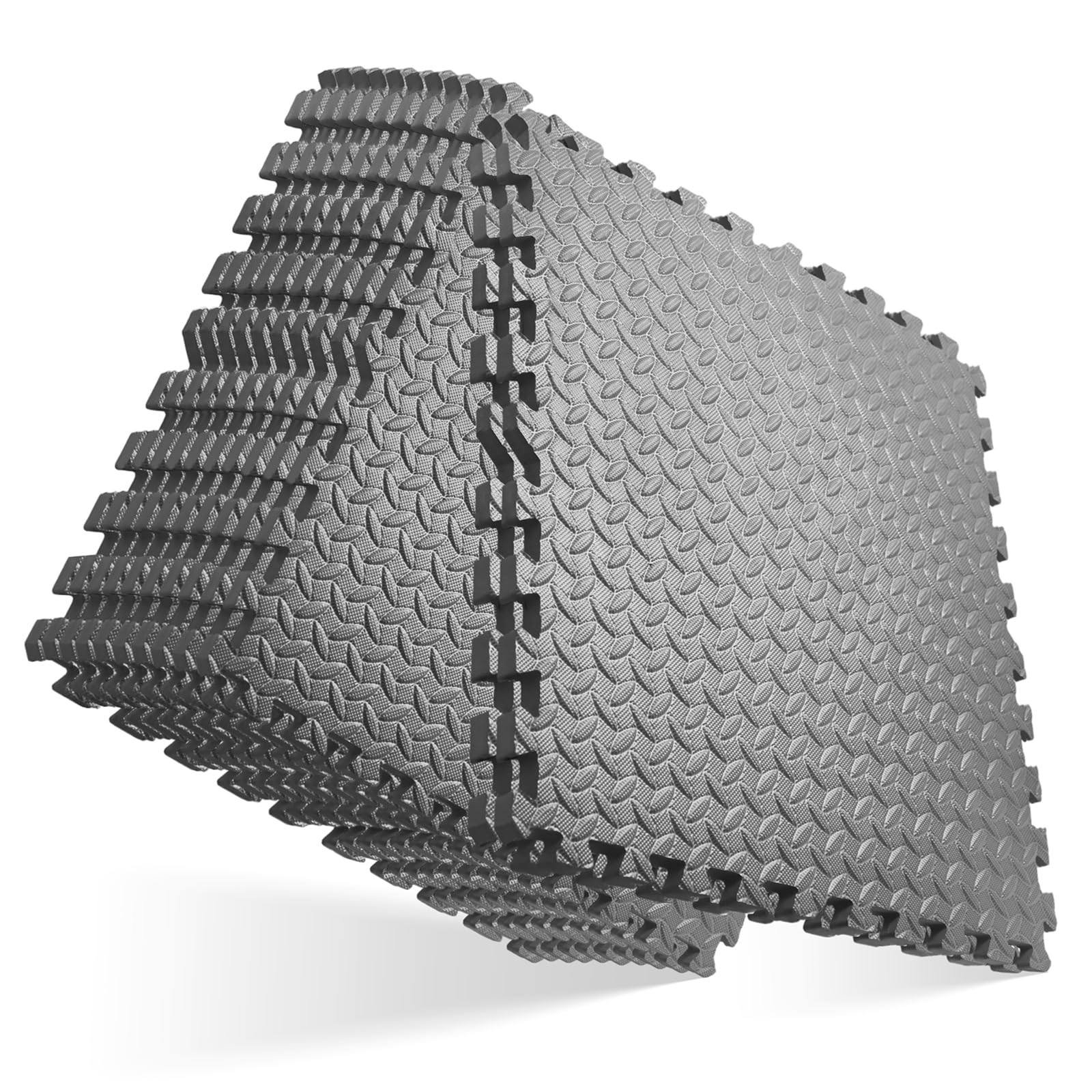
A thin, forgiving tile you can snap down in minutes and cut to fit around posts and corners.
This one is built for the buyer who wants the floor done fast and does not need a slab of cushion. Each tile measures 24 in x 24 in x 0.4 in, and the 12-pack covers 48 sq ft — the same footprint as the 24 in x 24 in ProsourceFit, in a slightly smaller tile than the 23.6 in Mat Block. That thinness is worth being honest about: owners split on whether it reads as thick or very thin in hand. What most do agree on is that it works — it goes down, it pads the floor, and it handles the everyday job of protecting hard surfaces and deadening noise.
The dual-side design is a nice touch: textured side up for grip, smooth side down to protect your existing floor from scuffs. It is also rated as low-odor and low-fuss from day one, which matters in an enclosed basement. The recurring gripe is fit and sizing — some tiles need extra effort to seat flush, and the size description has left a few owners surprised on arrival. Score with a utility knife at the joints and it cuts neatly around posts and irregular corners.
Best used for: a snug gym corner, a basement slab, or a garage where the floor just needs a protective, non-slip skin under the equipment.
Set the expectation: 0.4 in of foam is a thin mat — if you drop weight from height, the foam will give and take a permanent impression.
Suits the quick setup crowd: tools-free assembly, a dual-sided surface, and a 48 sq ft layout that cuts to fit around posts.
Step it up if you drop weights or kneel a lot: the thicker, rubber-topped picks are more forgiving.
5. Mat Block Interlocking Foam Tiles 6 Tiles

Six tiles, 24 square feet, and a footprint small enough to fit a home gym that shares the room.
Not every gym is a garage. This set gives you 6 tiles at 23.6 in x 23.6 in x 0.5 in for 24 sq ft — exactly half the coverage of the 48 sq ft ProsourceFit — with 12 end borders to finish every exposed edge. That makes it the better size when your rack tucks into a kitchen corner or you only lift on the part of the floor the machine occupies. The EVA foam is non-skid, high-density, and shock-absorbing, and it connects and pulls apart in under three minutes, so it packs down between sessions.
The strength owners single out most is insulation — the tiles deaden the cold and hard feel of a laundry or garage floor — followed by how easy they are to install. Stability is solid too: once seated, the set stays put and does not slide around underfoot. The trade-off lives on thickness, where the feedback is split: 0.5 in is a real cushion, but it is not the deep-cushion floor a knee-on-concrete session wants.
The case for the mini set
- 24 sq ft from 6 tiles is the right fit for a small room or one machine
- Includes 12 end borders to clean up every outside edge
- Installs and pulls apart in quick order for storage
- Non-slip surface holds firm once seated
The trade-off
- Half the coverage of a 12-tile set, so a full rack may outgrow the edges
- Half-inch foam is a light cushion, not a deep one
The right size if you are short on floor: a 24 sq ft block with borders that fits a spare corner and comes apart in minutes.
Size up if you have the room: the 48 sq ft sets give a full workout area without gaps at the edges.
6. Sivan Fitness Rubber Top High-Density EVA Foam Gym Flooring

A rubber-topped tile that keeps its footing through plyometrics and heavy training days.
Where the plain-foam sets protect the floor, this one is built to keep your feet planted while you move hard. It pairs a rubber top with a high-density foam base, and each grey-speckled tile measures 24 in x 24 in x 0.5 in, with 12 tiles covering 48 sq ft. Every tile has two detachable edge pieces, so any piece can serve as a corner, border, or centerpiece — a small detail that makes a straight, finished edge or a wall-to-wall run easy to lay out. Start with one pack and expand with another to fit the room.
This is the pick for training that lives in the air — plyometric jumps, jiu jitsu drills, and anything that needs traction underfoot. Buyers report it stays locked in place and does not slide around, and it sits comfortably over a plywood platform. That combination of a rubber surface and a stable base is what a home gym wants for impact work. The catch: it is an indoor-focused tile and hand-wash only, so it is not the set you hose off or leave out on the patio for a season.
Where it pulls ahead: rubber top plus foam base means grip and shock in one tile, so jumps and mat work stay steady instead of hunting for traction.
Keep it indoors: the maker lists it for indoor spaces, and the surface is hand-wash only.
Reach for this if you train on your feet: plyometrics and mat drills get a rubber surface that resists sliding.
Pass if you need an outdoor floor: this is an indoor tile with hand-wash care.
7. BalanceFrom Puzzle Exercise Mat 1-inch
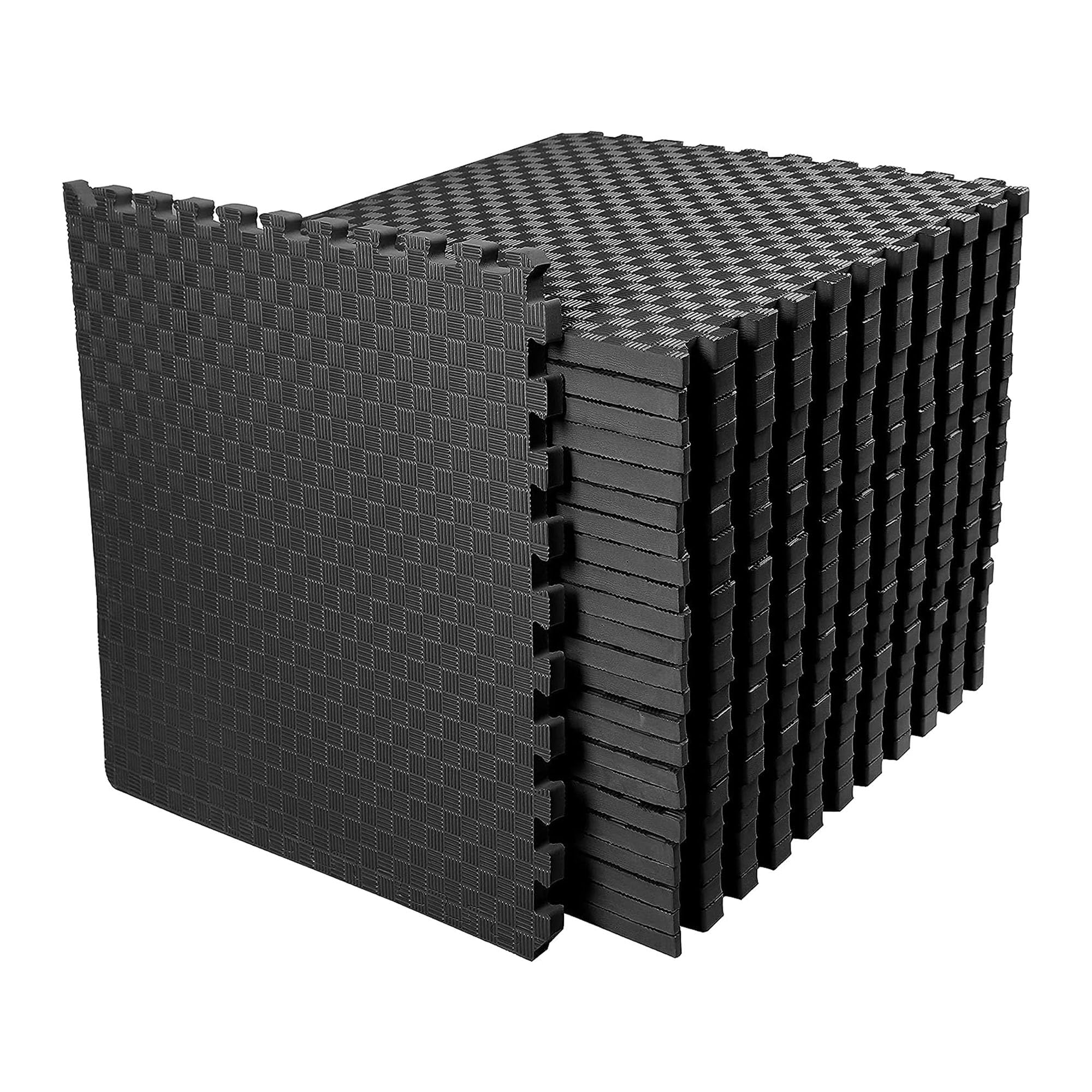
Eighteen tiles and a full inch of foam — a floor big enough to be the whole gym.
For a garage or basement you are flooring wall to wall, this is the biggest single-pack in the group. It ships 18 tiles at 24 in x 24 in x 1 in for 72 sq ft — the largest footprint here, well past the 48 sq ft the 12-tile sets provide. That full inch of high-density EVA foam is the deepest cushion in the lineup, and it absorbs impact to a degree the thinner mats do not. A 2-year warranty backs the build, which is longer cover than the foam-only picks offer.
Owners rate it for durability and for how easy it assembles, and the thickness earns real praise — thick enough to kneel on, comfortable under a stationary bike, and kind to joints during floor work. That depth is the point: at 1 in it stands taller than the 0.75 in CAP and doubles the 0.5 in sets. The honest limit is the flip side of all that foam — a floor this thick feels soft under heavy standing lifts, and the high-pile feel is not the firm platform a deadlift session wants. Keep the heaviest iron loaded on a separate platform.
Why the deep cushion earns its keep
- 18 tiles at 24 in x 24 in x 1 in cover 72 sq ft — the largest area on this list
- Full-inch EVA foam for kneeling, stretching, and floor work
- 2-year warranty covers the build
- Assembles and pulls apart without tools
What to weigh up
- An inch of foam feels soft under heavy standing lifts
- High-pile surface is not a firm platform for loaded barbell work
Pick this for a wall-to-wall floor: 72 sq ft of 1 in foam is the deepest and widest coverage here, ideal for a full home-gym room.
Keep the barbell elsewhere: softness this deep is a joint cushion, not a lifting platform.
8. Xspec 1″ Reversible EVA Gym Foam Floor Mat Tiles

An inch of reversible foam with a steel-grip pattern on both sides — practical and good-looking.
This is the set that answers the question “can a functional floor also look good in the room?” Each tile measures 23.6 in x 23.6 in x 1 in, and 12 pieces cover 48 sq ft. The dual-color steel pattern runs on both sides, so you can flip a worn or scuffed face down and get a fresh look. The 1 in EVA foam is BPA-free, non-toxic, and phthalates-free, and it is built for high-impact work. At 15 pounds for the set, it is the heaviest 48 sq ft foam pack in this group — that extra foam is the difference between a deep, supportive floor and a thin protective sheet.
Owners love the durability and the extra thickness, and the appearance gets its share of compliments — as one buyer put it, these are about as close to a full rubber mat as you can get without the matting. The low-impact feel matters too, comfortable lying flat on your back with no pressure on the knees. Two practical notes: an occasional unit arrives with a slight new-material scent, so air it out after unpacking, and it is rated for indoor use only.
The selling point: dual-sided steel-pattern foam in a full inch thickness that cushions hard floor work and wipes down in seconds.
Two small notes: allow it to air out after unpacking to clear the new-material scent, and keep it indoors.
For the buyer who wants looks and comfort: a reversible two-tone inch-thick floor that cushions floor work and flips for a fresh face.
Skip if the floor stays outside: indoor use is what this tile is rated for.
9. AIRHOP 0.79 in Exercise Equipment Mats
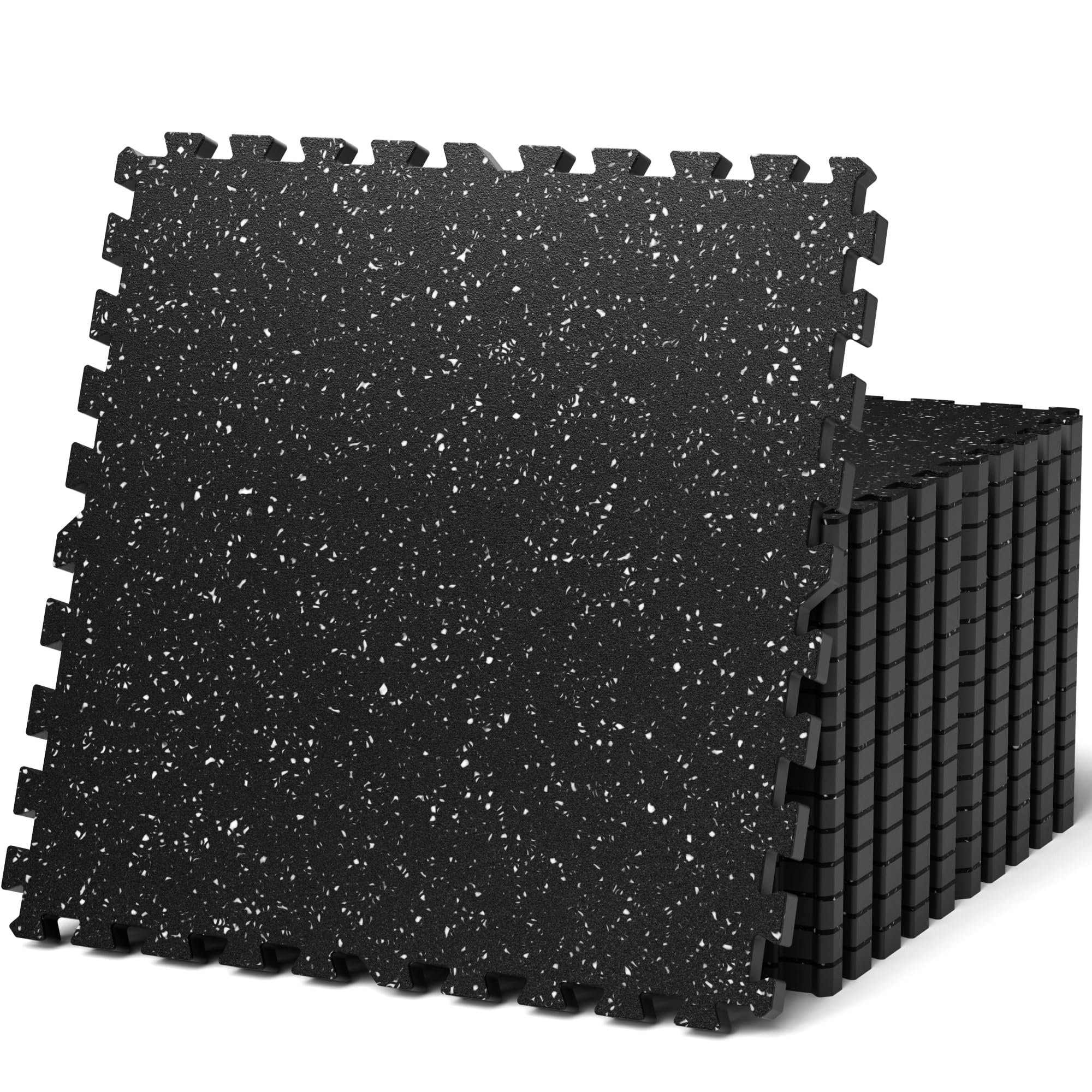
The tile built for dropped dumbbells: a tough rubber surface over 0.79 inches of dense foam.
When a dumbbell comes down hard, plain foam gives. This set solves that with a dual-layer build — a textured rubber top layer fused to a high-density EVA foam base — so you get a non-slip, shock-absorbing surface that resists scuffs and dents from weights. Twelve tiles at 24 in x 24 in x 0.79 in cover 48 sq ft, roughly an 8 ft by 6 ft block. At 0.79 in it sits between the half-inch sets and the full-inch cushions, and the upgraded larger interlocking locks are designed to keep tiles from separating mid-set.
This is what owners of heavier home gyms reach for. The rubber face takes free weights being dropped with less marking, and it holds up under a rack and heavy machinery in a basement. Assembly is quick, and the noise and vibration damping is a benefit if you train in a shared house. The honest point is care: it is a square-foot-eating mat under heavy gear, and like all foam-based tiles it will want wiping down with a damp cloth and keeping dry. The dual-layer construction is the reason to pay for this one over a plain EVA set.
Why the rubber top matters
- Rubber over foam resists scratches, scuffs, and dents from dropped weights
- Larger interlocking locks keep the tiles from separating during heavy sets
- 0.79 in thickness over 48 sq ft gives firm shock absorption
- Noise and vibration damping suits a basement or shared house
The catch
- Heavier and more costly than a plain EVA foam pack — this is the premium option
Choose it if you lift heavy: the rubber top over dense foam is the most protective surface here for dropped iron and a loaded rack.
The trade-off: it costs more than a plain foam set — but it is the one built to survive weight room abuse.
Know the Specs
Thickness (in)
Thickness is how deep the foam sits between you and the hard floor, and it is measured from the high point of the tile’s texture. It sets how much shock your joints absorb and how well a tile survives impact. Thin tiles around 0.4 in are a protective skin for a garage corner. Half-inch tiles around 1/2 in are the everyday middle for a mix of a rack, a bench, and floor work. Deep tiles at 3/4 in or a full 1 in are a joint-first pick for kneeling, stretching, and plyometrics. Thicker foam feels softer and kinder underfoot — and noticeably softer under a heavy standing lift.
Coverage (sq ft)
Coverage in square feet is your room fit, and it is simply tile count times tile size. Twelve tiles at 24 in x 24 in gives 48 sq ft, roughly an 8 ft by 6 ft block. Six tiles gives about 24 sq ft; eighteen gives 72 sq ft. Match coverage to the area under your rack, bench, and machine, then leave margin so the outside border does not fight the wall. A connected layout with more tiles also holds itself together better than a small, loose one, because each joint helps pin the next tile.
Surface: EVA foam vs rubber top
EVA foam is a springy, lightweight material that cushions impact and deadens noise on hard floors, and it wipes clean with soap and water. It is the right surface for yoga, bodyweight work, and cardio machines. A rubber top adds a tacky, tough layer over the foam that grips better and takes dropped weights with less marking — the smarter pick for a weight room. Rubber-topped tiles usually cost more and weigh more, and that added protection is what you are paying for.
Interlock and border pieces
The puzzle edge is the teeth along each tile that press into the next one. A set that includes end borders gives the outside of the floor a finished, straight edge instead of exposed teeth. Detachable edge pieces let one tile serve as a corner, border, or center piece. Interlocking design matters because a floor that stays connected stays flat, and a floor with borders looks like it belongs in the room rather than on a warehouse pallet.
Common Questions
Will a 48 sq ft interlocking mat set cover my home gym rack?
Is 1/2 inch thick enough for a home gym floor?
Do these mats slide apart while I am working out?
Can I put a heavy treadmill or squat rack on foam tiles?
Are interlocking mats safe for kids and pets?
How do I clean interlocking foam gym mats?
Will foam mats dent if I drop a dumbbell on them?
Can I cut these tiles to fit around a corner or post?
Are these mats meant for outdoor use?
What is the difference between a plain foam mat and a rubber-topped mat?
The Bottom Line
Start with the floor that fits the room, then let the workout decide the surface. For most home gyms, the ProsourceFit Exercise Puzzle Mat is the straightforward pick — 48 sq ft of 1/2 in foam that covers a rack and bench, cleans up easily, and comes with end borders for a finished edge. If you kneel on concrete and want more cushion, the CAP 3/4-Inch set is the joint-first upgrade. And if there is iron in the room — dropped dumbbells, a loaded bar, heavy machinery — the AIRHOP Rubber Top set is the surface built to take the abuse.
The honest nudge before you order: 48 sq ft is the practical size for most home setups, so if your rack and bench fit inside an 8 ft by 6 ft block, the 12-tile sets here are the right starting point — the ProsourceFit at 4.5+ stars across 60,000+ ratings has earned the most trust for good reason.
How we choose
We do not accept paid placement. Every pick is matched to a real buyer and a real use-case; we do not hands-on test units.
Sources
Specifications: manufacturer listings and product documentation. Review insights: verified customer reviews, as of November 2026. Pricing: not shown on this page (it changes often); check the current price via the retailer link.
As an Amazon Associate, Tactical Gear Guy earns from qualifying purchases. This does not affect which products we feature.