Specs are compiled from manufacturer listings and verified buyer reviews and can change over time — please confirm the key details on the product page before buying.
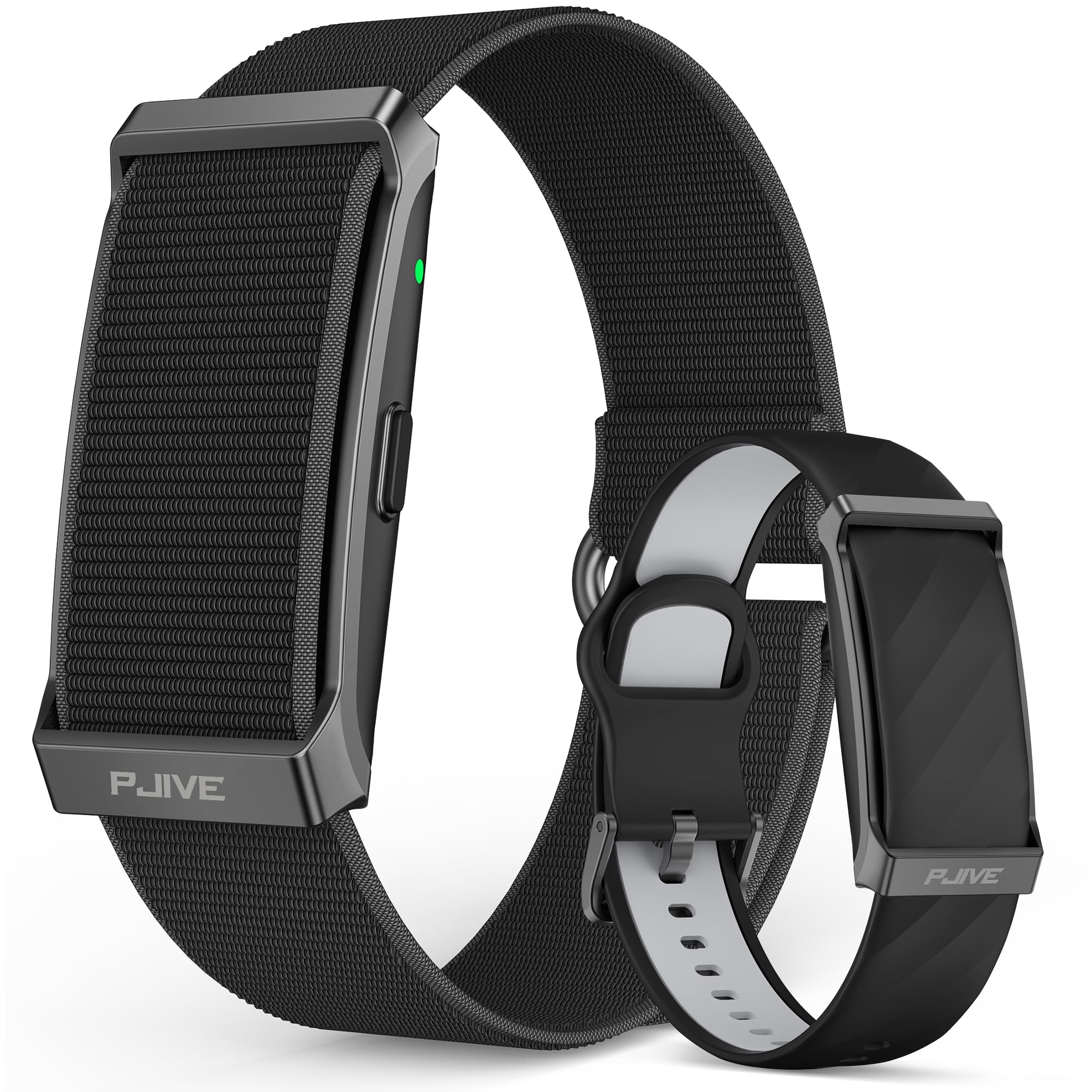
Most people hunting a workout fitness band end up choosing between three things: battery that lasts, a screen bright enough to read mid-sprint, and a strap that does not sweat you out. The pick that gets the most right is the PJIVE Smart Bracelet — an 18.4 g band that runs up to 60 days on a charge with 170+ sport modes and an IP68 rating, meaning it survives sweat, rain, splashes and swimming.
This guide is built by comparing the manufacturers’ published specifications and the patterns across verified customer reviews, so you get each pick’s real strengths and trade-offs instead of marketing spin.
Below you get plain-English spec breakdowns, the trade-off each band actually carries, and honest fit notes so you buy the right tracker first time. This breakdown of the workout fitness band field separates the bands you will still be wearing in a year from the ones you will not.
Top Picks

How To Choose The Best Workout Fitness Band
A workout band fails you in two ways: the battery dies mid-week, or the strap is so heavy and slick you stop wearing it by day four. Everything below is about avoiding those two outcomes, then matching the extras to how you actually train.
Battery capacity tells the truer story than the day count
The day count on the box is measured with the screen dim and notifications off. The real number to compare is the battery capacity in milliamp-hours, and a small cell paired with a bright screen drains fastest. If you want to charge once a month rather than once a week, look at the bands with the biggest cells and the dimmest default display.
IP68 versus splash resistance
An IP68 rating means the band is sealed against dust and survives being submerged — so sweat, rain and hand-washing are all fine. Some listings still warn against long soaks, hot baths and saunas, because heat softens the seals. Read that fine print before you swim laps in it.
Sport mode count versus the modes you will use
A band with 170+ sport modes covers everything from walking to strength training, but the modes that matter are the three or four you actually do. What separates a good tracker is whether those modes record steps, distance, calories and duration automatically, not how long the total list is.
Display size and wrist weight
A 1.58-inch display is easy to read mid-run but adds bulk; an 18.4 g band barely registers on the wrist. If you sleep in the tracker for the sleep-stage data, weight matters more than screen size. If you glance at pace during intervals, the bigger display wins.
Side-by-Side Comparison
| Model | Best For | Battery Life | Display Size | Weight | Amazon |
|---|---|---|---|---|---|
| PJIVE Smart Bracelet★ Best Overall | Long battery and full sport coverage | 60 days | — | 18.4 g | Amazon |
| Bestinn H32 ProBest Display | Big display on a slim band | 7 days | 1.58 inches | 27.22 g | Amazon |
| FITVII FINO2Easiest to Live With | Simple, button-light daily tracking | — | 1.45 inches | — | Amazon |
| MorePro Health Tracker | Watch faces and women’s health tools | 7 days | 1.47 inches | — | Amazon |
| Xiaomi Mi Smart Band 10 | Bright AMOLED screen and long battery | 21 days | 1.72 inches | — | Amazon |
| Fitbit Inspire 3 | Stress and sleep coaching | 10 days | — | — | Amazon |
| Fitbit Charge 6 | Built-in GPS and Google extras | 7 days | — | — | Amazon |
| Garmin CIRQA | Screenless, no-subscription training | 10 days | Screenless | — | Amazon |
| Dagakto C68L | Tightest-budget step and sleep tracking | 5 days | 0.96 inches | 45 g | Amazon |
Detailed Reviews
1. PJIVE Smart Bracelet
Our pick — 4.5+★ from 250+ verified ratings; the strongest balance of quality and price.
The band you charge roughly every other month and forget you are wearing between charges.
Start with the number that shapes your whole week: 60 days of battery from a 180 mAh lithium-ion cell that tops up in about 2 hours. That is the gap nobody else here closes — the Dagakto C68L manages 5 days of juice and the Fitbit Charge 6 runs 7. That 60-day versus 5-day gap is the difference between a band that lives on your wrist and one that lives on a charger.
At 18.4 g it is the lightest tracker on this list, and the Dagakto weighs 45 g by comparison. You feel that weight difference mostly at night, when a heavier band presses into your wrist while you sleep. It ships with two interchangeable straps, nylon and silicone, on a 20 mm band width with a tang buckle, so you can swap the sweaty one out without buying anything extra.
For training, there are 170+ sport modes covering walking, running, cycling, yoga and strength training, each recording steps, distance, calories and duration. The IP68 seal covers sweat, rain, splashes and swimming. It also tracks heart rate, blood pressure and blood oxygen around the clock, and breaks your sleep into light, deep and REM stages. Vibration alerts for calls and messages come through on both Android and iOS through the QWatch Pro app.
Where it delivers
- 60-day battery life on a single charge, with a 2-hour full recharge
- 18.4 g body with two included straps (nylon and silicone)
- 170+ sport modes with steps, distance, calories and duration logged
- IP68 sealing handles sweat, rain and swimming
What to expect
- The health readings are wellness reference only — this is not a medical device
- Blood pressure and blood oxygen figures are trends to watch, not clinical numbers
Go for it if: you want to charge your tracker a handful of times a year and still get full sport tracking and sleep stages.
Look elsewhere if: you need a big, bright display to read mid-run — this band leans on battery and weight instead of screen size.
2. Bestinn H32 Pro Smart Watch Fitness Tracker
The one that feels like a watch and reads like a screen — 1.58 inches of color on a 27.22 g frame.
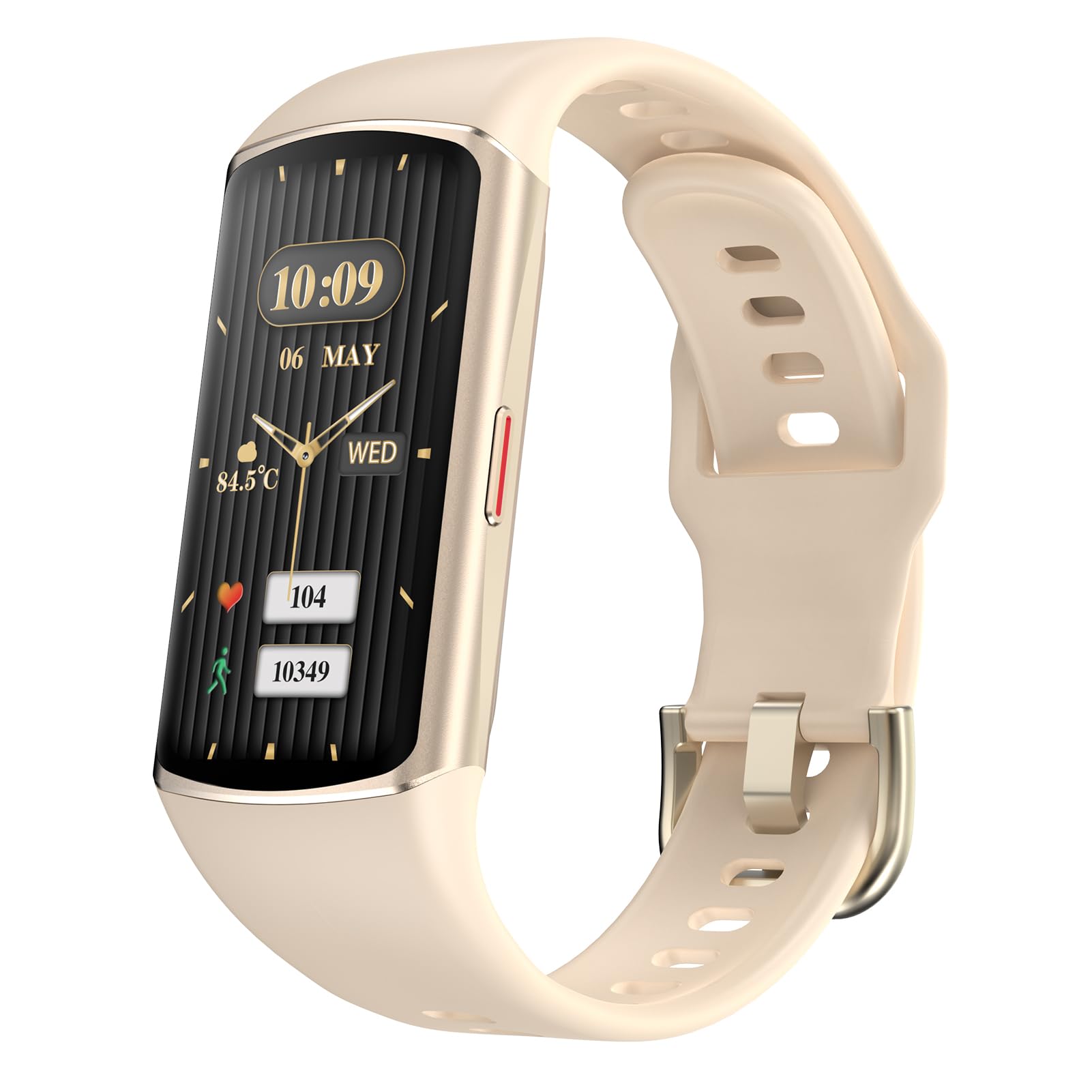
The display is the whole pitch here: 1.58 inches against the Dagakto C68L’s 0.96-inch panel, and the Bestinn’s body is just 0.23 inches thick versus the Dagakto’s 0.35 inches. That means a bigger, flatter face that slips under a sleeve instead of catching on it. An always-on clock keeps the time visible without a wrist flick, and full touch plus a side button handle navigation.
What wins people over is the appearance — it is the most-discussed strength in the feedback, and the champagne finish with a metal-and-silicone build is why. Value and raw functionality land right behind it, and the customization angle is real: over 250 watch face options let you go analog on a work day and digital for training.
The sensor set covers 24/7 heart rate, blood pressure and blood oxygen, plus a sleep tracker that logs light sleep, deep sleep and wake time. There are 120+ exercise modes with all-day step, distance and calorie counting. Battery is quoted at up to 7 days per charge via USB, and GPS comes through your paired phone so outdoor routes show up on a map in the app. Daily extras run to water and sedentary reminders, weather, music control and a remote camera shutter.
The battery honesty: 7 days is the quoted figure, and tracking with a screen this size on always-on will pull that down — the PJIVE’s 60-day cell is the better match if charging is your frustration.
Fit note: it pairs with Android 4.4 and iOS 8.4 or above, so a very old phone is the one thing worth checking before you commit.
Pick this one: if a readable color screen and a watch-like look matter more to you than a month between charges.
Hold off: if you want the longest runtime on the list — 7 days here versus 60 on the top pick.
3. FITVII Slim Fitness Tracker
Built for the person who wants the data without a menu tree — no complicated buttons, no steep setup.
Quality is what this one is known for more than anything else in its feedback, and the reason is the combination of a 1.45-inch TFT color touchscreen and a slim, lightweight body that stays readable without a bright flash. Ease of use sits second, and it shows: navigation is touch plus a couple of buttons rather than layers of menus, so you can find your step count without a tutorial.
Health tracking covers sleep, blood oxygen, 24-hour heart rate and 24-hour blood pressure, all viewable on the wrist and stored in the FitCloudPro app by day, week and month. The sleep view breaks out light and deep sleep plus waking time, and a silent alarm wakes you with a buzz instead of a noise. Sport modes include running, basketball, walking, climbing, cycling, yoga and elliptical, with calories, steps, distance and speed logged live.
There are 89+ watch faces, and you can load your own photo onto the dial. The band fits a wrist from 5.31 to 8.66 inches and connects over Bluetooth 5.0 to Android 5.1 or iOS 10.0 and above — but not to a PC or tablet. Notifications cover calls, texts and app messages including Facebook, X, WhatsApp and Messenger, and an incoming call shows the name or number so you can decide whether to dig out your phone.
Comfort verdict: it wears all day without complaint, and the clear screen means you can read it at a glance rather than squinting at your wrist mid-set.
The catch: it runs on a phone connection only, so leave your phone behind and the route mapping goes with it.
Reach for this if: you want a slim band that is quick to read and quicker to learn, with no menus to memorize.
Think twice if: you need tablet or PC syncing — this one is phone-only by design.
4. MorePro Health Fitness Tracker

A slim 16 mm-band tracker that treats the dial as a wardrobe and the calendar as part of your health data.
Functionality is the thing people talk about most with this one, and the spec sheet explains why: a 1.47-inch display, 300+ watch faces, and the option to load your own dial when you want something personal. That is 300+ dials against the FITVII’s 89+, which matters if you get bored of a look fast. The 16 mm band width is the narrowest here, giving it a slim, jewelry-like profile on the wrist.
Seven sport modes cover running, climbing, cycling, basketball, walking, elliptical and yoga, with steps, distance and calories recorded through the day. The IP68 seal takes hand-washing, sweat and light rain. The women’s health side goes deeper than most: menstrual period, safe period, ovulation period and ovulation day calendar, plus menstrual, pregnancy-preparation and pregnancy modes in the app. Battery runs up to 7 days of use or 10 days standby from a 140 mAh cell that charges in about 2 hours, over Bluetooth 5.3.
Strengths worth knowing
- 300+ watch faces, including custom dials you load yourself
- Cycle and ovulation calendar built into the app
- 7-day battery with 10-day standby and a 2-hour charge
- Narrow 16 mm band for a slim wrist profile
Trade-offs to plan around
- Only 7 sport modes — the PJIVE’s 170+ covers far more workout types
- Not compatible with PCs, iPads or tablets, so phone pairing is required
Best fit for: anyone who wants their tracker to look different on a Tuesday than on race day, with cycle tracking built in.
Skip the style focus if: you train in niche disciplines — 7 sport modes will run out before 170+ does.
5. Xiaomi Mi Smart Band 10

The only band here that stays readable in direct midday sun — 1500 nits on a 1.72-inch AMOLED panel.
Brightness is the spec that separates it. The 1.72-inch AMOLED display hits 1500 nits in high-brightness mode, and the maker states that is 25% brighter than the previous version, so messages stay legible even in direct sunlight. The bezels are 2.0 mm and the screen-to-body ratio climbs from 66% to 73%, which means the glass is almost all screen. That is a different approach from the Bestinn’s 1.58-inch panel — bigger, brighter, more watch-like in footprint.
Runtime is the second win. The 21-day battery runs from a 200 mAh lithium-polymer cell, and a full recharge takes about an hour. That sits between the PJIVE’s 60 days and the Fitbit Charge 6’s 7, so it is a strong middle choice for people who charge weekly but hate daily cables. A new high-precision electronic compass tracks swimming direction for pool sessions, and the workout analysis is detailed enough to tune each session.
Sleep monitoring covers stages and quality so you can see how your recovery is going. The interface runs Xiaomi HyperOS 2 for smoother navigation. One practical quirk: the Xiaomi Fit app supports the metric system only, so for pounds and inches you connect it to Google Fit and read your data there.
The sunlight test: 1500 nits is the reason this one wins outdoors — you will not be shading your wrist at the track.
Worth flagging: the metric-only default trips people up, so plan the Google Fit link if you think in pounds and miles.
Choose this for: outdoor sessions where glare is the enemy and a three-week charge cycle fits your routine.
Pass if: you want an imperial-first interface from the start — this one needs a second app for that.
6. Fitbit Inspire 3
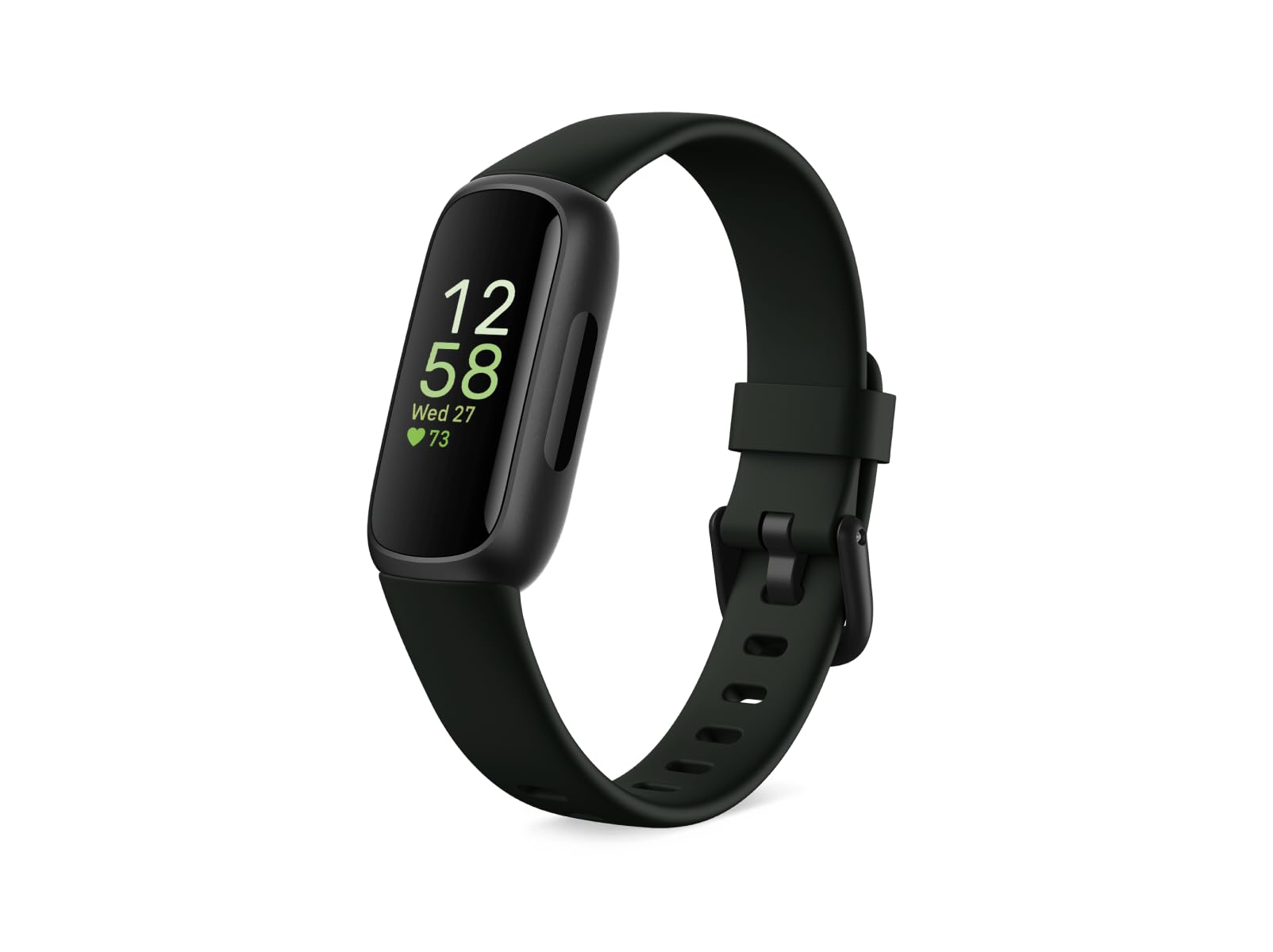
The tracker that leads with recovery — readiness scores, stress scores and sleep coaching rather than just step counts.
Where the others count reps, this one reads your body. A Daily Readiness Score tells you how hard to push before you start, Active Zone Minutes tracks intensity rather than just movement, and a daily Stress Management Score sits alongside guided breathing and mindfulness sessions. That is a different job from the PJIVE’s 170+ sport modes — one is a workout logger, the other is a recovery coach you wear.
It covers 40+ exercise modes with automatic exercise tracking and 24/7 heart rate, plus reminders to move. Sleep tracking is automatic and reports a nightly Sleep Score, with a smart wake vibrating alarm and a sleep mode to quiet the screen. It also tracks SpO2, resting heart rate, menstrual health and irregular heart rhythm notifications.
Battery is quoted at 10 days with a 2-hour charge, and the silicone band with a tang buckle sits in a black and midnight zen finish. Compatibility runs to Apple iOS 16.4 or higher and Android OS 11.0 or higher. It arrives with the tracker and band ready to pair, no separate charger purchase needed.
What it does best
- Daily Readiness Score and Stress Management Score for recovery guidance
- Automatic sleep tracking with a nightly Sleep Score and smart wake alarm
- 10-day battery and a 2-hour charge time
- Irregular heart rhythm notifications and SpO2 alongside heart rate
The practical limit
- Battery reliability draws mixed reports — a minority see charging trouble within a couple of months, so keep the receipt
- No built-in GPS, so outdoor route maps come from your phone instead
Suits you if: you want to know when to back off training, not just how many steps you took.
Not your band if: a week and a half between charges feels like too much maintenance.
7. Fitbit Charge 6

The one with GPS built into the case — no phone in your pocket to map the run.
Built-in GPS is the reason to pay up for this band over the Inspire 3, which relies on your phone for outdoor routes. The Charge 6 pairs that with 40+ exercise modes, all-day activity tracking, 24/7 heart rate and automatic exercise detection, so a spontaneous run logs itself. Battery runs 7 days per charge from a 0.25 cell with a 2-hour top-up.
The Google layer is the other half of the pitch. Turn-by-turn directions from Google Maps appear on the band during runs and rides, Google Wallet lets you tap to pay, and YouTube Music controls are on the wrist. You can also link the band to compatible gym machines like treadmills and ellipticals to see your heart rate in real time on the machine’s display.
Recovery tracking follows the Fitbit playbook: a stress management score, a nightly Sleep Score, and a Smart Wake alarm that rouses you at a lighter point in your cycle. Quality is the aspect owners praise most — well ahead of anything else they mention — though reliability and battery life are more divided, and a share of long-term users report durability trouble after a couple of months of use.
Where it shines: built-in GPS plus Google Maps directions make it the best route-tracking band here for runners who leave the phone at home.
The honest caveat: durability is the one weak signal — a meaningful slice of long-term feedback reports units failing early, so treat the warranty as part of the deal.
Worth it for: runners and riders who want GPS in the band and Google tools on the wrist.
Second-guess if: you want a tracker you will still be wearing in three years without thinking about it.
8. Garmin CIRQA Smart Band
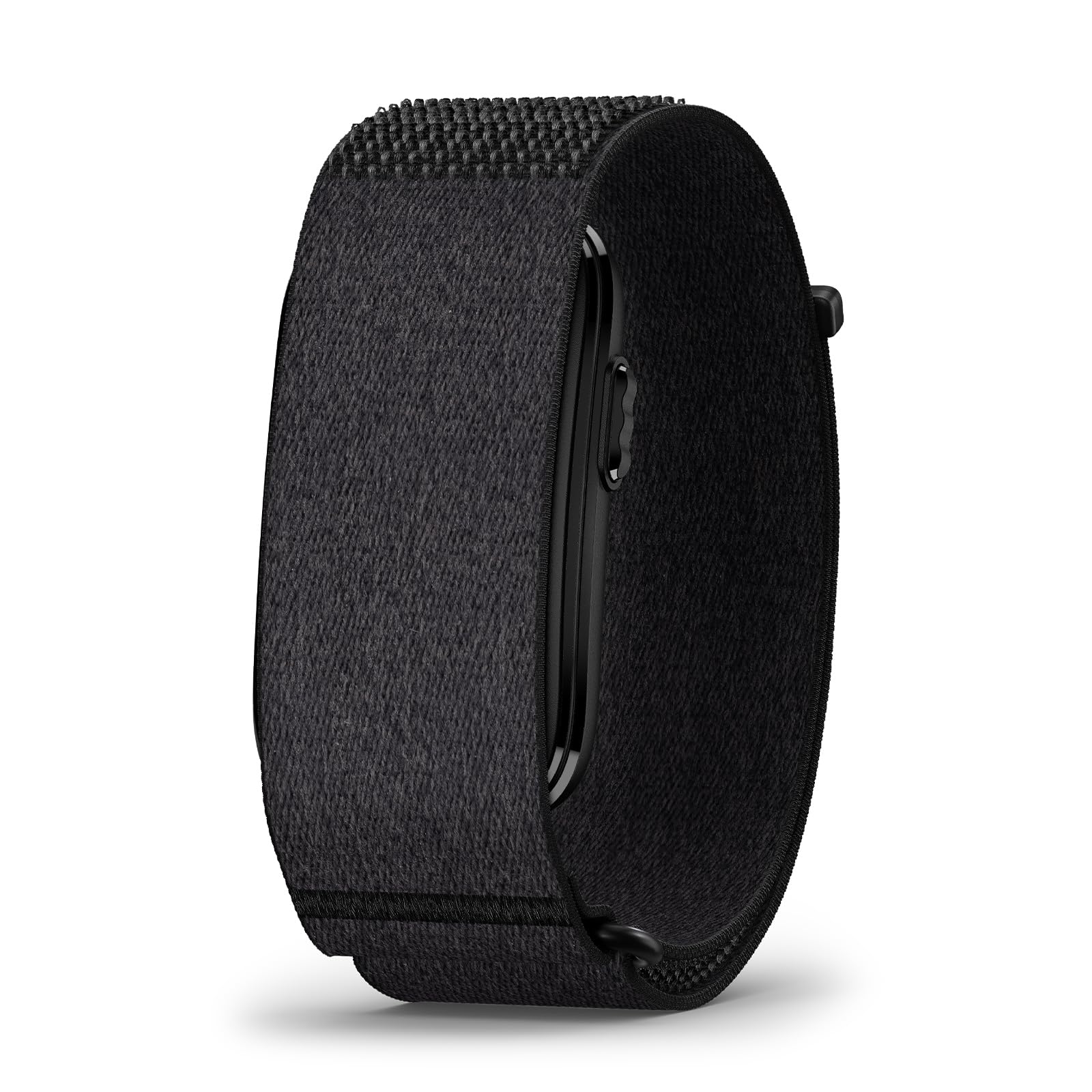
No screen, no subscription, no distractions — a nylon band that disappears on your wrist and reports through the app.
The design choice is the whole story: there is no screen at all, only a soft nylon band and a single on-device button. That removes the constant glance habit a bright AMOLED panel invites, and the 24 mm nylon strap breathes through all-day and all-night wear. Performance is the thing owners praise most, and the trade-off is that you read your data in the Garmin Connect app rather than on the wrist.
Battery runs up to 10 days from a 126 mAh lithium-ion cell, so the charging routine stays weekly rather than daily. Health tracking covers heart rate, health status, Body Battery energy monitoring, stress and women’s health tracking, all without a subscription — a real cost difference versus trackers that push a paid coaching tier.
There are 80+ activities in the app, and the band automatically detects a variety of them, adapting to your habits as you confirm or edit the classifications. A favorite activity can be set for quick start and stop on the button, without your phone. Sleep tracking reports a score with personalized coaching, and a breathing variations feature uses Pulse Ox to show shifts in your breathing patterns overnight.
The training read: workout benefit, training readiness and training status tell you whether to go hard or ease off — advanced features most bands here just do not offer.
The fit catch: this is the L-XL size band, and fit draws mixed reports, so measure your wrist first if you fall near the small end.
Love it if: you want serious training guidance and zero subscription, and you are happy reading data on your phone.
Keep looking if: you glance at your wrist for pace and time — there is no screen to glance at.
9. Dagakto C68L Fitness Tracker

The entry-level band that still packs heart rate, blood oxygen and sleep stages — no feature left off, just a smaller package.
What you get is a full tracker on a tight budget. The 0.96-inch display is the smallest here, but the band covers the essentials: steps, calories, exercise distance and time, plus heart rate and blood oxygen monitoring. The 45 g body is the heaviest here versus the PJIVE’s 18.4 g, so it feels more substantial on the wrist — and at 10.63 inches long it sits at the opposite end of the size scale from the Bestinn’s 1.7-inch footprint.
Sleep tracking is the deeper feature: it breaks your night into Fall Sleep, Deep Sleep, Light Sleep and REM stages, and you view daily, weekly and monthly data in the KuPoo app. That is a level of sleep breakdown that usually costs more. A Family mode lets family members view each other’s health data, which is a nice touch if you are buying this for a parent or a partner.
Notifications push through from Facebook, Twitter, WhatsApp and Instagram when Bluetooth is on, and the band vibrates so you can read the message on your wrist. Work tools include water reminders, sedentary reminders and appointment alerts set in the app. Battery runs up to 5 days from a rechargeable lithium-ion cell via a magnetic USB cable, and the IP68 seal handles hand-washing and swimming — though the maker warns against long soaks, hot baths and saunas.
Best value read: the included black and white straps mean you can swap the look without buying extras, which few budget bands bother with.
The real limit: 5-day battery is the shortest here, so this is a band you charge twice a week rather than once a month.
Reach for it if: you want full sleep-stage tracking, notifications and blood oxygen without stretching the budget.
Look up if: you resent charging — 5 days here versus 60 on the top pick is the whole difference.
Know the Specs
Battery life in days versus milliamp-hours
The day count on the box is a best-case figure with a dim screen. The capacity in milliamp-hours (mAh) is the actual fuel tank, and bright displays drain it faster. A band with a 180 mAh cell and a dim screen (the PJIVE) can stretch to 60 days, while a 200 mAh cell paired with a 1500-nit AMOLED panel (the Xiaomi Mi Smart Band 10) lands at 21 days. More milliamp-hours does not automatically mean more days — the screen decides the rest.
IP68, sport modes and what they cover
IP68 is an ingress protection rating meaning the band is sealed against dust and survives being submerged, so sweat, rain and swimming are fine. Sport modes are simply the activity profiles a band can log — 7 on the MorePro, 120+ on the Bestinn, 170+ on the PJIVE. The count matters less than whether your three or four regular workouts are on the list and whether each one logs steps, distance, calories and duration automatically.
Common Questions
Can I swim with an IP68 fitness band?
Does a fitness band track heart rate accurately during a workout?
Will a fitness band work with my iPhone or Android phone?
Do I need a subscription to use the Garmin CIRQA?
How often will I have to charge a workout fitness band?
Does a screenless band still track workouts?
Which is better, a fitness band or a smart watch for working out?
Can a fitness band show messages and calls from my phone?
What does blood oxygen monitoring on a band actually measure?
The Bottom Line
For most people, the workout fitness band to buy is the PJIVE Smart Bracelet, because 60 days of battery from a 180 mAh cell plus 170+ sport modes and an 18.4 g frame covers everything a general trainer needs. If a readable color screen matters more, the Bestinn H32 Pro gives you 1.58 inches and 120+ exercise modes. And for outdoor runners who want GPS without their phone, the Fitbit Charge 6 carries it in the case — just accept that its long-term durability is the one signal worth watching before you commit.
How we choose
We do not accept paid placement. Every pick is matched to a real buyer and a real use-case; we do not hands-on test units.
Sources
Specifications: manufacturer listings and product documentation. Review insights: verified customer reviews, as of November 2026. Pricing: not shown on this page (it changes often); check the current price via the retailer link.
As an Amazon Associate, Tactical Gear Guy earns from qualifying purchases. This does not affect which products we feature.