Specs are compiled from manufacturer listings and verified buyer reviews and can change over time — please confirm the key details on the product page before buying.
If you want the short answer: a nylon belt suits most men training squats and deadlifts a few times a week, and a leather belt is the step up once the bar gets heavy and you want a brace you can push against. The tricky part is size and closure — a belt that is too big or too fiddly will end up on the floor, and sizing runs differently from brand to brand. This guide sorts out which belt actually fits your training, whether you grab the 6-inch Schiek at the top or a budget-friendly nylon option.
This guide is built by comparing the manufacturers’ published specifications and the patterns across verified customer reviews, so you get each pick’s real strengths and trade-offs instead of marketing spin.
Rather than dumping nine nameplates into a table and wishing you luck, this guide walks through what each belt actually does for your brace, how the closures differ in real use, and where the sizing traps hide. The result is a straightforward pick list you can read in one sitting, sorted by material, closure and width.
Top Picks

How To Choose The Best Workout Belt for Men
A lifting belt does one job: it gives your abs something solid to push against while you brace, which steadies your lower back under load. Everything else — material, closure, width, thickness — is about how that brace feels to put on, wear through a session, and take off. Get those details wrong and a perfectly good belt sits in your gym bag.
Material: nylon is forgiving, leather is firm
Nylon belts follow your torso and are easy to wear set after set, which suits general strength training and anyone who does not want a break-in period. Leather belts feel stiffer at first and take a while to mold to your waist, but they resist squashing and give a more solid wall to brace against on maximal lifts. Neither is “better” — a nylon belt that fits beats a stiff leather belt that digs in.
Width and thickness change how much belt you feel
Belt width runs from a 4-inch uniform band up to a 6-inch cut that is wider at the front and back. A wider belt wraps more of your torso for a bigger bracing surface, while a slimmer belt stays out of the way on front-loaded lifts. Thickness works the same way — a 7 mm belt bends more easily than a 10 mm slab, so beginners and lifters who hate a stiff wall often prefer the thinner cut.
Closure type decides your rest-time routine
A traditional double-prong buckle is set-and-forget solid but slow to loosen between sets. A lever flips open in a second, and a hook-and-loop strap or auto-locking buckle lets you tighten and release with one hand. If you change belt tension often, the faster closures save real minutes over a session — but the prong buckle will never wear out the way a strap can.
Sizing is the number one return reason
Measure around your navel with a flexible tape, over a T-shirt, and not by your trouser size. A belt that runs large will not let you cinch tight enough for a proper brace, and one that is too small will not buckle at all. Check the brand’s own chart, because the same labelled size can land differently across makers.
Side-by-Side Comparison
| Model | Best For | Material | Thickness | Closure | Amazon |
|---|---|---|---|---|---|
| Schiek Sports 2006 Nylon Belt★ Best Overall | All-round heavy-lift support | Nylon | 6 in | Buckle, hook and loop | Amazon |
| DMoose Fitness Auto Locking BeltFastest On-Off | Quick-release lifting | Nylon | 4 in | Hoop & loop | Amazon |
| Nike Strength Training BeltGym Bag Staple | Everyday gym training | — | — | — | Amazon |
| Harbinger Weightlifting Belt | Low-profile budget bracing | 40% PP / 30% PE / 20% nylon | 4.48 in | Buckle, hook and loop | Amazon |
| GurZinn 9 mm Leather Belt | Padded leather support | Leather | 9 mm | Buckle | Amazon |
| POZTEV Lever Belt | Fast tension changes | Leather | 10 mm | Lever | Amazon |
| Fitgriff Classic Leather Belt | Classic leather value | Leather | 5 mm | Double prong buckle | Amazon |
| MRX Powerlifting Leather Belt | Bracing on a tighter budget | Leather | 10 mm | Steel slide bar buckle | Amazon |
| Iron Bull Strength 7 mm Belt | Competition-style lifting | Leather | 7 mm | Double roller steel buckle | Amazon |
Detailed Reviews
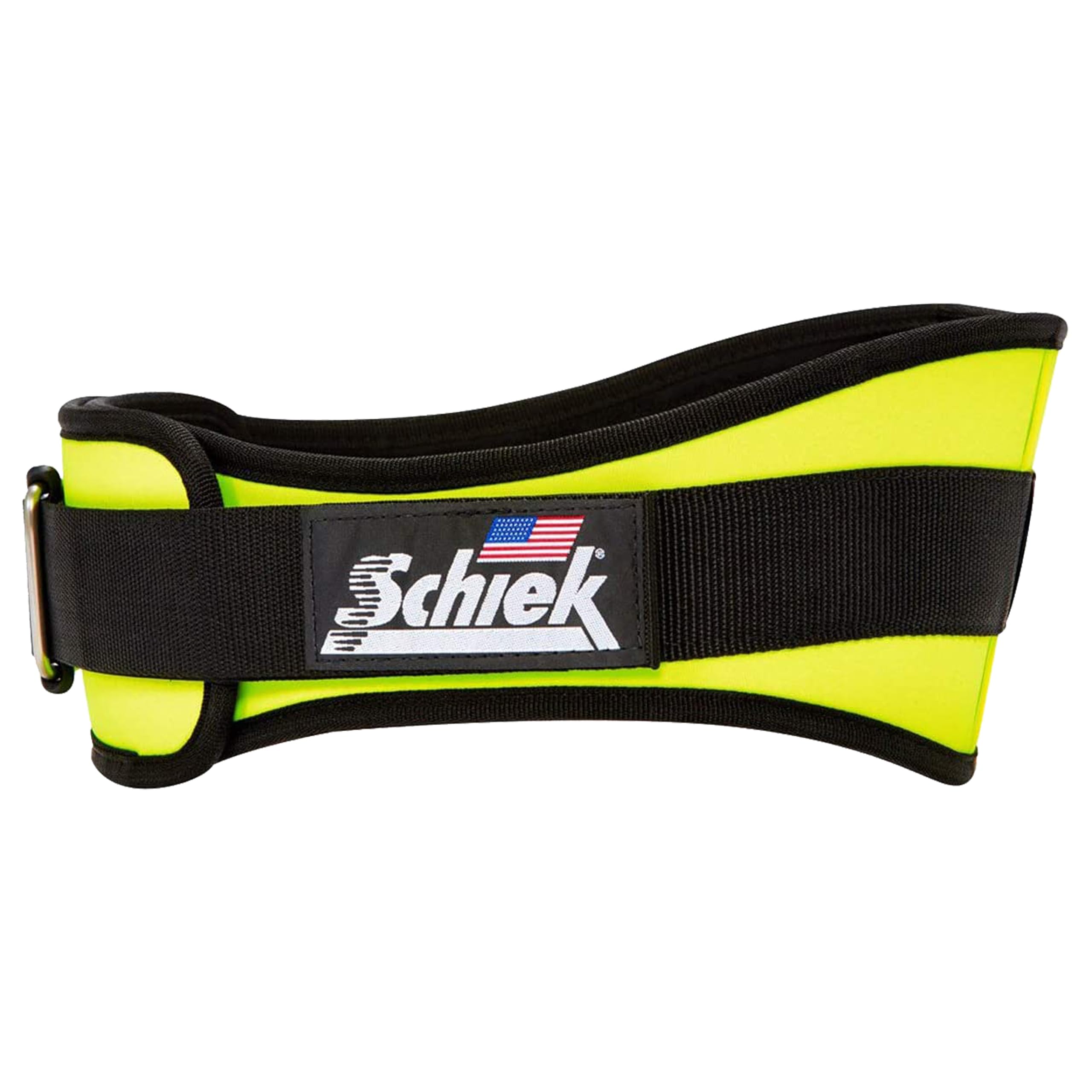
1. Schiek Sports 2006 Nylon 6 in Weight Lifting Belt
Our pick — 4.5+★ from 450+ verified ratings; the strongest balance of quality and price.
A 6-inch nylon cut that wraps more of your torso than any standard 4-inch belt.
That 6-inch width is the number to fix in your head. Schiek builds the belt wide across the front and the back, so it covers more of your abdominal wall and lower back than a uniform 4-inch band — that difference is literally 50% more belt across your midsection compared to the 4-inch DMoose below. More covered surface means more to push your brace against when the bar gets heavy.
The closure is a hybrid: a buckle paired with a hook-and-loop strap. You set the buckle once and then cinch the strap for tension, which makes it quick to loosen between sets without unbuckling. The nylon is the other quiet win — it follows your torso instead of sitting on it like a plank, and it holds up to repeated sessions without the break-in a leather belt demands.
What owners consistently rate highest is the build, and it shows in a belt this wide staying flat and firm rather than folding over. The honest catch is sizing: this one runs large, and it is offered in XX-Large, so a thinner waisted lifter needs to check the chart carefully. Get the size right and the 6-inch cut gives you noticeably more bracing surface than any 4-inch belt here.
What earns it the top slot
- 6-inch width front and back — the widest bracing surface here
- Buckle plus hook-and-loop lets you set tension once and cinch fast
- Nylon flexes with your torso, no stiff break-in period
- Reinforced stitching built for high-intensity training
The trade-offs worth knowing
- Runs large — measure at the navel before ordering
- Wide cut can feel like a lot of belt if you are new to bracing
- Nylon will not give the rock-solid wall a thick leather belt does
Go racing green if: you squat and deadlift heavy and want the widest bracing surface in this lineup.
Measure twice if: you are on the slim side — the large-running fit means the size chart is not optional.
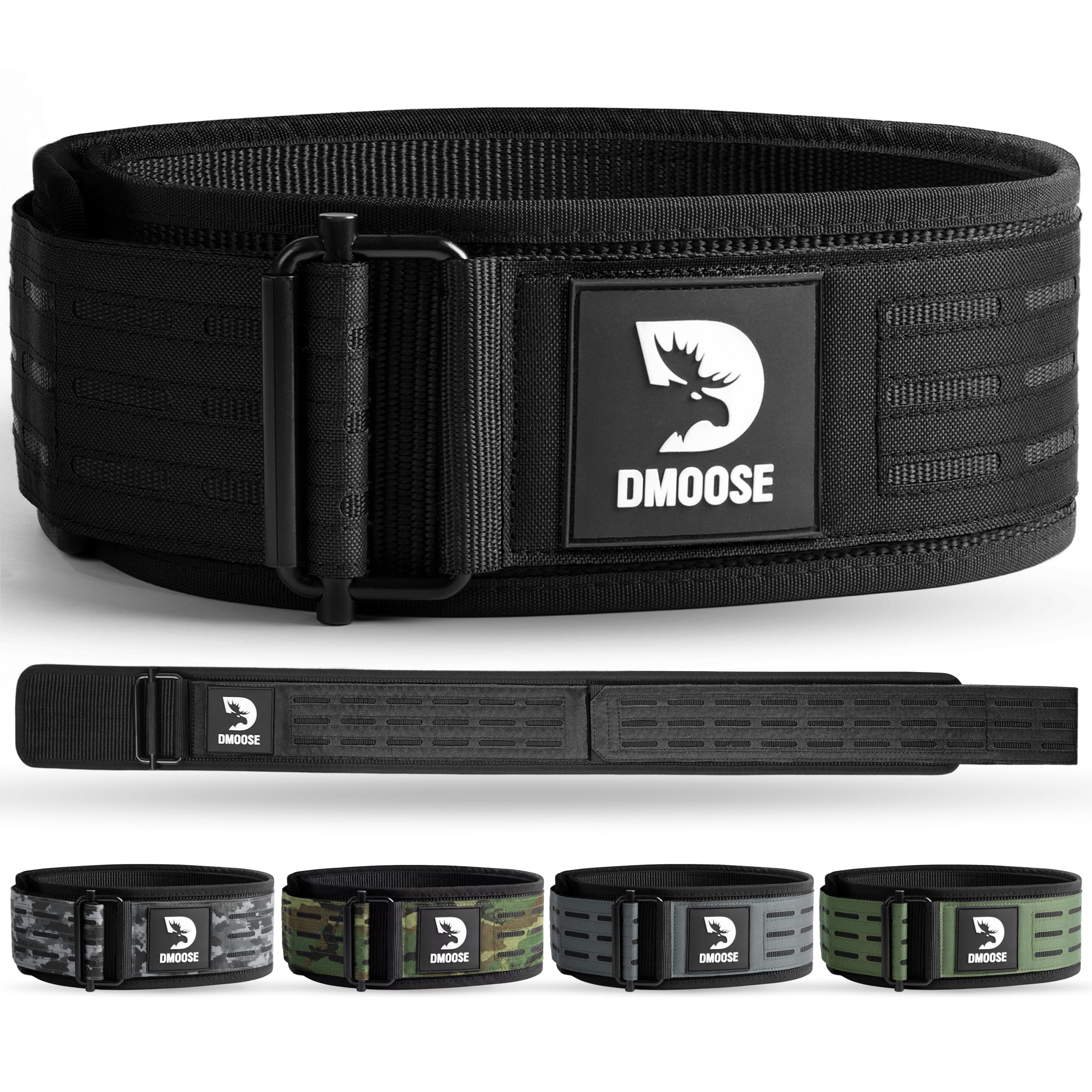
2. DMoose Fitness Auto Locking Weight Lifting Belt
The belt for lifters who change tension a dozen times a session and hate fumbling with prongs.
A 4-inch uniform width spreads pressure evenly across your lower back and gives you a consistent edge to brace against on every rep. At 4 inches it is noticeably slimmer than the 6-inch Schiek up top, which means less coverage but more freedom on lifts where a wide belt crowds your ribs. The strap-and-buckle closure cinches tight and releases with a flick, so you can drop tension between sets without fighting hardware.
The nylon body is light and flexes with you instead of digging in like a stiff leather belt, which makes it wearable set after set. Sizing is done around the navel rather than by trouser size, and the range is meant to cover a spread of body types. A one-year warranty backs the build.
What owners praise most is the overall quality and the support it gives compound lifts. The honest catch is fit and ease of use — some lifters find it hard to get tight enough, and the locking mechanism takes a session or two to feel natural. If you have a very narrow waist, check the size chart twice, and treat the first few cinches as practice rather than a defect.
Where it shines: the auto-locking buckle and quick-release make it the fastest belt here to tighten and loosen, and the 4-inch uniform width keeps the bracing surface consistent.
Fair warning: the strap closure rewards a practiced hand — lifters who want a set-and-forget prong buckle may find it fussy at first.
The right fit: anyone doing squats, deadlifts and functional work who wants fast tension changes mid-session.
Think twice: if you need maximum tightness on a very small waist — the strap closure can be harder to cinch down snug.
3. Nike Unisex Adult Strength Training Belt
A brand-name training belt for the lifter who wants simple back support without the spec sheet.
Nike’s training belt lands in the same everyday category as the nylon options above, but it leans on the name rather than a published spec list. The details it does confirm are straightforward: it is built for strength training and sized unisex for men and women. What owners value most is the back support it gives during sessions — that is the practical reason it earns a place here.
Compared to the 6-inch Schiek or the 10 mm leather belts, this is a slimmer, simpler proposition: a belt to keep in your gym bag for the days you want a little extra bracing on squats or rows. It is not trying to be a competition powerlifting belt, and that is fine — most men lifting for general strength do not need one.
The honest note is that the listing is thin on specs, so you are mostly buying a recognized name and a training-focused fit rather than a documented 4-inch or 10 mm spec. If you want the numbers spelled out, the nylon and leather picks elsewhere in this list give you more to compare. If you just want a familiar brand-name belt for lower-back support through a normal training week, this one covers it.
What it offers: Nike branding, unisex sizing, and back support that owners rate highly for general strength training.
What to know: the listing does not spell out width or thickness — if detailed specs matter to you, look to the leather and nylon picks with declared measurements.
Reach for this: if you want a recognized brand name and simple back support for regular gym training.
Look elsewhere: if you need a documented belt width and thickness to compare — this listing keeps it minimal.
4. Harbinger Weightlifting Belt, Foam, 4.5″ Width

A 4.5-inch foam belt that braced a lot of lifters before premium leather got popular.
At 4.48 inches wide, this Harbinger sits between the slim 4-inch nylon belts and the wide 6-inch Schiek — a bit more bracing surface without going full wrap-around. The body is a blend of 40% PP, 30% PE and 20% nylon, so it flexes rather than fights you, and it weighs in at 8.8 ounces. A low-profile steel roller buckle keeps hardware out of the way during lifts, and the hook-and-loop fastener is built for a strong hold without snagging.
Owners rate the quality highly and find it useful for squats and deadlifts, with the design getting some love too. That makes it a sensible first belt for a lifter moving up from no belt at all. It sizes small through X-large and is listed as unisex, so both men and women can find a fit.
Here is the catch: sizing is the recurring issue. Some lifters find it sized for a much smaller waist than expected, so measure at the navel and pick carefully rather than defaulting to your trouser size. Get the fit right and the 4.48-inch foam body braces squats and deadlifts without the bulk of leather.
Reasons it made the list
- 4.48-inch width gives more coverage than a standard 4-inch belt
- Steel roller buckle stays low-profile and out of your lift
- Light at 8.8 ounces — easy to keep in the gym bag
- Premium hook-and-loop fastener holds without snagging
Where it asks for care
- Sizing runs small for some — measure at the navel
- Foam-and-blend body will not brace like solid leather
- Hook-and-loop can weaken over years of heavy use
Best for: a lifter buying a first belt who wants a low-profile brace without spending much.
Not for: anyone who wants rock-solid leather bracing on maximal lifts — this is a supportive foam belt, not a competition slab.
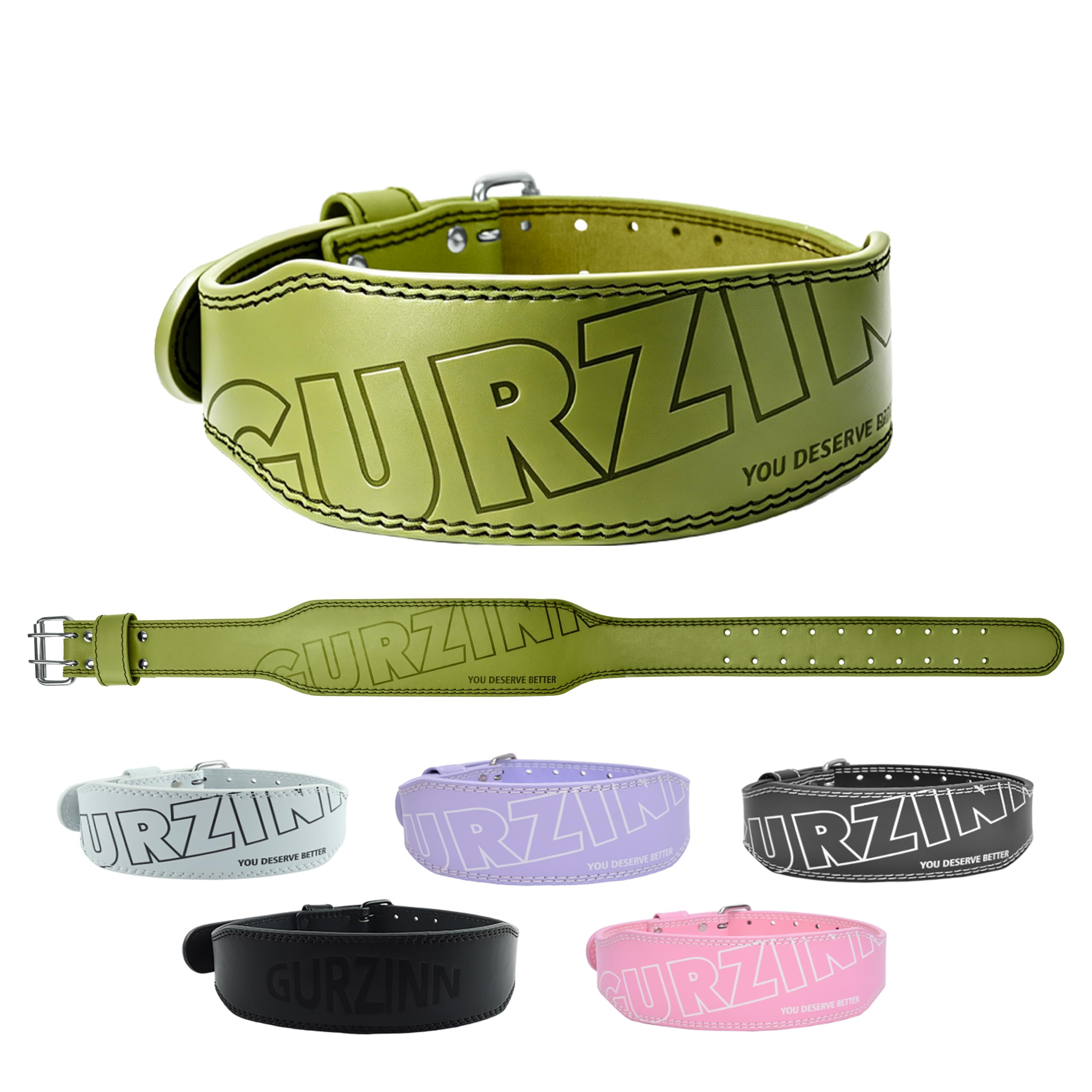
5. GurZinn 9 mm Leather Fitness Weight Lifting Belt
A 9 mm leather belt with a sponge pad, built to sit soft against your waist and still brace.
The spec that matters here is a 4-inch wide, 9 mm thick piece of double-sided leather — thick enough to hold its shape on a heavy squat, thin enough to bend with your torso rather than lock your hips in place. That 4-inch width is the same as the DMoose, but where the Schiek goes out to 6 inches, this one stays uniform so it stays out of your way on front-loaded work. A sponge pad runs along the lumbar area to cushion the pressure from the load.
Six stainless steel rivets and double reinforcement hold the belt together, and 10 rows of holes let you dial in a snug fit without a lot of guesswork. The leather is finished to sit gently around your waist with minimal friction, which owners notice — the padding is a frequently mentioned plus, and the belt stays put without feeling bulky.
Sizing runs by waist in inches, with charts from XS through L, so a man with a mid-range waist lands in the middle of the spread. The honest catch is break-in: new leather this thick starts firm and takes sessions to soften, so the first few weeks will feel stiffer than the nylon options. Put that break-in time in and the 9 mm leather holds its shape for years of heavy squats.
What wins people over: the 9 mm double-sided leather and sponge lumbar pad deliver a soft-feeling coat over a belt that still gives solid support — durability gets its own nod from owners who train hard.
The reality check: thick new leather needs break-in, and the fit is tied to the brand’s own waist chart, so measure rather than eyeball.
The good match: a lifter who wants the bracing of leather with a padded, less abrasive feel against the waist.
Consider another: if you cannot spare a break-in period — nylon belts here arrive ready to wear.
6. POZTEV Powerlifting Lever Belt, 10 mm Leather

A 10 mm leather belt with a lever that flips open in a blink — built for lifters chasing bigger numbers.
The lever is the reason to look here. Instead of threading a prong, you flip a lever closed and it locks your tension in place, then flips open to release between sets. That is the fastest way to preset a tight belt and get straight into a working set, and it is the closest thing in this list to how powerlifters actually train. The body is 10 mm thick leather with a 4-inch vertical back support, so you get a solid wall against your midsection on squats and deadlifts.
The leather is pre-broken, which means it starts more flexible than raw 10 mm slabs and is meant to resist tearing or wearing thin. That matters when a lever belt gets torqued hard — a weak body would fold under repeated tension, and owners speaking to the 10 mm support suggest it holds up on heavy work. A one-year free replacement warranty backs the purchase.
The trade-off is the lever system itself. It takes a little setup to get the tension right, and some lifters find the locking mechanism and adjustability need practice before they feel natural. Size it off your waist chart and give the first few sets some patience — once dialed in, the lever makes every set faster than a prong buckle ever will.
Why it earns a premium spot
- Lever buckle releases in seconds between sets
- 10 mm leather with 4-inch vertical back support
- Pre-broken leather starts flexible, not plank-stiff
- 1-year free replacement warranty
What to plan for
- Lever tension takes a session to dial in
- Thick leather feels firm compared to nylon
- Adjustability is less instant than a strap closure if you change size often
Pick it for: heavy squats and deadlifts where you want a preset lever tightness and fast release.
Skip the lever: if you like to fine-tune tension every single set — a strap closure is quicker to micro-adjust.
7. Fitgriff Classic Weight Lifting Belt

Old-school double-prong leather that molds to your waist over time.
Three layers of 100% cowhide add up to a 5 mm thick belt — the thinnest leather here, and that is deliberate. A 5 mm belt bends with your torso while still giving your abs something firm to push against, so it suits lifters who want leather support without the locked-in feel of a 10 mm slab. The double prong buckle and solid rivets are the traditional setup, built to hold tight through years of training.
Owners consistently highlight how well it supports squats and shrugs, and note it is a solid addition to a regular routine. The leather becomes more comfortable as you use it, which is the whole point of a classic design — it will not feel custom on day one, but it settles into your waist over the first weeks.
The honest catch is fit: sizing draws the most attention, and some find it runs small, so measure your waist at navel level over a shirt and use the brand’s chart before ordering. If you get that right, you have a genuine leather belt with a two-year guarantee behind it, at a price that undercuts most of the leather options here.
The appeal: three-layer 100% cowhide at 5 mm is the most flexible leather construction on this list, and the double prong buckle will not wear out on you.
Read the chart: the fit is the one variable people wrestle with — the brand runs its own waist sizing, so measure rather than guess.
Made for: a lifter who wants traditional leather bracing with a flexible feel and a two-year guarantee.
Not ideal: if you want the board-stiff wall of a 10 mm competition belt — 5 mm is deliberately softer.
8. MRX Powerlifting Leather Belt, 4″ Wide, 10 mm
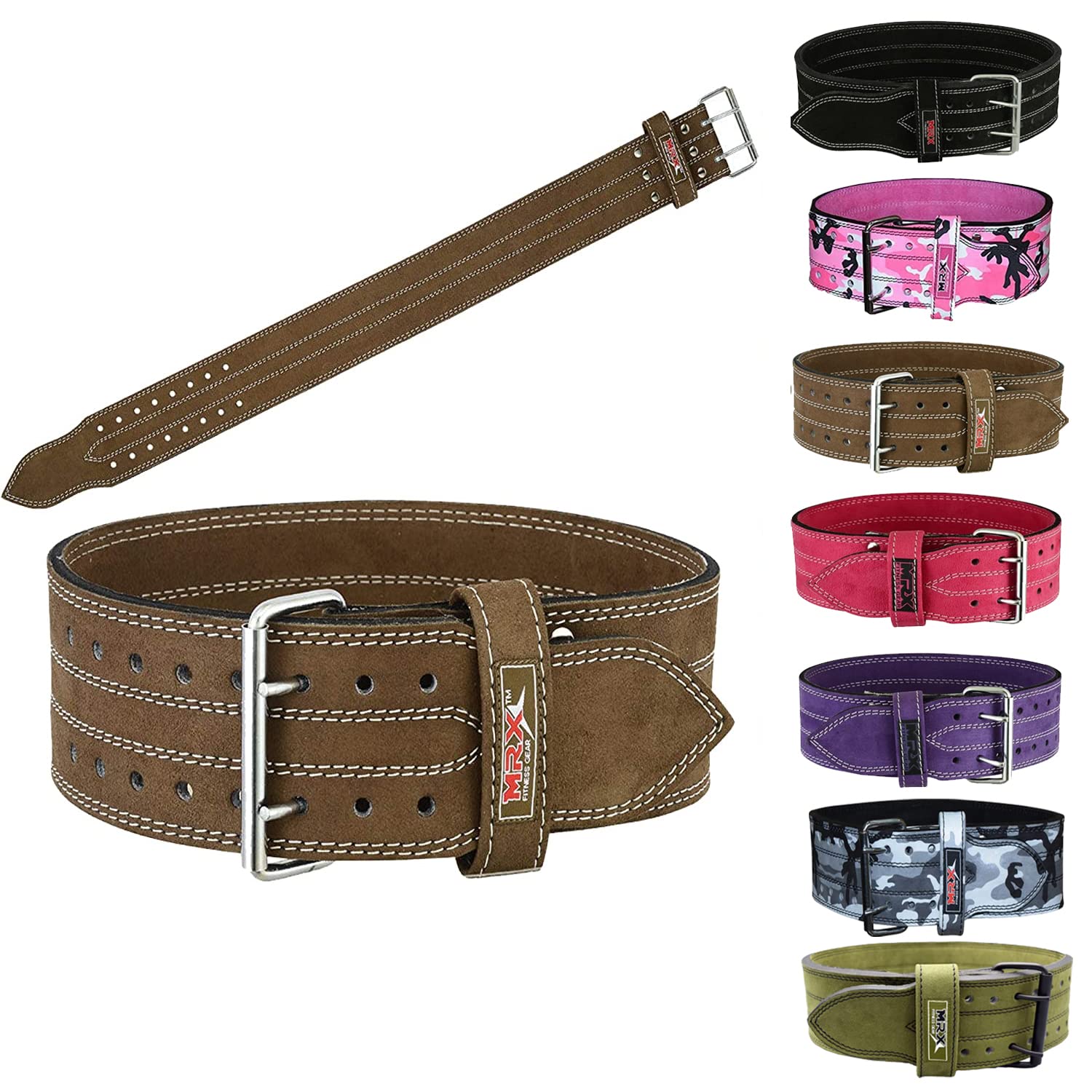
A 10 mm leather belt with a full 4-inch back, sized for lifters who need a roomier cut.
This is the roomiest leather belt in the lineup by far. MRX offers sizes from Small all the way to 3XL, with waists ranging from 27 inches up to 50 inches, so a lifter who struggles to find a belt that closes will find this one. The body is 10 mm thick leather with a 4-inch wide back support, and it weighs 2 pounds — a substantial piece without being an anchor in your gym bag.
The stainless steel slide bar buckle is the other draw. It adjusts by sliding rather than threading fixed holes, which means you can tighten it to your exact waist instead of settling for the nearest hole. Owners point to the value — it delivers the support of a heavier leather belt without the high-end price, and it fits well thanks to that wide size range.
What to expect: new 10 mm leather is stiff, and that stiffness is a known gripe until it breaks in, so give it time to soften. Some lifters also find the sizing needs checking against the chart before you commit. Once broken in, the 10 mm body and 4-inch back give you competition-grade bracing at a budget-leather price.
Where the value lands
- Widest size range here — Small through 3XL, 27 to 50 inches
- 10 mm leather with 4-inch back support at a tighter price
- Steel slide bar buckle tightens to your exact waist
- Durable and functional for everyday lifting
Expect from day one
- Stiff when new and needs break-in time
- Sizing still worth checking against the chart
- Slide bar buckle is less common to adjust than a prong
Thumbs up if: you want thick leather bracing and a size range that reaches larger waists.
Hold off if: you want a belt that feels flexible in week one — this one needs a break-in stretch.
9. Iron Bull Strength 7 mm Leather Belt (IPF Approved)
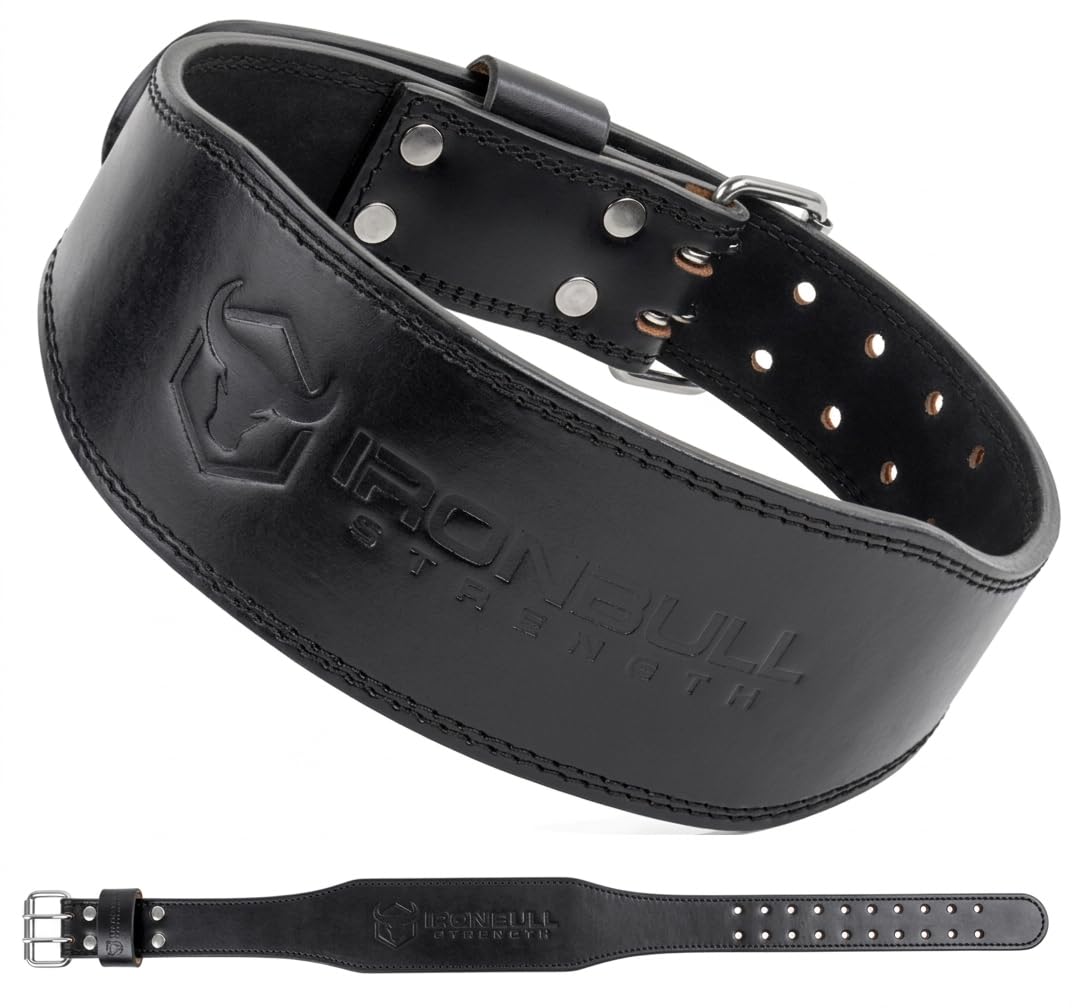
The tapered 7 mm belt for lifters who want competition-style support without a slab.
The 4-inch by 2-inch taper is the defining shape here. A tapered belt is full width across the back and narrows at the front, so it keeps a wide wall over your lower back while staying out of the way on front-loaded lifts like cleans and front squats. At 7 mm it is thinner than the 10 mm POZTEV and MRX belts, which makes it more flexible and less disruptive through a full range of motion.
Iron Bull cuts the core from single pieces of A-grade leather rather than gluing smaller offcuts together, so the thickness stays consistent across the whole belt. Double roller steel buckle prongs and double stitching run throughout, and the belt carries IPF, USAP, USPA, IPL, USAW and IWF references for competition use. If you compete or are heading that way, that notation is the checklist box many federations look for.
Owners rate the material quality highly and describe the leather adapting to the body over time — the 7 mm construction is part of that. The honest catch is fit and the break-in of stiff new leather; use the brand’s own waist chart and measure with a flexible tape rather than your trouser size. Do that, and the tapered 7 mm cut keeps a wide back wall while clearing your hips on cleans and front squats.
Standout spec: a 4-to-2-inch tapered 7 mm A-grade leather body that bends where a competition slab stays rigid, without giving up the back wall.
Buyer beware on fit: the sizing runs off your true waist measurement, and the new leather needs time to soften — both are worth planning around.
This one suits: Olympic lifters and competitors who want a tapered, flexible leather belt with competition markings.
Not for you: if you train only heavy powerlifting squats and want maximum thickness — a 10 mm belt braces harder.
Know the Specs
Width and thickness
Width is how much belt wraps your torso — 4 inches is the standard uniform band, and 6 inches covers more of your front and back for a bigger bracing surface. Thickness is the material’s gauge: a 5 mm or 7 mm leather belt bends with you, while 9 mm and 10 mm give a firmer wall to push against on maximal lifts. A thicker belt feels more supportive but needs break-in, and a thinner belt feels flexible from the start.
Closure type
A double-prong buckle is slow but permanent, a lever flips open and closed in a second, and a hook-and-loop strap or auto-locking buckle lets you tighten and release on the fly. If you change tension often between sets, the faster closures make a real difference; if you set it once and lift, the buckle will outlast them all. Match the closure to how you actually train, not to what sounds strongest.
Tapered versus uniform
A tapered belt runs wide across the back and narrows at the front, which keeps your back braced while freeing your hips on front-loaded lifts. A uniform belt keeps the same width all the way around, so it braced evenly but can crowd your ribs on some movements. If you compete in Olympic lifting or do a lot of front squats, the taper matters; for pure squat and deadlift work, uniform is fine.
Sizing
Measure around your navel with a flexible tape, over a T-shirt, and ignore your trouser size. Brands run their own charts, and the same labelled size lands differently across makers — some run large, some small. If you are between sizes, follow the brand’s guidance rather than ordering up or down by default, and check the chart again if you plan to wear the belt over a thicker shirt.
Common Questions
Do I need a 4-inch or 6-inch belt for squats?
Does a leather belt need breaking in?
How do I measure my waist for a lifting belt?
Is a lever belt faster than a buckle belt?
Can I use a nylon belt for heavy deadlifts?
What does IPF approved mean on a lifting belt?
Will a 10 mm belt feel too stiff for a beginner?
Should I wear a belt over my shirt or against my skin?
How tight should a lifting belt be?
The Bottom Line
For most men training squats and deadlifts, the workout belt for men winner is the Schiek Sports 2006 Nylon Belt because its 6-inch width gives the biggest bracing surface here and the hybrid buckle-and-strap closure is quick to adjust. If you want a lever that flips open in a second for heavy sessions, the POZTEV Lever Belt is the one to reach for. And if you need a size range that reaches larger waists, the MRX Leather Belt covers Small through 3XL and delivers 10 mm leather bracing. Whichever you pick, measure at the navel first and give new leather time to break in.
How we choose
We do not accept paid placement. Every pick is matched to a real buyer and a real use-case; we do not hands-on test units.
Sources
Specifications: manufacturer listings and product documentation. Review insights: verified customer reviews, as of November 2026. Pricing: not shown on this page (it changes often); check the current price via the retailer link.
As an Amazon Associate, Tactical Gear Guy earns from qualifying purchases. This does not affect which products we feature.