Specs are compiled from manufacturer listings and verified buyer reviews and can change over time — please confirm the key details on the product page before buying.
A bad pair of work shoes turns an eight-hour shift into a punishment. The fix is simpler than the marketing suggests. You want a protective toe box that matches the hazards on your site, an outsole that holds on wet concrete, and enough underfoot cushioning to get you to the end of the day without hobbling to the car. This guide sorts work footwear by the hazard each pair actually protects against, so you can match a boot to your job.
This guide is built by comparing the manufacturers’ published specifications and the patterns across verified customer reviews, so you get each pick’s real strengths and trade-offs instead of marketing spin.
Some pairs here are built for a wet kitchen, some for a muddy site, and some for a warehouse floor that never dries out. Below you will find the full breakdown of the workman’s boots and shoes worth your money right now.
Top Picks

How To Choose Workman’s Boots and Shoes
Most people buy work footwear on looks and then find out on the third day that the toe pinches or the sole goes slick on a wet floor. Getting the right pair starts with knowing which hazard you actually face and how many hours you spend standing on hard ground.
Match the toe cap to your job
A steel toe is the traditional choice for construction and heavy material handling, and it protects against falling or rolling objects. An alloy toe does the same protective job with less metal weight, which matters if you are lifting your feet thousands of times a shift. A composite cap is the lightest option and, unlike steel, does not conduct the cold, so it stays warmer on a winter site. Each has a different ASTM rating printed on the box — check that the rating actually matches what your employer requires.
Slip resistance is a floor question, not a tread question
A deep lug pattern looks tough, but it tells you nothing about how the sole compound behaves on an oily tile. Look for an outsole explicitly described as slip resistant or marked with an SR rating, and pick a rubber or TPU compound over a hard plastic one if you work near wet or greasy surfaces. Kitchen and restaurant staff should prioritize this over everything else.
Waterproofing and the wet-shift question
A waterproof leather boot and a rubber pull-on handle water differently. Leather with a membrane breathes and works for most splashes and rain, while a full rubber and neoprene boot keeps your feet dry through standing water and puddles but traps more heat. If you work outdoors in all weather, a rubber boot is the workhorse; if you rotate between indoors and out, a leather boot with a waterproof membrane is the easier daily wear.
Get the size right the first time
Work footwear should have a bit of extra room in the toe for swelling at the end of a shift. Measure your foot in the evening, then follow the maker’s size chart rather than guessing from your sneaker size. If a brand’s reviews say it runs narrow or large, size accordingly, and break the boots in at home before you wear them to the job site.
Side-by-Side Comparison
| Model | Best For | Toe Type | Weight | Waterproof | Amazon |
|---|---|---|---|---|---|
| Cat Footwear Striver Steel Toe★ Best Overall | All-around value | Steel | — | — | Amazon |
| Skechers Ultra Flex 3.0 SR JinieBest for Women | Women’s service shifts | — | 1.5 lb | — | Amazon |
| Reebok Work N Cushion 4.0Kitchen Workhorse | Kitchen and restaurant | — | 3 lb | — | Amazon |
| NINGO Waterproof Steel Toe | Wet construction sites | Steel | — | Yes | Amazon |
| TIDEWE Rubber Work Boots | Puddles and mud | Steel | — | Yes | Amazon |
| Carhartt Rugged Flex WP 6″ | Cold weather jobs | Steel | 4.5 lb | Yes | Amazon |
| Timberland PRO Pit Boss | Everyday industrial wear | Steel | 1.83 lb | — | Amazon |
| Timberland PRO Barstow Wedge | Cushion on concrete | Alloy | 2 lb | — | Amazon |
| KEEN Utility Gibson | Wide toe comfort | Carbon fiber composite | — | Yes | Amazon |
Detailed Reviews
1. Cat Footwear Striver Steel Toe
Our pick — 4.5+★ from 650+ verified ratings; the strongest balance of quality and price.
The no-drama steel toe that keeps a whole crew on its feet while staying affordable.
The Striver is a steel-toe work boot from Caterpillar, model P91672, and it earns the top spot here on a simple reason: it gets the fundamentals right and never makes you think about it. The steel toe protects against the falling and rolling objects that cause most shop-floor toe injuries, and the slip-resistant outsole keeps you planted on wet ground. That combination covers construction, warehouse, and general industrial work at a mid-range price.
What wins people over is the build quality — it is the most-praised thing about this boot, and it shows in how the boot holds its shape after months rather than weeks. Comfort and fit follow close behind, and the majority wear this true to size. The break-in is gentle enough that most wearers get through their first week without a blister. One thing worth knowing if you are moving over from a sneaker-style work shoe: this is not a featherweight, and the weight is a fair trade for that steel cap.
Here is the honest comparison since the Cat Footwear listing shows a product dimension of 0.39 x 0.39 x 0.39 inches — a placeholder in the listing, not a real physical measurement — so judge the fit by the size chart, not the spec line. Otherwise it is a dependable boot for workers who need protection and comfort, not a fashion statement.
Why This One Leads
- Steel toe protection for heavy-material work
- Slip-resistant outsole for wet shop floors
- Build quality that holds shape for months
- True-to-size fit in most cases
Before You Click Buy
- Heavier than a sneaker-style work shoe
- The product-dimension listing does not reflect real sizing
Reach for this if: you want a proven steel-toe boot for mixed indoor and outdoor work and want to keep the spend sensible.
Look elsewhere if: you need a waterproof membrane or a composite toe — this one is steel and not marked waterproof.
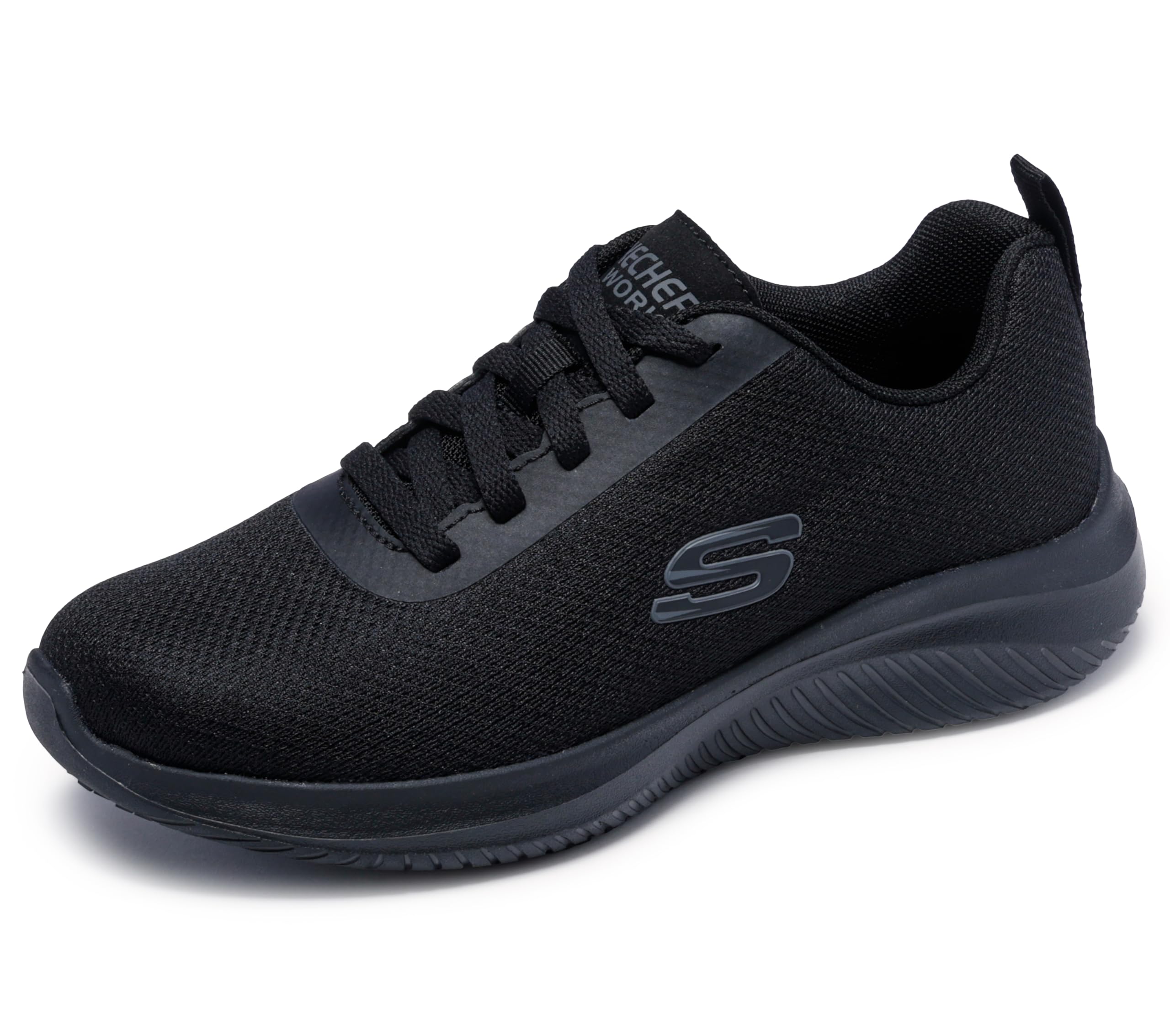
2. Skechers Women’s Work Ultra Flex 3.0 SR – Jinie
A featherweight women’s work shoe made for people who stand all shift, not sit.
At 1.5 pounds, the Jinie is the lightest shoe in this lineup, and that is not a small detail when you are on your feet for the whole shift. It is a women’s work shoe with a slip-resistant outsole, a breathable mesh upper, and memory foam cushioning — the start of a comfortable shift. The relaxed fit design leaves room in the toe box, and the electrical hazard protection means it is intended for healthcare, restaurant, and service settings where accidental contact with a live circuit is a concern.
Comfort is the headline here, with room to spare in the toe box and true-to-size fit making it a safe pick for women who usually have trouble finding work shoes that do not squeeze. The slip-resistant traction is a real benefit on a wet kitchen floor. The memory foam and breathable mesh upper keep your feet from overheating, so you barely notice the shoe after a long shift.
The catch, for anyone who wants a rugged outdoor boot, is that this is a work shoe, not a boot — the mesh upper is not waterproof, and the low profile leaves the ankle exposed. Compare it head to head with the Carhartt boot: at 1.5 pounds vs 4.5 pounds, the Jinie is a full 3 pounds lighter, which is the whole reason it works for an eight-hour shift on tile.
Lightness you notice: 1.5 pounds is the reason your legs still feel fresh after a double shift, and the mesh upper keeps your feet from getting hot.
The honest limit: no waterproofing and no ankle coverage, so this is a dry-floor indoor work shoe first.
Best for: healthcare workers, restaurant servers, and anyone standing on hard floors all day who wants a shoe that disappears on the foot.
skip it if: you need protection from water, ankle support, or toe-crush hazards.
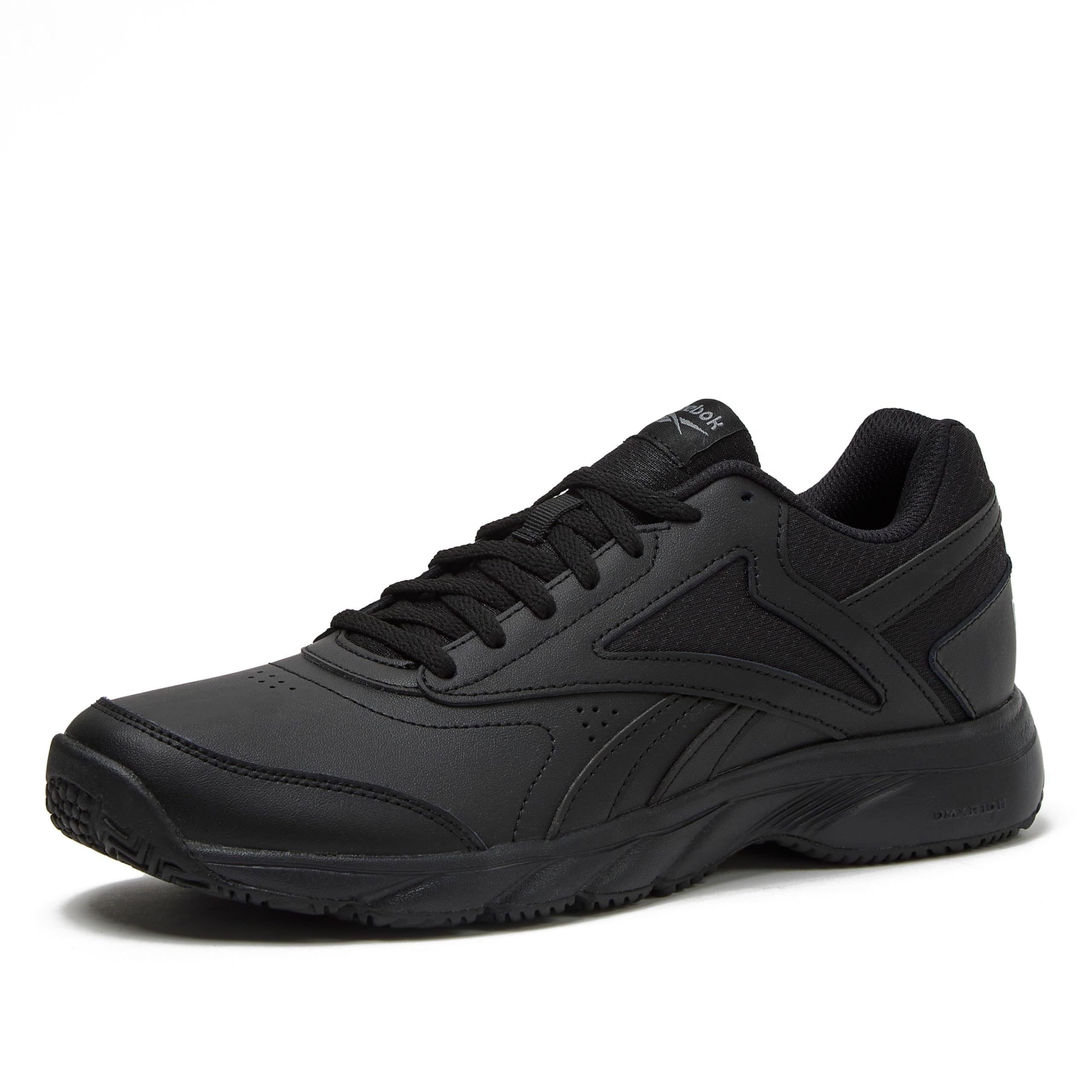
3. Reebok Work N Cushion 4.0 Work Shoes
Built for the kitchen floor that never quite dries, with cushioning that follows your stride.
If you work in a restaurant, the Reebok Work N Cushion 4.0 is the shoe that matches your actual job. The oil- and slip-resistant outsole is the feature that matters most on a greasy tile floor, and it is specifically intended for waiters, cooks, and prep staff. The DMX Ride+ cushioned foam midsole runs heel to forefoot, so the cushioning follows your stride rather than sitting in one spot. The INSITE Pulsion foam sockliner adds a responsive feel underfoot on long shifts.
Quality and comfort are the two things this shoe gets praised for most, and the durability holds up in a hot, wet kitchen where shoes often fall apart at the seams. At a mid-range price, this Reebok delivers cushioning from a brand known for it. The fit is where opinions split: some wearers find it an excellent fit while others find it runs narrow. If you have wide feet, order deliberately and check the size chart rather than assuming the standard size.
Compare the package dimensions to the Carhartt boot: 14 x 9 x 5 inches vs 12.99 x 11.81 x 4.92 inches, so the Reebok box is 8% more in volume terms — a small reminder this is a shoe, not a tall boot. Slip resistance is the other split opinion, and the honest read is that on a genuinely wet floor you should still watch your step rather than trust the label blindly.
What makes the shifts easier: the oil and slip resistant outsole plus a cushioned foam midsole that runs heel to forefoot, so your feet get support through the whole gait cycle.
Fit warning: a narrow cut is the recurring report, so wide-footed workers should size up or try before buying.
The right pick for: restaurant and kitchen staff who need oil resistance and long-shift cushioning in a shoe they can wipe clean.
Consider another option if: your feet run wide, or your job requires a protective toe cap.
4. NINGO Waterproof Steel Toe Work Boots
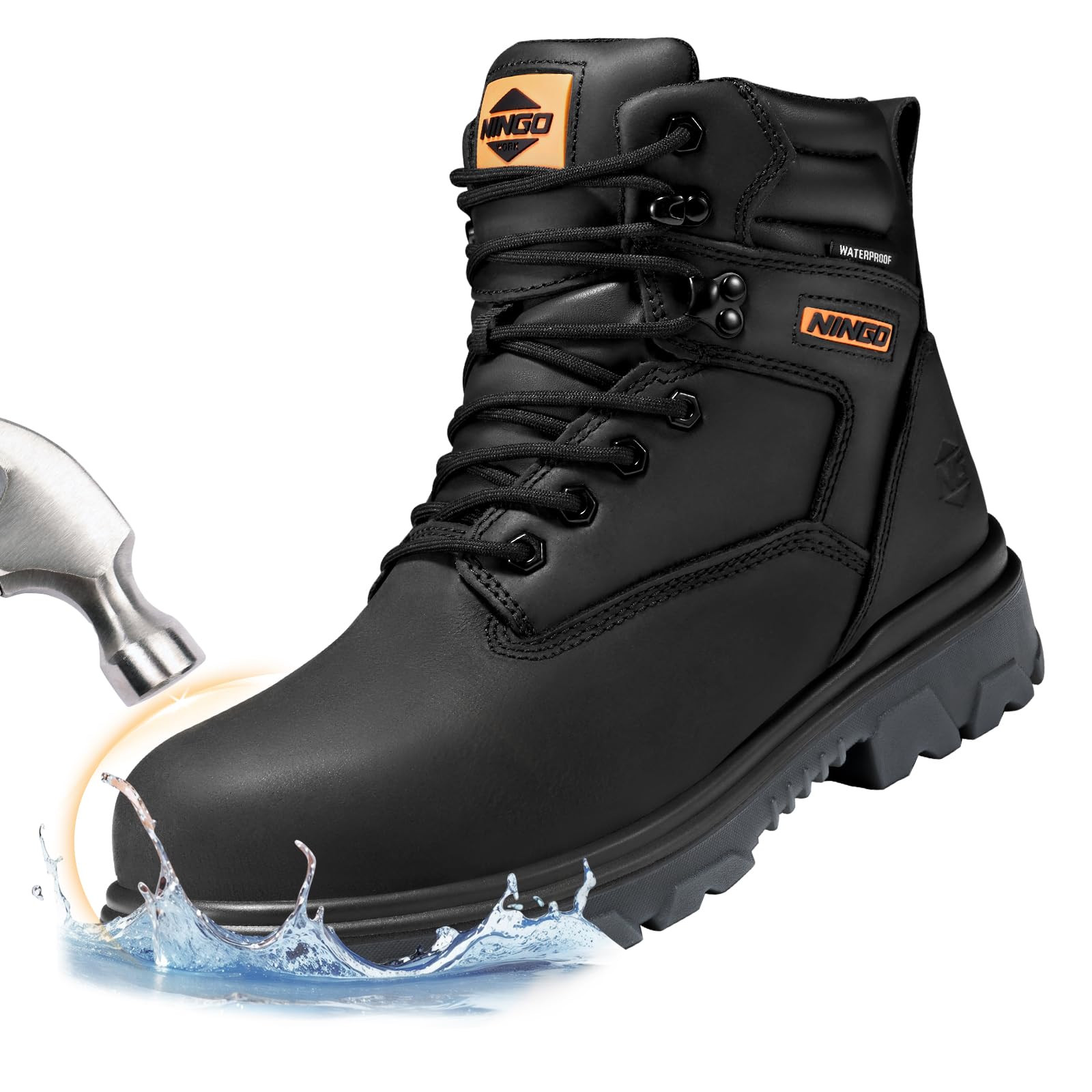
The budget-priced boot that still meets ASTM steel-toe, electrical-hazard, and puncture standards.
This is the boot you buy when the job site is wet, muddy, and full of sharp debris, and you still want to keep the spend in check. The steel toe meets or exceeds ASTM F2413-24 standards for impact (I-75), compression (C-75), and Electrical Hazard protection, which covers the majority of day-to-day construction hazards. The full-grain leather upper is designed for abrasion resistance and breathability, and the direct-attach construction bonds the outsole to the upper to reduce the chance of separation over time.
The outsole is a TPU SR lug pattern, and TPU is the harder-wearing choice — comparative testing in the listing claims up to three times greater abrasion resistance versus traditional rubber. Traction and safety features both come in for positive mention, and one line in the listing says you can wear them without a break-in period.
The one honest split is weight. Some wearers find these boots manageably light for a steel toe, others find them heavy — and that is a quibble you can live with given the safety features you are getting. For a mid-range price you are getting a waterproof leather boot with a puncture-resistant sole, and that is a genuine value.
What You Are Getting
- ASTM F2413-24 rated steel toe with I-75 impact and C-75 compression protection
- Waterproof full-grain leather upper
- Puncture-resistant TPU SR lug outsole
- Removable high-rebound insole with gel heel padding
What to Weigh Up
- Weight opinions are genuinely split
- Not the lightest steel toe here
The standout spec: ASTM F2413-24 steel toe protection with I-75 impact and C-75 compression ratings, at a mid-range price.
One real caveat: the weight is a genuine coin toss, and if you have an old knee injury you may want the lighter Cat Footwear boot instead.
5. TIDEWE Rubber Work Boots
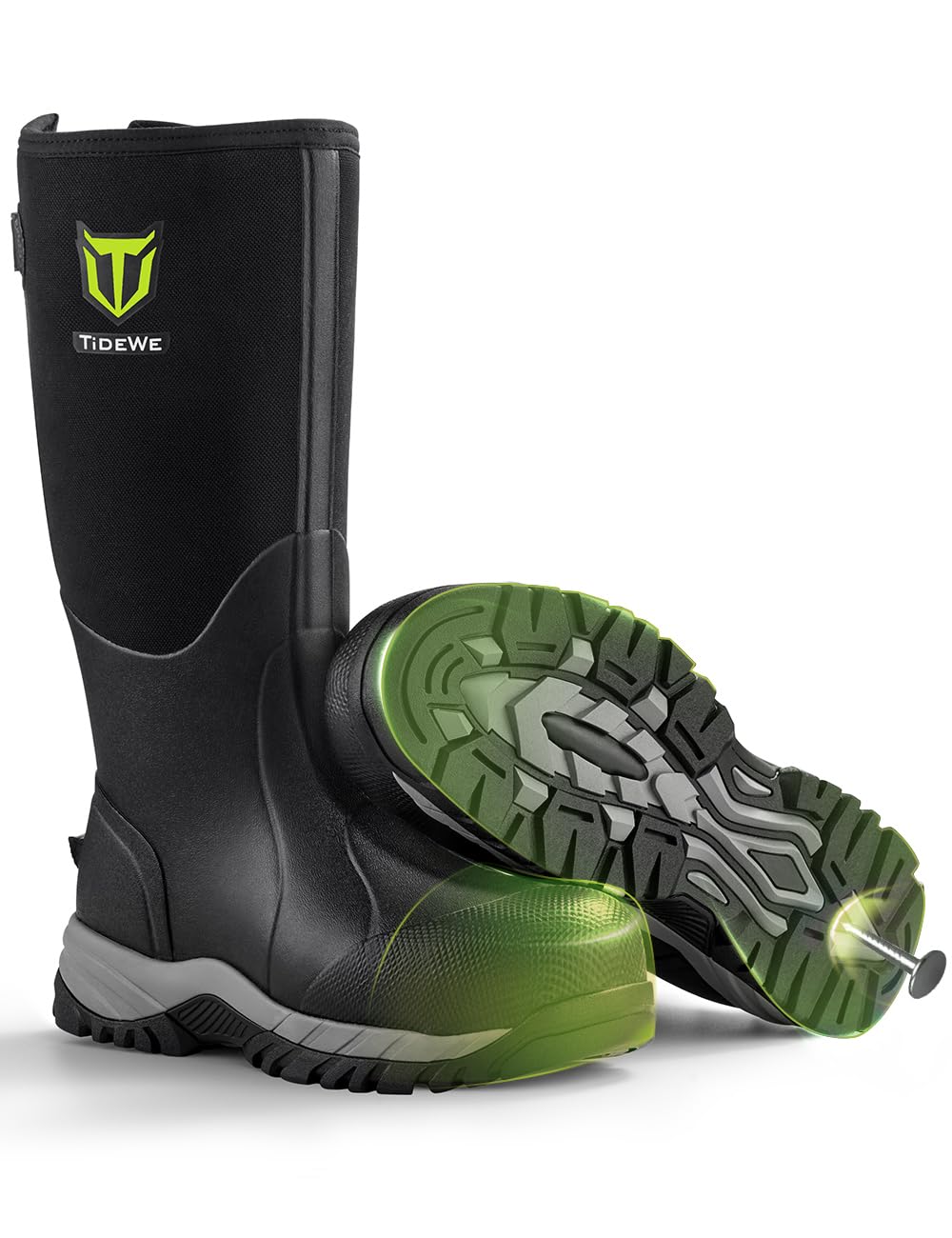
A full rubber boot that shrugs off standing water and mud without asking for a break-in period.
When the puddle is ankle-deep and the mud has no bottom, leather is the wrong answer and this is the right one. The TIDEWE work boot is 100% waterproof rubber and neoprene — so it handles standing water in a way no leather boot can. The steel shank sits between the insole and the outsole to protect the sole of your foot and provide support through a long day, and the steel toe handles impact from falling or rolling objects. The puncture-resistant layer adds secondary underfoot protection against sharp debris.
What buyers notice first is that feet stay dry and warm — the 6mm neoprene insulation does its job when the temperature drops. The breathable inner lining helps on warmer days, so the boot does not turn into a sweatbox if you are working in the sun. The pull-on and kick tab is a practical touch that gets you out the door faster. The shaft circumference is 10 inches, and the boot is ankle-high, so you get ankle coverage without a full knee-high silhouette.
Sizing is the one thing to pay careful attention to. The listing asks you to measure your foot and refer to the insole length and width in the size chart, choosing a size approximately 0.16 inches larger than your actual foot measurement. Skipping that step is the surest way to end up with a boot that is too tight or too loose.
Where it shines: the 100% waterproof rubber and neoprene build and the 6mm neoprene insulation keep you dry and warm in wet, cold ground conditions.
Don’t overlook: the size chart — the listing specifically asks for about 0.16 inches more than your actual foot length.
Pick this one for: farm, fishery, garden, or any job where you are standing in water or mud instead of on a dry floor.
Not your boot if: you work indoors on tile, where a rubber boot traps heat and an oil-resistant shoe does the job better.
6. Carhartt Rugged FF6213-M Work Boot
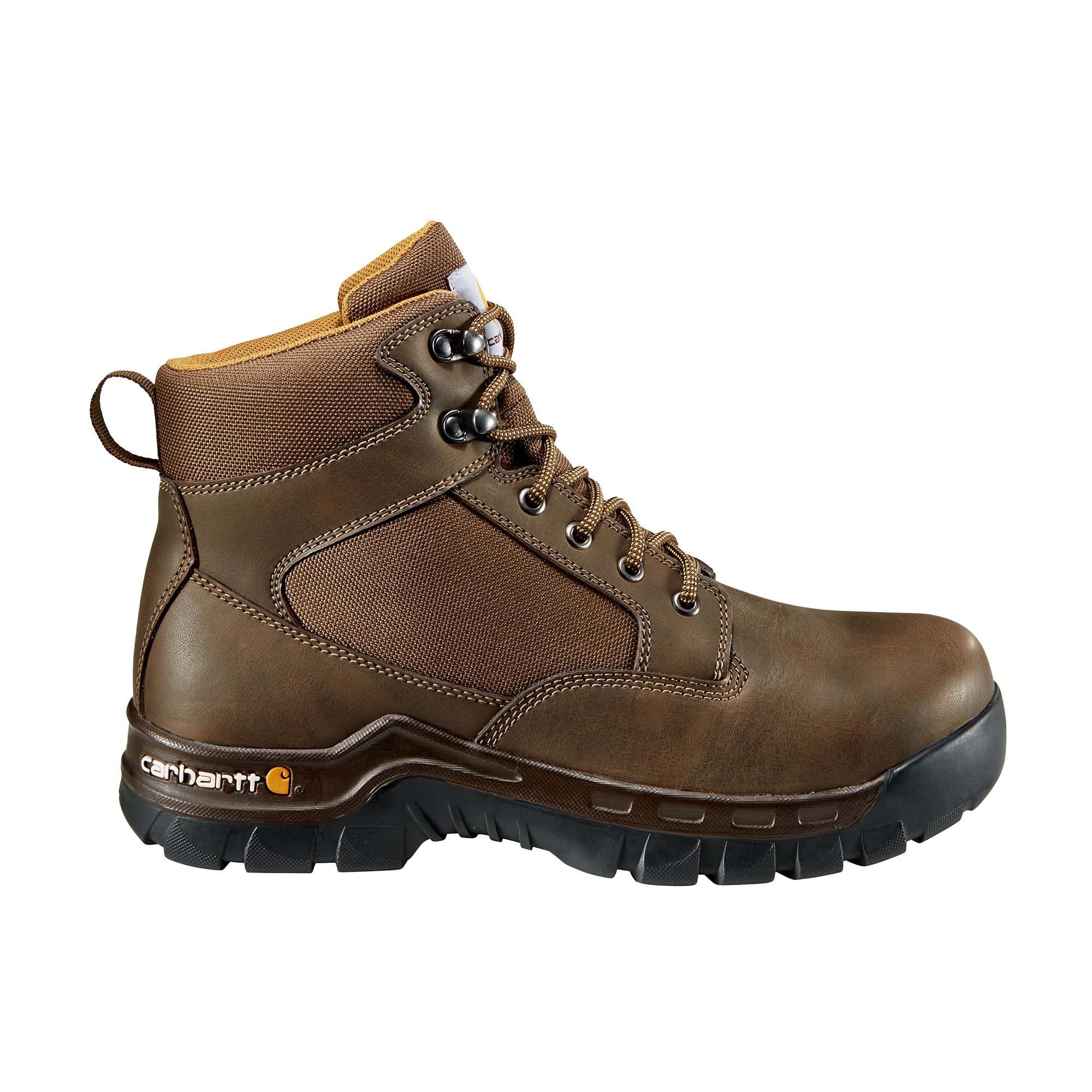
A six-inch leather waterproof boot that keeps the rain out and the toe protected.
Carhartt’s Rugged Flex steel-toe boot is built for a wet construction site in cold weather. The Storm Defender waterproof membrane keeps feet dry while allowing breathability, so you are not trading clammy for soaked. The steel toe meets ASTM 2413-21 standards, the premium brown leather and Carstrong fabric upper handle abrasion, and the cushioned polyurethane insole with a PU Strobel pad and EVA filler works to reduce foot fatigue. The slip-resistant Rugged Flex rubber lug outsole provides grip on uneven, wet ground.
Durability and protection are the things this boot gets praised for most, and one point in the customer summaries is that it performs reliably in wet and rainy weather. That is the core of what it is meant to do. Comfort and fit are the split opinions — some wearers find it comfortable and well fitting, others find it very uncomfortable and too big, and value is likewise a mixed verdict. The honest read is that this boot is a better match for people who prioritize protection and will break it in gradually.
The comparison that matters is weight: at 4.5 pounds, the Carhartt is 3 pounds heavier than the 1.5-pound Skechers Jinie — which tells you this is a proper outdoor boot, not an indoor work shoe. That extra weight buys you a waterproof membrane and a steel toe that the lighter shoe does not have. If you want a boot you can put on and forget about, the Jinie is the easier wear; if you need real wet-weather protection, this is the one.
The protection payoff: the Storm Defender waterproof membrane and ASTM 2413-21 steel toe make this a serious wet-weather work boot.
The real trade-off: at 4.5 pounds, this is a heavy boot, and the fit runs differently for different feet — check the size chart before ordering.
Buy this for: outdoor work in rain and cold, where a waterproof leather boot and a steel toe are non-negotiable.
Pass it over if: you need a lightweight indoor shoe, or you want a guaranteed-comfortable fit from the start without breaking in.
7. Timberland PRO Pit Boss Work Boot
The industrial boot with a steel toe and a roomy box that thousands of workers keep coming back to.
The Pit Boss is Timberland PRO’s classic industrial work boot, and it has the widest following in this lineup. The steel toe construction meets ANSI safety standards, and the design leaves a roomier toe box than many competing boots — which is the difference between a tolerable shift and a painful one. Nylon shock-diffusion plates add support and torsional rigidity. The outsole is built for grip on wet or slippery surfaces, and the electronic hazard protection is intended to reduce risk from accidental contact with live circuits. A removable sock liner lets you swap in your own insole if you want.
Construction quality is the most-mentioned positive here, and it is why this boot has built such a large and loyal following. Long-term durability is the one split: some buyers report their boots holding up for years, while others report them falling apart sooner than expected. That is not unusual for an industrial boot used hard, but it is worth knowing that you are trading a bit of durability variance for a very comfortable everyday wear. The value for money aspect comes in strong as well, which for a boot at this price point is a real argument.
At 1.83 pounds, the Pit Boss is many pounds lighter than the Carhartt and the heavy S-T-C boots mentioned here, which makes it a more realistic daily wear if you are not standing in water. It is not waterproof and it is not a mud boot — but it is the everyday industrial boot people keep reaching for.
The Everyday Performer
- ANSI-rated steel toe with a roomier toe box
- Nylon shock-diffusion plates for support
- Electronic hazard protection
- Removable sock liner for custom insoles
The Long-Shift Reality
- Durability is a split verdict — some report early wear
- Not waterproof
For the worker who: wants an everyday industrial boot with a roomy toe box and solid brand support behind it.
Keep looking if: you need a waterproof boot for wet ground, or you are rough on boots and want maximum expected lifespan.
8. Timberland PRO Men’s Barstow Wedge Alloy ST Work Boot

A wedge sole with an alloy toe that trades lug bite for underfoot cushion.
The Barstow is the Timberland PRO work boot for people who want cushioning and a lighter protective toe. The alloy safety toe protects without the weight of steel, and the wedge sole is designed for superior cushion underfoot, which matters on a hard factory floor or a concrete warehouse. The leather upper has a vintage look, and the slip-resistant outsole keeps you sure-footed. At 2 pounds, it is the pickup-truck of work boots — practical, comfortable, and not trying to be a rugged mud boot.
Comfort is the runaway winner here, and one consistent note in the customer summaries is that you can wear these all day. Value for money comes in strong too, especially for a boot with a leather upper and an alloy toe. The two things to weigh are fit and durability. Fit is a split opinion — wide-footed wearers find it suitable while others say it runs large. Durability is similarly divided, with some reporting their boots lasting 5+ years and others finding them falling apart. That kind of split typically reflects different work environments more than different boots.
This is the boot where the wedge sole is the whole argument. If your shift is spent on concrete or a hard factory floor and your feet hurt by mid-afternoon, a wedge sole can change your day. If you work on wet ramps or gravel, a lug sole is still the better call.
The flex: a leather upper, an alloy toe, and a wedge sole that gives you cushioning straight through the heel and forefoot.
The caution: fit is a mixed report on wide feet, and durability is hit or miss depending on how hard you use it.
Go with this if: your feet ache on concrete and you want an alloy toe without the bulk of a heavy steel boot.
Choose differently if: you need waterproofing or deep-lug traction on outdoor mud and gravel.
9. KEEN Utility Gibson Work Boots

The most-trusted brand in work footwear takes a lightweight route with a carbon fiber toe.
The KEEN Utility Gibson is the work boot for people who want the protection of a safety toe but hate the feeling of a steel-capped brick on their foot. The carbon fiber safety toe meets ASTM F3445-21 and F2413-18 M I/75 C/75 ESD/SD 35 standards, which is a serious set of ratings. The full-grain water-resistant leather upper and mesh liner help keep feet cool in warm environments, and the KEEN.ReGEN midsole is designed to resist compression over time. Electrical hazard (EH) and Electric Shock Resistant (ESR) protection is built in for accidental outsole contact with live circuits. The slip-resistant rubber outsole meets ASTM F2913-19 SATRA and ASTM F1677-96 Mark II non-slip standards, and the direct attached outsole is built to flex without separating.
Comfort and quality are the two things this boot gets praised for most, and the fit gets an especially strong endorsement — the leather is soft enough that people describe it as part of their foot. The style is a nice bonus if you want a work boot that does not look purely industrial. Durability is the main split: some owners find they hold up great, others report them falling apart within two months. Value for money is a mixed verdict too, which is a fair read for a premium boot. If you are hard on your boots, plan on replacing them sooner; if you are careful, they will last.
Sizing gets mixed feedback as well — with a carbon fiber toe box that runs differently from steel, checking the size chart first is wise. The high price buys you the lightest toe protection in this lineup and a serious set of safety ratings, so the question is whether that trade is worth it for your job.
Why Workers Choose It
- Carbon fiber composite toe with ASTM F3445-21 and F2413-18 ratings
- ESD/SD 35 static dissipative protection
- Water-resistant full-grain leather upper
- Lighter toe protection than steel
What to Know First
- Durability reports are split, with some failing early
- Premium price and a mixed value verdict
Made for: workers who want a premium, lightweight, water-resistant boot with the most safety ratings in this lineup.
Don’t pick it if: you want the longest expected lifespan or you need a boot that holds up to the most brutal daily abuse.
Know the Specs
Toe caps: steel, alloy, and composite
A toe cap is the protective shell over your toes, and the three types differ in weight and cold transfer. Steel is the most traditional and is the heaviest, but it is also the simplest to trust. Alloy is lighter than steel and does the same job, though it is still cold in winter. Composite materials like carbon fiber are the lightest choice, and unlike steel they do not conduct the cold, so they stay warmer on a winter site. All three can meet the same ASTM protection ratings — the rating on the box is what matters, not the material name.
Slip resistance and outsole compounds
Slip resistance is about the rubber compound, not just the tread pattern. A TPU SR lug outsole or a rubber outsole marked slip-resistant grips better on wet tile and oil-slick floors than a hard plastic sole does. If you work in a kitchen, an oil- and slip-resistant outsole is the most important thing on the spec sheet. On a construction site, a lug pattern with a deep tread matters more, because the ground is uneven and often muddy.
Waterproofing: membrane vs rubber
A leather boot with a waterproof membrane, like the Storm Defender in the Carhartt, keeps rain and splashes out while allowing the boot to breathe. A full rubber and neoprene boot, like the TIDEWE, keeps water out even in standing puddles or mud, but it traps heat because the material does not breathe the same way. Choose the membrane if you move between indoors and outdoors; choose the rubber boot if you are standing in water.
Cushioning and long-shift comfort
Cushioning is what saves your knees on concrete. A cushioned polyurethane insole, an EVA filler, or a high-rebound foam with a gel heel pad all work to reduce foot fatigue over a long shift. The KEEN.ReGEN midsole is described as compression-resisting, meaning it does not flatten as fast over time. If you stand on hard floors all day, cushioning is a higher priority than most of the other specs on the box.
Common Questions
Will a steel toe boot set off a metal detector?
How tight should work boots fit around the toe?
How long does it take to break in a leather work boot?
Are rubber work boots better than leather for wet work?
What does an electrical hazard rating mean on work boots?
Can I wear work boots on concrete all day without foot pain?
Is a composite toe as safe as a steel toe?
Do slip-resistant work shoes work on oily floors?
How should I clean and maintain leather work boots?
The Bottom Line
For most workers, the workman’s boots and shoes winner is the Cat Footwear Striver Steel Toe because it gives you a proven steel toe, a slip-resistant sole, and a build that holds its shape, all at a mid-range price. If your feet are the thing that needs saving after a double shift on hard floors, grab the Skechers Women’s Work Ultra Flex 3.0 SR Jinie at 1.5 pounds.
One honest nudge: the Timberland PRO Pit Boss has the largest following in this lineup by a wide margin, and that kind of staying power comes from a roomy toe box and an everyday comfort most workers find easy to live with. If you are unsure what your job actually requires, start there and size yourself properly — your feet will tell you the answer by the end of the first shift.
How we choose
We do not accept paid placement. Every pick is matched to a real buyer and a real use-case; we do not hands-on test units.
Sources
Specifications: manufacturer listings and product documentation. Review insights: verified customer reviews, as of November 2026. Pricing: not shown on this page (it changes often); check the current price via the retailer link.
As an Amazon Associate, Tactical Gear Guy earns from qualifying purchases. This does not affect which products we feature.