Specs are compiled from manufacturer listings and verified buyer reviews and can change over time — please confirm the key details on the product page before buying.
If you work outside in winter, the jacket question is simple: does it keep you warm for a full shift, or does it quit on you by mid-morning? The mistake most people make is buying by brand name alone. A jacket has to match your job — how cold it gets, whether you are standing still or moving, and whether traffic is moving past you in the dark. This list sorts those variables out.
This guide is built by comparing the manufacturers’ published specifications and the patterns across verified customer reviews, so you get each pick’s real strengths and trade-offs instead of marketing spin.
Below you will find a work jacket for frozen concrete, a heated option for wet night shifts, and a low-cost hi-vis bomber that fits over layers. Each entry names its real limits up front, so you can match a jacket to your shift instead of scrolling spec sheets.
Top Picks

How To Choose The Best Worker Winter Jacket
You are not shopping for a coat to walk from the truck to the office. You are shopping for a shell that has to survive eight or ten hours of cold, dirt, and whatever the weather decides to do. Three things decide whether a jacket earns its place on your back: the shell fabric, the insulation, and whether it is visible and layering-friendly.
Start with the shell fabric, not the fill
A jacket’s outer layer is what takes the abuse — snagging on rebar, scraping a truck bed, brushing against scaffolding. Look for a shell described in denier, which is a measure of the yarn thickness behind the fabric. A 300D Oxford weave is a rugged, tightly woven fabric that resists tears and shrugs off stains. A 500-denier Cordura nylon is even heavier in the weave, so it handles rough contact better. Thin, unlisted shells are the ones that give out first.
Match insulation to how much you move
Insulation is measured in grams, and the figure tells you how much warmth is packed in. Some jackets list a fill weight, like 150g 3M Thinsulate insulation, which is a synthetic fill engineered to trap body heat in thin layers. If you stand at a traffic post all night, you want more fill and a windproof outer. If you are humping materials all day, too much fill leaves you sweating and then chilled when you stop.
Visibility and fit for the job you actually do
If your shift involves moving vehicles, hi-vis is not optional. ANSI Class 3 is the highest visibility class in the ANSI/ISEA 107 standard, and it requires reflective material on the arms as well as the torso — which is why the good safety jackets wrap 2-inch reflective tape around shoulders, waist, and sleeves. On fit, remember that a loose fit leaves room for a hoodie underneath, while a regular cut sits closer. Check sleeve length and front hem height too; a jacket that rides up when you reach overhead is a jacket you will resent by February.
Side-by-Side Comparison
| Model | Best For | Insulation / Shell | Weather Protection | Visibility Rating | Amazon |
|---|---|---|---|---|---|
| Carhartt Montana Loose Fit Insulated Jacket★ Best Overall | Frozen concrete and brutal cold | Sherpa fleece and synthetic down | Blocks wind, sheds damp | — | Amazon |
| Carhartt Yukon Extremes Insulated CoatDeep-Cold Armor | Deep cold and hard wind | 150g 3M Thinsulate, 500-denier Cordura nylon | Rain Defender DWR, Wind Fighter | 3M Scotchlite reflective taping | Amazon |
| TRUEWERK Tower WerkParkaBest for Hard Work | Cold days with active movement | Level 3 of 4 warmth, midweight | DWR treatment, windproof | — | Amazon |
| Pioneer Hi Vis Heated Rain Jacket | Wet night shifts with adjustable heat | 300D Nano Tech fabric, heated lining | Waterproof and windproof | Reflective tape, fluorescent hi-vis | Amazon |
| Portwest PW3 Hi-Vis Winter Jacket | Road crews and wet work sites | 170g wadding, 300D Oxford PU coated | Waterproof, taped seams, EN 343 Class 3:1 | ANSI/ISEA 107 Type R Class 3 | Amazon |
| HISEA Sherpa Work Jacket | Cold days on a tighter budget | Sherpa-lined canvas | Water resistant | — | Amazon |
| TINGLEY Bomber II Insulated Jacket | Cooler mornings layered over a hoodie | Polyester quilted liner | Water-resistant | Fluorescent yellow-green with silver reflective tape | Amazon |
| TCCFCCT Class 3 Hi Vis Jacket | Mild cold and wet outdoor work | 300D coated PU Oxford, lightweight lining | Waterproof | ANSI Class 3, 2-inch reflective stripes | Amazon |
Detailed Reviews
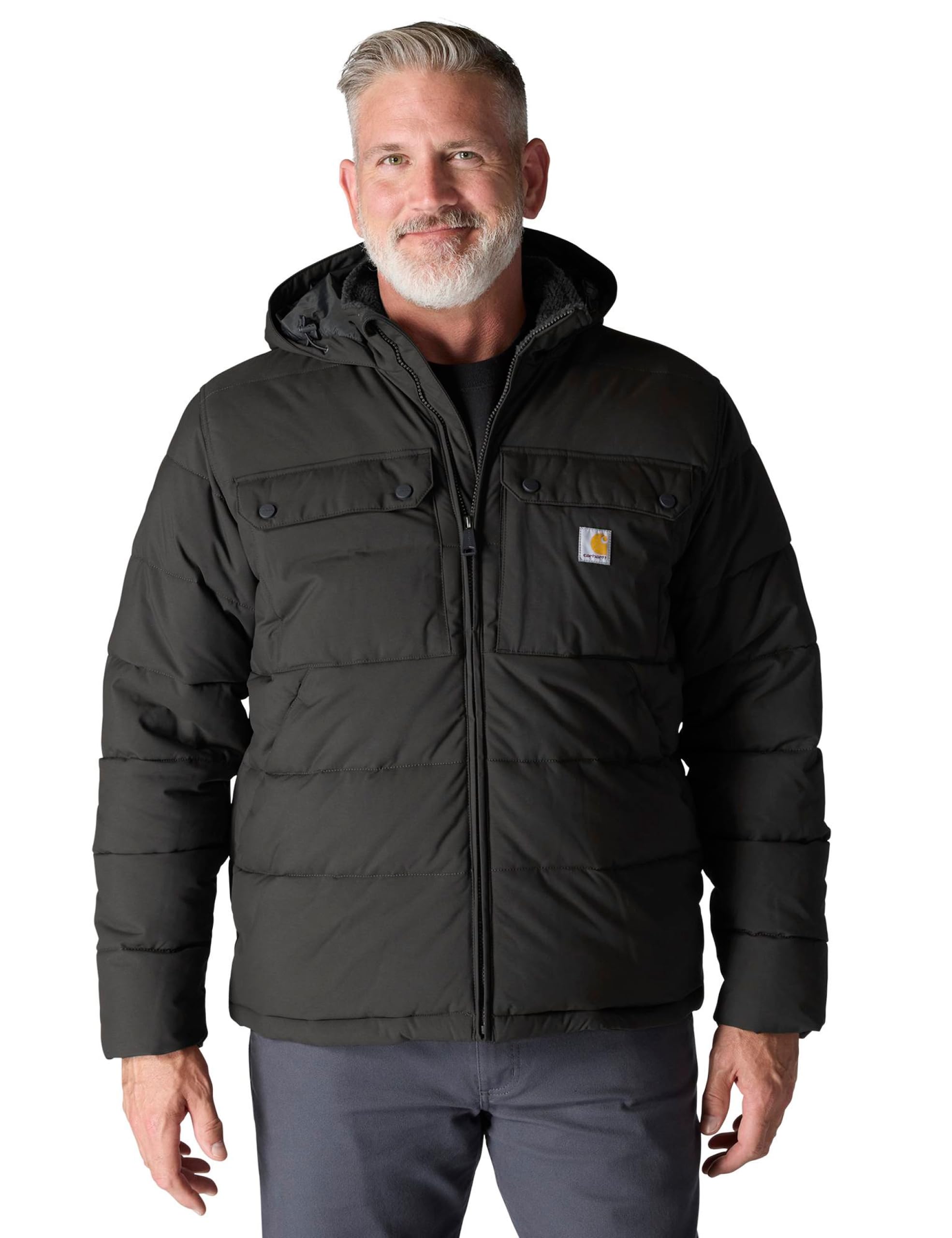
1. Carhartt Men’s Montana Loose Fit Insulated Jacket
Our pick — 4.5+★ from 700+ verified ratings; the strongest balance of quality and price.
Sherpa fleece and synthetic down stacked in one loose-cut shell, built for the days nobody wants to be outside.
The Montana answers the coldest version of your workday with two insulation layers instead of one. Sherpa fleece is a thick, nubby pile fabric that traps warmth close to your body, and synthetic down adds a second layer of lofted fill that holds heat even when it gets damp. That two-layer pairing is why warmth is the most repeated point in verified reviews of this jacket. Carhartt also built in wind blocking and a shell that sheds damp conditions, so a wet morning does not turn into a cold one.
Storage is genuinely generous on both sides of the fabric — pockets inside and out, which means your gloves, phone, and a couple of hand tools all have their own spot. And the weight is a quiet win here: owners keep pointing out it is not overly heavy on the shoulders, which matters at hour eight when a heavy coat starts to feel like a second job. The loose fit is deliberate, sized to let you put a hoodie or a base layer underneath without fighting the sleeves.
Here is the catch, and it is worth knowing before you order. The fit runs big on plenty of people, so if you normally wear a roomy jacket, dropping a size is the smarter call. The front hem also sits shorter than you might expect on some bodies, and the sleeves run long — a real annoyance if you are reaching overhead all day. Treat the size chart seriously rather than defaulting to your usual number.
What earns its keep
- Two insulation types layered together — sherpa fleece plus synthetic down — for warmth in real cold.
- Wind blocking plus a damp-shedding shell, so a wet morning stays a wet morning.
- Pockets inside and out for gloves, phone, and small tools.
- Loose fit that layers over a hoodie without sleeve-fighting.
What to plan around
- Runs big for many buyers — sizing down is often the right move.
- Front hem is short on some frames and the sleeves run long.
- Not a hi-vis jacket, so it is a poor fit for traffic-facing shifts.
Pick it when: you want a warm daily driver for freezing outdoor work and you will actually check the size chart.
Think again if: your shift puts you near moving vehicles, where you need reflective tape instead.
2. Carhartt Men’s Yukon Extremes Loose Fit Insulated Coat
The Yukon is the coat you buy when the forecast stops being a suggestion.
Two numbers define this jacket. The shell is a 6.5-ounce, 500-denier Cordura nylon — a heavy, abrasion-resistant woven fabric that takes a beating from rough surfaces. The fill is 150g 3M Thinsulate insulation, a synthetic that traps heat in a thin profile. Put those together with Wind Fighter technology that tames the wind, and you have a coat built for the kind of cold that makes you question your career choices. Rain Defender durable water repellent sheds light precipitation, and triple-stitched main seams keep the whole thing from pulling apart under load.
The detail work is where the Yukon pulls ahead of cheaper shells. A corduroy-trimmed collar with hood snaps keeps the wind off your neck. Rib-knit storm cuffs seal your wrists with no fiddling required. A droptail hem covers your lower back when you bend, which is a small thing that makes a big difference on a long shift. Storage is organized rather than scattered: a left-chest map pocket with zipper closure, two lower-front snap pockets, a right-chest snap pocket, plus inner zip and hook-and-loop pockets. Reflective 3M Scotchlite taping on the center back and front pockets gives you a visibility edge the Montana and Firm Duck coats do not carry.
The recurring gripe is the fit around the shoulders. The loose fit gives some people plenty of room for layering, while others find it tight in the armpit area on the same size — so try the range rather than trusting one number. The zipper also draws mixed reaction, with some finding it stiff to operate on a new coat.
The build that justifies it
- 500-denier Cordura nylon shell with triple-stitched main seams for hard contact.
- 150g 3M Thinsulate insulation plus Wind Fighter technology for wind-driven cold.
- Storm cuffs, droptail hem, and a hood-snap corduroy collar to seal off drafts.
- Reflective 3M Scotchlite taping on the back and front pockets.
The honest friction
- Armpit area runs tight on some builds despite the loose fit label.
- Zipper can be stiff to work on a fresh coat.
- Premium-tier build means you are committing serious money to one shell.
Your coat if: you face genuine deep cold and want a shell that outlasts the season it was bought in.
Walk on by if: your winters are mild or you need full ANSI-rated hi-vis for road work.
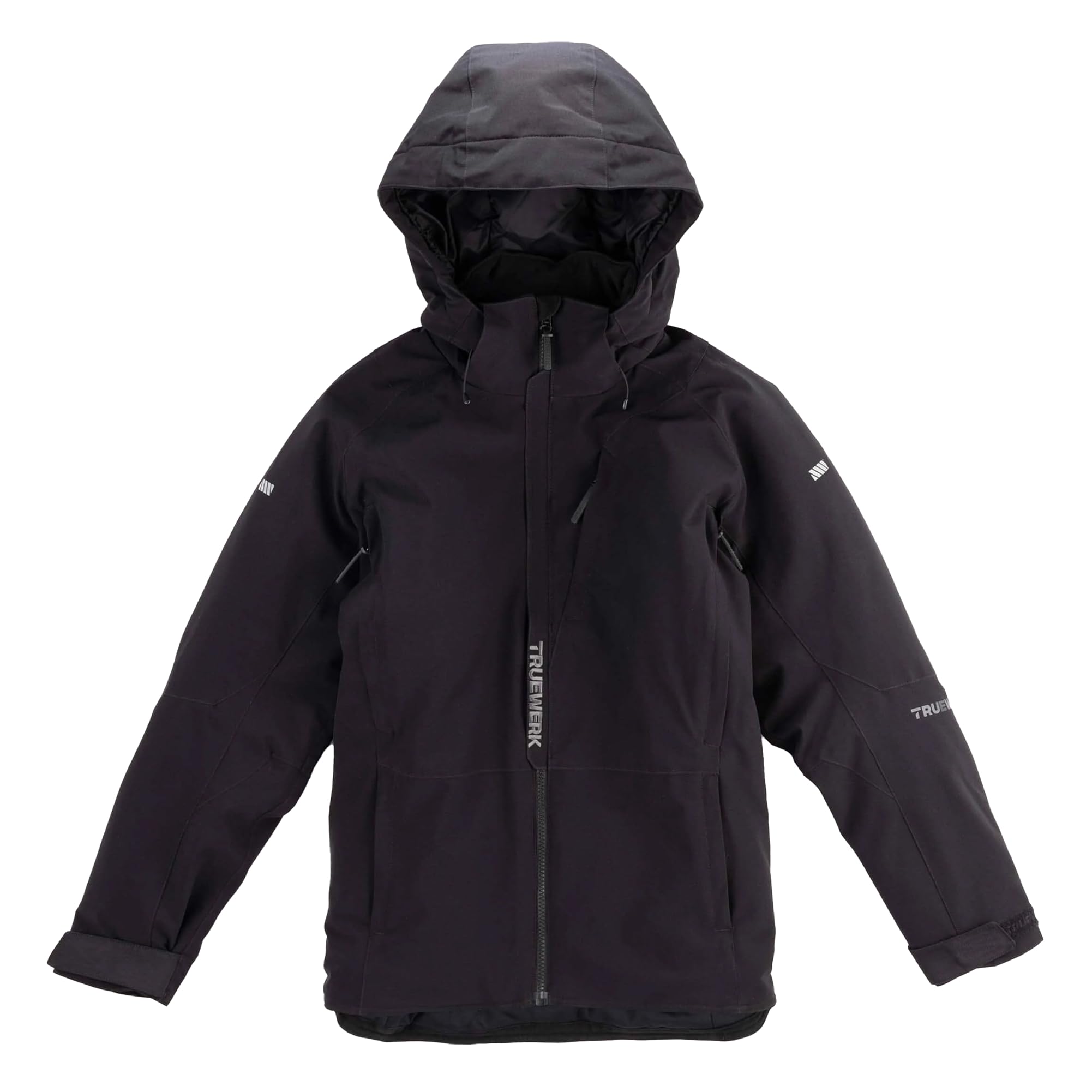
3. TRUEWERK Men’s Work Coat – Tower WerkParka
A midweight parka rated Level 3 of 4 for warmth, built for people who work rather than stand.
Warmth on the WerkParka is measured honestly: Level 3 out of 4, midweight, aimed at cold days rather than the deep freeze. That Level 3 rating is why it beats the heavier Yukon Extremes for active work: warmth without overheating mid-shift. The DWR treatment (a durable water repellent finish that makes water bead off the fabric) handles damp weather, and the windproof build stops the wind from cutting straight through. Comfort and wind resistance both come up as the reasons owners keep it in rotation.
Buyers report it holding up in below-freezing conditions on the job. People describe it as comfortable on the move and effective across shifting weather through the day. The construction is aimed at the trades, not a fashion shelf, which is what you want for a coat facing dirt and scrapes six days a week.
Fit is the one thing to plan carefully. Some workers find it well-fitting from the first wear, while others hit sizing issues and wish they had gone up or down. Get your measurement and check the size guide before committing — the warmth level you are paying for only helps if the coat sits right over your layers.
The standout spec: Level 3 (out of 4) warmth in a midweight parka is a deliberate choice aimed at people who generate their own heat through the shift.
Go in with eyes open: the sizing is not uniform across builds, so measure before you order.
Reach for it if: your job has you moving hard in cold weather and you want warmth without overheating.
Look elsewhere if: you stand still all shift, where a heavier fill like the Yukon’s serves you better.
4. Pioneer Hi Vis Heated Rain Jacket
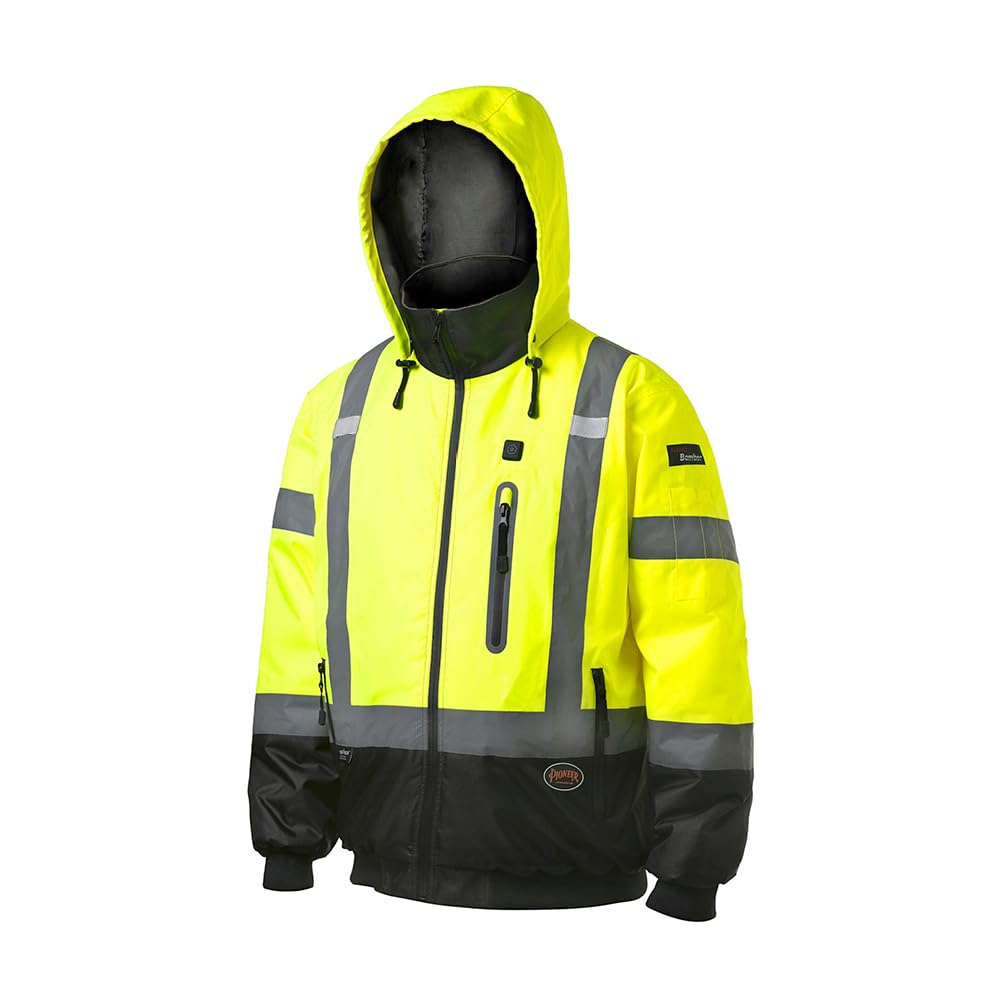
A heated hi-vis bomber that lets you dial the warmth up on a wet night shift.
The Pioneer puts four heat settings on a control dial, so you tune your own warmth through the shift. Four separate heat settings let you run cooler on the move and crank it when you stop, which is a real advantage over a fixed-fill jacket — you are adjusting warmth through the shift instead of dressing for the coldest ten minutes. The shell is 300D Nano Tech fabric, a durable woven outer, and the build is both windproof and waterproof, so a wet night does not soak through and kill the point. Fluorescent hi-vis colors plus premium reflective tape keep you findable in low light, which is why construction crews, traffic crews, and utilities workers are the target here.
The heating runs off a rechargeable power bank you supply through a built-in USB port — the bank is not included, so budget for one and keep it charged. Storage is set up for a site: two lower slash pockets with waterproof zippers, a lower inside zip pocket, and a lower chest zip pocket. Water resistance earns consistent praise from people who work in the rain, and the overall quality is what most buyers highlight.
The honest catch is durability of the heating hardware. Owners mention the USB connector breaking within months, and the outer layer can rip with hard use. The heat function and zipper both draw mixed feedback, so treat the electronics as a bonus rather than the reason to buy.
What you actually gain: adjustable warmth plus waterproof, windproof protection and hi-vis tape all in one shell.
The caution: the USB connector is the weak link — customers note it breaking within months, so it is not a jacket to count on for the electronics alone.
Best matched to: utilities and traffic workers on wet night shifts who want warmth they can tune.
Pass on it if: you want a heating system to last seasons without extra care, or you would rather not supply your own power bank.
5. Portwest PW3 Hi-Vis Winter Jacket
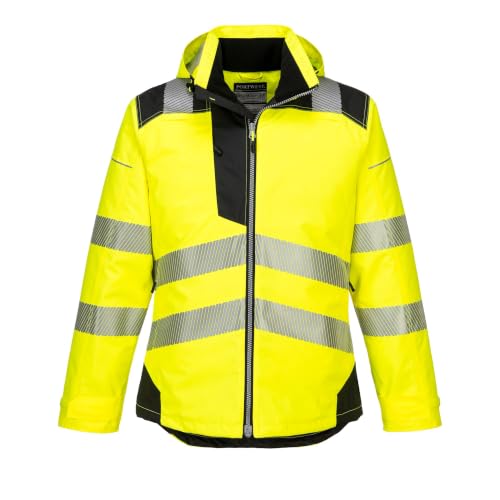
This is the one that carries the standards paperwork — Class 3 visibility plus certified waterproofing.
If your site requires documented hi-vis, the PW3 is the jacket to check first. It meets ANSI/ISEA 107:2015 Type R Class 3, the top visibility class in that standard, and also carries EN ISO 20471 Class 3 and EN 343 Class 3:1 WP 15,000mm — the last of those being a European rating for waterproof performance. The shell is 300D Oxford PU coated polyester, a durable, stain-resistant woven fabric with a polyurethane coating that keeps water out. Taped seams back that up by sealing the stitching lines where water would otherwise creep in, and Texpel stain-resistant finish repels dirt and grime so the yellow stays yellow.
Warmth comes from a quilt-lined build with 170g polyester wadding and an Insulatex heat-reflective lining panel that reflects heat back into your body. Lightweight HiVisTex Pro segmented reflective tape boosts visibility without the heavy feel of solid tape. A concealed mobile phone pocket and quick-dry knitted cuffs round out the practical side. Water resistance and fit both earn praise from people working in rain and rough weather.
Two things deserve your attention. Sizing is inconsistent — some reviewers point out it fits great, others not sized right — so order with a return window in mind. And the zipper is the recurring complaint, described as difficult to use; go slowly on it rather than yanking. Care matters too: max washing temperature is 40°C, do not tumble dry or iron, and the manufacturer lists a maximum of 25 washes for the waterproof finish.
Why the standards matter here
- ANSI/ISEA 107 Type R Class 3 and EN ISO 20471 Class 3 certified visibility.
- Waterproof with taped seams and EN 343 Class 3:1 rating.
- Quilt-lined with 170g wadding plus Insulatex heat-reflective lining.
- Texpel stain-resistant finish repels dirt on a hi-vis shell.
Where it asks patience
- Sizing is inconsistent across buyers — confirm your size with a return plan.
- Zipper is hard to operate, so it needs a steady hand.
- Waterproof finish is rated for a maximum of 25 washes.
Right choice for: road and site crews who need certified Class 3 visibility plus proven waterproofing.
Look past it if: you want a coat to pull on without thinking, since the zipper and sizing both ask for more care.
6. HISEA Men’s Sherpa Work Jacket
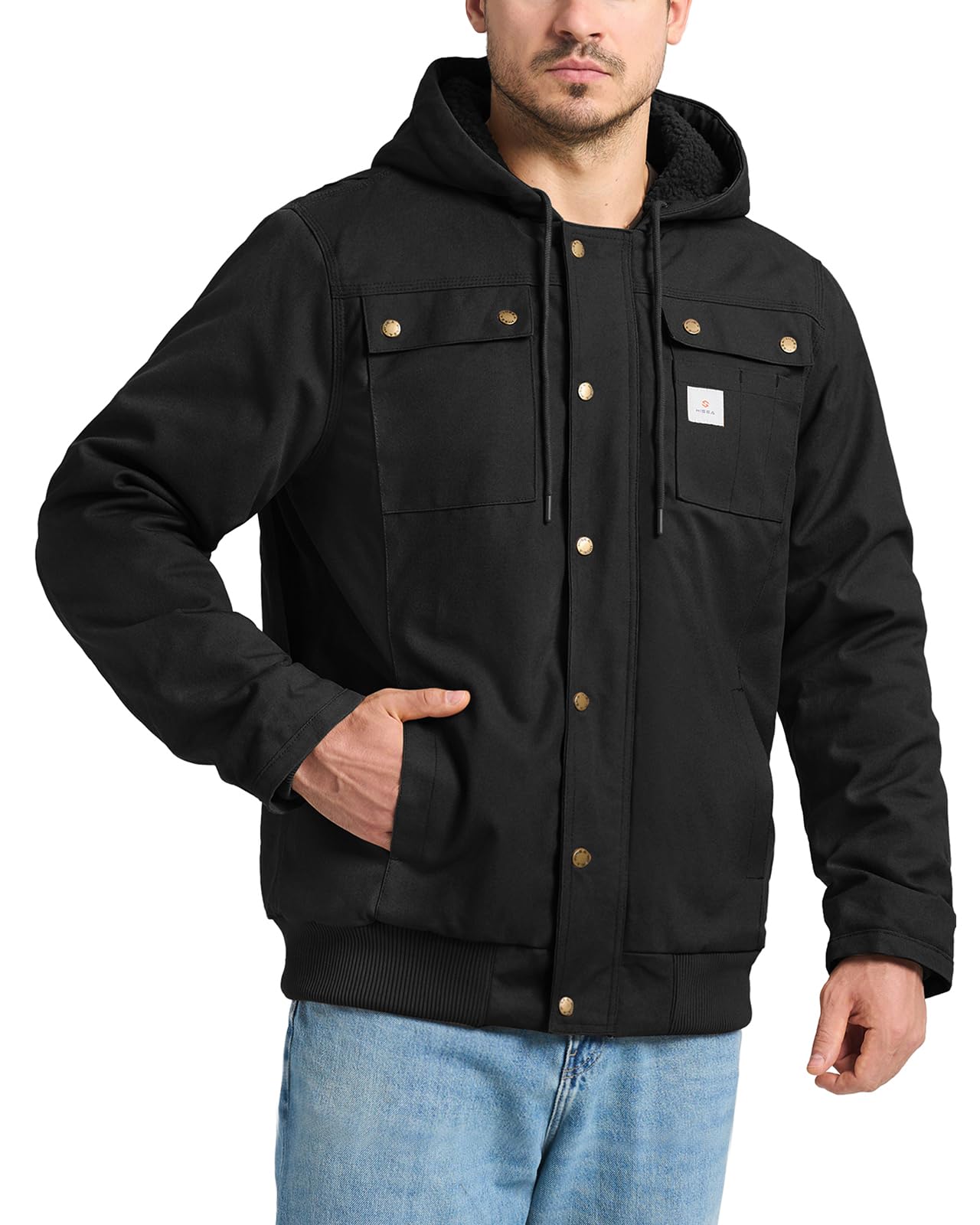
Sherpa-lined canvas and a hood at an entry-level number that punches well above it.
The HISEA goes for warmth through a sherpa lining — the thick, fuzzy pile fabric that sits against your body and holds heat — inside a water-resistant canvas shell with a hood attached. That combination is the classic budget formula for cold work, and it delivers: buyers describe it as well-made and comfortable, and it held up through a genuinely harsh winter for at least one owner. Pocket layout is straightforward with a chest pocket, two hand pockets, and three inner pockets, so you have somewhere to put gloves and a phone without unzipping your coat.
The sizing story leans generous — the XXL fits properly for buyers who need the extra room, which is a real plus if you are hard to fit. Durability and winter suitability both come up as the reasons people keep it in the rotation, rather than as afterthoughts.
What you should know going in: the zipper draws criticism from multiple buyers, so treat it gently and do not force it. Weight also splits opinion — some find it easy to wear, others find it on the heavy side. And this is a value-tier canvas coat, so it is a smart fit for cold days rather than the deepest freeze.
Best case for the money: sherpa lining plus a hooded water-resistant shell, with six pockets and a generous XXL cut.
The weak spot: the zipper is the repeated complaint — work it slowly and keep the pull straight.
Suit yourself to: cold-day work on a budget where warmth and comfort matter more than deep-freeze ratings.
Skip if: you need a zipper you can yank with gloves on or a coat for sub-zero shifts.
7. TINGLEY Bomber II High Visibility Insulated Hooded Jacket

A fluorescent bomber with silver reflective tape that layers well over a hoodie for cool mornings.
The Bomber II is a different shape of jacket from the canvas coats above — shorter, lighter, and meant to work as an outer layer over your existing kit. The polyester quilted liner gives you a warm core without a heavy shell, and the fluorescent yellow-green body with silver reflective tape keeps you visible in dim light. Buyers find it water-resistant enough to keep them dry, and it is described as suitable for rough, dirty, and wet work environments. The attached hood means no hunting for a loose one when the rain starts.
Warmth here is what owners praise, and it works well with layers for cooler mornings rather than the deep freeze. Value, water resistance, and brightness of the reflective tape all come up as reasons it stays in the truck. The bomber cut means it sits higher on the body than a parka, so it can be a smart pick for someone who wants mobility over maximum coverage.
Sizing is the recurring snag. Shoppers say the size runs off, often larger than expected, so check the chart carefully. Treat that as a fit note rather than a fault — get the right size and the Bomber II does exactly what it says.
What keeps it in the rotation
- Fluorescent yellow-green with silver reflective tape for low-light visibility.
- Polyester quilted liner plus attached hood for warm, dry work.
- Water-resistant build that handles rough, dirty, wet environments.
- Bomber cut that layers over a hoodie without bulk.
Before you commit
- Sizing runs large for many buyers — verify against the chart.
- Bomber length means less coverage than a full parka.
- Not built for sub-zero cold — a cool-morning layer, not a deep-freeze shell.
Built for: cooler-morning shifts where you want a bright, water-resistant layer over your own hoodie.
Not for you if: you need one jacket to carry you through a full deep-winter day.
8. TCCFCCT High Visibility Jacket Class 3

The cheapest way onto this list to get Class 3 visibility and waterproofing in one jacket.
For mild cold and wet outdoor work, the TCCFCCT is genuinely hard to argue with. The shell is 300D coated PU Oxford fabric — a durable woven outer with a polyurethane coating for waterproofing — paired with a cozy, lightweight lining. It meets ANSI Class 3, and the 2-inch wide reflective stripes wrap the shoulders, waist, sleeves, and cuffs so you are findable from more angles than a single-stripe jacket allows. Neon yellow body with black cuffs and bottom hides dirt where you scuff most and keeps the contrast sharp.
Site details are thought through. A detachable hood, an inner pocket, a vertical zip pocket on the right chest, a transparent ID holder on the left, and dual microphone buckles on the shoulders for a walkie-talkie all show this was designed by people who know what a work day needs. Elastic ribbed cuffs with adjustable hook-and-loop straps stop cold wind sneaking up your sleeves.
Order sizing with care — the cut runs a little big. The durability also draws mixed feedback, with buyers reporting it ripped after two weeks of use, so hard-contact jobs may want the tougher Portwest above. For lighter outdoor work, though, it covers the basics.
What you get for the money: ANSI Class 3 visibility, waterproof 300D coated PU Oxford fabric, and 2-inch reflective stripes on shoulders, waist, sleeves, and cuffs.
Size it right: the fit runs a little big, and durability splits opinion — fine for lighter work, less so for constant abrasion.
Right for you if: you need an affordable Class 3 hi-vis jacket for surveying, warehousing, or wet outdoor work.
Think twice if: your day involves constant scraping against rough material, where you will want a heavier shell.
Know the Specs
Denier and shell fabric
Denier measures how thick the yarn in a woven fabric is, and higher numbers mean a heavier, tougher weave. A 300D Oxford is a rugged everyday work fabric; a 500-denier Cordura nylon is heavier still and handles more abrasion. The shell is what takes the abuse on site, so it usually matters more than the fill number.
Insulation fill weight
Fill weight in grams tells you how much insulation is packed into the jacket. Synthetic fills like 3M Thinsulate are engineered to trap body heat in a thin layer; 150g is a substantial fill for real cold. More grams means more warmth, but also more bulk and heat if you are moving hard all day.
ANSI Class 3 visibility
ANSI Class 3 is the highest visibility class in the ANSI/ISEA 107 standard. It requires reflective material on the arms as well as the torso, so you can be seen from more angles in low light. If your shift puts you near moving vehicles, this class is what to look for.
Waterproof versus water-resistant
Water-resistant fabric sheds light rain but will eventually soak through. Waterproof means the fabric and seams are built to keep water out, often with taped seams to seal stitching lines. Read the care instructions if you buy waterproof — the finish has a wash limit before it needs refreshing.
Common Questions
Will the Carhartt Montana fit over a hoodie if I size down?
What does ANSI Class 3 actually mean for a work jacket?
Is a heated jacket better than a heavily insulated one for night shifts?
How do I wash a waterproof hi-vis work jacket without ruining it?
Why do so many work jackets run large in the sizing?
What is the difference between the Carhartt Firm Duck coat and the Yukon Extremes?
Do I need to supply my own power bank for a heated jacket?
How long does a hi-vis work jacket stay visible?
Which jacket is warmest for standing still on a frozen site?
Can I wear a work jacket over a sweater without it feeling tight?
The Bottom Line
For most workers, the worker winter jacket winner is the Carhartt Montana because it stacks sherpa fleece and synthetic down into a loose shell that keeps you warm on the coldest days. If you need certified Class 3 visibility for a traffic-facing shift, grab the Portwest PW3 with its ANSI/ISEA 107 Type R Class 3 rating. And if you want adjustable heat on wet night work, the Pioneer is the one to reach for. One reminder before you order: check the size chart on any of these, since loose and straight fits run big for plenty of people.
How we choose
We do not accept paid placement. Every pick is matched to a real buyer and a real use-case; we do not hands-on test units.
Sources
Specifications: manufacturer listings and product documentation. Review insights: verified customer reviews, as of November 2026. Pricing: not shown on this page (it changes often); check the current price via the retailer link.
As an Amazon Associate, Tactical Gear Guy earns from qualifying purchases. This does not affect which products we feature.