Specs are compiled from manufacturer listings and verified buyer reviews and can change over time — please confirm the key details on the product page before buying.
A work jacket fails you in one of three ways: it soaks through halfway across the site, it tears at the elbow by the second season, or it fits so badly you can’t lift your arms overhead. The fix isn’t a thicker coat — it’s matching the shell fabric, the waterproofing, and the shoulder room to the job you actually do. Below are nine workers’ jackets that pass those three tests, sorted by the kind of day you put them through.
This guide is built by comparing the manufacturers’ published specifications and the patterns across verified customer reviews, so you get each pick’s real strengths and trade-offs instead of marketing spin.
Every jacket on this list is a real jobsite piece, with waterproofing or water repellency, an abrasion-ready shell, and pockets sized for tools. The winner for most people, though, is the one duck canvas that balances warmth against arm mobility: the work wear jacket that lets you swing a hammer without fighting the seams.
Top Picks


How To Choose The Best Work Wear Jacket
Start with the weather you work in, not the brand name. A rain shell and a firm duck canvas coat are built for completely different shifts, and buying the wrong type is the single most common mistake. Match the jacket to your worst day, then worry about pockets.
Waterproof shell versus water-repellent canvas
A waterproof jacket (fully seam-sealed with waterproof zippers) keeps rain out completely, which matters if you’re standing in it for hours. A water-repellent canvas jacket (duck canvas treated so light rain beads up) breathes better and takes abrasion better. Canvas is the pick for dry cold and rough work; a seam-sealed shell is the pick for wet shifts.
Lining and warmth without bulk
Sherpa lining (a thick fleece-style inner layer) and quilted lining both trap heat. Sherpa runs warmer and softer, while quilted lining keeps a lower profile so you can move. If you layer a hoodie underneath, a lighter shell is enough; if the jacket is your only layer in deep cold, go for the warmest lining you can find.
Fit, arm mobility, and sizing reality
Work jackets are cut to layer, so a relaxed fit usually leaves room for a sweatshirt. Watch the chest and shoulders specifically — that’s where tight cuts show up. If you’re between sizes, check whether the listing describes the fit as relaxed or snug before you order.
High visibility if you’re near traffic
An ANSI Class 3 rating (a recognized visibility standard for workers near moving vehicles) means the jacket meets a set reflectivity and fluorescent-color requirement. If you work on roadsides or around equipment, that rating is a genuine safety spec, not decoration.
Side-by-Side Comparison
| Model | Best For | Rain Protection | Warmth Layer | Shell Material | Amazon |
|---|---|---|---|---|---|
| Carhartt Monterey Jacket★ Best Overall | Wet-weather layering shell | Waterproof, seam-sealed | Packable shell, no lining listed | Synthetic waterproof shell | Amazon |
| TICONN Hi Vis Safety BomberSafety First | Roadside and equipment crews | Waterproof | Fleece-lined | Fleece-lined synthetic | Amazon |
| Wrangler Riggs Quilted JacketSherpa Comfort | Cold-day comfort with Sherpa hood | Not rated in listing | Quilted lining with Sherpa hood | Cotton duck | Amazon |
| Red Kap Performance Crew | Utility pockets and light stretch | Water repellent | Lightweight, unlined | Stretch twill ripstop | Amazon |
| HISEA Sherpa Work Jacket | Winter cold on a budget | Water resistant | Sherpa-lined | Canvas | Amazon |
| TACVASEN Duck Sherpa Jacket | Snow and hard winter shifts | Waterproof | Sherpa-lined | Duck canvas | Amazon |
| Carhartt Rugged Flex Berwick | All-season workhorse with stretch | Not rated in listing | Unlined canvas shell | Stretch duck canvas | Amazon |
| TRUEWERK Tower WerkParka | Cold-weather layering system | DWR treatment, water resistant | Level 3 of 4 warmth, midweight | Stretch nylon/spandex outer | Amazon |
Detailed Reviews
1. Carhartt Men’s Monterey Jacket
Our pick — 4.5+★ from 750+ verified ratings; the strongest balance of quality and price.
The rain shell you can ball up and stuff in a pocket before the sky even opens.
The Monterey is the jacket to grab when your work happens outdoors and the forecast is a coin flip. It’s a fully seam-sealed waterproof shell — meaning every stitch line is taped so water can’t creep through — with waterproof zippers to match. A regular zip on a rain jacket lets water wick in along the teeth; these don’t, so your chest pockets stay dry when you’re leaning over a wet railing.
The design is built around layering, not warmth on its own. There’s no heavy lining described here, just an adjustable hood, adjustable cuffs and hem, and multiple zip pockets. That’s why it pairs so well over a hoodie or a fleece in cold weather, and why it packs into its own pocket when the sun breaks through. Wind protection comes as part of the sealed shell, so a windy 50-degree day doesn’t cut straight through you.
Here’s the honest limit: this is a shell first, a heater second. If you want a single jacket for a 20-degree morning with no base layer, canvas coats deeper in this list do that job better. The Monterey is for wet, changeable shifts and for anyone who wants rain cover they can carry without bulk. It’s the highest-rated jacket here at 4.5+ stars across 700+ ratings, and the one owners recommend most for wet shifts.
Why workers keep reaching for it
- Fully seam-sealed waterproof build — the listing pairs it with waterproof zippers, so rain doesn’t sneak in at the pockets.
- Packs into a pocket, so it lives in a truck cab or toolbag until you need it.
- Adjustable hood, cuffs, and hem let you seal the fit against wind and sideways rain.
- Quality is what owners talk about most — the jacket reads as a serious piece of gear, not a throwaway poncho.
Where it stops short
- No thick insulation described — you’ll want a layer under it in real cold.
- Sizing feedback is mixed, so check the chest and arm room if you plan to layer a heavy hoodie.
Reach for this if: your shifts are wet and unpredictable and you want rain cover you can stow in a pocket.
Look elsewhere if: you need one jacket to carry you through deep cold with no base layer underneath.
2. TICONN Hi Vis Safety Bomber Jacket
If your shift puts you near moving vehicles, the high-vis rating here is a safety requirement, not a style choice.
This is the jacket for roadside crews, warehouse floor workers, and anyone who needs to be seen from a distance. It carries an ANSI Class 3 rating — the visibility standard that calls for fluorescent fabric and reflective striping sized for workers near traffic. The fluorescent body and reflective lines are what make you visible early to a driver, which is the whole point.
Underneath the visibility, it’s a fleece-lined bomber with a waterproof build, a stowable hood, and a mic strap and retractable hem. The mic strap is a small but real worker detail — it keeps a radio clipped where you can reach it. A windproof zipper and snap front seal against cold air, and the water resistance keeps you dry through rain. Fit is the strength here: it’s what gets praised most, and it’s the thing you’ll feel every shift.
The catch is sizing. Feedback runs in both directions — some find it runs huge, others find it runs small — so the safest move is to check the size chart against your chest measurement before ordering. The jacket itself is a strong value, comfortable, and practical for shoveling snow or standing on a cold street.
Built for a visible shift: ANSI Class 3 fluorescent shell, reflective lines, fleece lining, stowable hood, and a mic strap for a radio clip — this is workwear that takes safety seriously without giving up function.
Order with measurements ready: the fit feedback is genuinely split, so don’t assume your normal size will land correctly on the first try.
Built for: workers who need to be seen — road crews, lot attendants, anyone near equipment in low light.
One caution: the sizing feedback splits both ways, so check the chart against your own chest and shoulder measurements.
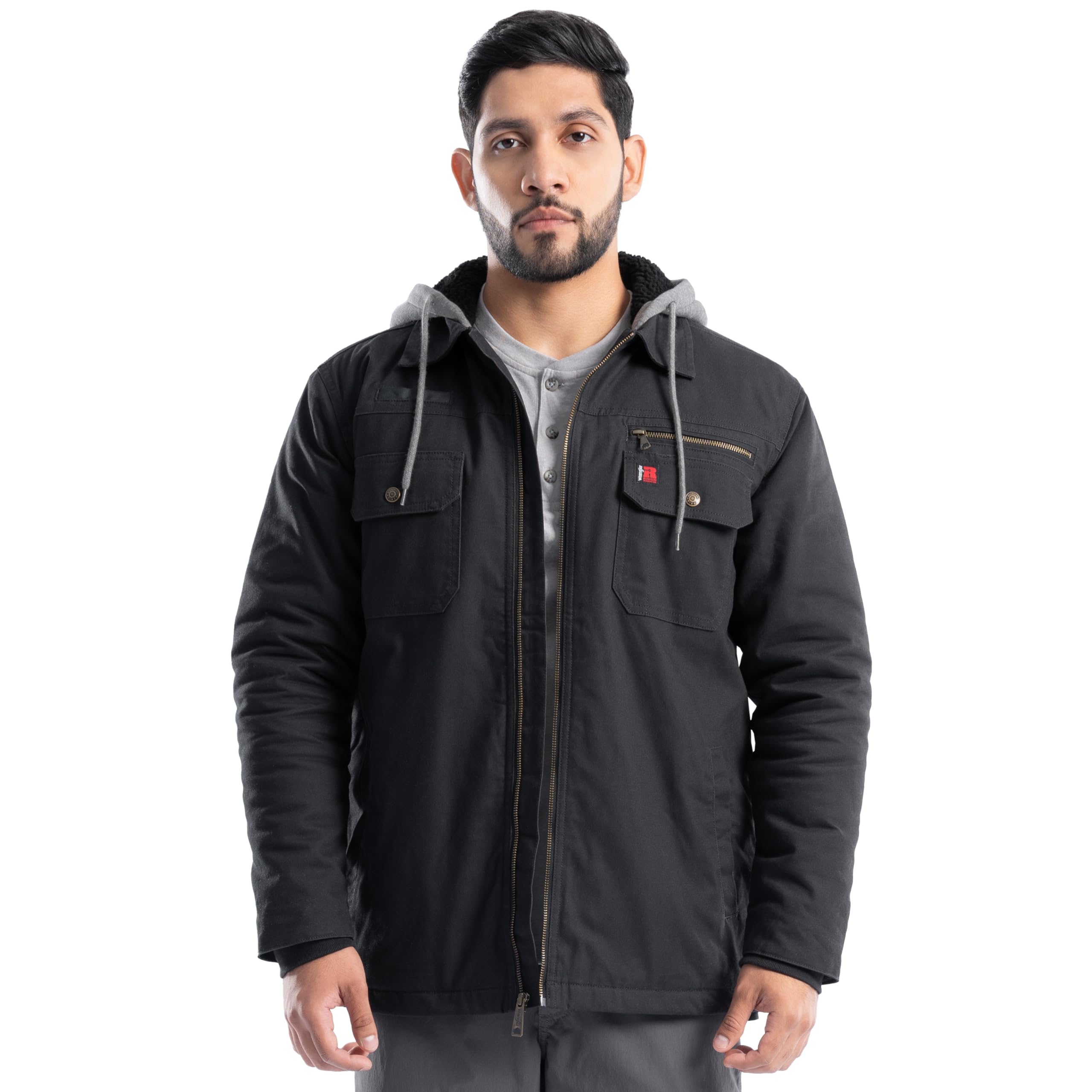
3. Wrangler Men’s Quilted Lined Jacket With Sherpa Hood
A cotton duck jacket with a Sherpa-lined hood — the soft spot on a cold, rough day.
The Wrangler Riggs Quilted Jacket is built from cotton duck, a tightly woven canvas that handles scrapes and cold without sacrificing breathability. The plush Sherpa hood (a thick fleece-like lining) gives you a soft shell around your ears when the temperature drops, and the quilted body lining keeps warmth in. Reinforced elbows mean the spots that wear through first on a work jacket get extra material.
Owner experience centers on how well-made it feels and how warm it runs for fall and light winter. The reinforced-elbow detail and utility zip pockets are the practical bits — hidden inside pockets carry essentials you don’t want to lose off a ladder. It’s a solid-value canvas coat that looks like workwear and wears like it too.
The honest fit note: the chest and shoulder area runs tight for some, even though the length is fine. If you’ve got a broad build or plan to layer, go up or check the size chart carefully. Otherwise, the jacket is comfortable, durable, and a smart pick for someone who wants canvas quality without spending premium-tier money.
What earns its keep
- Cotton duck shell takes abrasion well and breathes better than a sealed synthetic shell.
- Sherpa-lined hood plus quilted body lining builds real warmth for fall and light winter.
- Reinforced elbows add life to the spot that wears first.
- Utility zip pockets and hidden inside pockets keep tools and essentials secure.
Where to slow down
- Chest and shoulders run tight for some builds — size up or check the chart.
- No waterproof rating listed — treat this as a dry-cold jacket, not a rain shell.
Go here if: you want a cotton duck coat with a Sherpa hood for cold dry days on the farm or jobsite.
Check first if: you have a broad chest — the shoulder area runs snug.
4. Red Kap Men’s Performance Crew Jacket

Lightweight stretch ripstop with enough pockets to leave the toolbag in the truck.
Red Kap built this as a performance utility piece — a lightweight stretch twill ripstop fabric that moves with you and shrugs off light rain. Ripstop is a fabric woven with a grid pattern that stops small tears from spreading, which is why it survives scrapes that would rip plain fabric. The stretch adds arm mobility, and the water-repellent finish beads light rain away without making the jacket heavy.
Pocket design is the standout. There are enough pockets for real storage — toolbag-level storage — and the jacket is cut with a wider chest and shoulders for a roomy fit. The zipper gets mixed feedback: some praise the front flap design, others want a sturdier zipper. Several owners find it runs small, so factor that in when you pick a size.
The trade-off worth naming: this is a utility shell, not a heavy winter coat. It’s lightweight and unlined, so it shines as a warm-weather layer or a mid-layer. For cooler Florida mornings and indoor-outdoor shifts, it’s near-perfect. For a Midwestern deep freeze, you’ll want something heavier over or under it.
Pocket-forward design: lightweight stretch ripstop, water repellent, wide chest and shoulders — this is the jacket for a worker who carries a lot in the pockets and needs freedom of movement.
Zipper is the variable: mixed feedback on the zipper, so don’t expect a heavy-duty brass feel.
Pick this if: you work warm-weather or indoor-outdoor shifts and need a lightweight jacket with serious pocket storage.
Pass if: you’re shopping for a deep-winter coat — this is a shell layer, not insulation.
5. HISEA Men’s Sherpa Work Jacket
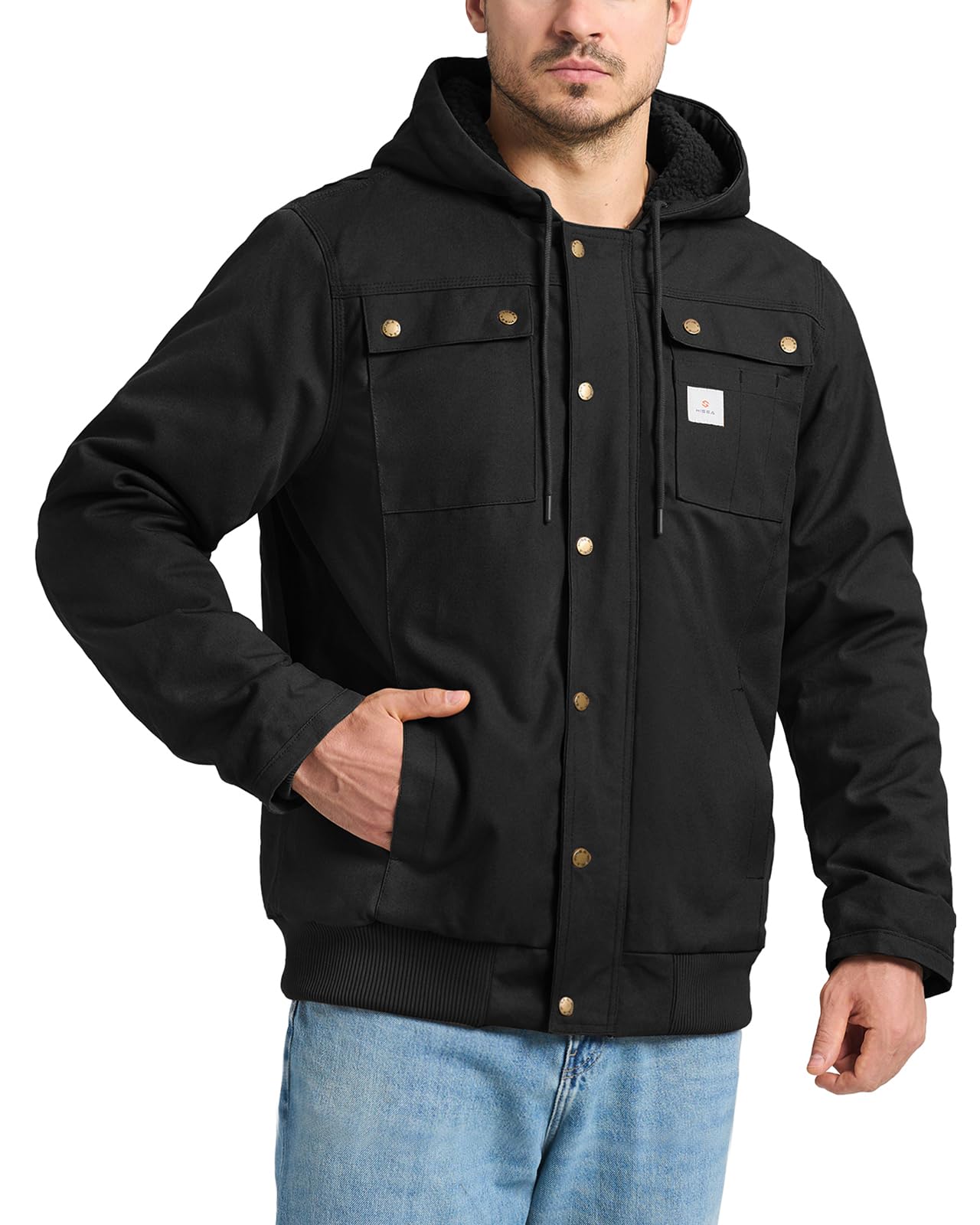
A Sherpa-lined canvas coat for the worker who wants warmth and won’t baby the fabric.
The HISEA Sherpa Work Jacket is a winter hooded canvas coat — a water-resistant outer shell over a soft Sherpa lining, built to take a full cold season of abuse. The canvas shell is the durable part; the Sherpa is the warmth. With a chest pocket, two hand pockets, and an inner pocket, you get enough storage for the essentials without bulk.
Where it wins is the cold-season fit. Owners describe it as well-made and comfortable, with the XXL size landing just right, and one noted it carried them through a harsh winter. As a value buy for winter work, it’s tough to argue with — you get Sherpa warmth and a canvas shell without hitting premium-tier pricing.
Two things to know. The weight draws split feedback — some find it light to wear, others find it on the heavy side — so consider your layering plan. And the zipper quality gets flagged by several customers, which is worth keeping in mind if you’re wrenching it open and closed all day. Treat the zipper gently and it serves you well.
Winter warmth without premium money: Sherpa lining, canvas shell, water resistance, and three pocket areas — practical cold-weather gear that doesn’t overshoot on price.
Two watch-points: the weight feedback is split, and the zipper is the most common gripe.
Made for: winter work on a budget — farms, lots, and job sites that need warmth without a premium-tier spend.
Keep in mind: if you run hot or work indoors, the Sherpa lining and heavier feel may be more than you want.
6. TACVASEN Men’s Duck Sherpa Winter Jacket
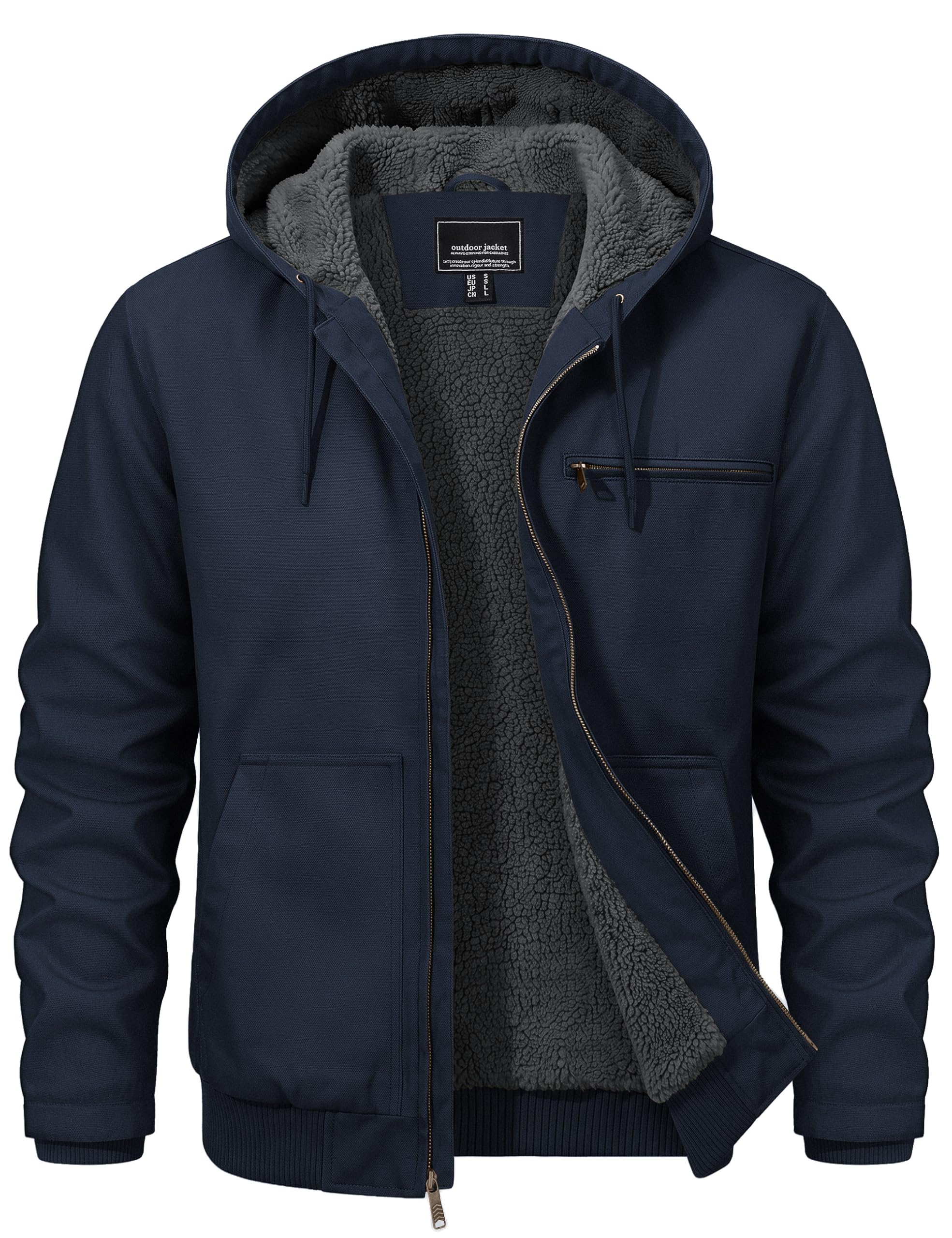
Duck canvas and Sherpa lining built for the worker who stays out in the snow.
This is the jacket for snowy conditions and hard winter shifts — a waterproof duck canvas shell with a warm Sherpa lining. Duck canvas is the heavy cotton weave that workwear is famous for; it resists abrasion and stays stiff enough to hold its shape through a season of abuse. The waterproof shell is the rain-and-snow barrier, and the Sherpa interior is what keeps you warm when the temperature drops.
Material quality is the first thing owners notice, followed by warmth. It’s a solidly built jacket that stands up to harsh winter weather, and it’s priced as a value buy in the winter-work category. If your job takes you into snowy conditions and you want one layer that does the heavy lifting, this is the shape of jacket you want.
The one honest caveat is sizing: feedback splits between “perfect fit” and “too small.” That’s a fit mismatch, not a quality problem — but it’s worth checking the size chart carefully, especially if you plan to layer. Pick the right size and this is a tough, warm duck canvas jacket at a fair price.
Where it earns its place
- Waterproof duck canvas shell handles snow and wet cold conditions.
- Sherpa lining supplies real warmth for harsh winter work.
- Material quality is the strongest owner takeaway — it feels built, not thrown together.
The honest caveat
- Sizing feedback splits between perfect and too small — check the chart.
Best fit for: snow-country workers who want a waterproof duck canvas shell with Sherpa warmth.
Watch the size chart: the fit runs inconsistent, so confirm your measurements before you commit.
7. Carhartt Men’s Rugged Flex® Duck Berwick Jacket
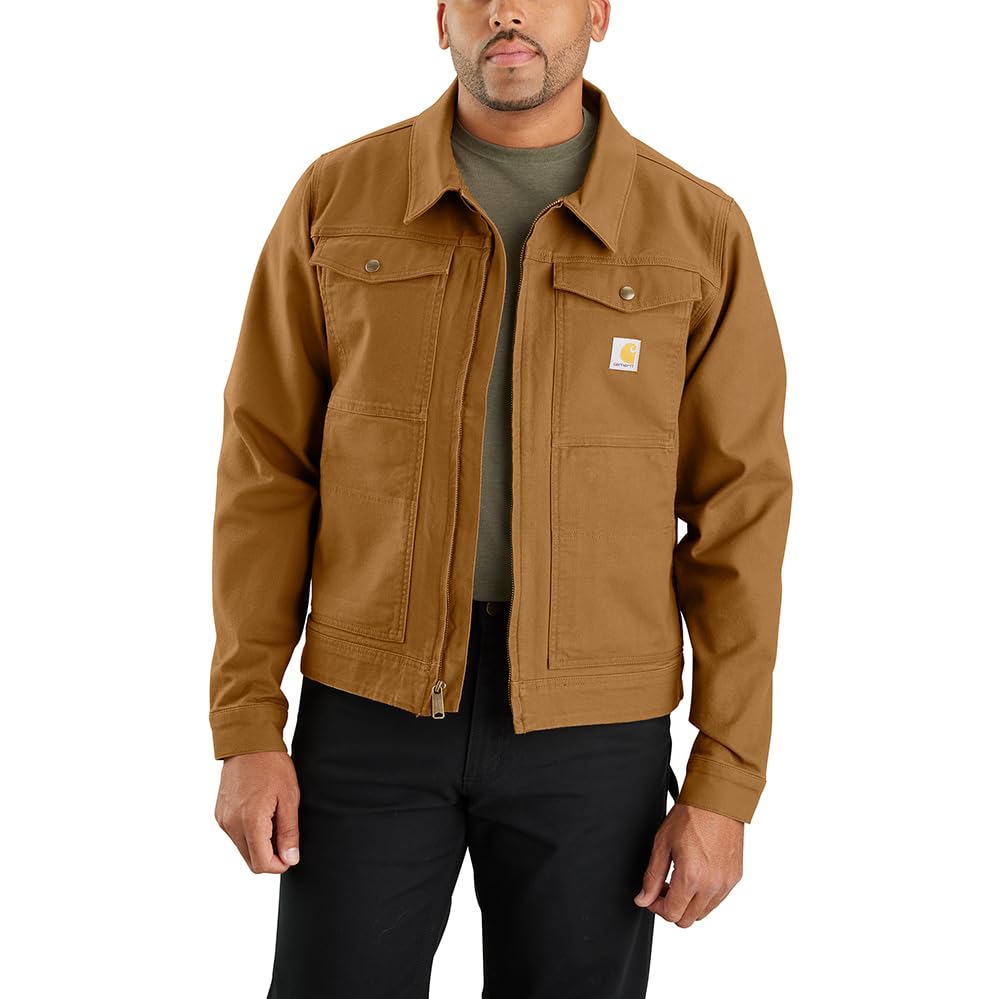
Canvas with give — the stretch duck shell that lets you reach, twist, and climb without the jacket fighting back.
The Berwick is the middle-weight canvas option — a true workhorse built from stretch duck canvas that adds movement to a fabric that’s normally stiff. That stretch is the difference: standard duck canvas resists when you raise your arms; this one gives enough that overhead work doesn’t feel like wrestling the coat. A snap-adjustable drop-tail hem lets you set the fit, and interior and exterior pockets cover storage.
It’s a relaxed fit with extra room to move, so layering a flannel underneath is easy. Owners talk about quality and fit first — this jacket feels like a long-term piece, the kind you expect to last several seasons of hard wear. Style is a genuine plus too; it reads as workwear without looking like a rain tarp. The zipper quality is mixed, so don’t expect the zipper to be the strongest component.
Compared to a firm duck coat, this Berwick prioritizes mobility and lighter wear over maximum warmth. It’s the all-season shell for three-season jobsites — the jacket you wear fall through spring with a layer under it. If you work in real deep cold and want one insulating coat, the firm duck pick further down this list carries more warmth.
The mobility play: stretch duck canvas, relaxed fit, drop-tail hem, and interior/exterior pockets — the jacket for a shift that keeps you moving.
Not the warmest: it’s an unlined three-season shell, so cold mornings need a layer underneath.
Choose this if: you need a durable canvas jacket that moves with you through three-season jobsite work.
Look past it if: you want one heavy insulated coat for deep winter — this one leaves warmth to your layers.
8. TRUEWERK Men’s Work Coat – Tower WerkParka
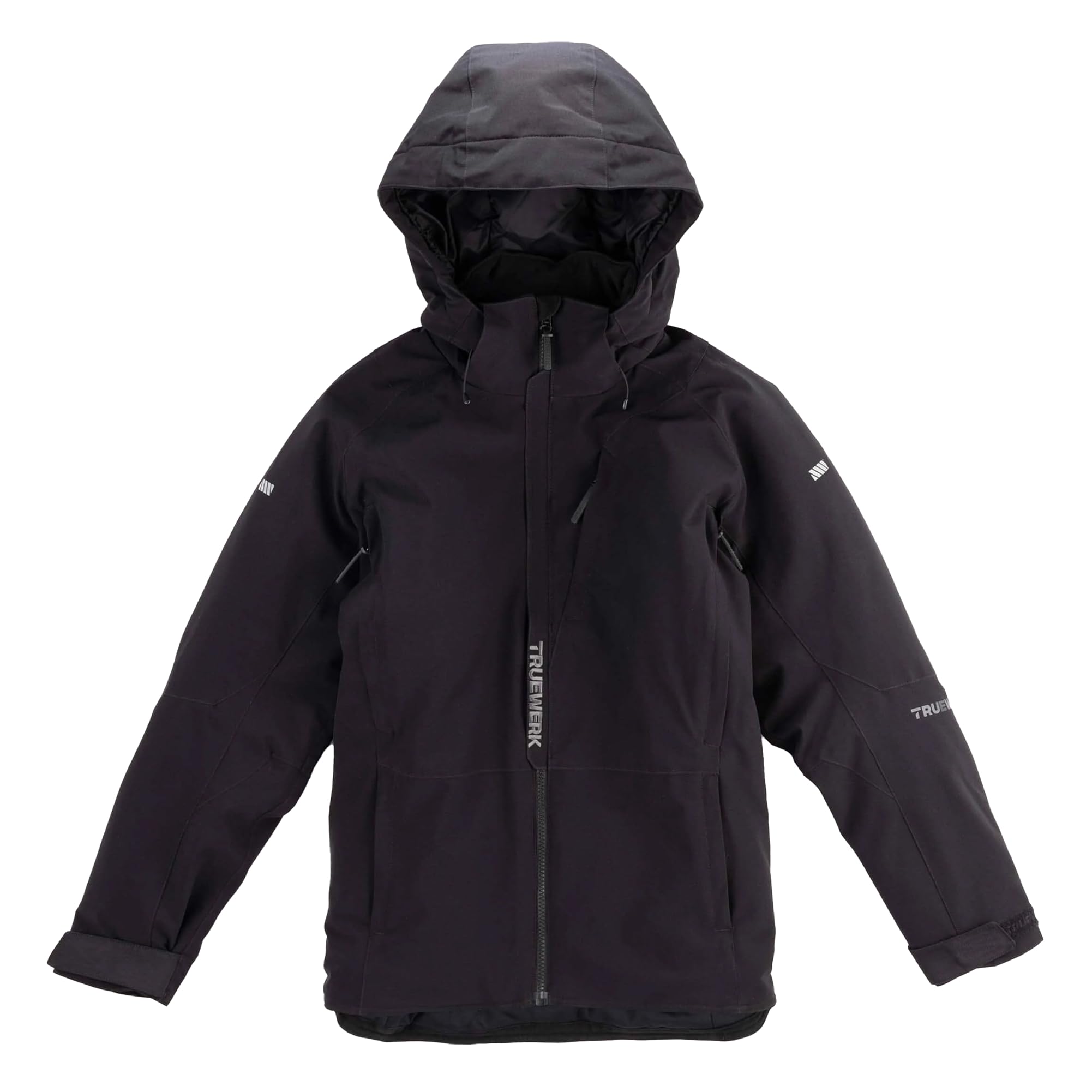
Engineered like a technical layer — warmth rated on a scale and a shell built to stretch and shed water.
TRUEWERK does something no other jacket on this list does: it rates its warmth on a scale. The Tower WerkParka sits at Level 3 out of 4 — midweight, built for cold days. That rating matters because it tells you exactly where this belongs in a layering system: it’s your cold-day outer layer, not a mild-weather piece and not the absolute deepest-cold coat.
The fabrics back that up. The outer is a stretch nylon-and-spandex blend, and the inner is a high-stretch polyester, giving four-way stretch (the fabric moves in both directions) plus a DWR treatment that makes it water resistant and moisture-wicking. Wind resistance and thermoregulation are part of the build too. The care instructions are firm: close all fasteners, wash cold, tumble dry low, and skip fabric softeners, bleach, and dry cleaning. Don’t iron and don’t dry on high heat.
What workers report is quality and warmth — it stands up to below-freezing temperatures and handles a range of weather conditions. Comfort and wind resistance come through clearly. The caveats are a mixed fit and water resistance that’s water-resistant rather than fully waterproof, so treat it as your dry-cold outer layer.
Rated, not guessed: Level 3 of 4 warmth, 4-way stretch, DWR water resistance, and wind resistance — this is technical workwear for cold days that leaves the guesswork out.
Care matters more here: skip softeners and high heat and follow the wash instructions — the stretch fabric depends on it.
Fits best for: the worker who wants a rated midweight outer layer with stretch and wind resistance for cold days.
Not the one if: you want the deepest-cold coat or a full waterproof shell — this is a Level 3 of 4 outer layer.
Know the Specs
Waterproof versus water repellent
A waterproof jacket is fully seam-sealed, meaning every stitch line is taped so water cannot pass through. A water-repellent jacket has a coating on the fabric that makes light rain bead up and roll off, but the seams aren’t sealed. Waterproof costs breathability and is heavier; water repellent breathes better and takes abrasion better. Choose waterproof for long wet shifts, water repellent for dry cold and rough work.
Duck canvas weight and firmness
Duck canvas is a heavy cotton weave — the fabric that makes work jackets tough. Firm duck is the stiffest grade, giving the most abrasion resistance and the longest break-in. Stretch duck adds give for mobility, and stretch twill ripstop is lighter and quicker to dry. Firmer canvas means more stiffness and more durability; stretch fabric means easier movement and lighter warmth.
Sherpa versus quilted lining
Sherpa lining is a thick fleece-style inner layer that traps heat and feels soft against the skin; quilted lining is a thinner, stitched layer that keeps warmth with a lower profile. Sherpa runs warmer and bulkier; quilted runs sleeker and easier to layer. Choose Sherpa for deep cold, quilted for a coat you wear over other layers.
ANSI Class 3 visibility rating
ANSI Class 3 is a visibility standard for workers near moving vehicles and equipment. A jacket carrying that rating uses fluorescent fabric and reflective striping sized to keep you visible at distance. If you work on roadsides, in lots, or around equipment, that rating is a safety spec you should require, not a decorative extra.
Common Questions
Should I buy a waterproof shell or a canvas jacket for work?
What does ANSI Class 3 mean on a work jacket?
Will a Sherpa-lined work jacket be too warm indoors?
How should I size a work jacket if I plan to layer?
Which jacket here is warmest for deep winter?
How do I wash a duck canvas work jacket?
Is a stretch canvas jacket as durable as firm duck canvas?
How long does firm duck canvas take to break in?
What is the difference between water resistant and waterproof?
Do these jackets have enough pockets for tools and a phone?
The Bottom Line
For most people, the work wear jacket winner is the Carhartt Monterey because it’s the only fully seam-sealed waterproof shell here that also packs into a pocket — the jacket you keep on hand for whatever the sky does. If you need a rated midweight outer layer for cold days, the TRUEWERK Tower WerkParka earns its place with Level 3 of 4 warmth. And for the coldest mornings, the Carhartt Firm Duck Traditional Coat brings the firm canvas and quilt-lined insulation to do the heavy lifting — and with the Monterey sitting at 4.5+ stars across 700+ ratings, it’s the one worth grabbing first if rain is your main enemy.
How we choose
We do not accept paid placement. Every pick is matched to a real buyer and a real use-case; we do not hands-on test units.
Sources
Specifications: manufacturer listings and product documentation. Review insights: verified customer reviews, as of November 2026. Pricing: not shown on this page (it changes often); check the current price via the retailer link.
As an Amazon Associate, Tactical Gear Guy earns from qualifying purchases. This does not affect which products we feature.