Specs are compiled from manufacturer listings and verified buyer reviews and can change over time — please confirm the key details on the product page before buying.
Which waterproof work boot is actually worth your money? The short answer: match the boot to your surface, not to the logo. If you spend the day in standing water or mud, a molded rubber pull-on with a steel shank keeps you dry and protects the sole from nails. If you are on concrete and ladders, a leather lace-up with a composite or steel toe and a slip-rated outsole makes more sense. Below you get nine waterproof men’s work boots sorted by what each one genuinely does best, with the trade-offs spelled out instead of buried.
This guide is built by comparing the manufacturers’ published specifications and the patterns across verified customer reviews, so you get each pick’s real strengths and trade-offs instead of marketing spin.
Waterproofing is the first filter here, so every boot below uses a sealed membrane or waterproof leather rather than a light water-repellent spray. Toe type, outsole grip, and how the boot fits wide feet decide the rest. Here is the honest rundown of the work waterproof men’s boots that hold up on a real job site.
Top Picks


How To Choose The Best Work Waterproof Men’s Boots
Start with the ground under your feet, not the brand name. A boot built for a wet barn floor is a different animal from one built for a dry concrete slab. Get that match wrong and a cushioned footbed will not fix a boot that fights the surface you stand on.
Match the boot body to the terrain
Molded rubber and neoprene boots shrug off puddles, mud, and washdown, so they suit farms, fisheries, gardens, and wet construction sites. Leather lace-ups breathe better on hot indoor jobs and grip ladders and rails. If your day moves between both, pick the surface you spend the most hours on and work around it.
Waterproof means a sealed membrane, not a spray
A true waterproof boot uses a sealed membrane or seam-sealed waterproof leather, so water stays out even when the leather soaks through. A “water-resistant” boot only sheds light rain. Check that the listing calls the boot waterproof and that the tongue is gusseted, since that is the gap water finds first.
Toe protection: steel, composite, or none
A steel toe guards against impact and compression from dropped or rolling loads. A composite toe does the same safety job and keeps weight down, which matters when you climb in and out of a truck all day. Plain soft-toe leather suits lighter duty where there is no crush risk overhead.
Grip, shanks, and footbed comfort
Look for a slip-resistant outsole with deep tread if you work near oil, water, or loose gravel. A steel or internal shank stiffens the sole underfoot so nails and sharp debris cannot push through. For long shifts, a cushioned footbed and a moisture-wicking lining are what stop your feet feeling shot by mid-afternoon.
Fit and wide sizes
Boot sizing runs differently from sneaker sizing, so measure your foot and compare against the maker’s chart. If you have wide feet, look for boots built on a wider form or offered in wide widths. A too-narrow toe box is the single most common reason a good boot gets sent back.
Side-by-Side Comparison
| Model | Best For | Toe Type | Outsole / Grip | Stated Weight | Amazon |
|---|---|---|---|---|---|
| Timberland PRO 8″ Direct Attach MaxTRAX★ Best Overall | Cold-weather site work | Steel toe | TPU MaxTRAX slip-resistant | — | Amazon |
| TIDEWE Rubber Work BootsBest for Wet Ground | Mud, water, and farm work | Steel toe | Rubber with deep tread | 3.19 kg | Amazon |
| Mens Composite Toe Leather BootBudget Pick | Budget industrial wear | Composite toe | Rubber no-slip sole | — | Amazon |
| Wolverine Floorhand 6″ Steel-Toe | All-day comfort on a budget | Steel toe | Rubber outsole | 4 pounds | Amazon |
| KEEN Utility Evanston 6″ | Wide feet, medium-duty work | Composite (carbon) toe | Rubber with 90-degree heel | 25.3 oz / 720 g per boot | Amazon |
| Carhartt CMW6220 6-Inch | Rough-environment ankle support | — | Polyurethane outsole | 4.5 pounds | Amazon |
| Ariat Rebar Lift 6″ | Long shifts with heavy support | Composite toe | Rubber outsole | 5.5 pounds | Amazon |
| Carolina 8″ Steel Toe Logger | Linemen and arborist work | Steel toe | Rubber lug, oil-resisting | — | Amazon |
| Thorogood 1957 Series 8″ | Premium long-term leather | Steel toe | MaxWear 90 traction outsole | 4.9 pounds | Amazon |
Detailed Reviews
1. Timberland PRO Mens 8 Direct Attach MaxTRAX Steel Toe WP SRO
Our pick — 4.5+★ from 800+ verified ratings; the strongest balance of quality and price.
Sealed leather, a steel toe, and 200 grams of insulation for cold morning starts.
If you work outdoors in dropping temperatures, this is the boot that earns its place first. The leather upper is seam-sealed for waterproofing, meaning the stitching itself is treated so water cannot creep in through the seams. Inside sits 200 grams of Thermolite insulation (a synthetic fill that traps warmth without bulk), so your feet stay warmer on a frosty site than they would in an unlined boot.
What wins people over is the build quality — it is the trait mentioned most often in buyer feedback. The outsole is thermoplastic urethane (a hard-wearing plastic-rubber blend) with the patented SR Max MaxTrax tread, a slip-resistant pattern aimed at slick and oily floors. Timberland PRO’s 24/7 comfort system and a polyurethane midsole are there to cut foot fatigue over a long shift, and the boot is marked ASTM F2413-18 M/I/C EH compliant, a safety standard covering impact, compression, and electrical hazard protection.
The honest catch is fit. The toe box runs narrow, and buyers with wider feet regularly say so, so try a wide width if you normally need one. Some wearers also report the soles separating after a few months of hard use, which is worth knowing if you are brutal on soles. For an eight-inch boot with insulation and a steel toe, this Timberland PRO is the strongest all-rounder here — you get cold-weather warmth, sealed waterproofing, and a proper slip-rated tread in one package.
What it gets right
- Seam-sealed waterproof leather keeps water out through the stitched seams, not just the surface.
- 200 grams of Thermolite insulation adds warmth on cold-weather jobs.
- SR Max MaxTrax slip-resistant tread plus an oil- and abrasion-resistant TPU outsole.
- ASTM F2413-18 M/I/C EH compliance for impact, compression, and electrical hazard protection.
Where it asks a little back
- The toe box runs narrow, so wide-footed workers should size up to a wide width.
- Some report the soles separating after a few months of hard use.
Go for it if: you want one boot that handles cold mornings, wet ground, and slick floors without a second pair.
Think twice if: you have especially wide feet — the toe box is the tight spot here.
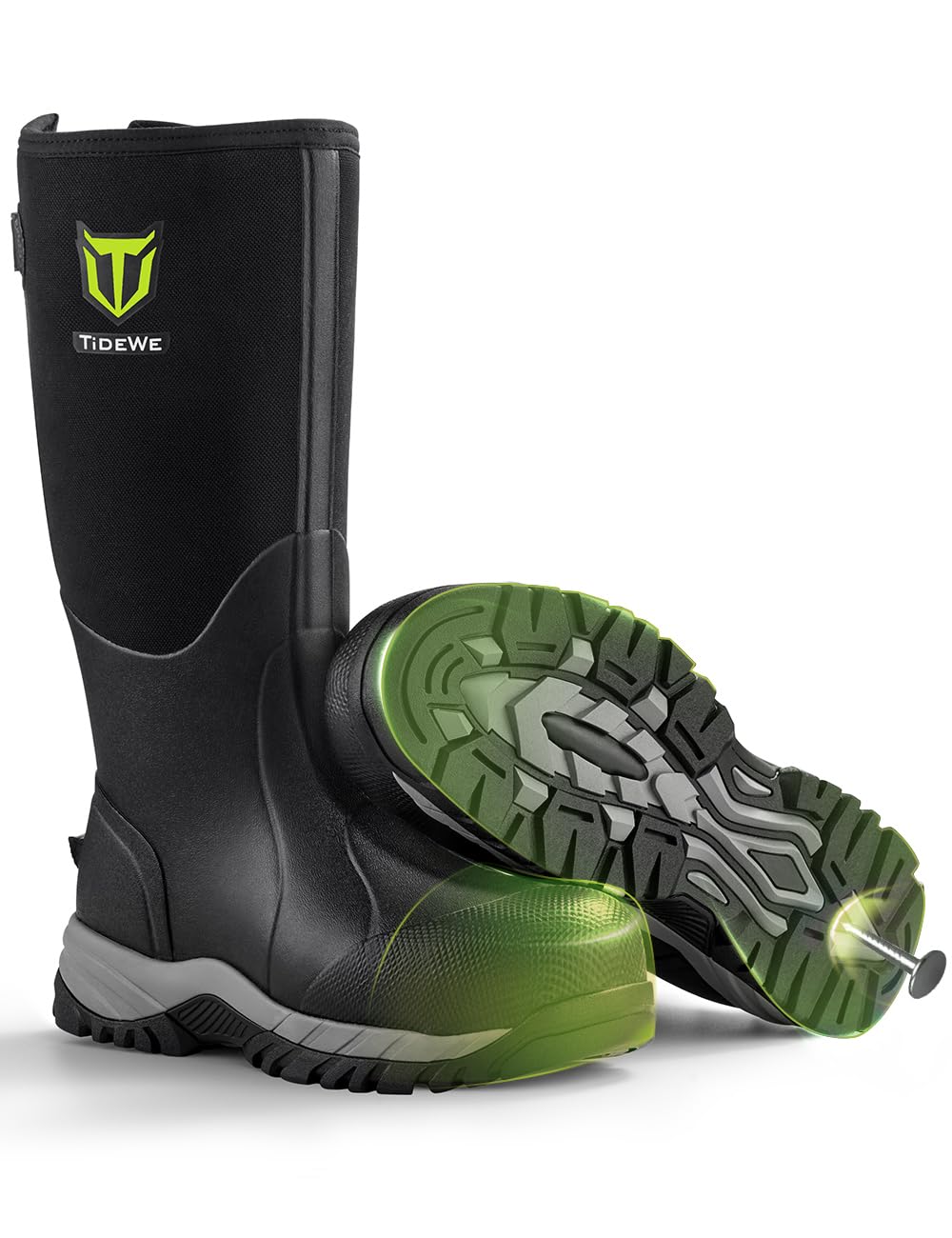
2. TIDEWE Rubber Work Boots
A pull-on rubber boot built for standing water, mud, and nails underfoot.
When the ground is genuinely wet — a washdown bay, a fish dock, a muddy farm track — rubber beats leather every time. These are made from 100% waterproof rubber and neoprene (a flexible synthetic that stays soft in cold), so the boot itself cannot soak through. The rubber sole carries deep tread for grip on uneven workplace terrain, and there is no lace to wick water in.
The standout safety feature is under your foot, not over your toes. A steel shank runs between the insole and the outsole to block punctures from nails and sharp debris, and it doubles as a stiffener so the sole supports you all day. The steel toe takes impacts from falling or rolling objects. Around the inside, 6mm of neoprene adds warmth when the temperature drops, and a breathable lining moves air so your feet do not stew in warm weather.
Getting them on is quick thanks to the pull-on loops and kick tab. Buyers report they keep feet dry and warm and leave plenty of room, and the boots suit farm, garden, fishery, and construction work alike. The catch is sizing: the maker asks you to measure your foot and pick roughly 0.16 inches over your actual measurement, so ignore that and you will get a loose or tight fit. At 3.19 kg, they are also heavier than a leather lace-up, which is the price of thick rubber.
The safety case: puncture protection underfoot plus a steel toe covers the two hazards wet outdoor work throws at you most — nails underfoot and heavy loads overhead.
The trade-off: thick rubber is warm and dry but not nimble; expect a heavier, clunkier feel than a leather boot if you are up and down ladders all day.
Reach for these if: your boots are going into actual water and mud, and you want puncture protection from the shank.
Look elsewhere if: you need a light, flexible boot for indoor concrete work.
3. Mens Work Boots Composite Toe
An entry-level leather boot that gets the basics right without asking much.
For light-duty industrial and construction work on a tight budget, this composite-toe leather boot covers the essentials. The upper is genuine leather, the toe is composite (a non-metal safety cap that meets impact needs while keeping weight down), and the rubber sole is built as a no-slip sole for everyday site surfaces.
Where the money went is the toe and the leather, and that shows in buyer feedback: quality and comfort are the traits owners rate highest. It fits well from the start and looks the part on site. If you want a straightforward safety boot for lighter tasks and do not need premium materials, it does the job.
Set your expectations honestly, though. Durability draws mixed feedback, with some finding these boots hold up and others saying they wear faster than they would like under normal work use. Water resistance is the weaker spot — this is the boot to avoid for standing water or soaking conditions. Keep it on dry concrete and light-duty tasks, and the composite toe and no-slip sole earn their price.
What you are paying for: an affordable leather boot with a real composite toe and a no-slip rubber sole — enough for dry-ground industrial and construction tasks.
The one thing to know: waterproofing and long-term durability are the soft spots, so keep these out of deep water and off the roughest sites.
Right for: a budget-conscious worker who needs a composite toe on dry concrete.
Not for: wet, muddy, or punishing conditions where rubber or premium leather pays off.
4. Wolverine Men’s Floorhand Waterproof 6” Steel-Toe Work Boot

The lace-up that stays light and dry through a full ten-hour shift.
If long days on your feet are the issue, this Wolverine is the value leader for comfort. It is a 6-inch waterproof work boot with a steel toe and a moisture-wicking mesh lining that pulls sweat off your foot. The build is light for a steel-toe boot at 4 pounds, which keeps the drag off your legs by the end of a shift. Buyers routinely report wearing them for 10+ hour days without trouble.
Compare that with a heavier leather boot like the Carhartt CMW6220 at 4.5 pounds: the Wolverine is roughly 12% lighter, a difference you feel when you are climbing stairs or spending hours on your feet.
The design leans on Wolverine’s American heritage — the brand has been at it since 1883 in Rockford, Michigan — and the Floorhand stands up to jobsite abuse at a friendly price. Fit is a strong point, and one buyer with wide feet finds the 9 extra-wide size works perfectly. The honest caveat is durability: some owners mention the boots coming apart over time, so if you are extremely hard on boots, keep that in mind. For most trades, though, the 4-pound build and moisture-wicking lining make it the comfort pick at this price.
The appealing side
- Shares the 4-pound class with few leather steel-toe boots, so your legs feel it less after ten hours.
- Waterproof leather with a moisture-wicking mesh lining keeps feet dry and fresh.
- Steel toe protection at a mid-range price point.
- Wide sizes work for buyers who need extra width.
The honest fine print
- Durability draws mixed reports, with some owners seeing the boots come apart.
- The 6-inch height gives less ankle coverage than an 8-inch logger boot.
Best call for: the worker who wants a light, dry, comfortable steel-toe boot without a premium price tag.
Worth a second thought if: you need maximum durability against relentless abuse.
5. KEEN Utility Evanston 6″ Composite Toe
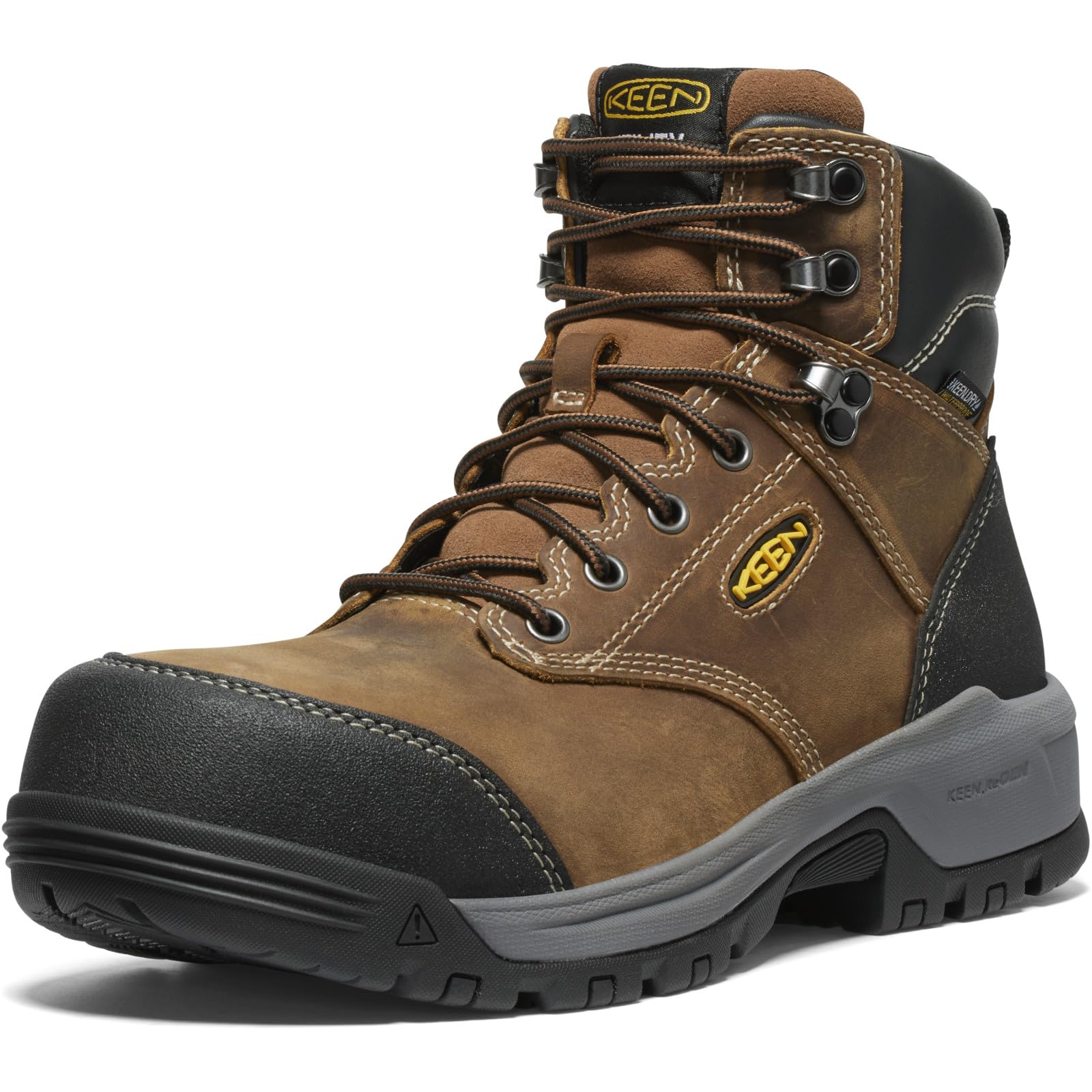
The wide-footed worker’s leather boot, with a carbon toe that lightens the step.
If most boots pinch your toes, start here. The Evanston is built off KEEN’s traditional wider footwear form, and buyers with wide feet consistently report plenty of room. The carbon toe (a composite safety cap) shaves weight while still guarding against impact, and the boot tips the scale at 25.3 oz / 720 g per boot.
Comfort comes from the KEEN.ReGEN midsole, a cushioning foam designed to return energy as you walk and keep you moving through a shift. The upper is barnyard-resistant waterproof leather, so wet and mucky conditions do not soak it, and there is a 90-degree heel plus an internal shank for stability on uneven ground. Removable insoles let you swap in your own support. KEEN rates it for medium-duty work in construction, utilities, landscaping, transportation, maintenance, and manufacturing.
The trade-off is lifespan under the harshest use: durability draws mixed reports, with some boots lasting up to a year and others wearing sooner. With the width, the waterproof leather, and the energy-returning midsole on your side, this is the boot to pick when a standard toe box has let you down.
The wide-foot answer: a wider form and removable insoles make it the most forgiving fit lift here for anyone whose usual boot squeezes.
The lifespan question: treat it as a solid medium-duty boot rather than a decades-long heirloom.
Pick this if: wide feet and medium-duty work are your reality, and you want waterproof leather with a lightweight toe.
Skip if: you need a boot rated for the heaviest, most punishing site abuse.
6. Carhartt Footwear CMW6220 6-Inch Waterproof Work Boot
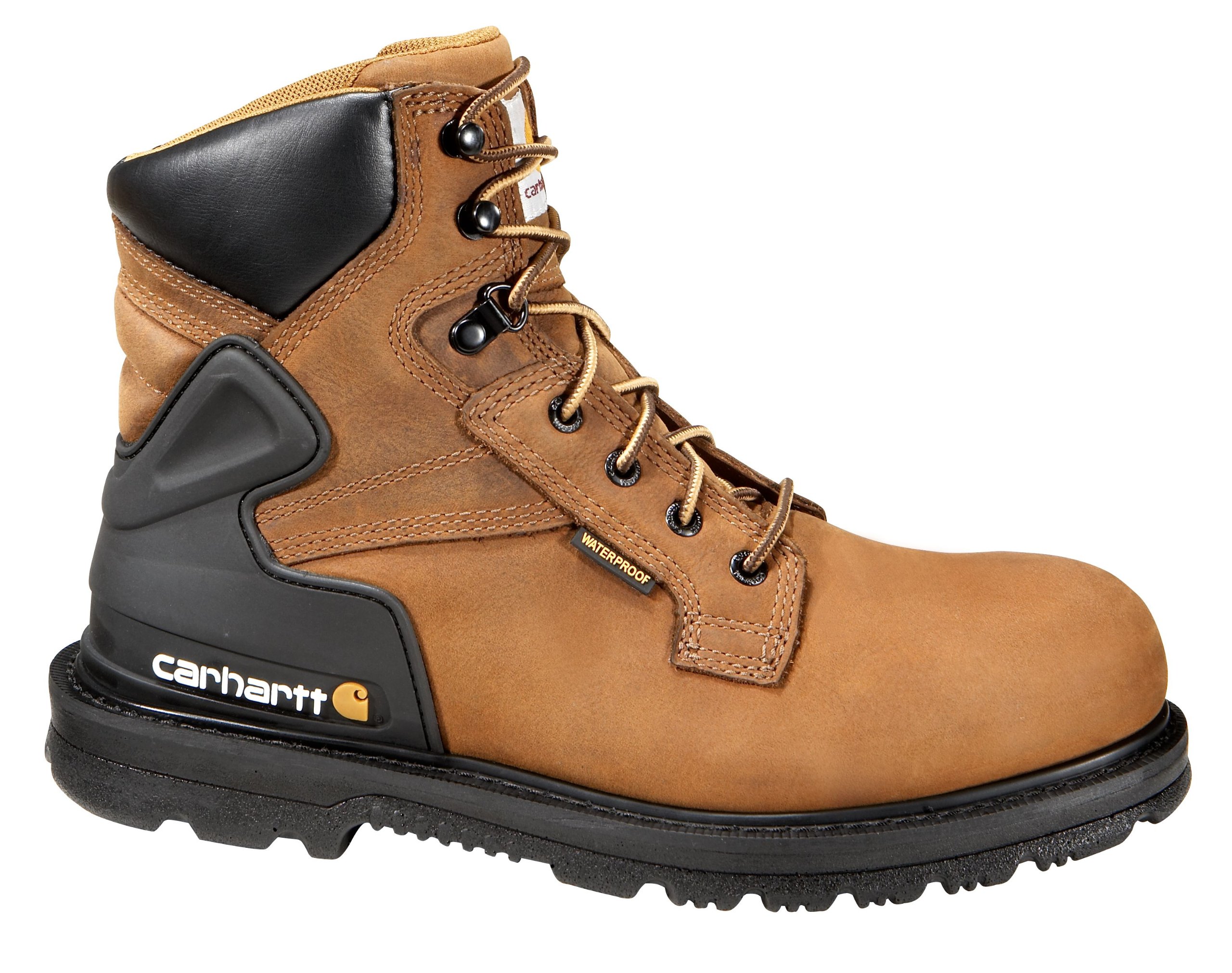
Carhartt’s ankle-guarding leather boot for rough ground and a full shift.
This is a comfortable leather boot built around ankle stability. The Carhartt TPU heel guard (a hard plastic-rubber shell around the heel) adds stability and protection in rough environments, which is the feature that separates it from a plainer lace-up. The Storm Defender waterproof system seals out water, and a FastDry lining moves sweat away so your feet stay fresher until you clock out.
Comfort is the trait owners bring up most. A Cushion Comfort polyurethane footbed and flexible polyurethane outsole keep the ride easy through the day. It weighs 4.5 pounds, so it is a little heavier than a light steel-toe boot like the Wolverine Floorhand at 4 pounds — you trade a bit of lightness for the extra heel structure.
The fit is the thing to get right. Buyers with wide feet say the boot runs very narrow, so size up or choose a wide width. Some owners also report the soles breaking apart after around three months of use, which is worth weighing if you are hard on footwear. Order the wide width if you need it, and the TPU heel guard and Cushion Comfort footbed make this a supportive boot for rough ground.
Why it earns a slot
- TPU heel guard gives the ankle extra support on rough ground.
- Storm Defender system and a FastDry lining keep feet dry and fresh.
- Cushion Comfort footbed and flexible outsole suit long shifts.
Where it needs care
- Runs narrow, so wide-footed buyers should size up to a wide width.
- Some report the soles breaking apart after around three months of use.
Good match for: rough-terrain work where you want proper ankle support plus waterproof leather.
Be careful if: you have wide feet — order the wide width from the start.
7. Ariat Men’s Rebar Lift 6″ Waterproof Composite Toe Work Boot
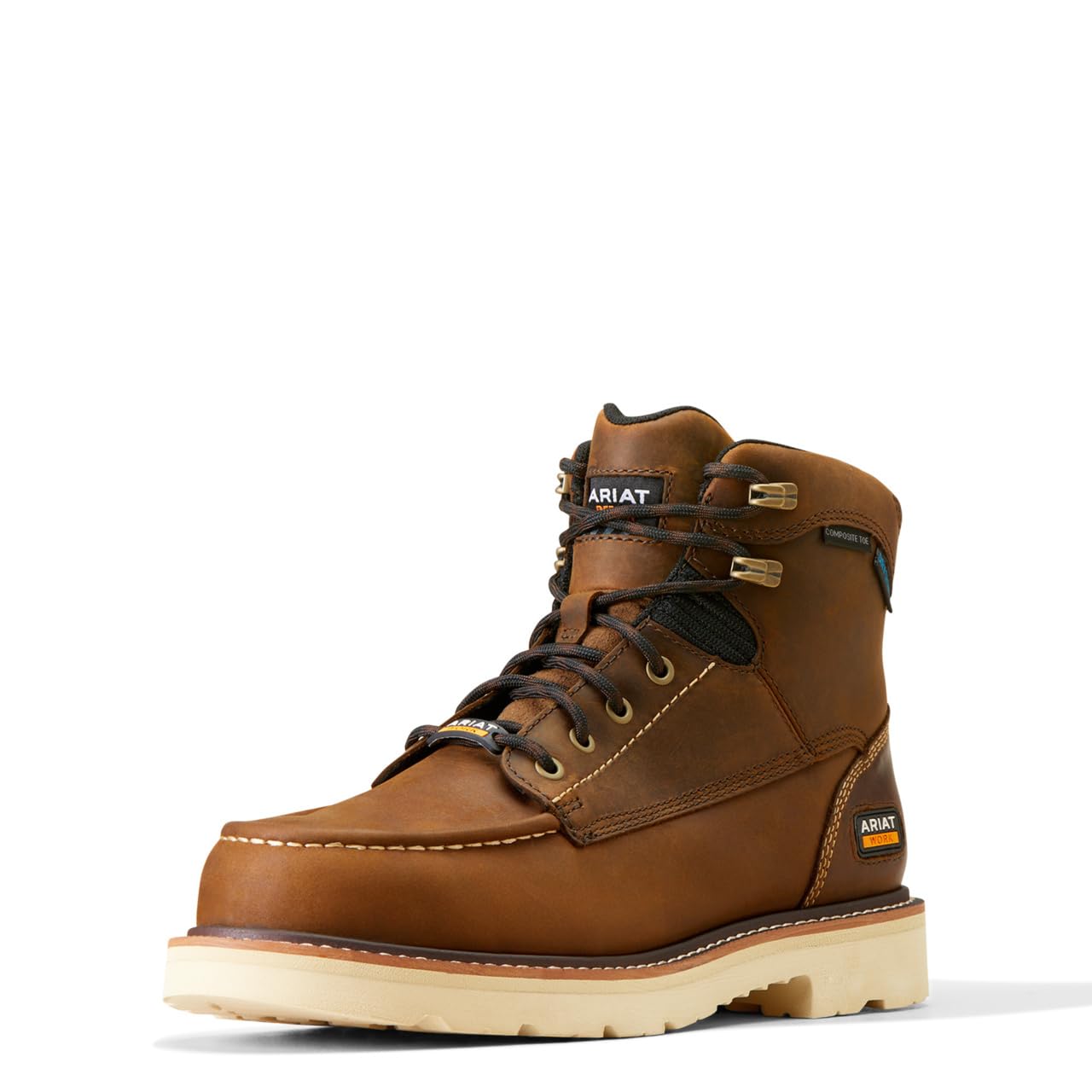
Cushioning and stability for the worker who is up and down all day.
The Rebar Lift is aimed squarely at long shifts: it delivers the cushioning and stability you need to keep going, with the durability to handle outdoor conditions. The composite toe keeps the safety protection without the metal bulk, and the boot is built waterproof for wet weather. An elastic panel at the ankle lets the boot flex as you squat, which makes crouching and kneeling easier through the day.
What people like about it is the quality and the comfort. It gives strong foot support and looks sharp enough to wear off the clock too. At 5.5 pounds it is one of the heavier boots in this group, so if you cover a lot of ground the weight is something to feel for.
The real concern is durability. Customers note the soles peeling apart and the boots coming apart after a couple of months, so this is not the pick for someone who needs a boot to survive years of abuse. For comfort and support on moderate-duty work, it delivers — just weigh the lifespan against how hard you are on boots.
Comfort and support, front and center: the cushioning, stability, and elastic ankle flex make it a great all-day boot for moderate-duty work.
The honest worry: sole and boot separation shows up in feedback, so this suits lighter-duty shifts better than relentless abuse.
A solid choice for: comfort-first workers who value cushioning and support over maximum lifespan.
Less ideal if: you need a boot to survive brutal, daily punishment for years.
8. Carolina 8″ Steel Toe Logger Boots

An eight-inch logger boot for linemen and arborists who climb for a living.
Logger boots are built for trades that climb and scramble, and this Carolina pairs that format with real waterproofing. Steel toe protection guards against impact and compression, and the EH-rated build adds electrical hazard protection for environments where that matters. The slip-resistant, oil-resisting rubber lug outsole keeps its footing on slick or oily surfaces, and welt construction with durable leather is meant to hold up over time.
A triple-rib steel shank adds stability underfoot, a detail that pays off when you are on uneven ground or climbing trees. Inside, a Pillow Cushion memory foam footbed works to reduce foot fatigue for people who spend long hours standing. The eight-inch height gives more ankle coverage than a six-inch boot, so it suits rough outdoor tasks in unpredictable weather.
Unlike most logger boots, which skip reliable moisture protection, this one is built waterproof from the ground up. Comfort is a genuine strong suit — reviewers point out it does not cause blisters, and the leather and stitching fit together cleanly. With the triple-rib steel shank and EH rating, it suits linework and tree care as well as rough construction.
Built for climbers: the triple-rib steel shank, eight-inch height, and rubber lug outsole are aimed straight at linemen and arborists on rough ground.
What you give up: this is a tall, heavy-duty logger format, not a nimble indoor boot — it shines outdoors.
Made for you if: your day involves climbing, uneven ground, and electrical hazard concerns.
Overkill if: you only need a light boot for dry, flat indoor floors.
9. Thorogood 1957 Series 8″ Steel Toe

American-made full-grain leather, built to last years if you care for it.
This is the boot you buy when you want the last one you will need for a while. Thorogood builds the 1957 Series with premium full-grain saddle leather in a moc-toe design, finished with a special wax for a vintage Trail Crazyhorse brown look. It is made in the USA with USA and globally sourced components. The steel toe meets ASTM F2413-18 safety toe standards, and the 8-inch shaft gives solid ankle coverage. At 4.9 pounds, it is the heaviest leather boot on this list, and that weight is the trade for all that leather.
Waterproofing is handled properly: a gusseted tongue keeps water and liquids at bay, while the moisture-wicking lining pulls sweat away so you stay dry from both sides. The MaxWear 90 traction outsole with a heel is built to flex better than other work boot outsoles, absorbing impacts and holding its grip on loose gravel and wet, oily surfaces — it meets ASTM F3445-21 slip-resistance standards. A memory foam insole softens the ride.
The one thing to plan for is break-in. Shoppers say these are comfortable once broken in, and owners describe them as well-constructed and built to last, though a few report soles coming apart and some question the value. Plan on a couple of weeks of break-in before the full-grain leather molds to your feet.
What makes it the premium pick
- Premium full-grain saddle leather in a moc-toe design, made in the USA with globally sourced components.
- Steel toe meets ASTM F2413-18 safety toe standards.
- MaxWear 90 outsole meets ASTM F3445-21 slip-resistance standards and flexes to absorb impacts.
- Gusseted tongue and moisture-wicking lining keep water and sweat out.
What to expect going in
- Needs a break-in period before it feels right.
- Heaviest leather boot here, so it is not the choice for a light, quick feel.
Worth it for: the tradesperson who wants full-grain American-made leather and is happy to break it in for years of wear.
Pass on it if: you want a light boot that feels broken-in from day one.
Know the Specs
Waterproofing: membrane vs. water-resistant
A true waterproof boot uses a sealed membrane or seam-sealed waterproof leather, so water cannot pass through even when the surface soaks. A boot labeled water-resistant only sheds light rain and will soak through in a puddle. Look for the word waterproof and a gusseted tongue, which blocks the gap where water usually enters.
Steel toe vs. composite toe
Both guard against impact and compression from dropped or rolling loads. A steel toe is metal; a composite toe is a non-metal cap that keeps weight down and stays warmer in cold weather. If you climb in and out of a truck all day, the lighter composite option can be easier on your legs.
Slip ratings and outsole traction
On oily or wet floors, the outsole pattern is what keeps you upright. The ASTM F3445-21 standard is the slip-resistance benchmark some boots meet. Deep-tread rubber lug outsoles are built for loose gravel and mud, while specialized slip-resistant tread targets slick shop floors.
Shanks, footbeds, and fatigue
A steel or internal shank runs underfoot between the insole and outsole, stiffening the sole so nails and sharp debris cannot push through. A cushioned footbed and moisture-wicking lining keep your feet comfortable and dry over long shifts, which is what staves off end-of-day foot fatigue.
Common Questions
Are rubber work boots truly waterproof in standing water?
Will a steel toe boot keep my feet warm in winter?
How do I know if a work boot will fit my wide feet?
What does EH-rated mean on a work boot?
How long should a pair of waterproof work boots last?
Do I need a steel shank in a work boot?
Are logger boots better than standard work boots for climbing?
How should I break in a new pair of leather work boots?
Can I wear composite toe boots where steel toe is required?
The Bottom Line
The strongest all-rounder in this lineup is the Timberland PRO 8″ Direct Attach MaxTRAX — seam-sealed waterproof leather, a steel toe, 200 grams of Thermolite insulation, and an SR Max MaxTRAX slip-resistant outsole make it the one boot here that handles cold, wet, and slick conditions. If your work means standing water and mud, reach for the TIDEWE rubber boots with their puncture-resistant steel shank. And if all-day comfort on a reasonable budget is the goal, the Wolverine Floorhand at 4 pounds and a full-grain leather boot like the Thorogood 1957 Series at the premium end round out the picks. Match the boot to your ground and your toe needs, and you buy once instead of replacing a wrong pick next season.
How we choose
We do not accept paid placement. Every pick is matched to a real buyer and a real use-case; we do not hands-on test units.
Sources
Specifications: manufacturer listings and product documentation. Review insights: verified customer reviews, as of November 2026. Pricing: not shown on this page (it changes often); check the current price via the retailer link.
As an Amazon Associate, Tactical Gear Guy earns from qualifying purchases. This does not affect which products we feature.