Specs are compiled from manufacturer listings and verified buyer reviews and can change over time — please confirm the key details on the product page before buying.
If you spend eight hours on tile, concrete, or an oily kitchen line, the shoe on your foot is either helping you finish the shift or making you dread it. The right pair grips a wet floor and cushions a hard one. This guide sorts nine work shoes by their strongest trait, so you can match one to your floor, your shift length, and your safety rules.
This guide is built by comparing the manufacturers’ published specifications and the patterns across verified customer reviews, so you get each pick’s real strengths and trade-offs instead of marketing spin.
Below you’ll find a slip-test-worthy pick for kitchens, a toe-cap option for warehouse floors, and a steel-plate model for job sites. Read on for the work shoes that hold your foot steady through a full shift.
Top Picks

How To Choose The Best Work Shoes
Your floor and shift length decide the shoe. A server on a wet tile floor and a warehouse picker on polished concrete need two different outsoles, and buying for the wrong surface is the most common mistake in this category. Start with the floor you stand on, then work outward to the toe and the cushioning.
Start With The Floor Under Your Feet
Slip resistance is the one trait you cannot compromise on. Look for an outsole described as oil and slip resistant, and check whether buyers report it gripping on the surface you actually work on. A kitchen line and a shop floor both get wet, but oil is a different problem from water, so match the claim to the mess. Non-slip tread patterns shed liquid rather than sitting on it, which is what keeps you upright when a spill spreads.
Decide if you need A Safety Toe
A safety toe cap protects your toes from a dropped box or a rolling pallet. Alloy and composite caps meet the same published impact standards as steel, but they weigh less, which matters when you take thousands of steps a shift. If your employer does not require a toe cap, skip it — you get more flex and a lighter shoe without one. If they do, confirm the exact standard named in the listing, because that is what a safety officer will check.
Match Cushioning To Your Shift Length
Most work shoes feel fine at hour one and fail by hour seven. The spec to look for is the midsole foam — a dedicated cushioning midsole and a foam sockliner are what keep your arches supported through a long standing shift. A memory foam insole feels soft in the store but can flatten by mid-afternoon, so read what owners say about the end of the day. Heavier shoes also raise fatigue, so if you walk a lot, weight in pounds is worth checking before you buy.
Side-by-Side Comparison
| Model | Best For | Safety Toe | Claimed Weight | Upper / Outsole | Amazon |
|---|---|---|---|---|---|
| Timberland PRO Powertrain Sport★ Best Overall | Industrial floors | Alloy safety toe | 1.54 lb (package) | Fabric-synthetic / Polyurethane | Amazon |
| Reebok Work N Cushion 4.0Kitchen Grip Pick | Restaurant and kitchen | — | 3 lb (package) | — / Oil and slip resistant | Amazon |
| Skechers Ultra Flex 3.0 SR JinieFeatherweight Pick | Healthcare and service | — | 1.5 lb (product) | Breathable mesh / Slip resistant | Amazon |
| SHULOOK Non Slip Work Shoes | Oily shop floors | — | — | — / Non-slip | Amazon |
| Skechers Nampa Broxtin | Easy on, easy off | — | 1.5 lb (product) | Leather / Slip resistant | Amazon |
| Skechers Max Cushioning Endeavour SR | Long standing shifts | — | 1.5 lb (product) | Engineered mesh / Slip resistant | Amazon |
| Timberland PRO Intercept Mid | Job-site protection | Steel safety toe | 2.71 lb (package) | Ripstop nylon / Injection-molded EVA | Amazon |
| New Balance Quikshift Composite | Wide feet and long shifts | Composite toe | — | — / Slip resistant | Amazon |
Detailed Reviews
1. Timberland PRO Powertrain Sport Alloy Safety Toe Work Shoe
Our pick — 4.5+★ from 17,000+ verified ratings; the strongest balance of quality and price.
An alloy safety toe that meets ASTM impact standards without the weight of steel.
This is the pick for warehouse floors, light industrial work, and any job where a toe cap is required but you still walk miles a shift. The headliner is an alloy safety toe — a metal cap shaped asymmetrically to follow the line of your foot. It meets ASTM F2412-18a and ASTM F2413-18 I and C standards, the published benchmarks for impact and compression protection. In plain terms, that is the toe protection your safety officer looks for, without the deadweight of a full boot.
Underfoot, Timberland’s Anti-Fatigue Technology uses shock-absorbing geometry that returns energy back to your foot. The polyurethane outsole (the bottom layer that touches the ground) resists slips, oil, and abrasion, so a wet loading dock doesn’t turn into a skating rink. There’s also electrical hazard protection for secondary underfoot protection against live circuits, rated to ASTM F2412-18a, F2413-18, and F2892-18. And the listing lists 1.54 pounds, listed as package weight, which is light enough that stepping up a ladder doesn’t feel like a chore.
What wins people over, based on the long review history, is the balance of comfort and protection — owners describe them as well-fitting and light for a safety shoe. The honest follow-up: these aren’t dress shoes, so if you need something that reads tidy at a front desk or in a customer meeting, the fabric-and-synthetic upper will look work-boot casual. The toe cap also takes up a little interior room, so if your foot runs wide, order with that in mind. That’s a fit note, not a flaw for the many workers with standard-width feet.
Where it earns its keep
- Alloy toe meets ASTM F2412-18a and F2413-18 standards without the weight of steel.
- Polyurethane outsole resists slip, oil, and abrasion on hard industrial floors.
- ReBOTL material uses at least 50% recycled PET in the upper.
- Electrical hazard protection rated to ASTM F2892-18.
What to weigh first
- Fabric-and-synthetic upper reads casual, not dressy.
- Toe cap trims interior room for wide feet.
- No specific slip-resistance standard published beyond the outsole claim.
Top call for: Anyone whose job requires a toe cap and who covers serious ground each shift.
Look elsewhere if: You need a dress shoe you can wear to a client meeting.
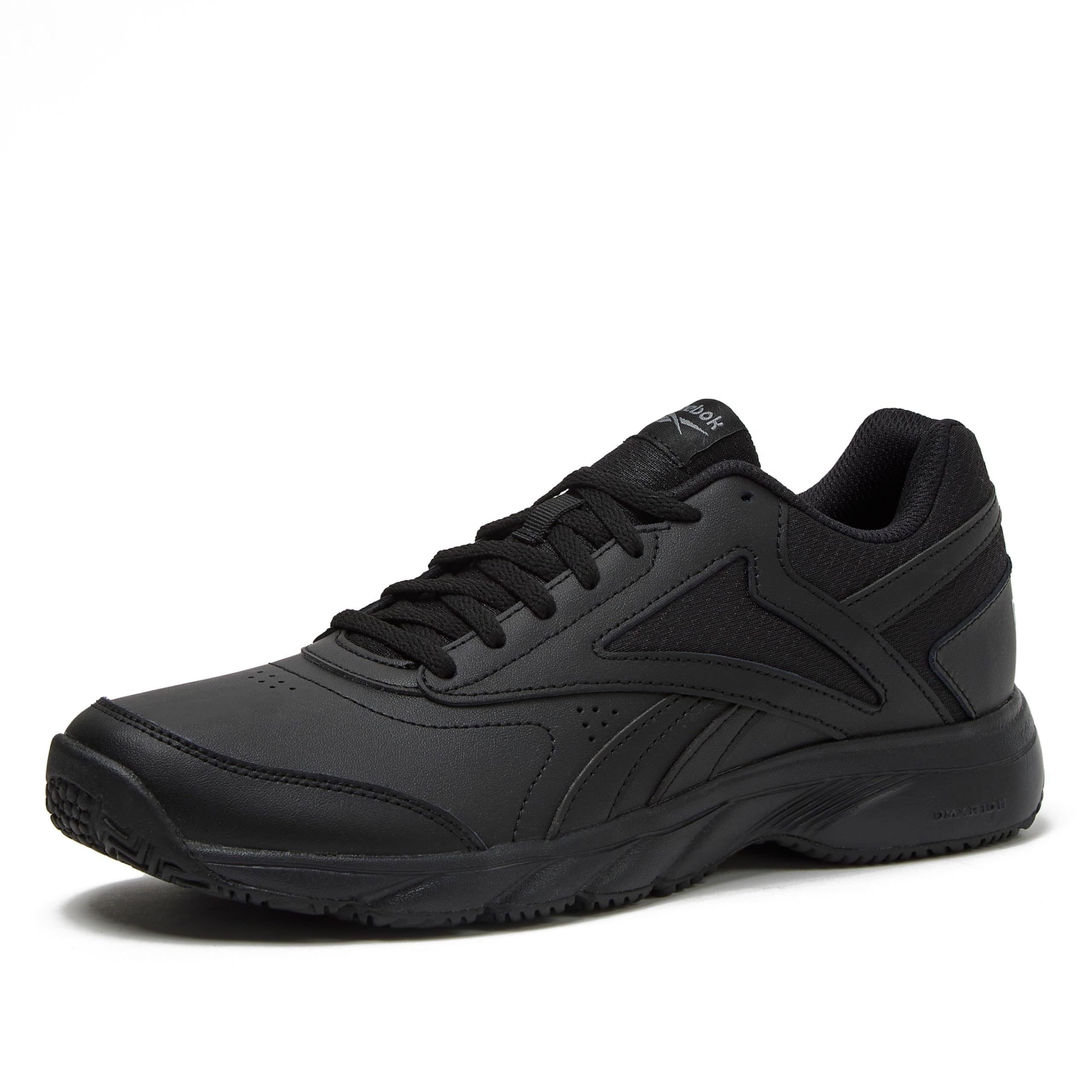
2. Reebok Work N Cushion 4.0 Non Slip Work Shoes
Built for wet, oily kitchen floors — the dish pit, not the dining room.
If you wait tables or work the line, the floor you fear is a wet one with a film of oil on it. Reebok aims this shoe squarely there, with an oil and slip resistant outsole and a DMX Ride+ foam midsole that cushions from heel to forefoot. A sockliner with INSITE Pulsion foam adds a responsive feel under the arch. The idea is simple: you land on your heel dozens of times an hour, so the shoe needs to absorb that repetition rather than pass it up your leg.
The specification that argues against it is weight. Reebok lists the package at 3 pounds, versus the 1.5-pound product weight listed for the Skechers women’s pick below. That gap is worth knowing if you’re on your feet for a double shift and do a lot of walking rather than standing in one spot. Heavier shoes raise the effort of every step, so lighter picks win for pure step-count jobs.
Owners are happiest about build quality and comfort. The recurring caveat is fit — some owners mention the shoe runs narrow, so if your foot is wide, size up or consider a wide-width option elsewhere on this list. Slip resistance opinions split too, which usually means surface matters: it grips well on wet tile but some workplace floors with heavy grease still catch people out. That’s a fit-and-surface note, not a reason to dismiss a shoe with solid quality scores.
Where the value sits: A restaurant-first design with an oil and slip resistant outsole and a foam midsole tuned for constant standing and pivoting — the exact motions a server repeats all night.
The honest limit: At 3 pounds listed package weight it’s the heaviest shoe here, and the fit reads narrow for some feet. Pick it for kitchen work, not for a job where you sprint between buildings.
Reach for this if: Your shift is spent on wet kitchen tile and you want grip and cushion up front.
Try another pick if: You have a wide foot or you cover a lot of ground on foot.
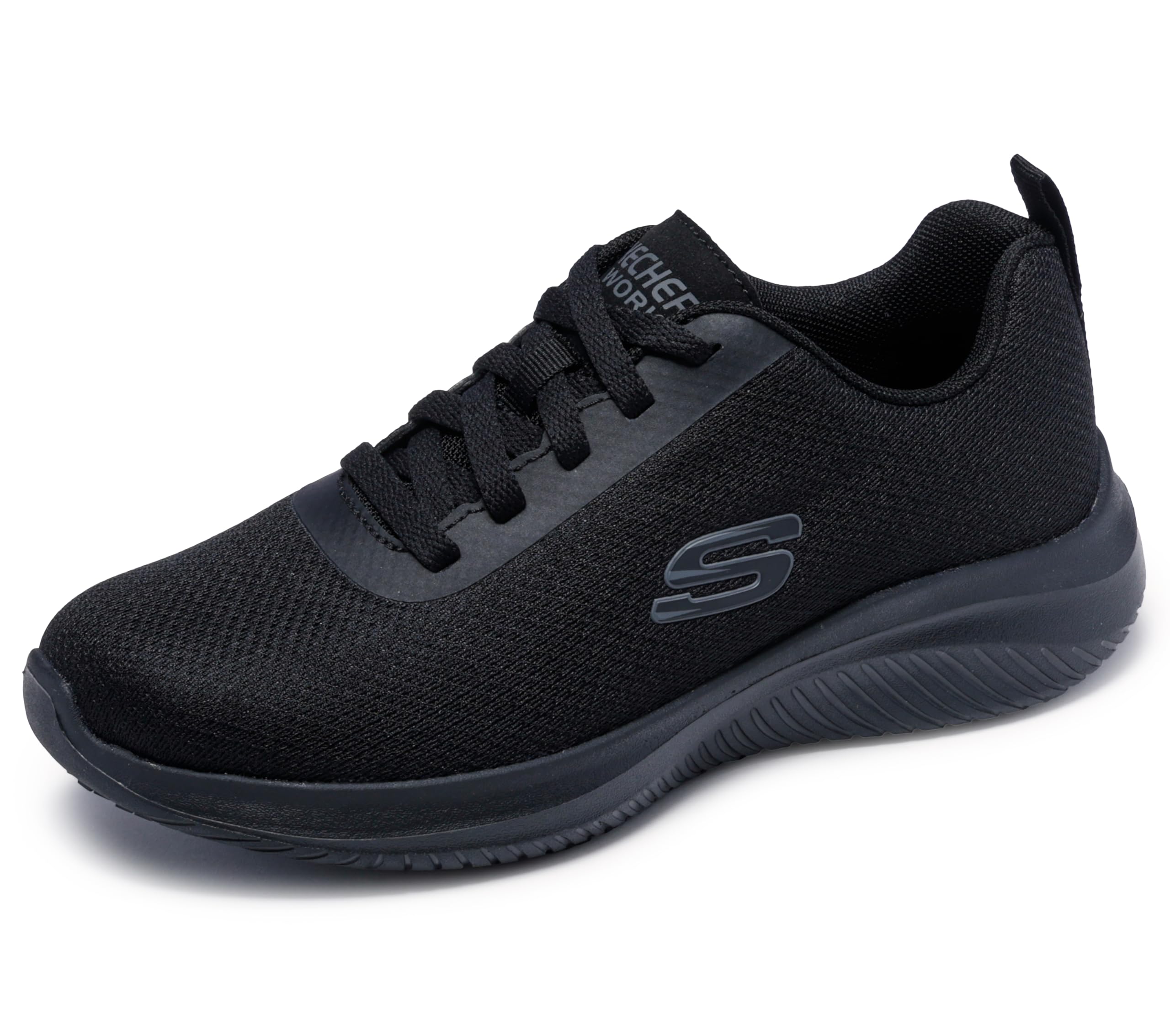
3. Skechers Women’s Work Ultra Flex 3.0 SR – Jinie
The 1.5-pound women’s shoe for nurses, servers, and anyone who paces a long floor.
At 1.5 pounds, listed as product weight, this is the lightest shoe on the list. That number is the whole pitch for healthcare and service work, where you might log a dozen miles in a shift and every extra ounce counts against you by hour ten. A breathable mesh upper keeps air moving across the foot, which matters when you’re moving fast indoors for hours. Memory foam cushioning sits underfoot, and the slip-resistant outsole is built for hard indoor floors.
You get electrical hazard protection, which means secondary underfoot protection against live circuits. The cushioning is a mesh-and-memory-foam combo, and that is the trade-off against shoes with a dedicated foam midsole — you get a soft step, but if you need maximum arch support for a long standing shift, a shoe with a structured midsole serves better. The relaxed fit design leaves toe room, which buyers tend to like.
What customers note lines up well: comfortable with plenty of toe room, traction they trust, and a fit that runs true to size. That true-to-size pattern is useful, because it means you can buy your normal number instead of guessing. For a women’s work shoe that has to double as an all-day service shoe, the lightweight build is the feature that keeps it in rotation.
The spec that sells it: 1.5 pounds of product weight with a slip-resistant outsole and electrical hazard protection — a genuinely light shoe for indoor service floors.
Know before you buy: Memory foam is the cushioning here rather than a dedicated supportive midsole, so if your arch needs firm structure all shift, look at the Max Cushioning Endeavour below instead.
Right answer for: Nurses, servers, and healthcare staff who want light feet and true-to-size fit.
Wrong tool if: You need firm arch structure for a standing-only shift.
4. SHULOOK Men’s Non Slip Work Shoes
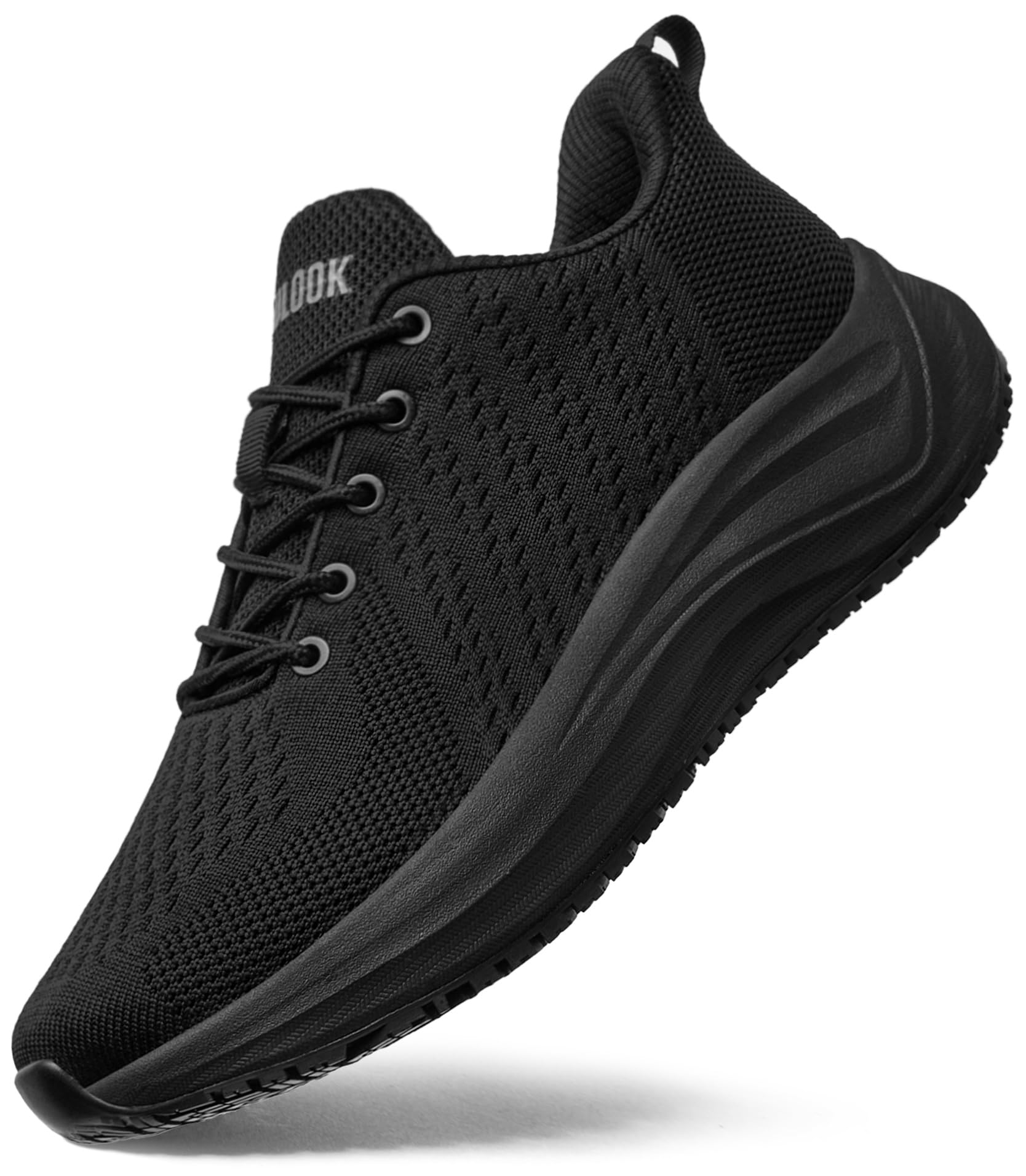
The oily-floor specialist — a non-slip shoe with arch support that holds up in a greasy shop.
Shop floors with oil on them are a different hazard from a wet kitchen, and SHULOOK pitches this shoe at restaurant, kitchen, nurse, and food-service work all at once. Non-slip traction is the point, and reviewers point out it performs well on oily shop floors specifically. Arch support earns consistent praise too, which matters if you stand in one spot on a concrete slab all day. A shoe with arch support holds your foot in a neutral position rather than letting it roll inward over hours.
The upper and build quality are the other strengths owners point to, along with appearance — a plain work shoe that doesn’t look like a medical clog. Functionality scores well across the board. For a shoe at this entry point, that’s a strong showing: you’re getting the core job done rather than paying for a brand name.
Fit is the honest wrinkle. Some buyers find the sizing perfect, others say it runs small — so the safe move is to order your size with a little room or check the seller’s sizing chart carefully. That’s a fit quirk, not a defect; most people land in the right size first try. Think of it as a shoe to size consciously rather than grab in your usual number without looking.
Best thing here: Genuine non-slip traction on oily surfaces plus arch support that keeps a standing shift manageable — the two things a food-service floor demands.
One sizing heads-up: The fit runs small for a portion of buyers, so double-check the size chart rather than assuming your usual number.
Worth a look if: You work an oily shop floor and want arch support with grip.
Maybe skip if: You’re a press-button-and-go buyer who won’t check sizing — this one rewards a careful size pick.
5. Skechers Men’s Nampa Broxtin
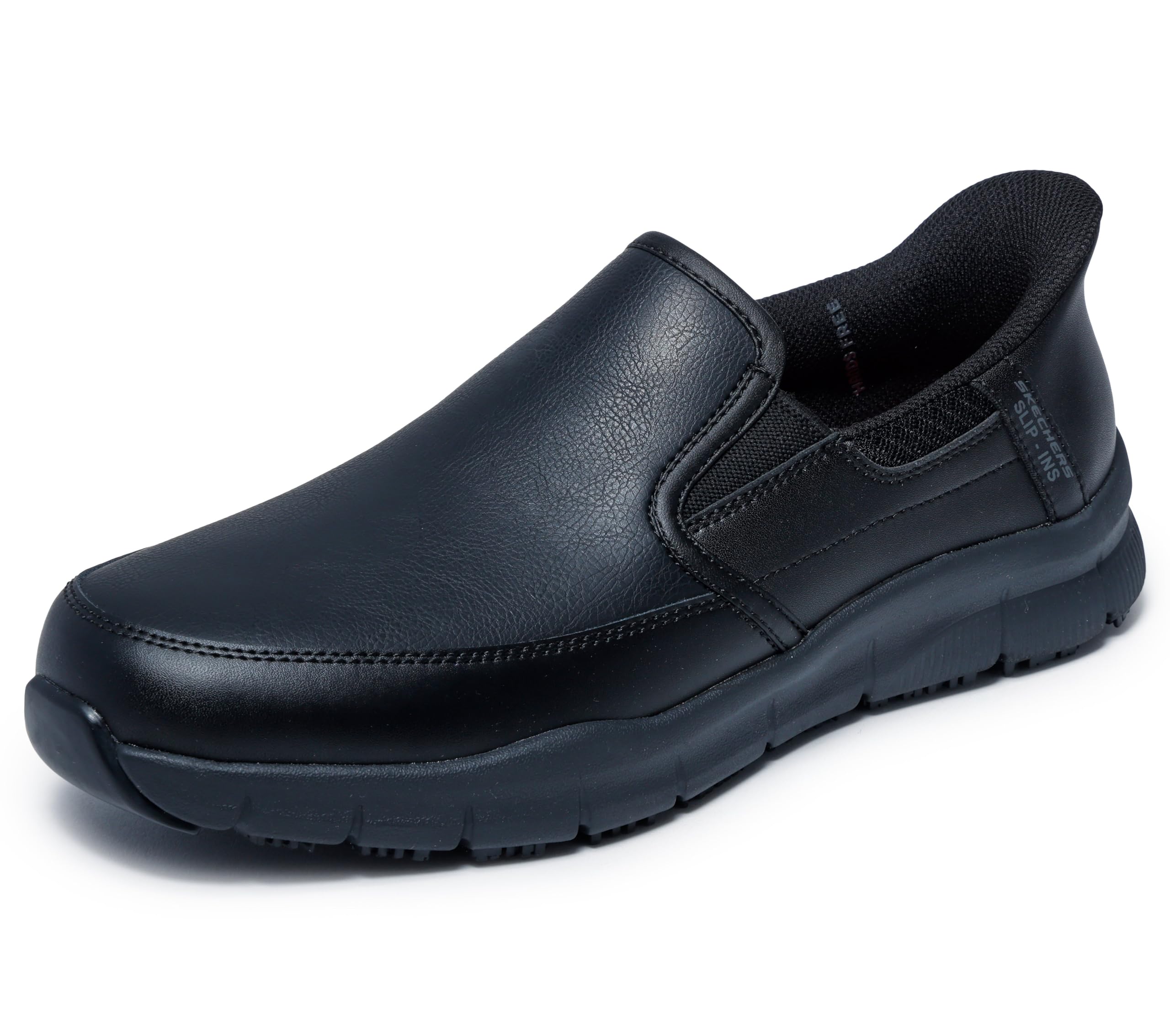
No laces, no bending over — a slip-on work shoe that still looks put-together.
If you clock in at 4 a.m. and don’t want to battle laces, this is the shape you want. Double-gore panels on either side of the tongue stretch as you slide your foot in, and a heel pillow locks the back of your ankle so the shoe doesn’t slip off mid-stride. The upper is smooth leather, which reads far tidier than mesh — owners note it’s smart enough to wear with a suit on non-work days. Air-Cooled Memory Foam sits underfoot, and the slip-resistant outsole handles hard indoor floors, all backed by electrical hazard protection.
Build quality and comfort are the two traits that carry this shoe, and there are plenty of them to go around — it’s one of the more thoroughly reviewed picks here. Owners also like the slip-on ease, which is the difference between getting out the door on time and hunting for a shoehorn. The leather upper is a step above the fabric styles on this list for appearance, so it works as a versatile shoe rather than a kitchen-only one.
The catch is fit. Some buyers find it perfect, others say it runs a bit small or tight — likely because the slip-on design depends on a snug hold at the heel to stay on. If you’re between sizes or have a high instep, go up rather than squeeze. That sizing caution is the honest cost of a shoe that stays on without laces.
Reasons it lands
- Double-gore slip-on design with a heel pillow that holds your foot.
- Smooth leather upper looks dressier than mesh work shoes.
- Air-Cooled Memory Foam insole for all-day cushion.
- Slip-resistant outsole plus electrical hazard protection.
The fine print
- Fit runs small or tight for some feet, especially high insteps.
- Memory foam can soften over a very long shift compared with a dedicated midsole.
Pick this when: You want laces-free convenience and a leather look for a mixed work-and-everyday shoe.
Size up if: You’re between sizes or have a high instep, because the slip-on hold is snug by design.
6. Skechers Engineered Mesh Lace Up Max Cushioning Endeavour Sr
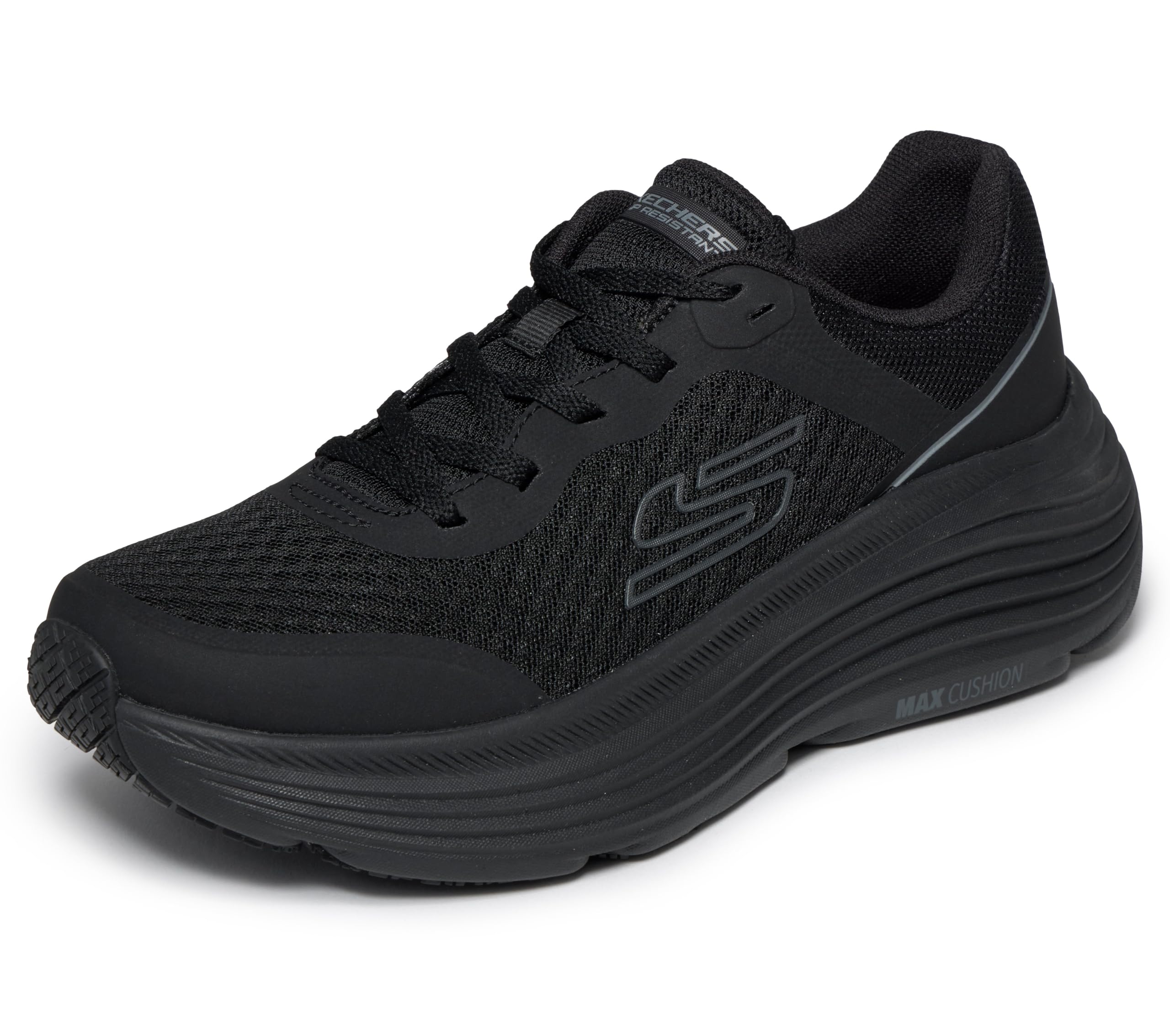
Max cushioning for the standing-only shift — think hospital corridors and hospitality desks.
Athletic styling with a slip-resistant outsole and a lightweight, flexible build — that’s the pitch for the Endeavour SR, and it fits health care and hospitality work where standing still is the job. Engendered mesh across the upper keeps the shoe breathable through a long shift. The max-cushioning platform is the reason to pick it over a flatter work shoe: you get a thick, soft landing underfoot in an athletic-styled sneaker that doesn’t look like safety gear.
At 1.5 pounds — using the 5-inch package height listing, this is a light shoe — it sits in the same weight class as the other Skechers picks here. Light doesn’t mean flimsy, though: shoppers say the extra padding and the ability to stand all day without fatigue. Fit runs true with plenty of room for toes, which matters when your feet swell over a twelve-hour stint.
The consideration is support versus structure. This is a cushioned shoe, not an orthotic platform, so if you need firm arch correction rather than just padding, look at the New Balance with its heel counter support. For a nurse or a hotel front-desk worker who wants a soft, roomy, athletic work shoe, the combination of mesh breathability and max cushioning makes this a comfortable all-day choice.
What you’re buying: Max cushioning in a breathable engineered mesh build, at a listed 1.5 pounds, with a slip-resistant outsole for health-care and hospitality floors.
The trade: It pads your step rather than correcting your arch, so structural support seekers should look at a shoe with heel counter support.
Made for: Nurses and hospitality workers who stand most of the shift and want soft, roomy comfort.
Not for you if: Your feet need firm arch correction rather than cushioning.
7. Timberland PRO Men’s Intercept Mid Steel Safety Toe Shoes
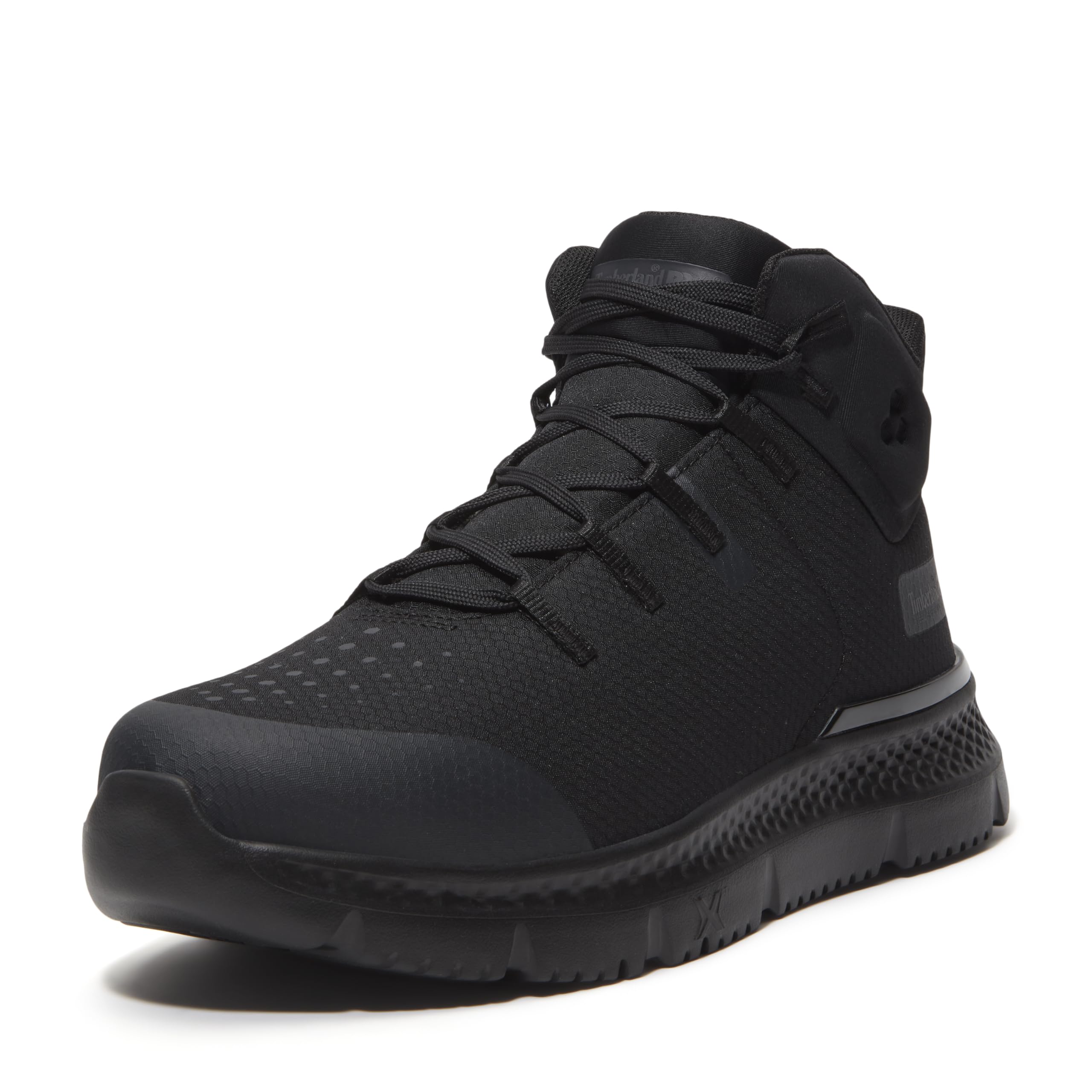
The most armored shoe here — steel toe, puncture plate, and electric shock protection together.
Save this one for the job site that asks for real protection. An asymmetrical steel safety toe guards your toes, and a steel puncture-resistant plate underfoot stops a nail or screw from coming up through the sole — a hazard that soft shoes on this list simply don’t address. Electric shock-resistant soles and electrical hazard protection round out the safety set, and the uppers are abrasion-resistant ripstop nylon built to take a beating.
Those safety layers add mass. Listed at 2.71 pounds package weight, it’s a substantial shoe, and you feel that on a long walk across a plant floor. What balances it is comfort engineering: the 24/7 Comfort Suspension System supports your arch and cushions each step to ease foot fatigue, and anatomically positioned flex grooves in the EVA outsole let the shoe bend with your stride. Owners mention it helps during long standing stretches, and the lightweight design gets consistent credit despite the safety hardware.
The trade is durability — some customers note seams failing after about six weeks, while others find it long-lasting. That spread is worth factoring in if you’re hard on shoes. For the right buyer, though, the puncture plate and steel toe are worth the weight and the watchfulness.
What it buys you
- Asymmetrical steel safety toe for toe protection.
- Steel puncture-resistant plate underfoot guards against sharp objects.
- Electrical hazard and electric shock-resistant protection.
- Moisture-wicking ReBOTL mesh lining with at least 50% recycled PET.
Before you commit
- 2.71-pound package weight adds real heft for long walks.
- Seam durability draws mixed reports, including wear around six weeks.
- Steel toe box can feel snug for wide feet.
Best used for: Job sites that need a toe cap and puncture protection underfoot.
Not the one if: You want a light everyday work shoe — the protection here comes with real mass.
8. New Balance Quikshift Composite Toe Work Shoes
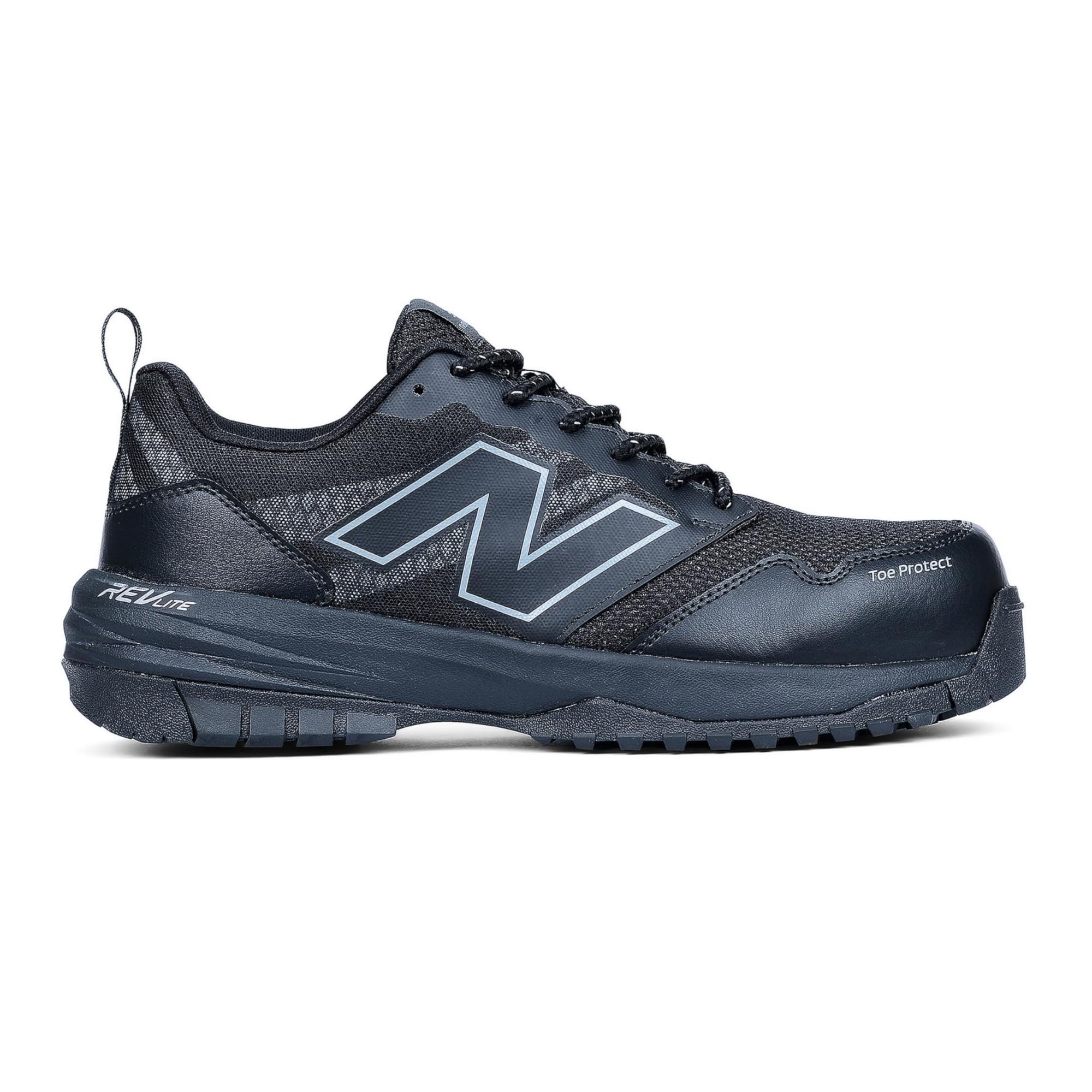
Three widths and sizes up to 18 — a composite toe shoe made to fit hard-to-fit feet.
Fit is the first reason to look at this New Balance. It comes in 3 widths and is available up to size 18, which is more size range than any other shoe here and a real answer for wide feet. The composite toe cap protects your toes without the weight of steel, and it meets ASTM F2413-18 EH safety standards for electrical hazards. A REVlite midsole and EVA insert deliver lightweight cushioning, while a heel counter support holds your heel steady — that stability matters when the sole is also designed for slip resistance.
Pull tabs on the heel and tongue make it quick to pull on and off, which is a small thing that adds up when you’re changing in and out of a plant every day. Comfort is the trait that comes through most in owner experience, along with a wide fit that actual wide-footed buyers appreciate. Quality gets consistent credit too.
Durability and cushioning are where opinions split — some reviewers point out the shoes lasting about two years, others find them wearing down within six months. Traction divides as well, with some praising grip on shop floors and others finding it slippery. So if you need a very hard-wearing shoe or a firm, supportive sole, this isn’t the guaranteed answer. But if you have wide feet and have struggled to find any work shoe that fits or has a toe cap, this is the one to try first.
Why it stands on its own: A composite toe meeting ASTM F2413-18 EH, 3 widths, sizes up to 18, and a REVlite midsole — the widest-fitting protective shoe in this group.
What to know: Durability and traction get mixed feedback, with some reporting wear by six months. Buy it for the fit range and the composite-toe protection, not for guaranteed long-term toughness.
Grab this if: You have wide feet and need a protective toe with real width options.
Keep shopping if: Hard-wearing longevity is your top priority — the reviews on durability are split.
Know the Specs
Safety Toe Ratings (Alloy, Steel, Composite)
A safety toe is the protective cap over your toes. Alloy and composite caps are lighter than steel and meet the ASTM F2412-18a and F2413-18 impact and compression standards, which is the published benchmark safety officers check. Pick a toe cap only if your job requires one — otherwise a soft-toe shoe gives more flex and less weight. The trade-off is simple: protection adds mass, and you feel it on long walks.
Electrical Hazard Protection
An electrical hazard rating gives secondary underfoot protection against live electrical circuits — the sole insulates against current coming up from the floor. It is not the same as shockproof and does not make you safe near power lines. Ratings like ASTM F2892-18 are a published standard you can look up, and they matter most for maintenance and industrial roles where wiring is part of the day.
Midsole Cushioning and Sockliners
The midsole is the foam layer between your foot and the outsole; it absorbs the impact of each step. Foam types like DMX Ride+, Hover Spring, and REVlite differ in feel — some prioritize softness, others structure. A foam sockliner adds a responsive layer beneath your arch. For long shifts, a dedicated midsole tends to hold up better than memory foam, which softens as the day wears on. Match the cushioning style to whether you stand in one spot or walk.
Slip Resistance and Outsole Compounds
Slip resistance lives in the outsole compound and the tread pattern. Rubber like GripMax channels oil, grease, and water out from under the shoe, while polyurethane resists oil and abrasion. A non-slip claim tells you the designer targeted wet floors, but the surface still matters — a tread that grips wet tile may not grip heavy grease. If your floor is oily, prioritize an outsole built to shed liquid rather than a flat, smooth tread.
Common Questions
Do I need a safety toe if my job doesn’t require one?
What’s the difference between alloy, steel, and composite toes?
Will slip-resistant work shoes grip on oil as well as water?
How many hours can I stand in work shoes before they wear me down?
Does electrical hazard protection mean I’m safe near live wiring?
How should I size work shoes — same as sneakers?
Are slip-on work shoes as safe as laced ones?
How do I know if work shoes will hold up for years?
Can I wear work shoes outside of the job?
What’s the best work shoe for a wide foot?
The Bottom Line
For most people who work on their feet, the winner is the Timberland PRO Powertrain Sport. It pairs an alloy safety toe rated to ASTM standards (the safety-toe test standard) with an oil-resistant outsole and a comfort system that keeps you moving — one shoe that handles both the dropped box and the wet floor. If you want the lightest choice for healthcare or service floors, grab the Skechers Ultra Flex 3.0 SR at a listed 1.5 pounds, so a full shift feels lighter on your feet. And if you need toe protection along with fit options for wide feet, the New Balance Quikshift is the one to reach for.
How we choose
We do not accept paid placement. Every pick is matched to a real buyer and a real use-case; we do not hands-on test units.
Sources
Specifications: manufacturer listings and product documentation. Review insights: verified customer reviews, as of November 2026. Pricing: not shown on this page (it changes often); check the current price via the retailer link.
As an Amazon Associate, Tactical Gear Guy earns from qualifying purchases. This does not affect which products we feature.