Specs are compiled from manufacturer listings and verified buyer reviews and can change over time — please confirm the key details on the product page before buying.
Your feet hit a cold, wet, slippery parking lot at 6 a.m. — and by noon you need them dry, warm, and steady on your feet. That’s the whole job here. This guide sorts out which winter work boots for women actually hold up to that: real waterproofing, real insulation, and a tread that bites into ice instead of skating across it. You do not need all seven — you need the one whose waterproofing, cold rating, and tread match your shift.
This guide is built by comparing the manufacturers’ published specifications and the patterns across verified customer reviews, so you get each pick’s real strengths and trade-offs instead of marketing spin.
There is one number that separates these boots faster than any marketing photo: the lowest temperature the maker rates them for, from -4°F down to -40°F. Here is how the best work shoes for women in winter stack up once that cold-weather number and the outsole are put side by side.
Top Picks

How To Choose The Best Work Shoes for Women in Winter
Your first cold, wet shift will expose three things most buyers miss: the waterproofing, the insulation, and the tread. Nail those three and style, brand name, and price tier matter far less. Here is how to check each one before you commit.
Waterproofing versus “water-resistant”
Waterproof means the boot is built as a sealed shell — a rubber or neoprene body that stops water at the surface. Water-resistant means the material resists water for a while but will soak through under a long slog. For wet ground, slush, and puddles, look for the word waterproof in the actual description, and check whether the upper is a sealed shell or a stitched leather. The TIDEWE and Trudave picks here lean on full rubber-and-neoprene builds; the Timberland PRO leans on a seam-sealed waterproof leather. Both approaches keep water out; they feel different on the foot.
Reading the cold-weather comfort rating
A comfort rating in degrees tells you the range the maker designed the boot for. TIDEWE rates its boot from -4°F to 50°F. MUCK rates its Arctic Ice Mid from -40°F to 40°F. Those numbers are not interchangeable — a boot rated to -40°F is built for genuine deep cold, while a -4°F rating is plenty for most winter work days. Match the rating to your local winter temperatures, not to the coldest figure on the page.
Slip resistance and the outsole
On ice, the outsole tread does the work. Look for a named slip-resistant tread — Timberland PRO’s SR Max MaxTRAX tread, Vibram’s Arctic Grip on the MUCK and Merrell picks — or a deep, lugged tread with a steel shank underneath. A steel shank adds a stiff spine that steadies the boot on uneven ground. On a farm or a frozen lot, that bite underfoot matters far more than the upper’s color.
Side-by-Side Comparison
| Model | Best For | Waterproofing | Insulation / Cold Rating | Toe & Outsole | Amazon |
|---|---|---|---|---|---|
| TIDEWE 6mm Neoprene Work Boots★ Best Overall | Wet farm and outdoor work | 100% waterproof CR Flex-Foam | -4°F to 50°F | Reinforced toe, slip-on | Amazon |
| Trudave 6mm Neoprene Rain BootsBest Traction | Snow and ice traction at work | 100% waterproof rubber shell | 6mm neoprene, all-season | Steel shank, anti-slip tread | Amazon |
| ANJOUFEMME Winter Hiking Boots | Comfortable all-day walking | Waterproof, non-slip | Warm winter snow design | Non-slip outsole | Amazon |
| Kalkal 6mm Neoprene Hunting Boots | Gardening and farming | Water-resistant neoprene top | 6mm neoprene | Slip-on, traction outsole | Amazon |
| MUCK Arctic Ice Mid Boot | Deep cold and wet ice | 100% waterproof CR Flex-Foam | -40°F to 40°F | Vibram Arctic Grip A.T. | Amazon |
| Timberland PRO Direct Attach MaxTRAX | Long shifts on hard floors | Seam-sealed waterproof leather | 200 grams insulation | SR Max MaxTRAX tread | Amazon |
| Merrell Coldpack 3 Thermo Moc | Icy commutes and indoor-outdoor days | Waterproof construction | 200 grams insulation, fleece lining | Vibram Arctic Grip | Amazon |
Detailed Reviews
1. TIDEWE Rubber Work Boots for Men and Women, 6mm Neoprene
Our pick — 4.5+★ from 6,500+ verified ratings; the strongest balance of quality and price.
The work boot that keeps feet dry and toasty from a muddy barn to a frozen lot — without a long break-in.
For wet outdoor work, the TIDEWE is the one to reach for first. The whole boot is a single 100% waterproof CR Flex-Foam shell — a rubber-and-neoprene body that flexes with your foot and blocks water at the surface instead of treating it. That shell keeps feet dry in puddles and slush, and the same material absorbs impacts and holds heat in. The comfort rating runs from -4°F to 50°F (-20°C to 10°C), which covers a normal winter work day: cold, yes, but not Arctic. It is the crowd favorite here, with 4.5+ stars across 6,500+ owners on Amazon.
The detail that wins the farmers and hunters over is the boot itself, not a gadget. That flex-foam shell returns up to 90% of your body heat, so your toes stay warm through a long shift in the barn or the yard. The reinforced toe takes the knocks a working boot takes, and a protrusion on the heel lets you kick the boot off without bending to fight it. Slip-on, no laces to freeze in the cold. The shaft circumference is 12 inches, so pants tuck in cleanly or sit over the top.
The catch is sizing, and it is a real one. The listing’s sizes 11-14 are men’s sizes, so you have to check the size chart before you order. Some women find the fit perfect and some find it runs big — the fit is the one thing buyers split on. Order with the chart in hand and this boot does everything you asked.
Why it holds up on a work day
- A fully sealed 100% waterproof shell keeps slush and puddles out.
- Rated from -4°F to 50°F, so it handles normal winter cold with margin.
- Reinforced toe and a heel pull that lets you kick it off hands-free.
- Neoprene flexes with your foot — no stiff break-in period.
What to sort before ordering
- The 11-14 sizes listed are men’s — check the size chart first.
- Fit runs big for some women, so don’t guess your usual size.
- Not the boot for genuine deep-cold, all-day outdoor exposure.
Pick this for: wet farm, barnyard, or outdoor work where a sealed shell and a toe that takes a hit matter most.
Mind the chart: the men’s sizing runs big for some women — measure before you buy.
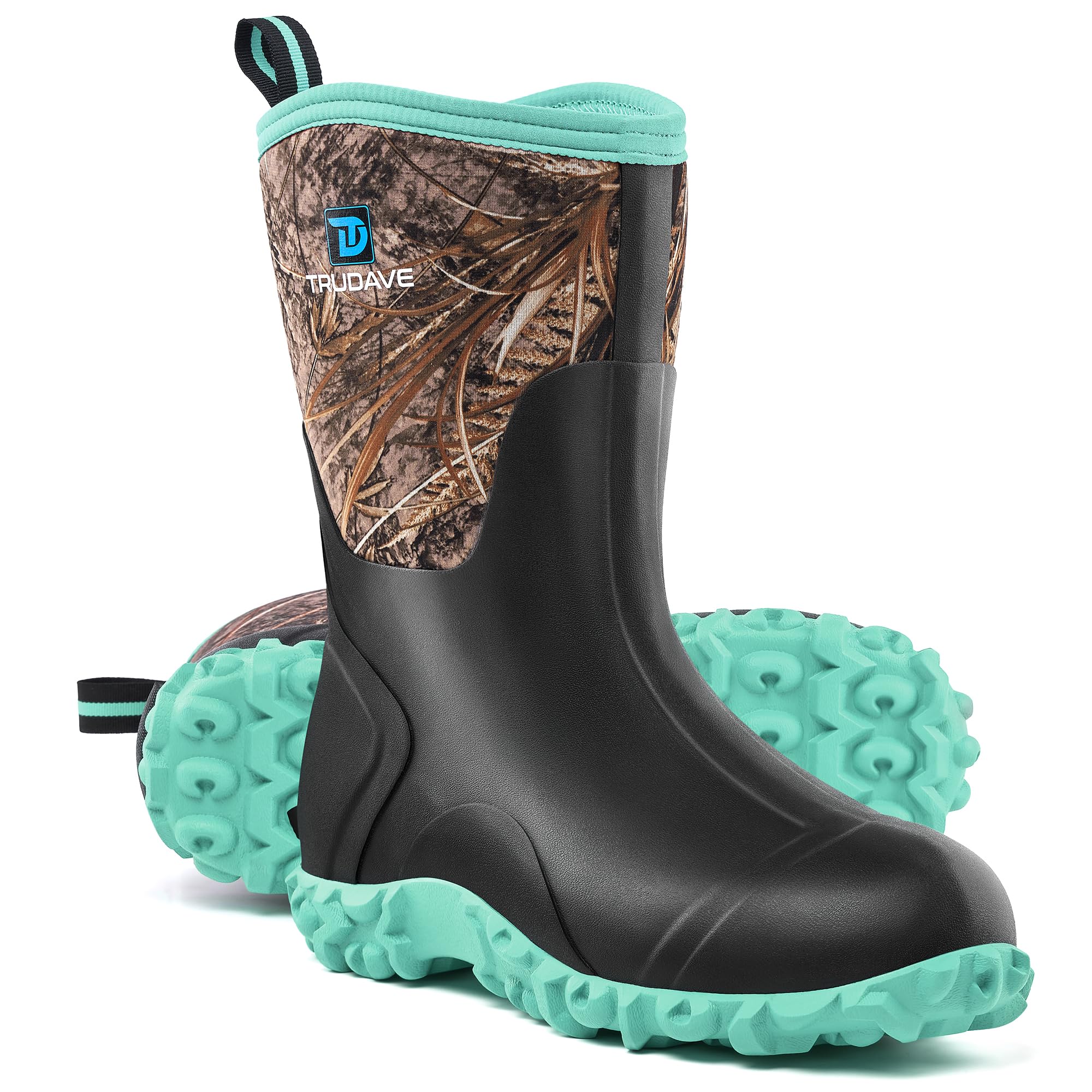
2. Trudave Rubber Boots
A women’s-fit rubber boot with a steel spine underfoot that steadies you on snow, ice, and mud.
If your winter work means frozen ground and slushy paths, the Trudave starts with the right question: what is under your foot? A built-in steel shank — a stiff metal strip that runs the length of the sole — gives the boot a rigid spine, so it doesn’t roll or twist on uneven ground. Under that sits a deep-tread anti-slip outsole, which is the part that bites into snow and ice. The whole boot is a 100% waterproof rubber-and-6mm-neoprene build, so water stays out and cleanup is a rinse.
What wins people over is the fit — it is the second most-praised thing about this boot, right after the shell itself. The boot is cut strictly to US women’s sizing and accommodates a thin sock or a thick one, which matters on a long winter shift when you want a wool sock inside. The 6mm neoprene is soft and breathable, and a breathable SBR lining keeps the inside from feeling clammy. It pulls on and off quickly with the tab, and the anti-slip sole handles muddy paths on the way to the job.
Where this boot beats the TIDEWE is the outsole story: a steel shank plus a deep lugged tread is built for standing and walking on hard, slippery ground all day. Where it falls a little short is that it is a rubber shell first — if you need a safety toe cap for a regulated job site, this is not a certified safety-toe boot. It is a waterproof work boot for real ground, not a steel-toe construction boot.
Rigid where it counts: the steel shank is the differentiator. It keeps the sole from flexing sideways on a muddy slope, which is what steadies your footing when the ground is not flat.
Fits like it should: cut to US women’s sizes with room for a thicker sock, so you can layer for cold without cramming your toes.
Made for: women who work on sloping, icy, or muddy outdoor ground and want a rigid sole and a real anti-slip tread.
Not for: a regulated site that requires a certified steel toe cap.
3. ANJOUFEMME Womens Fall Winter Hiking Boots
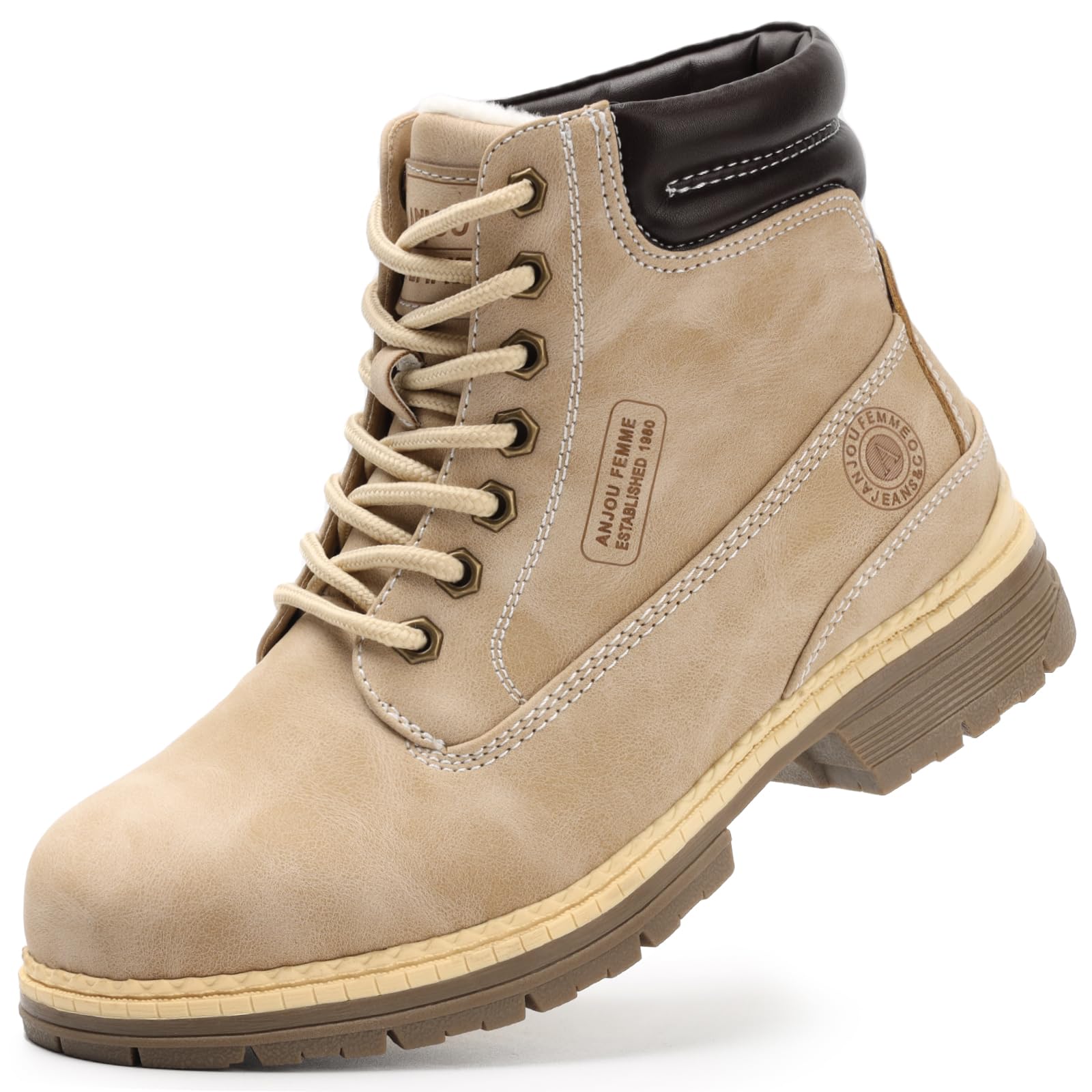
The winter boot you can walk in all shift without thinking about your feet.
Some winter work keeps you moving — on your feet for hours, in and out of the cold. For that, the ANJOUFEMME is the comfortable pick. It is a waterproof, non-slip hiking-style boot with a warm winter-snow build, and the thing buyers notice is the fit: it is the top-praised aspect of this boot, ahead of its style. It is cut for women and cut for walking, so your toes are not pinched after the first mile.
The boot is designed for wet and slippery ground, so it earns its place at work and on the trail alike. The upper is waterproof and the outsole is non-slip, which covers a wet parking lot and a sidewalk that never quite dried out. The style gets more than its share of compliments — this is a winter boot that looks like a winter boot, not a rubber wellie. On a cold, wet day, that combination is exactly what you want for a commute that ends at a job site.
The honest trade-off is the cushioning inside. The faux leather is stiff for some wearers, even though others find the inside very soft — so the comfort on this boot lives in the shell and the fit, not in a plush footbed. If you want a boot that feels broken in from the start, look elsewhere. If you want a walking boot that keeps feet warm and dry and fits properly, it earns its keep.
Built for the walk-in: the women’s-fit cut and non-slip sole make this the pick for days that mix a commute with being on your feet.
The sizing truth: fit is what buyers talk about most here — order your normal women’s size rather than sizing up for a thicker sock.
Lean this way if: you walk to and around work and want a winter boot that looks the part and fits cleanly.
Keep looking if: you want a cushioned, plush-inside boot — the faux leather runs stiff for some.
4. Kalkal Insulated 6mm Neoprene Hunting Boots, Tall Camo
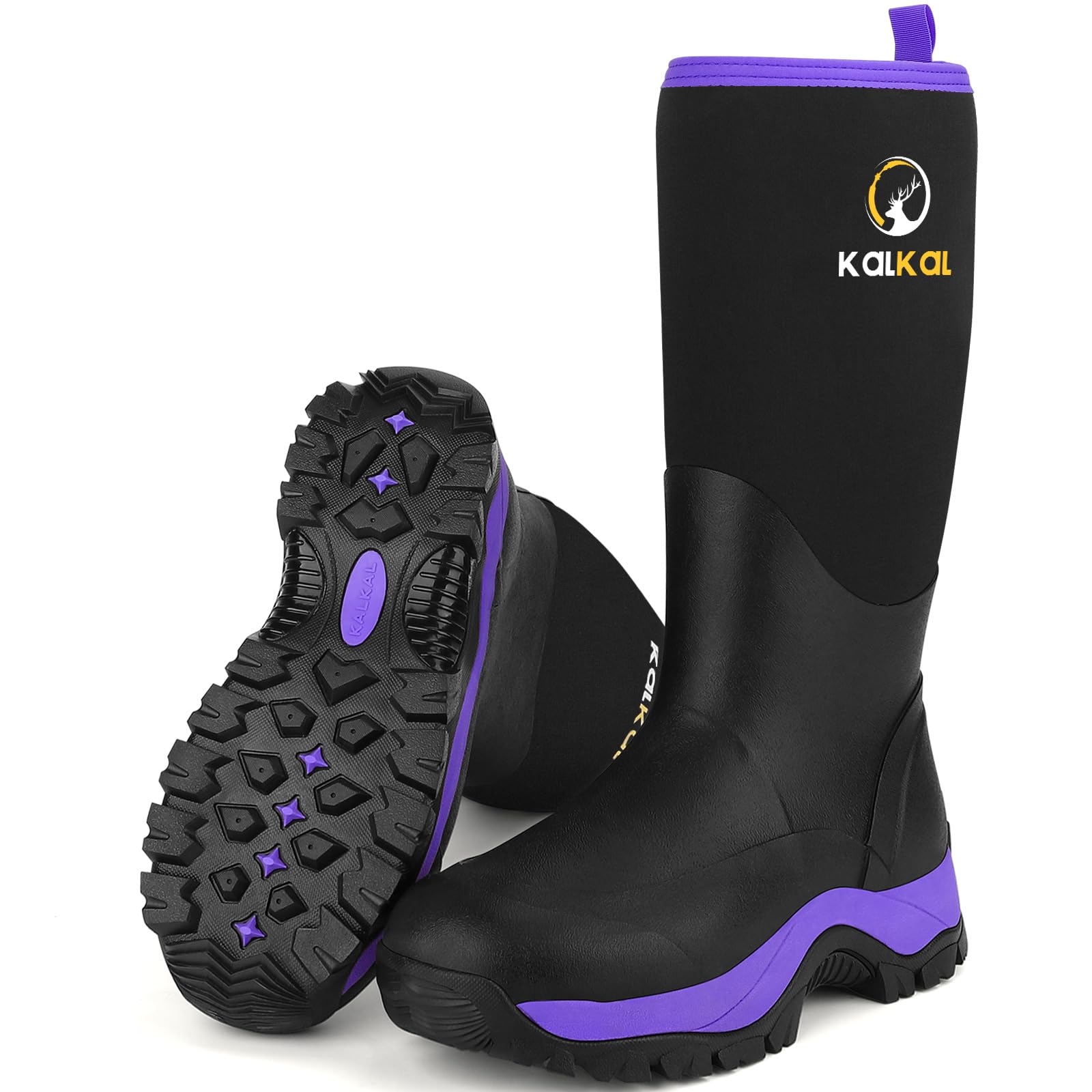
A tall, camo-topped neoprene boot for the outdoor worker who wants water out and a quick slip-on.
For garden, farm, and fieldwork, the Kalkal is the big-canvas pick. It is a tall-calf 6mm neoprene boot with a camo upper, built for exactly what the listing names: gardening, farming, working. The water resistance comes from the neoprene top, which keeps water out when you step into a wet patch, and the boot pulls on and off without a fight. At 4.51 pounds it is a solid, planted boot — not a featherweight, but the kind of weight that feels steady in mud.
The part that delivers on a rough surface is the traction. The outsole bites on slick ground, and buyers single it out for not slipping on slimy rocks — that is a real thing in a wet yard or a stream bank. The neoprene top panels let the boot flex as you crouch and pull, which matters when your work is bending, lifting, and kneeling. For a long day in the cold and wet, that is the combination that keeps you moving.
For context, the Kalkal boot ships in a package measuring 16.73 x 12.79 x 5.9 inches and weighing 4.51 pounds. The MUCK Arctic Ice Mid ships at 16 x 13 x 5 inches and 4.5 pounds. The one honest caveat: fit is what splits buyers here, so check the ladies’ size chart and don’t guess if you wear a half size.
Where it earns its keep: the neoprene top seals out water at the calf, so muddy ground and shallow puddles don’t get inside your boots.
Steady on slick ground: traction is what buyers call out most — a real grip on wet, mossy, or slimy surfaces.
Worth it for: garden, farm, and outdoor work where a tall neoprene boot and a slip-on shape do the heavy lifting.
Half-size shoppers: fit runs mixed, so measure rather than assume your usual size.
5. MUCK Women’s Arctic Ice Mid Boot + Vibram Arctic Grip A.T.
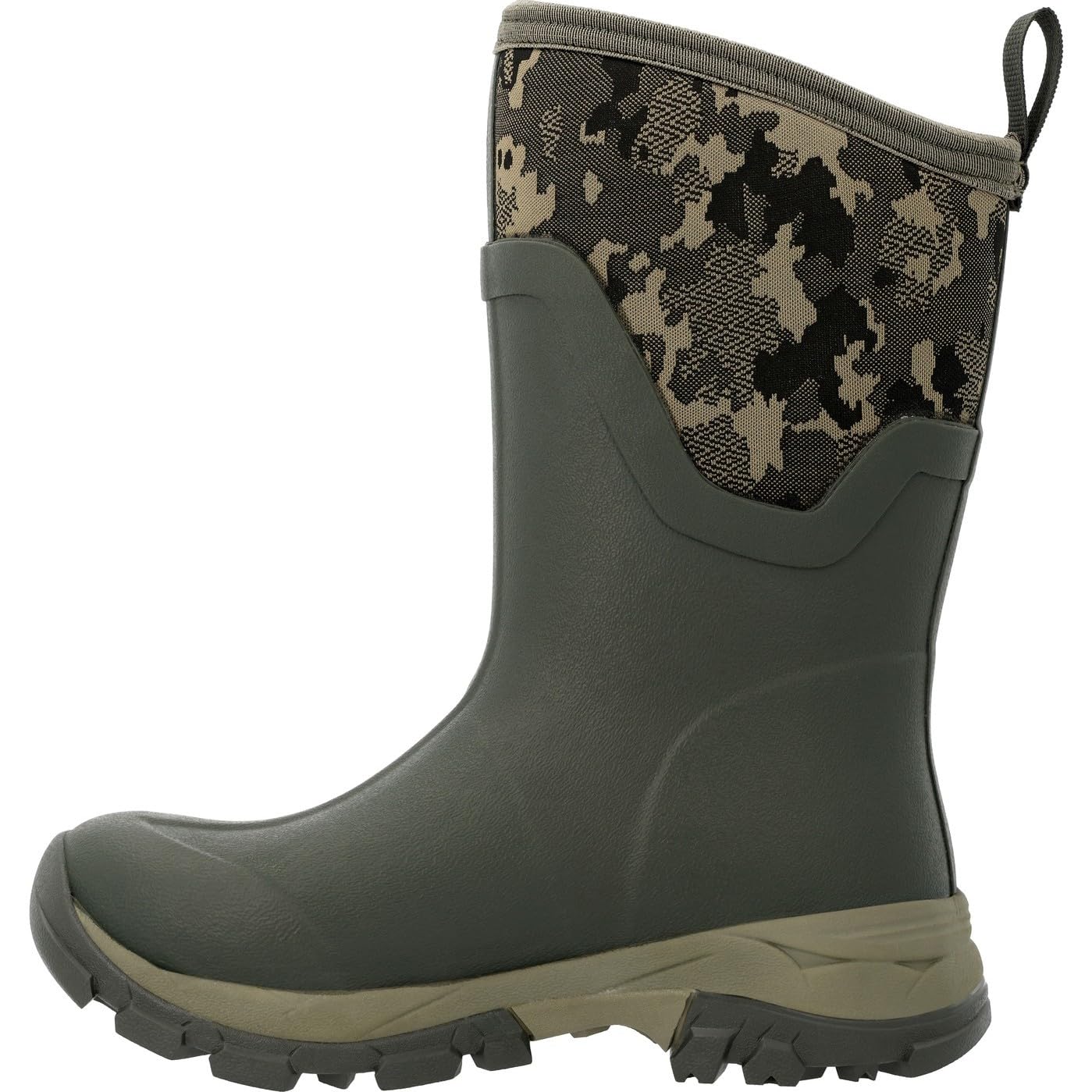
The boot for genuine deep cold — rated to -40°F and built to grip wet ice.
When winter work means real deep cold, the MUCK Arctic Ice Mid is where the numbers get serious. Its comfort range runs from -40°F to 40°F (-40°C to 4°C), versus -4°F to 50°F on the TIDEWE above. That range is built on a 5mm neoprene inner boot layered with fleece lining, with a stretch-fit top binding that seals the boot against your leg so cold air stays out. For a January shift outdoors, that difference in the rating matters.
The traction is the other half of the story. The Vibram Arctic Grip A.T. outsole — an ice-focused tread compound made by Vibram — is designed for wet ice, snow, mixed loose surfaces, and hard pack. That is a tread for the ground that actually throws you. The boot is 100% waterproof, lined with 5mm CR Flex-Foam neoprene, and the whole package sits on a lightweight cushioned EVA midsole with an extended rubber coverage for protection. A pull tab gets it on and off quickly.
Two practical details for fit: the boot is estimated at 31cm / 12.2 inches tall, and the estimated maximum calf circumference is 37cm / 14.6 inches. Measure your calf before ordering — this is a mid-height boot with a real top circumference, not a loose wellie. On a cold, icy job, the deep-cold rating and the ice-focused outsole are the two things you are paying for.
The number to buy it for: -40°F. That is a serious cold-weather rating, and it is the reason this boot takes the deep-cold slot rather than another rubber shell.
Grip made for ice: Vibram Arctic Grip A.T. on the bottom is tread designed for wet ice and hard pack — the surfaces a parking lot turns into after a freeze.
Choose it if: you work outdoors in deep winter cold and want real ice grip underfoot and a fleece-lined, fully waterproof shell.
Check the calf number: the top measures about 14.6 inches around, so a wide calf may not tuck in comfortably.
6. Timberland PRO Women’s 6″ Direct Attach MaxTRAX Soft Toe
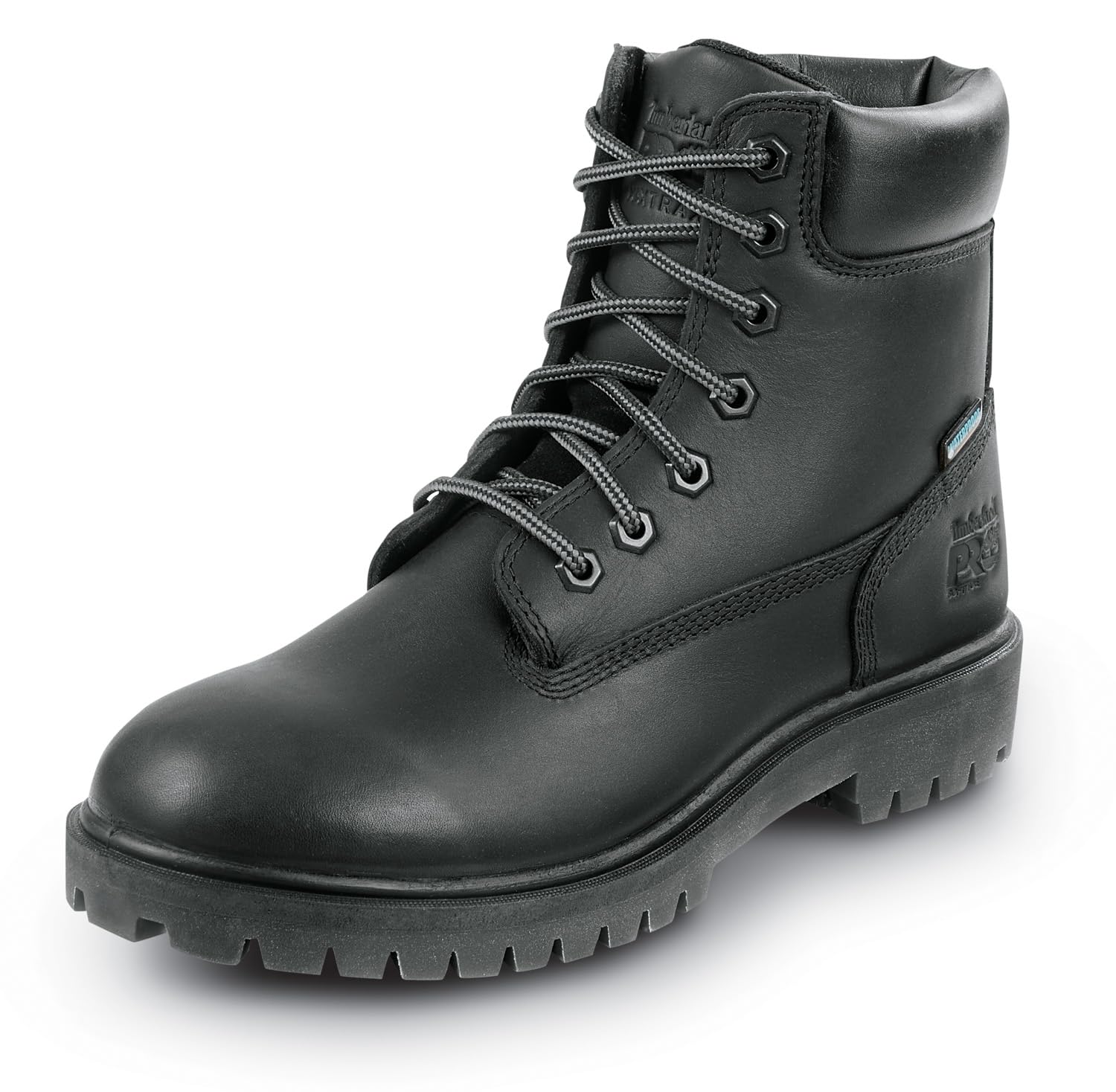
A waterproof leather work boot with 200 grams of insulation and a slip-resistant tread made for hard floors.
For a long shift that ends on a hard floor, the Timberland PRO is the built-for-work pick. It is a waterproof leather boot with a seam-sealed construction — the seams are sealed so water doesn’t wick in — and a breathable lining that moves moisture away from your foot. The 200 grams of insulation is the warmth layer, enough for a cold commute and a cold warehouse without turning your foot into a sauna. The soft-toe design keeps the profile flexible, and the 24/7 comfort system is aimed squarely at reducing foot fatigue over a long day.
The outsole is where the work-boot story lands. It is an oil-, slip-, and abrasion-resistant TPU outsole built on the SR Max MaxTRAX patented slip-resistant tread — a tread pattern designed to hold on wet, oily floors. That is a different job from a lugged rubber boot: this tread is aimed at smooth, hard surfaces where spills and slick walkways are the hazard. The boot measures ASTM F2892-24 EH SRO compliant, an industry rating that covers electrical hazard and slip resistance. It is a soft toe with no safety toe cap, so it is not a certified protective-toe boot.
Buyers report two things again and again on this boot: the quality and the day-long comfort. It is waterproof, it looks the part, and it is not too heavy for a leather work boot. The honest stickler is the fit: it runs mixed on width, and it does not cater well to wide feet. So it is not the pick if your foot is broad. If your foot is a normal width, it is among the most purpose-built work boots on this list.
What a long shift gets
- Seam-sealed waterproof leather keeps feet dry in wet weather.
- 200 grams of insulation adds warmth without overheating.
- SR Max MaxTRAX tread is made to hold on wet, oily floors.
- ASTM F2892-24 EH SRO compliant construction.
The fit fine print
- Soft toe — no safety toe cap for a regulated site.
- Width runs mixed, and it doesn’t cater well to wide feet.
The shift-work pick: a waterproof insulated leather boot with a slip-resistant tread for hard, wet, or oily floors.
Wide-foot buyers: the width is the one thing to size carefully here, so try before you commit.
7. Merrell Women’s Coldpack 3 Thermo Moc Waterproof
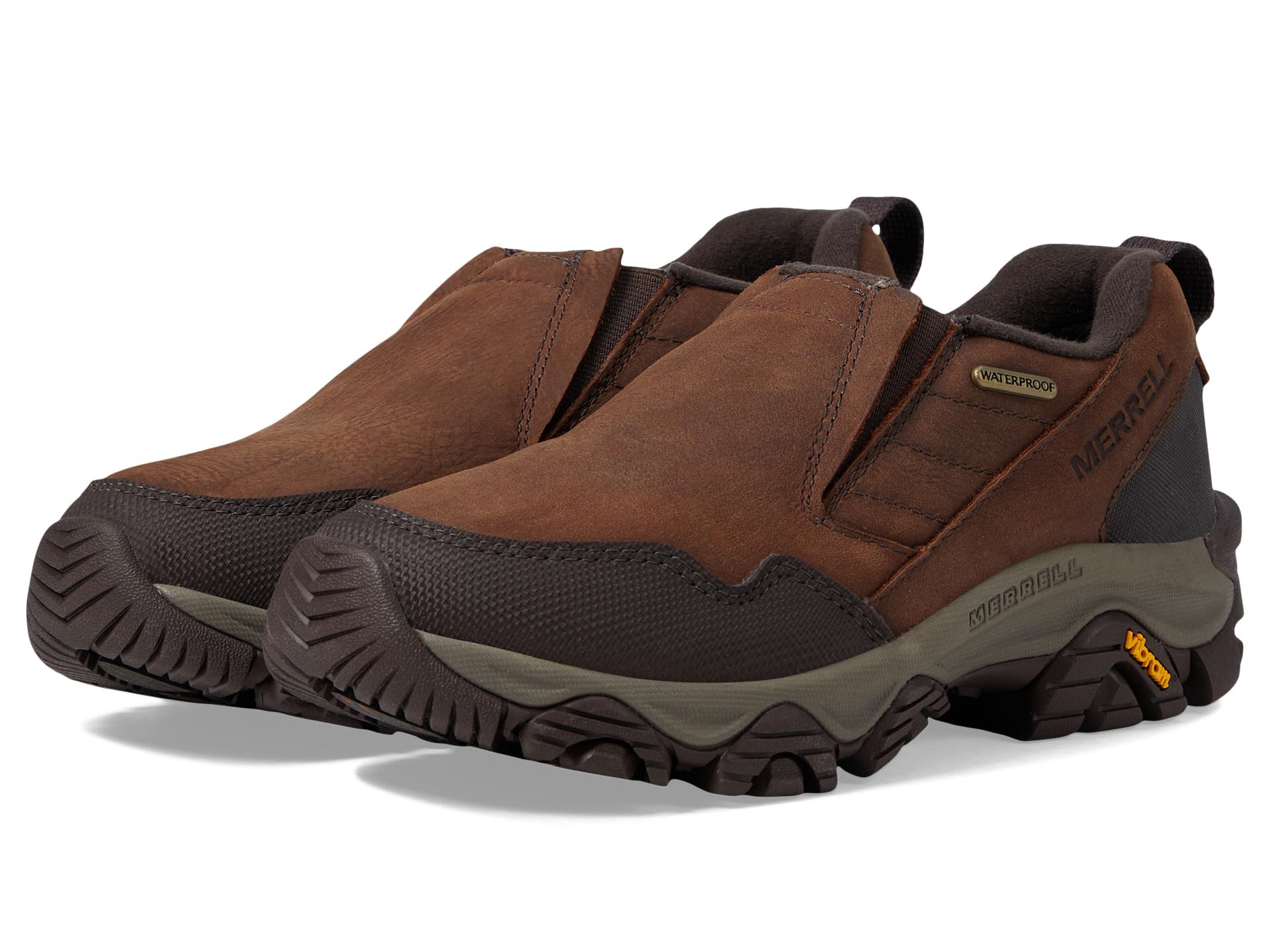
A slip-on moccasin that keeps feet warm and dry on an icy commute — and is comfortable enough to walk all day.
The Merrell Coldpack 3 sits in the middle of the winter-boot spectrum: a waterproof moccasin-style shoe for days that mix a cold, icy commute with indoor time. It uses 200 grams of insulation and a fleece lining — the two-layer warmth combo that keeps your feet warm when temperatures drop. The waterproof construction is paired with Vibram Arctic Grip underfoot, the same ice-focused tread family the MUCK uses, so you get grip on icy sidewalks and plowed lots. It is a moc, so it slips on without laces freezing up.
What people rave about most is the look. This is a winter shoe that reads as a shoe, not a wellie — the appearance gets singled out far more than anything else, and it earns it. The comfort is right behind: owners mention it keeps feet warm and dry in icy conditions and offers good arch support for a shoe this light. For a long walk to work across an icy lot, that support underfoot is what lets you keep the pace.
On fit, the boot splits: some find it roomy and some find it runs narrow, so order your usual women’s size rather than sizing up for a thick sock. It is not a rubber-shell farm boot, and it is not a heavy-duty steel-toe work boot. It is the cold-weather shoe you reach for when the job site is a walk, a locker room, or a shop floor — and you want something smart on your foot without giving up the insulation and the ice grip.
Why it looks good and works
- 200 grams of insulation plus a fleece lining for real cold-weather warmth.
- Vibram Arctic Grip underfoot for traction on ice.
- Waterproof build that keeps feet dry in slush and snow.
- Good arch support for an insulated slip-on shoe.
Where it isn’t the answer
- Runs narrow for some feet, roomy for others — the fit is a split.
- Not a rubber-shell or steel-toe boot for heavy field work.
Reach for this if: you want a smart-looking, warm, icy-grip slip-on for commutes and indoor-outdoor work days.
Look elsewhere if: you need a sealed rubber shell for deep mud and standing water.
Know the Specs
Comfort Rating in °F
The comfort rating is the temperature range the maker designed the boot for. A -40°F rating means the boot is built for genuine deep cold; a -4°F rating means normal winter cold. The number tells you where the boot spends its comfort, not the coldest day on record. Match it to your actual winter, and don’t pay for a deep-cold rating you’ll never use.
Waterproof vs. Water-Resistant
Waterproof boots are built as a sealed shell that stops water at the surface — full rubber or neoprene bodies are the clearest example. Water-resistant boots resist water for a while but can soak through on a long wet slog. Check the description for the word waterproof, and look for either a sealed shell or a seam-sealed construction. Both keep feet dry; the shell flexes more, the leather supports more.
Insulation in Grams
Insulation is measured in grams, and it is the warmth layer inside the boot. 200 grams is a common mid-weight for a cold-weather work boot — enough for a cold shift without overheating indoors. More grams means more warmth and more bulk. For a commute or an indoor-outdoor day, 200 grams is a solid balance; for deep outdoor cold, a neoprene shell that holds body heat does the rest.
Slip Resistance and the Outsole
The outsole is the bottom tread, and it is what keeps you on your feet. Look for a named slip-resistant tread — Vibram Arctic Grip for ice, an SR Max MaxTRAX tread for wet or oily floors — or a deep lugged tread with a steel shank for support. A steel shank is a stiff spine in the sole that steadies the boot on uneven ground. On ice, the outsole tread beats every other feature on the boot.
Common Questions
Are rubber work boots warm enough for winter work or do I need insulated shoes?
How do I know if a winter work boot is truly waterproof or just water-resistant?
Will neoprene work boots be too hot to wear indoors on a winter shift?
How does Vibram Arctic Grip differ from a normal rubber outsole on ice?
Do winter work boots for women run true to size?
What does a steel shank do in a rubber work boot?
Are the Timberland PRO work boots slip-resistant on wet, oily floors?
Can I wear a winter work boot for both an icy commute and a muddy farm job?
How do I keep my feet warm if my work boot doesn’t have a listed temperature rating?
Is a soft-toe work boot safe for a warehouse or shop floor?
The Bottom Line
For most women working outside this winter, the work shoes for women in winter winner is the TIDEWE 6mm Neoprene Work Boots. It seals water out at the surface and keeps heat in, and it does that for a mid-range price. If your winter goes genuinely deep and icy, step up to the MUCK Arctic Ice Mid for its -40°F rating and Vibram Arctic Grip tread. And for a long shift on hard, wet floors, the Timberland PRO has the slip-resistant tread and 200-gram insulation to see you through the day. The smart buy is the boot whose cold rating and outsole match your winter and the ground you actually stand on.
How we choose
We do not accept paid placement. Every pick is matched to a real buyer and a real use-case; we do not hands-on test units.
Sources
Specifications: manufacturer listings and product documentation. Review insights: verified customer reviews, as of November 2026. Pricing: not shown on this page (it changes often); check the current price via the retailer link.
As an Amazon Associate, Tactical Gear Guy earns from qualifying purchases. This does not affect which products we feature.