Specs are compiled from manufacturer listings and verified buyer reviews and can change over time — please confirm the key details on the product page before buying.
Eight hours on concrete will find every weak spot in a boot — a toe cap that doesn’t fit, a sole that slips on wet floors, cushioning that flattens by lunch. The nine work safety boots below are ones people actually wear on the job, from steel toes built for warehouses to composite toes made for cold and electrically sensitive sites. You’ll get plain-English notes on which boot fits which job, where each one falls short, and how to read a safety rating before you spend your money.
This guide is built by comparing the manufacturers’ published specifications and the patterns across verified customer reviews, so you get each pick’s real strengths and trade-offs instead of marketing spin.
You’ll see why a steel toe is not the same as a composite toe, what a wedge sole does for a twelve-hour shift, and which pairs run narrow. The list below gathers the work safety boots worth trying first when your feet are the tool you work with.
Top Picks

How To Choose The Best Work Safety Boots
The first decision is the toe, because that’s the part protecting you and the part that changes how the boot fits. A steel toe uses a metal cap that meets a crush-resistance standard, and it’s the familiar choice on warehouse and construction floors. A composite toe uses a non-metal cap instead, so it won’t set off a metal detector and it doesn’t conduct cold the way steel can. Both do the same job of shielding your toes from a dropped load; the difference shows up in weight, temperature, and where you work.
Match the sole to the surface you stand on
A lug outsole has deep treads that bite into mud, gravel, and uneven ground. A wedge sole is a flatter, one-piece sole that puts more rubber on the floor, which many workers prefer for long stretches on hard concrete. If your day is a mix of both, look at how the outsole is described — slip-resistant and oil-resistant outsoles help on slick shop floors, and heat-resistant rubber matters if you work near hot surfaces.
Decide if you need waterproofing and insulation
A waterproof membrane keeps rain and puddle splash out while letting some moisture escape, which matters for outdoor crews and cold, wet yards. Insulation adds warmth for winter work but can feel hot indoors. If you spend your shift inside a temperature-controlled building, a breathable unlined boot often feels better by hour ten than a heavily insulated one.
Get the fit right before anything else
Safety boots run differently from sneakers, and several models here are reported to run narrow or large. Measure your foot late in the day when it’s at its widest, and read the fit notes on each pick before you order. A boot that pinches at the toe box gets left in the closet, no matter how good its safety rating looks on paper.
Side-by-Side Comparison
| Model | Best For | Toe Type | Waterproof | Stated Weight | Amazon |
|---|---|---|---|---|---|
| Cat Footwear Striver Steel Toe | Everyday job-site wear | Steel toe | — | — | Amazon |
| Georgia Boot Georgia Giant Steel Toe | Value leather work boot | Steel toe | — | 4.5 pounds | Amazon |
| Carhartt Rugged Flex 6″ Steel Toe | Wet and rainy sites | Steel toe | Yes — Storm Defender | 4.5 pounds | Amazon |
| Carhartt Rugged Flex Square Toe Wellington | Muddy, muddy-boot pull-on work | Steel toe | — | 4.5 pounds | Amazon |
| Timberland PRO Barstow Wedge Alloy ST | Long concrete shifts | Alloy safety toe | — | 2 pounds | Amazon |
| ARIAT Work Sierra Steel Toe | Durability on hard jobs | Steel toe | — | 4 pounds | Amazon |
| Timberland PRO Boondock Ultralight 6″ | Metal-free industrial sites | Composite toe | Yes | — | Amazon |
Detailed Reviews
1. Cat Footwear Mens Striver Steel Toe
The boot that keeps turning up on job sites because it just holds together
What wins people over here is build quality: it lands 4.5+ stars across 700+ owners, and the leather, stitching, and sole come across as built to take a beating rather than last a season. That’s the Crowd favorite of the list, and it’s the safest default if you want one boot to cover general construction, warehouse, or yard work without overthinking the spec sheet.
The Striver wears a steel toe, so it’s built for the kind of floor where a dropped crate or a rolling pallet is a real risk. Owners describe the fit as true to size, which is rarer than it should be in this category — you can usually order your normal size and skip the guesswork. The slip-resistant outsole earns mention too, and that matters the moment a floor turns wet or greasy.
The honest catch is the heft. Some people love the heft because it feels solid, and others find it genuinely heavy by the end of a shift. If you’re on your feet on concrete for ten hours, or you’re switching to these from a lightweight wedge boot, that’s the one thing to weigh against the durability.
What holds up
- Build quality is the standout — leather and sole that feel made for daily abuse
- True-to-size fit means fewer returns and less sizing guesswork
- Slip-resistant outsole keeps you steady on wet floors
- Steel toe protection for general construction and warehouse floors
Where it pushes back
- Not a light boot — some wearers find it heavy across a long shift
- No waterproof membrane named in the maker’s spec for this model
Reach for this if: you want one durable steel-toe boot for mixed job-site work and a fit that matches your normal shoe size.
Look elsewhere if: you spend the whole shift on hard concrete and want the lightest boot you can find.
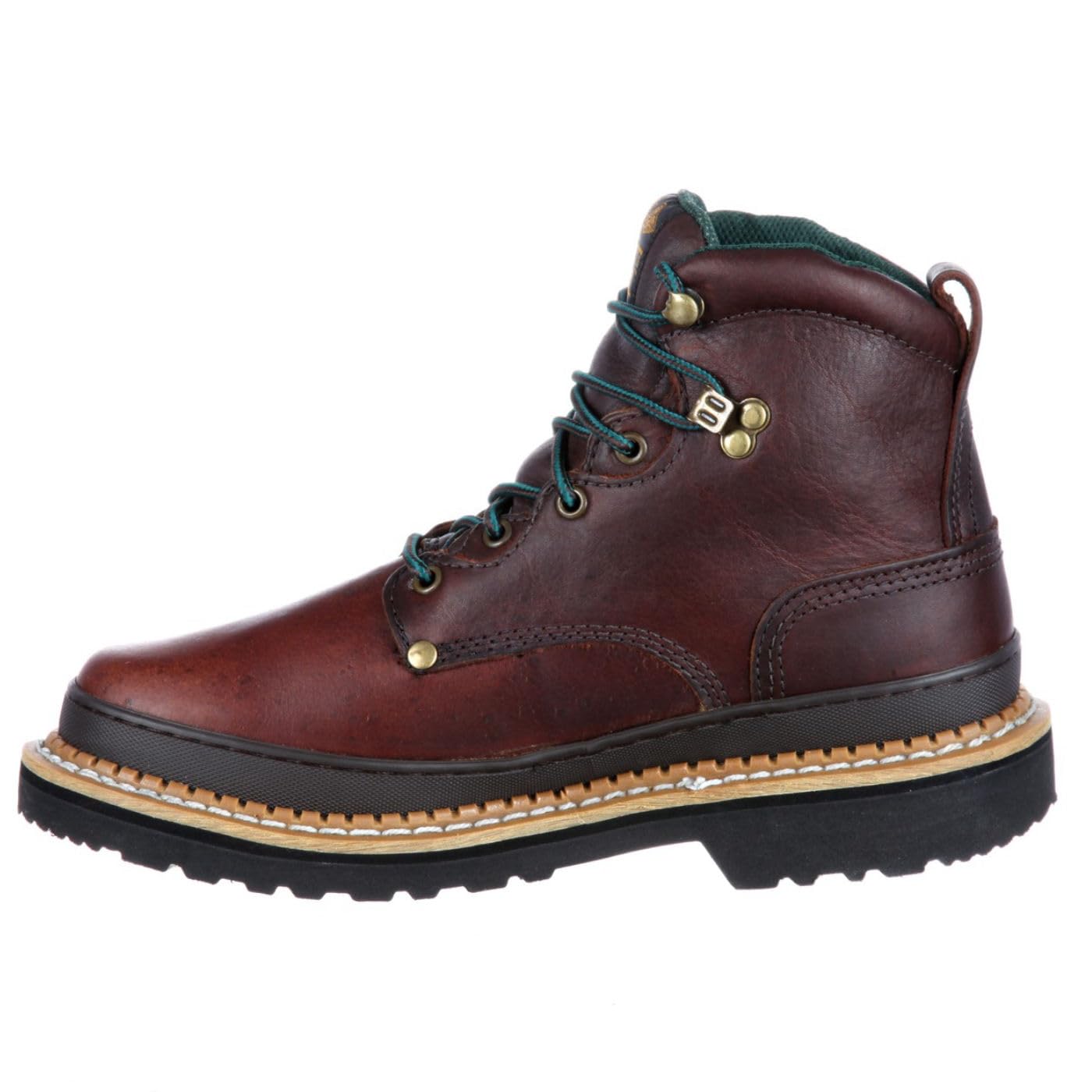
2. Georgia Boot Men’s Georgia Giant Steel Toe Work Boots
Soft full-grain leather and a steel shank, built to work as hard as you do
Full-grain leather covers the upper here, and a jumper guard sits over the toe area to shrug off the scuffs and abrasions that come from kneeling and dragging. A steel shank runs under the foot for stability, and the oil-resistant bumper protects the sole edge from the chemicals and grime a shop floor throws at it. Cushioned insole, EVA midsole, and moisture-wicking lining round out the comfort side.
Quality is the reason people keep buying this model — it’s the top thing buyers talk about, and the leather and overall build read as sturdy for the tier. Appearance gets steady praise too, so it holds up as a boot that looks like a work boot rather than a costume. Value sits with the leather and the steel toe, both of which hold up for a budget-friendly price.
Fit is the split point. Some wearers say it’s comfortable right from the start, while others find it too narrow and stiff at first. It’s also not the lightest option at 4.5 pounds. If you have wide feet or you’re replacing a broken-in pair, try these on before committing to a long shift.
Leather and shank first: the full-grain upper and the steel shank are the parts that make this boot feel like more than its tier suggests, and the toe bumper keeps the scuffs from getting to the leather underneath.
The fit caveat: sizing runs narrow for some wearers, so a half-size up or a wide width is the safer call if your feet tend toward broad.
Best for: the buyer who wants real leather and a steel shank without a premium-tier layout.
Think twice if: you need a roomy toe box right from the start or you’re sensitive to break-in stiffness.
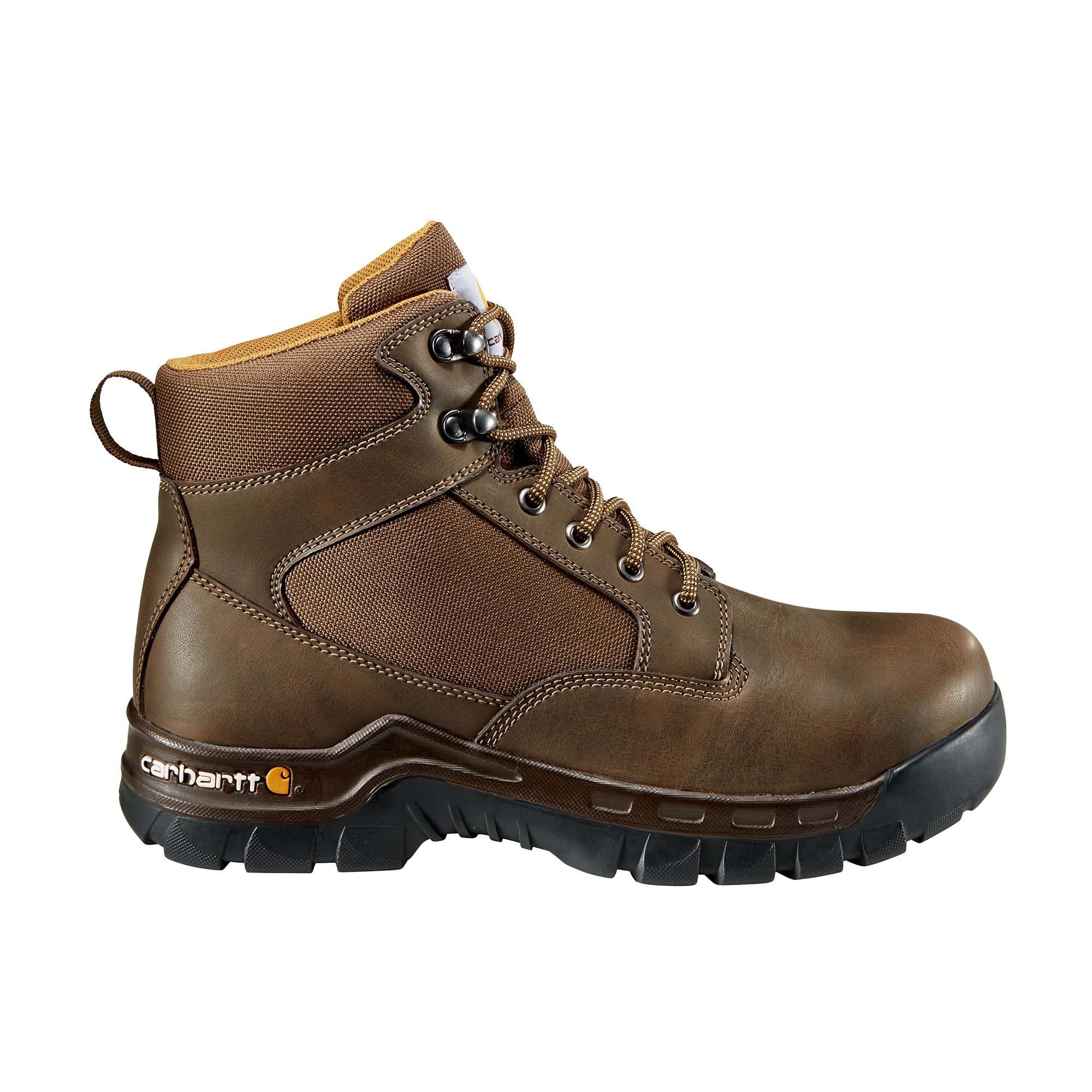
3. Carhartt Rugged FF6213-M Steel Toe Work Boot
A waterproof 6-inch steel toe that meets ASTM 2413 21 and keeps wet days from turning into a soak
On a rainy site, the Storm Defender waterproof membrane (a breathable layer that keeps outside water out) is the part that earns its keep — it blocks rain while still letting your feet breathe, so a downpour doesn’t turn into a swamp. The steel toe is rated to ASTM 2413 21, the safety standard that spells out what a toe cap must withstand under impact and compression, so you’re covered where a dropped load is a real hazard. Carstrong fabric reinforces the upper so it holds up against scrapes.
Underfoot, there’s a cushioned polyurethane insole, a PU Strobel pad, and an EVA filler layered together to cut fatigue across a shift. The Rugged Flex rubber lug outsole is slip-resistant and gives you grip on uneven ground. Owners describe it performing well in wet and rainy weather, which tracks with the waterproof build.
Where it trips people up is fit and feel — some wearers call it very comfortable and some find it too big, so sizing deserves a careful look. It’s also a heavy 4.5-pound boot with a break-in period. For buyers who need the waterproofing and the certified toe, those are reasonable trade-offs; for dry indoor work, they’re just extra weight.
Go with this if: you work outside in wet weather and want a certified steel toe with a membrane that actually keeps the water out.
Consider a pass if: your job stays dry and indoors, where the waterproofing and 4.5-pound heft buy you nothing.
4. Carhartt Rugged Flex Steel Toe Wellington
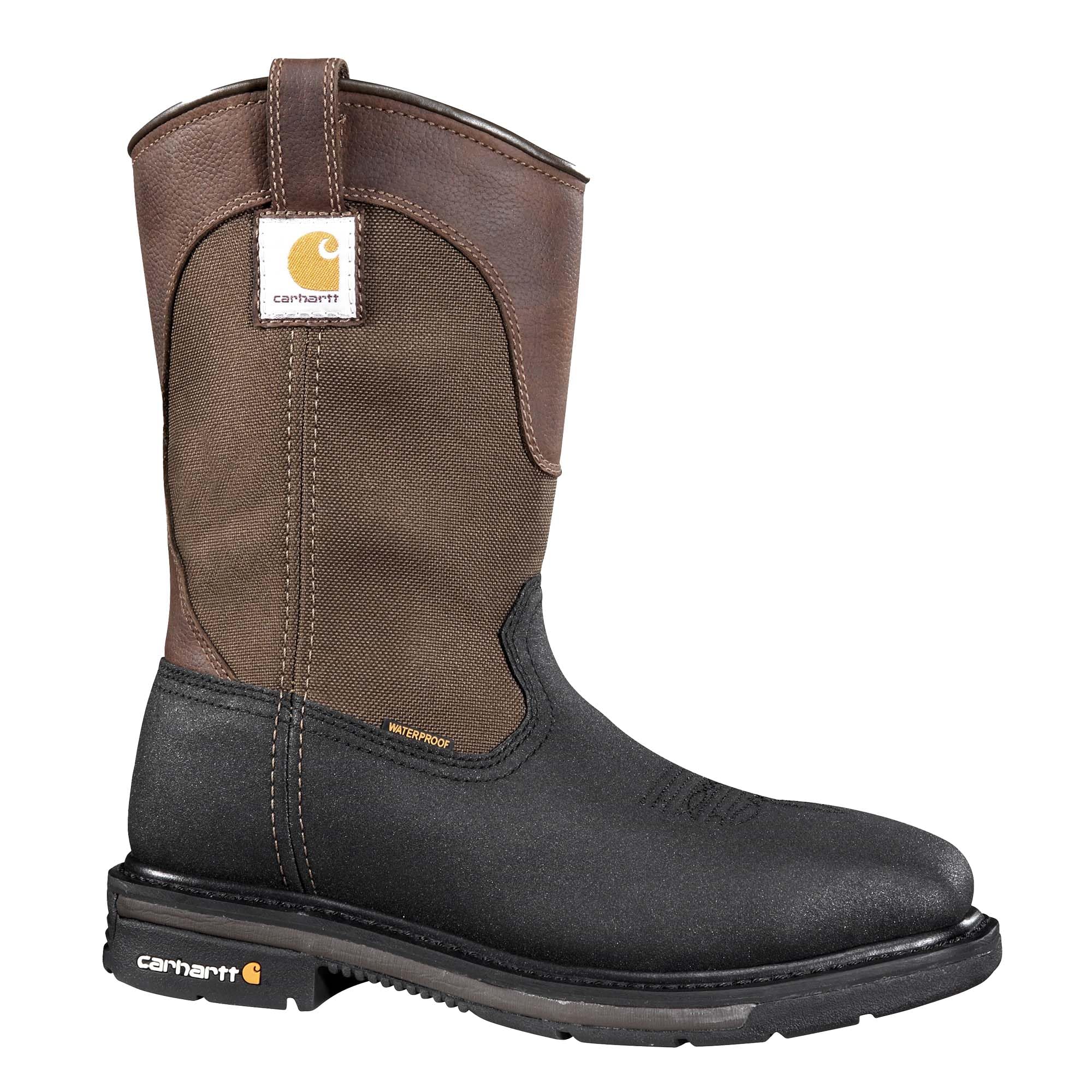
A slip-on square-toe Wellington with a shallow tread built to throw mud and keep moving
No laces, no fuss — this is a pull-on wellington with a square toe and the steel cap inside it, made for anyone who steps in and out of boots a dozen times a day. FastDry lining wicks sweat away, and the Carhartt PU insole is cushioned for support underfoot. Goodyear welt construction with a rubber outsole is a stitched build that many workers trust for durability, and the CMEVA midsole plus PU strobel pad add a layer of cushioning.
The shallow tread is the smart part of the design for anyone in mud or dirt — deep lugs clog and turn into a heavy brick, while a shallow pattern releases the mess and lets you keep walking. Quality is what people rave about most here, and value for money follows close behind, which is a fair read for a stitched leather boot.
Fit and comfort are the mixed part. Some wearers say it fits perfectly and feels comfortable; others find it too narrow or uncomfortable. Timberland PRO’s Barstow Wedge, weighing 2 pounds, is the lighter of the two, while this Wellington comes in at 4.5 pounds. That’s the trade for the stitched, mud-shedding build.
Pick it for: muddy yards, farm work, and anyone who wants a slip-on with a stitched welt and a steel toe.
Skip it for: a snug, broken-in feel from the start — the break-in and the narrow fit are the likeliest friction points.
5. Timberland PRO Men’s Barstow Wedge Alloy ST Work Boot

The 2-pound wedge boot for long shifts on hard floors
Comfort is the whole point of the Barstow — the wedge sole puts a wide, flat cushion under your arch, so standing at a bench or pacing a concrete warehouse feels less punishing by hour eight. The alloy safety toe protects at a lighter weight than a steel cap, and the leather upper has a worn-in look that doesn’t shout “safety shoe.” A slip-resistant outsole keeps you sure-footed on slick ground.
The weight is the headline: at 2 pounds, it’s the lightest boot on this list and less than half the heft of the Carhartt Rugged Flex 6″ at 4.5 pounds. That’s a real difference at the end of a shift. The vintage leather look earns steady praise, and the value read is good for the comfort you get.
Not everything is a lock. The fit is genuinely mixed — some wearers with wide feet say the roomy cut works for them, while others find it runs large and should size down. Durability reviews split between “lasts 5+ years” and “falling apart,” so treat the wedge sole as a soft-cushion pick for concrete, not a heavy-duty ground pounder.
Why the concrete crowd likes it
- 2-pound weight makes it the lightest boot on the list
- Wedge sole spreads the load for long standing shifts
- Alloy safety toe protects without steel-toe bulk
- Slip-resistant outsole for slick shop floors
The honest limitations
- Runs large for some buyers, so size-down is often the move
- Wedge sole and lighter build trade away hard-use survivability on the harshest sites
Pair it with: a concrete floor, an assembly line, or a job where your feet are the tool and a light boot wins.
Look at a lug boot instead if: you’re in mud, gravel, or sites that chew through soft soles.
6. Timberland PRO Men’s Switchback 6″ Composite Safety Toe

The long-haul steel toe that still looks new after months of hard use
Durability is the reason this boot makes the list — owners describe it lasting a long time and still looking brand new after months of wear. It’s a steel toe, so it covers the basic crush hazard on a construction or ranch floor, and the 4-pound build sits between the light wedge boot and the heavier Carhartt welly. It’s a straightforward, hard-working leather boot rather than a tech showcase.
The steel toe draws praise on its own, and the look is a plus — it reads like a work boot you’d wear off the clock too. Value holds up because a leather boot that keeps its shape and finish for years spreads its cost across them.
The honest limit is that ARIAT names no waterproofing spec for this model, so rain and soaked yards will reach the seams with no membrane to stop them. On dry, hard-use jobs the missing membrane is a nonissue, and the long-wearing leather is exactly what you’re paying for.
Where the money goes: into construction that survives — this is a boot you buy to stop replacing a pair every season.
The gap to know: no waterproofing spec named for this model, so it’s a dry-weather and dry-floor boot first.
The right buy for: hard-use dry work where longevity beats a long feature list.
Not your boot if: you need a named waterproof membrane for wet shifts.
7. Timberland PRO Boondock Ultralight Comp Toe Waterproof
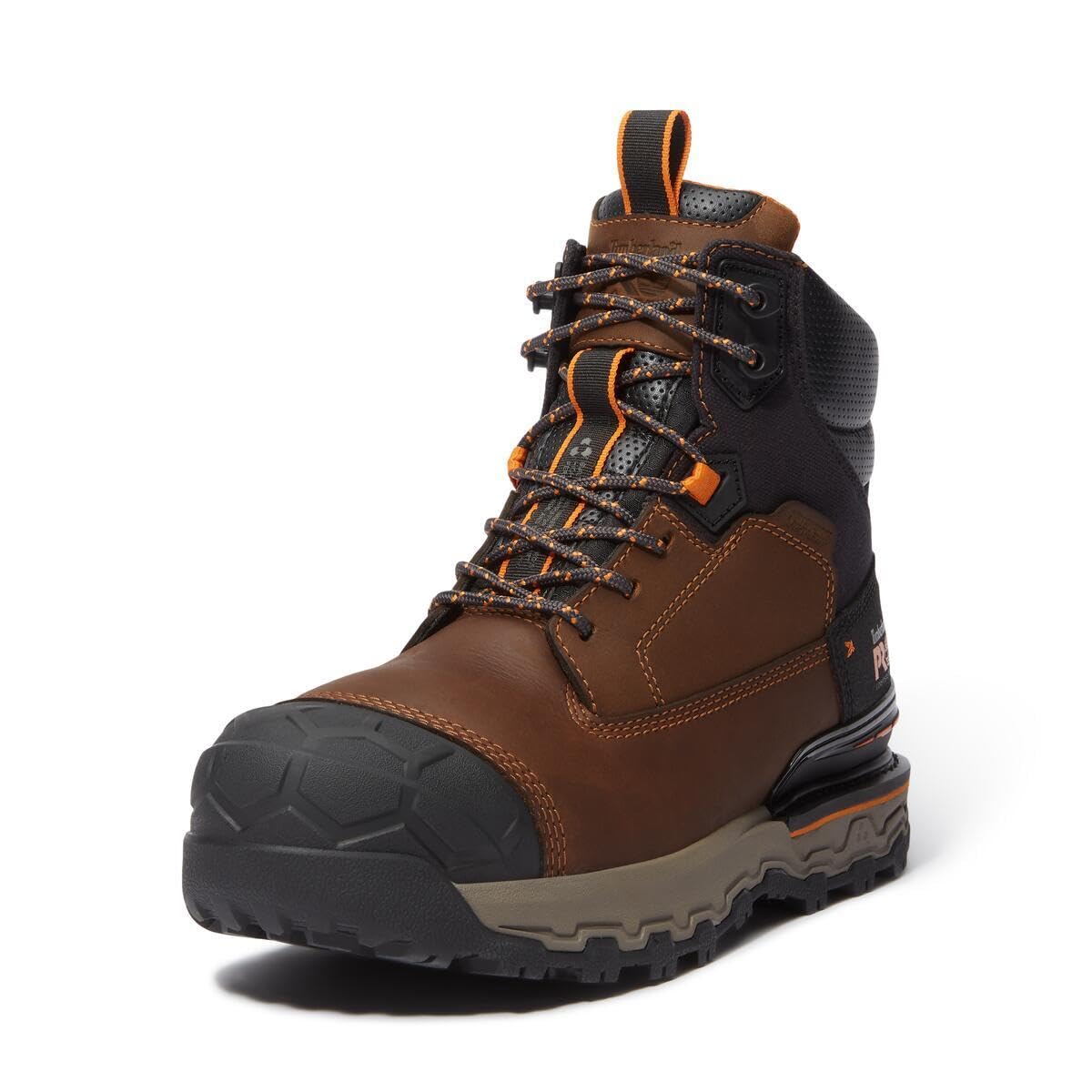
Industrial-grade protection with zero metal, from toe cap to shank
This is the pick for security checkpoints, electrical work, and any site that runs a metal detector on the way in. The composite safety toe, non-metallic shanks, and metal-free uppers mean nothing on this boot sets off a detector, while still giving you crush protection and structural support. Full-grain waterproof leather with abrasion-resistant Ever-Guard leather and molded TPU reinforcements covers the durability side.
Waterproof breathable membranes keep outside water out, and the All-Weather TPU outsole is non-marking and heat-, oil-, slip-, and abrasion-resistant across climates. Underfoot, HoverSpring foam midsoles add flexibility, and the 24/7+ comfort tech is built to disperse pressure and cushion the arch. The ventilated Anti-Fatigue polyurethane footbed handles shock absorption and energy return.
Fit and cushioning draw mixed notes — some wearers find it perfect and well-cushioned, others say it runs slightly tight or uncomfortable. Quality, warmth, and water resistance get the strongest praise. For the metal-free requirement and industrial-grade build, this is the most complete package on the list.
The metal-free advantage: composite toe, non-metallic shanks, and metal-free uppers are the reason this boot works where a steel boot simply can’t go.
Fit warning: the slightly tight run means trying a half size up is worth it before a long shift.
Choose it for: security screening, electrical environments, or any site where metal in the boot is a problem.
Try before a full shift if: you have wide feet, since the fit can come up slightly tight.
Know the Specs
Steel toe vs composite toe
A steel toe uses a metal cap to shield your toes from impact and compression, and it’s rated against a standard like ASTM 2413 21 (the test that sets how much impact and squeeze a toe cap must take). A composite toe uses a non-metal cap instead, so it won’t trip a metal detector, won’t conduct cold, and often trims a little weight. Both protect the same part of your foot — the choice depends on your site’s rules and how cold your work gets.
Waterproof vs breathable
A waterproof membrane blocks outside water while letting moisture escape, which keeps you dry in rain and puddles without a full sweat-soaked shift. Insulation adds warmth for winter but can feel hot indoors. If you work dry and inside, a breathable unlined boot often wins over a membrane you don’t need.
Wedge sole vs lug sole
A lug sole has deep treads that bite into mud and gravel for grip on uneven ground. A wedge sole is flatter and puts more rubber on the floor, which many workers prefer for standing on concrete. A shallow tread can also release mud rather than packing it in, which is the point of a wellington built for yards and farm work.
Weight and stated pounds
A boot’s listed weight is often a shipping figure, but the gap still tells you something: a light boot tire your legs less across a long shift, while a heavier one can feel sturdier on rough ground. Look for the weight difference between models before you commit to a heavy build.
Common Questions
Will a composite toe pass a metal detector where a steel toe won’t?
What does an ASTM 2413 21 rating on a steel toe actually mean?
Do waterproof work boots make your feet sweat more?
How long should a pair of safety boots last?
Is a steel toe boot heavier than a composite toe boot?
Should I size up or down for a safety boot?
Can I wear insulated work boots indoors without overheating?
What’s the difference between a wedge sole and a lug sole for concrete floors?
Are pull-on wellingtons as safe as lace-up safety boots?
Do these boots need a break-in period?
The Bottom Line
For most people shopping for work safety boots, the Cat Footwear Striver Steel Toe is the pick to beat — it leads on build quality and true-to-size fit, and that durability is what you’re really paying for on a job site. If wet weather is part of your shift, the Carhartt Rugged Flex 6″ adds a waterproof membrane and a certified steel toe. And for a light boot on hard concrete, the 2-pound Timberland PRO Barstow Wedge is the one to lace up. Match the sole to your surface and the toe to your site’s rules, and you’ve covered the two decisions that matter most.
How we choose
We do not accept paid placement. Every pick is matched to a real buyer and a real use-case; we do not hands-on test units.
Sources
Specifications: manufacturer listings and product documentation. Review insights: verified customer reviews, as of November 2026. Pricing: not shown on this page (it changes often); check the current price via the retailer link.
As an Amazon Associate, Tactical Gear Guy earns from qualifying purchases. This does not affect which products we feature.