Specs are compiled from manufacturer listings and verified buyer reviews and can change over time — please confirm the key details on the product page before buying.
Most hooded work jackets fail in one of two places: the hood is a thin afterthought that flaps loose in wind, or the shell is so flimsy that a season of jobsite abuse finishes it off. You want one jacket that keeps your head covered, your core warm, and your shoulders intact — and you want the hood attached to something that will still be here next winter.
This guide is built by comparing the manufacturers’ published specifications and the patterns across verified customer reviews, so you get each pick’s real strengths and trade-offs instead of marketing spin.
Below you’ll find eight hooded work jackets sorted by what they actually do well, from 12-ounce duck canvas tanks to lighter three-season shells. The short answer: the Carhartt Firm Duck is the crowd favorite — 4.5+ stars across 23,000+ owners — but it isn’t always the right hood for every job. Read on for the full breakdown of the work jacket hood options that hold up.
Top Picks

How To Choose The Best Work Jacket Hood
The hood is the first thing you touch and the last thing you think about. Get it wrong and you spend every cold morning tugging at a flap that won’t sit still. Get the hood right and you stop noticing it by mid-morning. Before you compare specs, decide three things: how cold you actually work, how much you move, and whether your jacket has to survive concrete dust or just a parking lot.
Start with the shell fabric weight
Shell fabric is measured in ounces per square yard — the higher the number, the thicker and more abrasion-resistant the cloth. A 12-ounce cotton duck (a tightly woven, heavy cotton canvas) behaves like light body armor against scrapes and snags. Thinner polyester shells trade that toughness for lighter weight and quicker drying. Neither shell is wrong; you just need to know whether your job demands abrasion resistance or lighter weight.
Then look at what’s inside the hood and body
Lining is where warmth lives. Thermal lining traps body heat for genuine winter work. Quilted flannel sits between you and the shell with a bit less bulk. Sherpa and micro fleece feel softer against the neck, which matters if you wear the hood up for hours. A sewn-in three-panel hood (one built from three fabric pieces rather than two) shapes around your head instead of pressing flat against your ears.
Check the seams and the cuffs before you commit
Triple-stitched main seams — three rows of stitching run along the load-bearing joints — are the quiet sign of a jacket built for real abuse. Rib-knit cuffs and waistbands seal out drafts at the exact spots cold air sneaks in. And if you layer a sweatshirt underneath, plan for the fit to be a little roomier than your bare-chest size, because a tight hooded work jacket is a miserable hooded work jacket.
Side-by-Side Comparison
| Model | Best For | Shell Fabric | Lining | Hood | Amazon |
|---|---|---|---|---|---|
| Carhartt Firm Duck Insulated Active Jacket★ Best Overall | Cold jobsites and layering | 12-ounce firm-hand cotton duck | Polyester thermal lining | Thermal-lined, attached | Amazon |
| Men’s Quilted Flannel Lined Waterproof Active JacketBest Value | Wet weather on a budget | Polyester with breathable membrane | Quilted flannel / waffle-knit thermal | Drawstring hood | Amazon |
| TBMPOY Hooded Work Cotton Fleece Lined CoatTop Performer | Entry-level cold-weather work | Cotton duck | Fleece lining | Attached hood | Amazon |
| Wrangler RIGGS Quilted Lined Jacket with Sherpa Hood | Fall and mild winter work | Cotton duck | Quilted lining | Sherpa-lined hood | Amazon |
| Wolverine Overman Fleece Lined Hooded Shirt Jacket | Three-season light duty | Cotton duck canvas | Micro fleece / quilted taffeta sleeves | Sewn-in 3-panel jersey | Amazon |
| HISEA Sherpa Work Jacket | Water resistance and pocket space | Canvas | Sherpa | Hooded | Amazon |
| Timberland PRO Gritman Lined Canvas Hooded Jacket | Mobility on the move | 100% duck canvas, medium weight | Quilted, insulated | Hooded with band collar | Amazon |
| Carhartt Camden Cryder Jacket | All-day movement and stretch | Stretch nylon | 3M insulation | Adjustable hood | Amazon |
Detailed Reviews
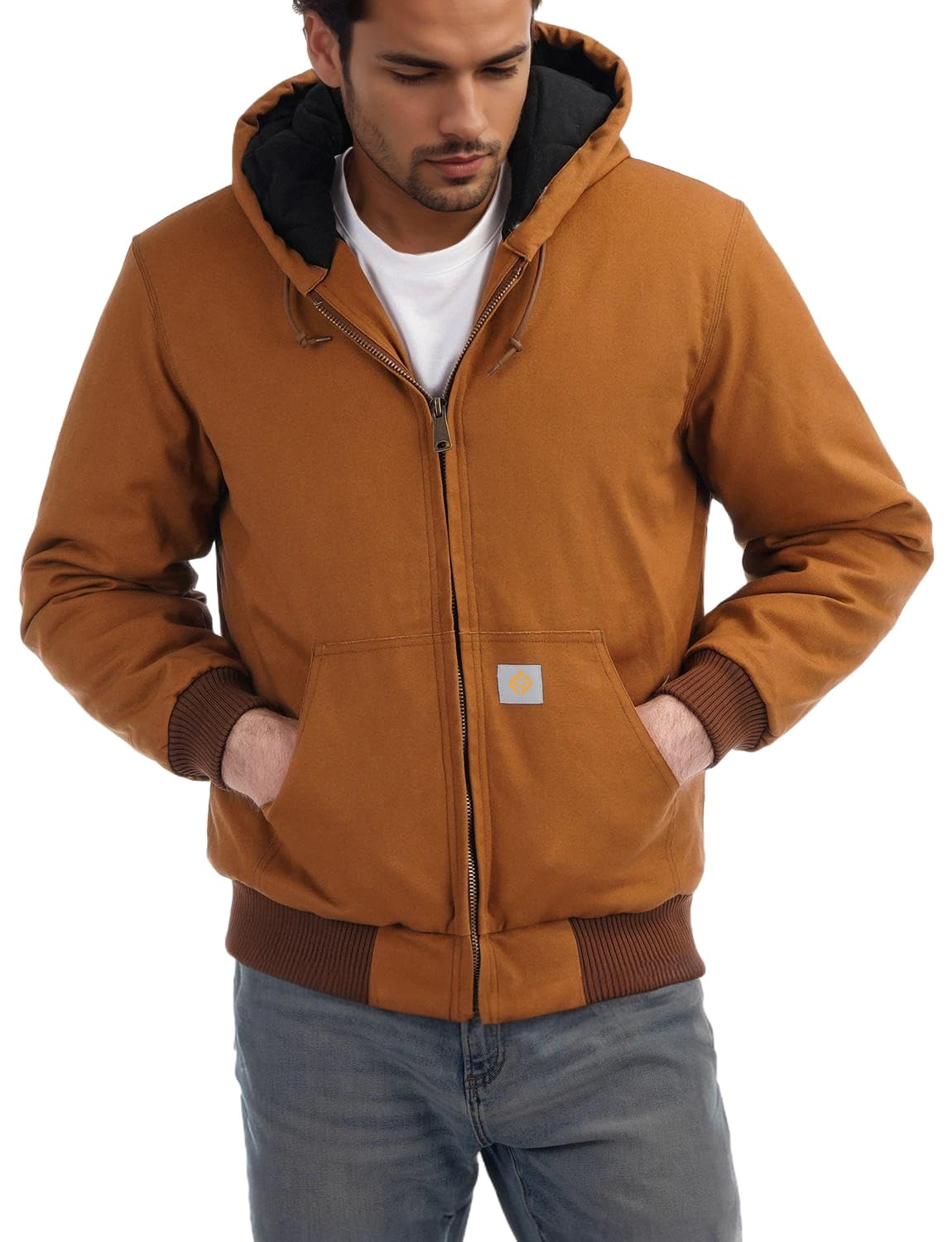
1. Carhartt Loose Fit Firm Duck Active Jacket
Our pick — 4.5+★ from 23,000+ verified ratings; the strongest balance of quality and price.
Twelve-ounce duck that shrugs off scrapes and a thermal hood that actually stays warm.
If your workday happens outdoors in winter, this is the jacket the rest of this list gets measured against. The shell is 12-ounce, firm-hand, 100% ring-spun cotton duck — a heavy woven canvas that resists abrasion far better than the thin polyester shells on lighter picks. That weight is why it feels like a tool rather than a garment. The hood is thermal-lined and attached, so your head gets the same insulation as your chest instead of a bare flap of cloth.
What wins people over is the build. The main seams are triple-stitched, which means three rows of stitching along the high-stress joints, and the rib-knit cuffs and waist keep cold air from creeping up your sleeves and back. You also get two large hand-warmer pockets and two inside pockets, which is enough room for gloves, a phone, and a wallet without bulking up the front. It’s built for winter jobsites and for layering on the coldest days.
The honest trade-off is stiffness. Firm-hand duck starts rigid and needs breaking in, and the fit around the sleeves and zipper draws mixed feedback — some find the sleeve length short of ideal, and the zipper can feel stiff when new. Neither is a defect; both are what heavy canvas does. If you want a jacket that feels soft from day one, this firm-hand duck isn’t it. If you want one that outlasts three cheap coats, it is.
Where it earns its keep
- 12-ounce ring-spun cotton duck shell takes scrapes that shred thinner fabric
- Thermal-lined attached hood keeps your head as warm as your core
- Triple-stitched main seams built for repeated abuse
- Four total pockets — two hand-warmers, two inside
What to expect going in
- Firm-hand duck starts stiff and needs a break-in period
- Sleeve length draws mixed feedback — try your usual size first
- Zipper can feel tight and stiff when the jacket is new
Reach for this if: you work outside through real winter and want one jacket that survives several seasons of it.
Think twice if: you want something soft and broken-in on the first wear — the canvas needs time.
2. Men’s Loose Fit Quilted Flannel Lined Active Jacket
A waterproof shell for wet mornings without paying premium-tier money for it.
Rain is the reason this one exists on the list. The shell uses a breathable membrane behind a waterproof heavy-duty design, with a storm placket over the front zip to stop water finding the seams. For anyone who works in drizzle, sleet, or a wet dock, that’s the feature worth having. The quilted flannel lining and waffle-knit thermal lining add warmth without the bulk of a full duck coat.
At 2.43 pounds it’s a middleweight — noticeably lighter than the Carhartt Firm Duck above and far more weatherproof than most canvas jackets here. The drawstring hood cinches down, and the kangaroo pocket plus rib-knit cuffs and waistband keep the fit snug. Buyers consistently describe the quality and warmth as strong for the money, and the fit as roomy enough to layer a thin sweater underneath without feeling stuffed.
Here’s the catch you should know before ordering: the zipper is the weak link. It draws negative feedback more than any other part of the jacket, and durability as a whole is a mixed report rather than a rave. That’s normal for a lightweight waterproof shell — the membrane does the weather work, but the hardware isn’t built like a 12-ounce duck jacket. Treat the zip gently and it’ll serve you well through wet-weather seasons.
The weatherproofing edge: a breathable waterproof membrane and storm placket give you real rain protection that the all-canvas picks on this list can’t match.
The hardware caveat: the zipper is the most-complained-about component, so this is a jacket for wet-weather work, not for someone who treats zips like pry bars.
Your match if: wet weather is your daily reality and you want a hooded work layer that sheds rain without premium pricing.
Look elsewhere if: you need heavy-duty canvas toughness and a zipper that takes real punishment.
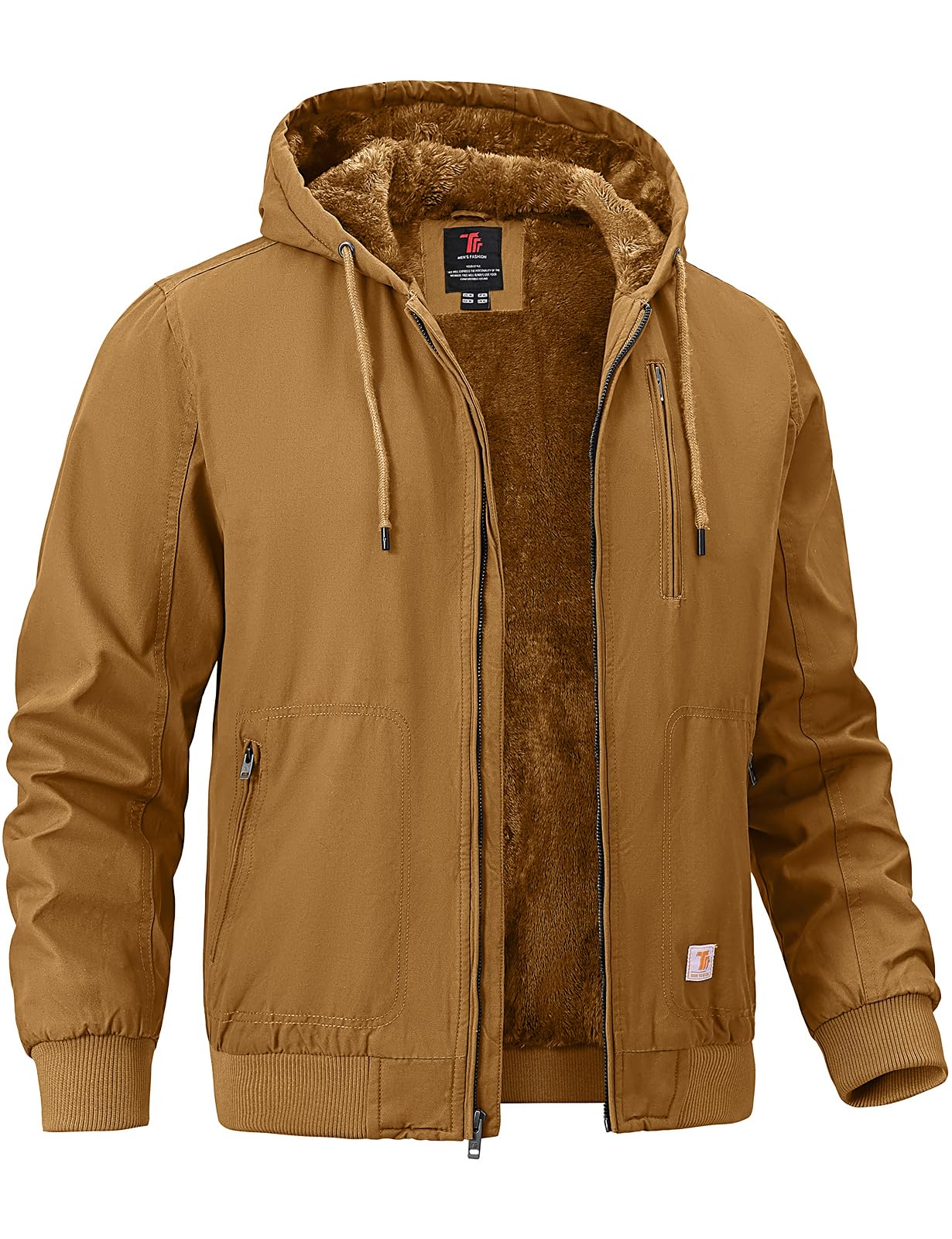
3. TBMPOY Men’s Hooded Work Cotton Fleece Lined Coat
A fleece-lined duck coat that does the basic job — if you size it right.
TBMPOY’s pitch is simple: cotton duck outside, fleece inside, hood on top. It’s the entry point into duck-canvas workwear, and for cold-weather work it does what it says. Buyers describe it as good quality and effective at keeping warm when the temperature drops. The duck shell gives you real abrasion resistance at a level well below the premium tier.
The sizing is the part you have to get right, and the brand says so itself: order one size up for a looser fit. That instruction matters because fit is the most divided topic in the reviews — some find it perfect, others find the sleeves run short. Go up a size if you plan to layer, and go true-to-size only if you want it snug. Value draws a split verdict too: good for the money to some, not worth it to others.
Think of this as the sensible starter jacket. It’s warm, it’s duck canvas, and it has a hood — but it doesn’t carry the seam construction or the hardware reputation of the Carhartt picks here. If your budget is the deciding factor and you mostly need warmth for cold morning work, this covers it.
Value read: a genuine duck canvas shell with a fleece lining and an attached hood at an entry-level tier, which is exactly what the price signals.
The sizing truth: the manufacturer’s own advice is to size up, and owner feedback backs that — sleeves are the recurring fit gripe.
Fits best for: cold-weather work on a tight budget where duck canvas toughness matters more than brand polish.
Not your fit if: you wear your normal size and expect the sleeves to land perfectly — order up instead.
4. Wrangler Men’s Quilted Lined Jacket With Sherpa Hood

The hood is the headline here — plush Sherpa against your ears on a chilly morning.
Most hooded work jackets line the hood with the same stuff as the body. Wrangler’s RIGGS line lines the hood with Sherpa — a soft, fluffy fleece — so the one part actually touching your skin feels warm rather than scratchy. The rest is cotton duck: tough, resilient, built for what the brand calls the harshest conditions. Reinforced elbows add durability at the spot that wears through first.
Storage is practical rather than clever: utility zip pockets for keeping things secure plus hidden inside pockets for essentials. For fall and low winter temperatures it holds warmth well, and buyers consistently describe it as well-made and comfortable without paying premium-tier prices. It sits in the same weight class as the other mid-range canvas jackets here but leans softer against the neck thanks to that Sherpa hood.
The catch is the cut through the chest and shoulders. Fit draws mixed feedback — some find it a good length, others find the chest area and shoulders feel tight. If you have broad shoulders or plan to layer a hoodie underneath, consider sizing up so the reinforced elbows don’t pull when you reach. Get the size right and this is a comfortable, warm fall-to-winter jacket with one of the nicest hood linings on this list.
What the RIGGS line gets right
- Sherpa-lined hood is soft and warm right against your head
- Reinforced elbows at the highest-wear point
- Utility zip pockets plus hidden inside pockets
- Rugged cotton duck shell for fall and low winter temps
Where it may pinch
- Chest and shoulders can feel tight for broad builds
- Fit reports are split on length and shoulder room
- Layering a thick hoodie underneath may require sizing up
Worth grabbing if: you want a warm fall jacket and the hood-against-your-head feel is what you care about most.
Measure first if: your chest and shoulders run wide — the cut is the one thing that trips people up.
5. WOLVERINE Overman Fleece Lined Duck Canvas Shirt Jacket

One pound of duck canvas for days you don’t want a heavy coat dragging on you.
This is the lightest jacket on the list by a wide margin — 1 pound, against 2.43 pounds for the quilted waterproof coat above. That’s the whole point of the Overman: a shirt-jacket for three-season wear when a full winter coat is overkill. The cotton duck canvas exterior gives it ruggedness, and the anti-pill micro fleece lining makes it warm for its weight. The sleeves are lined with quilted taffeta so the jacket slides on and off without drag.
The hood is the standout detail. It’s a sewn-in three-panel jersey hood with drawstrings, shaped so it fits around your head without pressure points under a hard hat. If your workday means wearing a hard hat in cool weather, that’s a feature most jackets on this list simply don’t have. You also get rolled shoulders for easier movement, a full metal snap front closure instead of a zipper, two chest pockets with a pencil opening on the left, and lower side-seam hand pockets.
Two things to weigh honestly. First, this is not a deep-winter jacket — 1 pound of canvas and fleece won’t match a 12-ounce insulated duck coat in a real cold snap. Second, the snap buttons have a durability concern, with multiple reports of them coming loose over time. Treat the snaps with some care and check them regularly for looseness. Everything else about this jacket is quietly excellent for the in-between seasons.
Why hard-hat workers like it: a three-panel hood designed to sit without pressure points, plus rolled shoulders and extended tail for movement on the job.
Where the trade-off lives: metal snap closure is the recurring durability gripe, and one pound of fabric means this is a fall-into-mild-winter pick, not a deep-freeze coat.
Ideal for: three-season work, hard-hat days, and anyone who wants duck canvas without the bulk of a heavy coat.
Wrong pick for: sub-zero shifts where you need thermal insulation and a zipper rather than snaps.
6. HISEA Men’s Sherpa Work Jacket
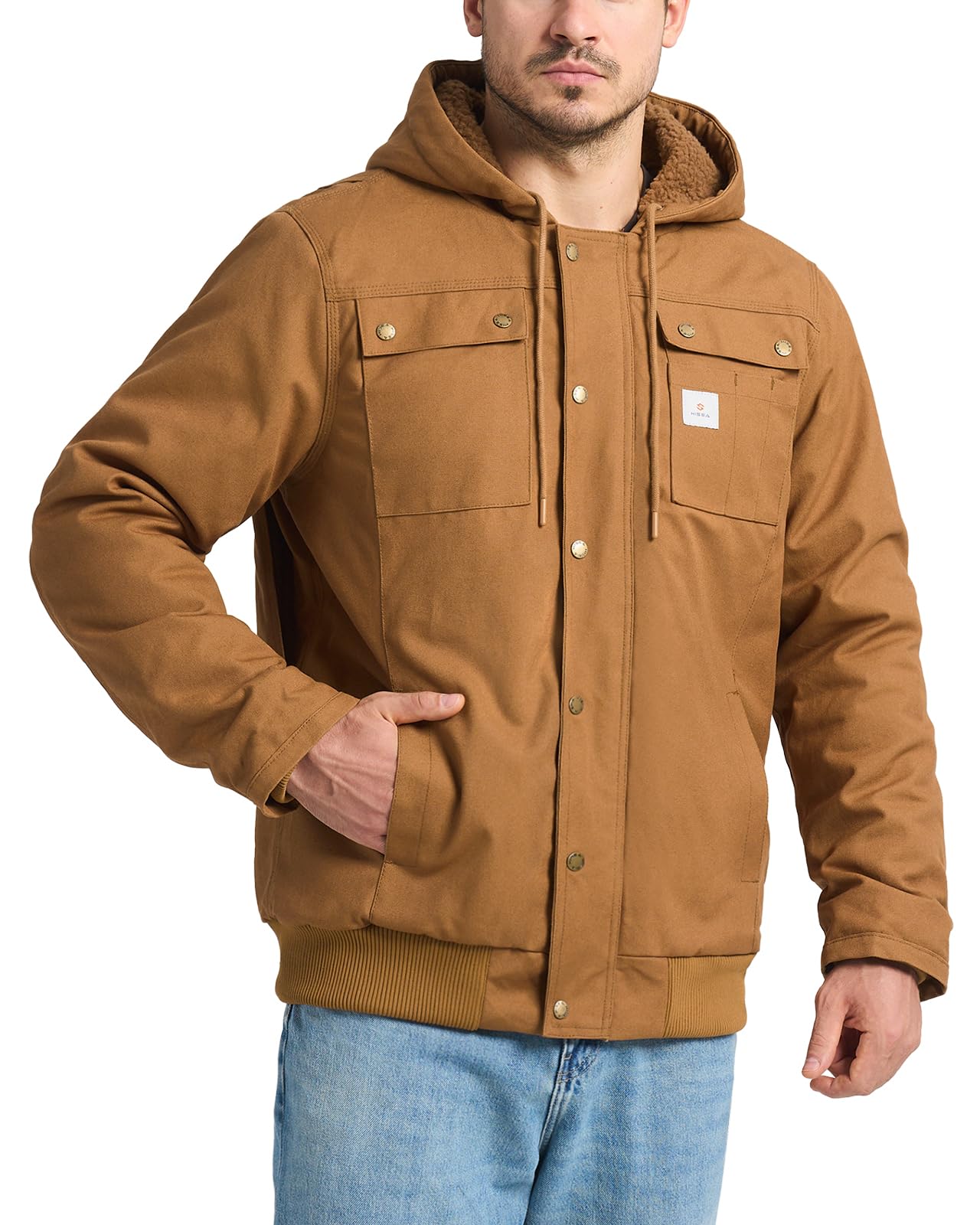
Sherpa warmth, a water-resistant canvas shell, and pockets in all the right places.
HISEA’s hooded work jacket puts storage and softness at the front of the pitch. There’s one chest pocket, two hand pockets, and inner pockets — a full set that covers tools, phone, and gloves without stuffing everything into one spot. The Sherpa lining runs warm against the body, which matters on cold jobsite mornings. The canvas shell is water resistant and hooded, so light precipitation doesn’t stop the workday.
Owners describe it as well-made and comfortable, and the XXL size fits exactly as expected — useful to know if you’re at the larger end of the size run. It’s built to handle a real winter, with buyers calling out its durability and value for money without paying premium pricing. Weight draws a split verdict: some say it’s not heavy to wear, others find it somewhat heavy, which is the natural result of a Sherpa lining in a canvas shell.
The one real weak point is the zipper, which draws negative feedback more than anything else on the jacket. It’s a pattern across lightweight waterproof and Sherpa-lined shells at this tier — the hardware isn’t the standout, the warmth and pockets are. If you’re careful with the zip and want maximum pocket space for the money, this hangs with the best of the mid-range picks.
The storage story: chest, hand, and inner pockets make this the most pocket-forward jacket in its tier, ideal if you carry tools and phone all day.
The zipper warning: the zip is the weakest part of an otherwise well-made jacket — treat it gently and it will serve you, but don’t expect heavy-duty hardware.
Pick this one: you want Sherpa warmth, water resistance, and more pockets than any other pick in this tier.
Skip the size-up gamble if: you’ve found your HISEA size reliable — XXL buyers report a true fit, so use that as your anchor.
7. Timberland PRO Gritman Lined Canvas Hooded Jacket

A jacket built for reaching — bi-swing shoulders and articulated elbows, not a stiff duck box.
Where most duck canvas jackets fight your shoulders when you reach overhead, the Gritman is cut to move. The PRO signature bi-swing back with knit rib insert and articulated elbows give you mobility through the whole arm range — a real advantage if your job means climbing, lifting, or reaching all day. It’s 100% duck canvas in medium weight with quilted insulation, so it’s warm for cold weather without being a heavy-bulk coat.
The finishing details are the workwear type: knit rib storm cuffs and a bottom hem with a logo patch on the front pocket, a pouch pocket with hand warmers, a zippered chest pocket, and an inside secured pocket. The band collar sits close under the hood. Buyers describe it as well-constructed with a great fit for winter work. Stretch is low, so the mobility comes from the cut rather than elastic in the fabric.
Durability is the mixed note — some say it holds up well, others report it ripping prematurely. That split is common in canvas workwear where the fabric takes a lot of strain at seams. It’s a jacket to buy if mobility matters more to you than maximum abrasion resistance, and to go into knowing the fabric is medium-weight rather than the heavyweight 12-ounce class above.
Why it moves better than most
- Bi-swing back with knit rib insert for overhead reach
- Articulated elbows cut for real arm movement
- Knit rib storm cuffs and hem keep drafts out
- Zippered chest plus inside secured pocket for essentials
What to weigh
- Medium-weight duck, not a heavyweight 12-ounce shell
- Durability reports are split between holding up and ripping early
- Low stretch fabric means the mobility is all in the cut
Built for you if: your day involves reaching, climbing, and lifting and you’re tired of jackets that bind at the shoulders.
Not the one if: you need the heaviest duck weight available and maximum abrasion resistance for the shell.
8. Carhartt Men’s Camden Cryder Jacket
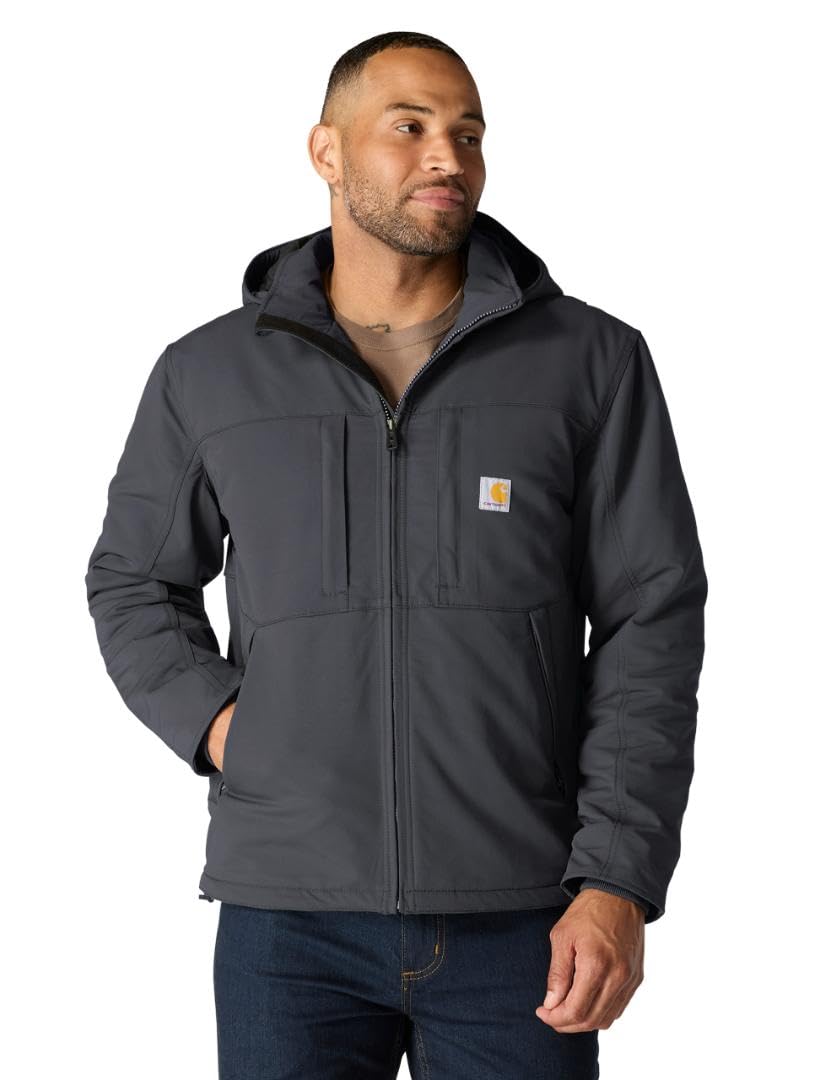
Stretch nylon and 3M insulation — a work jacket that moves like a sweatshirt.
Carhartt built the Camden Cryder to fight wind, light rain, and cold in a shell that moves with you. The stretch nylon fabric is described as lighter and more abrasion-resistant than traditional duck, which is a big directional shift from the canvas picks here. 3M insulation handles the warmth, and the adjustable hood lets you cinch it down when the wind picks up. Plenty of pockets, with zippers on the important ones.
What wins people over is the movement. That’s a real distinction from the 12-ounce duck and the reinforced-elbow canvas jackets, which take time to break in. The stretch nylon and 3M insulation give you the same protective job in a more flexible package.
The trade-offs are worth naming. The price puts it at the top of the premium tier, not the value end, and the fit runs mixed — some find it right, others need a size change. The softness that makes it comfortable also means you should expect a lighter feel than a rigid duck coat. If you want the most comfortable premium jacket that moves with you all day, the stretch nylon Camden Cryder is the one. If you’re prioritizing heavy-duty abrasion resistance, the duck coats above are the more traditional pick.
What makes it feel different
- Stretch nylon shell moves and flexes instead of hanging stiff
- 3M insulation provides warmth without extra bulk
- Adjustable hood for windy days on the move
- Multiple zippered pockets keep essentials secure
What you’re giving up
- Premium-tier pricing above most of this list
- Fit is mixed — some need a size change
- Soft, stretch feel rather than rigid duck canvas
It’s your jacket if: you want premium comfort, stretch, and a hood that adjusts on windy workdays.
Consider the duck coats if: you’d rather have traditional canvas rigidity than the stretch nylon feel.
Know the Specs
Fabric weight in ounces
Fabric weight tells you how heavy the shell cloth is. “12-ounce cotton duck” means one square yard of the fabric weighs 12 ounces — a thick, tight weave that resists scrapes and snags far better than thinner cloth. Heavier duck means more abrasion resistance but more break-in time. Medium-weight or stretch nylon shells feel lighter and more flexible but trade some of that bulletproof durability for comfort and movement.
Lining type
Lining determines warmth and how the jacket feels against your skin. Thermal lining traps body heat for genuine winter jobsite temperatures. Fleece is softer and warmer against the neck but bulkier. Sherpa is the fluffiest, best for the hood or full body where you want maximum warmth. Quilted flannel sits between you and the shell with less loft. If you run hot or work hard, lighter linings keep you from overheating.
Hood construction
The hood matters more than most buyers realize. An attached hood is sewn to the jacket’s collar, while a three-panel hood is built from three fabric pieces to shape around your head. A thermal-lined or Sherpa-lined hood keeps your ears as warm as your core. A drawstring or adjustable hood lets you cinch it down in wind. If you wear a hard hat, look for a hood that fits without pressing into your head.
Seams and hardware
Triple-stitched main seams (three rows of stitching at high-stress joints) are the quiet signature of a built-to-last jacket. Rib-knit cuffs and hem keep drafts from sneaking in around your wrists and waist. The zipper is where most lightweight jackets show their limits — treat it as the weak point unless you’re buying a heavyweight duck coat, and check the hardware before you commit to a size.
Common Questions
Is a hooded work jacket warm enough for winter jobsite work?
What does 12-ounce duck canvas actually mean?
Should I size up in a hooded work jacket?
What’s the difference between thermal lining, Sherpa, and fleece?
Can I wear a hard hat with a hooded work jacket?
Is a waterproof membrane worth having on a hooded work jacket?
How long should a hooded work jacket last?
What’s the difference between a work jacket and a shirt-jacket?
Do the pockets on these work jackets fit gloves and a phone?
What should I check before buying a hooded work jacket online?
The Bottom Line
The work jacket hood that wins for most people is the Carhartt Firm Duck Active Jacket — its 12-ounce cotton duck shell, thermal-lined hood, and triple-stitched seams give you a jacket built for real winter jobsite work, and the 4.5+ star consensus backs it up. It’s not soft on day one, but it’s the one that’s still there after three seasons of abuse.
If wet weather is your reality rather than deep cold, the waterproof quilted flannel jacket gives you a breathable membrane that canvas duck can’t match. For hard-hat work in three seasons, the Wolverine Overman and its one-pound build and pressure-point-free hood are the smart pick. And if you want premium comfort that moves with you, the Carhartt Camden Cryder earns its place at the top tier.
The nudge: pick the jacket that matches your coldest, wettest workdays, not your mildest. The Carhartt Firm Duck has been the work jacket that thousands of owners rebuild their winter around — check your size against the loose fit before ordering, and let the canvas break in.
How we choose
We do not accept paid placement. Every pick is matched to a real buyer and a real use-case; we do not hands-on test units.
Sources
Specifications: manufacturer listings and product documentation. Review insights: verified customer reviews, as of November 2026. Pricing: not shown on this page (it changes often); check the current price via the retailer link.
As an Amazon Associate, Tactical Gear Guy earns from qualifying purchases. This does not affect which products we feature.