Specs are compiled from manufacturer listings and verified buyer reviews and can change over time — please confirm the key details on the product page before buying.
You want one black jacket that survives a real shift without turning into a sweatbox or a soaked mess by lunch. The short answer: buy for the shell first, the insulation second, and the fit third — and ignore the sleeve label that says it’s warm until you know what it’s warm in. A work jacket in black also hides grease, caulk and job-site grime better than any colour you can pick, which is exactly why so many of these are sold in it.
This guide is built by comparing the manufacturers’ published specifications and the patterns across verified customer reviews, so you get each pick’s real strengths and trade-offs instead of marketing spin.
Below you’ll find the shells that actually keep water out, the linings that hold heat without bulk, and the fit quirks that catch most buyers out. Here is the honest breakdown of the work jacket black market so you can pick once and stop looking.
Top Picks
How To Choose The Best Work Jacket Black
Work jackets split into two families, and knowing which one you need settles most of the decision. Shell-first jackets fight weather and abrasion and carry little insulation. Lined-and-insulated jackets hold heat and shrug off wind but add bulk. Pick the family, then pick the fit.
Read the shell before the lining
A woven duck canvas or stretch nylon outer takes scrapes from scaffolding, truck beds and brush without tearing. That’s the part of a work jacket that decides how long it lives. Insulation is replaceable comfort; the shell is the structure. A 3000mm waterproof rating, for example, means the fabric holds back a column of water that high before it passes through — enough for steady rain, not a submersion.
Match the warmth to the temperature you actually work in
A quilted flannel or fleece lining holds heat against you. A thin synthetic insulation keeps warmth without the weight. The catch is that heavier insulation traps sweat once you start moving, and a soaked base layer is colder than no jacket. If you alternate between a warm cab and a cold site, a lighter shell over layers beats one thick coat.
Fit is the recurring complaint, so plan for it
Every jacket here has a fit or size note attached to it in the reviews, and they go in both directions — some run roomy, some run small in the sleeves. Read the specific note for the jacket you’re considering. A relaxed cut is built to layer a hoodie underneath. A trim cut is built to sit flat under a harness.
Pockets and visibility count as safety gear
Zippered exterior pockets keep a phone dry and a tape measure from sliding out. Chest pockets on some models sit behind a flap you can reach with gloves. If you work near traffic or in low light, a reflective strip changes your odds far more than any other feature on the jacket — that’s a buying decision, not a style one.
Side-by-Side Comparison
| Model | Best For | Water Protection | Insulation | Pocket Layout | Amazon |
|---|---|---|---|---|---|
| Carhartt Camden Cryder★ Best Overall | All-rounder for mixed weather | Fights wind and light rain | 3M™ insulation | Plenty of zippered pockets | Amazon |
| toolant Hi Vis Safety JacketBest for Wet Sites | Rainy sites and low light | 100% waterproof, 3000mm rating | 180g insulation | Exterior, interior and radio mic tabs | Amazon |
| TUAOVA Quilted Flannel LinedBest Warmth Value | Cold, wet outdoor shifts | Waterproof with storm placket | Quilted flannel and waffle-knit lining | Kangaroo pocket | Amazon |
| CARWORNIC Hooded Active | Honest warmth for cold mornings | — | Quilted-lined cotton | 2 inner, 2 front | Amazon |
| TBMPOY Fleece Lined Duck Coat | Layers and a looser feel | — | Fleece lining, cotton duck | — | Amazon |
| Red Kap Performance Crew | Utility use and chest room | Water repellent | — | Tons of pockets | Amazon |
| HISEA Sherpa Work Jacket | Cold seasons in canvas | Water resistant | Sherpa lining | Chest, hand and inner pockets | Amazon |
| Carhartt Firm Duck Traditional Coat | Harshest cold, farm to jobsite | Water repellent | Warmest insulation, quilt-lined | Plenty of pockets | Amazon |
Detailed Reviews
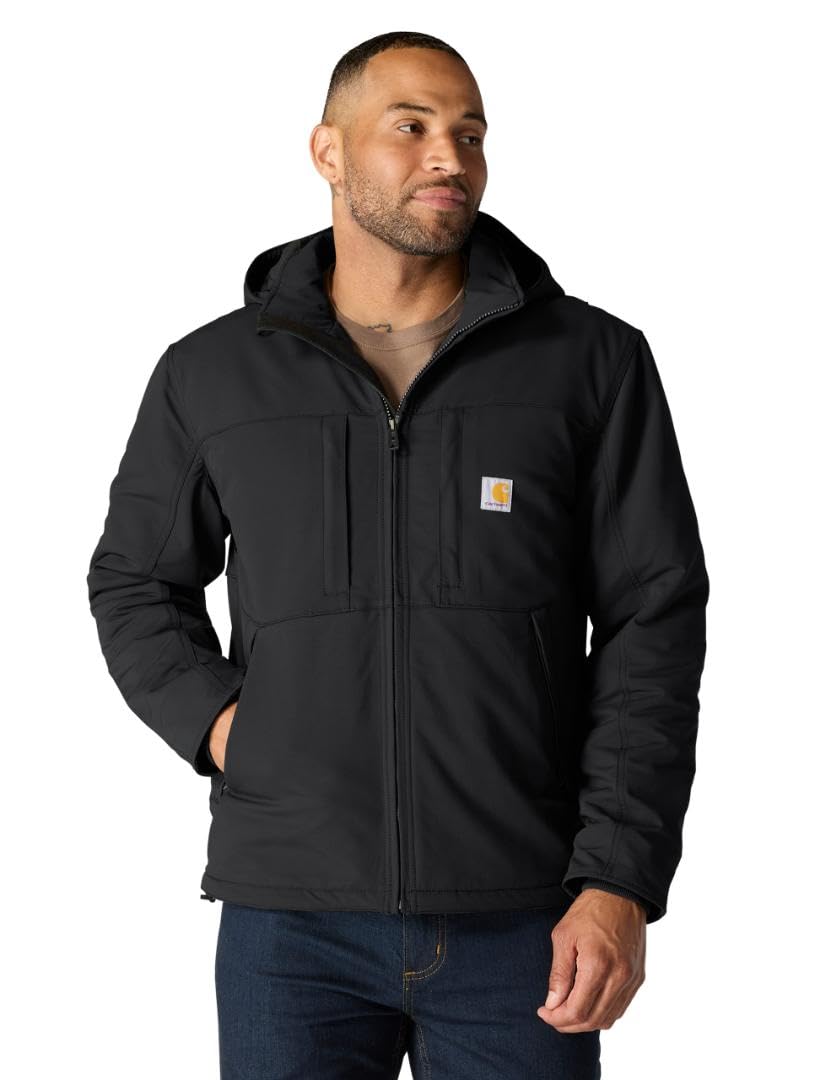
1. Carhartt Men’s Camden Cryder Jacket
Our pick — 4.5+★ from 350+ verified ratings; the strongest balance of quality and price.
The jacket that wears like a sweatshirt and works like a shell.
If you want one black jacket to cover most of the year, start here. It’s built from stretch nylon that Carhartt describes as lighter and more abrasion-resistant than its traditional duck cotton — the heavy canvas most work coats use. That swap is the whole story: you get a coat that bends with your arms instead of fighting them.
Inside sits 3M™ insulation, a synthetic fill that traps warmth without the loft of down, so the jacket stays flat through a long shift. It fights off wind and light rain according to the maker, and the adjustable hood gives you a way to seal your head when the weather turns. The pocket count is a big part of the appeal — the zippered pockets are what people keep bringing up, and they’re where a phone and a tape measure stay dry.
The honest catch is sizing. Fit draws the most disagreement of any trait on this jacket, and the softness is the flip side of the same coin — it feels closer to a heavy sweatshirt than a stiff coat, which some people love and some people don’t expect from a work garment. Order your normal size if you want it trim under a harness, or size to layer.
What earns its keep
- Stretch nylon is lighter and more abrasion-resistant than traditional duck, per the maker
- 3M™ insulation plus an adjustable hood for wind and light rain
- Zippered pocket layout keeps tools and a phone dry
- Soft, mobile feel that people describe as sweatshirt-like
Where to think twice
- Fit is the mix-and-match point — sizing is the biggest disagreement in the reviews
- Treats light rain, not a downpour; it’s not rated as a rain coat
- The soft hand feel may read as lightweight to buyers expecting stiff duck
The verdict: The strongest all-rounder of the nine, and the one to buy if you want a single black jacket for three seasons.
Think twice if: you need a true rain shell or you’re working in sustained heavy weather.
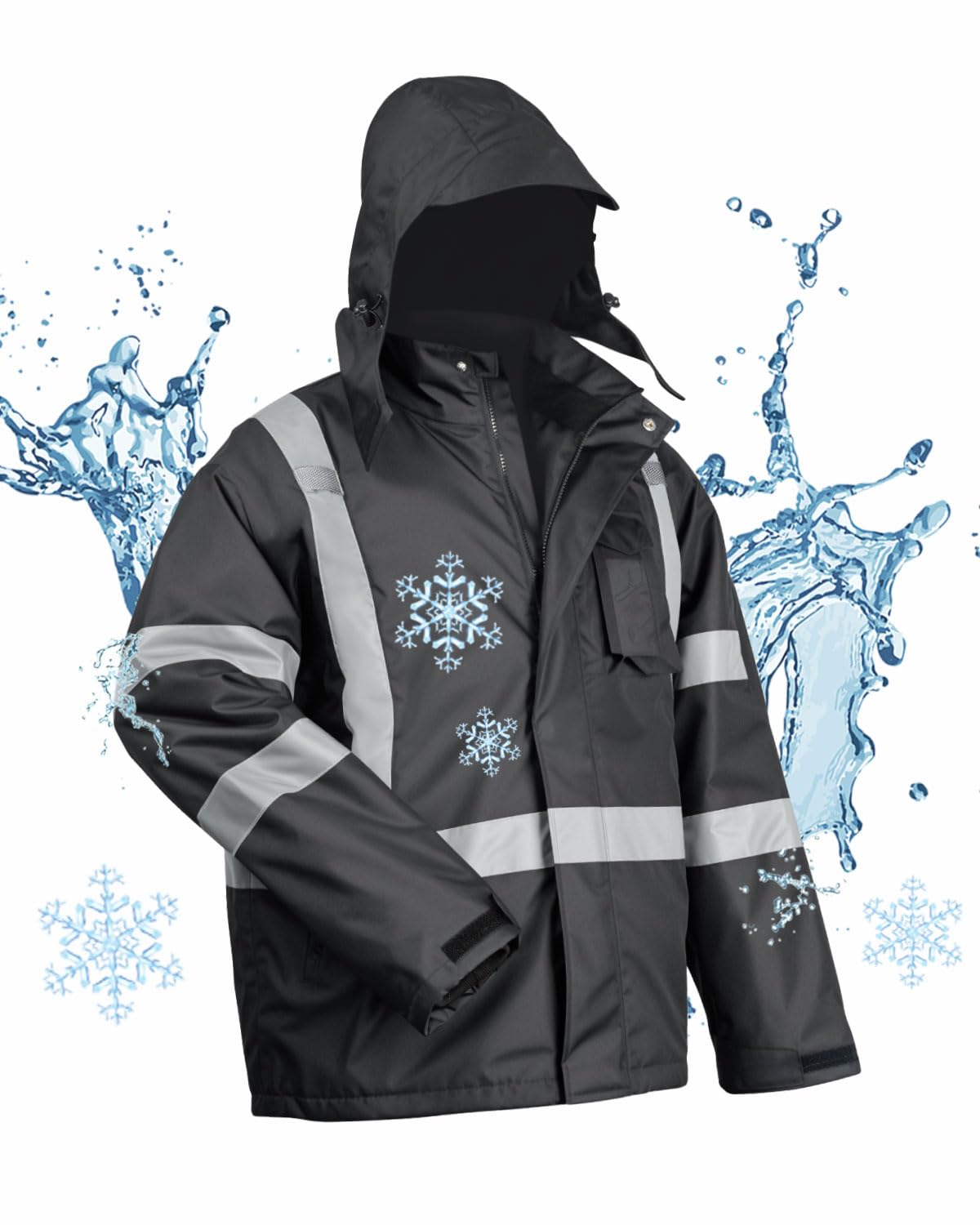
2. toolant 100% Waterproof Safety Jacket
Rain, glare and cold, handled in one hi-vis layer.
Start with the number nobody else here has: 3000mm waterproof rating, backed by a PU coating. That means the fabric holds back water pressure before it soaks through, so a steady drizzle beads off instead of chilling you. The jacket also carries Type R Class 3 ANSI certification — the visibility standard for workers near road traffic — with reflective strips that the manufacturer says keep their shine through 25 washes. If you stand near moving vehicles, that’s the feature that matters most.
Inside you get 180g insulation, a visible warmth figure you can compare against other jackets. The 180g fill takes the edge off cold storage work or an early farm start without trapping sweat once you’re moving. Add an extended rigid hood brim to keep rain off your face, water-resistant zippers, velcro cuffs and radio mic tabs, and the shell is genuinely set up for a shift outdoors.
The one thing to flag: the zipper. It’s the single piece of hardware buyers bring up as a weak spot, so treat the pull deliberately rather than yanking it shut with gloves on. Warmth, water resistance and pocket layout all earn their place, and build quality is the trait buyers praise most. Between this and the Carhartt Camden above, this one leads on rain protection; the Camden leads on everyday softness.
Who it’s built for: Site crews, flaggers and anyone working beside traffic in wet weather who needs to be seen and stay dry.
The trade-off: The zipper is the weak hardware point, so a slow pull beats a fast one.
Reach for this if: your workday has traffic, rain, or both in it.
Look elsewhere if: you want an understated black jacket for casual wear — the hi-vis design is the point here.
3. Men’s Loose Fit Quilted Flannel Lined Workwear Jacket
Double lining, a storm placket and a hood — for cold, wet days.
This is a two-layer warmth play. A quilted flannel lining holds heat against your body, and a waffle-knit thermal lining adds another pass at it. The outer is 100% polyester with a breathable membrane and a storm placket — the flap that covers the zipper so wind and rain can’t drive straight through the closure. Rib-knit cuffs and a rib-knit waistband seal the gaps at your wrists and hem.
Buyers report the quilted flannel and waffle-knit linings holding warmth in cold temperatures, with enough room to wear a thin sweater underneath. It’s a loose fit by design, so the kangaroo pocket sits low and the whole jacket hangs easy over layers. At 2.43 pounds it carries real weight without feeling like a parka.
Here’s what to know before you buy: two hinge points draw noise. Zipper quality is the most-discussed flaw, and the durability picture is mixed rather than glowing. Neither is universal, but if you’re hard on zippers, budget for that being the part that fails first. Against the toolant above, this one trades the hi-vis designation for a more everyday look with a hood.
The case for it: Two linings, a storm placket and sealed cuffs for a genuinely cold-weather build.
Worth knowing: The zipper is the weak link, and durability is mixed — treat the hardware gently.
Best paired with: a thin sweater and a cold, damp commute.
Steer away if: you want a jacket you can throw around without watching the zip.
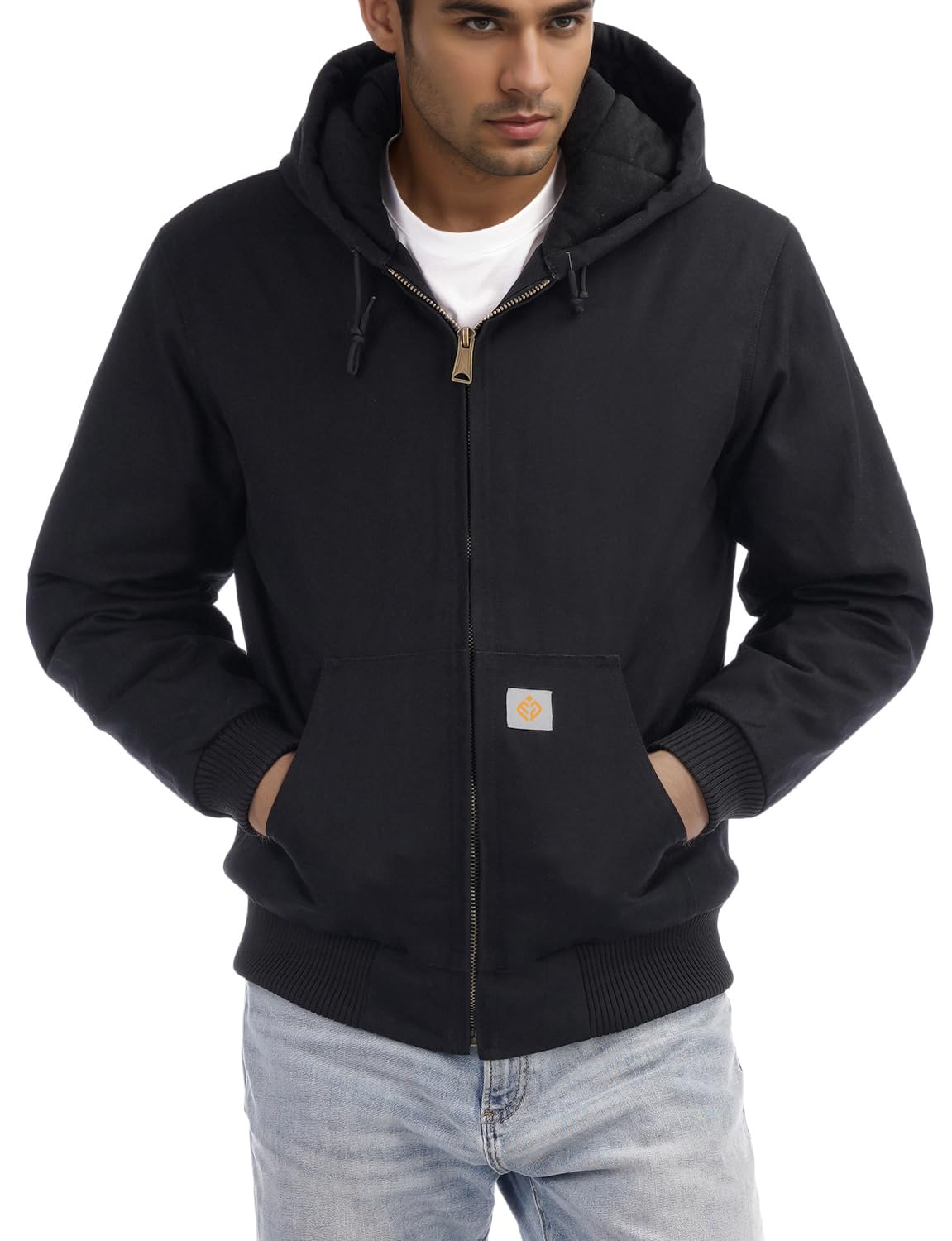
4. CARWORNIC Men’s Winter Hooded Active Jacket

A quilted-lined hooded coat with two pockets inside and two out.
The layout is the selling point here. You get two inner pockets and two front pockets, plus a warm hood and elastic hem and cuffs that keep cold air out at the edges. The outer is a quilted-lined cotton build, so it’s a softer, cloth-feel coat rather than a slick synthetic shell.
For work, buyers call it a solid cold-weather jacket, and the satin lining is noted for letting shavings and dust slide off instead of clinging all day. The quilted lining holds heat once you’re moving.
The important caveat is sizing: it runs noticeably small, and that’s a repeated note. Size up, especially if you want a hoodie underneath. The zipper is the other hardware point that recurs. Two things to hold in mind, but the build quality carries the daily wear.
Working in its favour
- Four pockets total — two inner, two front
- Quilted lining and a warm hood for cold starts
- Satin lining resists picking up debris
- Elastic hem and cuffs seal out drafts
Before you commit
- Runs small — go a size up if you layer
- Zipper is a recurring weak point
- Cotton build, not a hard abrasion shell
Pick it when: you want a soft, warm, pocket-heavy coat for cold daily work.
Pass when: you’re between sizes and won’t size up.
5. TBMPOY Men’s Winter Hooded Work Fleece Lined Coat

Fleece inside, duck cotton outside — and sized to layer.
TBMPOY builds this as a cotton duck coat with a fleece lining, so the outside takes scrapes and the inside stays soft against a shirt. It’s a hooded active workwear cut, and the maker’s own advice is to order one size up for a looser fit — a hint that the stock sizing is trim.
Owners mention the fleece lining holding warmth on cold mornings, and the stitching and duck cotton draw the most praise. Where this one splits opinion is the fit: some buyers find it perfect and others note the sleeves run short. It’s the coat’s main variable, so check the sleeve note before you commit.
Value divides opinion too, but the honest read is that it’s a fleece-lined duck coat built for layering — the kind of thing you wear over a hoodie on a cold morning and forget about. It’s a lighter shell than the Carhartt Firm Duck below, which is built for the worst of it.
Where it shines: Fleece lining plus cotton duck for cold, active work.
Mind the sleeves: Fit and value both draw mixed feedback — check the sleeve length before ordering.
Suits you if: you want a fleece-lined work coat sized for a layer underneath.
Not for you if: long arms run in your family — check the sleeve note first.
6. Red Kap Men’s Performance Crew Jacket

A ripstop utility layer with room across the chest and shoulders.
Red Kap’s crew jacket is built from stretch twill ripstop — a woven pattern that stops a small tear from running into a big one — and finished with a water-repellent surface. It’s a lightweight layer, not an insulated coat, so its job is to keep the wind and drizzle off while you move.
The fit is where it earns fans: the cut is wide in the chest and shoulders, so it moves with you and layers over a shirt without pinching. The pocket design is a praised feature, and the whole piece reads as a utility jacket first. It handles a colder morning in warmer climates well, per the reviews.
But there are two sizing notes to plan around: the jacket runs small, and the zipper is mixed — some buyers like the front flap, others want better zip hardware. Buy a size up if in doubt. Against the Carhartt Camden above, this is the lighter, more casual layer; the Camden is the warmer, dressier one.
Why people like it
- Stretch twill ripstop is water repellent and lightweight
- Wide chest and shoulders for ease of movement
- Pocket design is a standout
- Covers a cold Florida-style morning without the weight
Where it asks you to plan
- Runs small, so sizing up is the move
- Zipper is mixed on quality
- Lightweight means it won’t carry you through a real cold snap
Best for: mild-winter climates and a roomy, layered utility fit.
The honest limit: it’s the lightest jacket here, so cold snaps need a warmer pick.
7. HISEA Men’s Sherpa Work Jacket
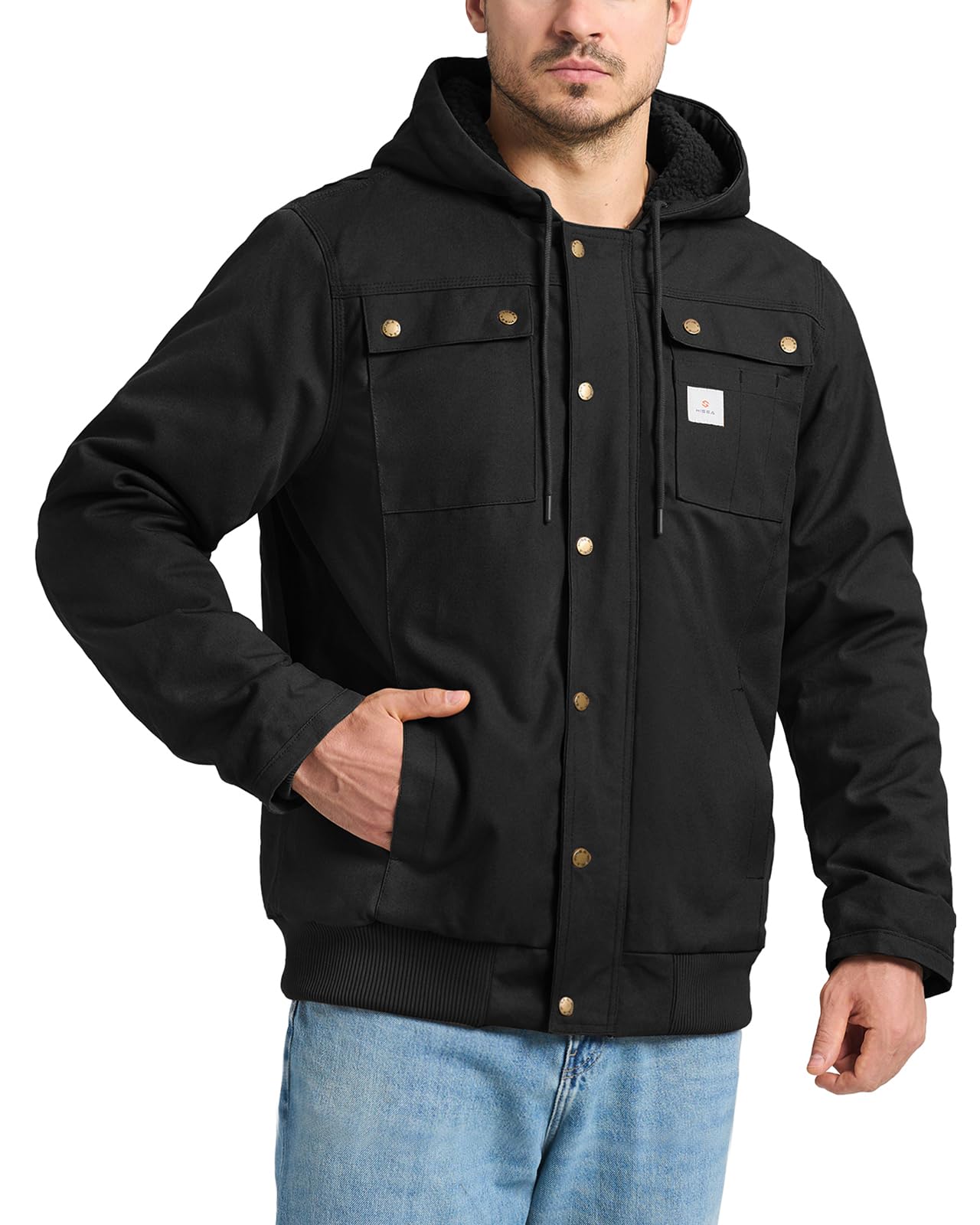
Canvas outside, sherpa wool-feel inside, for the cold butt of the season.
Sherpa is the fleece that looks and feels like shearling — soft, textured, and warm against a T-shirt. HISEA puts it inside a water-resistant canvas shell with a hood, so you get a rugged exterior and a soft interior in one. The layout is sorted: chest pockets, hand pockets and inner pockets cover the small stuff.
Customers note the canvas and sherpa lining holding up through a harsh winter of regular wear. The fit earns praise too, with the roominess of a larger size noted as a perfect match.
The thing worth knowing: the weight splits opinion. Some find it light to wear; others find it on the heavy side. The zipper is also the hardware point that recurs, so treat it deliberately. Watch the weight note if you’re sensitive to a heavier coat.
The standout: Water-resistant canvas over a sherpa lining for real cold.
The caveat: It’s a substantive coat — if you want lightweight, note the weight feedback.
Go for it if: you want canvas toughness with a soft, warm interior.
Thing is: the weight and the zipper are the two points that divide buyers.
8. Carhartt Men’s Firm Duck Traditional Coat

The heritage canvas coat, built for farm, jobsite and camp cold.
Firm duck is Carhartt’s heaviest gauge canvas — stiff from the start, then it molds to you. This coat pairs it with the warmest insulation Carhartt puts in this line and a quilt lining, so it’s the one here built for the deepest cold. The water-repellent finish keeps light precipitation off the canvas.
The cut stays trim rather than puffy, so it doesn’t billow over your layers — you get warmth without a balloon shape. That’s the draw for people who want a classic coat that still moves. It’s a canvas coat meant to take years of farm and jobsite abuse.
Two honest notes: it’s stiff until broken in, and the sizing runs big for some — you’ll want to check it carefully if you’re between sizes. The zipper is mixed, and a few find it harder to work than a light jacket’s. Break-in is the price of a canvas this firm.
Where it delivers
- Firm duck canvas and Carhartt’s warmest insulation in this line
- Quilt lining and water-repellent finish
- Trim cut that doesn’t look puffy
- Built for the hardest cold on the list
What to expect
- Stiff until it breaks in — the trade for that canvas
- Runs big for some buyers
- Zipper is mixed on feel and operation
The buy for: hard winter work where the coat needs to outlast the season.
The trade: firm canvas needs a break-in period before it softens up.
Know the Specs
Waterproof rating versus water repellent
A waterproof rating in millimetres measures how much water pressure a fabric holds before it passes through, so 3000mm handles steady rain. Water repellent means the surface sheds light drizzle but the fabric itself isn’t sealed. Both work; pick by weather.
Duck canvas and Rugged Flex
Duck canvas is a tightly woven cotton that shrugs off abrasion — the workhorse fabric for jobsite coats. Rugged Flex duck is the stretch version, so it gives when you reach. Stretch nylon is the lightest shell option, and it’s more abrasion-resistant than traditional duck according to Carhartt.
Insulation weight in grams
Insulation weight in grams tells you roughly how much warmth is inside. A 180g fill suits cold work where you still need to breathe; heavier quilted linings suit the deep cold but trap sweat once you’re moving.
Hi-vis and ANSI classes
Type R Class 3 ANSI is the visibility standard for workers near road traffic, and reflective strips need to keep their shine through washing to stay useful. If you’re near vehicles, that rating is a safety feature, not styling.
Common Questions
Does a black work jacket show less dirt than a lighter colour?
What does a 3000mm waterproof rating actually mean on a work jacket?
Should I size up in a black work jacket if I want to wear a hoodie underneath?
How much insulation do I need for cold work?
What is the difference between water repellent and waterproof?
Why do so many work jacket reviews mention zippers?
Can I wear a hi-vis work jacket as an everyday black jacket?
How many pockets should a work jacket have?
Is a duck canvas jacket stiff when it arrives?
How should I care for a waterproof work jacket?
The Bottom Line
If you buy one, buy the Carhartt Camden Cryder — it’s the strongest all-rounder with its stretch nylon shell, 3M™ insulation and zippered pockets, and it’s the pick that covers most seasons and most workdays. Need to stay seen and dry near traffic? The toolant safety jacket leads on 3000mm waterproofing and Type R Class 3 visibility. For deep, hard winter work, the Carhartt Firm Duck coat carries the heaviest warmth, and if mobility matters more than bulk, the Montana Rugged Flex is the one to reach for.
How we choose
We do not accept paid placement. Every pick is matched to a real buyer and a real use-case; we do not hands-on test units.
Sources
Specifications: manufacturer listings and product documentation. Review insights: verified customer reviews, as of November 2026. Pricing: not shown on this page (it changes often); check the current price via the retailer link.
As an Amazon Associate, Tactical Gear Guy earns from qualifying purchases. This does not affect which products we feature.