Specs are compiled from manufacturer listings and verified buyer reviews and can change over time — please confirm the key details on the product page before buying.
You want a jacket that keeps you warm on a cold job site and does not fall apart by the end of the season. That means real insulation between you and the wind, and a shell tough enough to brush past scaffolding, truck beds, and gravel. Below are nine picks that actually qualify as work jackets, ranked by what they do best: warmth, visibility, waterproofing, or free arm movement. The standout for most buyers is the Carhartt Camden Cryder — a 4.5+ star crowd favorite with 300+ owners behind it — because it pairs 3M insulation (a thin synthetic layer that traps body heat) with a stretch nylon shell that moves with you instead of fighting you.
This guide is built by comparing the manufacturers’ published specifications and the patterns across verified customer reviews, so you get each pick’s real strengths and trade-offs instead of marketing spin.
A work jacket has to hold heat without locking up your arms. The picks below split cleanly between high-visibility safety shells, canvas duck coats, and insulated soft shells. Our work insulated jacket breakdown separates them by the one spec that matters most for your job.
Top Picks

How To Choose The Best Work Insulated Jacket
The three things that decide whether a work jacket earns its place are the shell, the insulation, and the fit. Get those right and you will wear it every cold morning without thinking about it. Get them wrong and you will be back to layering hoodies by January.
Start with the shell, because that is what dies first
The outer fabric takes the abuse — snagging on rebar, rubbing against truck beds, soaking up rain. Canvas duck is the traditional choice and it wears like iron. Stretch nylon is the newer option; Carhartt uses it on the Camden Cryder and describes it as lighter and more abrasion-resistant than their traditional duck. Coated Oxford, like the 300D PU fabric on the TCCFCCT, is the waterproof pick for wet outdoor work. Match the shell to your environment, not to a brand name.
Insulation weight in grams is a real number, not marketing
Insulation is measured in grams, and that figure tells you how much warmth is packed in. A 3M Thinsulate fill rated at 80 grams suits active work where you generate heat. A 150-gram fill, like the one in the Carhartt Yukon Extremes, is built for standing still in serious cold. Heavier fill means more warmth but less breathability, so match it to how much you move.
Decide now if you need high-visibility striping
If you work near traffic, heavy machinery, or a loading dock, ANSI Class 3 visibility can be a job requirement rather than a preference. The TCCFCCT and Tingley Bomber II both carry reflective striping across the shoulders, waist, and sleeves. If you work alone in a shop or on a residential site, plain canvas does the job and blends in better off-shift.
Treat the size chart as a starting point, not gospel
Almost every jacket in this category draws some fit complaints, and the reason is layering. A jacket sized to fit over a t-shirt will be tight over a hoodie. Work out what you will wear underneath on the coldest day, then size for that. Several of these picks deliberately run roomy for exactly that reason.
Side-by-Side Comparison
| Model | Best For | Insulation | Shell Material | Water Resistance | Amazon |
|---|---|---|---|---|---|
| Carhartt Camden Cryder Jacket★ Best Overall | All-round jobsite wear | 3M insulation | Stretch nylon | Light rain | Amazon |
| Carhartt Yukon Extremes CoatDeep Winter Pick | Deep winter cold | 150g 3M Thinsulate | 500-denier Cordura nylon | Rain Defender DWR | Amazon |
| TRUEWERK S3 Solution HoodieFeatherweight Layer | Lightweight layering | Insulated | — | Water resistant | Amazon |
| HISEA Sherpa Work Jacket | Cold-weather canvas | Sherpa lining | Canvas | Water resistant | Amazon |
| CARWORNIC Hooded Active Jacket | Budget warmth | Quilted lining | Cotton | — | Amazon |
| TBMPOY Duck Coat | Fleece-lined value | Fleece lined | Duck cotton | — | Amazon |
| Tingley Bomber II | High-vis wet work | Polyester quilted liner | Polyester | Water resistant | Amazon |
| TCCFCCT Hi Vis Jacket | Waterproof visibility | Insulated lining | 300D coated PU Oxford | Waterproof | Amazon |
Detailed Reviews
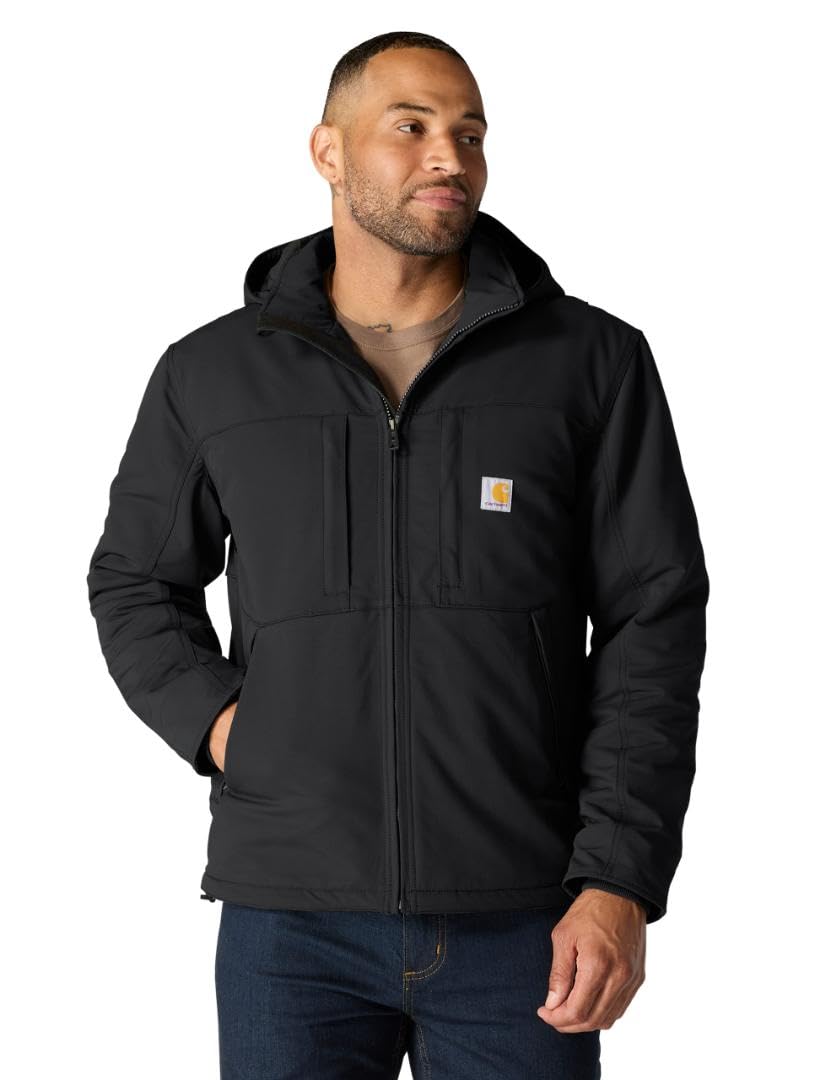
1. Carhartt Men’s Camden Cryder Jacket
Our pick — 4.5+★ from 350+ verified ratings; the strongest balance of quality and price.
The stretch-nylon workhorse that moves like a sweatshirt and takes a hit like a coat.
The Camden Cryder swaps Carhartt’s traditional duck canvas for stretch nylon. The brand describes that shell as lighter and more abrasion-resistant than their familiar duck, which means you get scrapes and snags sliding off instead of chewing in. Behind that shell sits 3M insulation, an adjustable hood, and enough pockets that you stop patting yourself down for your phone. It fights off wind and light rain, so a cold, drizzly morning is not a reason to stay in the truck.
What wins people over is build quality — it is the attribute that dominates how owners talk about this jacket, and the durability conversation follows close behind. It also does something work jackets rarely manage: freedom of movement. Owners describe it as very soft and not stiff, with enough give for reaching, lifting, and climbing. One buyer even compares the feel to a sweatshirt rather than a coat. With 4.5+ stars and 300+ owners behind it, it is also the highest-scored pick on this page.
Here is the honest catch. The stretch nylon shell that makes this jacket so comfortable in motion is the same reason it only handles light rain. It is not built for a soaking wet shift the way the coated Oxford on the TCCFCCT is. Fit is also a mixed bag across body types, so read the size chart carefully if you plan to layer a thick hoodie underneath. For dry cold work with constant movement, few jackets touch it.
What earns the top spot
- Build quality is the thing owners praise most, and durability is right behind it.
- Stretch nylon shell lets your arms and shoulders work without the jacket fighting back.
- Plenty of zipper pockets, plus an adjustable hood and 3M insulation for wind and light rain.
Where it stops short
- Light rain only — not a full waterproof shell.
- Fit runs differently across body types, so sizing takes care when layering.
Reach for this if: you work in dry cold and need a jacket that moves with your arms all shift.
Think twice if: your days are wet enough that you need a true waterproof shell rather than light-rain protection.
2. Carhartt Men’s Yukon Extremes Loose Fit Insulated Coat
The one you grab when the forecast stops being polite.
Everything on this coat is heavier than the Full Swing above, and that is deliberate. The shell is 6.5-ounce, 500-denier Cordura nylon, a tightly woven fabric built to shrug off abrasion. Inside sits 150g 3M Thinsulate insulation — nearly double the fill weight of the Full Swing, and the reason this is the warmest Carhartt on the list. Wind Fighter technology tames the wind and Rain Defender durable water repellent keeps a shower from soaking through. Buyers report it blocking wind and outlasting duck jackets, which matches the 500-denier Cordura shell and Wind Fighter build.
Reflective detailing is where this one separates from a plain work coat. There is 3M Scotchlite Carbon Black reflective taping on the center back and front pockets, plus a 3M reflective Carhartt patch. That gives you a measure of night visibility without a neon-yellow shell. The pocket layout is generous too — a zippered left-chest map pocket, two lower-front snap pockets, a right-chest snap pocket, and inner zip and hook-and-loop pockets. Triple-stitched main seams, rib-knit storm cuffs, and a droptail hem all point at the same goal: holding heat where it belongs.
What you should know before ordering is that the fit runs genuinely mixed. Some buyers love the room for layering, while others find it too tight, especially around the armpits — so if you are between sizes and plan to wear a hoodie, size up. Zip quality is the other recurring note, so ease that zipper rather than yanking it. Nearly a thousand owners have reviewed it over the years, and the fit and zipper complaints are a small minority.
Cold-weather credentials
- 150g 3M Thinsulate insulation — the heaviest fill on this list.
- 500-denier Cordura nylon shell with Wind Fighter and Rain Defender treatments.
- Carbon Black reflective taping and a reflective patch for after-dark visibility.
Sizing and zipper notes
- Armpit area runs tight for some buyers who layer heavily.
- Zipper draws recurring comment — treat it gently.
Made for: outdoor crews who stand in wind and hard cold rather than constantly moving.
Order carefully if: you layer thick and sit between sizes — the armpit fit is where this coat divides people.
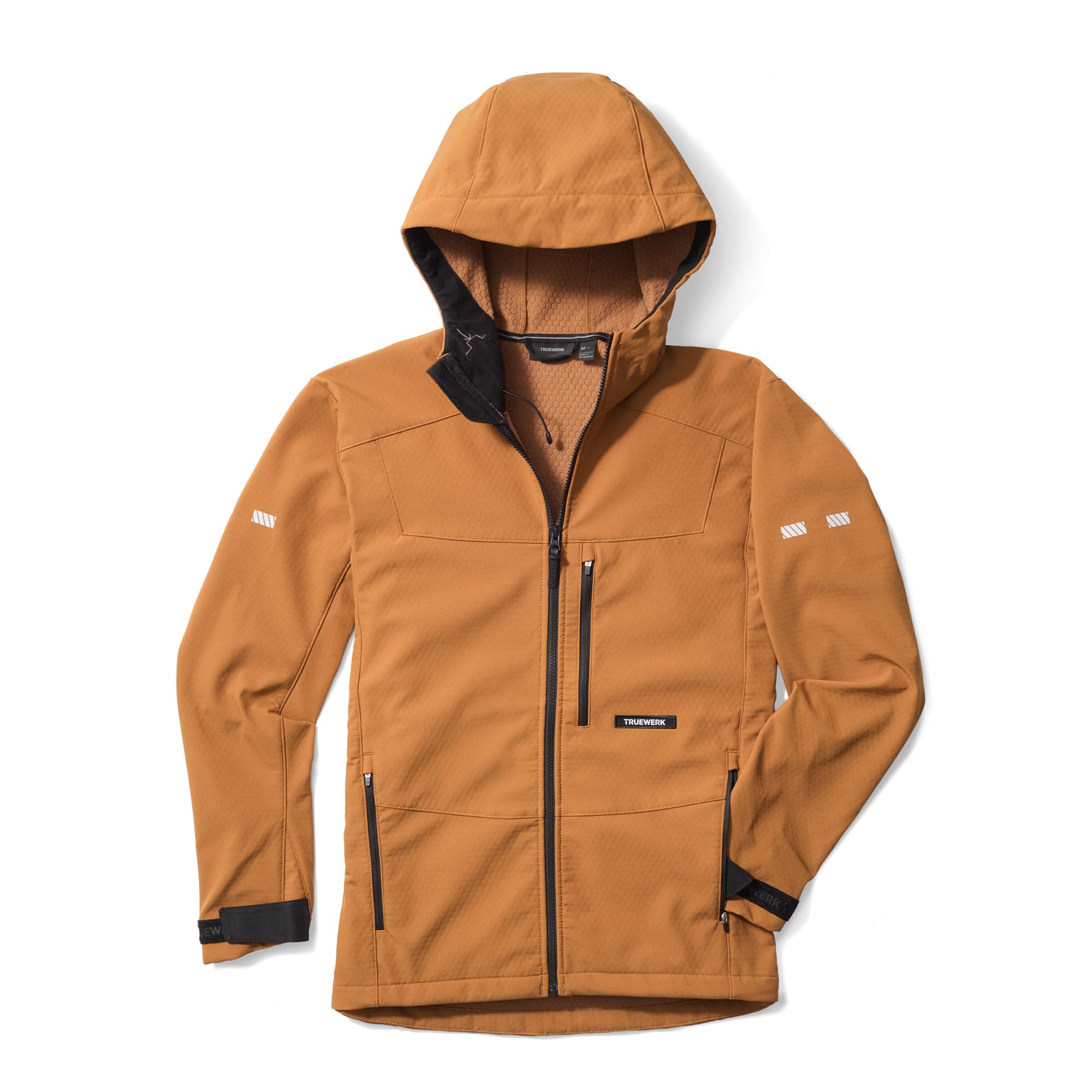
3. TRUEWERK S3 Solution Zip-Up Hoodie
A hoodie with insulation ambitions — light enough to forget, roomy enough to layer.
This is a zip-up hoodie cut for people who avoid stiff coats. It is cut as a zip-up hoodie rather than a shell, with a medium fit that buyers describe as very roomy. The lightweight feel is the loudest positive in how owners talk about it — it moves like a hoodie and never weighs you down. Quality lands right next to fit at the top of what people praise.
Where it gets murky is warmth and water resistance. Warmth feedback splits both ways — some find it plenty warm, others say it is not warm enough for real cold. Water resistance splits the same way, with some calling it water-resistant and others flatly saying it is not waterproof. Material thickness is the third split, and several buyers describe the fabric as very thin. None of that makes it a bad jacket. It makes it a specific one: a light, roomy layer for mild-to-cool conditions, not a deep-winter coat.
Compared with the Yukon Extremes above, this hoodie is a completely different animal. The Yukon packs a 150g fill and a heavy Cordura shell for standing in hard cold. The S3 Solution gives you a hoodie silhouette and a roomy cut for people who want warmth without a coat’s stiffness. If your winters are mild or you work indoors and outdoors in turns, that trade makes sense. If you are on a site in January wind, it will leave you wishing you had brought the big coat.
Why owners like it: the roomy fit and lightweight feel make it easy to wear all day and easy to layer over a base shirt.
Read the reviews before you commit to winter: warmth, water resistance, and fabric thickness are all split in the feedback, so match it to cool weather rather than deep cold.
Your pick if: you want a light, roomy work layer for cool days and mild sites.
Not your pick if: you need proven warmth and waterproofing for hard winter conditions.
4. HISEA Sherpa Work Jacket

The canvas-and-sherpa coat that behaves like the work jackets your dad wore.
This is the traditional silhouette: a hooded canvas coat with a sherpa lining warm enough for a rough winter. The canvas shell takes a scrape, and the water-resistant treatment means a wet morning does not seep straight through. Buyers describe it as well-made and comfortable, with the XXL fitting perfectly on at least one frame — a good sign if you are on the larger end and tired of jackets that assume you are not.
What stands out in the feedback is quality and fit, with durability, value, and winter suitability following. One buyer reports wearing it through a particularly harsh winter without complaint. Pocketing runs three ways — chest, hand, and inner pockets — so you can keep your phone inside and your gloves in reach.
Two notes worth having before you buy. Weight feedback is mixed: some find it easy to wear, others call it somewhat heavy, so if you are sensitive to a coat’s bulk, know what you are getting. Zip quality also draws negative comment from more than one direction, so work that zipper with a little patience. Set those against 4.5+ stars and 200+ owners and the picture is a solid cold-weather coat with a couple of minor irritations, not a jacket to steer around.
The sherpa pay-off: the fleece-style lining is what lets a canvas coat handle real winter, which is why winter suitability shows up so clearly in the feedback.
The one gripe to expect: the zipper is the recurring weak point — be gentle with it and it holds.
Made for: buyers who want a tough canvas coat with sherpa warmth and a traditional look.
Heads up if: you prefer a lightweight jacket or you are hard on zippers.
5. CARWORNIC Hooded Active Jacket
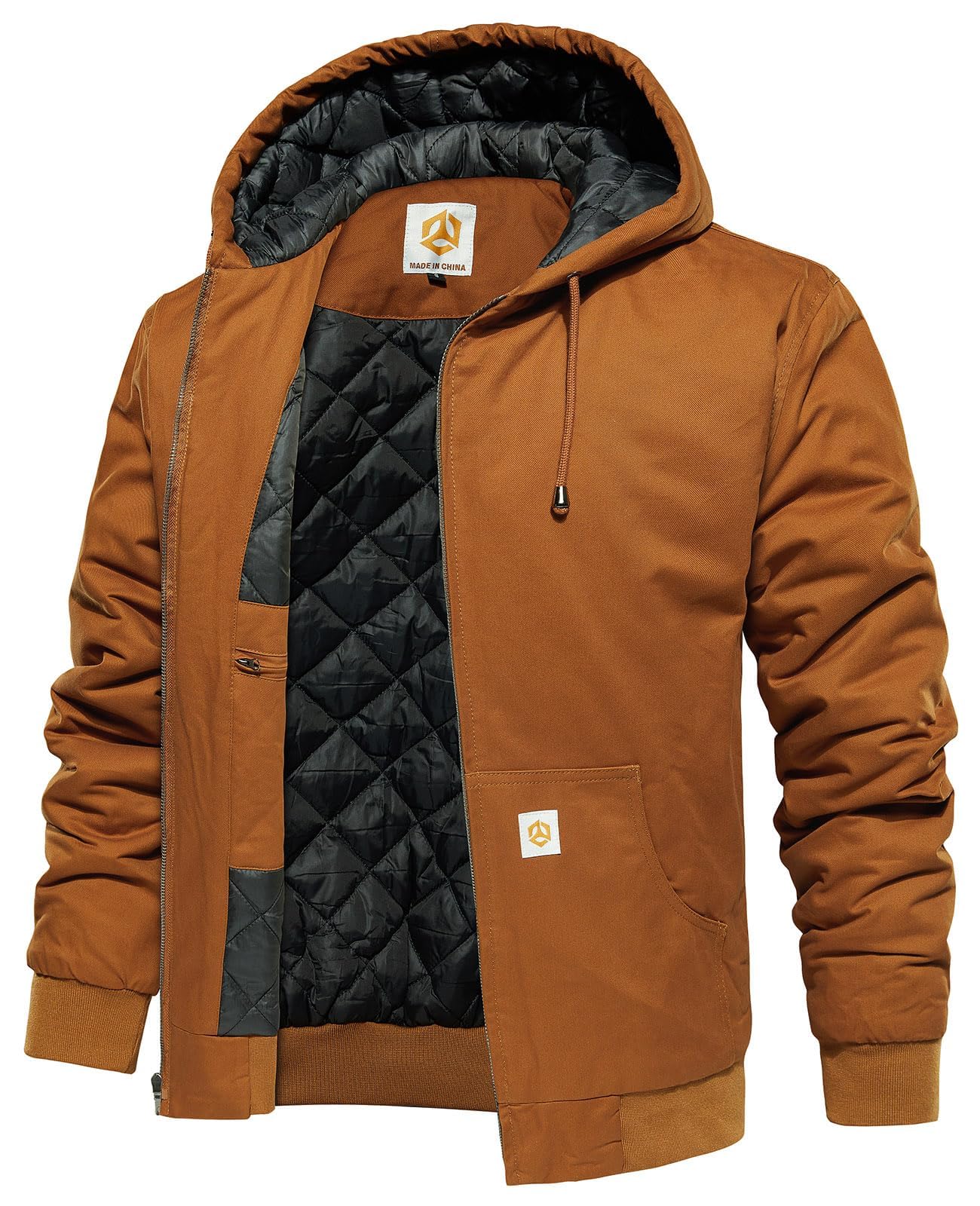
Warm cotton workwear at an entry price, with room for a hoodie underneath.
For the money, this is the simplest path to a warm, hooded work jacket. The quilted lining traps heat, the hood is designed for warmth, and the elastic hem and cuffs seal the drafts out at the wrists and waist. Two front pockets and two inner pockets give you somewhere to stash gloves and a phone, and the fit runs roomy enough that a hoodie slides in underneath without a fight. Buyers call it a good work jacket that provides warmth, with one noting it handles 40+ degree weather.
The durability commentary is where this jacket earns its keep — the satin-style lining is called out for not collecting debris, so sawdust and grit wipe off instead of sticking. Value for money lands well, and the fit is generally praised for its roominess. What is worth mapping out is size: several owners mention it runs very small, so treat the listed size as a starting point and think about sizing up. Zipper quality also draws several comments, which is the one component to handle with care.
Where the Carhartt Camden Cryder above delivers a stretch nylon shell and 3M insulation, this one delivers quilted cotton warmth for a fraction of the cost. That is a fair trade for a first work jacket or a backup coat you leave in the truck. It is not built for years of hard abuse the way Cordura or heavy duck is, but it will keep you warm on a mild winter site.
What it delivers
- Quilted lining with a warm hood, elastic cuffs, and hem to hold heat in.
- Room for a hoodie inside, plus two inner and two front pockets.
- Lining resists gathering debris, so it stays cleaner on dirty jobs.
What to plan around
- Sizing runs very small for several buyers — size up.
- Zipper quality draws repeated comment; treat it gently.
Great starting point if: you need warm, hooded workwear on a tight budget.
Size up if: you plan to layer — the small cut is the most common surprise here.
6. TBMPOY Hooded Work Cotton Coat
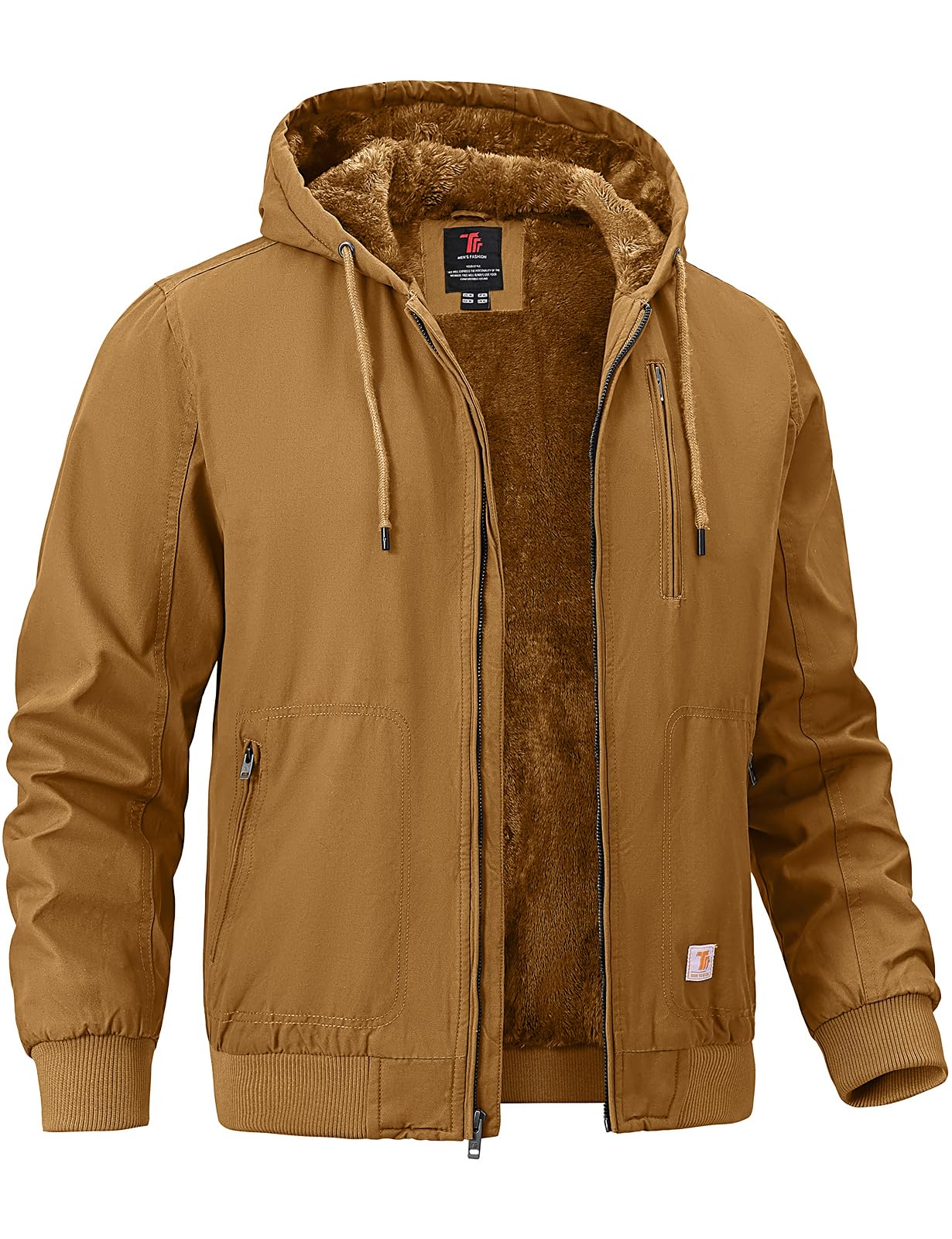
Duck-cotton warmth with a fleece lining, sized to layer if you plan ahead.
A fleece lining inside a duck-cotton shell is a proven cold-weather recipe, and that is exactly what this coat offers. Quality is the attribute buyers rate highest, with warmth following, so the two things you actually want from a winter work coat are the two things it does best. The fabric carries a flannel character that makes it comfortable enough to wear without a base layer fight.
Fit is the thing to sort out before you click. Feedback splits between people who find it perfect and people who note it runs small in the sleeves, so if your arms run long, go a size up. The maker’s own listing suggests ordering one size up for a looser fit, which is a useful hint. Value for money and durability feedback also split, so this is a jacket that will serve you well in normal use rather than being a lifer.
Against the CARWORNIC above, both are budget cotton work coats chasing the same buyer. This one leans on fleece and duck cotton; the CARWORNIC leans on a quilted lining and a warmer hood. Neither will outlast Cordura, but both keep the cold out on mild winter days without a big down payment on warmth. If the sleeves are your worry, size up here rather than guessing.
Where it shines: the fleece lining and duck-cotton shell give real warmth for the money, and quality is the standout in the feedback.
Sleeve length is the deciding factor: fit splits between perfect and snug in the sleeves, so follow the maker’s one-size-up advice if you are long-armed.
Worth grabbing if: you want fleece-lined duck warmth without spending much.
Go up a size if: your sleeves run long — that is where the fit notes cluster.
7. TINGLEY mens Bomber IiHigh Visibility Insulated Hooded Jacket

Bright, reflective, and built for rough, wet, dirty jobs where you need to be seen.
Warmth is the headline here, and it is the attribute buyers mention above everything else. A polyester quilted liner sits inside a fluorescent yellow-green and black shell, with silver reflective tape laid across it and an attached hood. It keeps you warm, works well with layers on cooler mornings, and shrugs off water enough to keep you dry. Owners describe it as suited to rough, dirty, and wet work environments, which is the exact job this bomber was designed for.
Value and water resistance come right after warmth in how owners talk about it, with visibility and durability close behind. The reflective tape is bright and easy to pick out in low light, and the bomber cut moves well without feeling like a bag. Comfort lands solidly positive, so a long shift does not end with you wanting it off.
Sizing is where this one asks you to pay attention. Fit and size both draw comment, and the size feedback leans negative, so measure rather than guess. Order close to your normal size and you will get the warm, visible, water-resistant bomber that keeps you dry and seen. Get the size wrong and you will be fighting the jacket instead of working in it. Across 800+ owners, warmth is the most repeated praise.
The warmth is the draw: a quilted liner and attached hood that handle cool mornings and layer comfortably.
Check the size chart first: size feedback leans negative, so an accurate measurement saves a return.
Built for: outdoor workers who need warmth, water resistance, and high visibility in one bomber.
Measure before ordering: sizing is the one place this jacket trips buyers up.
8. TCCFCCT Hi Vis Jacket Class 3

The waterproof, Class 3 visibility shell that covers the wet shifts other jackets avoid.
Of every jacket here, this is the one that is honestly waterproof. The shell is 300D coated PU Oxford fabric — a heavy, rubber-backed nylon that water runs off rather than soaks into — with a lightweight insulated lining for warmth. It meets ANSI Class 3 visibility, with two-inch reflective stripes wrapping the shoulders, waist, sleeves, and cuffs. For construction, surveying, or warehousing, that is a safety requirement met in a single layer.
Buyers praise quality most, with warmth right behind it. Water resistance and value for money follow, and owners note it handles mild cold on the job site well. The design is laid out for a working day: a detachable hood, an inner pocket, a vertical zipper pocket on the right chest, a transparent ID holder on the left chest, and dual microphone buckles on the shoulders for a walkie-talkie. Elastic ribbed cuffs with hook-and-loop straps (the hook side grips the loop side to tighten) seal out the wind.
The honest downside is durability. Feedback on how long the fabric lasts is split, with one buyer reporting a rip after two weeks of use, so this is not a coat you expect to abuse for years like Cordura. Sizing also runs a little big, so if you are between sizes, try down. Weigh those against 4.5+ stars and 400+ owners and this is a strong, affordable waterproof safety jacket that keeps you seen and dry — just not indestructible.
Why it earns a slot
- Genuinely waterproof 300D coated PU Oxford shell — the strongest water protection on the list.
- ANSI Class 3 visibility with two-inch reflective stripes across shoulders, waist, sleeves, and cuffs.
- Walkie-talkie mic buckles, ID holder, and multiple zip pockets built for job-site use.
Where it gives way
- Durability feedback splits, so it is not the years-long coat Cordura is.
- Sizing runs a little big — try down if you sit between sizes.
Pick this if: your shift involves rain, traffic, and a requirement to be seen.
Look elsewhere if: you need a coat that survives heavy abrasion for years — this one prioritizes waterproofing over long-term toughness.
Know the Specs
Insulation Weight in Grams
Insulation is measured in grams, and it tells you how much warmth is packed into the jacket. A fill rated at 80 grams, like the Carhartt Full Swing, suits active work where your own movement generates heat. A 150-gram fill, like the Yukon Extremes, is built for standing still in serious cold. More grams means more warmth and more bulk, so match the fill to how much you move on the job, not to the coldest day you can imagine.
Shell Material and Denier
The shell is the layer that takes the abuse, and the material plus its denier rating — the thickness of the yarn — tells you how tough it is. Cordura nylon at 500 denier, as on the Yukon Extremes, resists abrasion hard. Coated PU Oxford, as on the TCCFCCT, adds a waterproof backing for wet work. Stretch nylon, as on the Camden Cryder, prioritizes flexibility. Match the shell to your environment: wet work wants waterproofing, abrasive work wants high denier.
Water Resistance vs. Waterproof
These are not the same claim. Water-resistant means the fabric repels a light shower but will eventually wet through; water-repellent treatments like Rain Defender fall in this camp. Waterproof means the fabric blocks water entirely, usually through a coated or laminated layer, as on the TCCFCCT’s coated Oxford. If your job puts you in steady rain, waterproof is the safer spec. For drizzle and snow, water-resistant is enough.
High-Visibility and ANSI Class
ANSI Class 3 is the visibility standard for workers exposed to traffic or moving machinery — the highest class for a jacket. It is met by reflective striping and high-contrast fabric in neon yellow, orange, or lime. The TCCFCCT uses two-inch reflective stripes wrapping the shoulders, waist, sleeves, and cuffs to meet this. If your site or employer requires Class 3, a plain canvas coat will not satisfy it, no matter how warm it is.
Common Questions
What does ANSI Class 3 mean on a work jacket?
Is insulation measured in grams, and does more grams mean warmer?
What is the difference between water-resistant and waterproof here?
Which work insulated jacket is best for wet, rainy job sites?
Do these jackets run true to size, or should I size up for layering?
Can I wear these jackets for high-visibility road or traffic work?
How long do work insulated jackets typically last?
Is 80 gram insulation warm enough for winter work?
Which pick gives the most arm movement for overhead work?
Do I need a hood on a work jacket, and can I remove it?
The Bottom Line
For most buyers, the work insulated jacket worth owning is the Carhartt Camden Cryder, because it pairs a stretch nylon shell that moves with your arms with 3M insulation and holds the highest score on this page. If your problem is overhead movement, grab the Carhartt Full Swing — its bi-swing back and flex elbow are built for reaching and lifting. And if your shift is rainy, busy, and needs you seen, the waterproof TCCFCCT Hi Vis Jacket is the right call. Match the pick to your coldest, wettest shift rather than a mild one, and it will carry you through the season.
How we choose
We do not accept paid placement. Every pick is matched to a real buyer and a real use-case; we do not hands-on test units.
Sources
Specifications: manufacturer listings and product documentation. Review insights: verified customer reviews, as of November 2026. Pricing: not shown on this page (it changes often); check the current price via the retailer link.
As an Amazon Associate, Tactical Gear Guy earns from qualifying purchases. This does not affect which products we feature.