Specs are compiled from manufacturer listings and verified buyer reviews and can change over time — please confirm the key details on the product page before buying.
Steel-toe boots shield your feet from falling objects, but the stock footbed inside does almost nothing for the ten hours you spend standing on concrete. That flat foam slab is why your heels throb by mid-afternoon and why your lower back aches when you get home. A proper work insole replaces that slab with real cushioning and arch support, and the picks below are the ones worth putting inside your boots.
This guide is built by comparing the manufacturers’ published specifications and the patterns across verified customer reviews, so you get each pick’s real strengths and trade-offs instead of marketing spin.
You will see the thickest options, the thinnest ones that still keep their shape, and which fits wide boots without trimming. The crowd favorite here is the ARIAT Energy Max, holding 4.5+ stars across 950+ owner ratings — here is how every pair on this list actually holds up inside a boot.
Top Picks
How To Choose The Best Work Insoles for Boots
Fit comes before everything else. An insole with brilliant cushioning is useless if it pushes your heel up so high that your boot stops lacing tight. Boots have less vertical room than sneakers, so thickness is the first number to check.
Thickness versus room inside the boot
A thick insole eats toe room. If your boots already felt snug across the top of your foot, look for a slim model instead. Thick builds suit roomy work boots, but they squeeze narrow ones.
Arch height and heel cup depth
A deep heel cup (the raised bowl that cradles your heel) keeps your foot from sliding around inside the boot. A firm arch supports the middle of your foot through a long shift. High-arch designs feel odd for the first few days, then settle in.
How to trim and size correctly
Most of these insoles arrive as trim-to-fit, meaning you cut along a printed line to match your boot’s liner. Pull the stock liner out, set it over the new insole, and cut slightly wide rather than slightly short. If you sit between two sizes, size up and trim down.
Side-by-Side Comparison
| Model | Best For | Arch Support | Fit Style | Weight | Amazon |
|---|---|---|---|---|---|
| ARIAT Energy Max Work Insole★ Best Overall | Everyday work boot comfort | Anatomical contouring | Round toe, size 10.5 M | 6.38 oz | Amazon |
| BestHalo Heavy Duty Plantar Fasciitis InsolesBest for Heavy Workers | Heavy workers over 220 lbs | High arch | Trim-to-fit | 9.14 oz | Amazon |
| ROCKROOSTER Anti-Fatigue Work Boot InsolesBest for Wide Feet | Wide feet in wide boots | High arch stability | True-to-size, no trimming | 8.15 oz | Amazon |
| Dr. Scholl’s Heavy Duty Support Insole | Big and tall workers over 200 lbs | Fits any arch type | Trim-to-fit | 14.4 oz | Amazon |
| EASYFEET Orthotic Work Insoles | Slim fit under safety boots | Medium, firm | Trim-to-fit | 3.28 oz | Amazon |
| Timberland PRO Insite AFT Footbed | Replacing a worn boot footbed | Dynamic arch support | Drop-in replacement | — | Amazon |
| Welnove Work Boot Insoles | Flat feet needing strong arch | Strong, high | Trim-to-fit | 8.82 oz | Amazon |
| KEEN Utility K30 High Arch | High arches needing underfoot lift | Contoured, high | Sized S to X-Large | — | Amazon |
| Superfeet Work Cushion Insoles | Odor control on all-day concrete | All arch heights | Trim-to-fit, size up and cut | 7.41 oz | Amazon |
Detailed Reviews
1. ARIAT Men’s Energy Max Work Insole Round Toe
Our pick — 4.5+★ from 950+ verified ratings; the strongest balance of quality and price.
The slipper-soft layer that gives a little back with every step.
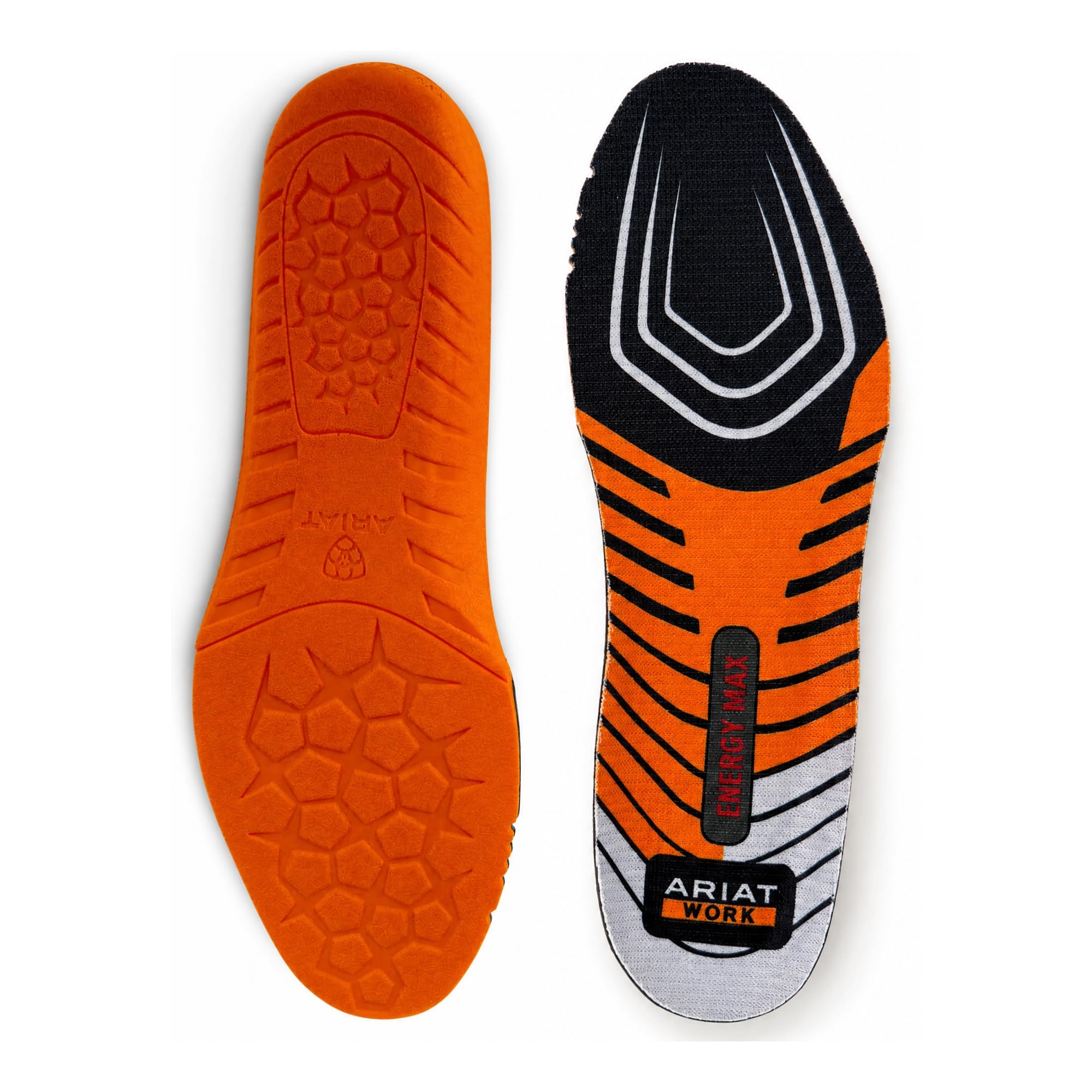
The job this insole does is spring back. Ariat builds an Energy Max layer that compresses under each step and pushes back into your stride, which is what separates it from the flat foam that comes inside most work boots. The footbed is shaped to the natural contours of the foot, so your weight spreads evenly instead of pooling in the heel.
A durable top layer pulls sweat away from your sock, and a temperature-regulating open-cell core vents heat inside the boot. On a warm shop floor, that is the difference between a footbed that stays comfortable and one that turns into a swamp by lunch.
What wins people over is the overall build quality and the comfort. The catch is cushioning: some find the padding thin for a rough concrete shift, and durability feedback splits between boots that last a year and boots that flatten early. It is a slim build (0.6 inches at the heel, 6.38 ounces), which is the point — it fits a round-toe boot without crowding your toes.
Where It Earns Its Place
- Energy Max layer rebounds with each step instead of deadening underfoot
- Anatomical contouring spreads weight across the whole footbed
- Moisture-wicking liner keeps socks drier through a long shift
- Open-cell foam vents heat so the footbed stays cool on warm floors
Where It Comes Up Short
- Padding reads thin for some heavy-footed wearers
- Durability feedback is mixed — some pairs flatten before a year
Made for: round-toe work boots where you want a light, breathing footbed that returns a bit of energy each step.
Look elsewhere if: you want a deep pillow of padding under a heavy frame.
2. BestHalo Heavy Duty Plantar Fasciitis Insoles
Built for the 220-plus crowd, with a structured arch that holds its shape.
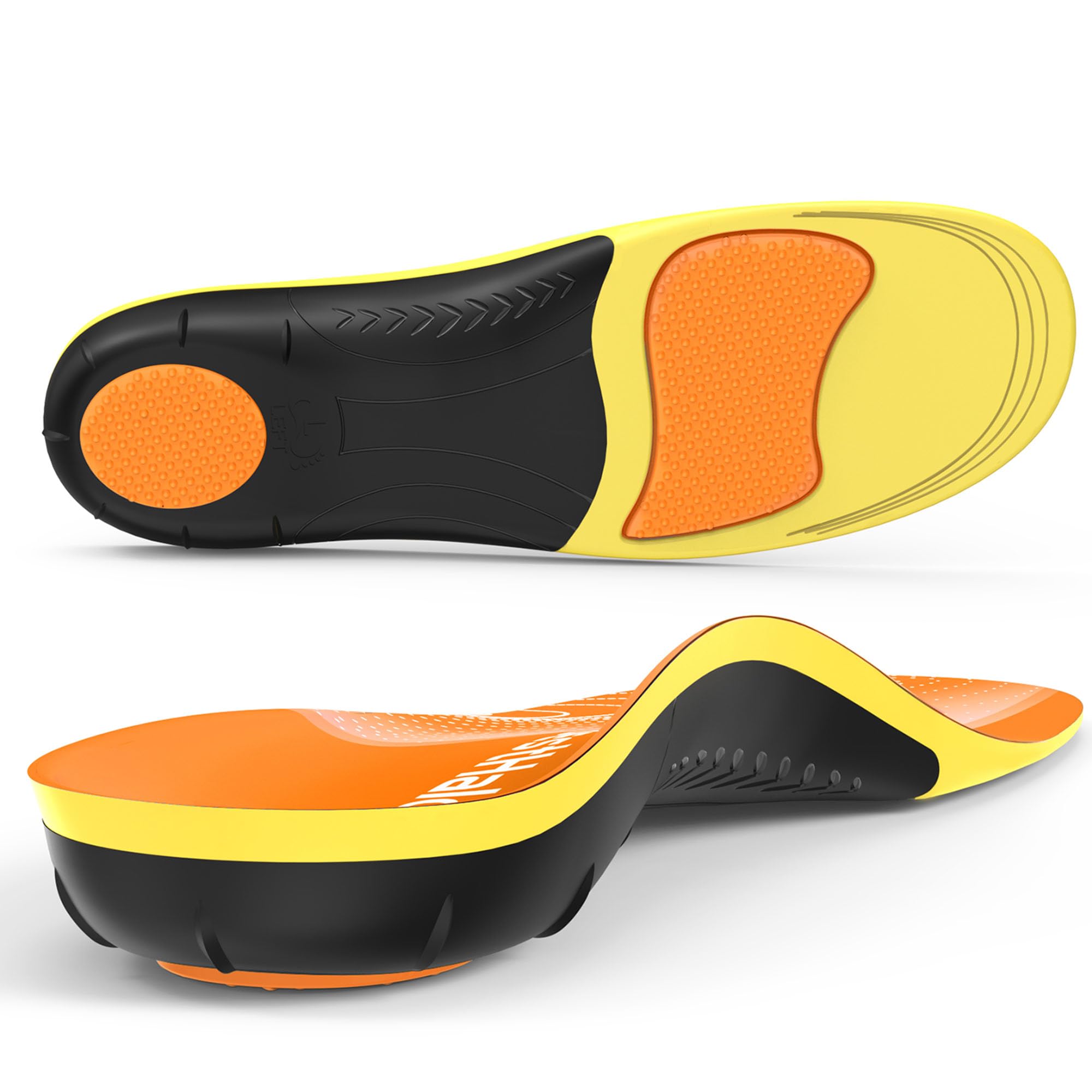
This one is for the worker who weighs over 220 lbs and feels every hard floor in the heel. The high arch support is engineered for high arches and works on alignment, smoothing the way your foot and leg line up. A deep heel cup stabilizes the heel and controls overpronation (the inward roll that throws your stride off).
Premium EVA foam and gel cushioning absorb the shock of a hard floor. The trim-to-fit design means you can shape it to nearly any boot, including work boots and athletic shoes. Reviewers consistently name pain relief and arch support as this footbed’s two strengths.
Give it time. The 2–3 hour daily ramp schedule isn’t marketing — it’s because the arch is firm enough to feel strange on day one. Wear it an hour at a time and build up. The package weight of 9.14 ounces tells you there’s a real structure here, unlike the thin slip-ins.
The real strength here: the combination of high arch and deep heel cup gives a heavy worker a stable platform, and the gel layer takes the sting out of a walk across a concrete shop floor.
Worth knowing: the firm arch takes a week to feel normal, so don’t judge it on the first day.
Strongest match: heavier workers or anyone whose heel takes the brunt of a long shift.
Think twice if: you want instant pillow-soft comfort with no break-in period.
3. ROCKROOSTER Anti-Fatigue Work Boot Insoles
The one that goes in wide boots without a trip to the scissors.
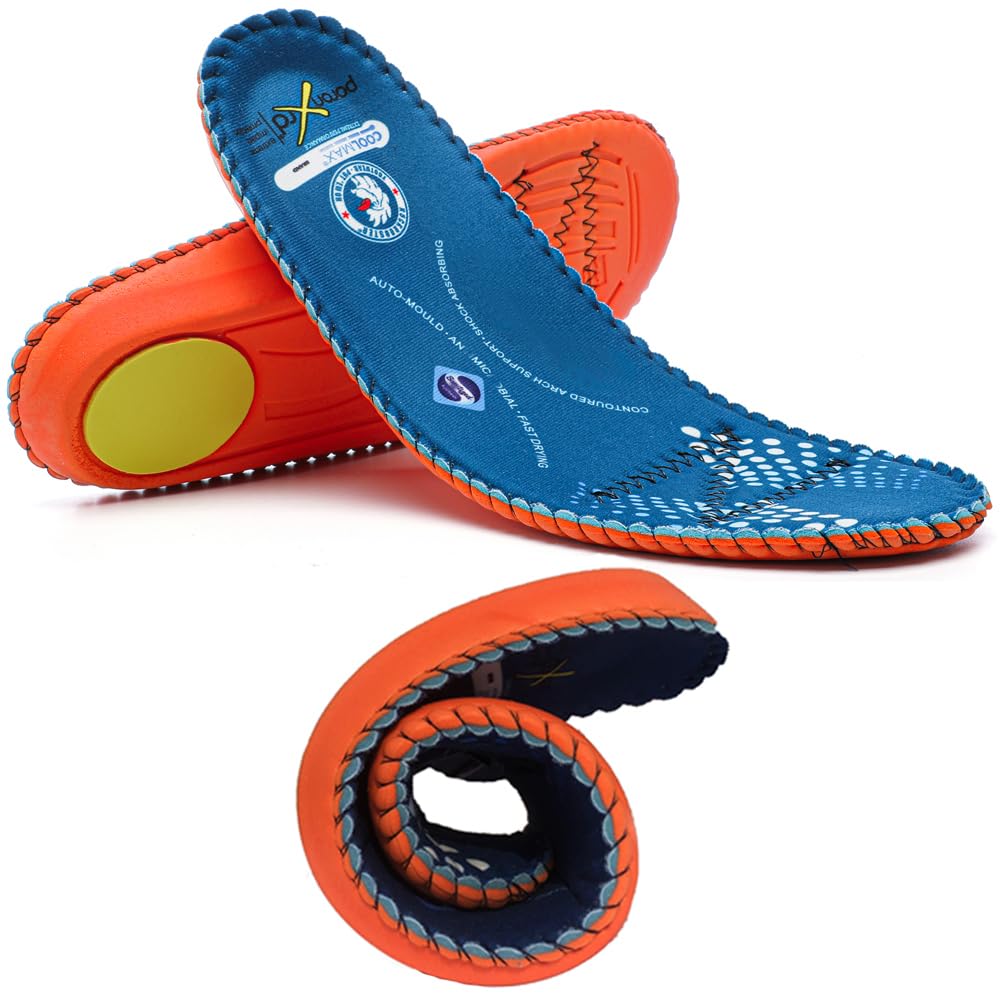
Wide-width boots are a pain to fit with insoles — the stock shape almost never matches. ROCKROOSTER builds this one flexible enough to sit comfortably in wide-width boots and work shoes, with thick perimeter stitching that keeps the edges from fraying. It is true-to-size, so there is no trimming at all: pull out the old liner, drop this in, done.
The stacked PU and memory foam layers deliver cushioning from the first step. A reinforced heel section absorbs impact on the joints and arches of a long day on concrete. COOLMAX top fabric moves sweat and heat away from the foot, which matters more in a sealed boot than in a sneaker.
Owners call the feel slipper-soft and credit it with easing pressure on the foot, knee, and back over long workdays. It is a modest seller compared to the giants on this list, so the body of feedback is smaller — but the people who bought it for work boots tend to be happy with it.
What makes it different: a true-to-size cut that fits wide boots without trimming, plus a COOLMAX top that manages heat and sweat inside a sealed boot.
Fit note: because there is no cutting, double-check the size chart against your boot before ordering — the sizing has to be right from the start.
Brings it home for: wide-footed workers who are tired of cutting insoles down to size.
Keep looking if: your boots are an odd width and you need adjustable shaping.
4. Dr. Scholl’s Heavy Duty Support Insole Orthotics
The heavyweight build sized for the big-and-tall work boot.
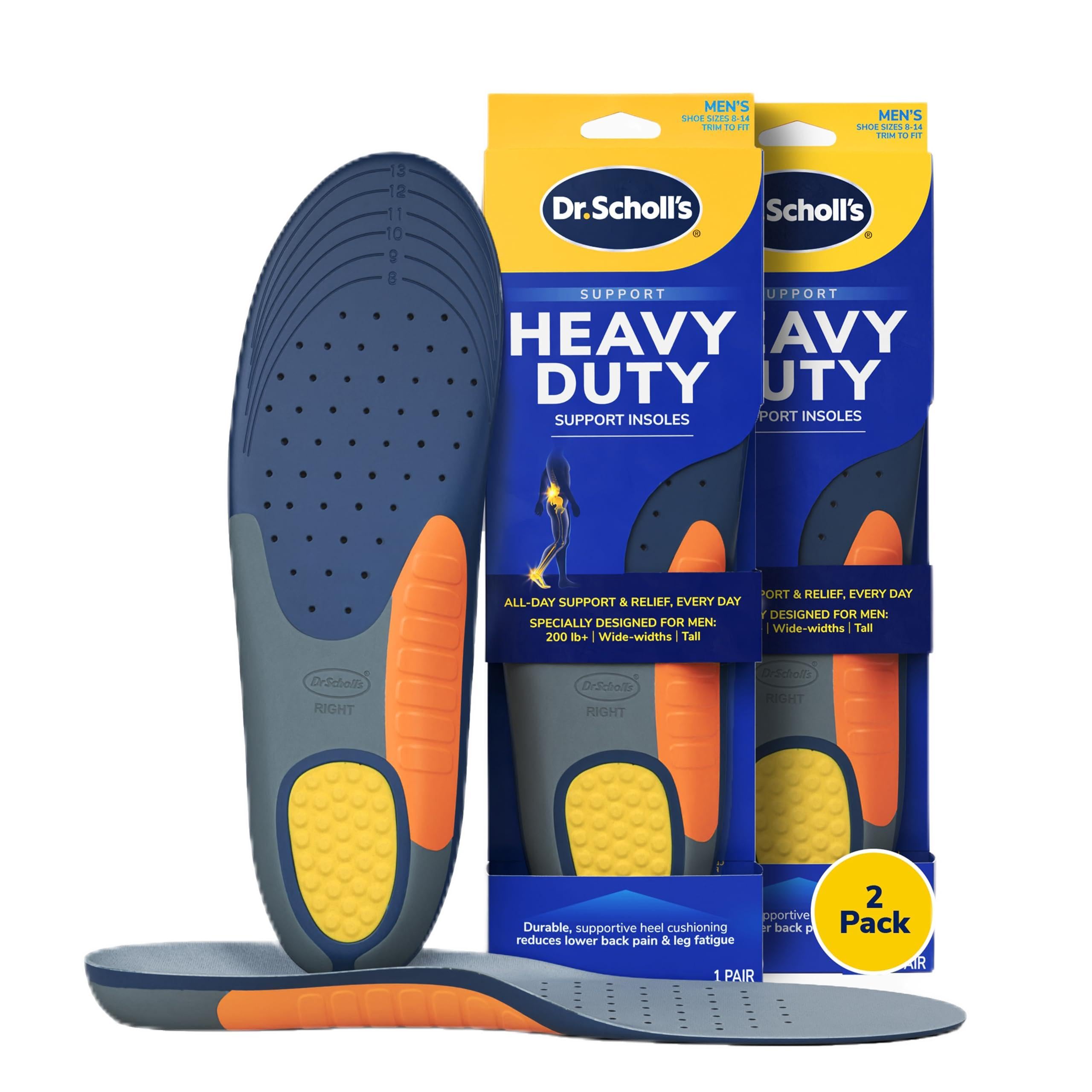
Dr. Scholl’s aims this one squarely at men over 200 lbs, tall frames, or wide feet — the exact group stock footbeds fail. It fits any arch type, high or fallen, and carries a supportive heel cushioning that targets the lower back and leg fatigue you feel after a shift. Shock-absorbing foam takes the impact out of each step.
The scale here is the most dramatic on this list. At 14.4 ounces and 14.17 inches long with a 2.72-inch heel height, this is a substantial insole built to carry the load — compare that to the EASYFEET at 3.28 ounces. Heavier and long means more material to absorb shock, and it means you have more insole to trim to your boot.
Because it’s trim-to-fit, you have a real say in how it seats. The size philosophy matters: if your sneakers run snug, trim it wide and settle it in; if your work boots are tall and roomy, you can leave more material. Reviewers of this 14.4-ounce build consistently report less pain and fresher feet after a long shift.
The Heavy-Duty Case
- Built for men over 200 lbs and tall frames
- Supports any arch type, from high to fallen
- Thick heel cushioning aimed at lower back and leg fatigue
- Trim-to-fit design lets you seat it in work boots or casual shoes
The Honest Trade-offs
- At 14.4 ounces it is the heaviest build here
- You will need to trim it to fit — no drop-in sizing
Go here when: you’re a big or tall worker who needs a heavy, shock-absorbing platform under a work boot.
Pass if: you want the lightest possible insert and will not bother trimming.
5. EASYFEET Orthotic Work Insoles

A thin footbed that slots under a snug safety boot without crowding your toes.
Most orthotics are too bulky for safety boots that already fit — you put one in and suddenly your heel is riding the back of the boot. EASYFEET made this one slim on purpose so it fits without squeezing your toes or lifting the heel. At 3.28 ounces, it’s the lightest insole on this list by a wide margin.
The medium, firm arch supports the middle of your foot through long shifts and pairs with a deep heel cup that keeps the heel steady. Shock-absorbing heel and metatarsal pads (the cushioning under the ball of the foot) soften the spots that hit the floor hardest. A breathable top layer moves air and moisture away from the foot so socks are drier at the end of a shift.
The maker rates it for up to 12 months of shape retention, so it outlasts insoles you swap every few months. It’s trim-to-fit, so use your old boot liner as a guide. What earns the trust on the review pages is the overall quality and fit: it comes out clean and keeps working after repeated heavy shifts.
The slim-fit argument: when a thick insole makes a safety boot unwearable, a 3.28-ounce build with a medium-firm arch gives you support without taking away toe room.
The honest catch: the firmness that makes it durable also means the cushioning is not plush — you’re trading pillow-soft for structure.
The smart pick for: snug safety boots and anyone who wants support without adding bulk or weight.
skip it if: you’re after a thick, cushioned pillow feel.
6. Timberland PRO Unisex Insite Technology AFT Footbed
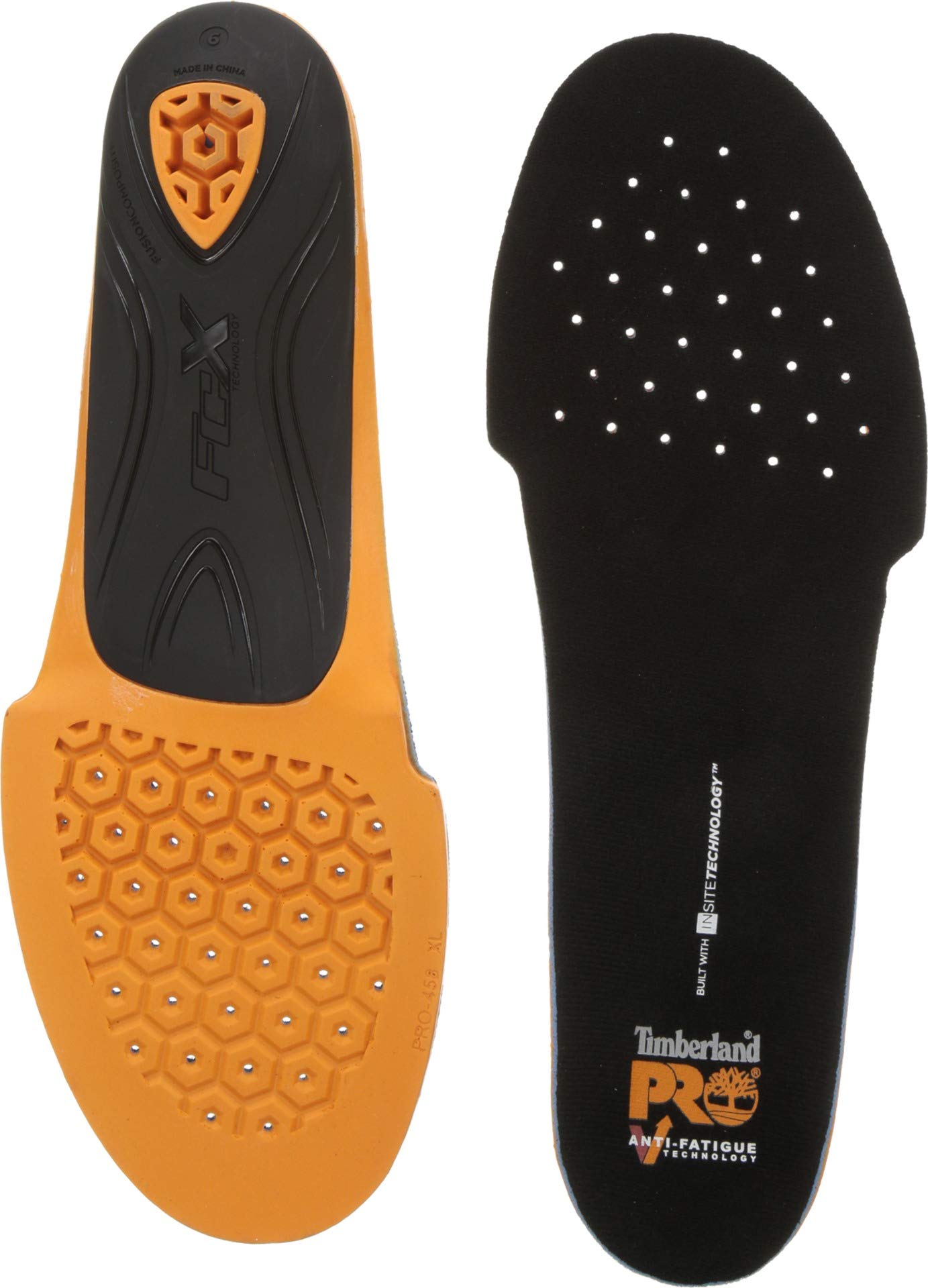
The original-equipment footbed that gives a worn boot a second life.
If you bought a Timberland PRO boot and wore the footbed flat, the replacement is obvious: you already trusted the build once. This one reworks the design with an inverted cone shape underfoot — the geometry absorbs shock and returns energy as you walk. Insite technology adds arch support aimed at easing fatigue through the workday.
Unisex sizing means one SKU covers more boot owners, and the moisture-wicking build keeps your feet dry in a sealed boot. Dynamic arch support is the reason people keep buying it for standing on concrete all day — that is the scenario this footbed was designed around.
The honest split here: arch support and fit are winners, but comfort and value come in for mixed feedback. Some owners love the support and find it worth it; some report a seam or edge that bites the top of the foot and conclude it isn’t worth the cost for them. That makes boot compatibility the thing to check before ordering.
What it solves: a worn-out original footbed gets replaced with one that returns energy and holds its arch through a shift, at a fraction of a fresh pair of boots.
The point of caution: a few wearers found the top edge rubbing the instep, so check how it seats against your boot’s interior before committing.
Best served: current Timberland PRO boot owners or anyone replacing a flattened factory footbed.
Not the best fit if: your boots have an unusually tight instep and you’re prone to rubbing.
7. Welnove Work Boot Insoles Plantar Fasciitis
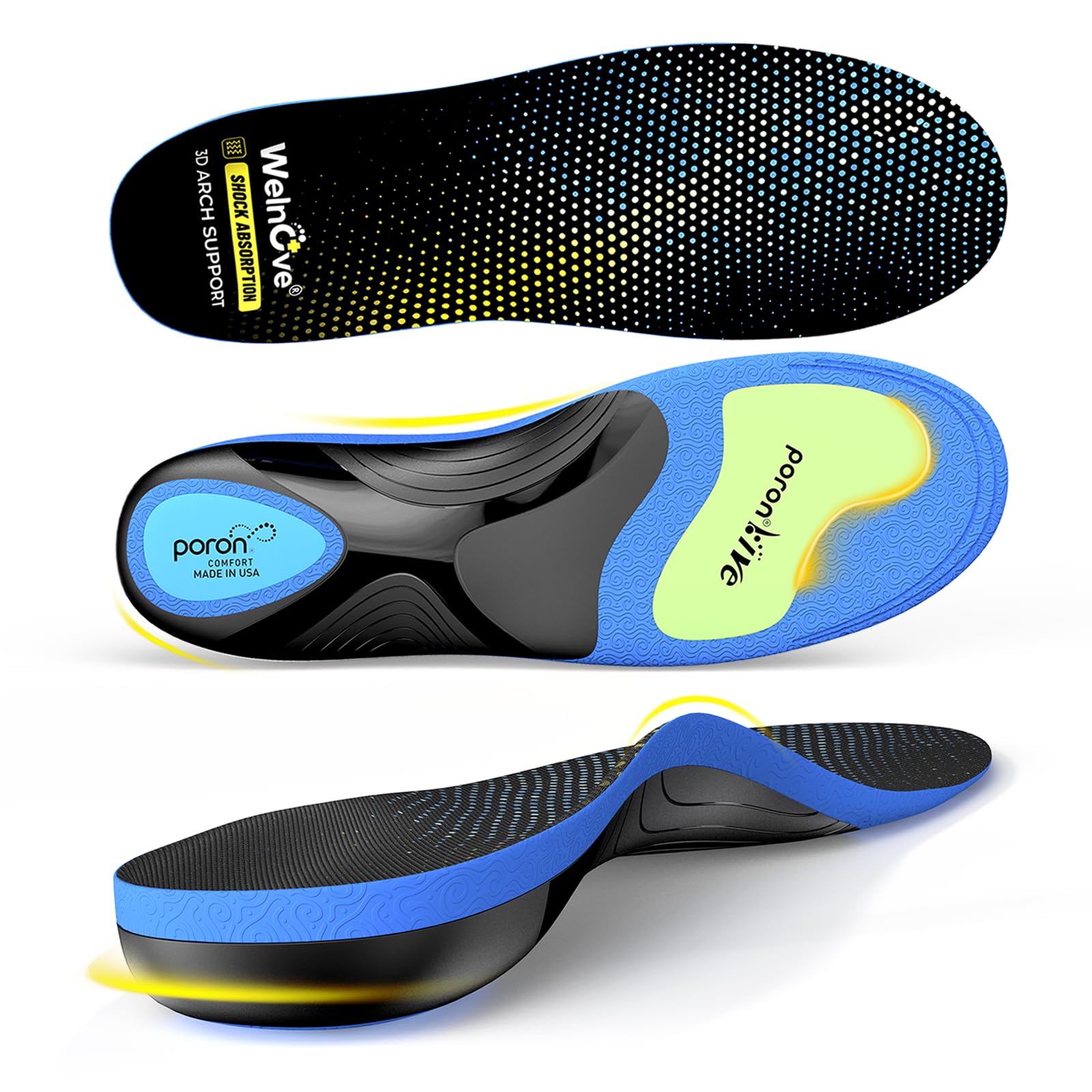
A strong, high arch for flat feet that need real underfoot shaping.
Flat feet and a concrete floor are a hard combination. Welnove answers with a strong, high arch support that distributes weight and takes pressure off the heel and the low back. Memory foam settles to the shape of your foot over time, and the soft material absorbs some of the shock of each step. It’s built for people who stand for long stretches — flat feet, plantar fasciitis, hollow feet.
Sizing runs across multiple lengths and the trim-to-fit design means it can go into work boots, sneakers, loafers, or hiking shoes. The first 2–5 days can feel like mild pressure as your arch adjusts; start with 3–5 hours and increase from there. That break-in caveat shows up on the product page for a reason.
Owners consistently rank comfort and support first, describing walking without their previous discomfort. The recurring gripe is not the arch but the length — some find the insole doesn’t reach the front of the shoe, which changes where your toes land inside the boot.
Why it’s here: a genuinely strong high arch at a fair price helps flat-footed workers who need to change how their weight lands.
What to know: check the length against your boot liner, because the front edge can fall a little short on some fits.
Make it yours: flat-footed workers or anyone whose arches need a firm, high lift through a long shift.
Look at the size before buying: if you’re between lengths, go up and trim so the front doesn’t sit short.
8. KEEN Utility K30 High Arch
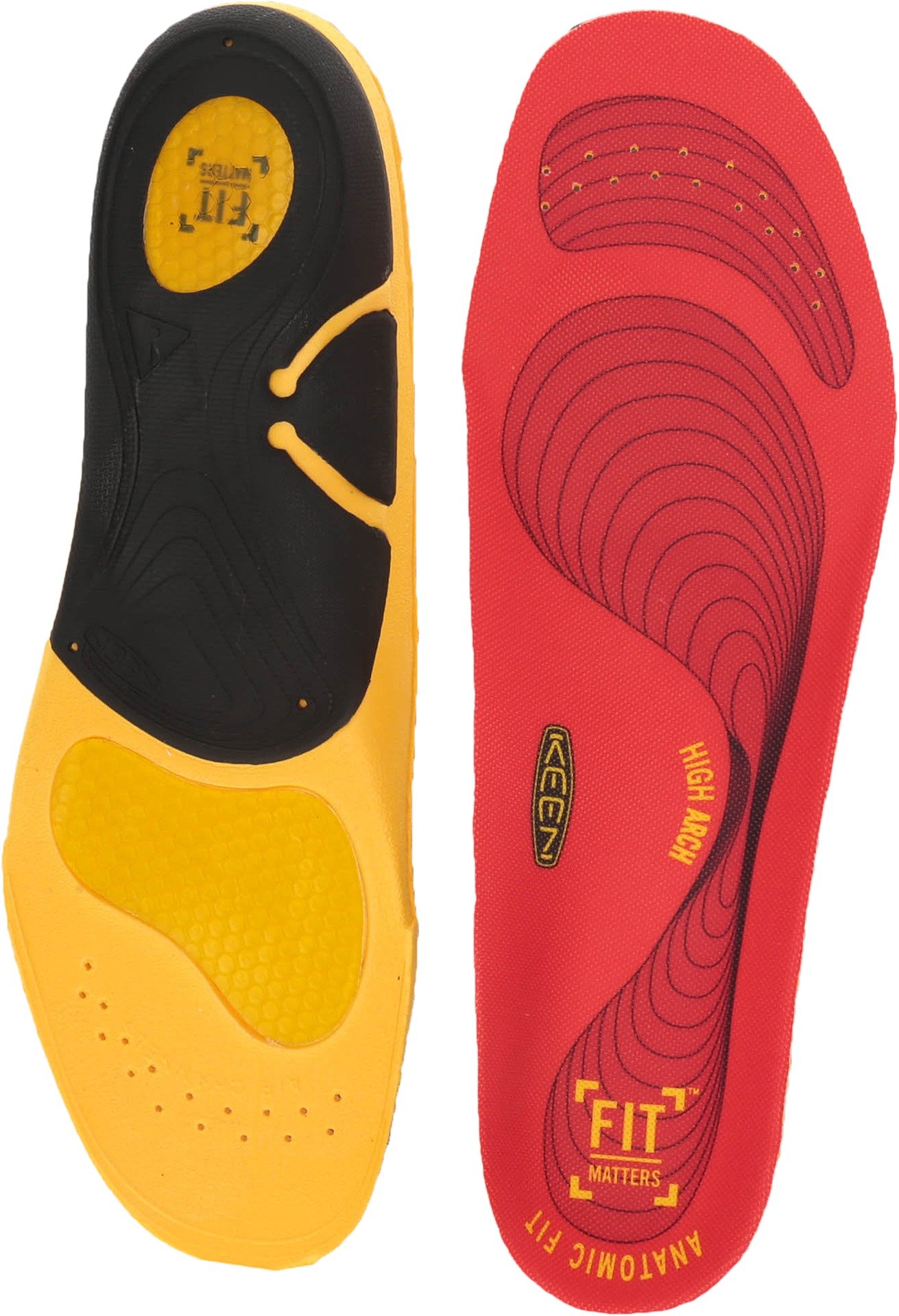
A contoured, high-arch insert that lifts underfoot support for tall footbeds.
For high arches, a generic insole can feel like it’s barely touching the middle of your foot. KEEN’s K30 is contoured specifically for high arches and extra underfoot support — it distributes pressure, absorbs shock, and improves stability. That last point matters for a worker carrying weight on uneven surfaces.
Sizing runs by men’s boot size: Small fits 6.5–8, Medium 8.5–10, Large 10.5–12, and X-Large 12.5–14. Get the size right and a KEEN boot or a comparable work boot has a footbed that seats properly without trimming. Contoured and high-arch builds tend to hold their shape across repeated shifts.
What people value here is arch and metatarsal support together — the two zones that fatigue first on a hard floor. One buyer with prior plantar fasciitis said the K30 eliminated it, and long-term KEEN boot owners trust the fit. The honest question is value: some feel the price is fair, others don’t. That’s a placement decision, not a quality knock.
Reasons to Pick the K30
- Contoured specifically for high arches and underfoot lift
- Supports both the arch and the metatarsal area
- Distributes pressure and improves stability through a shift
- Four men’s sizes cover 6.5 through 14
What to Weigh
- Value is a mixed read — some find the price steep for an insole
Best paired with: high arches and work boots that need a contoured, stable footbed.
Worth a second look if: you prefer a softer, more cushioned ride over a firm, supportive one.
9. Superfeet Work Cushion Insoles
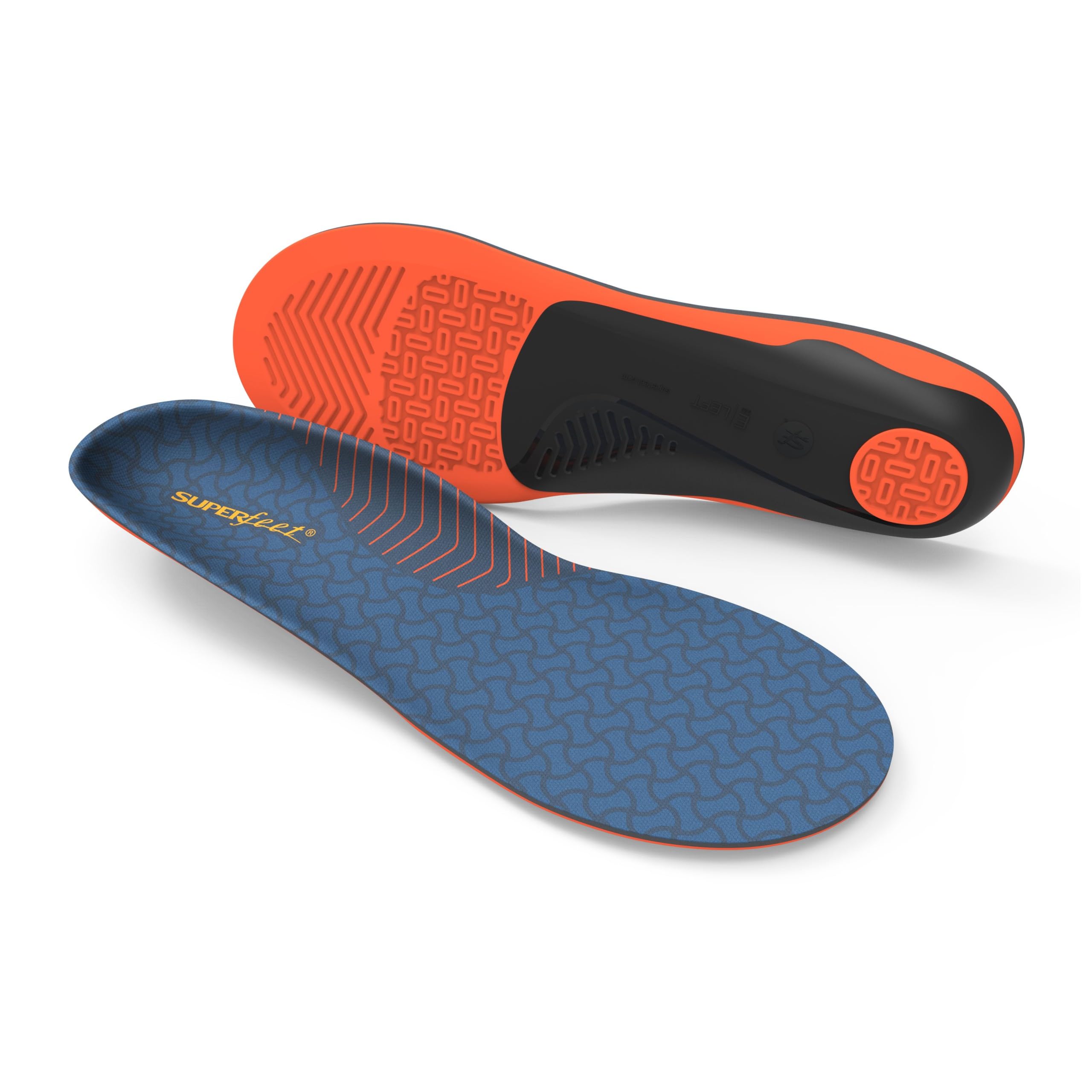
The boot insole that tackles the smell as well as the ache.
Superfeet brings something the rest of the list doesn’t emphasize: odor control. A Moisturewick top cover pulls moisture away and helps reduce the smell that builds up in a sealed work boot over a full week. Premium anti-fatigue cushioning supports long hours on your feet, and the structure is lightly built for both women and men across all arch heights.
Trim-to-fit is how it lands in your boot — follow the cutting instructions, and if you’re between sizes, size up and trim down. The maker rates it for up to 12 months of shape retention. At 7.41 ounces, it sits between the slim slip-ins and the heavy orthotics on this list.
Where it shines is concrete. Owners say it handles all-day concrete floors better than any insole they’ve tried. The honest split is comfort and fit: some feet feel great and fit perfectly right away, while others find it too tight or report some discomfort until it adjusts. Check the trim before you cut.
The distinguishing feature: the Moisturewick cover is the reason to pick this one — a dryer, fresher boot through a full week of shifts.
Fit caution: sizing runs firm, so start with a careful trim and test the toe room before you commit to the cut.
Best for: workers who care about odor and moisture as much as cushioning under a long shift.
Reconsider if: your boots are already tight and you need a slimmer build.
Know the Specs
Arch Support and Heel Cup
Arch support is the raised section in the middle of the insole that holds up your foot’s natural curve. A firm arch takes the load off the soft tissue and spreads it evenly. A deep heel cup is the bowl around the heel that stops the foot from sliding side to side inside a boot. Together they are the two biggest reasons a work insole reduces fatigue versus the flat foam footbed that ships with the boots.
Thickness, Weight, and Boot Room
Heavier, thicker builds like the Dr. Scholl’s at 14.4 ounces absorb more shock but take up more room inside the boot. Slimmer builds like the EASYFEET at 3.28 ounces fit under tight safety boots without lifting your heel off the back. Match the build to the boot you have, not the other way around.
Trim-to-Fit Sizing
Trim-to-fit means you cut the insole to follow the outline of your boot’s old liner. Pull out the stock footbed, trace it, and cut slightly wide — you can always take off more, but you can’t add it back. If you’re between two sizes, size up and cut down.
Moisture and Heat Management
A boot is a sealed space, and a sealed space traps sweat and heat. Moisture-wicking liners, COOLMAX top fabric, and open-cell foam all help move that moisture away from the foot and vent heat. On a warm floor, that is the difference between a fresh footbed and a swamp.
Common Questions
Will these insoles fit inside steel-toe work boots?
How do I trim a trim-to-fit insole correctly?
How long does a work insole last?
Are high arch insoles better for work boots than flat ones?
How many hours a day should I wear new orthotic insoles?
Do work insoles for boots help with plantar fasciitis discomfort?
Can I use these insoles in sneakers or casual shoes?
What is the difference between a work insole and an orthotic?
Will a heavy-duty insole add weight to my boots?
How do I stop my feet from smelling inside work boots?
The Bottom Line
For most workers, the best work insoles for boots is the ARIAT Energy Max — it returns energy with each step, breathes through the shift, and slides into a round-toe boot without crowding your toes. If you carry a heavier frame or want firmer arch correction, grab the Dr. Scholl’s Heavy Duty or the BestHalo. And for snug safety boots where bulk is the enemy, the slim EASYFEET is the one to reach for.
How we choose
We do not accept paid placement. Every pick is matched to a real buyer and a real use-case; we do not hands-on test units.
Sources
Specifications: manufacturer listings and product documentation. Review insights: verified customer reviews, as of November 2026. Pricing: not shown on this page (it changes often); check the current price via the retailer link.
As an Amazon Associate, Tactical Gear Guy earns from qualifying purchases. This does not affect which products we feature.