Specs are compiled from manufacturer listings and verified buyer reviews and can change over time — please confirm the key details on the product page before buying.
If you want the short answer: the PROHEAR 033 is the one to buy for most work sites. It pairs a real FM/AM tuner with 31 dB of noise reduction — the SNR rating (a measure of how much noise the muffs cut) — and it keeps that radio playing for 58 hours per charge in Bluetooth mode. That combination is why it tops this list. The other picks solve narrower problems: a 1.8-inch backlit display, a 4GB memory card for music, or a removable BL-5B battery you can swap mid-shift.
This guide is built by comparing the manufacturers’ published specifications and the patterns across verified customer reviews, so you get each pick’s real strengths and trade-offs instead of marketing spin.
A radio headset earns its keep around loud machines: it cuts the noise while the tuner keeps you company through a long shift. Here is what to know before you buy the best work headphones with FM radio.
Top Picks

How To Choose The Best Work Headphones with FM Radio
Almost every radio earmuff blocks some sound; the differences that matter are how much noise it cuts, how well it pulls in a station, and whether the battery lasts a full shift. The differences that matter come down to three things: how much noise the muff actually cuts, how well it pulls in a radio station, and whether the battery survives a full shift.
Start with the noise-reduction number
Look for a rating like SNR 31 dB or NRR 30 dB. These numbers tell you how much sound the earmuffs are designed to reduce. As a rough illustration from the maker’s own literature on one model: if the noise around you measures 80 dB, ears under that muff are described as hearing roughly 55 dB. Higher is better for loud machines like mowers and saws.
Then check how the radio is tuned
Some muffs use a digital tuner with an LCD screen, and you save stations with a button. Others use a backlit color display that stays readable in direct sun. The number of saved stations ranges from 10 per band up to 50 per band, so think about how many channels you actually flip between.
Decide how you want to power it
Built-in lithium batteries charge by USB-C and run for days. Removable batteries let you swap in a fresh cell. AA-powered models mean you carry spares instead of a cable. None of these is wrong — pick based on whether you have a charger at the truck or a pack of AA batteries in the toolbox.
Side-by-Side Comparison
| Model | Best For | Noise Reduction | Power / Runtime | Radio Features | Amazon |
|---|---|---|---|---|---|
| PROHEAR 033 AM FM Bluetooth★ Best Overall | All-day comfort on noisy job sites | 31 dB SNR | 1500 mAh, 58 hrs Bluetooth | 10 AM + 10 FM presets, Bluetooth 5.4 | Amazon |
| Kalence AM/FM Radio Ear ProtectionBest Display | Seeing the dial in bright sun | 30 dB SNR | 2000 mAh, up to 120 hrs | 50 AM + 50 FM presets, backlit color display | Amazon |
| PROHEAR AM FM Digital 25dBBudget Entry | Budget entry to radio earmuffs | NRR 25 dB | 2 × AA batteries | 10 AM + 10 FM presets, LCD, AUX | Amazon |
| Safety Works 10121816 Digital Radio Ear Muffs | A built-in digital clock on the job | 24 dB NRR | — | Digital AM/FM search and save | Amazon |
| ZOHAN AM/FM Radio Headphone | Gel ear cushions for long wear | — | — | AM/FM radio, digital display | Amazon |
| 3M WorkTunes Connect + AM/FM | Taking calls while sawing | 26 dB NRR | 1 × AAA battery (included) | Bluetooth + AM/FM | Amazon |
| Gardtech Hearing Protection with Bluetooth | Music from a memory card | NRR 30 dB | Removable BL-5B, Type-C | One-touch FM auto scan, 4GB card, Bluetooth 5.3 | Amazon |
| Howard Leight by Honeywell Sync | Pulling in weak AM/FM stations | NRR 25 dB | 2 × AA batteries (included) | Digital AM/FM, 10 presets, LCD | Amazon |
Detailed Reviews
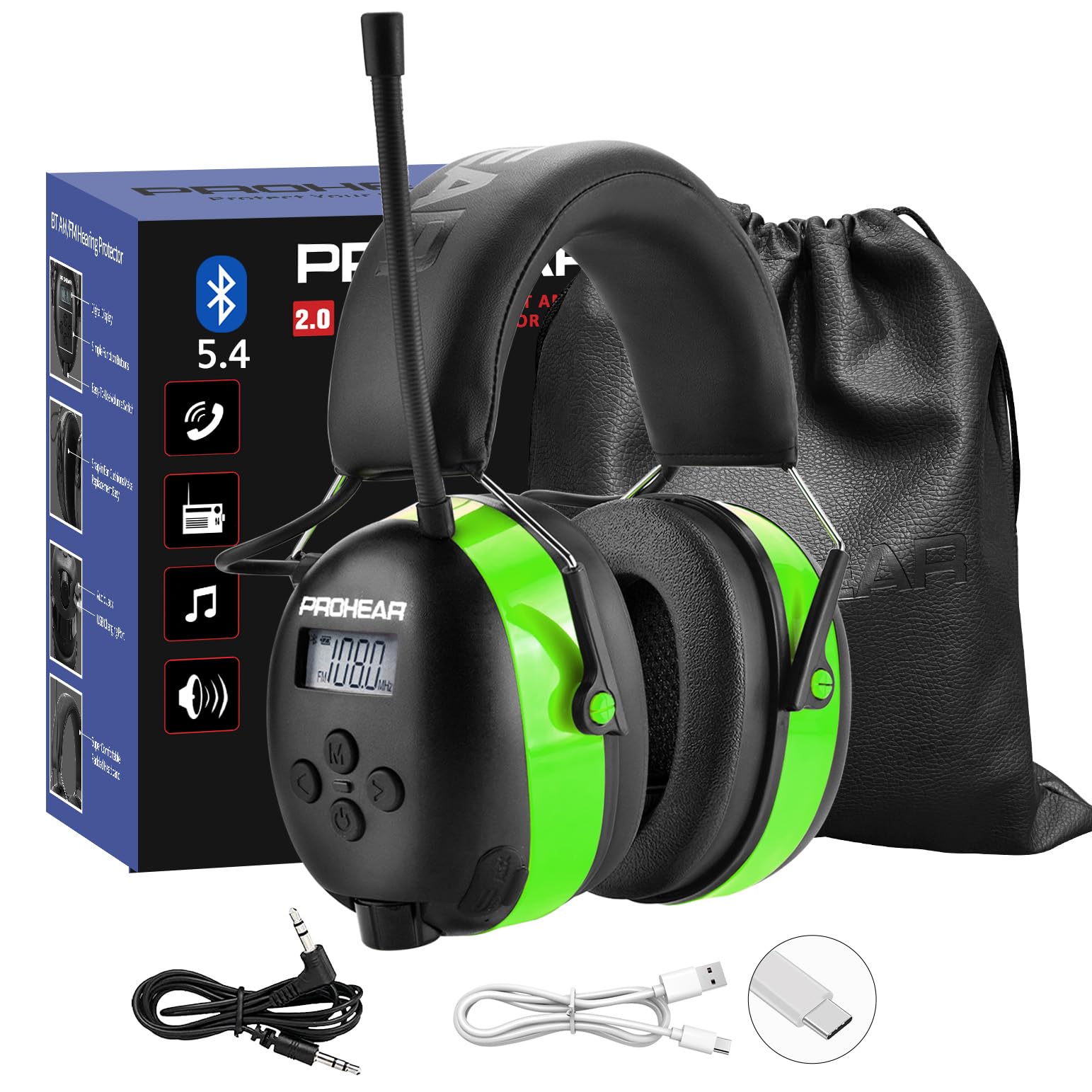
1. PROHEAR 033 AM FM Bluetooth 5.4 Radio Headphones
Our pick — 4.5+★ from 250+ verified ratings; the strongest balance of quality and price.
A radio muff people forget they are wearing, because the comfort gets mentioned more than any other trait.
Here is why the PROHEAR 033 leads: it hits 31 dB of SNR noise reduction, which is the highest rating on this list. It runs on a 1500 mAh rechargeable battery that the maker rates for 58 hours of playtime in Bluetooth mode, and it gives you 10 saved AM stations and 10 saved FM stations to flip between. Cutting the noise and keeping the radio going is the whole job, and it does both well.
Comfort is what owners praise most: a padded headband and anti-sweat cushions that snap in and out. The headband is padded, the ear cushions are anti-sweat, and the cushions snap in and out, so a worn pair is a quick replacement instead of a new headset. It charges over USB-C, which the maker upgraded from an older 3.5mm charging port for better compatibility with the cable you already own. It is also pool-median priced for this category, not the cheapest and not the priciest.
Bluetooth 5.4 handles calls and streaming, and there is an AUX jack for a direct cable connection. Compare it with the PROHEAR 033 2.0 further down and the numbers lean here for battery capacity if raw mAh matters to you — the 2.0 packs 2000 mAh. Both put out the same 31 dB SNR. What it is not: a display-first design — there is no large color screen, so tuning leans on the preset buttons. There is no big color screen, so station tuning leans on the preset buttons rather than a bright readout.
What earns the top spot
- 31 dB SNR — the strongest noise reduction in this lineup, per data
- 1500 mAh battery rated at 58 hrs in Bluetooth mode
- 10 AM and 10 FM presets, plus Bluetooth 5.4 and AUX
- Comfort is what owners praise most, followed by sound quality
Where it asks you to adapt
- No large backlit display for tuning in bright sun
- Fewer presets than the 50-per-band Kalence pick below
- You charge it by cable rather than swapping in a fresh cell
Grab this one if: you want the most noise reduction paired with all-day comfort and a rechargeable radio for mowing, sawing, or construction.
Consider the display pick if: a bright readable station readout is the detail you cannot do without.
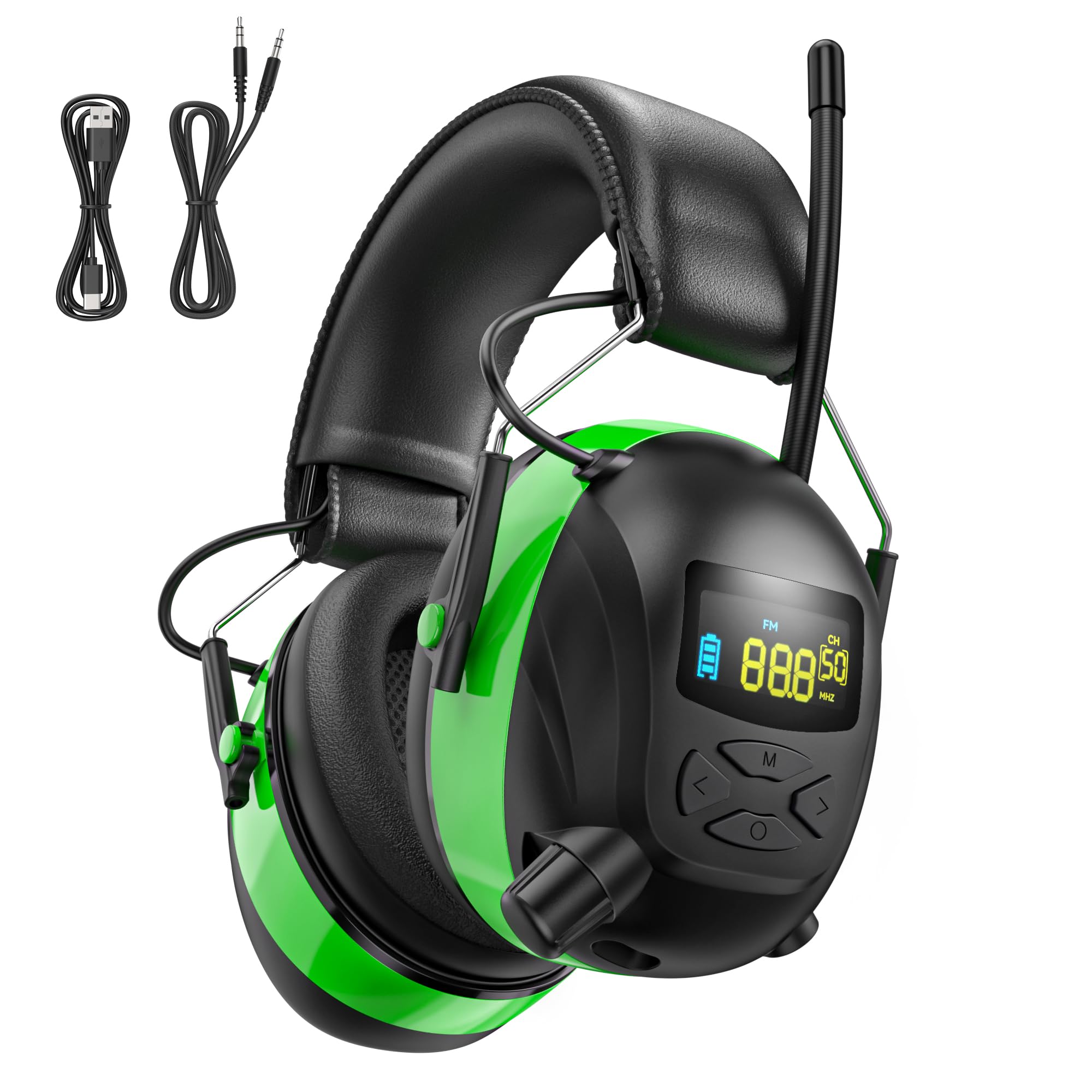
2. Kalence AM/FM Radio Ear Protection Headphones
The muff that shows you the dial on a 1.8-inch backlit color display, even in direct sunlight on a roof or a field.
If tuning blind is your frustration, the Kalence solves it with a 1.8-inch backlit color display that the maker pitches against basic monochrome screens. Station and battery readings stay visible in bright daylight and in the dark. It also stores up to 50 AM and 50 FM presets, which is the largest preset count on this list, and the tuning is a push-button design so there is no loose knob to lose.
Battery is the standout number: a 2000 mAh lithium cell with Type-C fast charging, rated for up to 120 hours of working time per charge. Compare that with the PROHEAR 033 up top, which carries 1500 mAh, and the Kalence holds more capacity. There is a catch the maker states plainly — it cannot be used while charging.
Noise reduction is 30 dB SNR, one notch under the PROHEAR muffs but still strong for mowing and construction. The tuning behavior is where owners are happiest: the function set is the most-discussed thing about this pick, and reception holds up well away from the city, with station pickup described reaching far-out rural areas. It is not a Bluetooth headset — the connections are AM/FM radio plus a 3.5mm AUX cable — so plan on a cable for podcasts or calls.
The display story: a 1.8-inch backlit color screen plus 50 presets per band turns station-flipping from a guess into a glance.
Plain honesty: the no-Bluetooth limit is real; if wireless calling is essential, this is not the one.
Reach for this if: you work outdoors and want to see your station and charge level without squinting.
Round trip to the truck: you will need a cable for anything beyond radio.
3. PROHEAR AM FM Digital Ear Protection 25dB NRR
The simplest way into a radio muff — AA batteries, 10 presets, and a light headset.
This is the value pick, and the trade-off is right on the label: NRR 25 dB, the lower of the noise-reduction classes here. The volume tops out at 85 decibels by design so you can wear it for long stretches. The headset is described as ultra-soft and extremely lightweight, and it comes with a carrying bag for stowing it in the truck.
Tuning is a digital LCD with 10 AM and 10 FM presets, plus manual and auto-scan. The maker is candid about power: two AA cells, and it advises regular alkaline batteries rather than lithium ones. Those batteries are not in the box. Build quality carries the most weight with owners — the sturdy shell and reception together are what they talk about.
Why this sits below the top picks: fit and battery retention run into more mixed reports, so if you have a larger head or run long shifts, the fitted and rechargeable picks above will serve you better. For light yard work and quick jobs, it holds its own.
Value read: digital tuning with presets and an AUX port for a budget-friendly entry point.
Know going in: batteries are extra, and fit runs snug for some.
Good fit for: occasional mowers and carpenters who want the basics without fuss.
Think twice if: you need maximum noise reduction or a rechargeable battery.
4. Safety Works 10121816 MP3/AM/FM Digital Radio Ear Muffs
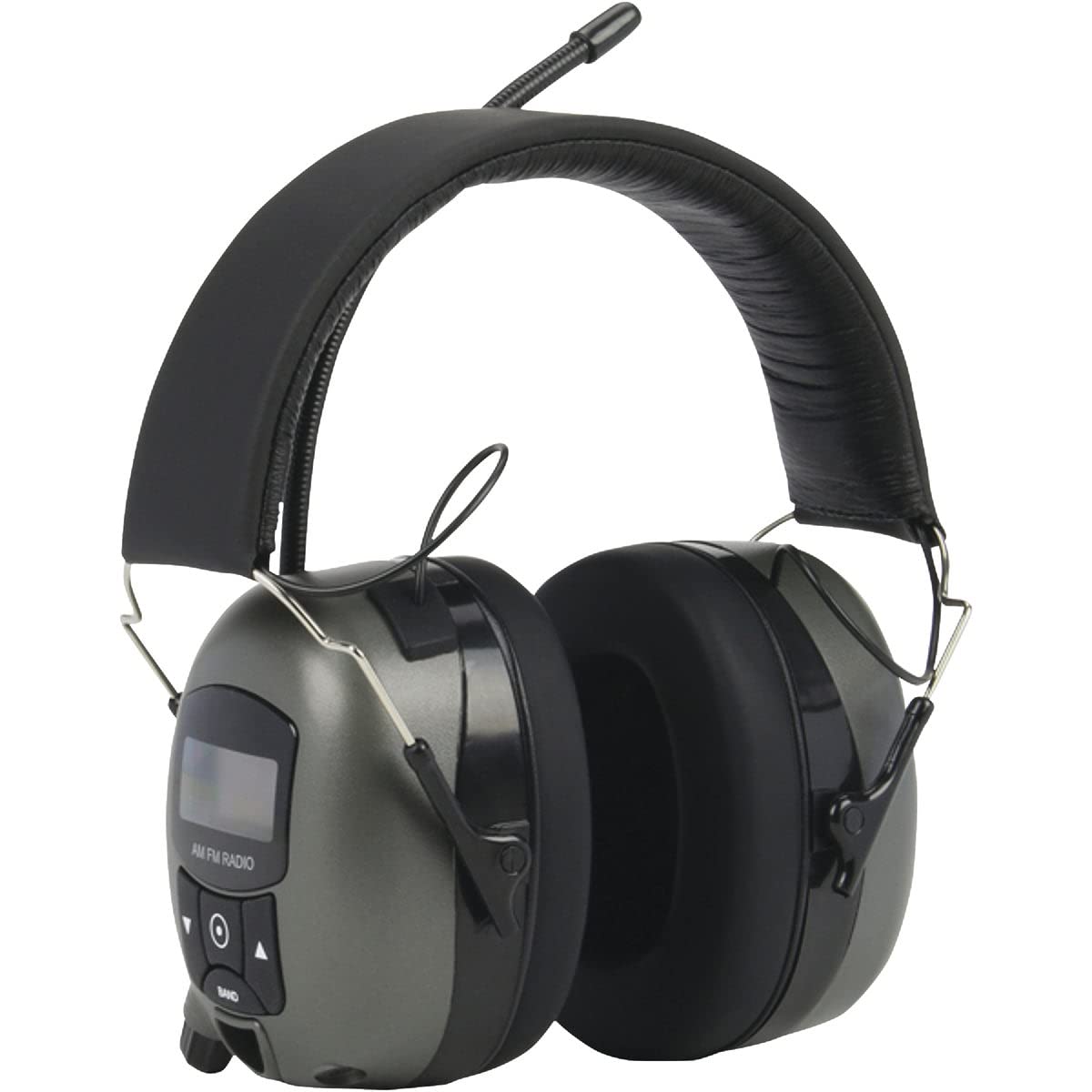
An old-school work muff with a digital clock built in, so you always know the time.
The feature that separates this one: a convenient built-in digital clock. On a long shift where your phone stays in the truck, that small detail earns its place. It handles MP3, AM, and FM, and it digitally searches for and saves your favorite stations. Noise reduction is rated at 24 dB NRR.
The shell is foam and polyurethane, and the headset weighs 8 ounces, so it sits light on the head. Electronics are described as advanced digital, tuned for clear acoustic output. Noise cancellation and station reception are the two things owners notice most, and both hold up well.
Fit is a mixed story. Some wearers settle in fine, while others find it too tight, so head size is worth weighing before you commit. What it is not is a Bluetooth headset — this is a radio and MP3 job, powered the old-fashioned way.
The unexpected extra: a digital clock on a work muff is a genuinely useful small touch.
The honest snag: the fit runs tight for some, so try a fitted design if you have a larger head.
Worth a look if: you want simple digital radio and a clock without any wireless fuss.
Try a different fit if: snugness is a deal-breaker on your head.
5. ZOHAN AM/FM Radio Headphone with Digital Display

Gel ear pieces are the star here — soft cushions that make long wear more bearable.
ZOHAN leans on comfort: the ear pieces are gel, and owners get on well with the fit. The ear muffs carry a digital display and an AM/FM tuner, and noise cancellation does its job around the yard. Sound quality and volume come across clear, with enough punch to hear a station over a running mower.
Where it makes sense versus the top pick: if soft cushions matter more to you than a big screen or a huge preset bank, this is a sensible everyday choice. It is a straightforward radio muff, aimed at people who wear one for a few hours rather than a full shift on a roaring site.
The published listing is lean, so check the power source and noise rating yourself before you order. What it clearly does right is the cushioning and the reception, which are the two daily-use points that matter most.
What owners notice: comfortable fit and gel ear pieces, plus solid reception that finds channels while mowing.
Best with eyes open: fewer published specs than the top picks, so verify the rating and power before buying.
The pick for softness: gel cushions that make a few hours of yard work easier on the ears.
Double-check first: the power and noise figures if your site is genuinely loud.
6. 3M WorkTunes Connect + AM/FM Wireless Hearing Protector

Answer the phone without lifting a muff, then go straight back to the radio.
3M built this one for staying reachable. Bluetooth wireless handles streaming and hands-free calls, so you can take or make a call without taking the headset off or grabbing your phone. Noise reduction is 26 dB NRR, enough for sawing and mowing. It is water and sweat resistant, which means a rain shower or a hot shift will not end the day.
The conformable ear cushions keep it wearable for long stretches. Power is a single AAA battery, included in the box. It pairs and holds its connection well — the Bluetooth side earns the most consistent praise, and build quality is the most-talked-about trait.
The honest catch is at the edges of the audio: sound quality and radio reception draw split feedback, with some finding the FM weak and the volume limited. If crisp, loud radio is your whole reason for buying, weigh that against the convenience of hands-free calls.
Why it belongs: hands-free calls plus a 26 dB NRR muff in one wearable, ready for sweat and rain.
Where the margin is thin: radio reception is the weaker trait by owner pattern, so signal-hungry sites may want another pick.
Best for the connected job: workers who field calls mid-shift and want hearing protection on at the same time.
Look past it if: your priority is the cleanest, loudest AM/FM signal.
7. Gardtech Hearing Protection with Bluetooth & FM Radio

Load a 4GB card with your own songs and never worry about a weak station again.
Gardtech goes where radio-only muffs cannot: a 4GB memory card that plays MP3s, so you have your own music bank when the signal drops out in the field. Radio is still there, handled with one-touch FM auto scan — one press skips weak or noisy channels and saves the ones it locks onto. Bluetooth 5.3 covers up to 33 feet for phone streaming and calls.
It cuts noise at NRR 30 dB (a noise reduction rating that measures how much sound the muffs block), which puts it among the strongest on this list. The battery is the detail that separates it: a removable BL-5B lithium cell with a leak-resistant housing and Type-C charging, so a long day can be solved with a fresh cell rather than a wall socket. Cushions are ultra-soft memory foam on an adjustable headband sized for 19.7 to 24.4 inch heads, and the fit is designed to sit over glasses or a hat.
The big buttons are a thoughtful touch for gloved hands — play, volume, and calls without taking the muffs off. The trade-off is that this is the busiest feature set here, so there is more to set up than a plain radio muff. Noise cancellation, comfort, and easy phone pairing are the wins you see most.
The memory-card advantage: 4GB of MP3s means your soundtrack survives where FM will not reach.
One thing to plan: more features means more setup time before your first shift.
Reach for this if: you want your own music on a card, a swappable battery, and a 30 dB muff all in one.
Keep it simple instead: a radio-only muff if extra setup is not for you.
8. Howard Leight by Honeywell Sync Digital AM/FM Radio Earmuff

The signal hunter — built to pull in weak AM/FM stations where other muffs give up.
Howard Leight’s calling card is reception. The digital tuner auto-searches stations, and the design is tuned for clear digital stereo coverage, including stations that reach far out. It saves 10 presets and remembers your volume between sessions. Radio reception and sound quality share top billing with owners here, and reliability sits right behind them.
Noise reduction is NRR 25 dB, helped by the patented Air Flow Control technology, which the maker says reduces sound across all frequencies without adding earcup size or weight. Earcups are lightweight, the headband is padded, and the fork slides are reinforced for all-day wear. The ear cushions snap in and out for easy cleaning or replacement.
Power is two AA batteries, included, and there is a 3.5 mm AUX jack plus cable for a phone or MP3 player. This is the highest-investment pick of the lineup, and it earns that spot on radio performance rather than noise reduction — you get 25 dB here versus the 31 dB SNR of the PROHEAR picks. Fit and volume control draw mixed feedback, so if you want a tighter ride, size accordingly.
Where it shines: AM/FM reception that reaches weak stations, backed by Air Flow Control for sound reduction without bulky cups.
The honest gap: at NRR 25 dB it leans on tuning and comfort rather than maximum noise reduction.
worth the money if: you care most about pulling in distant stations and want a lightweight muff for the money.
Go elsewhere if: the deepest noise reduction is your priority — the PROHEAR models higher up deliver more.
Know the Specs
SNR vs. NRR
You will see two noise-reduction numbers across these muffs: SNR and NRR. Both describe how much sound the earmuff is designed to block, and both are stated in decibels. SNR is a single-number rating, while NRR is the older standard that many safety listings use. The higher the figure, the quieter your ears should be around a mower or saw.
Presets and tuning design
Presets are the stations you save for one-touch recall. Some muffs hold 10 AM and 10 FM stations, while one on this list holds 50 per band. Digital tuning with an LCD is the common setup; a backlit color display stays readable in direct sun. AUX and memory cards are the fallbacks when the signal is weak.
Common Questions
Can these earmuffs play FM radio and Bluetooth at the same time?
What does SNR 31 dB or NRR 30 dB actually mean on a work muff?
Will these radio earmuffs pick up stations if I live far out in the country?
Can I use a radio muff while it is charging?
Do these earmuffs work over glasses or a hard hat?
What is the difference between Bluetooth headphones and radio earmuffs?
How long does the battery last on a rechargeable radio muff?
Are replacement ear cushions available for these earmuffs?
Should I choose a radio muff with a memory card or one with more presets?
The Bottom Line
For most work-site shifts, the best work headphones with FM radio pick is the PROHEAR 033, because it pairs the highest noise reduction here at 31 dB SNR with the comfort owners rate highest and a rechargeable radio that runs for 58 hours. If seeing your station in bright sun matters most, grab the Kalence with its 1.8-inch backlit display. And for chasing distant AM/FM stations on a lightweight muff, the Howard Leight Sync is the one to reach for.
How we choose
We do not accept paid placement. Every pick is matched to a real buyer and a real use-case; we do not hands-on test units.
Sources
Specifications: manufacturer listings and product documentation. Review insights: verified customer reviews, as of November 2026. Pricing: not shown on this page (it changes often); check the current price via the retailer link.
As an Amazon Associate, Tactical Gear Guy earns from qualifying purchases. This does not affect which products we feature.