Specs are compiled from manufacturer listings and verified buyer reviews and can change over time — please confirm the key details on the product page before buying.
If you climb ladders, work roofs, or spend your shift on rungs and scaffolding, the boot you need is the one with a real block heel — a squared-off ledge at the back of the sole that catches the rung and locks your foot in place. That squared ledge is what separates a true logger from a fashion boot with a flat wedge sole. The picks below all have that heel, and I’ve ranked them so you can match one to your job, your foot width, and how hard you actually are on leather.
This guide is built by comparing the manufacturers’ published specifications and the patterns across verified customer reviews, so you get each pick’s real strengths and trade-offs instead of marketing spin.
You’ll see what each heel actually buys you on a ladder, where the steel and composite toes differ, and which pairs run narrow or wide before you order. Here is the honest breakdown of the work boots with 90 degree heel worth your money.
Top Picks


How To Choose The Best Work Boots with 90 Degree Heel
Start with the heel, since that’s the feature that defines this category. A 90-degree heel is a squared block at the back of the sole that sits at roughly a right angle to the ground — that ledge is what catches the rung of a ladder or the edge of a roof deck. A flat wedge sole has no ledge at all, so it slides right past the rung. If your day involves climbing, a true block heel is not a style choice; it’s the ledge that catches the rung and keeps your foot planted.
Heel height and shape matter more than you think
Heel height changes how the boot behaves on a rung. The KEEN Cincinnati runs a 90° heel at 5/8″, which is a defined ledge you can feel lock in. Taller logger heels like the ones on the Danner and Chippewa pairs give you a deeper catch, but they also change how the boot feels walking flat ground — you notice the lift under your arch. Pick based on how much ladder time you log versus how much flat-floor walking you do.
Toe type: steel, composite, or soft
A steel toe puts a metal cap over your toes for impact protection, and it’s the classic choice on a jobsite that requires it. A composite toe uses a non-metallic carbon cap instead — KEEN states theirs is 15% lighter than steel — which helps if you’re on your feet all day and want less weight out front. A soft toe has no cap at all and is lighter and more flexible, but it gives you no impact protection. Match this to what your site actually requires.
Waterproofing and how wet your job gets
Waterproofing comes in different forms, and they behave differently. A membrane like Gore-Tex or Danner Dry is a breathable liner that keeps water out while letting sweat vapor escape. Full-grain leather that’s been treated resists water on its own. The Carolina pair handles creek crossings without letting water in, and the Danner barrier is built for wet wildland work. If your job stays dry, skip the membrane’s extra cost and heat and rely on treated leather.
Construction: how the sole stays attached
Goodyear welt construction stitches the upper to the sole so it can be rebuilt later — that’s a long-term durability feature you’ll see called out on the Georgia and Irish Setter pairs. A cemented sole is glued on, which is lighter and cheaper but harder to repair. On a boot you plan to wear for years, welt construction is the difference between resoling and replacing.
Side-by-Side Comparison
| Model | Best For | Heel / Height | Toe Type | Waterproofing | Amazon |
|---|---|---|---|---|---|
| Carolina CA8821 8″ Logger★ Best Overall | All-day comfort on a budget | 90° logger heel / 8″ shaft | Soft toe | Waterproof | Amazon |
| SUREWAY 8″ Steel-Toe LoggerBest Budget Steel Toe | Steel-toe protection on a tight budget | 90° logger heel / 8″ shaft | Steel toe | Waterproof | Amazon |
| Ad Tec Men’s LoggerBudget Entry | Budget entry into a true logger | 90° logger heel / 8″ shaft | Soft toe | — | Amazon |
| Georgia Boot Logger | Soft full-grain leather and an ANSI safety toe | 90° logger heel / 8″ shaft | ANSI-compliant safety toe | — | Amazon |
| KEEN Skokie Hiker | Ladder stability in a sneaker-light package | 90° heel / mid height | Composite toe | KEEN.DRY waterproof | Amazon |
| KEEN Cincinnati 6″ | Medium-duty work with a defined 90° heel | 90° heel, 5/8″ / 6″ shaft | Composite toe | KEEN.DRY waterproof | Amazon |
| Irish Setter Mesabi 8″ | Goodyear-welt logger built for the long haul | 90° logger heel / 8″ shaft | Soft toe | UltraDry waterproof | Amazon |
| Georgia G9382 GORE-TEX 400G | Cold, wet sites with a steel toe | 90° logger heel / 8″ shaft | Steel toe | Gore-Tex + 400g insulation | Amazon |
| Danner Logger 8″ | Long ladder and roof days in wet weather | 90° heel / 9″ shaft | Soft toe | Danner Dry waterproof | Amazon |
| Chippewa Baldor 8″ | Full-grain leather and steel-toe ruggedness | 90° logger heel / 8″ shaft | Steel toe | Water resistant leather | Amazon |
Detailed Reviews
1. Carolina CA8821 & CA8823 8″ Waterproof Logger Boots for Men
Our pick — 4.5+★ from 500+ verified ratings; the strongest balance of quality and price.
The logger that sells itself on one thing — comfort you can work in all day.
If your job is ladder work and long shifts, the thing that wins people over here is plain comfort. The Carolina blocks are built around an 8″ shaft that comes up over the ankle for support, and that height is exactly what you want when the boot is planted on a rung. It’s a soft-toe logger, so it’s lighter and more flexible than a capped toe, and the fit comes back positive across the board — the boots run true and feel right fresh from the box.
Weight matters on a ladder, and this is the reference point. At 3 pounds the Carolina is the benchmark against the Georgia Boot Logger at 4.5 pounds. It also measures 13 x 12 x 6 inches against the Georgia at 12 x 8 x 4 inches.
The water resistance is the quiet bonus. Buyers report creek crossings without water getting inside, and the leather holds its look over time.
What Makes It The Pick
- Comfort is the standout — the boots feel broken-in from day one.
- True to size fit that most wearers get right on the first order.
- Waterproof enough for creek crossings and wet mornings.
- At 3 pounds, it’s the lighter side of a full logger.
Where It Gives
- Soft toe only — no steel or composite cap if your site requires it.
- Duplicates like a workhorse rather than a showpiece.
Reach for this if: you want an 8″ waterproof logger that feels comfortable before you break it in and you don’t need a safety toe.
Look elsewhere if: your jobsite mandates an impact-rated steel or composite toe cap.
2. SUREWAY Men’s 8″ Waterproof Steel-Toe Logger Work Boot
Steel-toe protection on a logger sole, at the entry-level end of the field.
SUREWAY’s pitch is simple: a lace-up leather logger with a high-strength steel toe to protect your toes from injury, built for site work and everyday wear. The quality and comfort read strong across the community, and the value line lands well — owners mention it’s worth what it costs. If you need a capped toe and don’t want to spend the most, this is the obvious first look.
The honest part is durability and fit, which come back mixed. Some wearers get 6 months of abuse out of them; others report the boots coming apart after 4 weeks, and the toebox runs too small. That’s a real sizing warning — if you’re between sizes or have a wider foot, consider sizing up so the steel cap isn’t pinching across the top.
Who it wins over: anyone who needs a steel toe on a logger heel and wants to keep the spend down. The soft leather and solid construction get consistent credit.
The trade you accept: the toebox in a steel cap runs narrow, and the durability picture splits hard — a great first pair, but not the pair you count on for years.
Best fit for: a first steel-toe logger or a second pair for the truck.
Think twice if: you have a wide forefoot or expect a decade out of one pair.
3. Ad Tec Men’s Logger Boots
The plainest ticket into a true logger shape and heel.
Ad Tec is the value-first option, and the construction earns credit for clean stitching and a good-looking profile. The leather is the split: some wearers call it high-grade, others compare it to an old-school Timberland feel. If you’re after the classic logger look and a defined heel without spending much, this gets you there.
Treat this as a casual-to-light-duty logger rather than a heavy site boot. The quality story is about appearance and build for the money, not about surviving daily abuse on a roof. Buy it if the look and the heel shape are the priority and the job is moderate.
The honest read: a logger silhouette and heel at the budget end, with stitching that reads clean and an appearance that holds its own.
What to plan for: the leather quality is debated rather than confirmed, so this suits light-duty wear and everyday use more than a full-time hard-labor site.
Pick it up if: you want the logger look and a real heel on a budget and your work is light-to-moderate.
Pass if: your day is heavy jobsite abuse — step up to a welt-built logger.
4. Georgia Boot Men’s Logger Work Boots
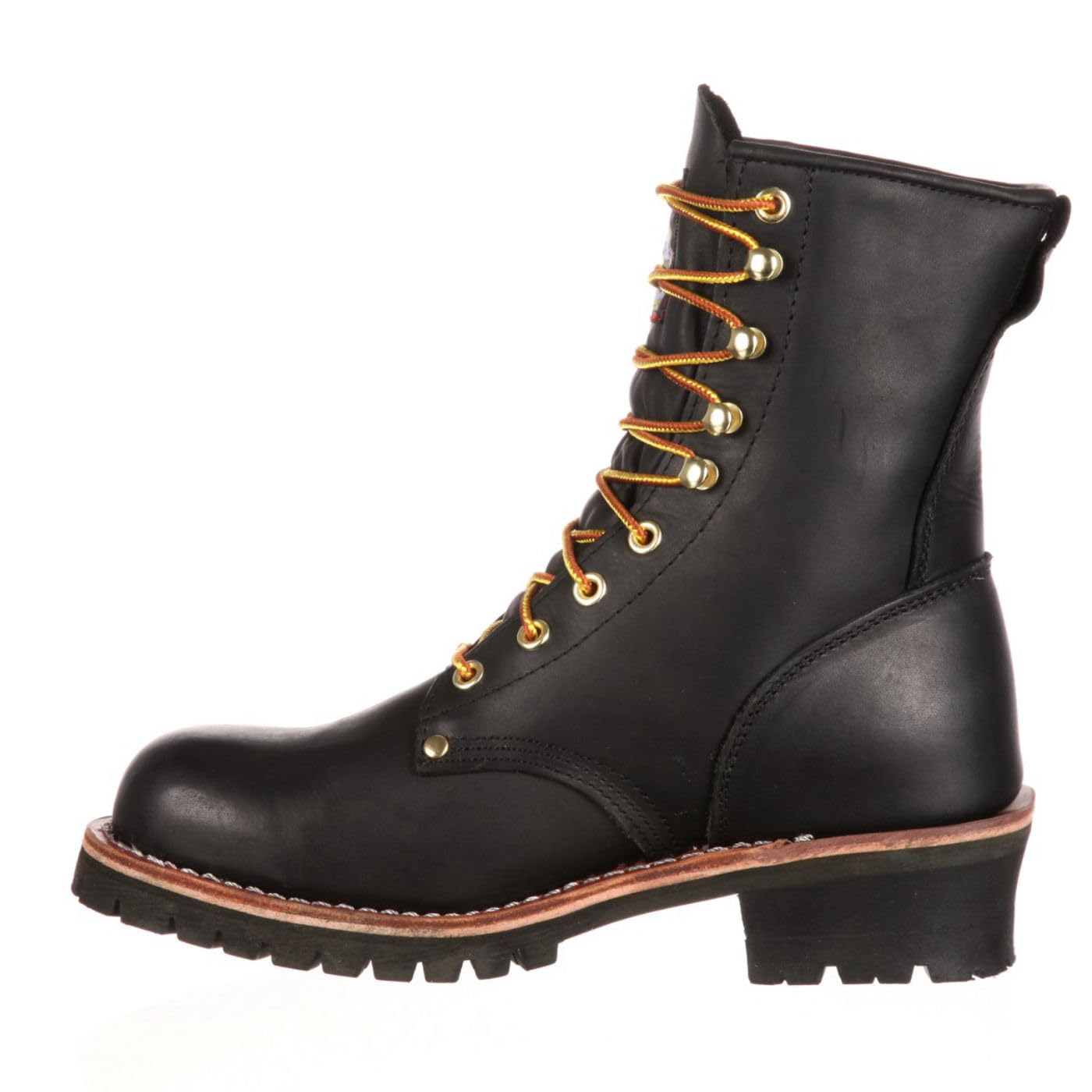
Full-grain leather that’s soft as it is tough, with a capped safety toe.
Georgia’s logger pairs an 8″ full-grain leather upper with a soft-touch feel — the material is described as both hardy and soft, which is why the quality line comes back positive so consistently. The lace-up design lets you dial the fit, and the stud hooks sit on steel washers so they won’t yank out while you work. A lugged, oil-resistant outsole and an ANSI-compliant safety toe round out the protection.
The weight is the thing to know before you order. At 4.5 pounds this is the heavier of the two loggers against the Carolina at 3 pounds, and it measures 12 x 8 x 4 inches against the Carolina at 13 x 12 x 6 inches. That weight is the price of a capped toe and a beefier build.
Durability is where opinions split: some report the boots falling apart within three months, while others wear them well. Break-in also takes time. If you want a soft, classically styled logger with a safety cap and can live with the weight, this is a strong option.
Where It Shines
- Full-grain leather that’s praised for being soft yet tough.
- ANSI-compliant safety toe for site protection.
- Steel-washer stud hooks that hold up to hard lacing.
- Lugged, oil-resistant outsole for grip on messy ground.
What To Weigh
- At 4.5 pounds, it’s the heavy end of the logger field.
- Durability and break-in time both draw mixed feedback.
Worth it for: buyers who want soft full-grain leather and a real safety toe and don’t mind a heavier boot.
Skip if: you’re chasing the lightest weight on the ladder or you want a boot that breaks in fast.
5. KEEN Utility Skokie Mid Composite Toe Waterproof
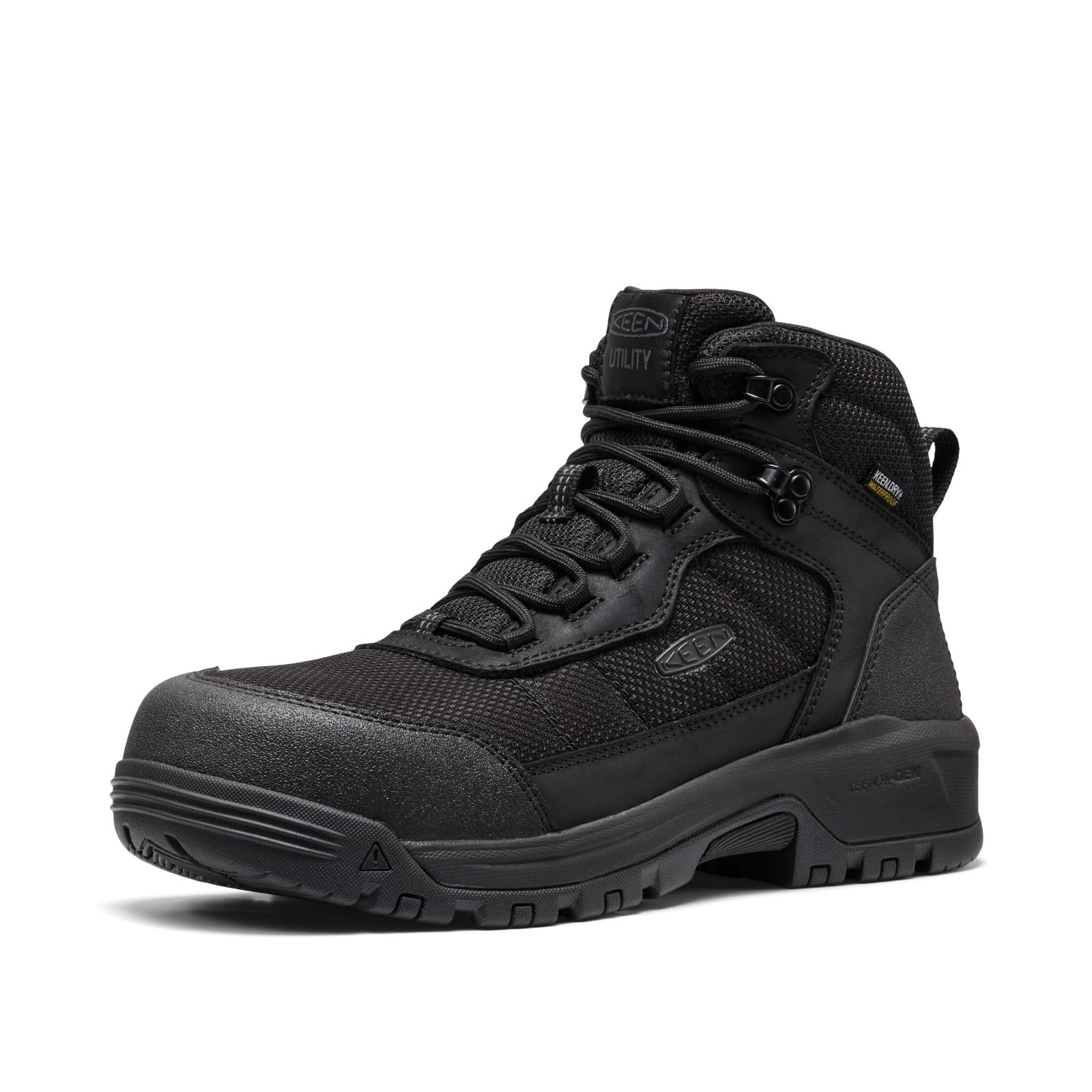
A hiker cut that carries a work-boot heel — sneaker weight, ladder grip.
Here’s the number that matters: 22.9 oz / 650 g per boot. That’s a hiker-style mid-cut with a composite toe and a genuine 90-degree heel for added stability on ladders. KEEN builds it on their Original Fit, which gives extra room for your toes to spread out, and the leather comes from tanneries certified by the Leather Working Group. The insole is removable if you run your own orthotic.
This is the lightest way to get a 90-degree heel onto a ladder. The waterproof KEEN.DRY membrane keeps your feet dry, and the composite toe keeps the front lighter than a steel cap. Quality and the light weight are the two things that get the most credit here.
Comfort and fit are the honest caveat — some wearers report heel pain and that the boot runs small, and one compared the sole to slab plastic. Size up if you’re between sizes, and try a sock combo that suits a stiffer sole.
Why it earns a spot: it brings the 90-degree heel into a boot you can wear like a hiker — 650 g per boot with a composite toe and waterproofing.
The catch to weigh: the sole and fit draw mixed feelings, so break them in gently and expect to size up.
Choose it for: medium-duty ladder work where you want a light boot with a real heel.
Hesitate if: you need a plush, broken-in feel from the first step or you want a full 8″ shaft.
6. KEEN Utility Cincinnati 6″ Composite Toe Waterproof
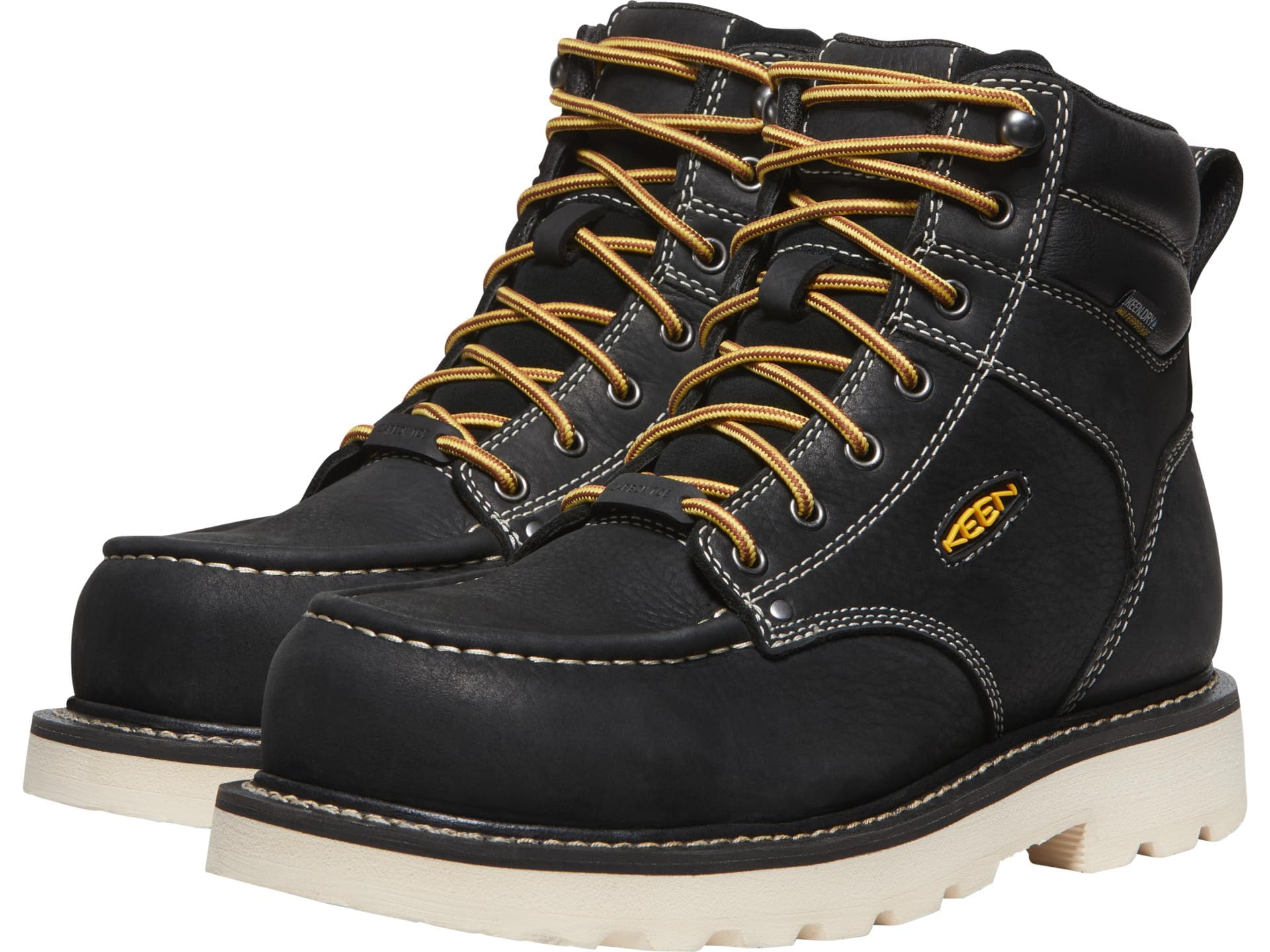
A 6″ medium-duty boot with a heel built to lock your foot on a rung.
The heel here is defined at 5/8″ and set at 90 degrees to help catch or lock your foot in place — that’s the feature that puts the Cincinnati on this list, and it comes on a lighter 6″ shaft that keeps the boot easier to move in than a full logger. The composite toe is built from non-metallic carbon with a left-right asymmetrical fit, which KEEN states is 15% lighter than steel. A KEEN.DRY membrane keeps it waterproof and breathable.
Fit and comfort are the clear strengths — wearers report wearing them all day without discomfort, and the boot looks good doing it. If you want a boot that disappears on your feet over a long shift, this is the pick.
Durability is the fair caveat: some report the sole coming apart, and the weight, while lighter than steel, does draw some criticism. Neither is a pattern worth writing the boot off over, but if you’re brutal on soles, keep an eye on the seam.
What carries it: a genuine 5/8″ 90-degree heel on a 6″ shaft, with an all-day comfort fit that gets consistent credit.
What to watch: the composite toe adds lightness but some report sole separation, so inspect the welt on arrival.
Great for: medium-duty work where you want ladder grip and a boot you forget you’re wearing.
Not for: buyers who need a tall 8″ shaft or maximum sole durability on the harshest sites.
7. Irish Setter Mesabi 8″ Mens Soft Toe Logger Work Boot

A Goodyear-welt logger that stores rebuild instead of replacement.
Construction is the value here. The Mesabi is built with Goodyear welt construction, meaning the upper is stitched to the sole and can be resoled down the road — that’s a boot you keep rather than toss. The upper is full-grain waterproof leather, the footbed is removable EVA, and the outsole is the Stars and Stripes logger with heat resistance and slip resistance. Full-grain leather on a welted logger is the combination that lasts.
Fit feels like a glove — that’s the recurring note on this pair — with arch support that gets specific praise. Weather performance is a strength too: the UltraDry waterproof membrane and the lugged outsole keep you planted in everything from wetlands to dry ground, and the logger heel gives you the ladder catch.
Waterproofing gets some mixed feedback, so treat that membrane with care and keep the seams clean. This is a soft-toe boot, so if you need a cap, this isn’t the one.
Why It Lasts
- Goodyear welt construction that can be resoled.
- Full-grain waterproof leather upper.
- Arch support and glove-like fit get repeated praise.
- Heat-resistant, slip-resistant Stars and Stripes outsole.
What To Know
- Soft toe only — no impact-rated cap.
- Waterproofing draws mixed feedback, so keep the seams cared for.
Worth the spend if: you want a welted logger you can resole and wear for years, with a soft-toe fit.
Move on if: your site requires a steel or composite safety toe.
8. Georgia Boot Steel Toe GORE-TEX Waterproof 400G Insulated
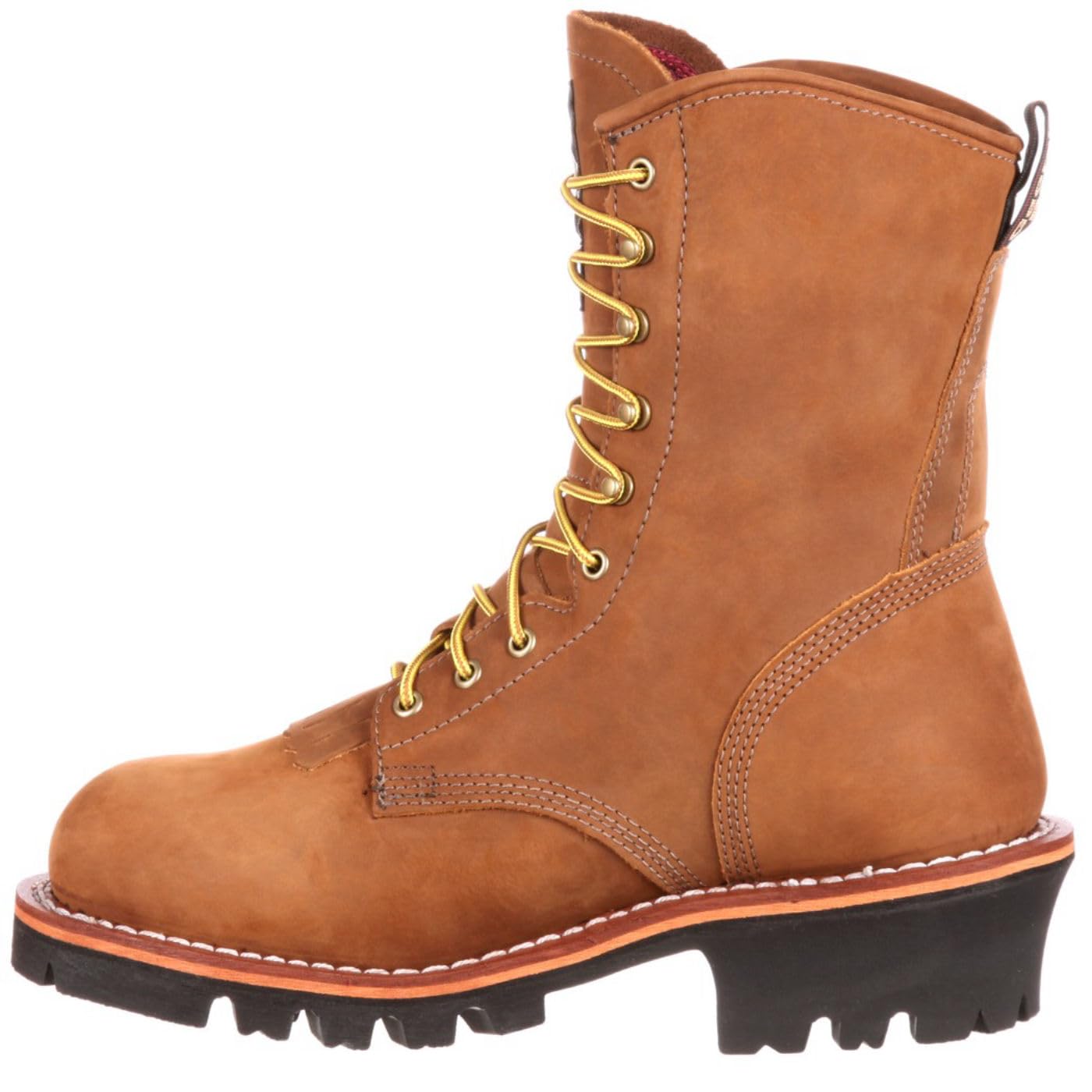
The one that keeps you dry and warm — steel toe, 400 g of insulation, Gore-Tex.
This is the cold-weather pick. It’s infused with 400 g of Thinsulate Ultra insulation and lined with Gore-Tex, a membrane that keeps water out while letting sweat vapor escape. A steel toe meets ASTM standards for protective toe, and it’s also rated for electrical hazard. The 8″ full-grain leather shaft comes up high for support and coverage.
The sole is a one-piece rubber, cleated Vibram Tacoma outsole, chosen for being lightweight, long-wearing, and flexible. The manufacturer calls it resistant to abrasions, oils, chemicals, heat, and metal chips. Goodyear welt construction ties the upper to the sole for strength and flexibility, and a removable polyurethane orthotic insert sits over a covered cushion insole.
The honest split: durability and fit draw mixed feedback — some say the sole separates and the fit runs tight. If you have a wide foot or expect years of hard abuse, size accordingly and watch the sole seam.
Where it’s genuinely strong: 400 g insulation and Gore-Tex together make this a wet-and-cold boot, with an ASTM-rated steel toe and EH protection.
What to inspect: the fit runs tight for some and sole separation comes up, so try them early and keep an eye on the welt.
Reach for it when: your job puts you in cold, wet conditions and you need a steel toe.
Leave it if: you work warm weather year-round — the 400 g insulation would run too warm.
9. Danner Logger Boots Waterproof Vibram 360
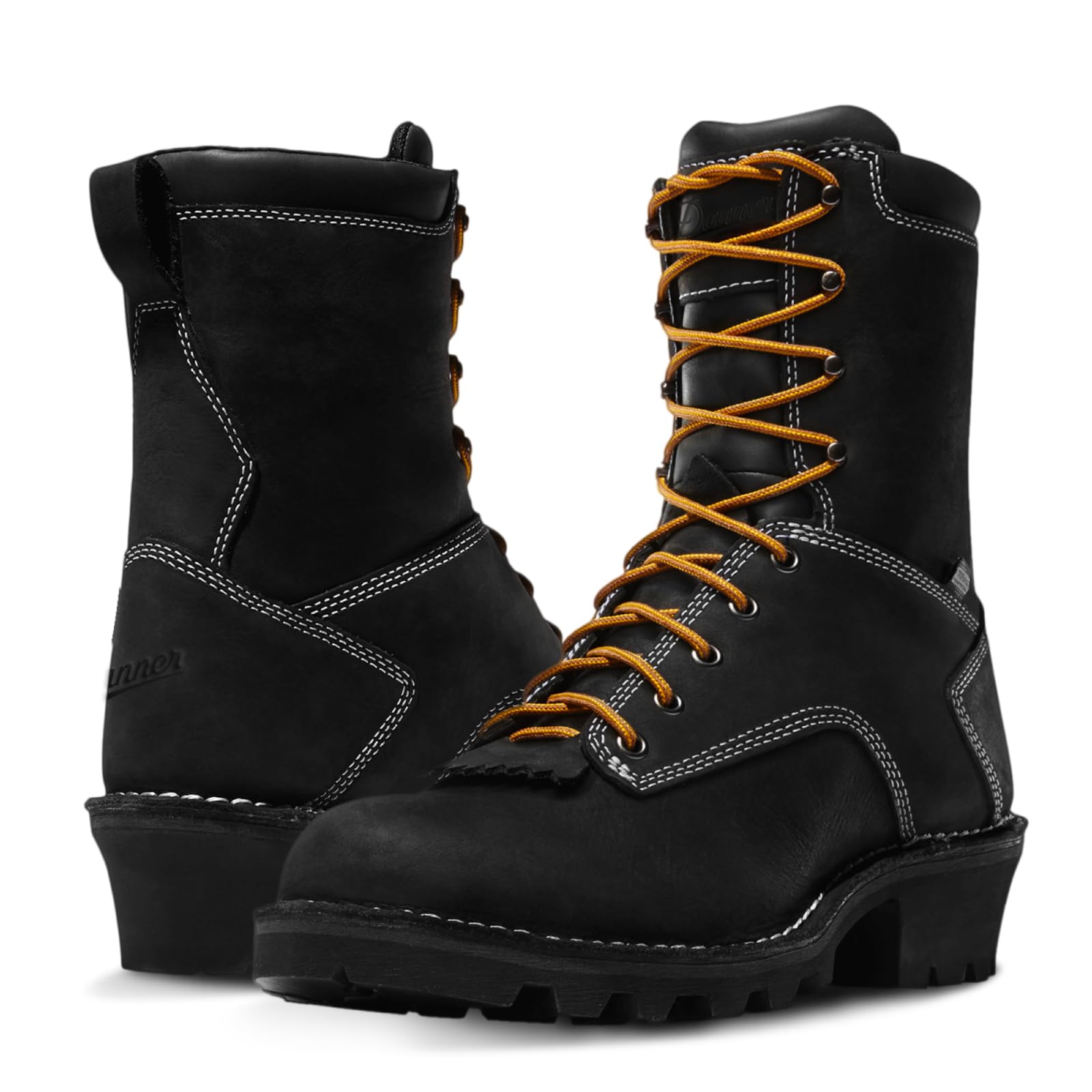
A light-platform logger with a pronounced heel, built for wet ground and long days.
The headline feature is the pronounced 90-degree heel on the Vibram 360 Traction outsole — the deep catch you want on a ladder or a steep bank. Danner wraps it in 100% oiled nubuck leather and a Danner Dry barrier that locks water out while letting heat and sweat escape. The boot is also ASTM F2892-18 EH certified for electrical hazard resistance.
Weight is the other standout: 4 pounds with a Bi Fit Board that pulls the shank, lasting board, and midsole into one piece for support without the weight. Inside is an Ortholite footbed with three layers of variable density, cushioning on uneven ground. The 9″ shaft gives more coverage than a standard 8″ logger.
The catch: the fit runs small for some wearers, and durability is debated. Break-in is short, which softens that blow, but size carefully if you’re at the edge of a size.
The standout: a pronounced 90-degree heel and Vibram 360 Traction outsole on a 4-pound platform with a 9″ shaft.
The honest limit: the boot runs small for some and durability is contested, so order with your true foot length in mind.
Best suited to: wildland, firefighting, and wet-weather work where the heel catch and waterproofing matter.
Think twice if: you want a soft toe with a generous, roomy fit from the start.
10. Chippewa Baldor 8″ Steel Toe Logger Boots
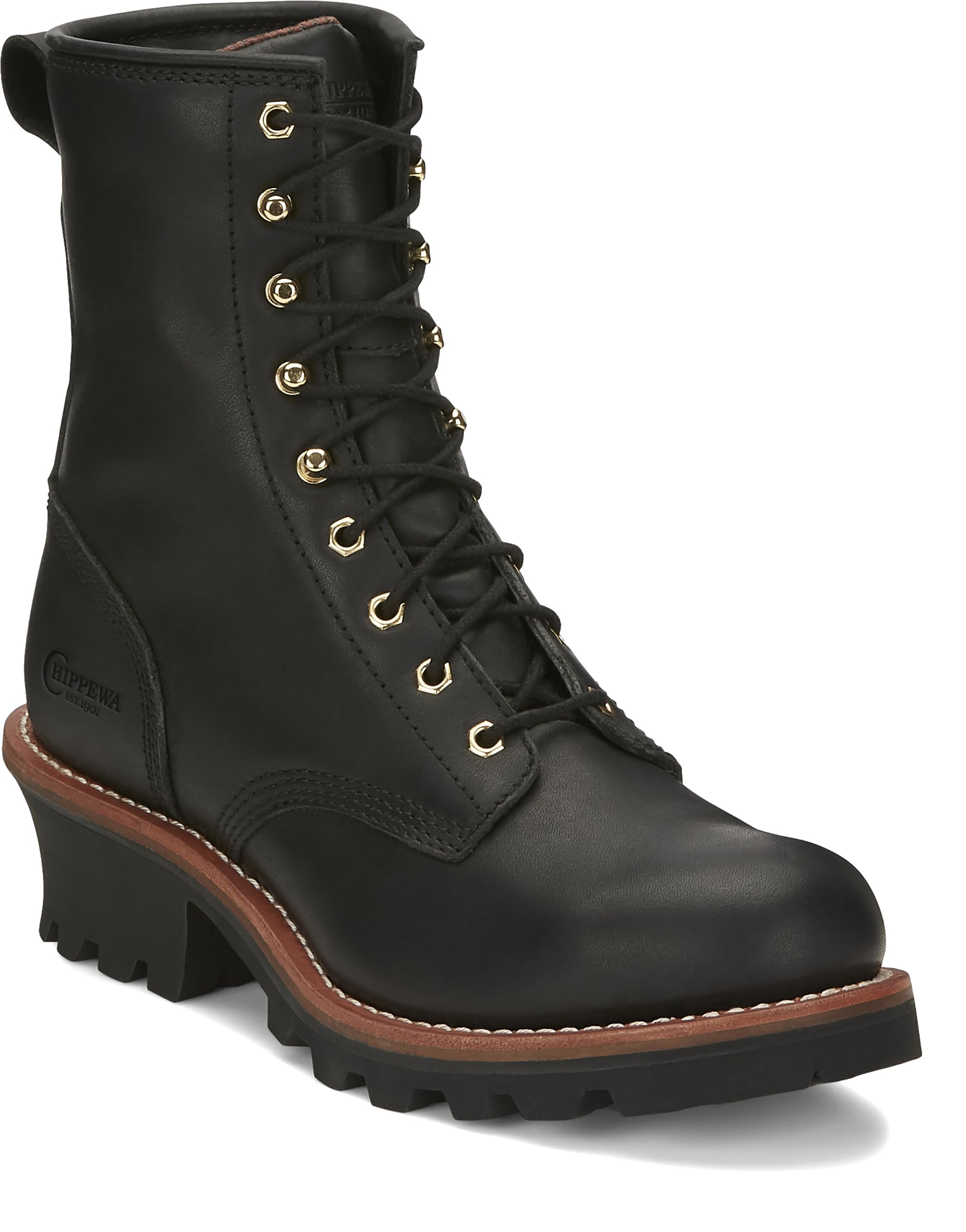
Heft and steel protected by full-grain leather — the classic logger build.
The Baldor is a hefty boot built to keep you protected and dry. Full-grain leather that’s water resistant covers a steel toe, and a thickly treaded rubber outsole gives the traction and durability you need on site or on the trail. Chippewa has been building outdoor footwear since 1901, and this pair carries the classic logger styling that gets compliments.
The leather and build quality are the strengths — the boot is well-made, and the appearance draws notice. If you want the classic look of a steel-toe logger with full-grain leather, this delivers it.
Durability is the honest caveat: some wearers say it holds up great, others report it doesn’t last. The steel toe and water-resistant leather add weight and stiffness you’ll feel in the first week. Fit it to your true size and let the leather settle in.
What sells it: a steel toe under full-grain, water-resistant leather with a thickly treaded rubber outsole — classic logger protection with a look that gets noticed.
The watch: durability splits between wearers, and the weight and stiffness are real, so plan for a break-in period.
Pick it for: the classic steel-toe logger look with full-grain leather and a thick rubber outsole.
Weigh it against your needs: it’s heavier and stiffer than the lighter picks, and long-term durability is a coin flip in the reviews.
Know the Specs
The 90-Degree Heel
A 90-degree heel is a block at the back of the sole that sits at about a right angle to the ground, creating a ledge that catches a ladder rung or a roof edge. It’s the feature that keeps a logger planted when you’re climbing. Heel height varies — the KEEN Cincinnati is stated at 5/8″, while taller logger heels give a deeper catch. More catch means more lift under your arch on flat ground.
Steel vs. Composite vs. Soft Toe
Steel toe caps are metal and carry impact protection — they meet ASTM standards on boots like the Georgia G9382. Composite toes are non-metallic carbon, and KEEN states theirs are 15% lighter than steel. Soft toes have no cap at all, are lighter, and flex more, but give no impact protection. Match the toe cap to your site’s impact-protection requirement.
Waterproofing: Membrane vs. Leather
A membrane like Gore-Tex or KEEN.DRY is a breathable liner that keeps water out while letting sweat vapor escape. Treated full-grain leather resists water on its own, which is how the Chippewa’s leather is described. A membrane adds cost and some heat, while plain leather is lighter and simpler but less wet-proof.
Insulation Grams
Insulation is measured in grams — the Georgia G9382 uses 400 g of Thinsulate Ultra to hold warmth. Higher grams mean warmer boots for cold sites, but they run too warm for summer work. Match the insulation grams to your season and climate rather than buying the warmest rating.
Goodyear Welt vs. Cemented Sole
Goodyear welt construction stitches the upper to the sole so the boot can be resoled — it’s the long-term durability feature on the Irish Setter and Georgia G9382. A cemented sole is glued, lighter and cheaper, but harder to rebuild. On a boot you plan to keep for years, Goodyear welt construction pays back at the first resole.
Weight and Shaft Height
Boot weight and shaft height shape how a logger feels on your feet. A 3-pound boot like the Carolina moves easier than the 4.5-pound Georgia Boot Logger, and an 8″ or 9″ shaft gives more ankle coverage than a 6″ mid. Heavier and taller means more support and more effort — pick the balance for your day.
Common Questions
What exactly is a 90-degree heel on a work boot?
Is a steel toe or composite toe better for ladder work?
Do logger boots with a 90-degree heel run true to size?
How long should a good logger boot last?
Will a 90-degree heel help me on a roof or a ladder?
How much insulation do I need in a logger boot?
Are these boots actually waterproof or just water resistant?
Can I resole a logger boot once the outsole wears out?
What is the difference between a 6-inch and an 8-inch logger shaft?
Do I need electrical hazard protection on a work boot?
The Bottom Line
For most people needing the work boots with 90 degree heel, the Carolina CA8821 8″ Logger is the one to get — an 8″ waterproof shaft at 3 pounds that wears comfortable from day one. If you need a steel toe on a budget, grab the SUREWAY 8″ Steel-Toe Logger. And for cold, wet sites with a steel toe, the Georgia G9382 GORE-TEX 400G is the pair to reach for. The bottom line: match heel height to your ladder time and toe type to your site’s rules — the Carolina remains the strongest all-rounder for the widest range of workers.
How we choose
We do not accept paid placement. Every pick is matched to a real buyer and a real use-case; we do not hands-on test units.
Sources
Specifications: manufacturer listings and product documentation. Review insights: verified customer reviews, as of November 2026. Pricing: not shown on this page (it changes often); check the current price via the retailer link.
As an Amazon Associate, Tactical Gear Guy earns from qualifying purchases. This does not affect which products we feature.