Specs are compiled from manufacturer listings and verified buyer reviews and can change over time — please confirm the key details on the product page before buying.
Cold feet end a workday faster than any foreman ever could. The boots that actually survive a snowy job site are the ones built with two things at once: a sealed waterproof upper and real insulation packed inside it. This guide sorts through eleven pairs that cover both, from heavy insulated hunters to steel-toe work boots with slip-resistant tread, and tells you which pair suits slush, which suits deep drifts, and which one you should size carefully before you commit.
This guide is built by comparing the manufacturers’ published specifications and the patterns across verified customer reviews, so you get each pick’s real strengths and trade-offs instead of marketing spin.
Every pair below is judged on the insulation it actually carries rather than the badge on the side. Here is the honest breakdown of the work boots for the snow that hold up when the temperature drops and the ground turns to ice.
Top Picks


How To Choose The Best Work Boots for the Snow
Buying a winter work boot is really two decisions stacked together: how much warmth you need, and how much protection your job demands. Get the warmth wrong and your feet sweat indoors or freeze outdoors. Get the protection wrong and you are standing on a site in a boot that was never built for it. Work through these four checks before you pick a pair.
Match the insulation grams to your actual cold
Insulation is measured in grams, and the number tells you how much fill sits between your foot and the outside air. A lighter fill like 200 grams of Thermolite (a synthetic insulation that traps body heat) suits an active job where you are moving and generating warmth. A heavy 1,000-gram or 1,200-gram fill is for standing still in serious cold, ice fishing, or long hours in a tree stand. The heavier the fill, the warmer your foot stays in the cold — and the more likely that same boot feels swampy if you are hustling all day.
Insist on a real waterproof build, not a spray-on finish
Snow melts, and slush is water with a plan. A sealed waterproof construction, whether that is a built-in membrane or a seam-sealed leather upper, keeps the wet out through a full shift. A water-resistant coating only shrugs off a light dusting before it gives up. Look for the words waterproof construction in the listing rather than a spray treatment, because that is the difference between dry socks at lunch and wet ones by ten.
Pick your toe protection before you pick a style
A steel toe shields your toes from a dropped load and carries an ASTM F2413 rating, a published safety standard for protective footwear. A composite toe does the same protective job without the metal, which trims the weight on each foot. If you work around heavy material, take the protection. If you are mostly hiking in to a job or standing on a roof, a lighter composite toe keeps you moving without the heft.
Check the outsole for ice and the fit for thick socks
The outsole is the bottom rubber that meets the ground, and on snow the tread pattern and rubber compound decide whether you stay upright. Look for a slip-resistant outsole or a design described as multi-directional for grip on uneven, icy ground. Then size up around your winter sock: insulated boots often run large, and a fully lined boot leaves less room for a thick sock than a summer boot does.
Side-by-Side Comparison
| Model | Best For | Insulation | Toe Type | Waterproofing | Amazon |
|---|---|---|---|---|---|
| Irish Setter Elk Tracker 12″★ Best Overall | Cold-weather hunting and long treks | 1000g 3M Thinsulate Ultra | — | GORE-TEX Waterproof | Amazon |
| ROCKY Sport Utility 600GBest All-Day Comfort | All-day hunting and work comfort | 600g 3M Thinsulate Ultra | Composite safety toe | Rocky Waterproof | Amazon |
| ROCKY Blizzard Stalker 1200GWarmest for Deep Cold | Deep cold and icy ground | 1200g Thinsulate Ultra | — | Rocky Waterproof | Amazon |
| Georgia Boot Homeland 8″ | Wet mud and mixed winter work | — | — | Waterproof insulated | Amazon |
| MUCK Arctic Pro | Subfreezing temps and deep snow | Comfort rated to -60 °F | Steel toe | 100% waterproof | Amazon |
| KEEN Utility Evanston | Medium-duty site work | Insulated | Composite (carbon-fiber) | Waterproof leather | Amazon |
| Timberland PRO 8″ MaxTRAX | Slip resistance on slick ground | 200g Thermolite | Steel toe | Seam-sealed waterproof | Amazon |
| Timberland PRO Direct Attach 6″ | Warehouse and cold-weather shifts | 200g | Steel toe | Seam-sealed waterproof | Amazon |
| Carhartt Force Waterproof Insulated | Active winter workdays | 400g 3M Thinsulate | Molded rubber toe cap | Storm Defender waterproof | Amazon |
| SAFETOE 8″ Composite Toe | Construction sites in the cold | Thermal insulation | Composite toe | Sanvlar-Tex WR | Amazon |
| ANGRYRAM Winter Steel Toe | Budget snow work on a tight spend | Warm fleece lining | ASTM F2413-18 steel toe | Waterproof construction | Amazon |
Detailed Reviews
1. Irish Setter Elk Tracker 12″ Mens Hunting Boot
Our pick — 4.5+★ from 800+ verified ratings; the strongest balance of quality and price.
The full-grain leather tank with a genuine GORE-TEX shield and warmth to spare.
For the hunter who sits in biting cold and needs his feet to survive the wait, this is the pair to beat. It runs 1000 g of 3M Thinsulate Ultra insulation — a synthetic fill that traps heat without bulk — down the length of a 12-inch shaft. That tall leather wall covers your ankle and lower calf, so a deep drift does not creep in at the top. A GORE-TEX waterproof membrane sits inside the leather and keeps the wet out while still letting sweat vapor escape.
What wins people over is the warmth. The full-grain leather upper earns real affection too, and owners treat these as a buy-once pair rather than a throwaway season boot. The Goodyear Leather Welt construction, which stitches the upper to the sole so it can be repaired rather than replaced, is a big part of that long-haul reputation.
The honest catch is sizing. Insulated boots this tall leave little room for a thick sock, and the fit feedback swings between buyers. Order your normal size with a winter sock on hand, and be ready to swap if it pinches. Weigh that against the warmth and the leather, and this is still the most complete snow work boot in the group.
What lands beautifully
- 1000 g of 3M Thinsulate Ultra insulation holds heat through a long, still sit
- GORE-TEX membrane keeps the wet out on slush and wet snow
- Full-grain waterproof leather with Goodyear welt construction
- Bulls-Eye Air Bob Aggressive outsole for grip on uneven ground
Where to watch your step
- Tall 12-inch shaft and heavy insulation leave less room for thick socks
- Fit is the most-discussed topic, so sizing is worth checking carefully
- Hefty build is on the heavier side for hiking miles in
Go for it if: you sit or trek in genuine cold and want a leather boot that keeps warmth in and wet out.
Think carefully if: you need a light summer-weight boot or you cannot try on with a winter sock first.
2. ROCKY Sport Utility 600G Insulated Waterproof Boot
The all-day workhorse that balances warmth, protection, and a lighter foot.
If you clock a full shift in the snow but are not standing still in brutal cold, this is the smart buy. It packs 600 grams of 3M Thinsulate Ultra insulation into a waterproof full-grain leather boot with a composite safety toe. Compare that to the Blizzard Stalker above at 1200 g: this one carries 600 grams of insulation, so feet run less hot on an active day. On the scale, this boot sits at 4.5 pounds for a size 10, while the Blizzard Stalker comes in at 5.4 pounds per pair.
The fit is the star here. Owners rave about how snugly it locks to the foot, and the composite toe does the protective job without the metal heft of a steel toe. On durability, the review pages carry a reassuring long view — buyers report the boots holding up through multiple seasons.
The trade-off is warmth at the low end. If your job means stationary hours in sub-zero wind, the lighter 600 g fill will not match a 1200 g boot for still-air warmth. For active work and cold commutes, it is the right compromise between protection and feel.
The comfort play: a full-grain leather boot with a composite toe and 600 g of insulation, built for movement rather than idle sitting.
Reach for this if: you are on your feet and moving all day and want warmth without the bulk of a heavy insulated boot.
Look elsewhere if: your work means standing still in deep cold, where the higher-fill boots pull ahead.
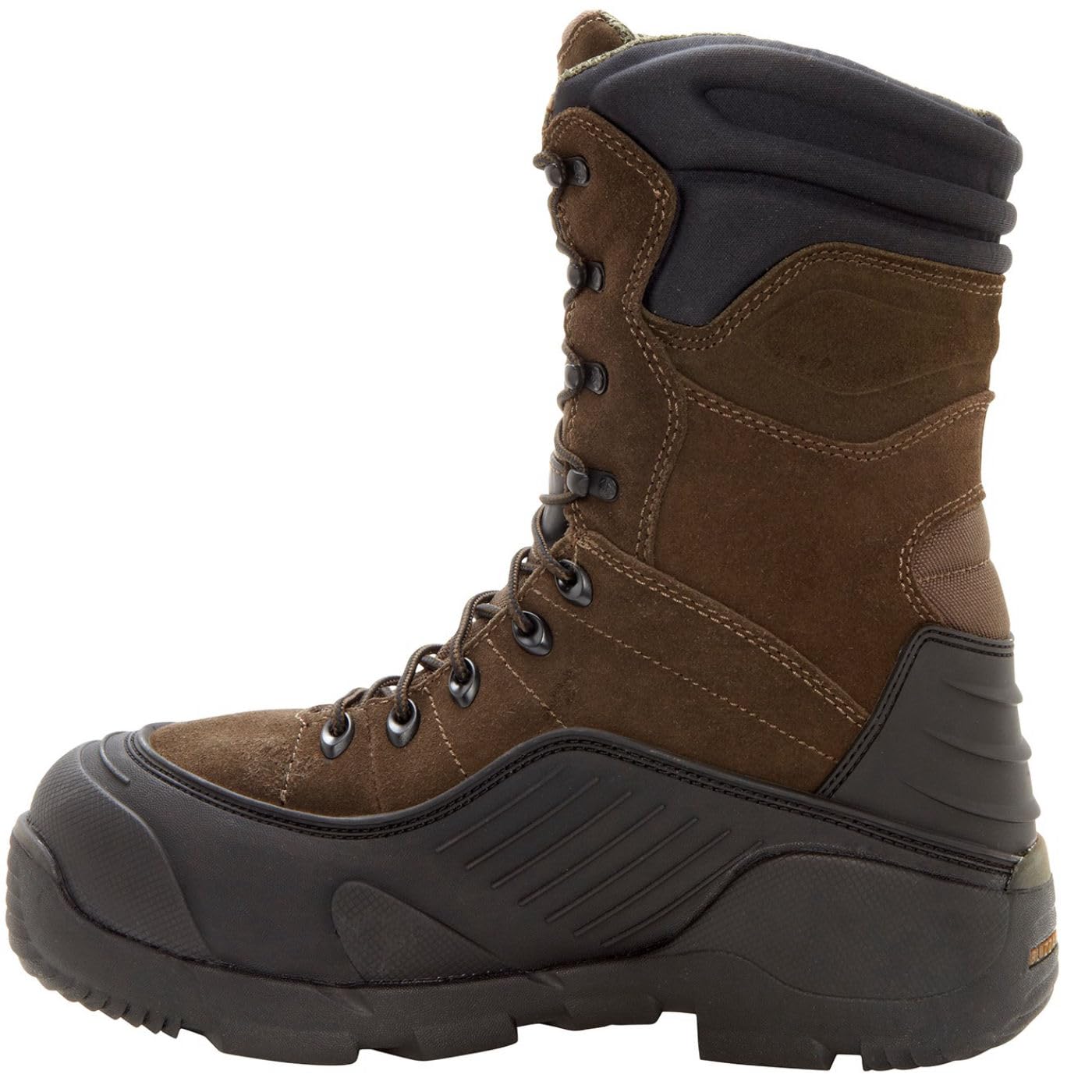
3. ROCKY Blizzard Stalker Waterproof 1200G Insulated Boot
1,200 grams of insulation for the days your breath freezes on the way out.
When the ground is ice and the wind cuts, warmth beats everything. This boot answers with 1,200 grams of Thinsulate Ultra insulation, compared with 600 grams in the Rocky Sport Utility above. It shields that warmth behind a split-suede and 900-denier high-abrasion textile upper treated with Rocky Waterproof construction, a built-in barrier that blocks meltwater while letting moisture vapor out.
The multi-directional Blizzard outsole is shaped to bite in several directions at once, which is what you want on packed snow and slick driveways. Underfoot, a removable mesh PU footbed lets air move and a TPU heel stabilizer holds your heel steady as you walk. Add the padded collar and rubber vamp and this boot is built to be worn, not just warmed.
Warmth is what it does best and what the review pages dwell on. The fit is the swing factor: this pair runs large, and a few units have been reported with stitching that gives way early. Try it with a thick sock and consider sizing down a half. At this price, few boots pack 1,200 g of insulation.
The deep-cold answer: the highest insulation count in this lineup, paired with a traction-focused outsole that grips icy, uneven ground.
Best match for: snow removal, ice fishing, and any standing-still job in hard cold where warmth is the whole point.
One thing to plan for: it tends to run large and the fit feedback varies, so pick your size with a winter sock ready.
4. Georgia Boot Men’s Homeland Waterproof Insulated Work Boots
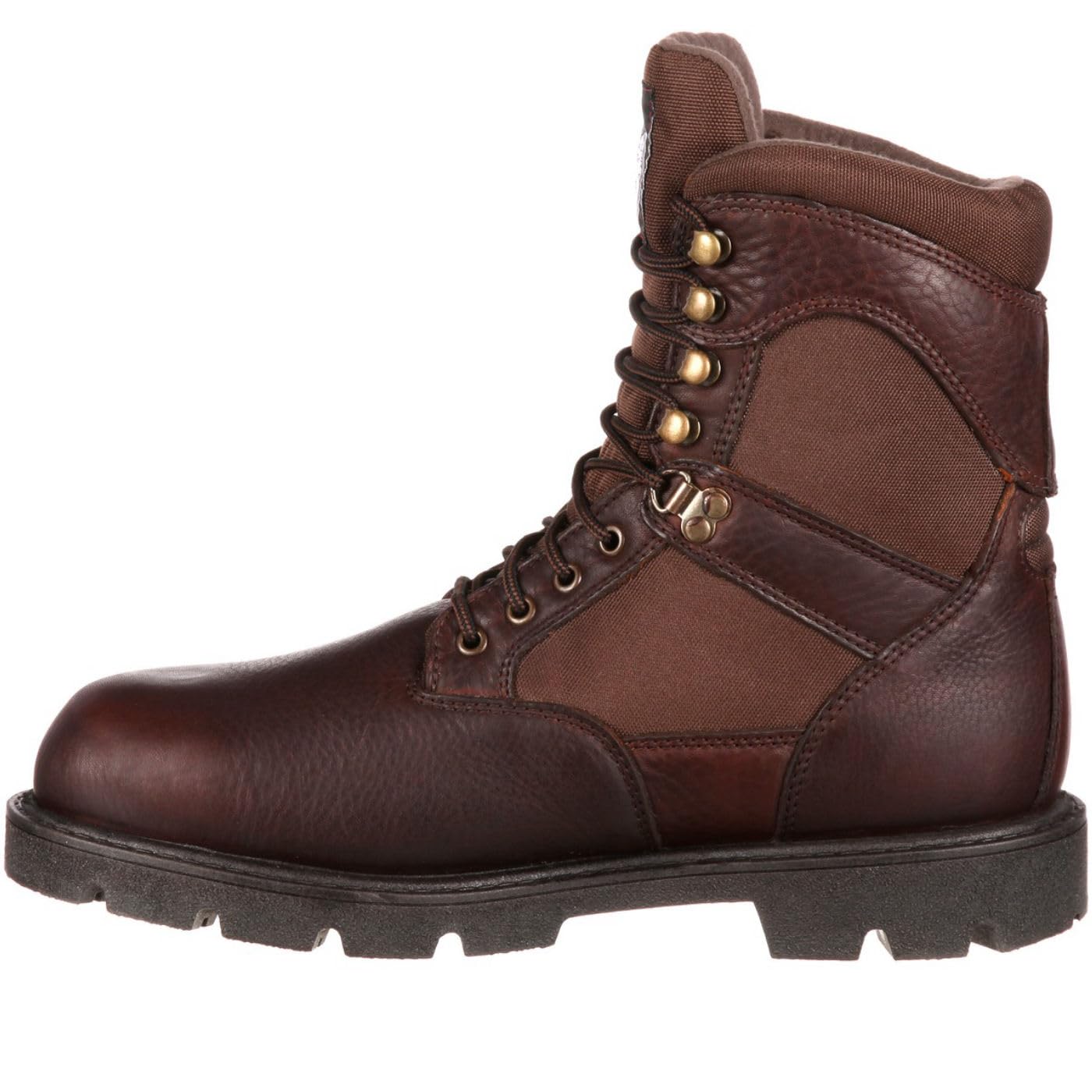
The mud-and-slurry specialist with an 8-inch wall and a grip that holds.
Some winter work is less about deep snow and more about the mess it leaves behind. This 8-inch waterproof insulated boot is built for exactly that: wet clay, muddy ruts, and a job site that turns to soup by midday. The waterproof insulated construction keeps the slop out, and the grip is what owners talk about most — the boot finds hold on wet Georgia clay and muddy slurry, long after a summer outsole would slick over.
Comfort is the other half of its reputation. It wears light on the foot for an 8-inch insulated boot, which matters if you are walking the site all shift rather than standing in one spot. The look earns praise too, a rare thing to say about a boot you are about to ruin in a mud pit.
The catch worth knowing: the listing does not publish an insulation gram count, so if you need a guaranteed warmth rating for extreme cold, look to the 1200 g Blizzard Stalker above instead. This one is for the worker facing wet and cold together, not the bone-dry deep freeze.
The mud-day case
- Waterproof insulated build sheds wet clay and slurry
- Grip holds on the slick stuff where grip matters
- Wears light for an 8-inch insulated boot
- Keeps feet warm on a cold shift
The fine print
- No published insulation gram count in the listing
- Not the warmest pick for standing in a deep freeze
Pick it for: wet, muddy outdoor work where traction and a waterproof wall matter more than a maximum insulation number.
Skip past it if: your winter means dry, brutal cold with no mud, where a higher-fill boot wins on warmth.
5. MUCK unisex-adult Arctic Pro
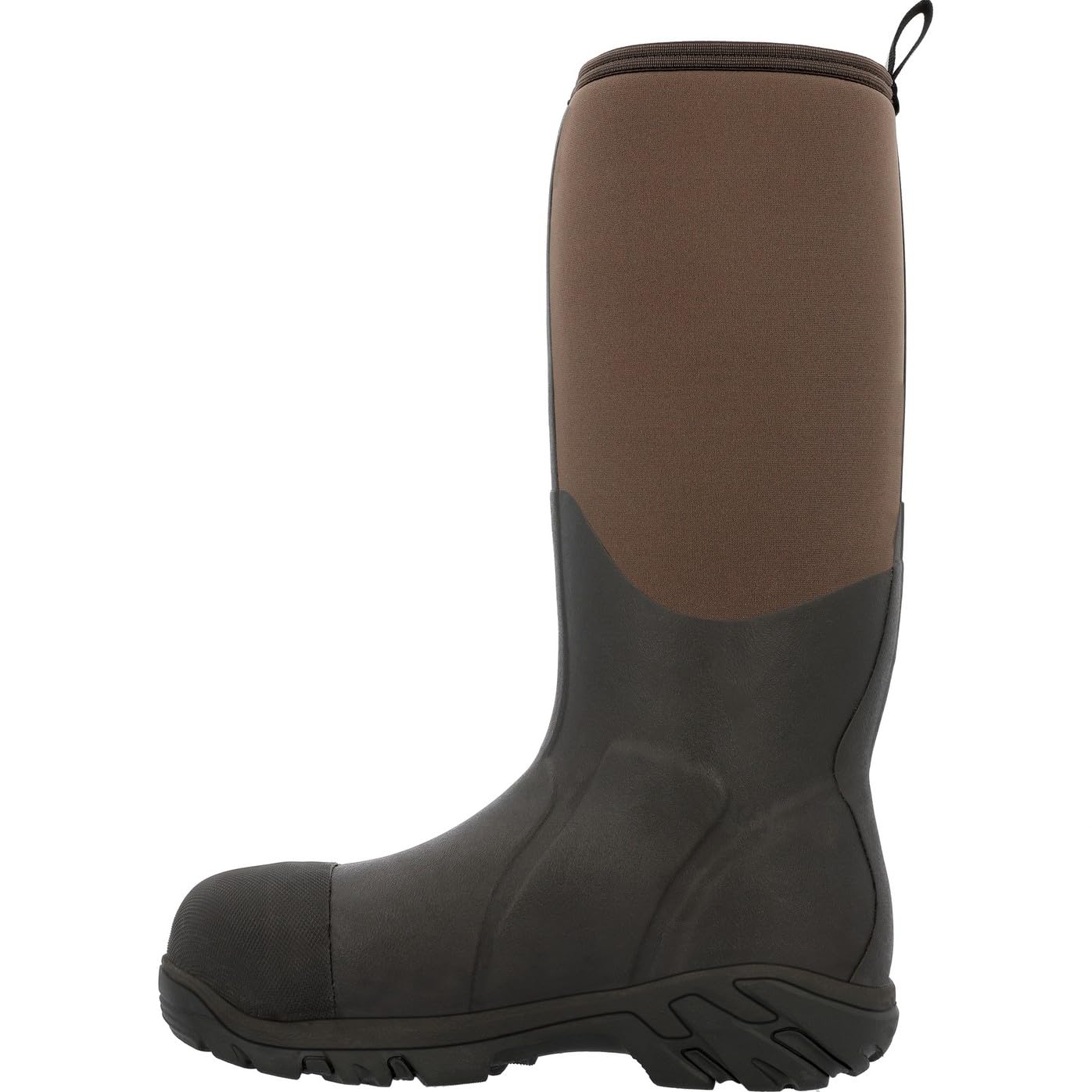
The rubber pull-on with a temperature rating that reaches far below freezing.
If your thermometer regularly dives into single digits and below, this is the boot built for it. MUCK rates the Arctic Pro comfortable from -60 °F/-50 °C up to 30 °F/-1 °C, a range that covers deep winter standbys. The warmth comes from thick 8 mm neoprene, a stretchy rubber that holds heat and cushions the foot, backed by 2 mm of thermal foam under the footbed and a warm fleece lining. No laces to fuss with — a stretch-fit topline snugs to the calf to seal warmth in and cold and debris out.
Quality and warmth drive the good word on this boot. The Bob-Tracker molded outsole is shaped for sure footing on ice and snow, and the steel toe carries an ASTM F2413-11 M I/75 C/75 EH rating, a published safety standard. The 17-inch shaft keeps deep snow well away from your ankle and lower leg.
The honest trade-offs: neoprene stretches, so the fit can run tight around the calf for some buyers, and a few units have been reported to wear out sooner than expected. At 6.9 pounds, it is a substantial boot to carry all day. For pure cold and snow, though, nothing else in this group is rated this low.
Coldest-rated in the group: a rubber neoprene build comfort rated to -60 °F, with a steel toe and an outsole made for ice.
Built for: deep-winter work and snow country where the mercury crashes and you need warmth guaranteed.
Worth a second look if: your calves run wide or you want a light, close-fitting boot — this one runs tight and heavy.
6. KEEN Utility Evanston Composite Toe Waterproof Insulated Work Boots
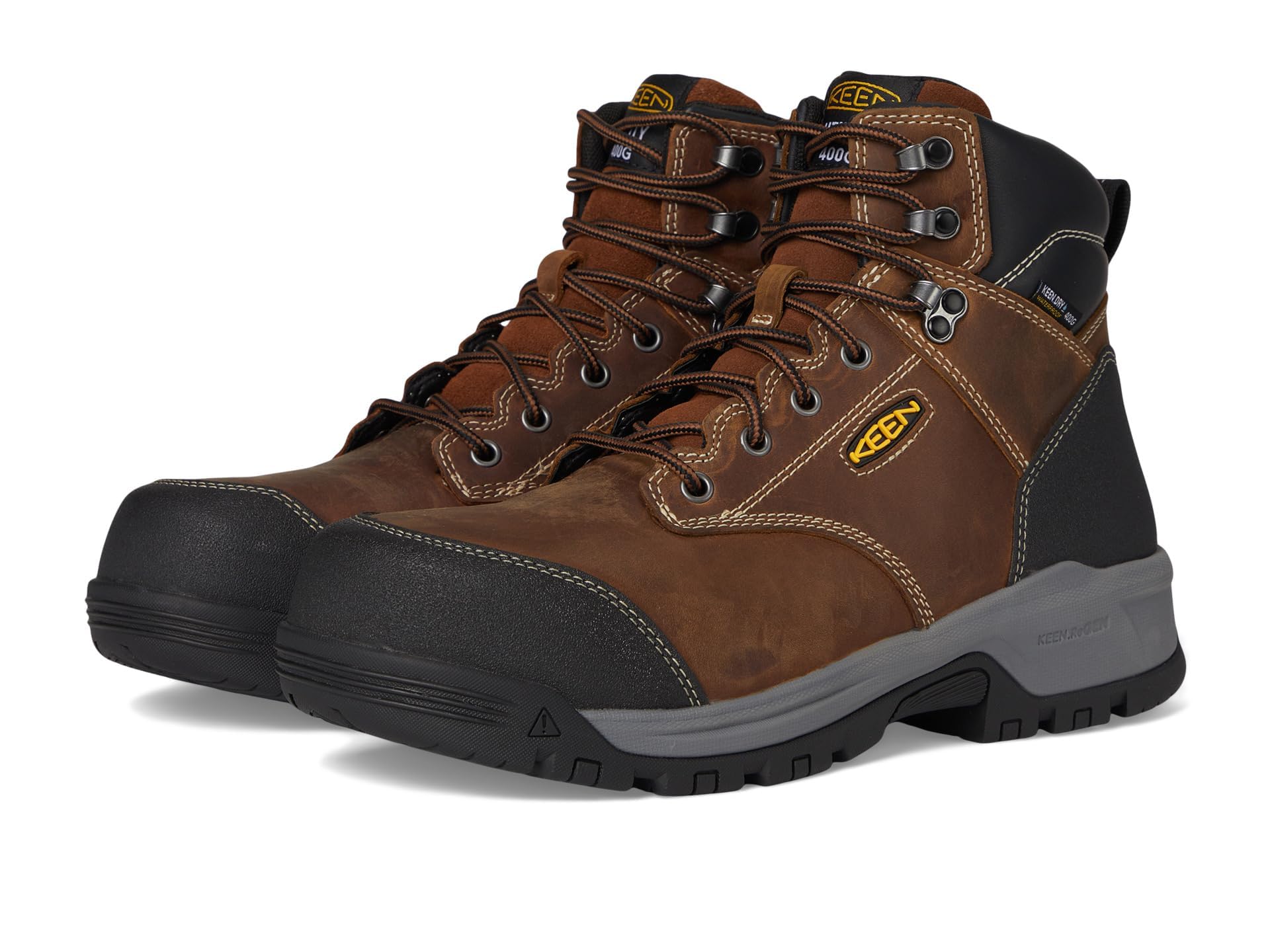
Light on the foot and built to propel you through a medium-duty site shift.
For construction, utilities, landscaping, and maintenance work, this 6-inch insulated boot is the practical pick. At 25.3 oz / 720 g per boot it stays light enough to keep your step quick all day. The energy-returning KEEN.ReGEN midsole — a cushioned layer that gives energy back with each step — and a carbon-fiber composite toe help here: the toe protects like a safety toe while cutting the metal weight.
Waterproof leather uppers shrug off the wet, and the build runs off KEEN’s traditional wider form, which suits a foot that feels cramped in a narrow boot. A 90-degree heel and an internal shank add stability. Quality and comfort lead the praise, and the LEED-aligned leather sourcing — leather from tanneries certified by the Leather Working Group — is a nice conscience point.
The sizing runs narrower than some expect despite the wider form, and a few owners have reported boots wearing out inside a short span. If you need a heavy 8-inch insulated boot for brutal cold, the Rocky Blizzard Stalker’s 1200 g fill out-warms this one; here you trade some warmth for a lighter, more athletic feel on a medium-duty site.
Where it shines on site
- 25.3 oz per boot keeps you light on your feet
- Carbon-fiber composite toe protects without steel heft
- Energy-returning KEEN.ReGEN midsole cushions every step
- Wider build suits a broader foot
Read before you buy
- Fit runs narrow for some buyers despite the wider form
- Durability feedback is mixed, with some wear reported early
Top choice for: medium-duty cold-weather site work where a lighter, cushioned boot and a composite toe matter most.
Consider the heavier option if: your job means standing in serious cold, where more insulation fill beats a lighter build.
7. Timberland PRO Mens 8 Direct Attach MaxTRAX Steel Toe WP SRO
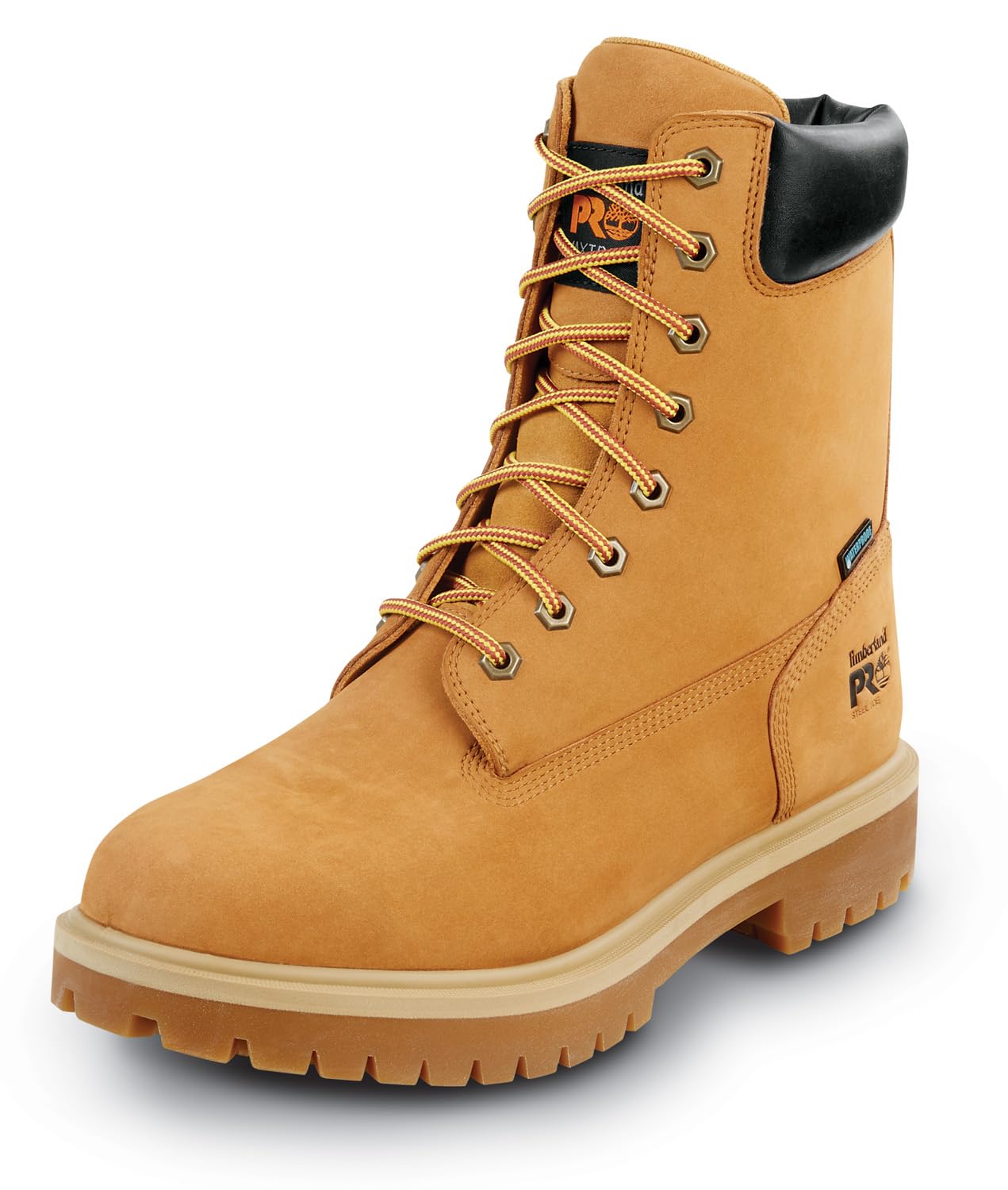
The slip-resistant workhorse with a steel toe and a waterproof leather wall.
Where ice and wet concrete meet, grip is the whole game. This Timberland PRO carries a patented SR Max MaxTrax slip-resistant tread — the outsole pattern tested to hold on slick surfaces — on a nonmarking TPU outsole that also shrugs off oil and abrasion. Under that sits a PU midsole and the Timberland PRO 24/7 comfort system, a cushioning build aimed at reducing foot fatigue across a long shift.
The 200 grams of Thermolite insulation is a lighter fill for active work, and the seam-sealed waterproof leather upper keeps the wet out. The steel toe carries an ASTM F2413-18 M/I/C EH rating, the current published safety standard, and quality is the strongest point across the review pages.
Be honest about the fit: it runs narrow, and buyers with a wide foot often need to size carefully or look elsewhere. Durability gets a mixed read, with some reporting years of service and others finding it wore early. The lighter insulation also means this suits a working winter, not a standing deep freeze.
The grip-first pick: a slip-resistant MaxTRAX tread with a steel toe and 200 g of insulation, built for slick ground and active shifts.
Great for: wet, oily, and icy work surfaces where slip resistance and a certified steel toe are the priority.
Not the fit for: wide feet or a job that means standing in deep cold, where less tread and more fill would serve you better.
8. Timberland PRO Men’s Direct Attach 6 Inch Steel Safety Toe Insulated Waterproof
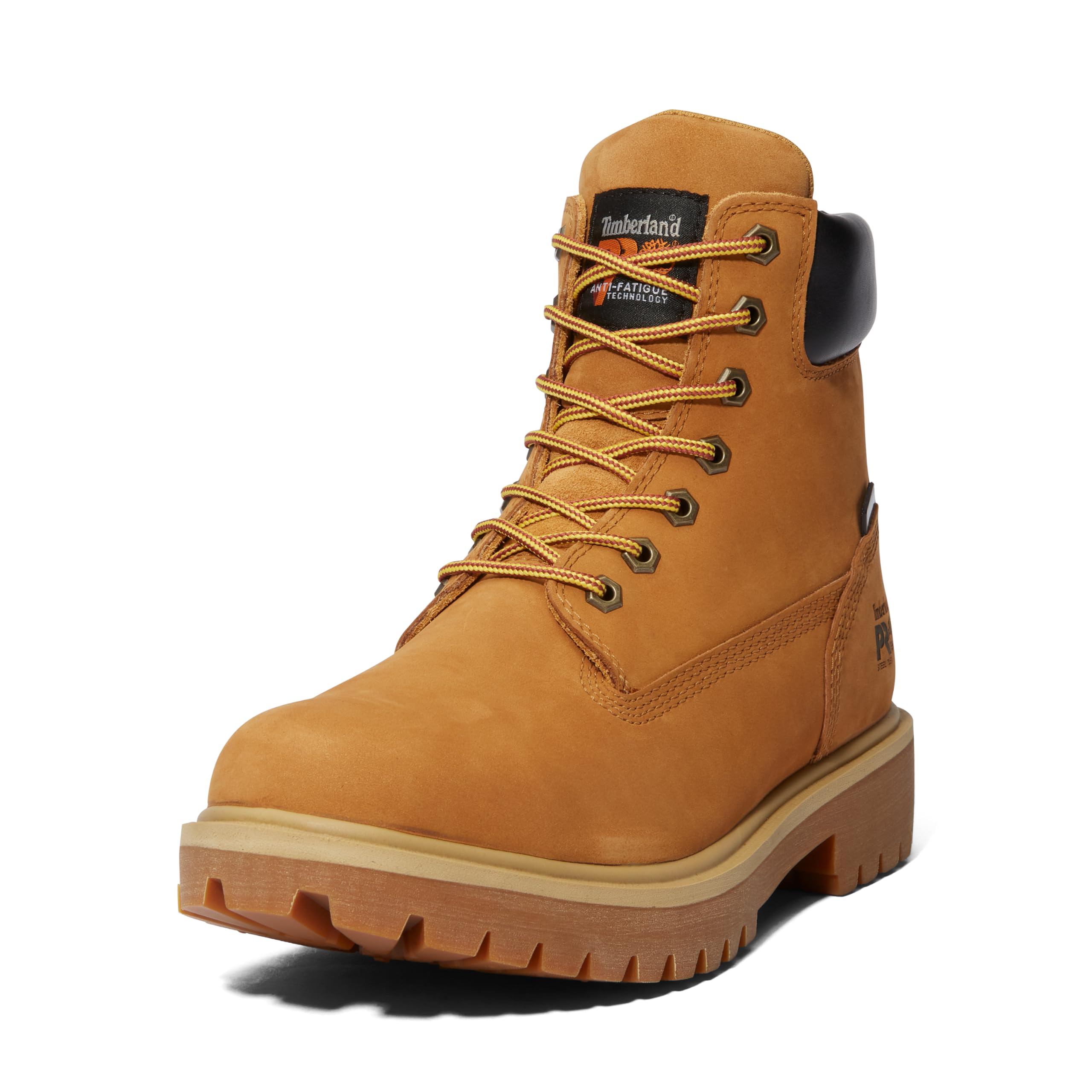
A warehouse-ready 6-inch steel toe that keeps your feet dry and warm through a shift.
This is the shorter, lighter sibling of the MaxTRAX above, built for a cold warehouse floor rather than an icy outdoor site. It puts 200 grams of insulation behind a seam-sealed waterproof leather upper with a padded collar, so a wet loading bay will not soak your socks. The steel toe keeps the ASTM F2413-18 M/I/C EH rating, the same published protection standard.
Where it earns its keep is all-day comfort. The Anti-Fatigue Technology polyurethane footbed is shaped to absorb shock and return energy with each step, and the breathable ReBOTL fabric lining wicks moisture away. That lining is made with at least 50% recycled plastic, a small win if you care where the materials come from.
The sizing is the one catch: it tends to run about half a size large, so try on or size down if you are between sizes. For warmth, the 200 g fill is modest — this boot handles a cold commute and a chilly warehouse, not a deep-field freeze. Pair it with a good sock and it is a solid daily driver.
The warehouse pick: a 6-inch seam-sealed waterproof steel toe with a shock-absorbing footbed, sized down half a step.
Made for: warehouse floors and cold-weather commutes where you want a certified steel toe without a tall insulated shaft.
Look elsewhere if: you need heaps of insulation for deep-field cold or you cannot try on a boot that runs large.
9. Carhartt Men’s Force Waterproof Insulated Work Boots
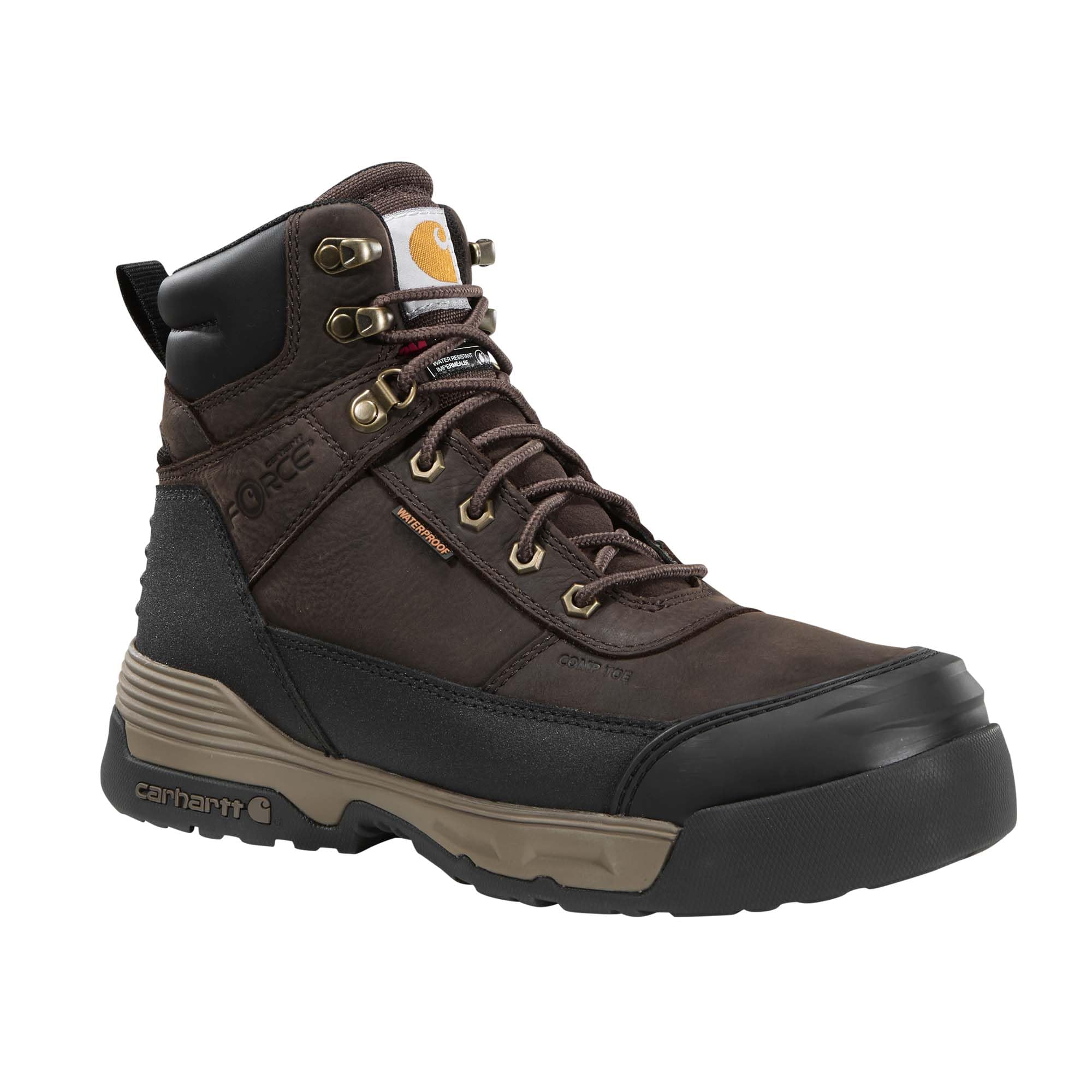
An athletic-feeling winter boot with 400 grams of fill and a no-break-in promise.
For a working winter day where you are moving constantly, this boot hits a smart middle. It carries 400 grams of 3M Thinsulate insulation, compared with 200 grams in the Timberland PRO Direct Attach above, so it runs warmer on a cold commute without the swampy feel of the heavy 1200 g boots. The Storm Defender breathable waterproof barrier keeps wet out while letting vapor escape, and the FastDry moisture-wicking lining pulls sweat away.
The LWD midsole gives an athletic, responsive feel, and the Insite footbed cushions through a long shift. Underfoot, the slip-resistant rubber outsole has been tested to withstand high heat surfaces, which helps if you cross a hot loading zone. A molded rubber toe cap and PU-coated mudguard and heel take the scuffs so the leather does not.
Quality leads the praise, and owners note there is no break-in period — you can wear them straight onto the job. The one thing to weigh is the lighter 400 g fill: it is a working winter boot, not a deep-freeze one. If you stand still in brutal cold, step up to the higher-fill options above.
Why active workers like it
- 400 g of 3M Thinsulate balances warmth with movement
- No break-in period before you can wear them on the job
- Athletic LWD midsole with a cushioned Insite footbed
- Slip-resistant outsole tested for high-heat surfaces
Keep in mind
- Lighter fill is not built for standing in extreme cold
Ideal for: the worker who is on the move all winter and wants warmth, waterproofing, and an athletic feel with no break-in wait.
Less ideal for: stationary deep-freeze duty, where a heavier insulation fill would keep you warmer.
10. SAFETOE Waterproof Cow Leather Safety Boot 8-inch Composite Toe

A top-layer cow leather site boot with a composite toe and a gift pair of socks.
For construction crews, welders, truck drivers, and warehouse hands, this 8-inch composite-toe boot brings serious protection to a cold-weather shift. The toe meets ASTM F2413, the published safety standard for protective footwear, but it is composite rather than steel, which lightens the load on each foot. The upper is top-layer nubuck cow leather with a Sanvlar-Tex WR barrier for water resistance, and thermal insulation keeps the cold from biting through.
Comfort is built in through a Four Layer Rebound (4LR) construction — a layered platform meant to keep you stable — and a lightweight memory foam insole that soaks up impact. The boot targets harsh construction sites, and the makers offer a replacement policy for quality issues inside 180 days. A gift pair of moisture-control work socks comes in the box, a small but useful touch.
The fit needs care: these are considered unisex but run on men’s sizing, so check the size chart before ordering. The waterproof story here is water-resistant rather than a fully sealed membrane, which is fine for snow and damp, but not for wading through puddles all day.
The composite-toe value: top-layer cow leather with an ASTM F2413 composite toe, thermal insulation, and a memory foam insole at a construction-site level.
Suits you if: you need a protected, insulated site boot and a composite toe keeps your step lighter than steel.
Watch the fit if: you are unsure of men’s sizing, or you need a fully sealed waterproof boot for standing water.
11. ANGRYRAM Winter Steel Toe Boots for Men
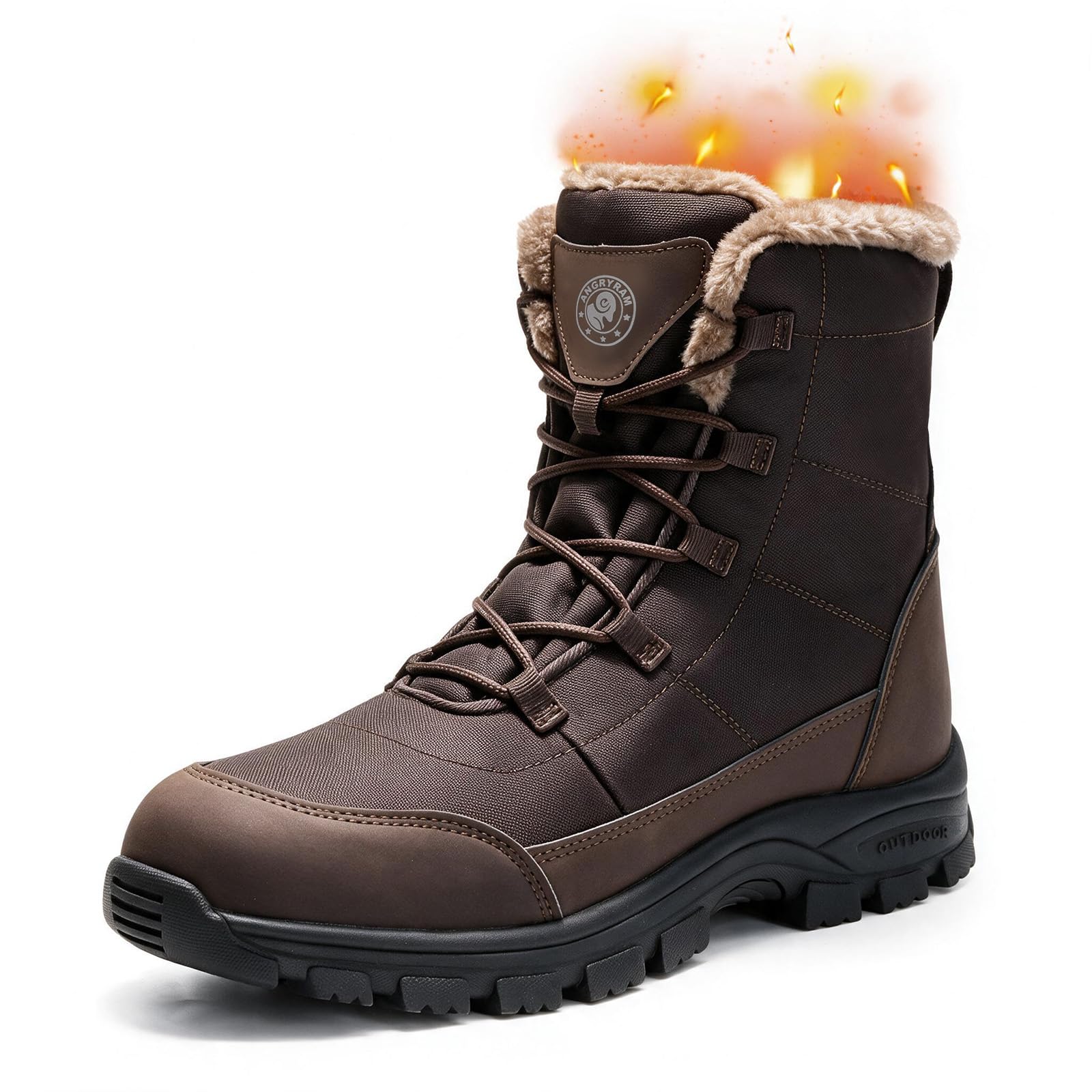
The entry-level steel toe that still brings a fleece lining and a protective sole.
If your winter work budget is tight but you still need a safety toe, this is where to start. The steel toe carries an ASTM F2413-18 rating, the published protective-footwear standard, so you are getting real toe protection rather than a lookalike. A puncture-resistant midsole guards the sole of your foot against a nail or sharp debris, and a warm fleece lining plus a slip-resistant outsole round out the winter kit.
It is pitched for construction sites and cold-weather outdoor jobs, with basic materials rather than the full-grain leather of the boots higher up this list. It works as a first snow work boot or a spare pair for the truck.
The catch is the budget build. The outsole and upper are not the same grade as a full-grain leather boot, so expect less long-term durability than a Goodyear-welted pair. If you need a decade of wear, spend up; for a season or two of protection and warmth, it does the job.
The budget start: ASTM F2413-18 steel toe protection, a puncture-resistant midsole, and a fleece lining for cold-weather work on a lean spend.
Worth it for: a first safety boot or a spare pair for the truck when protection and warmth matter more than premium materials.
Step up if: you need a boot built to last many winters of hard wear, where leather and welted construction pay off.
Know the Specs
Insulation grams (Thinsulate, Thermolite)
Insulation fill is measured in grams, and it tells you how much warmth the boot traps. A low fill like 200 g of Thermolite suits active work where you generate your own heat, while 1,000 g to 1,200 g of 3M Thinsulate Ultra is built for standing still in serious cold. The higher the number, the warmer your feet stay in the cold — and the more likely the boot feels hot if you are hustling. Match the fill to how much you move, not just how cold it gets.
Waterproof construction vs water resistance
A waterproof construction, whether a GORE-TEX or Rocky membrane or a seam-sealed leather upper, blocks meltwater from getting in while letting sweat vapor escape. A water-resistant finish only shrugs off a light dusting of snow before it soaks through. For a snowy job site, insist on the word waterproof in the build, because that is what keeps your socks dry through a full wet shift.
Steel toe vs composite toe
Both toe types protect against a dropped load and carry the same ASTM F2413 standard. Steel is the traditional metal cap; composite, including carbon-fiber versions, does the same protective job without the metal, which trims weight on each foot. If you want a lighter boot for all-day movement, the composite toe is the comfortable pick. Either way, the protective rating is the thing to verify.
Outsole and slip resistance
The outsole is the bottom rubber that meets the ground, and on snow its tread pattern and compound decide whether you stay upright. A slip-resistant rating or a traction-focused design grips slick, wintry ground where a plain summer sole would slide. Look for terms like slip-resistant tread or a multi-directional pattern built for ice and uneven snow.
Common Questions
Will a steel toe boot keep my feet warm in the snow?
How much insulation do I need for winter work boots?
Do insulated snow work boots run large or true to size?
Is a composite toe safe enough for construction work?
Can I wear snow work boots indoors or in a warehouse?
How long do insulated waterproof work boots usually last?
Are GORE-TEX work boots actually waterproof for snow and slush?
What is the warmest work boot for sub-zero temperatures?
Should I size up for thick winter socks in insulated work boots?
Do snow work boots need a slip-resistant outsole for ice?
The Bottom Line
For most winter workers, the work boots for the snow winner is the Irish Setter Elk Tracker 12″ because it pairs a GORE-TEX waterproof membrane with 1000 g of 3M Thinsulate Ultra insulation in full-grain leather — the most complete cold-weather package here, with 4.5+ stars across 800+ owner reviews. If you want a lighter boot that stays warm through active work, grab the Carhartt Force Waterproof Insulated with its 400 g of 3M Thinsulate and no break-in wait. And for deep, hard cold where warmth is the whole game, the MUCK Arctic Pro is the one to reach for, comfort rated all the way to -60 °F.
How we choose
We do not accept paid placement. Every pick is matched to a real buyer and a real use-case; we do not hands-on test units.
Sources
Specifications: manufacturer listings and product documentation. Review insights: verified customer reviews. Pricing: not shown on this page (it changes often); check the current price via the retailer link.
As an Amazon Associate, Tactical Gear Guy earns from qualifying purchases. This does not affect which products we feature.