Specs are compiled from manufacturer listings and verified buyer reviews and can change over time — please confirm the key details on the product page before buying.
You want a running layer that handles sweat without turning into a soggy, smelly mess by mile three. Merino handles sweat better than polyester — but only if you pick the right weight and wool content. This guide sorts nine real wool options by what each one actually does for a runner, from a heavy thermal pant for cold-weather base layering to a lightweight tee you can wear for back-to-back runs.
This guide is built by comparing the manufacturers’ published specifications and the patterns across verified customer reviews, so you get each pick’s real strengths and trade-offs instead of marketing spin.
Every pick here is a genuine wool garment, not a synthetic blend wearing a wool label. The quick comparison table below lines up fabric weight, wool content, and fit so you can spot the right layer for your climate and effort level in seconds. Here is the honest breakdown of the Best Wool Running Gear for real runners.
Top Picks

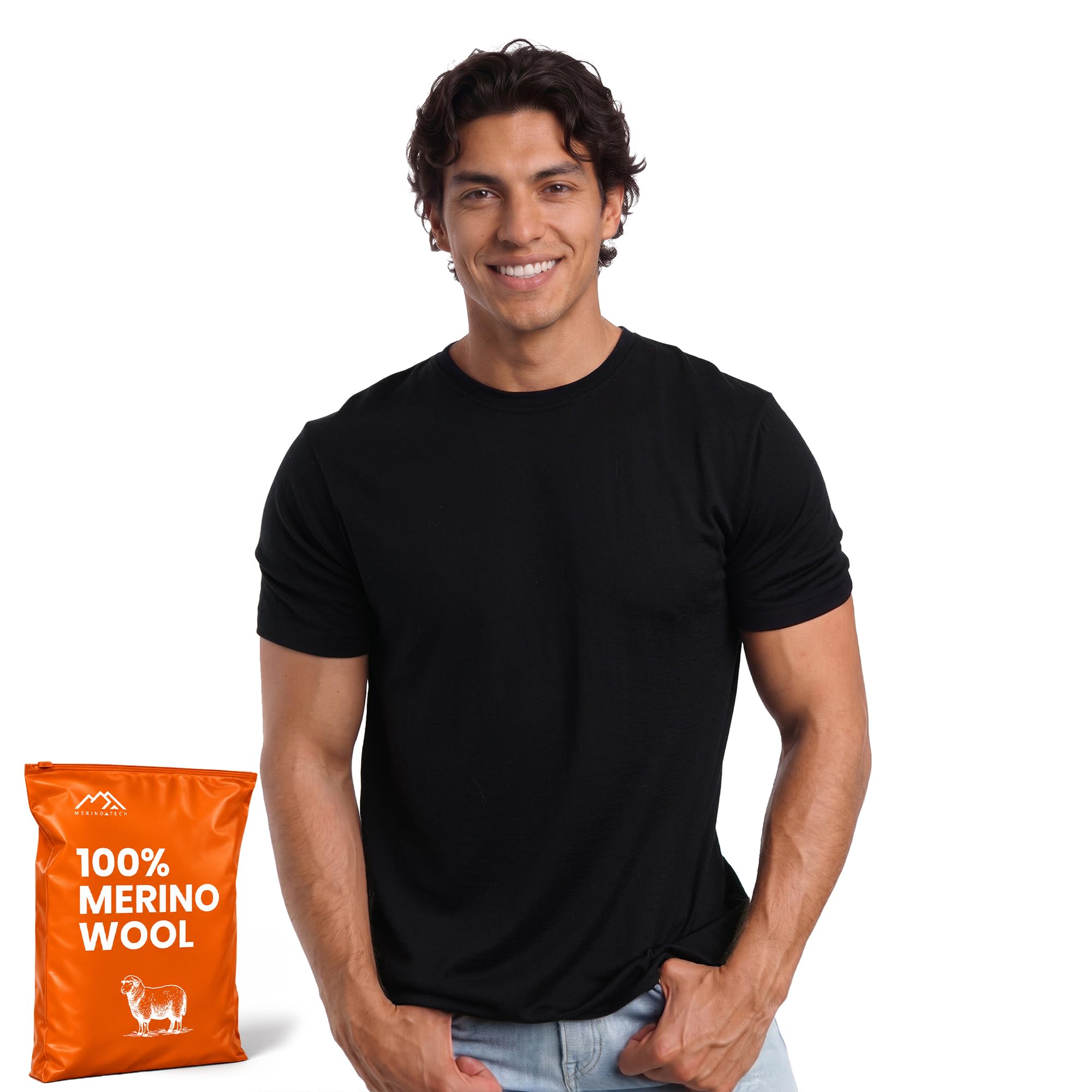

How To Choose The Best Wool Running Gear
Running in wool is a different decision than buying a wool sweater. You are picking a next-to-skin layer that will get soaked with sweat, stretched across your shoulders, and washed often. The fabric has to move moisture, dry fast, and hold its shape — and the wool content has to be high enough to actually deliver odor resistance.
Fabric weight is the first thing to lock in
Merino weight is measured in gsm (grams per square meter — basically how much fabric sits in a square meter, so a higher number means a thicker, warmer layer). A lightweight layer around 165gsm suits high-output efforts like trail running and cool-weather cycling. A midweight around 250gsm is for colder days and lower-output moments, like waiting at a trailhead or resting at camp. A heavyweight 400g layer is for serious cold and low movement, not for sweating hard.
Check the wool percentage before anything else
A “merino” label means little on its own. Look for 100% merino wool if odor resistance and temperature regulation matter most to you. Blends with nylon or polyester add durability and stretch, but they also cut down on the natural odor-fighting properties that make wool worth the spend.
Fit and seam placement decide comfort on long runs
A running base layer should sit close to the body without bagging at the waist or bunching under the arms. Flat seams reduce rubbing where a pack strap or waistband presses in. If you plan to layer under a shell, a slimmer cut keeps everything from twisting mid-stride.
Be realistic about durability
Fine merino is soft because the fibers are thin, and thin fibers wear through faster than coarse ones. Wash on a gentle cycle or by hand and air dry to get more seasons out of a lightweight tee. That care habit matters more with merino than with almost any other running fabric.
Side-by-Side Comparison
| Model | Best For | Wool Content | Fabric Weight | Style | Amazon |
|---|---|---|---|---|---|
| MERIWOOL Heavyweight 400g Thermal Pants★ Best Overall | Cold-weather base layering | 100% Merino Wool | 400g heavyweight | Thermal pants | Amazon |
| Merino.tech Short Sleeve Thermal Base LayerBest Value | Everyday running tee | 100% Merino Wool | Lightweight | Short sleeve | Amazon |
| Merino Protect V Neck T-ShirtBest for Heat | Hot-weather running | 100% Merino Wool | — | V-neck short sleeve | Amazon |
| SHEEP RUN Lightweight Base Layer T-Shirt | High-intensity workouts | 100% Merino Wool | 170gsm | Short sleeve | Amazon |
| MERINNOVATION Long Sleeve Base Layer Top | Trail running and cycling | 100% Merino Wool | 165gsm or 250gsm | Long sleeve | Amazon |
| Merino.tech Quarter Zip Sweater | Chilly-morning runs | 100% Merino Wool | Midweight | Quarter zip long sleeve | Amazon |
| MERIWOOL Base Layer Hoodie | Cold-weather running with hood | 100% Merino Wool | Lightweight | Hoodie | Amazon |
| MERINNOVATION Base Layer Set | Multi-day trips and sleep wear | 100% Merino Wool | 165gsm or 250gsm | Top and bottom set | Amazon |
Detailed Reviews
1. MERIWOOL Mens 400g Thermal Pants
Our pick — 4.5+★ from 750+ verified ratings; the strongest balance of quality and price.
The heavyweight wool pant that turns a winter run into a warm one.
This is the thickest layer on the list — 400g merino, built for the kind of cold that makes you second-guess a run. The pants are meant to sit under your outer layer, not replace it, so think of them as the warm foundation for a winter session. Buyers comparing them to neoprene note the fabric adds the insulation equivalent of 1mm of neoprene, which is a useful benchmark if you already know how that feels against your legs.
The quality of the wool is the part people keep coming back to — it is consistently called one of the best merino brands, and the fabric feels soft against the skin rather than scratchy. That matters for a layer that sits directly on your legs for the whole run. The fit runs large, which most buyers treat as generous sizing rather than a problem, but it does mean you should size down if you want a snug layer.
The honest trade-off is weight and warmth. At 400g, these pants are not for mild mornings or high-output summer running — they will cook you. A few buyers also flag that the thickness and durability are worth watching over time, since heavyweight merino can wear at high-friction points. Treat them as a cold-weather specialist and they will earn their place in your winter kit.
What earns the top spot
- 100% merino wool at 400g — serious warmth for cold-weather base layering
- Soft against the skin, not the scratchy wool you might remember
- Generous sizing that leaves room for a base layer underneath
- Quality is the thing buyers return to most in reviews
Where it stops being the right pick
- Too warm for mild conditions or high-output summer runs
- Runs large, so size down for a snug fit
- Heavyweight merino needs gentle washing to hold up
Grab these if: your winter runs happen in real cold and you want a wool foundation under your outer layer.
Look elsewhere if: you run in mild weather or want a single layer you can wear year-round — these are cold-weather specialists.
2. Merino.tech Short Sleeve Thermal Base Layer
A do-everything merino tee that costs less than most running shirts.
If you want to try wool running without committing to a premium price, this short sleeve is the entry point. It is 100% merino, lightweight, and rated UPF 50+ (sun protection that blocks most UV rays) — so it works as a summer running shirt and a warm-weather base layer. The fabric regulates temperature in both warm and cool conditions, which is the whole reason wool makes sense as a running fabric.
Where it earns its keep is the odor resistance. Merino resists the odor that builds up in synthetics, so this tee stays fresh across several runs between washes. The fit extends below the waist so it tucks into pants without riding up, and the lightweight build means it layers under a jacket without bulk. It is machine washer and dryer safe, though hand washing and air drying will extend its life.
The catch is sizing. Buyers split on whether it runs true or small, so check the size chart carefully before ordering — a snug running fit is fine, but a too-small tee is not. Durability is also a watch point; lightweight merino can develop thin spots over time if you wash it hard. Neither issue is universal, but both are worth knowing before you buy.
The everyday winner: this is the tee you reach for when you want wool benefits without a premium price. It works for the trail, the gym, and the office, and the UPF 50+ rating makes it a solid summer running choice.
Reach for this if: you want an affordable wool running tee you can wear daily and wash often.
skip it if: you need a precise fit right out of the bag — sizing is inconsistent enough that you should measure first.
3. Merino Protect V Neck T-Shirt for Women
The women’s wool tee that stays comfortable when the temperature climbs.
This one is built for hot-weather running. The merino manages moisture as you sweat, and the soft texture feels gentle against the skin even on humid days. The V-neck cut and short sleeves keep airflow moving, which is what you want when the run gets sweaty. The color options are a real draw too — wool running gear often comes in dull shades, and this one gives you choices.
Beyond the heat, the odor resistance is the headline. Merino resists the bacteria behind odor, so this tee handles several wears between washes without turning rank. The fit is consistently called beautiful and true to size, and it holds its shape after washing — one detail buyers specifically call out as a relief, since wool can shrink if you are careless.
The honest caveat is durability. Several buyers report holes developing over time, which is the trade-off of fine merino that feels this soft. If you run hard and wash often, expect to treat this tee gently and check the seams. It is still a strong pick for hot-weather runners who want wool’s comfort and odor control — just go in knowing it is a delicate fabric.
Why hot-weather runners like it
- Merino manages moisture and stays soft against skin in heat
- Odor resistance holds up across multiple wears
- True-to-size fit that keeps its shape after washing
- Color options that go beyond basic wool shades
The honest fine print
- Durability is the weak point — holes can develop over time
- Needs gentle washing to last
- Fine merino is a delicate fabric by nature
Made for: women running or hiking in heat who want wool’s odor control and a soft feel next to skin.
Think twice if: you wash running gear on heavy cycles — this tee rewards gentle care.
4. SHEEP RUN Men’s Lightweight Base Layer T Shirt

A fine-gauge 170gsm tee built for sweat and speed.
The number that matters here is 170gsm — a lightweight fabric that suits high-output efforts like running, cycling, and skiing. The merino yarn is sourced from New Zealand and Australia at 17.5-19.5 micron, which means the fibers are fine enough to feel soft against the skin rather than itchy. Flat seams reduce rubbing and bunching, which is the detail that separates a running tee from a casual one.
Wool’s natural moisture handling is the reason this shirt works when you sweat. The fibers wick sweat off your skin and can absorb up to 30% of their dry weight before the fabric feels wet. That means even on a hard run, the fabric surface stays dry against your body. Odor resistance follows the same logic, so you can wear it for several sessions without washing.
What holds this back is inconsistency. Some buyers question the authenticity of the wool, and durability is a recurring concern — the fabric can develop holes after a few washes. The fit also splits opinions, so check sizing. None of that makes it a bad shirt, but it does mean you should treat it as a lightweight performer rather than a buy-it-once workhorse.
The fine-gauge edge: at 170gsm with 17.5-19.5 micron fibers, this is one of the softest lightweight options on the list — good for runners who hate the itch of traditional wool.
Pick this when: you want a featherweight wool tee for sweaty workouts and care more about breathability than long-term durability.
Look elsewhere if: you need a shirt that survives years of hard washing — this one is a lightweight, not a tank.
5. MERINNOVATION Long Sleeve Thermal Shirt
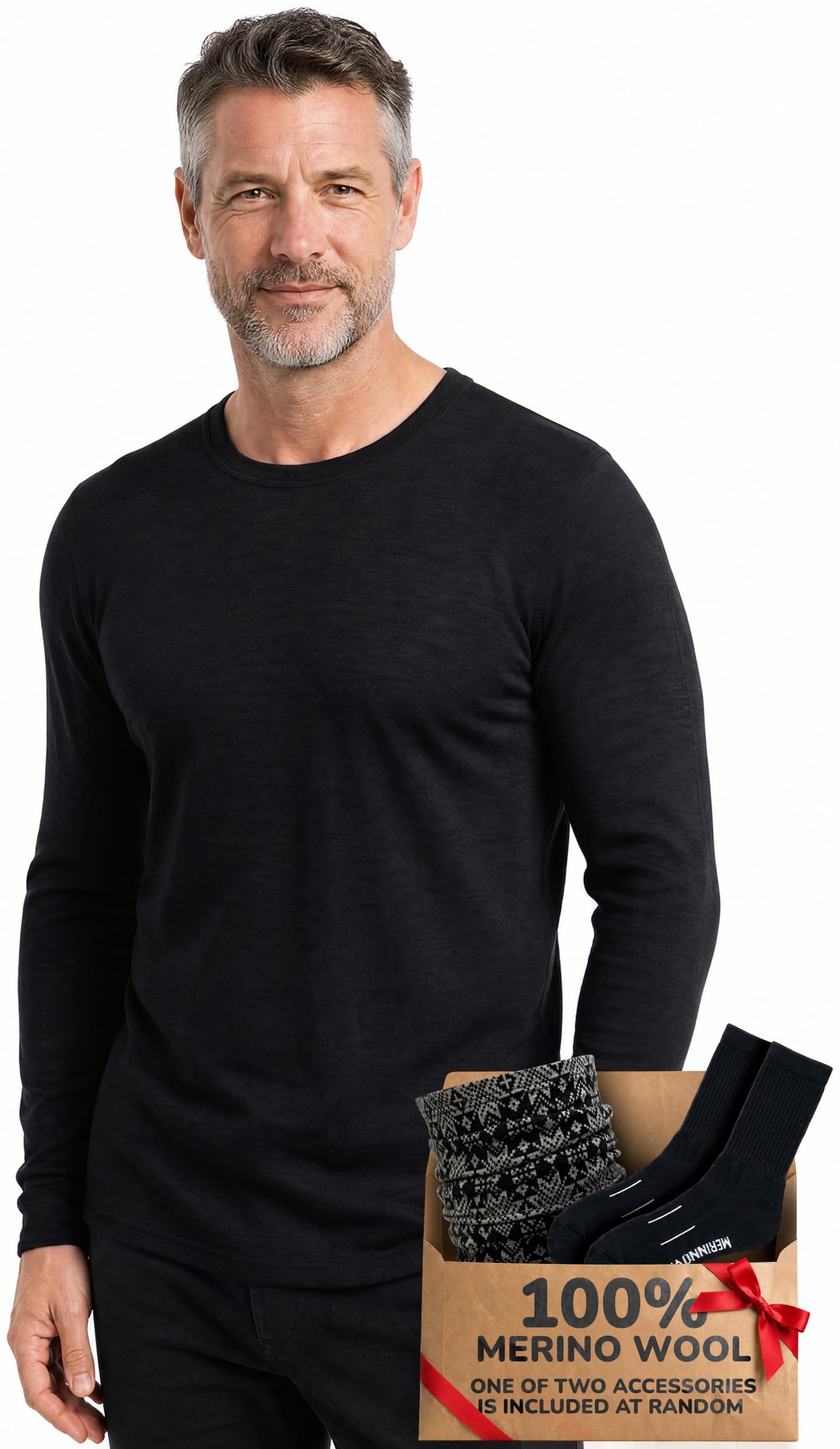
Two fabric weights, one layer that follows your effort level.
This top comes in two weights for a reason. The 165gsm lightweight version is cut for trail running, uphill skiing, and cool-weather cycling — high-output activities where you want warmth without bulk. The 250gsm midweight handles colder days and lower-output moments, like standing around at a trailhead or resting at camp. That choice is the whole value here: you match the shirt to the conditions instead of owning one layer that is wrong half the year.
The fiber is 100% merino, and the natural crimp of the wool traps small pockets of insulating air — that is how it keeps you warm without feeling heavy. The slim athletic fit sits close to the body without adding bulk at the shoulders or waist, and the sleeves are cut to stay covered through movement and under glove cuffs. It is soft against the skin, which matters for a layer you wear for hours.
The mixed feedback is on fit. Some buyers find it true to standard US sizing, others find it snug, so measure before you commit if you are between sizes. The shirt is light — about 7.8 ounces — which makes it easy to pack but also means it is a layering piece, not a standalone jacket. Set your expectations to a base layer and it delivers.
The conditions matcher: the 165gsm version is the faster, cooler layer for hard efforts; the 250gsm version is the warmer pick for low-output cold days. Choose the weight, not just the shirt.
Best for: runners who want one wool top that adapts to different effort levels and climates.
Not quite it if: you want a relaxed fit — the athletic cut sits close to the body by design.
6. Merino.tech Quarter Zip Sweater Women

The quarter zip that adds a zip-neck layer to your chilly run.
A quarter zip is the layer you want when the temperature is borderline and you need to dump heat mid-run. The zip neck lets you vent without stripping off the shirt, and the midweight merino keeps warmth in when you stop moving. It is rated UPF 50 for sun protection, which adds value for early-season runs and long days outside.
Wool warmth is the headline here — buyers specifically call out that it handles chilly running temperatures well. The soft texture is the other thing they mention, describing it as feeling like a second skin rather than an itchy layer. It is machine washer and dryer safe, though hand washing and air drying extend the life of the merino.
The fit is the honest wrinkle. Some buyers find it true to size, others note it runs differently — and the free socks that sometimes come with it run very large, so do not judge the shirt’s fit by the socks. The 1/4 zip design also means it is a layer, not a standalone jacket, so pair it with a shell on wet days. For a midweight layer with real warmth, it is a solid choice.
The zip-neck advantage
- Quarter zip vents heat mid-run without removing the layer
- Midweight merino warms well on chilly mornings
- Soft, second-skin feel against the body
- UPF 50 sun protection for long days outside
What to size-check
- Fit splits between true-to-size and snug
- The free socks run very large — do not use them to judge fit
- As a layer, it needs a shell in wet weather
Go for this if: you want a warm quarter zip you can vent on the move in cool-to-cold conditions.
Pass if: you need a single shirt for hot weather — this is a midweight layer with real warmth.
7. MERIWOOL Men’s Hoodie Lightweight Merino Wool
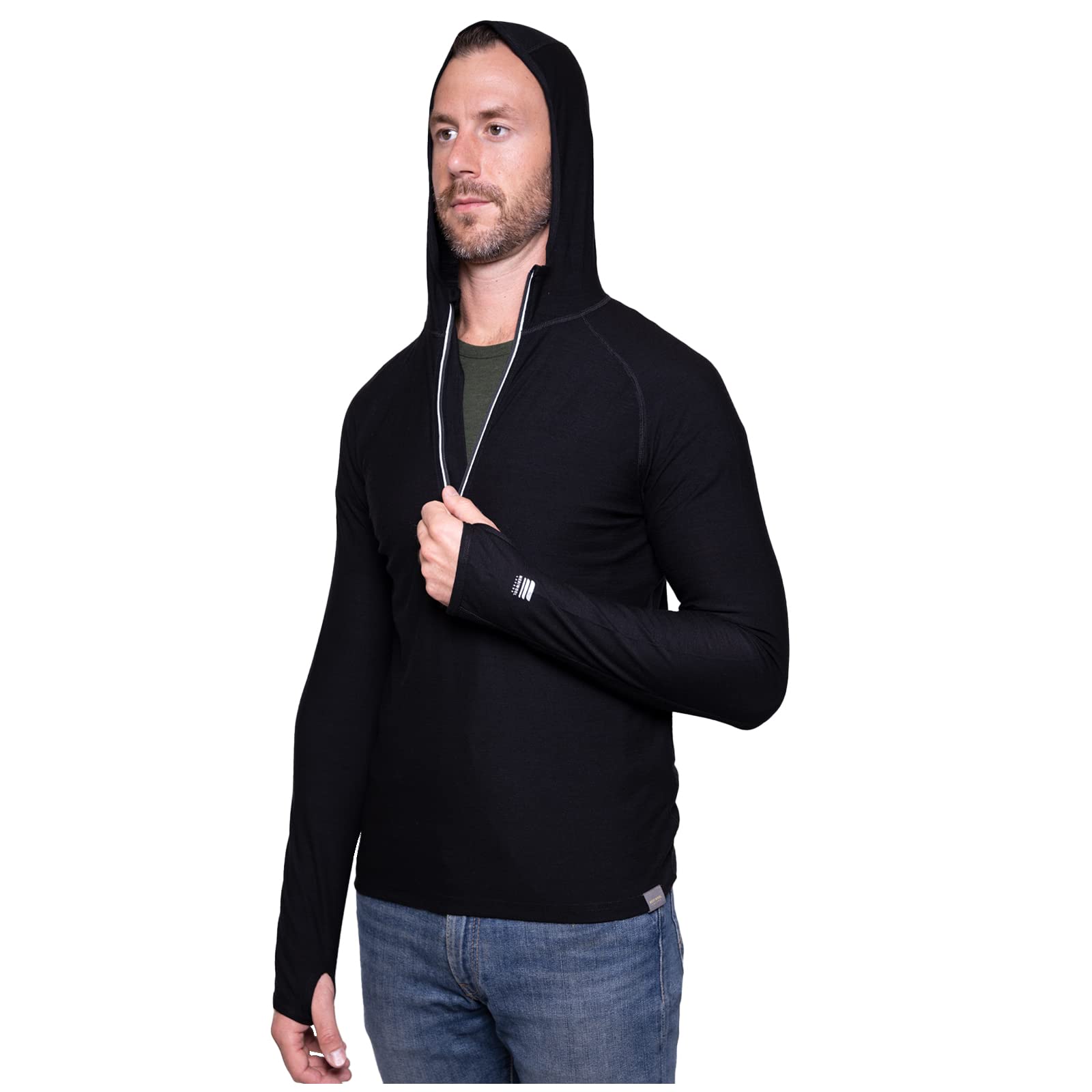
A wool hoodie that keeps your head warm while you move.
There is a gap in most running kits between a base layer and a jacket, and this hoodie fills it. The hood covers the gap at your neck and head that a crew neck leaves open, which is exactly where you lose heat on a cold morning. The merino regulates temperature as your effort rises, so you are not stripping layers off halfway through the run.
Buyers use it across the board — under a climbing helmet, as a base layer on chilly mornings, and on its own in cool weather. The wool is soft and the material gets consistent praise for quality. It resists odor, so you can wear it for several sessions between washes, and it moves with you rather than against you during exercise.
The fit is the recurring note. The large size runs very tight, according to some buyers, so size up if you want room for a layer underneath. As a lightweight hoodie, it is not a windproof shell — pair it with a jacket on exposed runs. For cool-to-cold training where you want a hood and wool warmth, it is a strong layer.
The hood advantage: the hood covers the neck and head gap that most base layers leave exposed — a real difference on cold morning runs.
Worth grabbing if: you want a hooded wool layer for cold-weather running, hiking, or climbing.
Skip if: you are between sizes and need a relaxed fit — the large runs tight, so go up.
8. MERINNOVATION Merino Wool Base Layer Set Lite
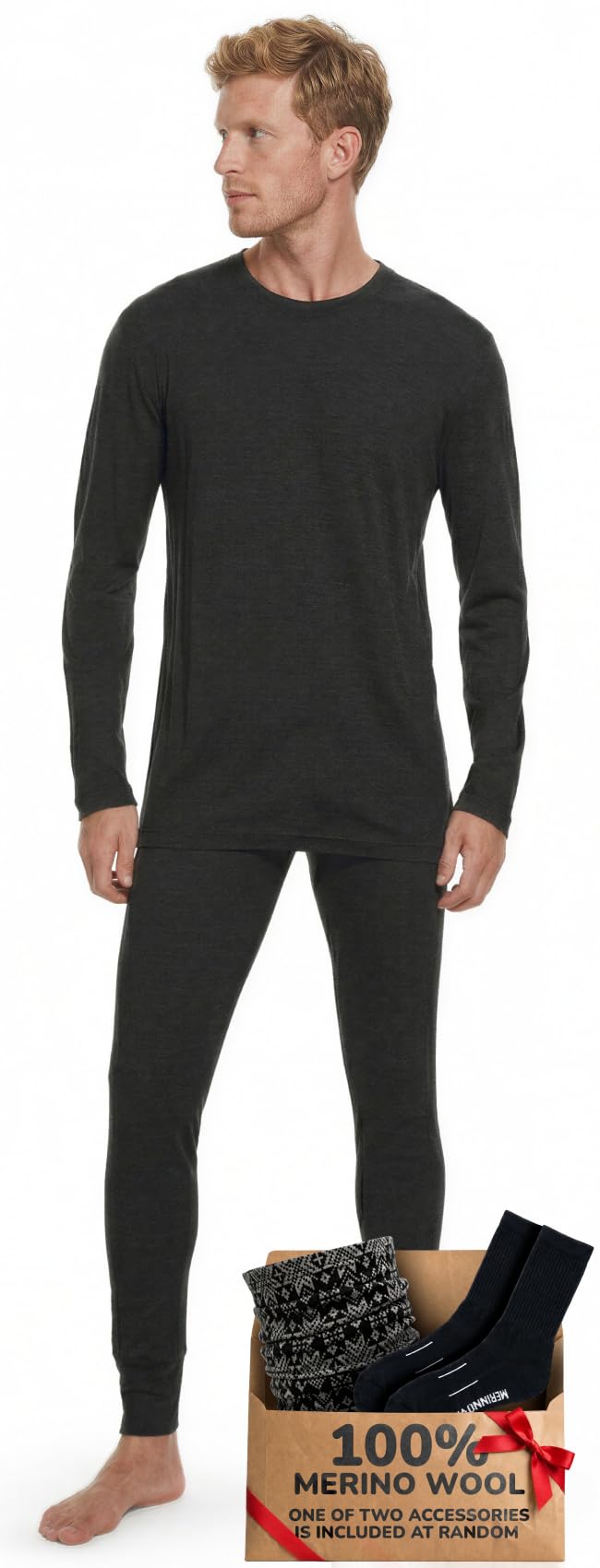
One set that covers the run, the trail, and the sleep in between.
This is a matched top-and-bottom set, not a single shirt. Both pieces are 100% merino wool, and you pick the weight: 165gsm for higher-output activity and milder cold, 250gsm for sustained cold and lower-movement days. That makes it a useful option for multi-day trips and cold-weather travel where you need a full base layer system rather than one piece.
The odor resistance is the reason a set like this earns its place in a travel bag. Merino naturally resists the bacteria that cause smell, so it holds up through multiple consecutive days of use — long hikes, travel days with limited laundry, back-to-back training sessions. The merino knit also vents heat as your effort rises instead of trapping it against your skin.
The honest note is sizing. Some buyers find it true to size, others say it runs small, so measure before ordering. Durability is also mixed — it holds up well when washed by hand, which is the care routine this set prefers. A few buyers also mention that the set’s warmth is best suited to cold conditions, so it is not the pick for mild-weather running.
Why a set makes sense
- Matched 100% merino top and bottom in one purchase
- Two weights for different conditions and effort levels
- Odor resistance for multi-day wear without washing
- Works as sleep wear, base layer, or standalone in moderate cold
What to plan for
- Sizing splits between true-to-size and small
- Durability is best when hand washed
- Built for cold, not mild-weather runs
Made for: cold-weather trips and multi-day wear where you want a full merino layer system in one go.
Not the one if: you only need a single running shirt — this is a set for cold, travel, and sleep.
Know the Specs
Fabric weight in gsm
Grams per square meter tells you how thick and warm the fabric is. A lightweight layer around 165-170gsm suits high-output running. A midweight around 250gsm adds warmth for colder, lower-output days. A heavyweight 400g layer is for real cold and low movement, not for sweating hard. Match the weight to your conditions and effort level.
Micron count and wool percentage
Micron measures fiber thickness — a lower number means finer, softer fibers. A 16.5 micron merino feels silky against the skin, while 17.5-19.5 micron is still soft but slightly more substantial. Check for 100% merino if odor resistance and temperature regulation matter most to you.
Common Questions
Is wool actually good for running, or does it get too hot?
What is the difference between lightweight and midweight merino?
How do I wash merino wool running gear so it lasts?
Does merino wool really resist odor over multiple wears?
Will merino wool running shirts shrink in the wash?
Should I size up or down in wool base layers?
Is 100% merino better than a wool blend for running?
How long does merino wool running gear last?
Can I wear wool running gear in summer?
Do wool base layers itch?
The Bottom Line
For most runners, the wool running gear pick is the MERIWOOL Heavyweight 400g Thermal Pants because it delivers serious cold-weather warmth from 100% merino wool with a soft feel against the skin. If you want an affordable everyday running tee, grab the Merino.tech Short Sleeve. And for multi-day trips and cold-weather travel, the MERINNOVATION Base Layer Set is the one to reach for.
Wool running gear rewards you for matching the layer to the conditions. A lightweight tee for summer efforts, a midweight layer for chilly mornings, a heavyweight piece for real cold — get that right, and the odor resistance and temperature control do the rest.
How we choose
We do not accept paid placement. Every pick is matched to a real buyer and a real use-case; we do not hands-on test units.
Sources
Specifications: manufacturer listings and product documentation. Review insights: verified customer reviews, as of November 2026. Pricing: not shown on this page (it changes often); check the current price via the retailer link.
As an Amazon Associate, Tactical Gear Guy earns from qualifying purchases. This does not affect which products we feature.