Specs are compiled from manufacturer listings and verified buyer reviews and can change over time — please confirm the key details on the product page before buying.
Cold-weather layering fails for one plain reason: sweat. Cotton and thick fleece trap moisture against your skin, then chill you the moment you slow down. Wool keeps working when it gets damp, and the nine pieces below are the ones worth your money for that job. Start with the MERIWOOL 400g Thermal Pants if you want the single warmest 100% merino layer here; the rest of the list covers women’s quarter zips, full base layer sets, midlayers, and one serious ski sweater. The crowd favorite of the group holds 4.5+ stars across 700+ ratings.
This guide is built by comparing the manufacturers’ published specifications and the patterns across verified customer reviews, so you get each pick’s real strengths and trade-offs instead of marketing spin.
You still have to match the fabric weight to your coldest day and your activity level. That one choice matters more than brand name when you pick from these nine wool pieces.
Top Picks


How To Choose The Best Wool Outdoor Wear
The biggest mistake first-time buyers make is picking the thickest, warmest-feeling wool they can find. That works if you plan to stand still in freezing air. It punishes you on a climb, because you overheat in minutes. Fit the fabric weight to what your body will actually be doing.
Match the weight to your output level
Heavyweight wool knit, like the 400g material in the MERIWOOL pants, is for low-output cold: sitting in a blind, ice fishing, or a slow snowshoe. Midweight knits, such as the 235 G/M2 interlock in the Minus33 pieces, breathe better when you hike hard and stop to cool down. Thin, light base layers work best as a summer-and-spring layer or as a first layer under a bulky jacket.
Check the fiber content and micron number
Look for a stated percentage of merino, not just the word “wool.” A 100% merino label tells you what you are buying. Micron count matters too, because the finer the fiber, the less it pricks your skin. The Minus33 crew lists 18.5 micron fibers, which is the fine end of the scale.
Decide if you need a top only or a full set
Sets give you matching top and bottom warmth, which matters for skiing and long hunts. A single quarter zip gives you a layer you can vent with the zipper, and pull on mid-hike without changing clothes. Think about how many pieces you will actually wear together.
Side-by-Side Comparison
| Model | Best For | Fabric Content | Weight/Weight Class | Category | Amazon |
|---|---|---|---|---|---|
| MERIWOOL Thermal Pants★ Best Overall | Deep cold and low output | 100% Merino Wool | 400g Heavyweight | Base layer bottom | Amazon |
| Merino.tech Quarter Zip (Women)Best Everyday Layer | Running and travel | 100% Merino Wool | Midweight | Base layer top | Amazon |
| LAPASA Merino Base Layer SetFull Set Pick | Cold days, top plus bottom | 100% Merino Wool | Lightweight | Base layer set | Amazon |
| Minus33 Long Sleeve Crew | Skiing and layering | 100% Merino Wool | 235 G/M2 Midweight | Base layer top | Amazon |
| Smartwool Classic Thermal Crew (Women) | Slim fit cold weather | 100% Merino Wool | Medium Weight | Base layer top | Amazon |
| Helly Hansen Lifa Merino Crew | High-output cold weather | 100% Merino Wool + LIFA | Midweight | Base layer top | Amazon |
| Minus33 Midweight Quarter Zip | Variable temps on the trail | 100% Merino Wool | 235 G/M2 Midweight | Midlayer | Amazon |
| First Lite Kiln Hoody | Hunting and layering | Merino Wool | Midweight | Base layer hoody | Amazon |
| Dale of Norway Anniversary Sweater | Apres-ski and looking sharp | 100% Wool | Lightweight | Sweater | Amazon |
Detailed Reviews
1. MERIWOOL Mens Base Layer 400g Thermal Pants
Our pick — 4.5+★ from 750+ verified ratings; the strongest balance of quality and price.
The thickest knit on this list, built for standing still in serious cold.
Most wool base layers are thin enough to vanish under jeans. These pants run the other way, with 400g merino built to trap heat on a day you barely move. Think sitting in a deer blind at first light, ice fishing on a frozen lake, or a slow snowshoe where the cold does the work and your legs do not. Slide them under your shell pants and your legs stay warm without feeling welded in place.
What wins people over is the raw feel of the fabric itself. Owners describe the material as the real deal, fine-fiber merino that goes on soft and never scratches — one owner compares the warmth to adding 1mm of neoprene insulation. That is the whole point of the 400g weight: a thick, dense knit that holds heat close to your skin instead of letting it leak out.
The honest counterpoint is that 400g is a lot of warmth for an active climb. On a hard uphill you will sweat, and these pants feel heavy once the output climbs. That makes them the wrong pick for a fast, high-output hike and the right pick for cold-but-slow days. The fit also runs generous, which is worth a size check before you buy.
What the 400g Knit Buys You
- Traps serious warmth for low-output cold — sitting, hunting, ice fishing.
- Itch-free merino that feels soft against the skin, not scratchy.
- Natural odor resistance lets you wear them several days running.
Where It Fits Less Well
- Too warm and heavy for a hard, sweaty climb.
- Runs large, so the fit needs a look before ordering.
Made for: Hunters, ice fishers, and anyone who spends fine but freezing hours nearly standing still.
Look past it: If your legs are working hard the whole time, a midweight would serve you better.
2. Merino.tech Merino Wool Quarter Zip Sweater Women
A quarter zip you can run in, then wear straight to dinner.
Warmth is the thing this piece does best, and it does it in a slim 100% merino knit you can wear under a jacket or on its own. The quarter zip is the smart bit: pull it up on the cold start of a morning run, then drop it open when your core heats up without stopping to change. It also wears a UPF 50 rating, a sun-protection score, so it pulls double duty on bright, exposed spring hikes.
The texture is the part owners notice. It feels almost like a second skin, soft and fine rather than woolly and rough, and the color range holds up across washes. The care is simple too — it is washer and dryer safe, though hand washing and air drying stretch the life of the fabric.
Two things to weigh before buying. The fit is true to size for most, yet sizing draws a split of opinion, so read a few of the size notes for your build. The free socks some buyers receive run very large, so treat them as a bonus rather than a reason to buy. If running in chilly air is your main wool need, this is a strong place to start the hunt.
What it nails: The quarter zip vents heat without a wardrobe change, and the merino feels light enough to log miles in.
Where it asks a little: Sizing splits opinion, so the fit rewards a careful size check.
Reach for it if: You want one easy layer for chilly runs, travel, and office-to-trail wear.
Think twice if: You need a deep-cold piece for sitting still — this is a midweight, not a heavy one.
3. LAPASA Men’s Merino Wool Base Layer Set
One purchase covers both halves of you, head to matching cuffs.
Buying a full set saves you the hassle of hunting a matching bottom. This LAPASA pairing gives you a merino top and bottom in a lightweight build that shines in cool and brisk weather.
The quality of the merino earns the most praise, with warmth close behind it. Owners also flag how light it packs and how soft it lies against skin. That lightweight build is the reason it layers under your normal clothes without a bulk bulge.
Here is the trade-off you should know before you order. This runs thin, and some buyers expect more heft from head-to-toe wool. A few also found it less hardwearing than expected, and a couple questioned whether every batch is fully 100% merino. For warm-weather or mid-layer duty the thinness is a feature, not a flaw; for a freezing, slow, exposed day you may want a heavier knit.
Why it earns a spot: A matched top and bottom in one go, at a lightweight that fits under almost anything.
The honest catch: The fabric is thin and not everyone finds it tough, so treat it as a brisk-weather layer rather than a hardcore cold piece.
Grab it if: You want one easy, affordable set for cool-weather skiing, running, or lounging.
Skip past it if: Your plan is sub-freezing stillness and you need maximum insulation.
4. Merino Wool Men’s Long Sleeve Crew Shirt

A fine-fiber, midweight crew that carries a full winter of skiing.
This one runs on a straightforward promise: 235 G/M2 midweight merino at 18.5 microns, a knit weight and fiber thickness that together mean soft, breathable, warm. The maker sets the range at 0°F to 30°F for high-output work and 30°F to 60°F for lower activity. That is a wide band, so it earns its keep whether you are skinning up a slope or splitting wood in the yard.
You get a top that looks as good as it works. Buyers report the cut and finish are what they like most, with warmth close behind. It sits close to the skin without irritation, and it handles damp cold better than the cotton tee you may be leaving behind. A UPF 50+ rating (a sun-protection score, where 50+ blocks the most UV) rounds out the sun protection, so long days outside stay comfortable.
Durability is the one soft spot to keep in mind. A handful of buyers found the fabric wore before they wanted a replacement, which is a real caution for hard daily use. Treat it well, wash it gently, and it should serve you through a season of cold trail days.
The Case For This Crew
- 18.5 micron fibers sit soft against the skin without itch.
- Midweight knit spans cold high-output work and mild days.
- Cut and finish look sharp enough to wear well beyond the trail.
What To Accept Going In
- Long-term durability is a gamble for heavy daily use.
- A midweight, not a substitute for a heavyweight top in deep cold.
Best for: Skiing, hiking, and hunting in spring-through-winter temperatures where you want one soft midweight.
Pass if: You want a heavyweight knit for sub-zero stillness.
5. Smartwool Women’s Classic Thermal Merino Base Layer Crew
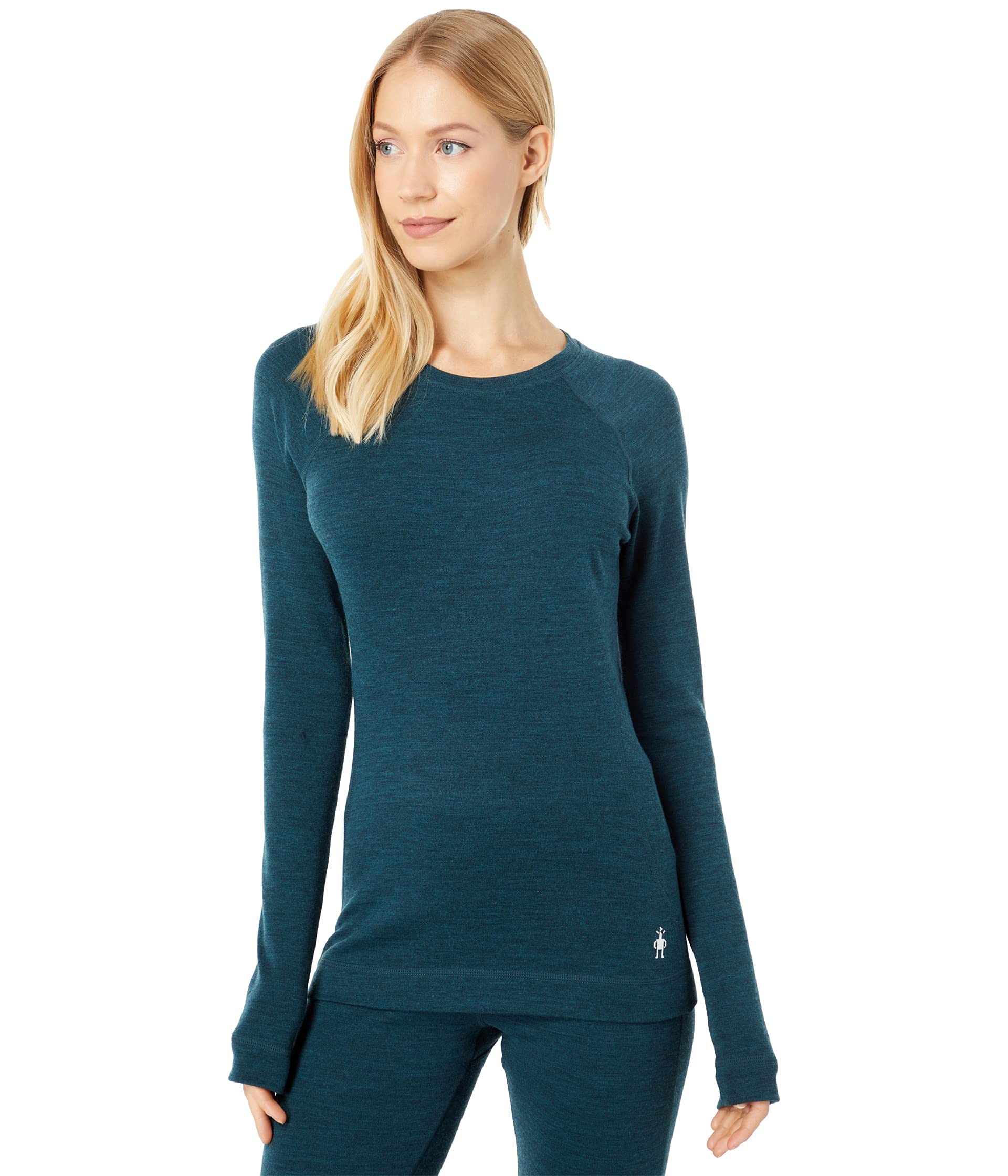
A slim, medium-weight merino crew that disappears under your jacket.
If you hate bulk under a shell, this is the crew to look at first. It is a 100% merino medium-weight top in a slim cut, and it slides under pants and shirts without adding a bulge. The flatlock seams — a stitched join that lies flat instead of rubbing — cut chafing on long climbs, and a back body seam wraps around to the front for a shape that stays close to the body.
What does it best? Looks and warmth trade first place. Owners mention the color and the soft feel, and the merino wicks moisture and manages temperature across cold-weather camping and summer hiking alike. It washes and dries well, which keeps the drawdown simple once you are back home.
There is one thing to watch. A slim cut is unforgiving if you like your base layers loose or want room to layer thickly. If you prefer a relaxed fit, or you are planning on a lot of heavier layers on top, the tighter lines here can feel restrictive.
Pick it for: The body-hugging fit that drops under any shell without a wrinkle bulge.
Reconsider if: You want a roomy cut to layer over other pieces.
Who it suits: Women who want a sleek, soft base layer for skiing, climbing, or spring hiking.
Who should look elsewhere: Buyers who prefer a relaxed fit or plan to layer several thick pieces.
6. Helly Hansen Men’s Lifa Merino Midweight Crew

Two layers in one shirt: merino for warmth, a synthetic face for moisture.
This one is built unlike the others on the list. It pairs a 100% merino wool layer with Helly Hansen’s LIFA Stay Warm Technology in a fitted 2-layer construction. The merino side gives you breathable warmth; the LIFA side handles moisture so the sweat you build on a hard climb moves away instead of pooling. For anyone who overheats fast, that combo is the reason to pay attention.
The shirt earns consistent praise for warmth and excellent quality, and the temperature regulation holds up whether you are skiing, snowshoeing, or working outside in a cold snap. It fits close, so it sits cleanly under a shell.
The reader question is simple: is a merino-synthetic hybrid right for you? If you want pure 100% merino against your skin, this is not that. If you want the warmth of merino plus a moisture layer that keeps you dry when you push hard, this is the smarter tool for the job.
For the sweaty and the active: High-output cold-weather athletes who want merino warmth with serious moisture movement.
For the merino purist: Someone who insists on an all-wool layer against the skin may prefer a single-fabric top.
7. Merino Wool Men’s Midweight Quarter Zip
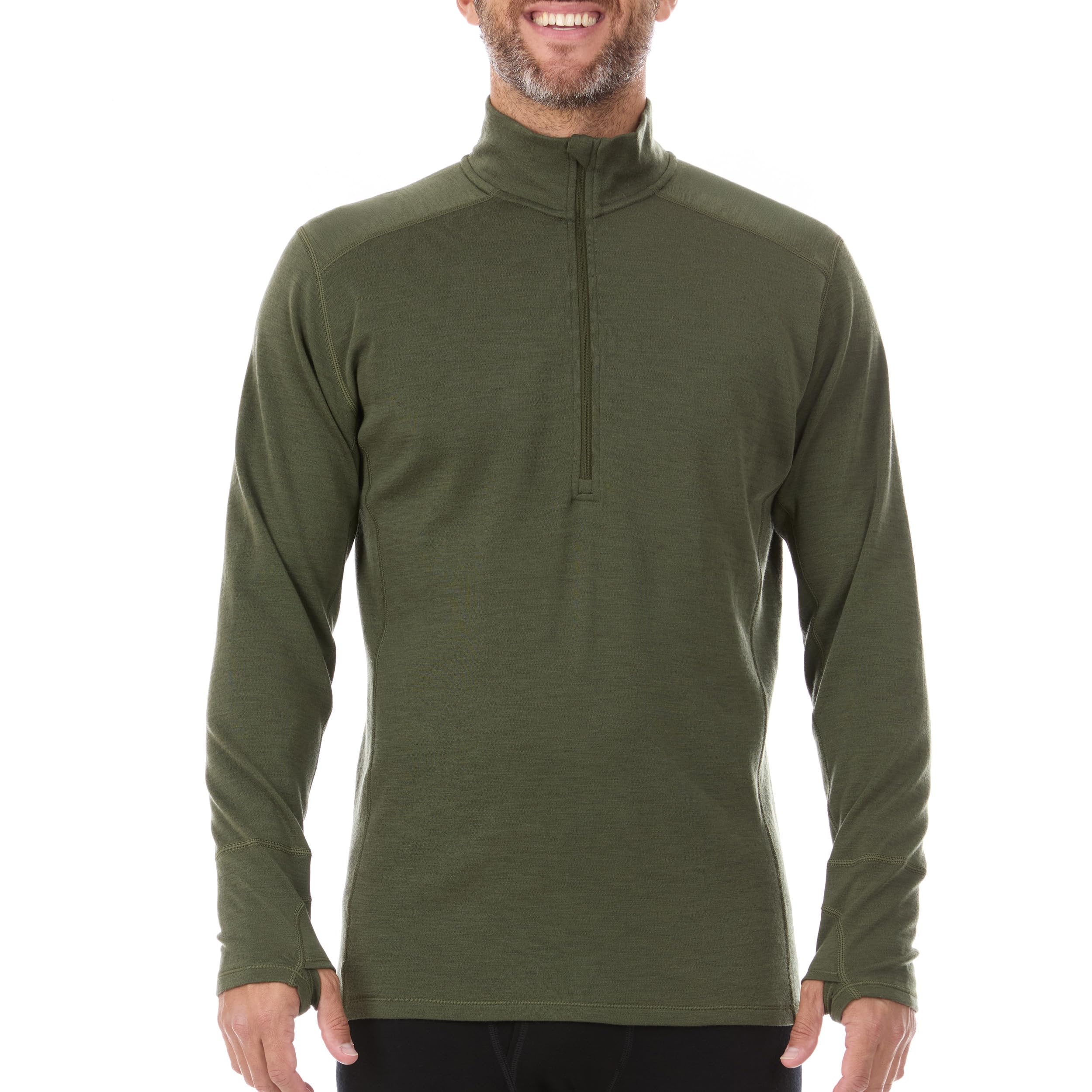
A warm merino pullover that vents fast when the trail steepens.
This is the layer you reach for on a day when the temperature swings, because the quarter zip opens to dump heat and closes back up when the wind picks up. Underneath it is the same 235 G/M2 midweight merino and 18.5 micron fiber as the crew above. The maker suggests 0°F to 30°F for high activity and 30°F to 60°F for low activity, so it handles a broad range of winter conditions. It is also rated UPF 50+.
Warmth is the clear owner favorite here, with fit close behind. Owners also mention how nice the weight feels and how easily it packs into a daypack, and the softness against the skin holds up. It wears as a midlayer over a base top, or as a standalone pullover on milder days.
The most discussed question is value. Some owners find it worth the money, and a share feel it is priced high for what a midlayer does. That is a fair call to weigh, especially if you already own a good merino top.
Why The Zip Wins
- Quarter zip vents heat without taking the layer off.
- Midweight merino spans a wide range of cold-weather conditions.
- Soft, packable, and easy to stash through the day.
Where The Price Bites
- The value is a split call — some feel it is priced high for a midlayer.
- Not a replacement for a true heavyweight in deep, still cold.
The right call for: Hikers and skiers who want a packable midlayer that adapts through the day.
Hold off if: You want a heavyweight insulator or you are shopping on a tight budget.
8. First Lite Men’s Kiln Hoody – Camo Merino Wool Base Layer
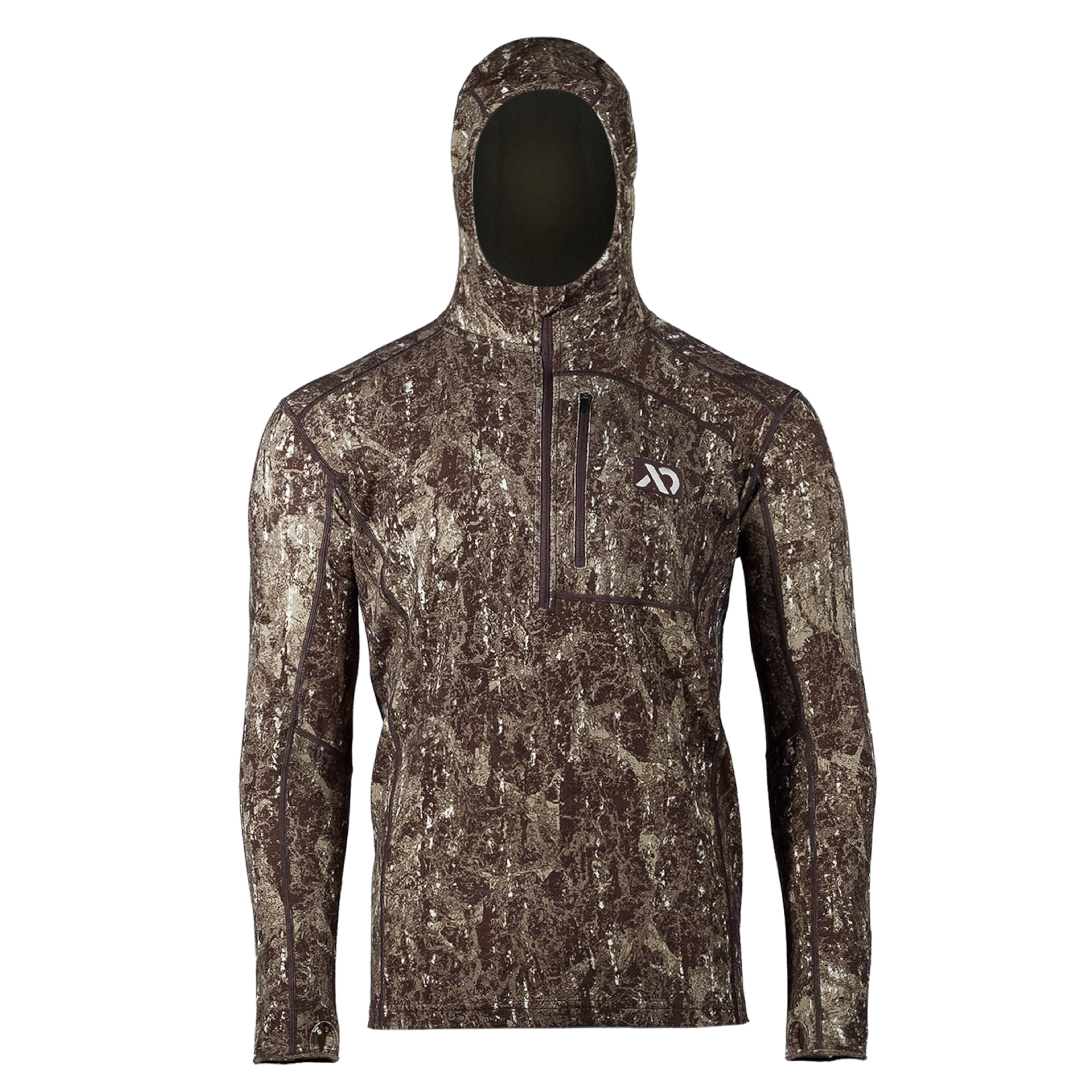
A camo merino hoody made for hunters who add and shed layers fast.
For a hunt where the temperature drops as the sun goes down, a hooded midweight merino is the smartest single layer you can pack. This First Lite hoody layers cleanly and adapts as conditions shift, which matters when you are sitting quiet in the morning and moving by midday. The hood adds warmth at the neck without a separate gaiter, and the camo pattern keeps you hidden in the trees.
What owners prize most is the build quality, with warmth right alongside it. It layers without bulk and fits true to form, and it is thin enough to wear under a beanie without crowding your head. That hood-and-camo combination keeps it in the pack across seasons.
The honest note is value. Some owners see it as well worth the money and others find it overpriced for a single layer, so the worth depends on how much you rely on that hood. A handful of buyers also wish for more durable fabric under hard, brushy wear.
The reason it works: Merino warmth with a hood and camo for hunters who adjust layers through a long day.
The honest trade-off: The price is a split call and the fabric is not the toughest for rough brush.
Made for the stand sitter: Hunters who want quiet, warm, layerable merino with a camo hood.
Not the pick for: Anyone who does not need camo and wants the best value per layer.
9. Dale of Norway 140th Anniversary Men’s Sweater

The wool sweater you wear straight off the mountain and into the lodge.
This is not a base layer, and that is the point. It is a lightweight 100% wool ski sweater built for show as much as warmth, the kind of piece you wear after the run rather than under the shell. The look is what owners fall for first, down to the accent around the zipper that draws comment. It brings warmth without bulk, so it sits on the body cleanly.
Fit is a close second to looks here, and the sweater wears comfortably without itch. It feels like a real Nordic knit rather than a sport-merino top, and it pulls on over a base layer for cool evenings outside.
The trade-offs are worth stating. Value is a split call, with some owners feeling the price is steep for a single sweater, and sizing draws a mixed spread. Treat it as a premium style piece for a cold-weather getaway rather than a hardcore backcountry layer.
Why you would want it: A wool sweater with genuine ski heritage and looks that carry it past the trail.
Where it is fussier: Sizing splits opinion and the price sits at the high end for style over performance.
Its ideal owner: Someone who wants a warm, good-looking wool sweater for apres-ski and cold-weather travel.
The wrong buyer: A backcountry skier who needs a technical base layer for the climb.
Know the Specs
Fabric weight in GSM and grams
The number like 235 G/M2 or 400g tells you how dense and warm the knit is. A higher number means a thicker, warmer layer that traps more heat; it also means less breathability on a hard climb. Match the weight to your activity: a 400g heavyweight for slow, cold stillness, and a lighter knit for high-output hiking or running.
Micron count and itch
Micron count measures fiber thickness. Finer fibers — like the 18.5 micron merino in the Minus33 crew — bend softly against your skin and feel smooth instead of scratchy. Coarser wool pricks more. For a base layer worn directly on skin, a finer fiber usually means more comfort and less irritation.
Layer type: base, midlayer, or sweater
A base layer sits right against your skin and moves sweat away. A midlayer adds insulation over a base and vents with a zip. A sweater is for warmth and looks after play. These pieces play different roles, so pick by where in the layering system you need coverage.
Zip, hood, and venting
A quarter zip or a hood gives you on-body control of your temperature. The zip opens to dump heat on a climb and closes for the descent; a hood warms the neck and head without a separate accessory. On a day with big temperature swings, a zip or hood matters more than a small difference in fabric weight.
Common Questions
Is merino wool warmer than a regular synthetic base layer?
Will merino wool base layers itch my skin?
Can I wear merino wool base layers for multiple days without washing?
What is the difference between lightweight and heavyweight merino?
Do wool outdoor layers shrink in the wash?
Is a quarter zip better than a crew for hiking?
Can I wear a wool base layer under a wetsuit?
Should I buy a base layer set or a single top?
Does merino wool work for summer hiking, not just winter?
Are thin merino layers as warm as thick ones?
The Bottom Line
For most of the time, the wool outdoor wear winner is the MERIWOOL 400g Thermal Pants because that heavyweight knit holds heat on cold, low-output days when thinner layers fall short. If you want one layer that vents as you move, the Minus33 Quarter Zip with its 235 G/M2 midweight knit is the versatile choice. And for high-output cold where you sweat hard, the Helly Hansen Lifa Merino Crew and its merino-plus-LIFA construction is the one to reach for. Match the knit weight to your activity and the rest of the layering falls into place.
How we choose
We do not accept paid placement. Every pick is matched to a real buyer and a real use-case; we do not hands-on test units.
Sources
Specifications: manufacturer listings and product documentation. Review insights: verified customer reviews, as of November 2026. Pricing: not shown on this page (it changes often); check the current price via the retailer link.
As an Amazon Associate, Tactical Gear Guy earns from qualifying purchases. This does not affect which products we feature.