Specs are compiled from manufacturer listings and verified buyer reviews and can change over time — please confirm the key details on the product page before buying.
Buying wool outdoor gear is a decision about grams, microns, and weight classes, and getting it wrong means a layer that either soaks through on the climb or leaves you cold at the belay. This guide walks you through nine real merino pieces — base layers, midlayers, a heavyweight hoodie — and tells you exactly where each one earns its place on your body and in your pack. You will see the weight of every fabric, the fit quirks that matter, and the honest trade-offs, so you can pick the right layer the first time instead of the third.
This guide is built by comparing the manufacturers’ published specifications and the patterns across verified customer reviews, so you get each pick’s real strengths and trade-offs instead of marketing spin.
From a 400g heavyweight pant to a 400 g/m2 fleece-brushed hoodie, the picks below cover the cold-weather layering stack from skin to shell. Read on for the honest breakdown of the best wool outdoor gear.
Top Picks


How To Choose The Best Wool Outdoor Gear
The single biggest mistake buyers make with wool outdoor gear is buying the wrong weight for the job. A 165gsm set is perfect for a spring run and useless at a winter summit. A 400g piece is brilliant on a snowmobile and a sauna on a mild hike. Read the weight, then match it to your activity and the temperatures you actually face.
Match fabric weight to your activity
Lightweight wool, often around 165gsm, works for high-output movement in milder cold — running, fast hiking, cross-country skiing. Midweight, roughly 235 to 250 g/m2, is the all-rounder for sustained cold and low-movement days. Heavyweight, at 400g, is for the coldest conditions and low-output activities like hunting stands, snowmobiling, or winter camping.
Check the micron count for itch-free wear
Micron count measures fiber diameter. Lower is finer and softer. A 20.5 micron garment feels noticeably smoother against skin than a coarser wool, which matters most for a base layer worn for hours. Any merino in the 18 to 21 micron range is generally considered itch-free by most wearers.
Base layer versus midlayer
A base layer sits directly against the skin and moves moisture away. A midlayer adds insulation over a base layer and is usually a quarter zip, crew, or hoodie. Buy one of each if you plan to layer in serious cold — the base layer manages sweat, the midlayer traps warmth.
Side-by-Side Comparison
| Model | Best For | Fabric Weight | Fit | Material | Amazon |
|---|---|---|---|---|---|
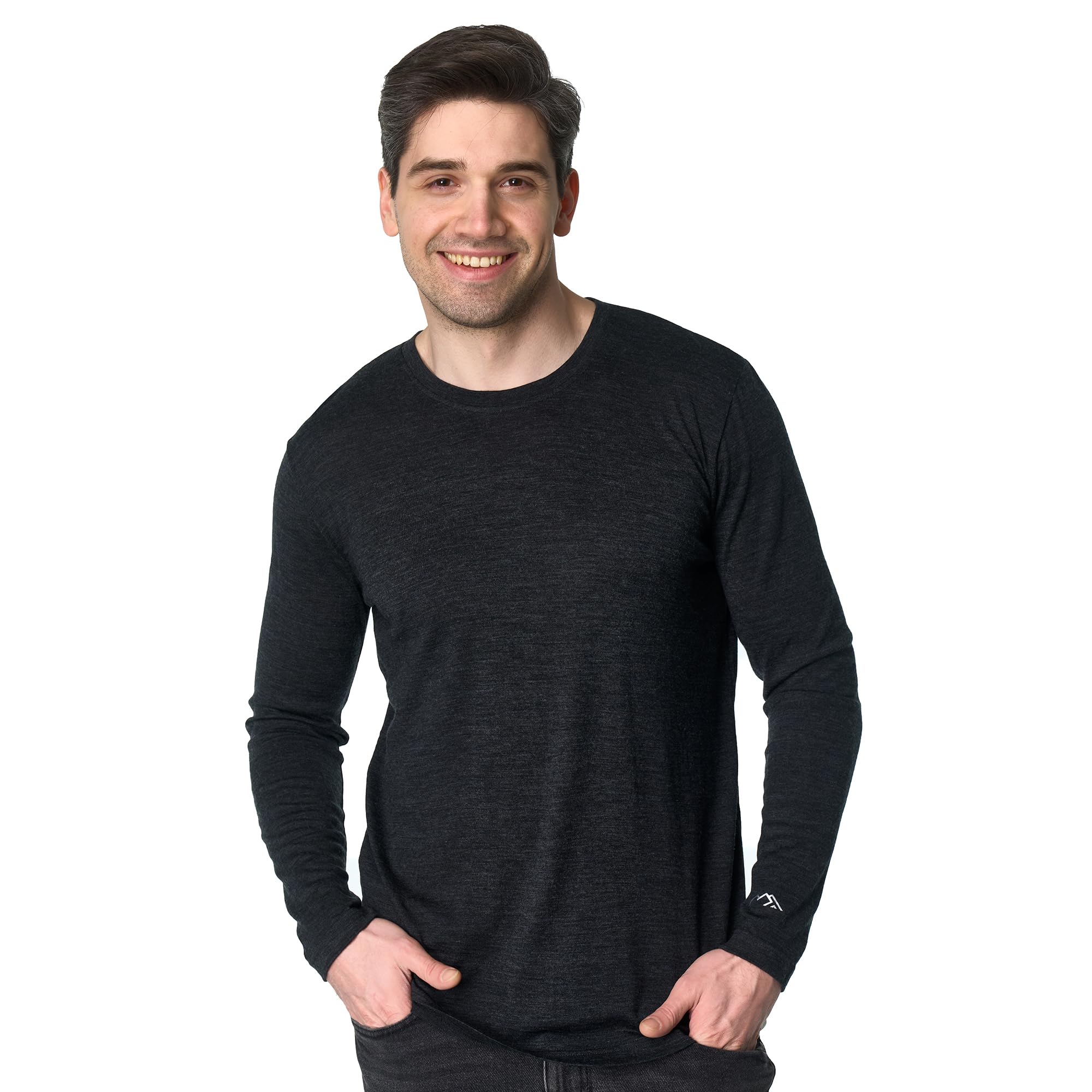
| MERIWOOL Heavyweight 400g Thermal Pants★ Best Overall | Deep cold base layer | 400g | Regular | 100% Merino Wool | Amazon |
| 100% Merino Wool Underscrub Long SleeveBest Value | Everyday base layer | — | Regular | 100% Merino Wool | Amazon |
| Merino.tech Quarter Zip Sweater WomenBest for Women | Women’s midlayer | Midweight | Regular | 100% Merino Wool | Amazon |
| MERINNOVATION Base Layer Set | Multi-day wear | 165gsm / 250gsm | Regular | 100% Merino Wool | Amazon |
| Smartwool Classic Thermal Merino Crew | Women’s base layer | Medium Weight | Slim | 100% Merino Wool | Amazon |
| LAPASA Merino Wool Base Layer Set | Women’s set value | — | Regular | 100% Merino Wool | Amazon |
| Helly Hansen Lifa Merino Midweight Crew | Moisture management | Midweight | Fitted | 100% Merino + LIFA | Amazon |
| Minus33 Isolation Midweight 1/4 Zip | Temperature swings | 235 g/m2 | Regular | 100% Merino Wool | Amazon |
| Minus33 Kodiak Expedition Hoodie | Deepest cold | 400 g/m2 | Regular | 95% Merino, 5% Spandex | Amazon |
Detailed Reviews
1. MERIWOOL Mens Base Layer Thermal Pants
Our pick — 4.5+★ from 750+ verified ratings; the strongest balance of quality and price.
The heavyweight pant that turns a frozen stand or a cold chairlift into a tolerable wait.
When the temperature drops below what a midweight can handle, you need the 400g fleece-knit fabric in these MERIWOOL pants. That number — 400g — is the heavyweight class, meaning thick, dense insulation that traps warmth against your legs without the bulk of a fleece-lined work pant. You wear them under your outer layer whether you are skiing, hunting, or just sitting in a cold cabin.
Merino wool regulates temperature in a way synthetics do not. The fiber reacts to your body heat, regulating temperature rather than just trapping it. That translates to fewer mid-day strip-downs on a climb and less shivering when you stop moving. And because merino is naturally odor resistant, you can wear the same pair for several days on a trip before they need a wash — a real advantage when laundry access is limited.
The fit is one thing to plan around. Reviews consistently mention the sizing runs large, so you may want to consider sizing down if you are between sizes. The value question is more mixed — some buyers feel they are paying a premium for the brand name, while others say the quality justifies it. Either way, this is a base layer built for serious cold, not a casual legging.
Why it earns the top spot
- 400g heavyweight insulation for true deep-cold performance
- 100% merino wool regulates temperature and resists odor
- Soft against the skin and itch-free for all-day wear
- Works as a base layer under ski pants or hunting gear
Where it falls short
- Sizing tends to run large — consider sizing down
- Some buyers feel the price is on the high side for the brand
- Heavyweight fabric means it is not a year-round layer
Reach for these if: you need a serious base layer for hunting, skiing, or winter camping in genuinely cold conditions.
Look elsewhere if: you run warm or need a lighter layer for high-output activity — the 400g weight will cook you.
2. 100% Merino Wool Shirts For Men
The affordable merino tee that works as hard under scrubs as it does on the trail.
Most people meet merino through a base layer top like this one. It is 100% merino wool, so you get the natural temperature regulation and odor resistance in a long-sleeve cut that layers without adding bulk. The brand pitches it for everything from the office to hunting, and that versatility is the real draw — one shirt that covers your workday and your weekend.
What wins buyers over is the fit. A lot of people find merino fits too slim or too boxy, but this cut lands well across body types, and buyers report it works even on a 5’4″, 135lb female frame. The fabric is smooth next to skin, which is the big hurdle for wool skeptics. It also breathes — the kind of breathability that means you are not peeling it off after a sweaty hike. The UPF 50 rating adds a layer of sun protection for exposed days.
Here is the honest catch: sleeve length is a bit of a coin toss. Some buyers find the sleeves run long or short relative to the body, so if you have longer arms, check that detail before you commit. The good news is the material holds up — it is the kind of shirt that makes you retire your cotton tees.
The plain-English take: if you want one do-everything merino top that will not break the bank, this is the sensible starting point. It is a base layer first and a standalone shirt second.
One caveat: the sleeve-length lottery is real. It is not a dealbreaker, but it is worth knowing.
Your move: buy it if you want an affordable entry into merino that works for work and play.
Pass on it if: you need a precise, athletic fit — the sleeve variance may frustrate you.
3. Merino.tech Quarter Zip Sweater Women
A midweight quarter zip that keeps a chilly morning run comfortable without the bulk.
For women chasing warmth on a cool-weather run or a spring hike, this quarter zip does the job. It is 100% merino wool in a midweight construction, which is the all-rounder class — enough insulation for sustained cold but breathable enough that you are not overheating the moment you start moving. The zip lets you vent quickly when you warm up, which is the whole point of a quarter zip.
Warmth is what this piece is known for. The merino regulates temperature so you stay comfortable in that awkward chilly-but-not-freezing range where cotton fails and heavy fleece is too much. The fabric is soft and it feels like a second skin, which is a phrase buyers keep landing on for good reason. Color options are a genuine draw too, with several shades to choose from.
Two things to know before you buy. First, the free socks that come bundled run very large — treat them as a bonus, not a sizing feature. Second, sizing is reported as true to size by some and off by others, so check the size chart carefully if you are between sizes. Neither is a reason to skip it; both are reasons to order thoughtfully.
What buyers rave about: the warmth-to-weight ratio. It is a layer you can run in and still wear to town afterward.
The fit nuance: true to size for many, but not universal. The included socks are a wildcard.
Best for: runners, hikers, and travelers who want a warm, packable women’s wool layer.
Skip if: you need a perfect out-of-the-box fit and cannot try before buying.
4. MERINNOVATION Merino Wool Base Layer Set Lite
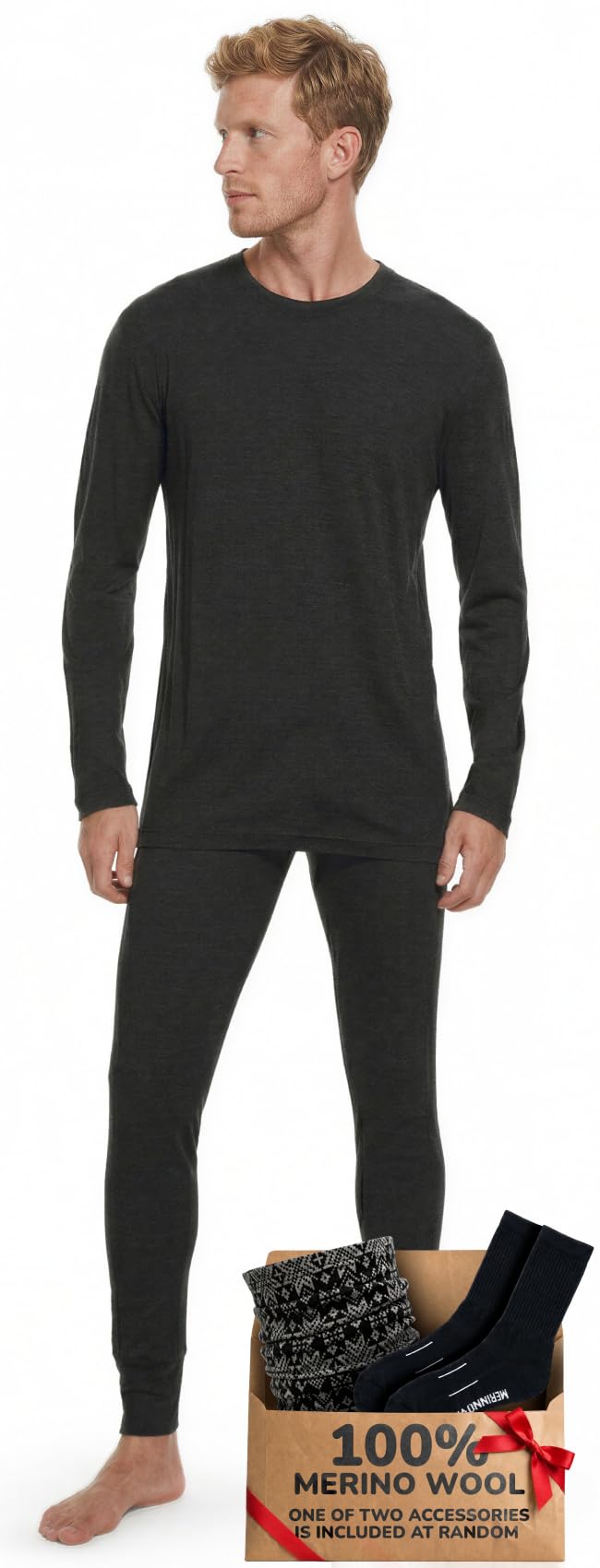
A two-piece merino set that lets you pick your warmth level before you pack.
This set comes in two weights, and that is the feature that matters. The 165gsm lightweight option is built for higher-output activity and milder cold — running, skiing, active hiking — where you want warmth without bulk. The 250gsm midweight handles sustained cold and low-movement days where retained warmth takes priority. Both share the same 100% merino wool construction; only the warmth level changes.
What makes merino practical for multi-day use is the odor resistance. The open knit construction creates natural ventilation that adjusts to your output, and the wool resists the odor that builds up in synthetics. That means you can wear this set for consecutive days on a multi-day hike or a trip with limited laundry access. Owners mention it stays comfortable even in cold arctic environments, which speaks to the insulation quality.
The fit is the split decision here. Some find it true to size; others report it runs small, so check the chart and consider sizing up if you are between sizes. Durability gets mixed feedback as well — this is a base layer set, so treat it as a layer, not armor. For the price, it is a solid way to get a full top-and-bottom merino setup in one go.
The strong points
- Full top-and-bottom set in 100% merino wool
- Two weight options for different conditions
- Odor resistant for multi-day wear
- Good value for a complete merino set
Watch for this
- Sizing runs small for some buyers
- Durability feedback is mixed
Worth buying if: you want a complete merino base layer set without buying top and bottom separately.
Think twice if: you need a precise fit — this one rewards checking the size chart.
5. Smartwool Women’s Classic Thermal Merino Base Layer Crew

A slim-cut merino crew built to sit under layers without a single wrinkle showing.
Smartwool’s classic thermal crew is the base layer you reach for when you need a clean, close fit under a shell or a sweater. It is 100% merino wool with an interlock knit — a tighter, smoother knit structure than basic jersey, which gives it a more polished feel against skin. The fabric combines moisture management, temperature regulation, and odor resistance, the three things merino is known for.
The slim fit is intentional. It follows the contours of your body, which means it layers without adding bulk, and it works well under pants and shirts. Raglan sleeves and a back body seam that wraps to the front are construction details that improve mobility — you will not feel restricted reaching overhead. It is medium weight and medium stretch, a balance that suits spring hiking and fall layering.
Washability is a quiet strength. This shirt washes and dries well, and buyers mention wearing it across seasons, from spring hikes to cold-weather base layering. It is a beautiful quality piece by all accounts. The one honest note: value is the mixed part — some feel it is worth the price, others think a premium merino layer should cost less. If you want the Smartwool name and the slim fit, it delivers both.
My read: a genuinely well-made base layer with a fit that flatters under layers. The interlock knit is the quiet upgrade here.
The trade-off: it is a premium purchase, and not every buyer feels the value lines up.
Pick this if: you want a slim, smooth base layer that disappears under your outer layers.
Leave it if: you prefer a roomier cut or are price-sensitive about base layers.
6. LAPASA Womens 100% Merino Wool Base Layer Set L58/L91/L127

A full women’s merino set that keeps you warm without the scratch of traditional wool.
For women who want a complete base layer setup, this LAPASA set delivers top and bottom in 100% merino wool. The wool regulates temperature, which is the property that matters most in cold weather — it absorbs moisture and evaporates it, so you stay dry rather than clammy. It is warm without being overly scratchy, the key hurdle for anyone who has tried coarse wool before.
Used in extreme cold, it holds up. The temperature-regulating properties are the standout, and the fabric is soft and lightweight enough to layer under your regular clothes. Value is a strong point here — a full set in merino at this level is a sensible way to build a winter layering system without buying pieces separately. The weight is light enough that it does not feel like you are wearing a snowsuit under your pants.
The fit is where it gets complicated. Fit and sizing feedback is mixed, and fabric quality gets mixed notes too. It is not a precision-cut garment, so approach it as a functional base layer rather than a tailored piece. If you are between sizes, that ambiguity is worth resolving before you order.
What stands out: warmth, softness, and the value of getting a full set in one purchase.
What to accept: the fit is functional, not tailored, and sizing feedback varies.
Go for it if: you want a complete, warm women’s merino set at a sensible price.
Hold off if: you need a reliably precise fit right out of the package.
7. Helly Hansen Men’s Lifa Merino Midweight Crew

Two layers in one shirt — merino warmth up front, LIFA fiber pulling sweat away.
Helly Hansen does something different here. This crew combines a 100% merino wool layer with the brand’s LIFA Stay Warm Technology in a fitted 2-layer construction. The idea is simple: merino gives you breathable warmth, and the LIFA fiber handles moisture management. You get the best of both — the natural feel of wool and the sweat-pulling performance of a technical synthetic, fused into one garment.
The result is a midweight base layer that adapts to cold weather. It is built for the kind of cold where you are moving — skiing, hiking, working outside — and want a layer that keeps you dry when you sweat. The fitted cut sits close to the body, which is exactly what you want in a technical base layer because it lets the fabric do its moisture-moving job efficiently.
Warmth is the headline. It regulates temperature well, and the quality is evident in the construction. The trade-off is that the two-layer construction adds a bit of structure — it is not as featherweight as a pure merino layer — so if you want the thinnest possible base, this is not it. But for cold-weather movement where staying dry matters as much as staying warm, the combination is smart.
The case for it: the LIFA-plus-merino construction genuinely earns its keep in sweat-heavy cold-weather activity.
The honest catch: the 2-layer build is a bit more substantial than a pure merino crew, so it is not the lightest option.
Made for: skiers, hikers, and outdoor workers who sweat in the cold and want one layer that handles it.
Not for: buyers who want the simplest, thinnest pure-merino layer available.
8. 100% Merino Wool Men’s Midweight Quarter Zip
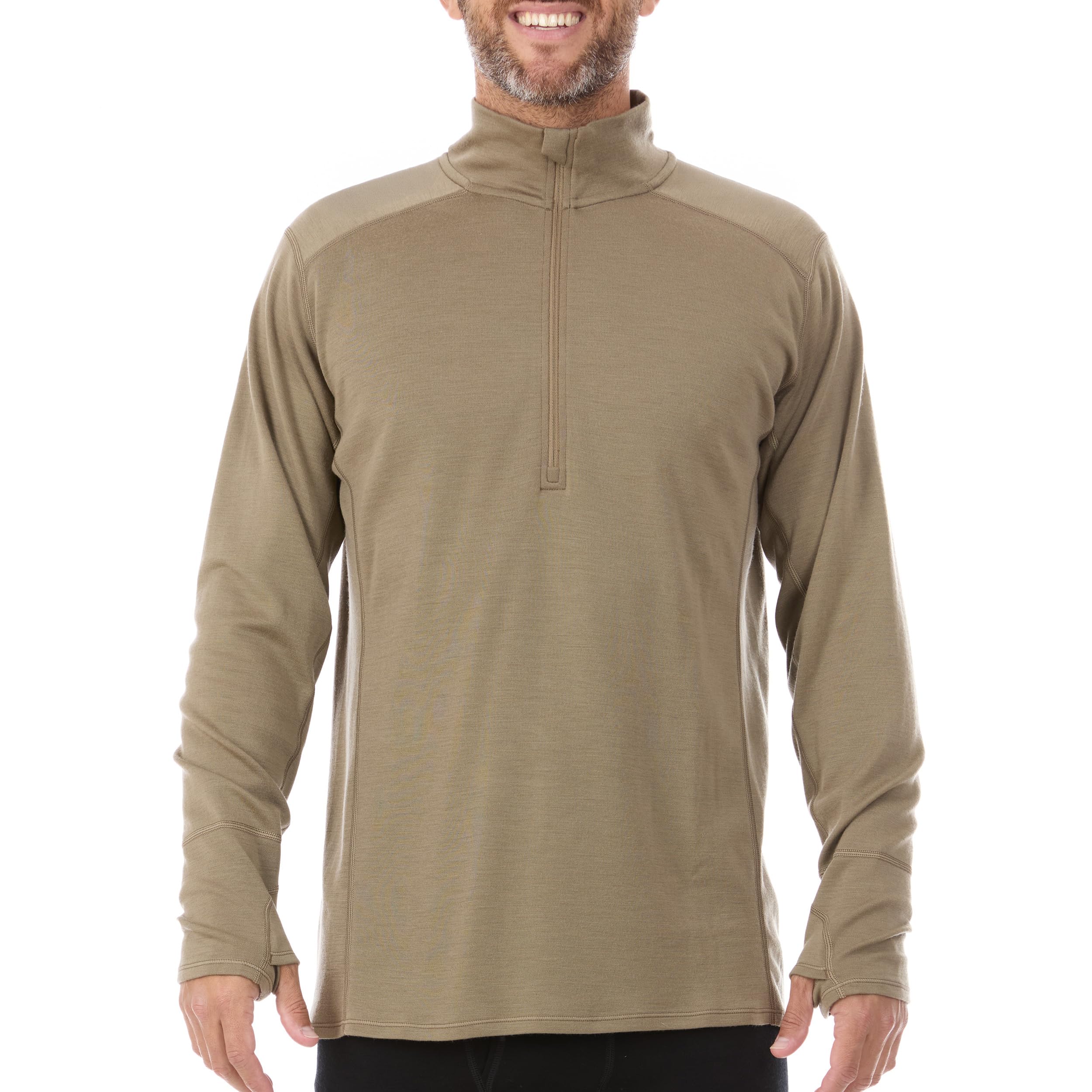
The zip-up midlayer that handles a temperature swing without a wardrobe change.
Minus33 builds this quarter zip from 235 g/m2 interlock knit in 18.5 micron 100% merino wool. Those numbers translate to a midweight fabric that is fine enough to feel soft against skin and dense enough to hold real warmth. The quarter zip is the design feature that separates it from a plain crew — zip it up to use the mock neck as a warm collar, unzip it to vent heat when the climb gets steep.
Minus33 rates it for 0°F to 30°F during high activity and 30°F to 60°F during low activity. That is the versatility that makes it a pack staple. It works as a base layer under a shell on the slopes or as an emergency pullover when a cold front rolls in before you summit. It has a UPF rating of 50+, so sunny summit days are covered too, and the wool absorbs up to 30% of its weight in moisture without feeling wet.
Fit runs regular and the weight is light enough to pack easily. Warmth and fit are what reviewers respond to most — it is a piece people reach for again and again. The value debate is the ongoing question: some find it well worth the money, others think a merino midlayer should cost less. What is not debatable is the versatility.
Where it shines
- 235 g/m2 midweight fabric for a wide temperature range
- Quarter zip vents heat when you warm up
- 18.5 micron merino feels soft against skin
- UPF 50+ for sun protection
- Packs easily for travel and backcountry use
What to weigh
- Value is a mixed call among buyers
- Regular fit may not suit a slim-preferring layer
Choose it if: you want one midlayer that covers multiple seasons and activities.
Look past it if: you insist on a slim, athletic cut or are sensitive to the price.
9. Merino Wool Hoodie Expedition Heavyweight

The heavyweight hoodie for the cold where a midlayer alone stops being enough.
Minus33 calls this the Kodiak, and it is built from 400 g/m2 fleeced merino wool in a 20.5 micron 95% merino, 5% spandex blend. The 400 g/m2 weight is the heaviest in this lineup, which means this is not a base layer — it is a mid or outer layer for genuinely frigid days. The fleece-brushed interior adds a soft, cozy feel that a plain knit cannot match.
This piece has seen serious use. According to the brand, it has been worn in the Antarctic and Arctic and to the summit of Mount Everest. It is designed to be either a base, mid, or outer layer, so it slots into a layering system flexibly. Thumbholes and a drawstring hood let you bundle up when the wind picks up, and the UPF 50+ rating protects on bright days. Wool insulates even when wet, absorbing up to 30% of its weight in moisture, so a damp day does not kill the warmth.
There are real caveats. The hood runs large, which some buyers find annoying and others appreciate for layering. Value is divided — some say it is worth every penny, others find it overpriced for a hoodie. And the fit is regular, so it is not a trim piece. It is the most expensive pick here, and it is meant to be — this is a specialty cold-weather garment, not a daily casual.
Where it earns its keep: the 400 g/m2 fleece-brushed fabric is the warmest option in this roundup, built for true deep cold.
The honest catch: the hood runs oversized and the value is a judgment call at this tier.
For the deep-freeze crowd: hunters, snowmobilers, and winter campers who need warmth when the mercury drops.
Not your pick if: you want a trim everyday hoodie or a value-driven layer.
Know the Specs
Fabric Weight (g/m2 or gsm)
This number tells you how thick and warm the fabric is. 165gsm is lightweight — high-output activity in mild cold. 235 to 250 g/m2 is midweight, the all-rounder for sustained cold. 400g or 400 g/m2 is heavyweight, built for deep cold and low movement. Always match the weight to your activity: too heavy and you overheat, too light and you freeze.
Micron Count
Micron count measures wool fiber diameter. Lower is finer and softer. An 18.5 micron fabric feels smoother against skin than a 20.5 micron one. For a base layer worn all day, anything in the 18 to 21 micron range is generally considered itch-free by most wearers.
Base Layer vs Midlayer vs Outer
A base layer touches skin and moves moisture. A midlayer sits over it for insulation. An outer layer blocks wind and weather. Some pieces cross categories — a heavyweight hoodie can work as a mid or outer layer. Know where a piece fits in your stack before you buy.
Merino vs Regular Wool
Regular wool is coarse, heavy, and itchy. Merino comes from Merino sheep and has thinner, finer fibers that bend softly and feel smooth against skin. That is why merino base layers are comfortable enough to wear all day, while a coarse wool sweater is not.
Common Questions
What fabric weight should I choose for a winter base layer?
Is merino wool itchy against the skin?
Can I wear merino wool for multiple days without washing?
What is the difference between a base layer and a midlayer?
Does wool still keep you warm when it gets wet?
How should I care for a merino wool base layer?
Should I size up or down in merino base layers?
What does the quarter zip do on a merino layer?
Is merino wool good for hunting and cold-weather outdoor work?
What does micron count mean and why does it matter?
The Bottom Line
For most people building a cold-weather layering system, the wool outdoor gear winner is the MERIWOOL 400g Thermal Pants because they deliver true heavyweight insulation in 100% merino for the days when midweight stops being enough. If you want a do-everything top that covers work and trail, the 100% Merino Underscrub Long Sleeve is the sensible value pick. And for the deepest cold, the Minus33 Kodiak Expedition Hoodie is the one to reach for when the forecast turns serious.
How we choose
We do not accept paid placement. Every pick is matched to a real buyer and a real use-case; we do not hands-on test units.
Sources
Specifications: manufacturer listings and product documentation. Review insights: verified customer reviews, as of November 2026. Pricing: not shown on this page (it changes often); check the current price via the retailer link.
As an Amazon Associate, Tactical Gear Guy earns from qualifying purchases. This does not affect which products we feature.