Specs are compiled from manufacturer listings and verified buyer reviews and can change over time — please confirm the key details on the product page before buying.
If your clearcoat is hazy, your gelcoat has gone chalky, or a box of foam pads just smeared the compound around without cutting anything, the fix is usually the pad face itself, not your technique. Wool is the aggressive medium here — real wool fibers slice through oxidation and sanding scratches that foam simply glides over. Below are nine wool pads that actually cut, sorted by what each one is genuinely good at, so you can match a pad to your machine and your paint instead of guessing.
This guide is built by comparing the manufacturers’ published specifications and the patterns across verified customer reviews, so you get each pick’s real strengths and trade-offs instead of marketing spin.
Some pads are built for a rotary with a threaded arbor, others expect a hook-and-loop backing plate, and a couple are multi-packs meant to be thrown away after one brutal job.
Top Picks

How To Choose The Best Wool Buffing Pads
The single biggest mistake is buying wool without checking how it attaches to your machine. A pad that spins off its own backing on the first pass wastes your compound and your afternoon. Get the mount, the diameter, and the wool type right and the rest is detail work.
Match the pad to your machine’s arbor, not the other way around
A hook-and-loop pad needs a backing plate already on your buffer — you press it on and pull it off. A threaded pad screws straight onto the spindle with a 5/8-11 thread (the standard male stud on most rotary buffers). If you own a rotary with a bare spindle, a screw-on pad is the sturdier choice. If you run an orbital or dual-action buffer, you want hook-and-loop and a matching backing plate.
Diameter decides how much heat and how much control you get
A 9-inch pad covers ground fast on a boat hull or a long van panel, but it needs a machine with enough torque to keep spinning under load. A 6-inch or 7-inch pad is easier to steer around mirrors, pillars, and tight curves. Bigger is faster on flat panels; smaller is safer on complex ones.
Genuine wool cuts; a blend polishes
Pure natural wool has a coarse, grabby face that removes oxidation and sanding scratches quickly. Blends and synthetics are gentler and finish finer, but they take far longer to cut. If your paint is dull and chalky, start with real wool and finish with a foam pad for gloss.
Plan for some lint on the first pass
New wool sheds loose fibers, and that is normal for the material. Many pads tell you to run the machine idle for a few minutes, or flap the pad by hand, before touching it to paint. Do that once and the loose fuzz comes off in the air instead of on your hood.
Side-by-Side Comparison
| Model | Best For | Diameter | Attachment | Pack Size | Amazon |
|---|---|---|---|---|---|
| 3M Wool Polishing Pad 05713★ Best Overall | Big flat panels and gelcoat | 9 inches | Hookit hook-and-loop | 1 pad | Amazon |
| TCP Global Premium 6 Inch (2 Pack)Best Value | Final finishing and wax | 6 inches | Hook and loop | 2 pads | Amazon |
| SPTA 9″ Double Side (5/8-11)Best for Rotary Work | Heavy cutting on a rotary | 9 inches | 5/8-11 thread | 1 pad | Amazon |
| Woolous 7 Inch Lambswool | One-pad garage setup | 7 inches | Hook and loop | 1 pad | Amazon |
| Sisha-A 2 Pack 7″ Wool | Oxidized hulls and RV panels | 7 inches | Hook and loop | 2 pads | Amazon |
| TCP Global 8″ Double-Sided Wool | Two faces, one pad | 8 inches | Rotary direct mount | 1 pad | Amazon |
| Fasmov 3 Pack 7 Inch | Multi-surface workshop use | 7 inches | Rotary pad change | 3 pads | Amazon |
| SPTA 8″ Wool 4pc Set | Kit with backing plate included | 8 inches | Hook and loop + 5/8-11 plate | 4 pads | Amazon |
| Linkstyle 6PCS 7 Inch Kit | Drawstring bonnet style | 7 inches | Drawstring | 6 pads | Amazon |
Detailed Reviews
1. 3M Wool Polishing Pad, 05713, Single Sided, 9 in
Our pick — 4.5+★ from 500+ verified ratings; the strongest balance of quality and price.
A 9-inch blended-wool face that cuts oxidation and microscratches off gelcoat and fiberglass in fewer passes.
Nine inches of blended wool is the headline, and it matters: that is 50% more diameter than the 6-inch TCP Global pad, so each pass covers far more of a boat hull or a long van panel. The wool is blended with very fine fibers, which is what gives it that quick, slick cut on paint, gelcoat, and fiberglass instead of a grabby, chattery one. Feed it a liquid polish and it works out swirls and microscratches that a foam pad just polishes over.
The Hookit hook-and-loop backing is a small thing you will appreciate on a real job — you press the pad onto the plate and peel it off, so switching from cutting to finishing does not mean unscrewing anything. This pad is built around 3M’s own Perfect-It compounds and waxes, and it shines brightest in that system, though any liquid polish will work.
Here is the honest part. A 9-inch pad is a lot of surface to keep flat, and it wants a machine with real torque behind it — this is a buffer’s pad, not a hand-drill pad. Some long-term durability grumbles surface among owners, and the wool does throw off loose fibers until it settles. Treat it as a pro-grade consumable and it earns its keep. It holds 4.5+ stars across 500+ ratings, and the 9-inch coverage per pass is what puts it at the top of this list.
Where it wins the job
- 9-inch face covers large flat panels fast and evenly
- Blended fine fibers cut swirls and microscratches on paint, gelcoat, fiberglass
- Hookit hook-and-loop changes take seconds, no tools
- Pairs directly with the Perfect-It polish and compound line
What to plan around
- Needs a torque-heavy buffer — a small orbital will bog down
- Fresh wool sheds loose fibers until broken in
- Durability is the most-discussed trade-off among owners
- One pad means no backup mid-job
Reach for this if: you are correcting a boat hull, RV side, or long flat panel and your buffer has the muscle to spin a 9-inch pad.
Look elsewhere if: you work mostly around tight curves and mirrors, where 9 inches becomes clumsy.
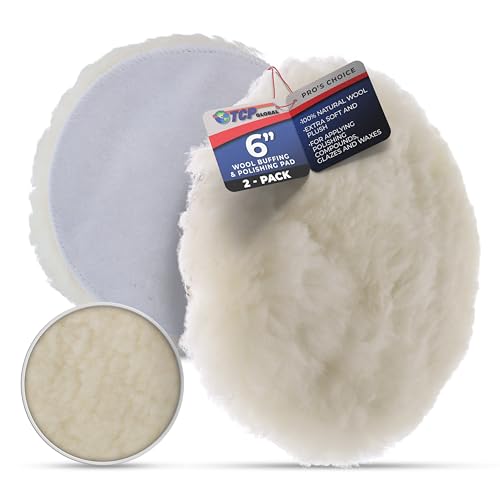
2. TCP Global 6 Inch Wool Buffing Pads
Two plush 6-inch pads for the finishing end of the job, not the heavy cutting.
This is the pad you reach for after the aggressive work is done. The face is 100% natural wool at a full 1-inch thick pile, and that extra loft is what makes it gentle: it spreads compound, glaze, sealant, or wax evenly instead of biting into the paint. At 6 inches it is the smallest pad here, which is exactly why it steers so well around trim and curved bodywork where the 9-inch 3M would be awkward.
Two pads in the pack is the quiet genius of this one. You can keep one loaded with wax and one with a finishing polish, or run one while the other airs out. The hook-and-loop backing centers easily on most orbital buffers and swaps without tools, and both pads are washable so they survive multiple sessions.
What buyers keep coming back to is simply the quality of the wool for the money, and it shows on final-finish work — that showroom gloss step rather than the correction step. The catch is in the same breath: a few pads reportedly come apart and some do not seat well on the machine, so check the backing seating before you spin it up. Keep expectations set to finishing duty and these two pads deliver a lot for a budget-friendly price.
The finishing specialist: Best used as the last pad in your sequence — apply wax or glaze and buff to a mirror shine on automotive paint, metal, and glass.
Not a cutter: If your paint needs serious defect removal, start with a coarser wool pad and save this one for the polish step.
Your match if: you want an affordable pair of plush pads dedicated to waxing and final gloss on a dual-action or orbital buffer.
Keep looking if: you need one pad to do the whole correction from scratch to shine.
3. SPTA 9″ Wool Buffing Pad
Wool on both faces and a screw-on arbor — the pad that never needs a backing plate.
Screw it straight onto a rotary spindle with the 5/8-11 thread, spin it, and go. There is no backing plate to buy and no hook-and-loop face to wear out, because the pad itself is the mount. Two wool faces mean you flip the pad over and keep working instead of stopping to swap — a real convenience on a long compounding job where every minute of downtime cools the panel.
It is a 9-inch pad built for heavy correction: deep scratches, severe oxidation, orange peel, and color sanding marks on clearcoats and hard topcoats. The grade is coarse, so this is a cutting pad rather than a finishing one. It pairs with compounds and pastes, and the design is meant to keep it from jumping or skipping across the surface while holding heat down so you do not burn through paint.
Buyers report it holds up against the big-name brands and removes scratches at working speeds on a rotary. Fit is the part to check: the 5/8-11 thread suits a standard rotary arbor, and a buffer with a different spindle will not accept it. Match the machine and this becomes the workhorse of your correction kit.
Why rotary owners like it: The threaded arbor is a direct, secure fit, and the double-sided wool doubles the usable cutting surface before you retire the pad.
The spec to verify first: That 5/8-11 thread — it is the right mount for a rotary buffer and the wrong one for a hook-and-loop orbital.
Reach for this if: you run a rotary polisher with a 5/8-11 spindle and want one rugged, coarse pad for heavy cutting.
Look elsewhere if: your machine uses a hook-and-loop backing plate instead of a threaded spindle.
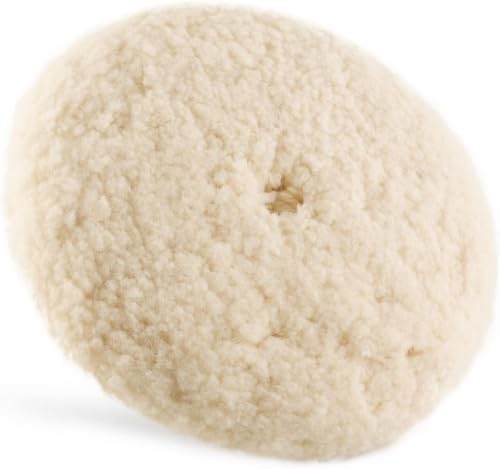
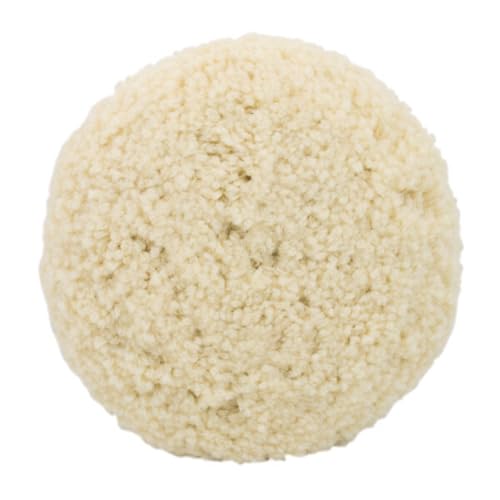
4. Woolous Wool Buffing Pads 7 Inch
One 7-inch lambswool pad that wants to do cars, boats, floors, and furniture.
Twisted 1-inch, 4-ply natural lambswool is the build, and that twist does a specific job: it keeps friction heat down so the pad cuts without leaving swirl marks or fresh scratches. At 7 inches it splits the difference between the nimble 6-inch TCP Global and the broad 9-inch 3M, which is why it works on a car door as happily as a boat transom. It removes scratches, oxidation, and dull paint when paired with a rotary polisher or buffer.
Consider this the single-pad garage solution. The hook-and-loop backing fits 6-inch backing plates and changes fast, and the single-sided design gives you control on big panels and enough precision for headlights and rims. It is also washable and reusable, so one pad stretches across several jobs if you clean it properly. Note this is one pad, not a pack — the 2-pack Sisha-A gives you two for a comparable spot in your kit.
One practical tip worth repeating from the maker: run the pad at high speed for five minutes before first use to shake out the loose lint. Do that and the shedding settles instead of landing on your fresh compound. It is a single 7-inch pad that handles car paint, boat gelcoat, and wood floors with the same twisted 4-ply wool face.
The case for one pad
- 100% natural lambswool with twisted 4-ply fibers for a cooler cut
- 7-inch size works on cars, boats, wood floors, and furniture
- Hook-and-loop backing fits 6-inch plates
- Washable and reusable
Before you order
- Sold as a single pad — no spare in the box
- Needs a five-minute high-speed break-in to tame shedding
- Wool is aggressive; finish with foam for maximum gloss
Your match if: you want one do-it-all 7-inch wool pad for a mixed bag of car, boat, and household polishing jobs.
Keep looking if: you prefer a multi-pack so you always have a clean pad ready.
5. 2 Pack 7″ Wool Polishing & Buffing Pads with Hook and Loop

Built aggressive on purpose — for hulls and RV panels that have gone chalky and grey.
Natural wool is more aggressive than a wool blend, microfiber, or foam, and this pad leans into that. It restores fiberglass boat hulls and RV exteriors that have been heavily oxidized, and it chews through scratches and oxidation on painted automotive, airplane, and wood floor surfaces. On chalky gelcoat and heavily oxidized paint, this coarse natural wool removes the dead layer instead of polishing over it.
The control story is better than you might expect from a coarse pad. It is designed not to jump and hop around the job, and it keeps heat down so it is less likely to burn paint. The construction is 100% twisted 4-ply sheep wool with a hook-and-loop backing, and it comes as a 2-pack, so you get the two-pad flexibility of a spare while the first one works.
Expect a little lint on the first run, and handle it the way the maker suggests — let the machine idle with the pad for a few minutes, or flap the pad by hand, to shake the loose float wool out. After that it settles. That little ritual is the price of a dense, aggressive wool pad, and it is worth it on a badly oxidized hull.
What it is really for: Heavy cutting on chalky gelcoat and oxidized paint, where a gentle pad would just polish the dead layer instead of removing it.
How to run it: Keep the pad flat, use less downward pressure than you think, and let the wool do the cutting.
Pick this if: your boat hull or RV is heavily oxidized and you need a two-pad supply of aggressive wool to bring it back.
Skip if: your paint is only lightly swirled — a coarser pad can leave haze you then have to polish out.
6. TCP Global 8″ 100% Wool Polishing & Buffing Pad Double Sided

An 8-inch pad with wool on both sides, so a worn face is just a flip away.
Double-sided is the whole idea here. When one face loads up or wears down, you flip the pad and keep cutting — no trip to the bench, no second purchase. At 8 inches it is between the 6-inch finishing pads and the 9-inch 3M, and it mounts directly to a rotary buffer for a stable, secure connection. The central core is built strong so the pad holds its shape through a long session.
This is a coarse cutting pad, rated 24 grit, aimed squarely at oxidized paint, orange peel, deep scratches, and clearcoats when used with automotive compounds. It is meant for hard topcoats and clearcoats where you need real bite. On a rotary, keep your eye on heat and let the compound do the work.
The quality picture is the one to weigh honestly. It is effective and long-lasting for plenty of owners, but some report it sheds heavily — more like a live sheep than a tidy pad — so break it in and accept that coarse wool is a messy material by nature. Two wool faces on one rotary-mounted pad doubles the usable cutting life before you buy a replacement.
Value in the design: Two wool faces on one rotary-mounted pad means double the usable life before replacement, with no hook-and-loop face to wear out.
The coarse trade-off: At 24 grit with heavy shedding, this pad is for rough correction and rotary workhorses, not gentle polishing.
Reach for this if: you run a rotary buffer, want direct mounting, and need a coarse pad that gives you two working faces.
Think twice if: your machine is a hook-and-loop orbital — this pad is built to mount straight to a rotary.
7. Fasmov 3 Pack Wool Polishing Pad, 7 inch
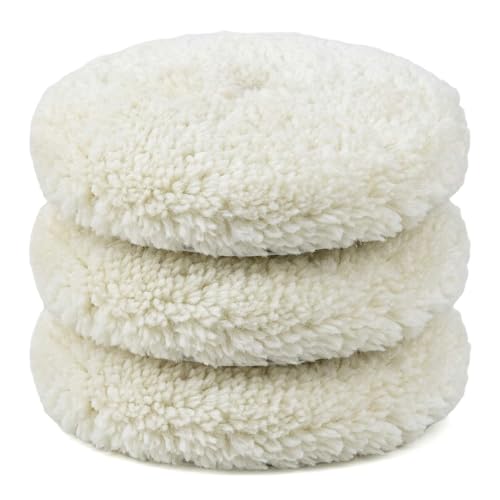
Three 7-inch wool pads that treat a countertop and a car hood the same way.
Most wool pads are car-only. This three-pack is the multi-surface pick: the maker lists it for car, boat, countertop, wood finishes, glass, stone, artificial stone panels, flooring, advanced kitchenware, and musical instruments. The face is wool at a fine grit, more aggressive than foam but controllable, and it removes swirl marks and oxidation from painted surfaces while staying gentle enough not to damage the finish.
Three pads is a real workflow advantage. You can dedicate one to compounds, one to polishes, one to glazes, and keep them clean and separate instead of cross-contaminating products. The design cuts heat and resists jumping or hopping, which is what keeps a wool pad from burning paint on a moment’s inattention. All three are washable and reusable.
The trade-off with a fine-grit wool pad is that it wants a finishing pass — wool is still the faster, more aggressive medium, so follow it with foam for maximum gloss. The three-pack also means you are committing to a set rather than a single pad. For a shop polishing countertops, stone, and furniture alongside cars, three pads let you keep compound, polish, and glaze separate.
Why three helps
- Three 7-inch pads cover compound, polish, and glaze stages
- Fine grit handles swirls and oxidation without heavy bite
- Listed for car, boat, stone, wood, glass, and more
- Washable and reusable
Keep in mind
- Fine grit means it finishes a step short of a foam pad’s gloss
- You buy a set rather than picking a single pad
Your match if: your polishing jobs spill beyond cars onto countertops, furniture, and stone, and you want three pads to stage your products.
Look elsewhere if: you only need one pad for a single vehicle and prefer not to store a set.
8. SPTA Wool Polishing Pads 8″ 4pcs Set

Four 8-inch wool pads plus the backing plate — the one box that makes a rotary usable.
If your buffer is a bare spindle with nothing to stick a pad to, this is the set that solves it. You get four 8-inch 100% natural wool pads and a 5/8-11 thread backing plate in the box, so you go from spindle to spinning without ordering a separate plate. The wool is elastic and natural, washable, and reusable, and it is meant to keep floating hair out of the finish.
Four pads give you a full sequence: cutting, polishing, and a clean spare. The wool is the more aggressive medium here — it cuts quicker than foam and holds heat down so it resists burning paint. Work it with polishing liquid, paste, or powder, and it suits most pneumatic and electric polishing machines on the market.
Most owners find it works with their corded grinders, attaches securely on the hook-and-loop velcro, and reaches a high-shine finish. The honest note is durability: while plenty of pads last a long time, some come apart and shed excessively, so break them in and treat them as consumables. The included 5/8-11 backing plate means a bare rotary spindle goes from unboxing to spinning without a separate order.
The complete-box advantage: The included 5/8-11 backing plate is the piece most buyers forget, so this set makes a bare rotary polisher usable right away.
The durability note: These are aggressive working pads; expect shedding early and plan for replacement if you buff often.
Pick this if: you have a rotary polisher with a bare 5/8-11 spindle and want four wool pads plus the backing plate in one go.
Skip if: you already have a backing plate set up and only need replacement pads.
9. Linkstyle 6PCS 7 Inch Wool Polishing Buffing Pads Kit
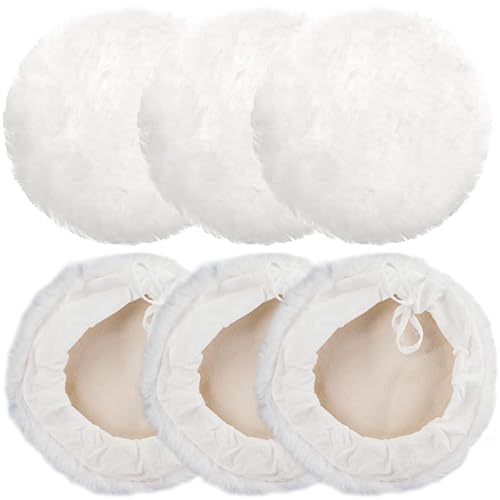
Six drawstring bonnets for the drill-adapter crowd who want a clean pad every pass.
These are bonnets, not stick-on pads — a built-in drawstring cinches them snug over a 7-inch polisher or drill adapter. That adjustable fit is the reason they hold steady on curved or uneven surfaces where a flat hook-and-loop pad can lift. You get six in the kit, so you can swap to a fresh one the moment a bonnet loads up with compound.
The soft lambswool face is meant for smooth, swirl-free polishing across a lot of materials: car paint, furniture, solid wood, metal, bronze, glass, musical instruments, and interior design work. They wash and reuse, and the maker advises cleaning them right after use and air-drying them in a cool spot so they keep conforming to irregular shapes.
Quality here is the most-discussed point, and it lands mixed — some kits work well, others fall apart fast, so check the stitching when yours arrives and keep the drawstring snug. That fragility is the trade-off for a budget-friendly six-pack of convenience bonnets. If durability is your priority, a heavier hook-and-loop pad is the sturdier route; if you want cheap, quick-change coverage, these do the job.
What the drawstring buys you
- Six bonnets means a fresh face for each stage or panel
- Adjustable drawstring grips curved and uneven surfaces
- Soft lambswool suited to paint, wood, metal, glass, and more
- Washable and reusable
The catch to weigh
- Durability is mixed — some bonnets come apart on first use
- Fit is mixed on 7-inch buffers
- Check stitching and keep the drawstring tight
Your match if: you work with a drill adapter or 7-inch polisher and want a cheap multi-pack of quick-change bonnets.
Keep looking if: you need maximum pad durability for repeated heavy jobs.
Know the Specs
Diameter and pad coverage
Diameter is the number that decides how much surface one pass covers and how much control you keep. A pad measured in inches across its working face — 9 inches on the 3M and SPTA double-side, 8 inches on the TCP Global and SPTA 4-piece set, 7 inches on the Woolous and Sisha-A, 6 inches on the TCP Global two-pack — covers more ground the larger it gets. On a long flat panel, larger means fewer passes. Around mirrors and tight curves, smaller means you can steer without clipping trim.
Attachment: hook-and-loop vs threaded
The attachment is how the pad holds onto the machine, and it is the first compatibility check. Hook-and-loop is a press-on face that grips a matching backing plate, so it needs a plate already on your buffer. A 5/8-11 thread is a screw-on male stud that matches a rotary buffer’s spindle, so a threaded pad needs no plate. Match the attachment to your machine or the pad will not mount.
Wool grade and cutting aggression
Wool grade is how coarse the face is, and coarser means more bite. A coarse pad like the 24-grit TCP Global double-sided removes oxidation and orange peel fast. A finer wool like the Fasmov pad removes swirls and light defects with more control. Start coarse for heavy correction, then finish with a finer foam pad for gloss.
Pile thickness and density
Pile is the height of the wool fibers on the face, and thicker pile is more forgiving. The TCP Global Premium pad carries a 1-inch thick pile that spreads wax and polish evenly rather than biting in. Dense, twisted fibers like the 4-ply wool on the Woolous and Sisha-A pads cut with less friction heat, which helps prevent swirl marks.
Common Questions
Will these wool pads fit my buffer or drill?
Why is my new wool pad shedding fibers?
Is a wool pad better than a foam pad for removing scratches?
Can a wool pad burn through my car paint?
What does 5/8-11 thread mean on a buffing pad?
Should I use a wool pad for applying wax or for cutting only?
Can I wash and reuse a wool buffing pad?
How do I match pad size to the panel I am polishing?
Do these pads work on gelcoat and fiberglass, not just car paint?
What is the difference between a wool pad and a wool bonnet?
The Bottom Line
For most buyers, the wool buffing pads winner is the 3M Wool Polishing Pad 05713 — a 9-inch blended-wool pad that covers big panels fast and cuts swirls and microscratches on paint, gelcoat, and fiberglass, backed by the strongest owner consensus in this group. If you want a plush pad dedicated to waxing and final gloss on a budget, grab the TCP Global Premium 6 Inch two-pack with its 1-inch pile. And for heavy cutting on a rotary with a 5/8-11 spindle, the double-sided SPTA 9-inch wool pad is the one to reach for — two faces mean double the cutting life before you replace it.
How we choose
We do not accept paid placement. Every pick is matched to a real buyer and a real use-case; we do not hands-on test units.
Sources
Specifications: manufacturer listings and product documentation. Review insights: verified customer reviews, as of November 2026. Pricing: not shown on this page (it changes often); check the current price via the retailer link.
As an Amazon Associate, Tactical Gear Guy earns from qualifying purchases. This does not affect which products we feature.