Specs are compiled from manufacturer listings and verified buyer reviews and can change over time — please confirm the key details on the product page before buying.
A wool blend base layer has to keep you warm when you stop moving, dry before you cool down, and resist itch and odour through a second day. The three picks below do that at three different levels of spend. The short answer: the Helly Hansen Lifa Merino Midweight Crew is the one to beat, because it pairs a 100% Merino wool inner layer with a synthetic LIFA outer layer in a two-layer build that handles sweat and cold together.
This guide is built by comparing the manufacturers’ published specifications and the patterns across verified customer reviews, so you get each pick’s real strengths and trade-offs instead of marketing spin.
Below you will find what the fabric actually does, which specs matter when you are standing in a cold changing room, and where each top gives ground. My pick for the best wool blend base layer stays the Helly Hansen Lifa Merino Crew, and the two alternatives cover budgets and workwear needs.
Top Picks

How To Choose The Best Wool Blend Base Layer
A base layer is not just another warm shirt. It is not. Its job is to move sweat away from your skin while you work hard, then keep you warm when you slow down. Get the blend or the fit wrong and you end up clammy in the first hour and freezing in the second.
Start with the blend, not the brand
A wool blend means the wool is mixed with something else — usually a synthetic like polyamide or polyester. The wool brings warmth and odour resistance; the synthetic brings durability and faster drying. Pure synthetics trap smell quickly. Pure wool can wear thin faster. That split is the compromise that works.
Weight in g/m² tells you how cold it is built for
Fabric weight is written in grams per square metre (g/m²) — the mass of one square metre of the knit. A midweight knit like 180 g/m² sits in the middle: warm enough for skiing and winter work, thin enough to fit under a jacket without bulk. Heavier knits warm more but add bulk under a shell.
Microns decide whether it touches your skin comfortably
Merino fibre thickness is measured in microns (one micron is one-thousandth of a millimetre). The finer the fibre, the softer it feels against bare skin. Superfine 18.5-micron merino is the kind that goes on smooth rather than scratchy, which matters because a base layer is worn directly on skin for hours.
Fit, seams and sleeves are the fit-and-finish test
A base layer needs to sit close without clamping. Look for flat seams that sit flush against the skin, and raglan sleeves (where the seam runs from underarm to collar rather than across the shoulder) so a backpack strap does not grind on a seam. Thumb loops stop sleeves riding up when you pull a jacket on.
Side-by-Side Comparison
| Model | Best For | Fabric Blend | Weight / Knit | Cut And Extras | Amazon |
|---|---|---|---|---|---|
| Helly Hansen Men’s Lifa Merino Midweight Crew★ Best Overall | Cold-weather layering that manages sweat | 100% Merino wool inner layer plus LIFA fibre outer layer, two-layer build | Midweight | Fitted crew neck, long sleeve | Amazon |
| DANISH ENDURANCE Merino Wool Base Layer for Men | Ski trips and full-body cold coverage | 80% Merino wool / 20% recycled polyamide | 180 g/m² midweight, 18.5-micron merino | Top plus matching long johns, raglan sleeves, flat seams | Amazon |
| Carhartt Men’s Force Midweight Synthetic-Merino Quarter-Zip Top | Workwear and layering with a zip collar | Synthetic-merino wool blend with Force and FastDry technology | Midweight | Mock neck, quarter zip, zip chest pocket, thumb loops | Amazon |
Detailed Reviews
1. Helly Hansen Men’s Lifa Merino Midweight Crew
Our pick — 4.5+★ from 600+ verified ratings; the strongest balance of quality and price.
Two layers doing two jobs: merino against your skin, LIFA fibre handling the sweat.
The defining feature here is the construction: a 100% Merino wool layer sits against your body, and a LIFA Stay Warm Technology layer sits on the outside of it. Merino on its own is warm and resists odour. Where it lags is moving heavy sweat quickly. Helly Hansen’s answer is to let the wool be the comfort side and the synthetic LIFA side be the moisture-management side. In real terms, you get the soft feel of merino with the drying behaviour of a technical fibre, which is exactly what you want when you are working hard in the cold and then standing still.
It is a midweight crew, so it layers under a shell without turning you into a bundle, and it is cut fitted so the fabric stays in contact with your skin where wicking actually happens. It delivers that warmth without much bulk. What you are buying is warmth that keeps regulating rather than a straight heat trap — the LIFA side is there to move moisture out while the merino keeps the chill off.
Here is the honest catch. The two-layer build and the real merino content put this in premium-apparel territory, so if you only need a base layer for two or three outings a year, the spend is hard to justify. It is also a fitted cut, so sizing up for a loose feel defeats the purpose of the contact fit. Treat the label instructions with respect and it should hold shape over seasons.
Where it earns its keep
- Merino inner layer plus LIFA outer layer — warmth and sweat handling in one garment
- Midweight knit that layers cleanly under a jacket without bulk
- Fitted cut keeps fabric on skin, which is where wicking happens
- Warmth and build quality are the two things buyers single out most
What to weigh first
- The most expensive of the three, so casual users will not get their money back in wear time
- Fitted sizing — a loose fit reduces the moisture management it is built around
Reach for this if: you spend real hours in the cold and want one next-to-skin layer that warms and dries in the same breath.
Think twice if: you want a relaxed fit or only need a base layer for the odd cold morning.
2. DANISH ENDURANCE Merino Wool Base Layer
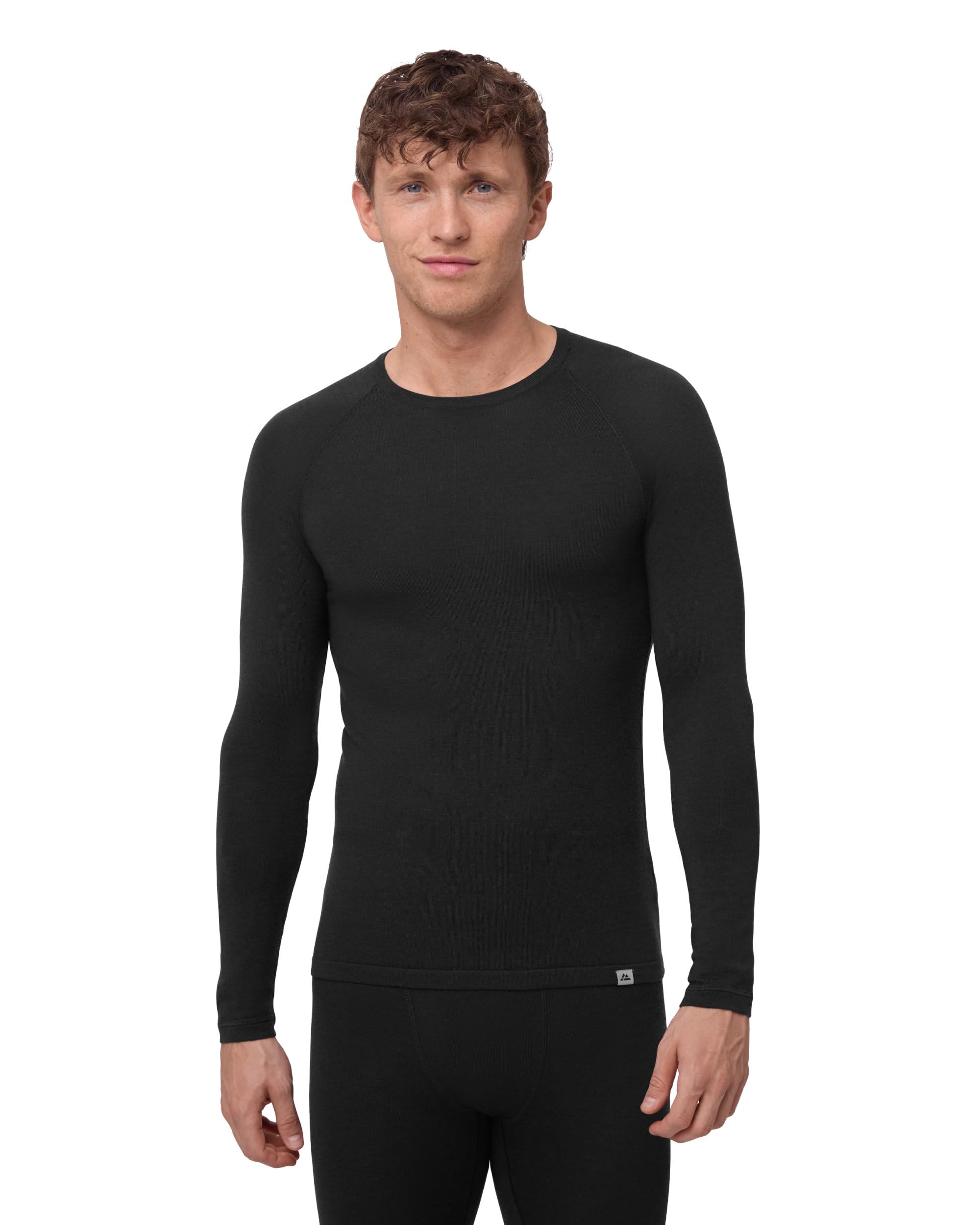
The one that dresses your legs too — a matching top and long john set at 180 g/m².
Most base layers stop at the waist, which leaves your legs to fend for themselves under ski trousers. This set does not. You get a long-sleeve top and matching long johns in the same 180 g/m² midweight merino knit, so the warmth runs from shoulders to ankles instead of quitting at your belt line. For a ski trip or a cold-weather work week that is the practical difference — one purchase, one fabric, one wash load.
The fabric maths is worth reading: 80% Merino wool and 20% recycled polyamide. The merino supplies warmth and odour resistance; the polyamide adds durability so the knit holds its shape through repeated use. The merino is superfine at 18.5 microns, which is the fine-fibre range that goes on smooth rather than itchy — a real concern when fabric sits against bare skin for a full day. It is also sourced mulesing-free and designed in Denmark.
Compared with the Helly Hansen above, this one wins on coverage and gives ground on sweat management. There is no second synthetic layer engineered purely to move moisture, so on a hard climb you rely on the merino blend breathing on its own. Raglan sleeves and flat seams keep chafing down during sustained movement, and the stretchy knit lets you reach and stride without the fabric tugging. Care is gentle: machine wash at a maximum of 30°C on a gentle cycle with wool detergent, and do not tumble dry.
The coverage argument: a full top-and-leg set in 180 g/m² merino covers the whole body for the same one-item decision, which suits ski trips, snowboarding days and outdoor work in changeable conditions.
The trade-off to plan for: no tumble drying and a 30°C wash ceiling mean this is a hang-dry garment, so buy it with a drying plan and ideally a second set for back-to-back days.
Pick this one when: you want legs covered as well as your core and you are packing for ski or snow trips.
Look elsewhere when: you only ever need a top, or you refuse to air-dry your laundry.
3. Carhartt Force Midweight Base Layer Quarter-Zip
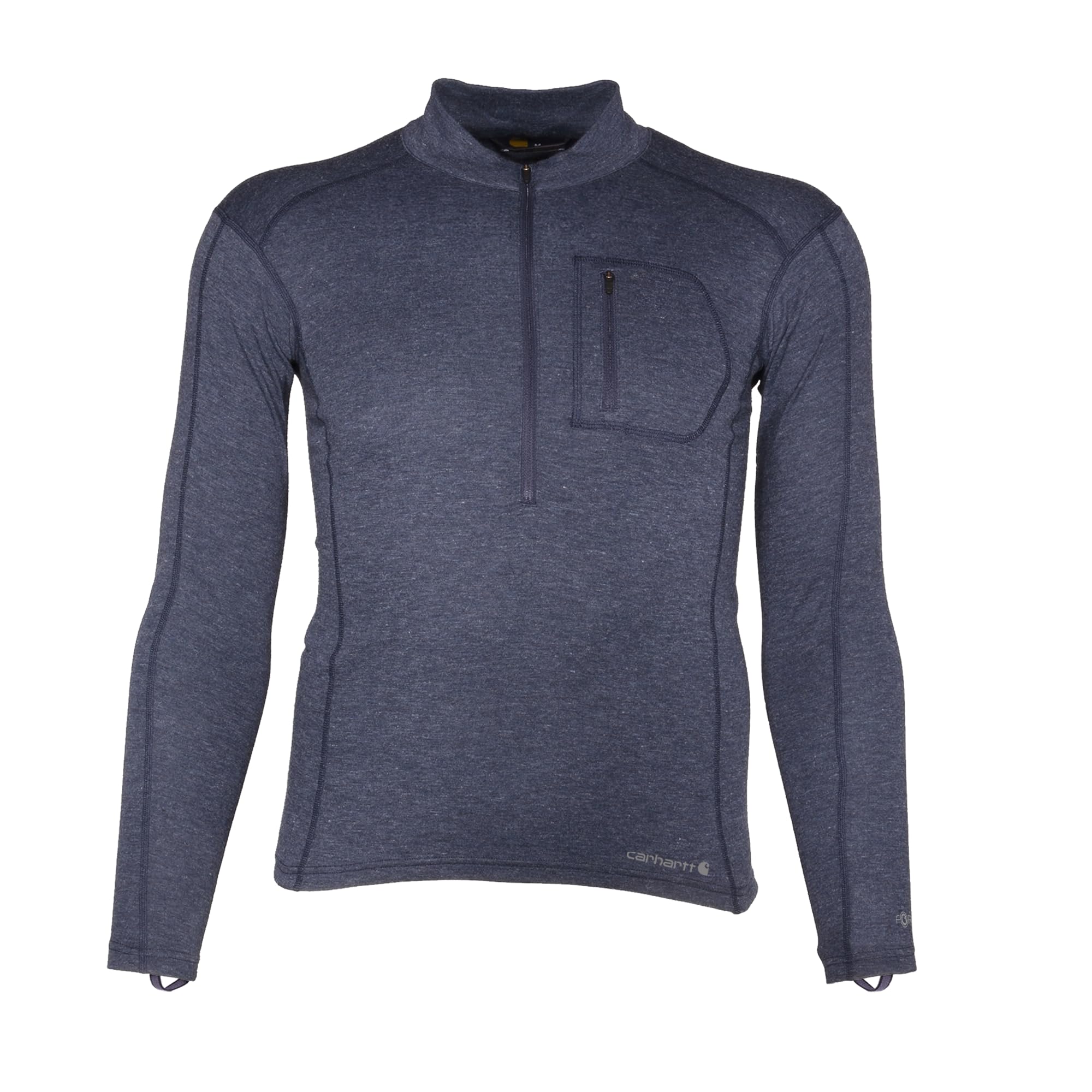
A base layer that looks like a shirt and vents like one, with a zip pocket for your phone.
This is the pick for the person who wears a base layer to a job site rather than a ski lift. The mock-neck collar with a quarter-length zipper gives you a vent you can open when you are loading a truck and close when the wind picks up — no stripping layers in a car park. There is a zip chest pocket for secure storage, thumb loops that keep the long sleeves anchored when you pull a jacket over the top, and tagless labels so nothing scratches at your neck. Flatlock seams sit flush to reduce chafing under a harness or pack strap.
Fabric-wise it is a synthetic-merino wool blend running Carhartt’s Force and FastDry technology, which the maker says wicks sweat, dries fast and resists odour. The merino portion is there to regulate temperature, so the layer breathes rather than baking you. Build quality is the thing buyers praise most here, and warmth runs second — this reads as a garment made to take abuse, which fits the workwear brief. Appearance earns a mention too: it passes as a regular shirt when you take your outer layer off at a lunch break.
What nobody should be surprised by is the fit conversation. This is cut to workwear proportions, and the sizing feedback runs mixed, so treat the size chart as a starting point rather than gospel — check the chest measurement before you commit. Value and fabric weight draw split opinions as well, which is normal on a midweight piece that some buyers want thinner and some want heavier. Get the size right and it is a workhorse; get it wrong and you will be exchanging it.
Why the job site crowd likes it
- Quarter zip lets you dump heat without removing the layer
- Zip chest pocket keeps a phone or card secure while you work
- Concealed thumb loops hold sleeves down when layering up
- Flatlock seams and a tagless label cut irritation under straps
What to check before you click
- Sizing feedback is mixed — verify chest measurements against the chart first
- Opinions split on weight and value, so expectations vary by wearer
Best matched to: outdoor workers and layered commuters who want vents, pockets and a collar that behaves like a real shirt.
Not your layer if: you want a pure next-to-skin ski piece with no zip hardware against your chest.
Know the Specs
Wool Blend Percentage
A blend percentage tells you how much of the fabric is wool and what props up the rest. The DANISH ENDURANCE set spells it out at 80% Merino wool and 20% recycled polyamide — wool for warmth and odour resistance, polyamide for durability. Carhartt describes a synthetic-merino blend without publishing a split. Either way, the wool portion is what makes the layer breathe and stay fresh, and the synthetic portion is what makes it last and dry.
Fabric Weight In g/m²
Grams per square metre is the mass of a square metre of knit, and it is the clearest guide to how cold a layer is built for. Midweight knits sit in the middle band: warm enough for winter activity, thin enough to slide under a shell. The DANISH ENDURANCE set runs 180 g/m², and both other picks are midweight. Lighter knits suit high-output movement; heavier knits suit standing around in low temperatures.
Merino Micron Count
Microns measure fibre diameter, and smaller means softer against skin. Superfine 18.5-micron merino, as used in the DANISH ENDURANCE set, is in the range that feels smooth rather than prickly. Micron count matters more than almost any other base layer spec, because an itchy knit ends up in a drawer no matter how warm it is.
Construction And Seam Details
Two-layer builds, flatlock seams, raglan sleeves and thumb loops are the invisible specs that decide how a layer behaves in motion. Helly Hansen uses a two-layer construction with merino inside and LIFA fibre outside for moisture management. Flat seams sit flush to reduce chafe. Raglan sleeves move the shoulder seam away from pack straps. Thumb loops, as on the Carhartt top, stop a sleeve riding up your forearm.
Common Questions
Is a wool blend base layer warmer than a pure synthetic one?
Will merino wool make me itch against bare skin?
How should I wash a wool blend base layer?
Do I need long johns as well as a base layer top?
Should a base layer be tight or loose fitting?
What is the difference between midweight and lightweight base layers?
Can I wear a wool blend base layer on its own?
Does merino wool base layer shrink in the dryer?
What does mulesing-free merino mean on a base layer label?
Which wool blend base layer is best for working outdoors in winter?
The Bottom Line
The pick that does the most work for the widest range of cold-weather days is the Helly Hansen Men’s Lifa Merino Midweight Crew, because its merino-inside, LIFA-outside construction warms you and moves sweat at the same time. If you want your legs covered for ski season without buying two separate pieces, the DANISH ENDURANCE Merino Wool Base Layer set hands you a full top-and-long-john pairing in 180 g/m² merino. And if your cold hours are spent on a job site rather than a slope, the Carhartt Force Quarter-Zip gives you a vent, a zip pocket and a collar that works as a shirt.
One honest note before you commit: all three are worth buying, but check the size chart on the Carhartt especially, since its fit feedback splits and a base layer only performs when it sits close to skin.
How we choose
We do not accept paid placement. Every pick is matched to a real buyer and a real use-case; we do not hands-on test units.
Sources
Specifications: manufacturer listings and product documentation. Review insights: verified customer reviews, as of November 2026. Pricing: not shown on this page (it changes often); check the current price via the retailer link.
As an Amazon Associate, Tactical Gear Guy earns from qualifying purchases. This does not affect which products we feature.