Specs are compiled from manufacturer listings and verified buyer reviews and can change over time — please confirm the key details on the product page before buying.
If your ears ache ten minutes into a cold walk, the fix is almost never a thicker hat — it is the right fiber. Merino wool is fine enough to sit against your skin without the itch you remember from scratchy wool, and it still traps heat when it gets damp from sweat or snow. Below you get nine real wool beanies, from a merino-and-socks bundle to a ribbed designer cap, so you can match one to how you actually wear a hat.
This guide is built by comparing the manufacturers’ published specifications and the patterns across verified customer reviews, so you get each pick’s real strengths and trade-offs instead of marketing spin.
You will see how fiber fineness, cuff depth and layer count change the way a hat feels on a cold morning. The crowd favorite here pairs 17.5 micron fibers with a double layer, which is why this wool beanie hat roundup leads with it.
Top Picks
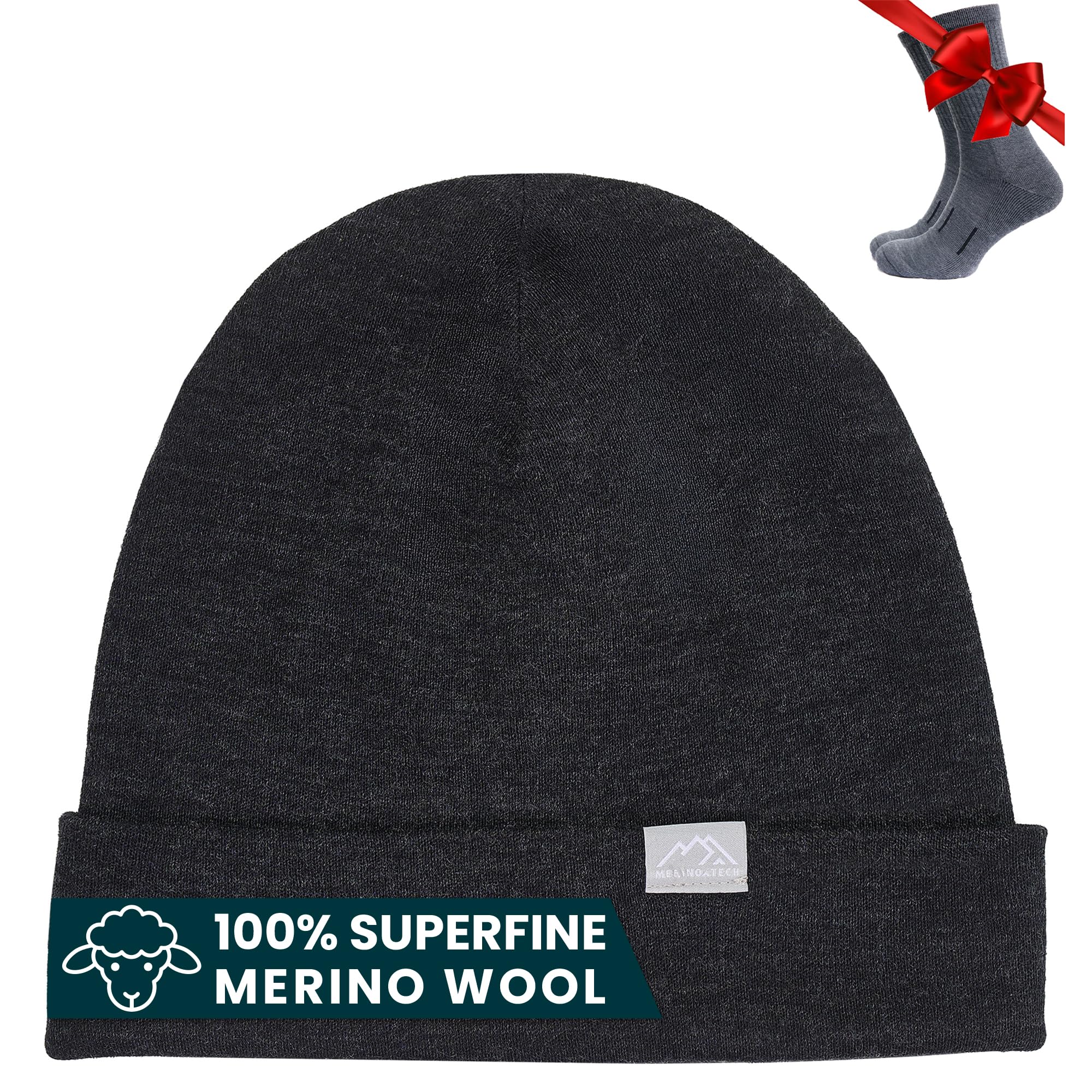


How To Choose The Best Wool Beanie Hat
Start with the fiber, not the color. A hat made from fine merino sits against your skin without the prickle you get from coarser wool, and that single difference decides whether you keep the hat on all day or pull it off every twenty minutes. Everything else — cuff, layers, size — is tuning after that.
Check the micron count before anything else
Microns measure how thin each wool fiber is, and thinner fibers bend instead of poking your skin. A 17.5 micron merino is described as finer than human hair, which is why it can be worn directly on a sensitive forehead. If a listing mentions merino but never gives a micron figure, treat the softness as unknown until you read the reviews.
Decide between one layer and two
A single-layer merino hat is the one that slips under a ski or bike helmet without a lump at the back. A double-layer hat traps more warmth for standing around in real cold, but it takes up more room. If you alternate between skiing and city walking, think about which of those two days is more common for you.
Match the cuff to your ears
A cuff is the folded band at the bottom, and it does two jobs: it gives you a double thickness of wool right over your ears, and it lets you roll the hat lower or higher. Ears that ache in wind want a cuff you can pull down past the lobe. A skull cap with no cuff is lighter and cleaner under a helmet but gives you less to work with in a headwind.
Be honest about the wool percentage
Blends are not a trick — a merino-and-acrylic mix can hold its shape and cost less. But you should know what you are buying. A 50/50 merino and acrylic hat behaves differently from a 100% merino one when it gets sweaty, and it will not match the odor resistance of pure wool. Read the composition line before you commit.
Side-by-Side Comparison
| Model | Best For | Fiber | Layer Build | Head Size Range | Amazon |
|---|---|---|---|---|---|
| Merino.tech 100% Merino Wool Beanie★ Best Overall | Deep cold and sensitive skin | 100% merino, 17.5 micron | Double layer, 250 g/m² | S/M 52–57 cm; L/XL 58–63 cm | Amazon |
| ACUSHLA 100% Merino Wool BeanieBest Value | Warmth without bulk | 100% merino | Double layer, 225 g/m² | One size | Amazon |
| 100% Merino Wool Cuff Beanie HatTop Performer | Everyday cuff wear | 100% merino | Cuffed knit | 11.0 x 7.8 in | Amazon |
| TOP-EX PolarWool Merino Beanie | Bigger heads, fleece comfort | 100% merino | Merino shell, fleece lining | M/L and XL/XXL, 56–64 cm | Amazon |
| MERIWOOL Ribbed Knit Winter Hat | Stretch and sun protection | 50% merino, 50% acrylic | Ribbed cuff beanie | Fits all sizes | Amazon |
| SmartWool The Lid | No-frills town and mountain hat | Wool blend | One layer with headband liner | — | Amazon |
| Minus33 Merino Wool Micro Weight Reversible Beanie | High-output cold workouts | Merino wool | Lightweight, reversible | — | Amazon |
| Merino Wool Cuffed Plain Knit Hat | Ear coverage that stays put | 100% merino (SGS A grade) | Cuffed knit | — | Amazon |
| Polo Ralph Lauren Signature Merino Cuffed Beanie | Dressing up a winter coat | Merino wool | Ribbed cuff | — | Amazon |
Detailed Reviews
1. Merino.tech 100% Merino Wool Beanie
Our pick — 4.5+★ from 900+ verified ratings; the strongest balance of quality and price.
The hat that decides it on fiber fineness, then throws in a pair of socks.
Each merino strand measures 17.5 micron, the spec that keeps this hat from itching. That fineness sits below the itchy threshold, and the maker describes these fibers as finer than human hair, so the hat rests on a sensitive forehead without the prickle of ordinary wool. The wool is Australian merino and RWS certified (an independent farm audit covering animal welfare and land management). Every component is also tested against 100+ harmful substances under OEKO-TEX Standard 100 (a safety certification for textiles).
That fine wool is packed into a 250 g/m² double layer, and that figure matters most when you compare it directly. The ACUSHLA beanie below uses a 225 g/m² double layer, so this one carries the heavier knit of the two. Heavier knit buys you more trapped air and a thicker band over the ears on a genuinely cold morning. It is also the piece that goes under a ski or snowboard helmet, because the double layer is described as thin enough to fit under one without bulk.
What wins people over is warmth without the sweaty-head feeling: the double layer blocks cold and wind, and the wool stays warm even when damp. Sizing splits into S/M for 52–57 cm and L/XL for 58–63 cm, and the maker’s own advice is to size up if you are unsure because merino stretches. The honest trade-off is thickness: a chunk of buyers find the double layer heavier than they expected, so if you want a barely-there hat for a mild autumn, a lightweight single layer will suit you better. It comes as a set with a pair of mid-weight hiking socks, which makes the entry point easy to justify.
Where it earns its first-place spot
- 17.5 micron merino that is fine enough to wear straight on sensitive skin
- 250 g/m² double layer holds more warmth than the 225 g/m² ACUSHLA knit
- Thin enough to slide under a ski or snowboard helmet without a lump
- Two size bands — S/M for 52–57 cm and L/XL for 58–63 cm
- Ships as a beanie-and-socks set, not a hat alone
The parts you should weigh up
- The double layer reads heavy to anyone used to a thin skull cap
- Must be washed cold at 30°C max and laid flat — tumble drying permanently damages merino
- Stretch means the fit loosens, so sizing up blindly can backfire
Reach for this one if: you want one hat that covers deep cold, helmet days and a sensitive forehead, and you like the idea of socks arriving with it.
Look past it if: you specifically want a featherweight hat for mild weather — the 250 g/m² double layer is more hat than you need.
2. ACUSHLA 100% Merino Wool Beanie
Pure merino in a two-layer knit that lands warm without turning your head into an oven.
Here is the comparison that shapes this pick: the ACUSHLA runs a 225 g/m² pure merino double layer against the 250 g/m² build of the Merino.tech above. Less weight in the knit, so you get a hat that still blocks cold but sits closer to a light cap than a deep-winter helmet liner. For a lot of buyers that is the exact balance they want — warm on a frosty commute, not something you yank off the moment you step indoors.
The stretch is the quiet engineering win. An interlock knit structure lets the fabric give, which is why buyers with larger heads report it settles on comfortably instead of perching. It is genuinely 100% merino, and the wool reads as soft rather than coarse against the skin. One thing to plan for: the maker recommends a laundry bag in the wash to stop it deforming, and tumble drying is only on low. Treat the wash cycle with the same care you would a wool sweater.
The recurring note is thinness, and it is a fair one to size up for yourself. This is a mild-to-cold-day hat, not a survival layer for a January summit. If you run cold and plan to stand still in wind, the heavier double layer of the top pick covers you better. But for the daily back-and-forth between a warm house, a cold car and a chilly office, it does the job neatly — and the single-size fit removes the sizing guesswork entirely.
What the stretch buys you: an interlock knit that flexes to your head instead of clamping it, so one size covers a wide range of heads without a tight band across the forehead.
Wash-day caution: a laundry bag and a low tumble are not optional extras here — skip them and the shape goes.
The easy yes if: you want pure merino, no size decision, and a hat that warms a normal winter day without bulk.
Keep shopping if: you need serious insulation for standing around in freezing wind — this one is built for moderate cold.
3. 100% Merino Wool Cuff Beanie Hat
A cuffed merino knit whose build quality is the thing that keeps coming up.
The cuff is the whole point of this design. That folded band doubles the wool directly over your ears and lets you roll the hat lower when the wind picks up. The knit measures 11.0 x 7.8 inches and weighs 2.56 ounces, so it packs into a jacket pocket without a bulge. Pure merino from Australian sheep handles the rest — the fiber responds to your body temperature, warming you on a cold platform and easing off once you are on a heated bus.
Build quality is what carries this one in the buyer conversation, and the warmth runs a close second. The fiber is described as fine enough to be non-irritating, and buyers report it does not aggravate sensitive skin around the eyes — a real concern when a cuff sits low on your brow. Stretch is described as just enough for a good fit rather than a loose, slouchy give — so it stays where you put it on a windy walk.
Honest limit: this is a knit cuff hat, not a windproof shell. On a still cold day it is excellent; on an exposed ridge with gusts, you will feel air moving through the knit, and a hat with a fleece lining handles that better. It also is not the lightest option for a helmet — the cuff adds bulk at the base. For a daily hat you pull on for the commute, the dog walk and the school run, it is a solid, long-wearing choice.
The cuff dividend: doubled wool over the ears plus the ability to roll the band down is what separates this from a plain skull cap in a headwind.
Where it stops: an open knit lets wind through, so treat it as a cold-day hat rather than a storm hat.
Best matched to: someone who wears one hat every day through autumn and winter and wants a cuff that actually covers the ears.
Not your hat if: you want a windproof layer for exposed winter hiking — the knit is breathable, which means it is not wind-blocking.
4. TOP-EX PolarWool Merino Wool Beanie

Merino on the outside, fleece next to your skin, and a size band that reaches 64 cm.
If most beanies perch on top of your head like a teacup, start here. The PolarWool comes in M/L and XL/XXL and covers 56–64 cm of head circumference, which is a wider spread than the Merino.tech’s 58–63 cm top band. The stretchy knit is built to sit without squeezing, and the maker’s own steer is to pick XL/XXL on a larger head rather than hope the smaller size gives.
The lining is the second differentiator. A soft Polartec micro-fleece sits against your skin under the 100% merino shell, so anyone who finds wool prickly on a bald or sensitive scalp gets a buffer that the unlined hats above cannot offer. It is described as gentle even there. The merino itself still does the temperature work — it breathes and moves moisture, which is why the maker lists running, cycling and hiking as fair use rather than just standing about.
The catch is the fit spread itself. Some buyers with larger heads say it is exactly right, while others find it small, and that split lines up with the two-size system rather than a quality problem — pick the wrong band and the hat will feel off either way. To keep it fitting right, wash it cold on a wool or delicate cycle, ideally in a bag, then lay it flat; heat is what shrinks wool, so keep it away from hot water and the dryer. For a lined hat at this level, the fleece comfort is the reason to choose it over the pure-merino picks.
Why the lining matters: a fleece inner layer turns a wool hat into something a bald or sensitive head can wear all day without a tickle.
The sizing gamble: two bands cover 56–64 cm, and getting the band wrong is the most common reason this one disappoints.
Worth it for: a larger head, a sensitive scalp, or anyone who wants fleece softness against the skin instead of bare wool.
Think twice if: you are between the two size bands — measure first, because the fit split is real.
5. MERIWOOL Merino Wool Blend Ribbed Knit Winter Hat
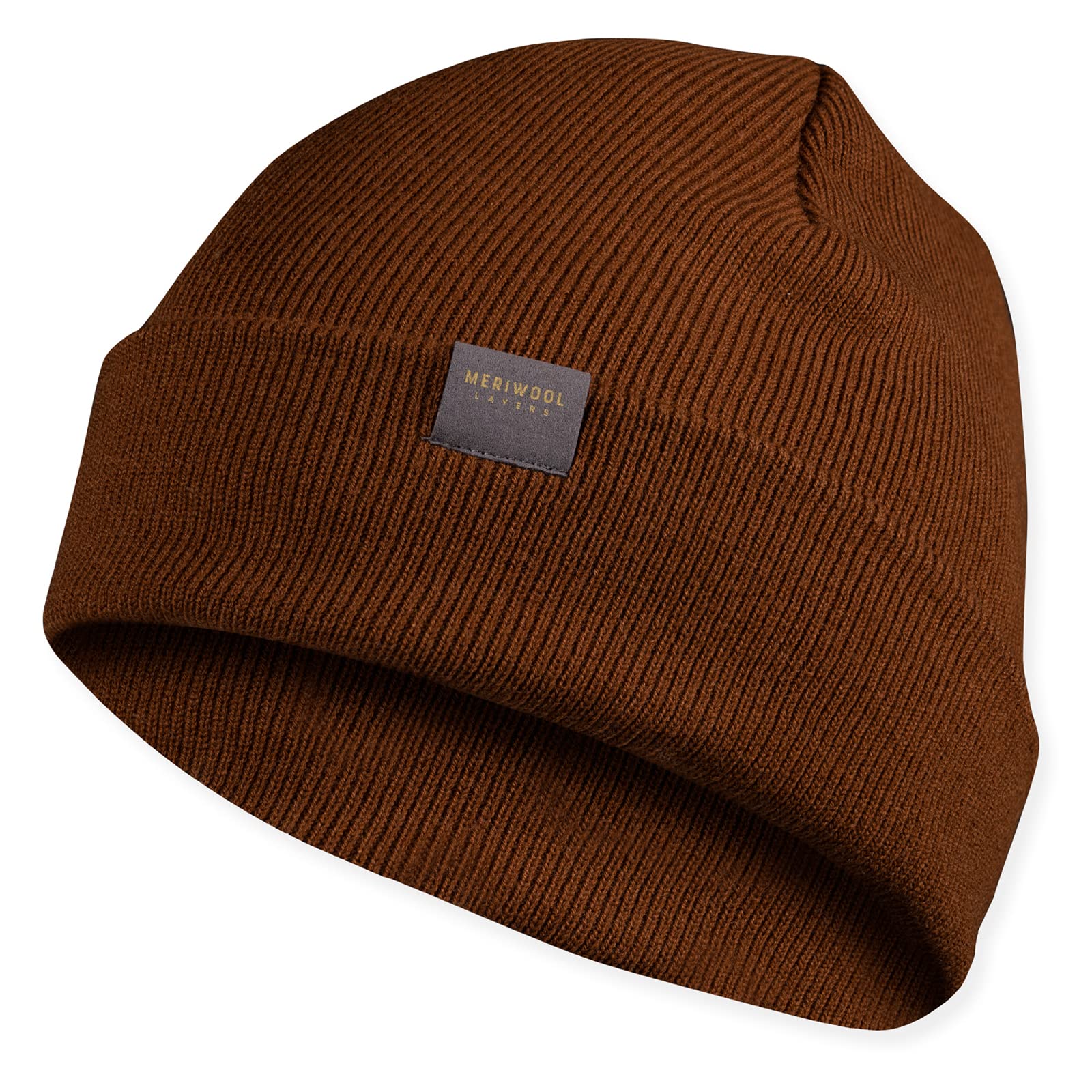
A 50/50 wool and acrylic ribbed cuff that gives on every head and shrugs off sun.
The blend is the headline, so let’s be clear about it. This is 50% merino wool and 50% acrylic, and the acrylic is what makes the ribbed cuff stretch across head sizes with ease. You give up some of the pure-wool behavior for that give, and you should know it going in. The wool half still delivers: merino resists odor, wicks moisture, dries fast and regulates temperature so you are not clammy after a climb. The fiber also carries a 30+ UPF rating, which is a sun-blocking measure — handy on a bright snow day when sun bounces off the ground.
Quality and warmth are what people respond to, with the ribbed cuff and color options close behind. The design is a cuffed rib knit, which is a casual, slightly slouchy shape rather than a snug skull cap. It is pitched at snowboarding, hiking and general winter wear, and the static-resistant wool helps it settle without clinging to your hair.
Two honest caveats. The fit runs inconsistent in reports — some find it generously sized, some find it snug — so try before you trust the “one size” label on a big head. And the material draws mixed reactions precisely because of the 50% acrylic, which some buyers notice against the pure-merino alternatives. If you want the maximum wool content, the Merino.tech or ACUSHLA picks above give you 100%. If you want stretch, sun protection and a shape that suits casual wear, the blend is the trade you are making.
Why the blend earns a place
- 30+ UPF rating blocks UV on bright snow days
- Odor-resistant, moisture-wicking merino in the mix
- Ribbed cuff stretches to fit a range of heads
- Dries quickly when wet
What you are trading away
- 50% acrylic means it is not a pure merino hat
- Fit reports split between generous and snug
- Less warmth-per-ounce than a 100% merino double layer
The fit for you if: you want stretch, quick drying and sun protection, and you are fine with a wool blend.
Walk on if: pure 100% merino is a hard requirement — this one is half acrylic by design.
6. SmartWool Unisex Adult The Lid

One layer, no frills, built to disappear under a helmet and just work.
This is the hat for the person who does not want to think about their hat. One layer of merino with a headband liner, no cuff to fiddle with, no slouch — it is designed to be a workhorse for cool or cold days whether you are in town or in the mountains. That single layer is exactly what makes it a strong helmet companion; there is no doubled band bunched up at the base of your skull.
Warmth without bulk is the consensus, and it fits the one-layer build. Owners mention it pulls down cleanly over the forehead and ears, which is the practical test of any low-profile hat. It also dresses up or down, so the same hat works under a ski helmet and over a coat on a night out. The merino does the temperature regulating, so you are not fighting a sweaty head the moment you step inside.
The fair warning is the fiber content. This is a wool blend rather than pure merino, and the material draws mixed feedback because of it — some owners praise the wool quality, others note that only 55% of the blend is wool. If pure fiber is your line in the sand, the Merino.tech at the top of this list is a cleaner choice. If you want a genuinely simple, low-profile hat that holds warmth and slides under a helmet without a fight, this is the one that earns its spot.
Built for the helmet: a single layer with a headband liner means no bulk and no bunching when you pull a ski or bike helmet on over it.
The fiber fine print: it is a blend at 55% wool, so do not expect the purity of the 100% merino picks.
Pick this when: you want a plain, low-profile hat for helmet wear and everyday cold.
Skip if: you insist on 100% merino — check the blend before you buy.
7. Merino Wool Micro Weight Reversible Beanie
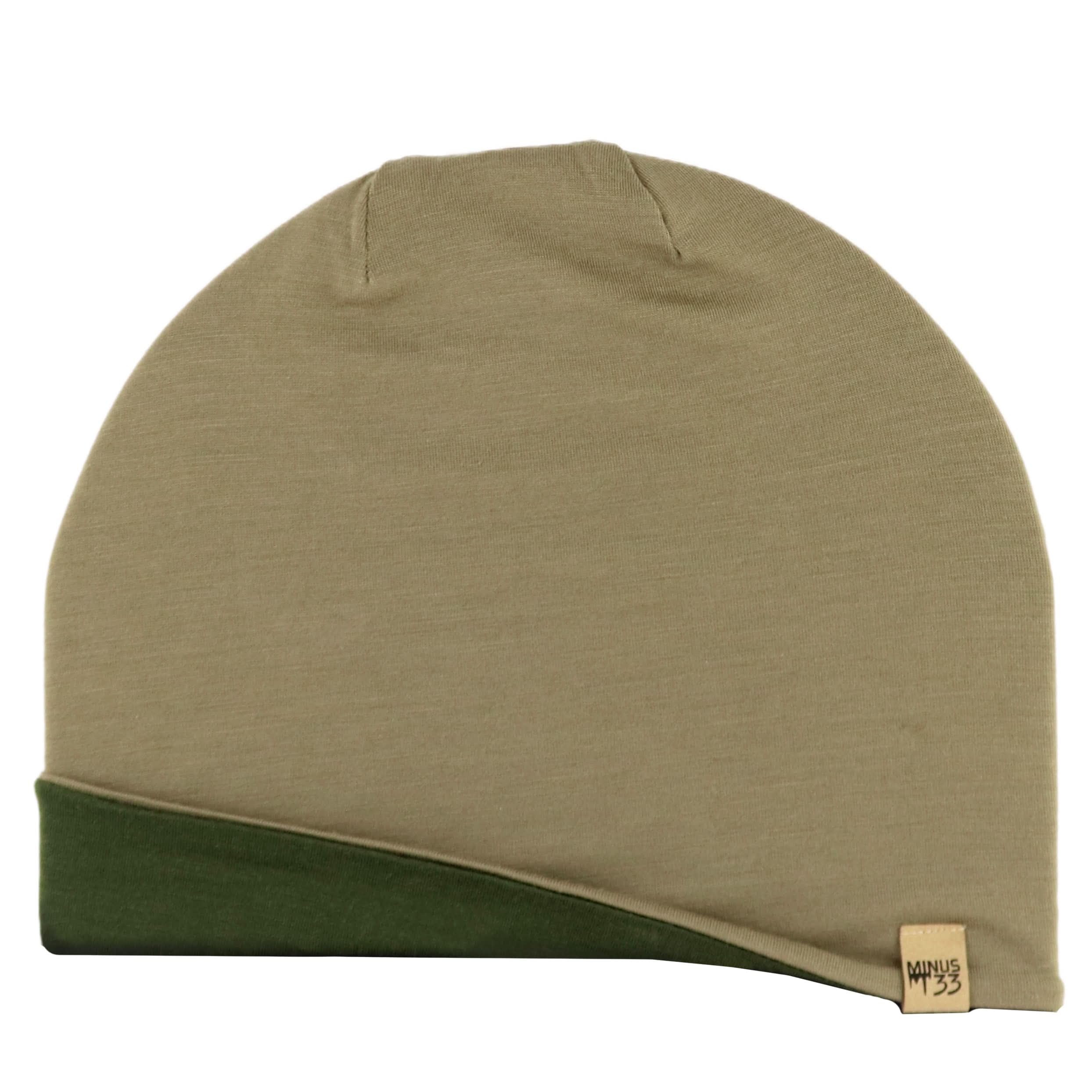
A micro-weight merino hat that flips inside out and stays toasty while you run.
Micro weight is the defining spec here, and it is a deliberate choice. This hat is built for high-intensity cold-weather work — running, skiing, snowmobiling — where a heavy double layer would leave you dripping. Superfine merino keeps it lightweight and soft, and the reversible build gives you two looks from one hat. Minus33, the brand behind it, traces back to a family wool business operating since 1916, and this hat is cut to fit under a helmet on the slopes.
Wool absorbs up to 30% of its weight in moisture without feeling wet or clammy, and it insulates better than cotton or polyester when damp. That is the whole argument for merino on a run — you can sweat and it still holds heat. Lightweight layers in the line carry a UPF rating of 25, so the hat gives you some sun protection on a bright winter outing too.
The honest limit is fit. Fit draws the most mixed feedback of anything on this hat, and the micro-weight thinness means it suits mild cold better than a bitter snap. If you want one hat for a frosty morning jog and a mild commute, it is a smart pick because of how little room it takes up. If you are standing still in a biting wind, the heavier knit of the top pick will serve you better. Think of this as a performance layer, not a snow-day lounger.
The workout logic: micro-weight merino breathes and wicks, so a hard run does not turn into a sweat bath under a heavy knit.
Where it is honest about itself: thin means mild-to-cold days, and fit is the detail that divides owners.
Made for you if: you run, ski or ride hard in the cold and want a hat you barely feel.
Not for you if: you want deep-winter warmth for standing around — this is a micro-weight layer.
8. Merino Wool Beanie Cuffed Plain Knit Hat
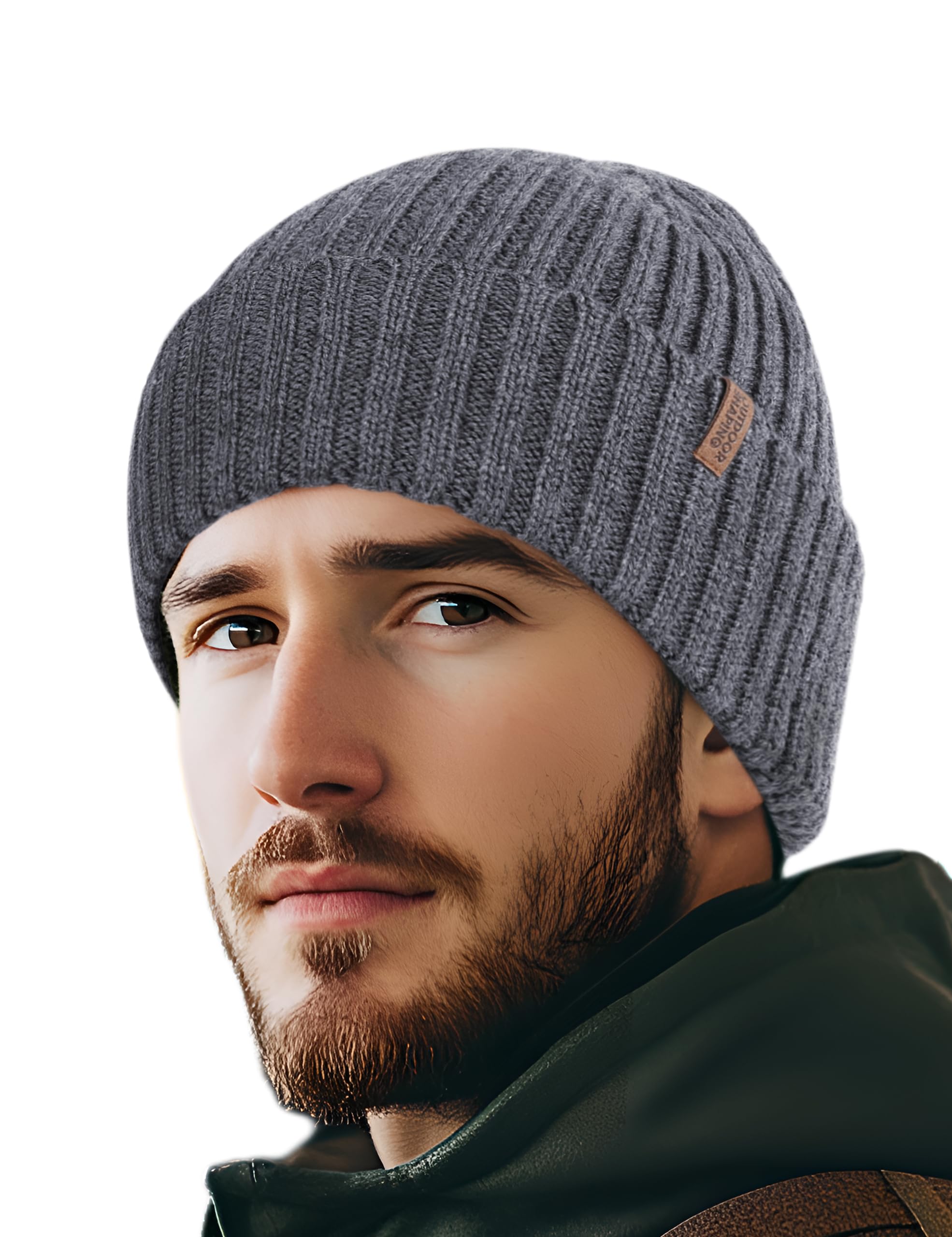
A 100% merino cuff that covers the ears without pinching the temples.
The claim to verify here is fiber quality, and it comes with documentation: this merino gets an A grade in the international SGS test. It is also 100% merino, not a blend, so you get the full odor resistance and temperature response of pure wool. The knit has a nice pattern to it, which makes it look more considered than a plain stockinette cuff.
Ear coverage is the practical virtue. The cuff sits down over the ears without being too tight, which is the exact balance that trips up most beanies — pull one down far enough to cover the lobe, and it often squeezes the temple instead. Warmth is described as right for winter temperatures, and the merino is soft rather than itchy against the skin. For a daily hat you grab on the way out the door, that combination covers the basics well.
The one thing to check is sizing, because the ear-coverage balance depends on the fit for your head. There is no size band printed in the specs, so if you sit at either extreme of head circumference, confirm the fit before committing.
The quality marker: an SGS A-grade result on the merino is a documented fiber check, not just a claim on the label.
Fit-first caution: no size bands are listed, so big or small heads should verify the cuff before buying.
The pick for you if: you want pure merino with a cuff that covers your ears without a tight band across your forehead.
Pause first if: your head sits at an extreme size — there is no size range to guide you, so check the fit.
9. Polo Ralph Lauren Men`s Signature Merino Cuffed Beanie
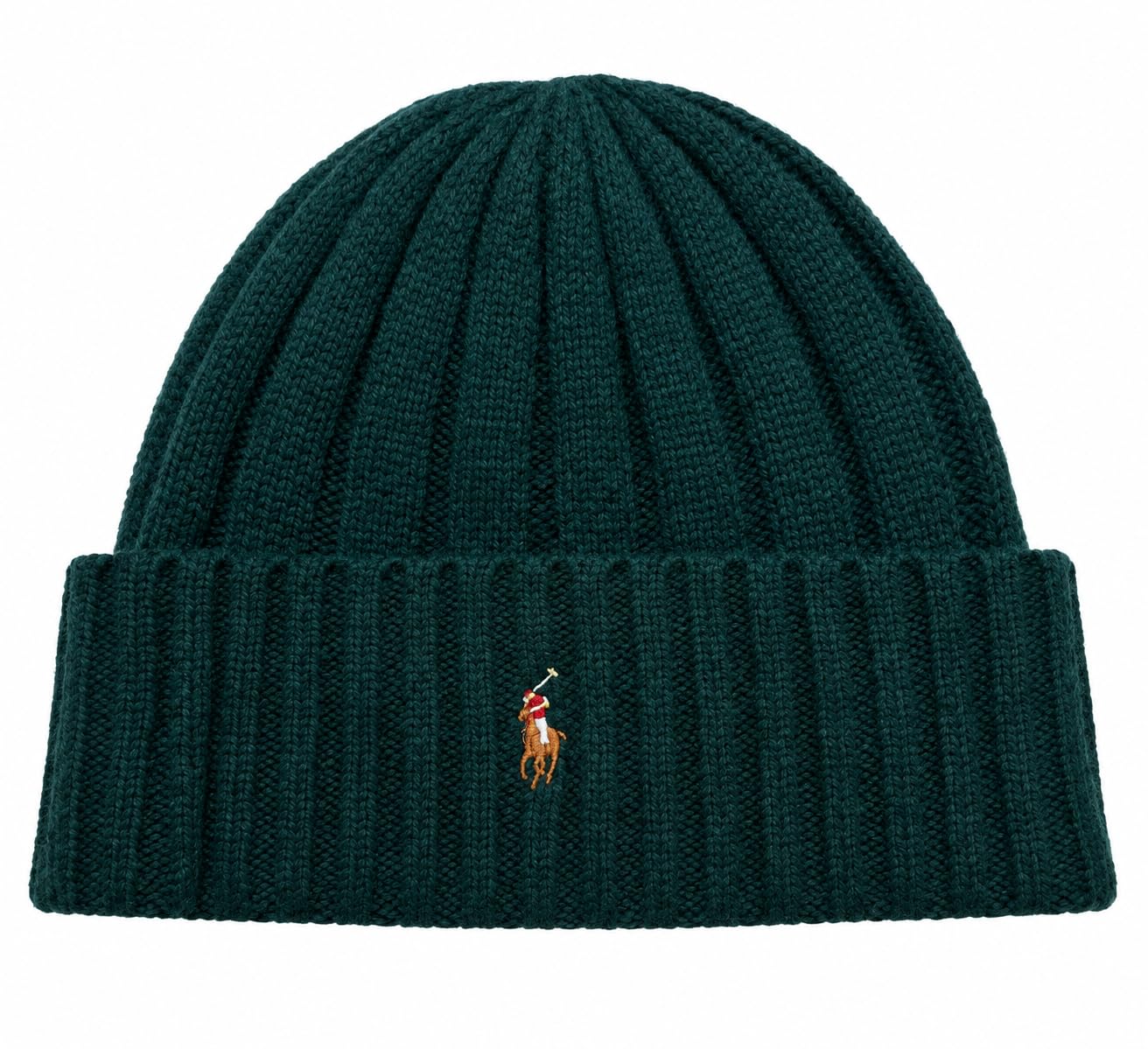
The ribbed merino cap for the coat you actually want to wear it with.
This is the hat you reach for when the puffer is too casual. A ribbed cuff in merino wool that naturally reacts to your body temperature — warm when you are cold, cooler when you are not — with a clean silhouette that reads as considered rather than sporty. It is the highest-end option on this list, and it looks the part next to a wool overcoat.
Quality, comfort, warmth and fit all land well, and the appearance earns its own praise. The ribbed knit gives it structure, so it holds a shape on your head instead of slumping. For a hat you wear to dinner, to the office on a frozen morning, or out on a weekend, that structure is what keeps it looking sharp rather than slouchy.
Two things a careful buyer should know. Color is the most common letdown — some buyers find the shade is not what they expected from the listing photos, so check the exact color name before you commit. And authenticity draws mixed feedback, with some buyers confirming it is genuine and others doubting it; buying from a reputable seller is the way to sidestep that entirely. If you want a merino cuff for the look and the dressier occasions, it delivers. If you want pure technical warmth for the trail, the double-layer picks above will serve you better for the money.
Why the look holds: a ribbed merino knit keeps its structure, so the hat stays shaped as a cap rather than collapsing into a slouch on your head.
What to verify: shade and authenticity are the two things to confirm before ordering — check the color name and buy from a trusted seller.
Reach for this if: you want a merino cuff that dresses up a winter coat and holds its shape on your head.
Not the one for: trail warmth on a budget — you are paying for the look here, and the double-layer picks give more insulation.
Know the Specs
Micron Count
Microns measure how thin each wool fiber is, and thinner is softer. The Merino.tech lists 17.5 micron merino, described as finer than human hair, which is why it can sit on sensitive skin without the itch of standard wool. A lower micron number is the quiet reason one merino hat feels gentle and another feels prickly, so check it before you assume all merino is the same.
Fabric Weight (g/m²)
The g/m² figure tells you how much wool is in a square meter of fabric, which is your best proxy for warmth. The Merino.tech runs a 250 g/m² double layer and the ACUSHLA a 225 g/m² double layer, so the first is the heavier knit. Heavier means more trapped air and a thicker band over the ears, but also less room under a snug helmet.
Single Layer vs Double Layer
A single layer is thin, light and slips under a helmet without bulk — the SmartWool The Lid is built this way. A double layer traps more warmth for standing cold, but it takes up more room. Match the layer count to how you will actually wear the hat, not to an abstract idea of “warmer is better.”
Fibre Composition Percentage
The composition line tells you what you are really buying. The MERIWOOL runs 50% merino and 50% acrylic, while SmartWool’s Lid is a blend with only 55% wool. Pure 100% merino — as on the Merino.tech, ACUSHLA and SGS A-grade cuffed pick — behaves differently when damp and gives fuller odor resistance. Blends can be softer on the budget and more stretchy, so decide what trade you want.
UPF Rating
UPF is a sun-protection score for fabric, the clothing equivalent of sunscreen SPF. MERIWOOL’s blended hat carries a 30+ UPF rating, and Minus33 states its lightweight layers carry UPF 25. On a bright day with sun bouncing off snow, that extra block is a genuine bonus, not a marketing footnote.
Washing Wool
Most merino hats want cold water at 30°C max on a delicate or wool cycle, then a flat dry. Heat shrinks wool, so hot water and tumble drying are the two things to keep away from any hat on this list. A laundry bag protects the shape, and wearing merino three to five days between washes is fine because the wool resists odor.
Common Questions
Will a merino wool beanie actually stop the itch?
Will a wool beanie fit under a ski helmet?
How should I wash a merino wool beanie so it does not shrink?
What head circumference do the hat sizes cover?
Is 100% merino warmer than a wool blend beanie?
Can I wear a wool beanie for running or sports?
Is Merino wool or acrylic better for a winter hat?
Do wool beanies have any sun protection?
Which beanie is best for a larger head?
How long can I wear a merino beanie before washing it?
The Bottom Line
For most buyers, the winner is the Merino.tech 100% Merino Wool Beanie because 17.5 micron merino and a 250 g/m² double layer deliver warmth on sensitive skin without the itch, and it comes as a hat-and-socks set. If you want a pure merino hat that warms a normal winter day without bulk, the ACUSHLA 100beanie turns the same warmth into a lighter 225 g/m² double layer with a stretchy fit. And for a larger head that needs fleece softness against the skin, the TOP-EX PolarWool Merino Beanie covers 56–64 cm across two size bands. One honest nudge before you commit: the top pick holds the strongest combination of fiber fineness, layer weight and size range on this list, so it is the one worth starting with if you are unsure which hat you need.
How we choose
We do not accept paid placement. Every pick is matched to a real buyer and a real use-case; we do not hands-on test units.
Sources
Specifications: manufacturer listings and product documentation. Review insights: verified customer reviews, as of November 2026. Pricing: not shown on this page (it changes often); check the current price via the retailer link.
As an Amazon Associate, Tactical Gear Guy earns from qualifying purchases. This does not affect which products we feature.