Specs are compiled from manufacturer listings and verified buyer reviews and can change over time — please confirm the key details on the product page before buying.
You want a jacket that keeps you warm without turning you into a sweaty, itchy mess by the time you reach the car. Some of these jackets mix a little wool into mostly polyester and call it a day; others wrap 100% merino around you and ask you to pay for the privilege. Below are five jackets sorted by what they actually do well — casual outer layer, office coat, wind-blocking shell, or merino mid-layer — so you can match one to your winter.
This guide is built by comparing the manufacturers’ published specifications and the patterns across verified customer reviews, so you get each pick’s real strengths and trade-offs instead of marketing spin.
A wool jacket earns its keep when the temperature swings and you cannot change clothes mid-day. The right wool layer moves from a cold morning commute to a warm office without overheating you, and an anti-pilling blend survives repeated machine washing instead of fuzzing up. Picking the right one is easier once you know which wool blend sits inside it, which is why this breakdown of the best wool and fleece jacket lines up the real material specs.
Top Picks

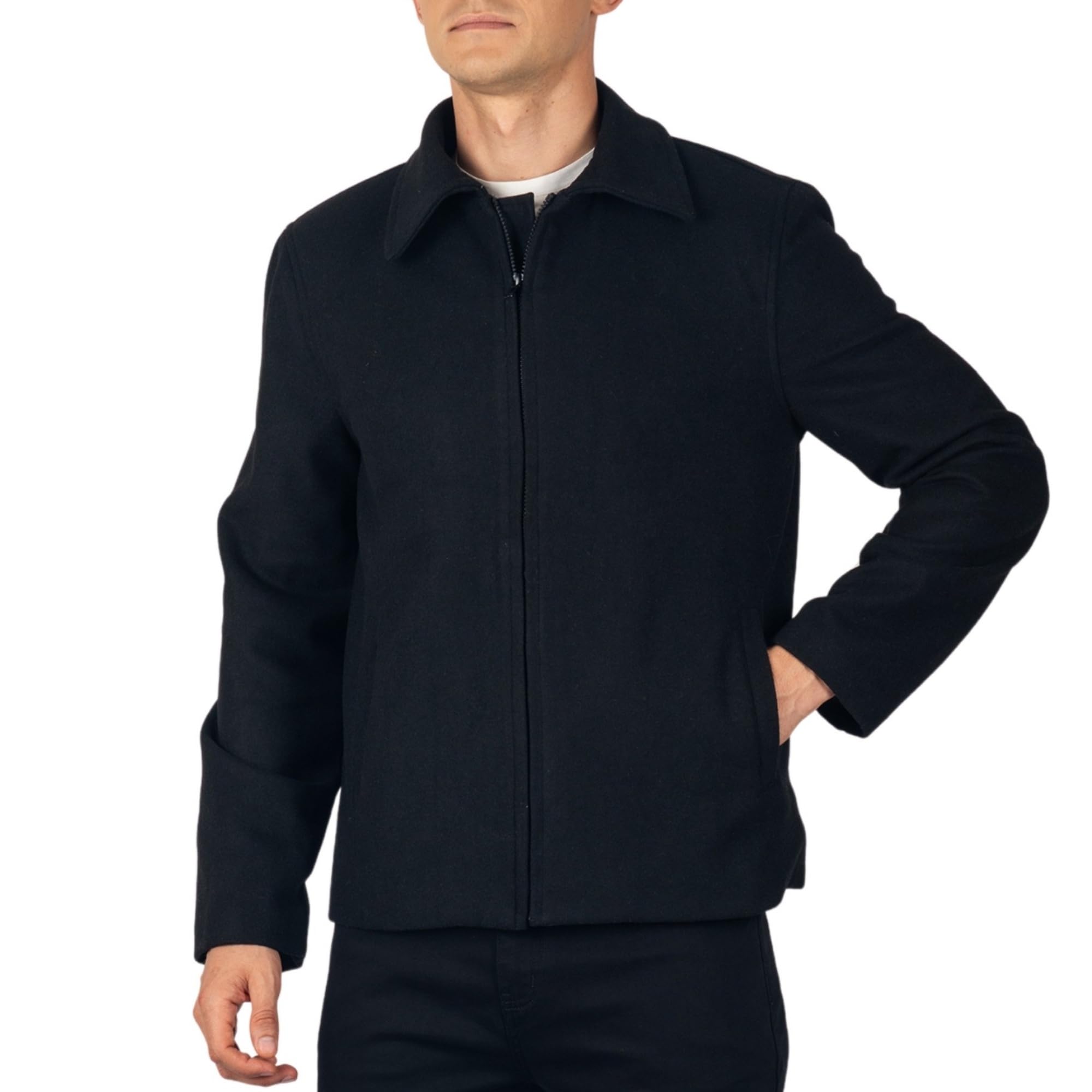
How To Choose The Best Wool and Fleece Jacket
Start with one question: is this jacket the outermost thing you will wear, or a layer under something else? A hip-length wool coat with a collar is built for the first job. A slim full-zip hoodie is built for the second. Buy for the wrong job and you end up with a bulky wool coat that bunches under your rain shell or a slim merino hoodie that leaves your neck exposed on a windy platform.
Read the wool percentage before anything else
Wool is the fiber doing the insulation work, so the ratio tells you how much of it you are actually getting. A 30% wool and 70% polyester blend gives you the warmth and look of wool while the polyester holds the shape and resists wrinkles. A 100% merino layer gives you the breathable, odor-resistant behavior wool is famous for, and you pay more for it. Neither blend is a rip-off — the 30% blend buys shape retention, the 100% merino buys breathability and odor resistance.
Watch for the word “washable” on the blend. A washable anti-pilling wool blend means it survives the machine without forming little fuzz balls, which is the single most common way a wool jacket starts looking tired.
Match the insulation to your actual winter
Jackets in this category use three main builds. Faux-insulation like an 80g/60g polyfill pack adds loft under a wool shell without much bulk. A midweight merino knit relies on the fabric itself, which you wear closer to the body. And a plain wool-blend coat leans on the shell alone for warmth and works best with a sweater under it.
If your winter means damp cold, weight wool’s ability to keep warming you while damp. That trait is what separates wool from cotton fleece, which goes cold the moment it soaks through.
Check the pockets and closures against your daily routine
A jacket with two chest flap pockets, two lower pockets, and an interior zipped welt pocket is a different animal from one with two welt pockets and a hidden snap chest pocket. Decide whether you carry a phone, wallet, keys, and gloves on your person, or whether you just need somewhere to shove your hands. Both a zip-plus-snap dual closure and a single zip center front seal out wind — the difference is how fast you get out the door.
Side-by-Side Comparison
| Model | Best For | Wool Content | Warmth Build | Lining / Detail | Amazon |
|---|---|---|---|---|---|
| Levi’s Wool Blend Hooded Military Jacket★ Best Overall | Cold-weather casual wear | Washable anti-pilling wool blend | Wool blend shell with patterned quilted lining | Onion quilted patterned lining | Amazon |
| Alpine Swiss Grant Wool Blend JacketOffice Crossover | Office and weekend crossover | 30% wool, 70% polyester | Wool blend shell, uninsulated | Smooth satin lining | Amazon |
| Nautica Lightweight Wool Blend Insulated Jacket | Fall-to-spring wind protection | Wind-resistant WR wool shell | 80g/60g polyfill | Flag-printed polyester lining | Amazon |
| Minus33 Merino Wool Full Zip Hoodie | Active layering | Merino outer sheath over nylon inner core | Midweight knit | Hooded, side panel design | Amazon |
| Minus33 Wilderness Expedition Full Zip | Deep cold and shoulder seasons | 100% merino wool, 21 micron | 380 G/M2 Ponte De Roma knit | UPF rating 50+ | Amazon |
Detailed Reviews
1. Levi’s Men’s Wool Blend Hooded Military Jacket
Our pick — 4.5+★ from 650+ verified ratings; the strongest balance of quality and price.
The military-cut wool jacket that handles a cold commute and still looks sharp at the bar afterward.
What makes this the one to beat is the fabric: a washable, anti-pilling wool blend lining an onion-quilted interior. That quilted liner traps heat in small pockets instead of one flat sheet, so it holds warmth across your chest without the bulk of a puffer. It is at its best in mild-to-chilly weather rather than a hard freeze — light enough for a brisk morning, warm enough that you are not reaching for a second layer.
The hardware is where this jacket separates itself. You get a dual closure — a zipper plus snaps — so on a windy day you zip up and snap down and the front stops flapping. Snap cuffs adjust at the wrist, epaulets sit on the shoulders, and there is a jersey hood for the days the forecast changes halfway through. Storage is generous: two snap-flap chest pockets, two lower pockets, and an interior welt pocket with its own zipper for anything you do not want loose.
The bulk of what buyers celebrate is how it looks — the military styling turns heads in a way a plain zip coat does not, with warmth a close second and the pockets drawing steady compliments. Fit is the one place opinions split, with the sleeve length coming in for the most debate. Treat it as a trim cut and check the size chart before you commit, and if you plan to wear a thick sweater underneath, size up.
One honest note: the hood is jersey material, not the wool blend, so it is more of a wind blocker than a rain cover. If you need a hood that sheds a downpour, this is not that jacket.
What earns the top spot
- Washable anti-pilling wool blend that survives regular machine washing without fuzzing up
- Dual zipper-plus-snap front seals out wind better than a zip alone
- Five-pocket layout including an interior zipped welt pocket
- Quilted patterned lining adds warmth without puffer bulk
Where it asks something of you
- Trim military cut — check the sleeve length before ordering
- Jersey hood blocks wind but is not built to shed heavy rain
Worth grabbing if: you want one wool jacket that covers errands, evenings out, and cold-morning drives in a single cut.
Think twice if: you layer a thick knit underneath regularly — this slim military fit leaves little room for it.
2. Alpine Swiss Grant Mens Wool Blend Jacket
A hip-length wool coat built to wear over a shirt and tie without looking like outerwear for the trail.
The number that defines the Grant is 30% wool against 70% polyester. That blend gets you the insulation and the wool look while the polyester holds the coat’s shape and resists wrinkles — which matters when the coat lives on the back of an office chair all day. A smooth satin lining glides over a dress shirt instead of grabbing at it, and the hip-length cut with a classic collar reads business-casual rather than sporty.
Where this one beats the Levi’s for a certain buyer is the silhouette. The Levi’s is a hooded military cut; the Grant is a straight-fit coat you can zip up over a button-down and walk into a meeting. True to size, regular straight fit, and a collar that frames a tie properly. That is why the crowd around it talks about versatility first — dressed up or down, zipped or open, it holds together either way.
The honest limit is warmth. This is a shell-plus-lining coat, not an insulated jacket, so it handles average winter days and a shirt-and-tie commute just fine. Point it at a genuine cold snap without a sweater underneath and you will feel it. There is no hood either, so a hat and scarf do the work the collar cannot.
The real draw: it is the one jacket here that looks equally correct over a tie and over a weekend flannel, which is rare at this construction level.
The trade: uninsulated build means it is a three-season coat, not a deep-winter one — plan on a mid-layer when the temperature really drops.
Reach for this if: your wool coat needs to survive an office dress code and a Saturday errand run in the same week.
Look elsewhere if: you need a hood or serious insulation for real winter cold.
3. Nautica Men’s Lightweight Wool Blend Insulated Jacket
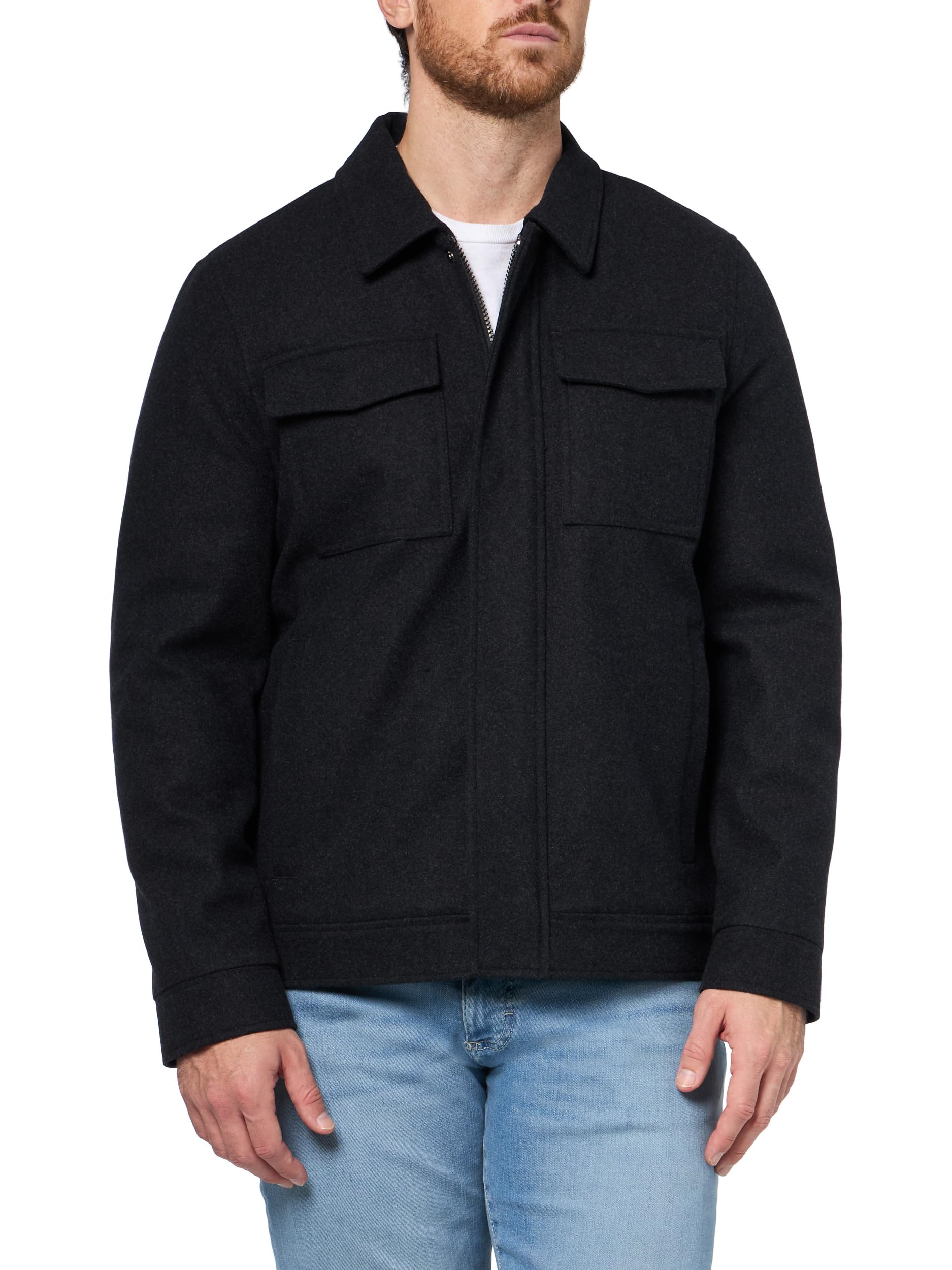
The wool-shell jacket that adds actual insulation under the fabric instead of relying on the shell alone.
Unlike the Alpine Swiss and the Levi’s, which warm you through shell and lining only, the Nautica packs 80g/60g polyfill insulation inside a wind-resistant WR wool shell. That shell-plus-polyfill combination is the difference between a wool coat that only looks warm and one that stops a biting wind from cutting straight through. A diamond-quilted interior keeps the fill from bunching, and a snap-and-zip center front closure seals the gap a single zip leaves open.
The fit details are purposeful. A banded bottom hem and banded cuffs close off the two spots where cold air sneaks in, and the 27.5-inch back length lands at the hip for coverage without restricting your stride. Storage runs to a hidden-snap chest pocket and lower welt pockets — clean lines, nothing bulky stitched onto the front.
What wins people over is the overall build quality, with fit close behind and the look landing exactly as pictured. The material and long-term durability are the mixed notes: most are happy with the fabric, a few find it wanting, and stitching has come up as a weak point. Sizing is where the practical advice lives — it is cut as a proper pea coat, so verify your measurements rather than assuming your usual size.
This is the pick for someone who wants the wool coat look with genuine wind defense for fall through spring in a colder climate, and who values a structured silhouette over a casual hoodie feel.
Why it stands out
- Wind-resistant WR wool shell plus 80g/60g polyfill — real insulation, not just a lined shell
- Banded hem and cuffs close the gaps cold air finds
- Hidden-snap chest pocket keeps the front looking clean
- 27.5-inch back length covers the hip without limiting movement
What to keep in mind
- Durability and material get mixed feedback — inspect the stitching on arrival
- Cut like a pea coat, so it rewards checking the size chart over guessing
Pick this one for: a structured, wind-blocking wool coat you can wear from the first cold snap of fall to the last of spring.
Pass if: you want a soft, unstructured hoodie feel — this one is built with shape and structure.
4. Minus33 Merino Wool Full Zip Hoodie

The itchy-wool problem solved by wrapping merino around a nylon core instead of your bare skin.
Here is the construction that matters: a nylon inner core for strength, resiliency, and extra elasticity, with a merino wool outer sheath doing the insulating, moisture wicking, and UV work. That two-layer knit is why this hoodie gets described as the opposite of scratchy — the wool does its job against your skin without the prickle that turns people off wool in the first place. The elasticity also pulls it into a tighter, athletic fit rather than a baggy sack.
This is a mid-layer, not a coat. Think of it as the thing you throw on over a tee when the morning is cold and the afternoon is not — merino regulates temperature across that swing, which is exactly what people keep praising about it. Wool absorbing up to 30% of its weight in moisture without feeling wet or clammy is the spec behind that behavior: sweat leaves, you stay dry, and the layer keeps warming you if you get caught in a drizzle.
The lightweight merino build carries a UPF rating of 25, so it doubles as sun cover on a bright day at altitude. Quality leads the conversation around this hoodie, with fit and warmth right behind. The catch is fit expectation: the athletic cut runs snug by design, so if you want room to layer a thick base underneath, go up a size. And at this merino weight, it is not the jacket you reach for on a freezing day on its own.
The standout spec: merino over nylon means you get wool’s insulation, wicking, and UPF 25 protection with none of the itch — a combination most budget fleece cannot match.
Be realistic: it is a mid-weight layer built for movement and temperature swings, not a standalone winter coat.
Best served for: hikers, skiers, and anyone who runs hot and cold through the day and wants a layer that keeps up.
Not the one if: you want an outer jacket for standing still in deep cold — this layer wants to move with you.
5. Minus33 Wilderness Expedition 100% Merino Wool Full Zip
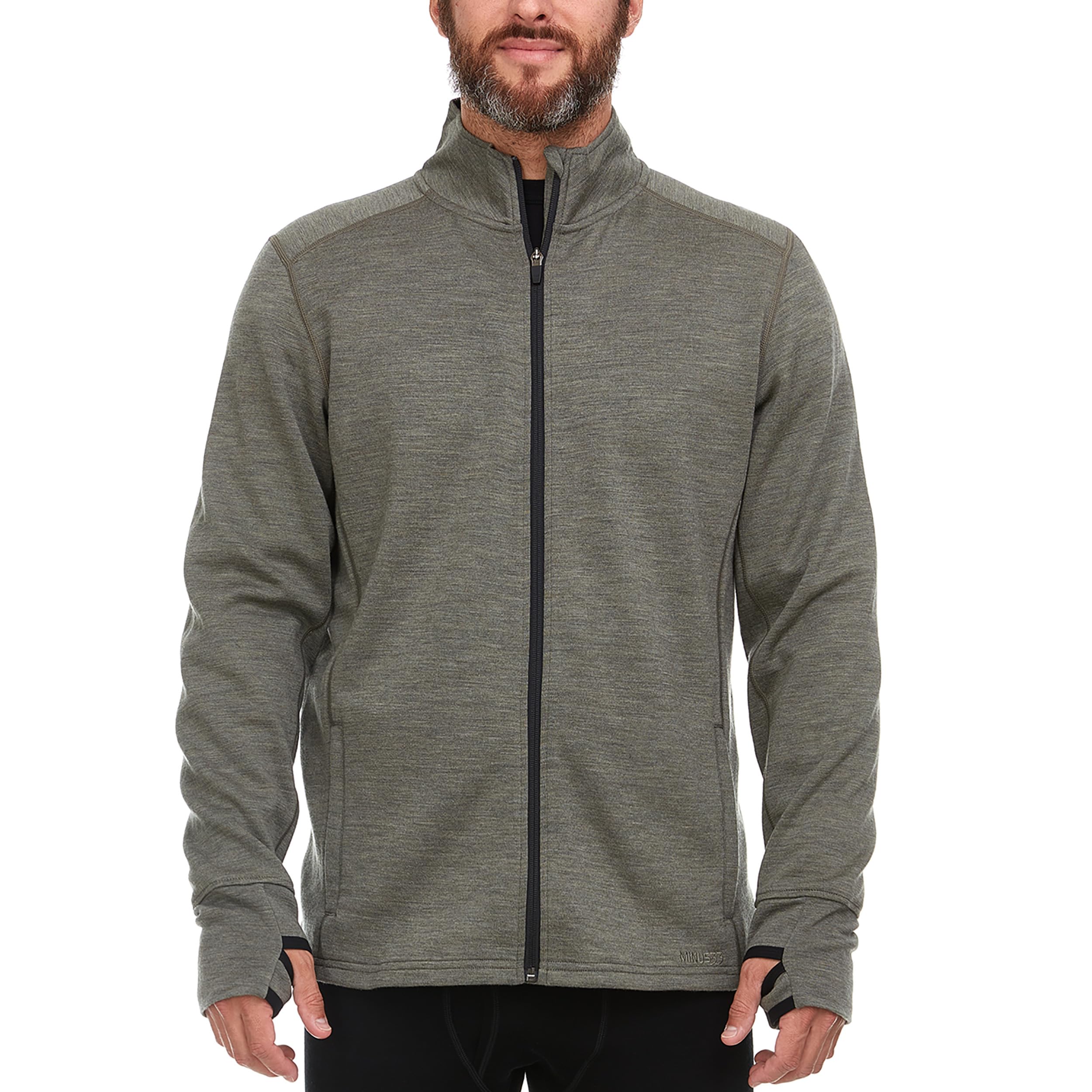
All merino, all business: a heavyweight knit rated for winter activity down to single-digit temperatures.
The fabric here is the headline — 100% merino wool at 21 micron in a 380 G/M2 Ponte De Roma knit. Micron is the measure of fiber diameter, and 21 is fine enough to sit against skin without the coarse prickle of cheaper wool. Ponte De Roma means two layers of fabric knitted together into one dense, stretchy sheet that resists wrinkles and drapes cleanly. That density is why the maker rates it for high-activity temperatures from 0°F to 30°F, and lower-activity temperatures from 30°F down to 0°F.
Compared with the merino hoodie above, this is the heavier sibling: a double-knit 380 G/M2 build rather than a lighter two-layer knit, and 100% merino rather than a merino sheath over nylon. The result is a warmer, more structured layer that crosses cleanly from trail to town. It also carries a UPF rating of 50+, so it blocks sun on exposed ridgelines as well as cold on the way down.
What people respond to is the wool quality itself, with fit and warmth following close behind. The fit note is honest and worth heeding: it runs fairly snug, so treat it as a body-hugging layer and size accordingly. If you want to wear a heavy base underneath, plan for a roomier size than your usual.
For anyone doing winter hiking, camping, or hunting in real cold who wants wool doing 100% of the work, this is the deepest-warmth layer in the group — and the price reflects the merino content.
What the merino delivers
- 100% merino at 21 micron — fine enough to avoid the coarse-wool itch
- 380 G/M2 Ponte De Roma double knit for dense, stretchy warmth
- UPF rating 50+ for sun protection on exposed terrain
- Rated for high-activity temperatures from 0°F to 30°F
The fit reality
- Runs fairly snug by design — size up for a heavier base layer
- Premium 100% merino build, so budget for it
Buy it when: you want pure merino warmth for winter hiking, camping, and hunting and you will pay for the fiber.
Skip it when: you want a loose, slouchy fit — this knit is built to follow your body.
Know the Specs
Wool percentage and blend
The number before “wool” on the tag tells you how much insulation fiber you are getting. A 30% wool and 70% polyester blend gives you wool’s warmth and look while polyester keeps the shape and resists wrinkles. A 100% merino layer gives you the full breathable, odor-resistant, temperature-regulating behavior wool is known for, and costs more because of it. Both are legitimate; the blend tells you whether the jacket is built as a structured outer coat or a breathable next-to-skin layer.
Merino micron and knit weight
Micron measures fiber diameter. Lower numbers mean finer, softer fiber that sits against skin more comfortably — 21 micron is fine merino territory. G/M2, or grams per square meter, measures how dense the knit is. A 380 G/M2 Ponte De Roma knit is a heavyweight double-knitted fabric, dense enough to hold warmth and resist wrinkles while staying stretchy.
Insulation fill versus shell-only warmth
Some wool coats warm you through the shell and lining alone; they are lighter and more tailored, and they work best with a sweater underneath. Others add polyfill — a synthetic fill like the 80g/60g pack in the Nautica — which creates loft that traps heat under the wool shell. If you want to walk out the door in just a shirt, fill helps. If you run warm or layer often, a shell-only coat stays more comfortable.
Wicking, wet insulation, and UPF
Wool regulates moisture by absorbing sweat and letting it evaporate off the fabric, which is what keeps you dry during activity. It will absorb up to 30% of its weight in moisture without feeling wet or clammy, and it keeps insulating when damp, unlike cotton. UPF measures sun protection in fabric — a lightweight wool layer can carry a UPF rating of 25, while midweight and expedition weights can reach 50+. Higher means more sun blocked.
Common Questions
Is a wool blend jacket as warm as a 100% wool one?
Will a wool blend jacket make me itchy like a wool sweater?
Can I wear a wool and fleece jacket in the rain?
How should I wash a washable wool blend jacket?
Should I size up in a merino full zip hoodie?
What does 0°F to 30°F mean on the Wilderness Expedition?
Is a hip-length wool coat or a full zip hoodie better for layering?
Do these wool jackets have enough pockets for daily carry?
What does UPF 25 or UPF 50+ mean on a wool layer?
Why is 100% merino more expensive than a wool blend?
The Bottom Line
The wool and fleece jacket that wins for most people is the Levi’s Wool Blend Hooded Military Jacket, because it pairs a washable anti-pilling wool blend and a quilted lining with five pockets and a dual zip-and-snap front — a combination that covers cold commutes and casual evenings without falling apart. If a structured coat you can wear over a shirt and tie is what you are after, the Alpine Swiss Grant slides into the office dress code, and the Nautica is the stronger call when wind and polyfill insulation matter more than a clean uninsulated shell. For anyone who lives in the cold outdoors, the Minus33 Wilderness Expedition puts 100% merino at 21 micron on your back, and the Minus33 Full Zip Hoodie is the lighter merino layer for moving fast through shifting temperatures. Match the wool percentage and warmth build — shell-only, polyfill, or merino knit — to your winter and the rest sorts itself out.
How we choose
We do not accept paid placement. Every pick is matched to a real buyer and a real use-case; we do not hands-on test units.
Sources
Specifications: manufacturer listings and product documentation. Review insights: verified customer reviews, as of November 2026. Pricing: not shown on this page (it changes often); check the current price via the retailer link.
As an Amazon Associate, Tactical Gear Guy earns from qualifying purchases. This does not affect which products we feature.