Specs are compiled from manufacturer listings and verified buyer reviews and can change over time — please confirm the key details on the product page before buying.
If you knit or crochet, you already know the punishment of a loose skein: it collapses, twists into itself, and turns a relaxing evening into twenty minutes of untangling. A wooden yarn winder fixes that by turning a messy hank into a neat, center-pull cake you can store on a shelf or drop into a project bag. The trick is buying one with a firm clamp and a true-spinning crank, because a wobbly winder makes the mess worse.
This guide is built by comparing the manufacturers’ published specifications and the patterns across verified customer reviews, so you get each pick’s real strengths and trade-offs instead of marketing spin.
Below you will find the winders worth your money, sorted by how they actually behave on a table, plus the one spec that predicts whether a cake comes out tight or sloppy. The right wooden yarn winder turns that hour of detangling into a two-minute job you barely think about.
Top Picks
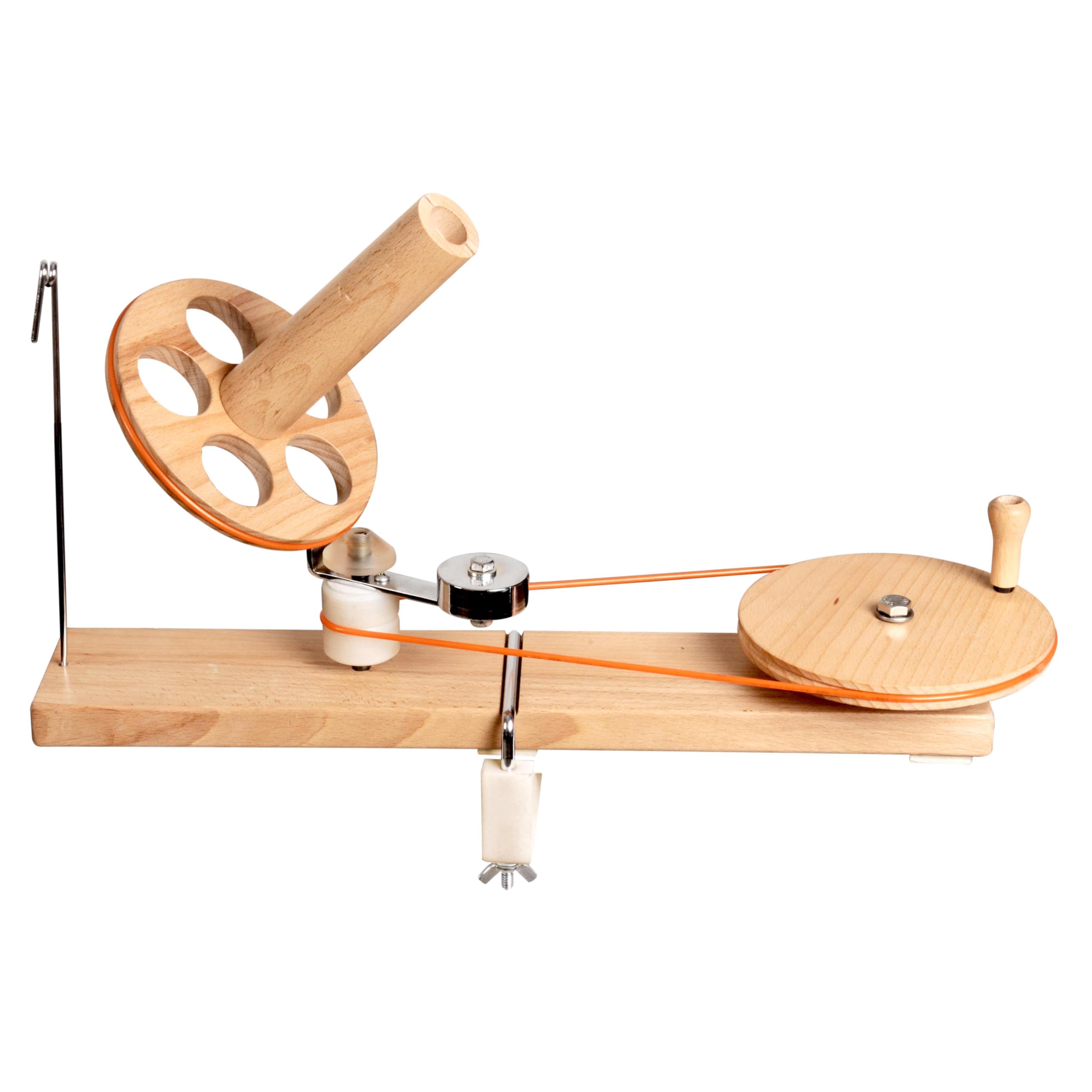
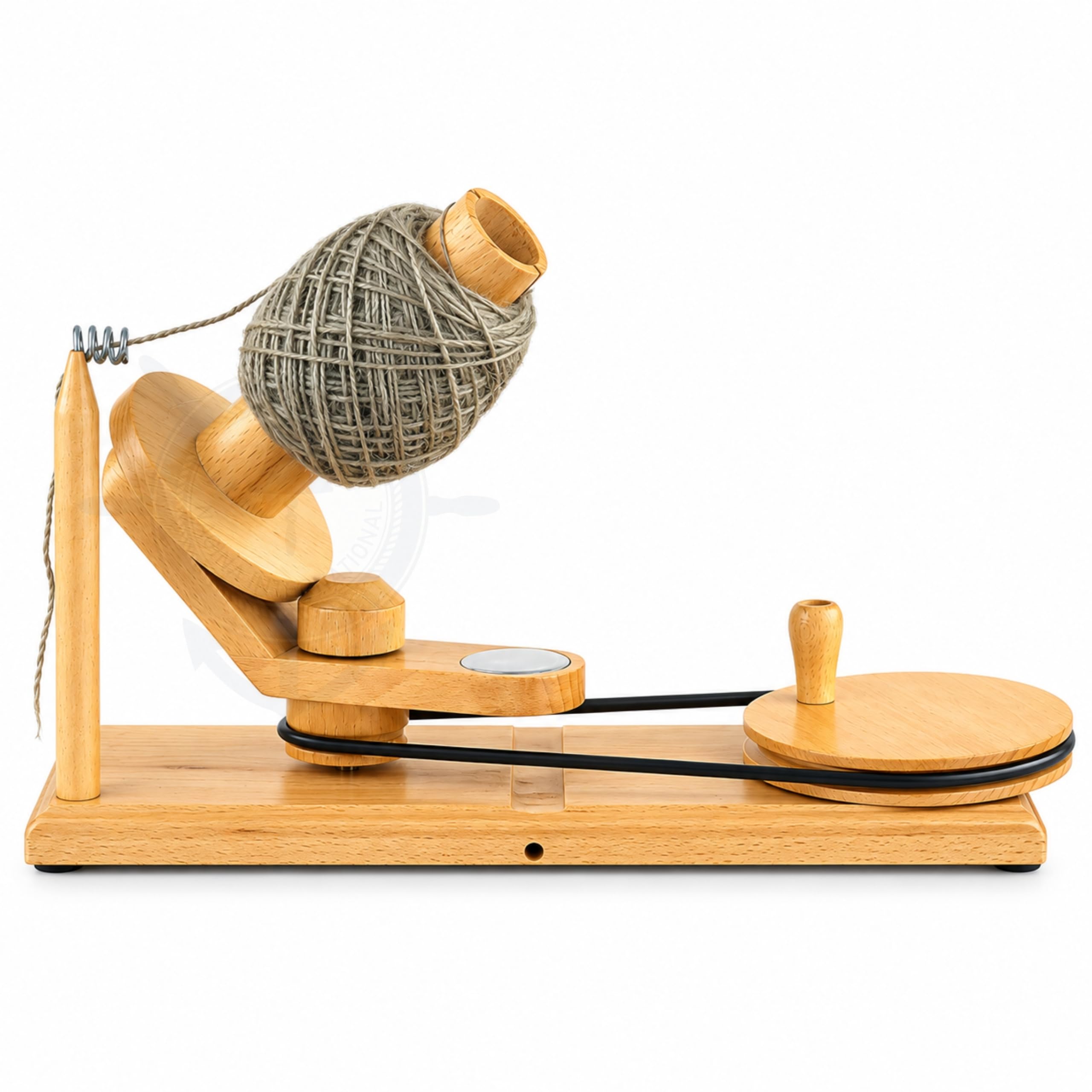
How To Choose The Best Wooden Yarn Winder
A yarn winder pulls yarn off a skein and wraps it into a tight, even cake with a loose center-pull tail. The wooden ones are hand-cranked, so there is no motor to fail and no cord to hunt for. What separates a good one from a frustrating one is how solidly it sits on your table and how smoothly the turning wheel runs.
The clamp and base decide everything
A winder needs to stay put while you crank with one hand and guide yarn with the other. Look for a base you can fasten with a wing nut or a firm anti-skid foot, because a base that creeps across the table will pull your yarn off-line and leave you with a lumpy cake. This is the single most common failure point on cheaper winders.
Center pull versus a plain ball
A center-pull cake lets you knit from the inside out, so the cake sits still in your lap instead of rolling around. Some winders add a thread-holding tower or a centered weight to keep the yarn feeding evenly and the cake balanced. If you mostly work from the outside of a ball, this matters less, but for larger projects it changes the whole rhythm of your knitting.
Wood type and how it wears
Beech and rosewood are the two woods you will see most. Beech is dense and takes a smooth finish well, while rosewood brings deep grain and a warmer look. Either works; what matters is that the moving parts stay tight and the surface is waxed or polished so yarn slides instead of snagging.
Side-by-Side Comparison
| Model | Best For | Wood | Length | Weight | Amazon |
|---|---|---|---|---|---|
| KnitPro Wooden Ball Winder | Natural★ Best Overall | Most knitters | Beech wood | 11.81 inches | 1.65 kg | Amazon |
| Nagina International Hand Operated WinderBest Value | Center-pull cakes on a budget | Steam beech wood | 14 inches | 250 g | Amazon |
| Hind Handicrafts Rosewood Winder | Large one-pound cakes | Rosewood | 14.17 inches | 3.87 pounds | Amazon |
| Mars Exports Wooden Winder | Winder and swift combo | Rosewood | 14 inches | — | Amazon |
| KnitPro Wooden Ball Winder | Signature | Heavy daily use | Beech wood | 11.81 inches | 4.4 pounds | Amazon |
Detailed Reviews
1. KnitPro Wooden Ball Winder | Natural
Our pick — 4.5+★ from 550+ verified ratings; the strongest balance of quality and price.
A 1.65 kg beech-wood winder with a wing-nut clamp that holds steady while you crank.
This is the winder most knitters end up recommending to each other, and the numbers back it up: 4.5+ stars across 500+ owners. The body is beech wood, a dense hardwood that holds a smooth, hard finish and resists the flexing that makes cheap plastic winders jump. At 1.65 kg it has enough heft to stay planted while you crank, and the base tightens to a table with the supplied wing nut.
Setup is deliberately simple. It arrives partly assembled, and the standard design means you clamp it, fasten the base with the wing nut, and follow the manual — no tools required. From there you guide the yarn with one hand and turn the crank with the other, and a loose skein becomes a tidy, evenly wound cake. Because the crank is manual, you feel exactly how tight the yarn is pulling, which is the whole argument for hand-powered over motorized.
It works best alongside a yarn swift, the separate frame that holds a skein open so it feeds without tangling. You can wind straight off a loose hank, but a swift keeps tension even and stops the skein from collapsing mid-wind. The compatible needle and hook sizing listed — 5 millimeters metric, which is US size 2 for needles and G-6 for hooks — is a listing detail, not a limit on what yarn you can wind. The real limitation is simple: there is no motor and no automatic guide, so you set the pace with your own hands.
What earns it the top spot
- Beech wood body at 1.65 kg stays steady while you crank
- Partly assembled and tool-free to set up with the wing nut base
- Manual crank gives you direct control over yarn tension
- Pairs cleanly with a yarn swift for even, tangle-free winding
Where it asks a little of you
- No power assist — your arm does the work
- A swift is a separate purchase for the smoothest results
Go for it if: you want one proven winder for steady weekly use and you value a dense wood body that will not skate across the table.
Think twice if: you expect a motorized winder or a built-in swift — this one hands both jobs to you.
2. Nagina International Hand Operated Winder
A featherweight rosewood-grain winder that makes center-pull cakes from a three-ounce skein.
At 250 g and 14 inches long, this is the lightest winder in the group and an easy one to move from desk to studio to a friend’s house. It winds a center-pull ball of up to 3 ounces, which covers most single skeins of sock, fingering, and DK weight yarn. The body is steam beech wood with a waxed, polished surface that shows deep grain, and the base carries a centered weight to keep things aligned while you crank.
The maker itself spells out the honest caveat: the rubber in the pulling mechanism wears over time and eventually stops applying the force the wind needs, so you will have to replace that rubber as it ages. That is a wear part, not a defect, but it is worth knowing before you buy. Feedback on this one splits down the middle — some buyers report it operates smoothly and sturdily, while others hit units that never wound right and fell apart. That spread is the reason it sits lower in overall satisfaction.
If you want a lightweight, low-cost way to try center-pull winding before committing to a heavier winder, this is a reasonable first step. If you wind every week and want something that will not need a rubber swap, the beech KnitPro above is the sturdier long-term call. The Trade-off: light and cheap, but the wearing rubber is a maintenance item you inherit.
The weight advantage: at 250 g it is by far the easiest of these to carry to a knitting group, and the 14-inch length gives you room to guide the yarn.
The rubber reality: the pulling rubber is a wear part the maker says you will need to replace, so factor a little upkeep into the deal.
Reach for this if: you are new to center-pull cakes and want an inexpensive, portable winder for small skeins.
Look elsewhere if: you want a set-and-forget tool with no wear parts to swap.
3. Hind Handicrafts Rosewood Winder
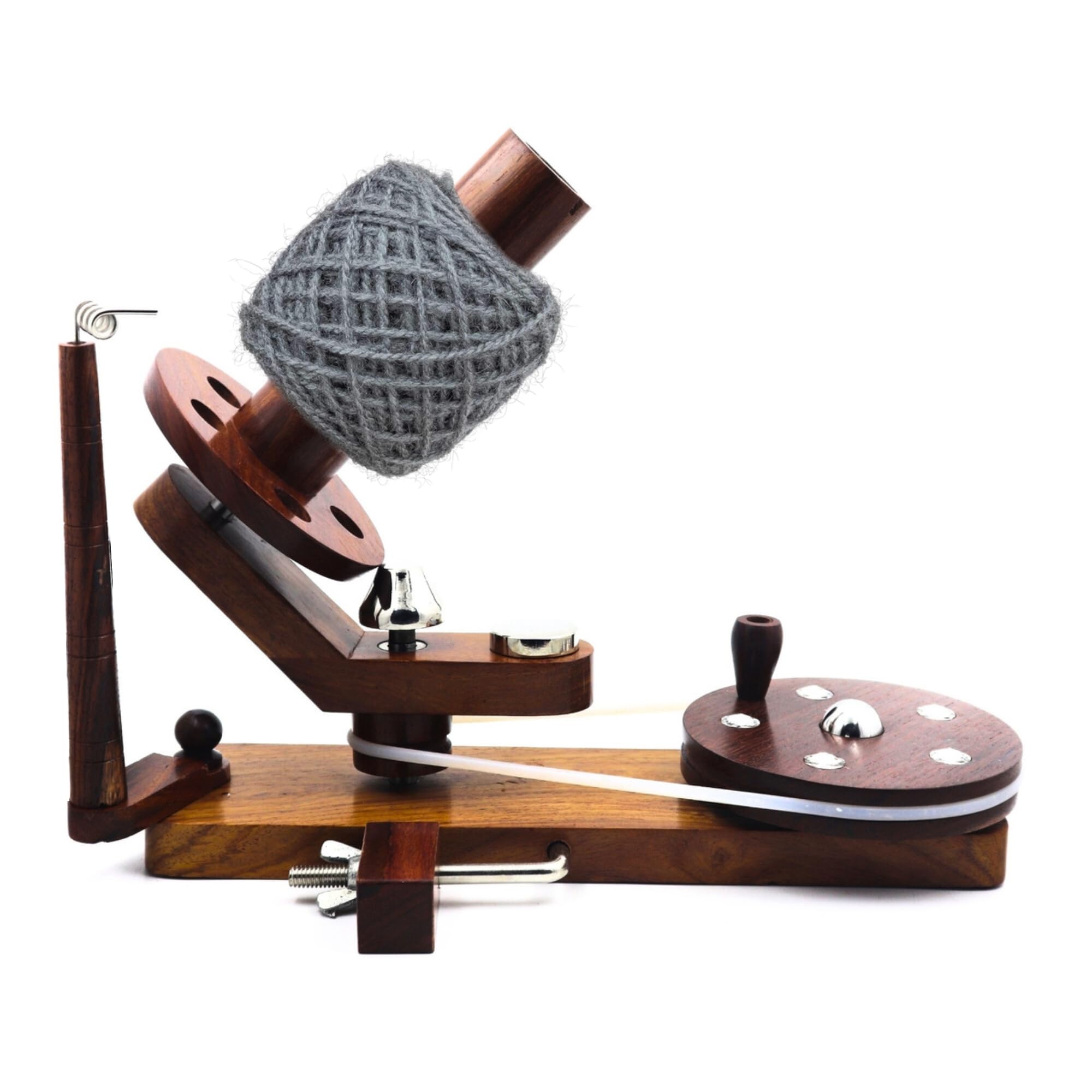
Built to swallow a full pound of yarn and still feed from the center.
This is the pick for anyone winding large project quantities rather than single sock skeins. It handles up to 1 lb yarn balls, and it adds a thread-holding tower that keeps the feed consistent so your center-pull cakes come out even. The body is handcrafted rosewood, and at 3.87 pounds it has real mass behind it — noticeably lighter than the 4.4-pound Signature KnitPro, but heavy enough that the anti-skid base stays planted and protects your table from scratches.
Storage was clearly on the designer’s mind. The spindle comes off and the yarn guide arm folds down, so it tucks away instead of hogging a shelf. The belt-operated mechanism gives you control over the wind and is space-efficient compared with a direct-drive crank. Deep rosewood grain also means it looks good sitting out, which not every craft tool manages.
Where it stumbles is consistency: feedback swings from well-made and effective to units that will not wind yarn correctly, and that split is the main reason it lands where it does in satisfaction. When it works, the big-cake capacity and folding storage are genuinely useful. When it does not, you are fighting the mechanism instead of the yarn. Buy it for the capacity and the folding design; go in knowing the quality can be uneven from unit to unit.
Why big-project knitters like it
- Winds up to a 1 lb yarn ball for large projects
- Thread-holding tower keeps center pulls consistent
- Removable spindle and folding guide arm for easy storage
- Anti-skid base protects the table and stays put
The catch worth knowing
- Winding performance is inconsistent from unit to unit
- Rosewood needs a dry spot and a wipe-down, not a scrub
Best matched to: knitters who wind full pounds of yarn and want a folding, table-friendly winder with a real capacity edge.
Weigh first: the uneven unit-to-unit quality, and check yours carefully as soon as it arrives.
4. Mars Exports Wooden Winder

The one you can buy as a winder, a swift, or both in one rosewood set.
Most winders force you to shop for a swift separately. This one comes in three variants — a wooden yarn winder, a wooden yarn swift, or the complete winder-plus-swift combo — so you can buy the whole winding station in one go if you want. The body is handmade rosewood, and it runs entirely on hand power, which means it travels to a studio or a class without hunting for an outlet. At 14 inches it is the same length as the Hind, and 2 inches longer than the 11.81-inch KnitPro models.
Rosewood is a fine choice for a tool that stays on show; the finish is smooth and the grain is the sort of thing people leave out on the table. It is also easy to care for, with wipe-clean care and dry storage keeping it in shape. The manual operation gives you the same tight control over tension that the hand-cranked KnitPro above offers, just in a longer-bodied, elegant frame.
The trade-off is real, though, and it shows up in the assembly and stability feedback. Some find it quick to put together and others describe it as horrible to use, and there are reports of the turning wheel feeling wobbly and yarn slipping off the cake. It is a newer listing with a smaller track record, so the sample is thinner. If you want the combo convenience and the rosewood look, this delivers; if you want a winder that is proven to spin true from the start, the KnitPro Natural is the safer bet.
The combo appeal: buying a winder and swift as one set saves you matching pieces later, and the 14-inch rosewood body looks the part.
The break-in question: assembly feedback is split and some units wobble, so plan to test the wheel as soon as it’s set up.
A good fit for: rosewood lovers who want the winder and swift together and do not mind finishing the assembly themselves.
skip it if: you want a winder with a long, proven track record of spinning straight.
5. KnitPro Wooden Ball Winder | Signature

The heavyweight twin of the top pick, built for knitters who wind all day.
Same beech-wood design and same 11.81-inch length as the Natural, but this Signature version carries 4.4 pounds to the Natural’s 1.65 kg — the heavier frame dampens vibration and stays rock-steady when you crank hard. It is the same hand-powered, tool-free setup: it arrives partly assembled, you clamp it and fasten the base with the wing nut, and you wind by hand with full control over tension. The listing shows compatible needle sizing of US 3.5 and 4.5, a detail about matching needles rather than a limit on yarn.
If you run a small studio, teach, or simply wind a lot, the extra mass pays off in less walking and fewer re-winds. For a casual knitter who turns one skein a week, the Natural version above does the same job for far less heft, and both share that smooth beech finish that lets yarn glide. The Signature sits a notch lower in satisfaction overall, but it is still a solid, well-made tool — and the 4.4 pounds is the reason.
One practical note: at 4.4 pounds it is a piece you leave clamped to a dedicated table rather than toss in a bag. That heft is its selling point, so it only makes sense if it has a permanent home. Choose it for stability and daily volume, not for portability.
The heavy-duty case
- 4.4-pound beech frame stays planted during hard cranking
- Same tool-free, wing-nut setup as the Natural
- Hand crank gives you precise, hands-on tension control
Where it falls short of the top pick
- Heavier and more expensive than the Natural for the same function
- Too bulky to move around — it wants a permanent spot
Worth it for: high-volume and studio knitters who want maximum stability and plan to leave it clamped in place.
Pass if: you wind occasionally or need to pack it away — the Natural gives you the same wind for less weight.
Know the Specs
Wood type (beech vs rosewood)
The wood sets the frame’s density and how the tool feels in the hand. Beech is dense and takes a hard, smooth finish, which helps the moving parts stay true and lets yarn slide without snagging. Rosewood is heavier and more decorative, with deep grain that looks good left out on a table. Neither is a guarantee of good winding — the clamp and the crank do that job — but dense wood resists the flexing that makes cheaper winders jump.
Length and weight
Length tells you how much room you have to guide yarn and how long the crank arm reaches; the models here run from 11.81 inches up to about 14 inches. Weight tells you how planted the winder sits while you crank — a 250 g winder travels easily but moves more, while a 4.4-pound one stays put but wants a permanent spot. Match weight to whether the winder stays clamped to one table or travels with you.
Center-pull capacity
The capacity figure — like a 3-ounce ball or a 1-pound ball — tells you the biggest skein the winder will take in one go. If you mostly wind single skeins of fingering or DK yarn, a smaller capacity is fine. If you buy sweater quantities, look for the larger figure, because forcing an oversized skein onto a small winder is how cakes come out lumpy.
Clamp, base and moving parts
A wing-nut clamp or an anti-skid base keeps the winder from creeping across the table, which is the difference between a tight cake and a lopsided one. Moving parts are the other half: some designs use a rubber pulling component that wears over time and needs replacing, while others run on a belt or direct crank. Know which wear parts you are signing up for before you buy.
Common Questions
Do I need a yarn swift as well as a winder?
Will a wooden winder fit my table?
How much yarn can each winder hold?
Are these winders electric or hand-powered?
What is a center-pull cake and why does it matter?
Do wooden winders need special care?
Which wood is better, beech or rosewood?
Why do some winders wobble or drop yarn off the cake?
Is a heavier winder always better?
Can I wind yarn without a winder?
The Bottom Line
For most knitters, the wooden yarn winder winner is the KnitPro Wooden Ball Winder | Natural because it pairs a dense beech-wood body and a steady 1.65 kg frame with a tool-free wing-nut setup that stays clamped while you crank. Its 4.5+ star standing across hundreds of owners is the strongest track record here, and it is the safest long-term pick. If you want the winder with the strongest track record here, that is the one.
If you wind full pounds of yarn and want a folding, table-friendly tool, reach for the Hind Handicrafts Rosewood Winder. And if you would rather buy the winder and swift together in a rosewood set, the Mars Exports Wooden Winder is the one to pick.
How we choose
We do not accept paid placement. Every pick is matched to a real buyer and a real use-case; we do not hands-on test units.
Sources
Specifications: manufacturer listings and product documentation. Review insights: verified customer reviews, as of November 2026. Pricing: not shown on this page (it changes often); check the current price via the retailer link.
As an Amazon Associate, Tactical Gear Guy earns from qualifying purchases. This does not affect which products we feature.