Specs are compiled from manufacturer listings and verified buyer reviews and can change over time — please confirm the key details on the product page before buying.
A replacement handle only works if it matches your tool’s eye — the socket the handle slides into — so measure that opening before you buy anything. Length comes second. A 28-inch shovel handle and a 36-inch sledge handle solve completely different problems, and buying the wrong one wastes a full afternoon of fitting. Below, the picks are grouped by the tool they actually fit, so you can jump straight to your job.
This guide is built by comparing the manufacturers’ published specifications and the patterns across verified customer reviews, so you get each pick’s real strengths and trade-offs instead of marketing spin.
Every handle here is real wood, from ash and hickory to lacquered Tennessee stock, and each one lists the hammer or shovel weight range it was cut for. You will see which fit the eye snugly, which arrive with wedges in the box, and which need a little sanding before they seat.
Top Picks

How To Choose The Best Wooden Tool Handles
Wood handles fail for two reasons: an eye that does not match the head’s socket and a weight rating below the head you hang on it. Get both right and a hickory handle will outlast the head it carries. Get either wrong and the head works loose or splits the shaft within a week.
Measure the eye before you measure anything else
The eye is the hole in the hammer, axe, or shovel head where the handle passes through. A handle listed for a 1-3/4” x 3/4” eye will not seat in a 1-inch by 3/4-inch oval eye, no matter how close the lengths look. Pull the old handle, clean the eye, and measure the opening with calipers or a steady tape before ordering.
Match the handle to the head weight
A sledge handle rated for 6 to 16-pound heads is built thicker than one rated for 2 to 4-pound heads. Fit a light handle to a heavy head and the wood takes stress it was never cut for. Fit a heavy handle to a light head and you lose control on the swing. Every listing here states its weight range — read it as a hard limit, not a suggestion.
Hickory versus ash: what each wood actually does
Hickory is the traditional hammer and axe wood because its long fibers flex and damp the shock of a strike instead of passing it into your hands and wrists. Ash is springier and is the classic choice for shovel handles, where you want flex on the drive and leverage on the lift. Neither is better across the board — pick the wood the tool was designed around.
Side-by-Side Comparison
| Model | Best For | Length | Wood | Fits | Amazon |
|---|---|---|---|---|---|
| Truper Classic Shovel Y Grip★ Best Overall | Shovels and digging work | 28 inches | Ash wood | Truper Classic Y shovels | Amazon |
| Seymour 423-19 Oval EyeFit-First Pick | Blacksmith and engineer hammers | 16 inches | American hickory | 3 to 4 lb hammers | Amazon |
| Cuitáxi 14-Inch Axe HandleHatchet Specialist | Hatchet and camp axe re-handling | 14 inches | Premium hickory | 1-1/4 lb heads | Amazon |
| CRKT Woods T-Hawk Handle | Tomahawks and throwing tools | — | Tennessee hickory | CRKT Woods T-Hawk | Amazon |
| Vaughan Straight Hammer Handle | Standard claw hammers | 18 inches | Genuine hickory | Model-specific hammers | Amazon |
| Cuitáxi Sledge Handle 2-Pack | Bulk sledge maintenance | 12.5 inches | American wood | 2, 3, and 4 lb hammers | Amazon |
| AMES 36-Inch Hickory Sledge | Heavy 6 to 16 lb sledges | 36 inches | Hickory | 6 to 16 lb heads | Amazon |
| Truper Sledge MG-MD-6/16 | Wedges-included sledge swaps | 36 inches | Wood | Truper 6 to 16 lb sledges | Amazon |
| True Temper 36-Inch Sledge | Very heavy 20 to 24 lb sledges | 36 inches | Hickory | 20 to 24 lb heads | Amazon |
Detailed Reviews
1. Truper 28-Inch Wood Shovel Handle
Our pick — 4.5+★ from 400+ verified ratings; the strongest balance of quality and price.
The Y-grip shovel handle that stops twisting in wet clay.
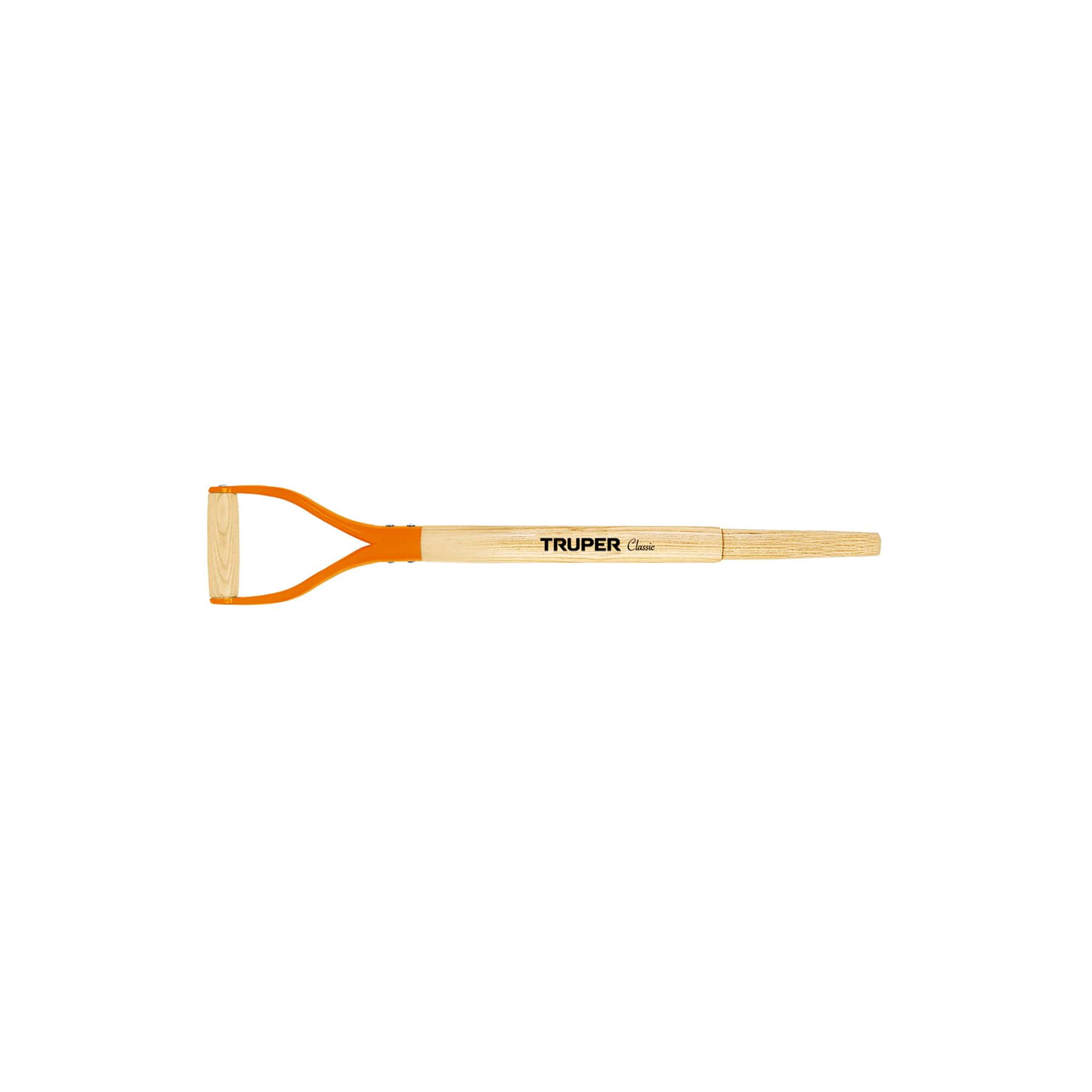
Most shovel handles are a straight stick with a D-grip bolted on top, and in wet ground that D-grip works loose. This Truper handle solves that with a Y-style grip and an anti-rotation fixing system — a locking design built to stop the grip spinning under load. If you have ever had a shovel handle rotate mid-dig, you already know why that matters.
The wood is ash, which is the right call for a digging tool because it flexes on the drive and springs back on the lift. It comes polished, lacquered, and waxed, so it feels finished in the hand from day one instead of raising splinters. The length is 28 inches (70 cm), the matching reach for Truper’s Classic “Y” shovel line. Check your model number before ordering — this is listed for Truper Classic Y shovels specifically, not a universal fit.
The buyers drawn to this one clearly care about the grip itself — the handle and the fit are the two things that win people over, with well over twenty owners singling out each in the review pages. Digging is the praise that keeps coming back: it goes on without wobble and holds its position in the ground. The honest caveat is that the anti-rotation Y-grip is exactly why this handle will not bolt onto a plain straight-shaft shovel.
Y-grip shovel fit
- Ash wood is the traditional shovel timber — flex on the drive, spring on the lift.
- Y-grip with an anti-rotation fixing system holds its angle in wet, heavy ground.
- Polished, lacquered, and waxed finish means no splinter break-in period.
- 28-inch (70 cm) length matches Truper Classic Y shovel reach exactly.
limited eye sizes
- Listed for Truper Classic “Y” shovels only — not a universal shovel handle.
- Wood takes a beating from being stored wet or driven into hard-packed gravel.
- Long-term durability is the mixed note in the feedback, so seat the head fully.
shovel repair: you own a Truper Classic Y shovel and want a grip that stays put instead of spinning.
odd sockets: your shovel runs a straight shaft or a standard D-grip.
2. Seymour 423-19 16-Inch Hammer Handle
Sixteen inches of shock-absorbing hickory for the 3 to 4-pound hammer in your hand.
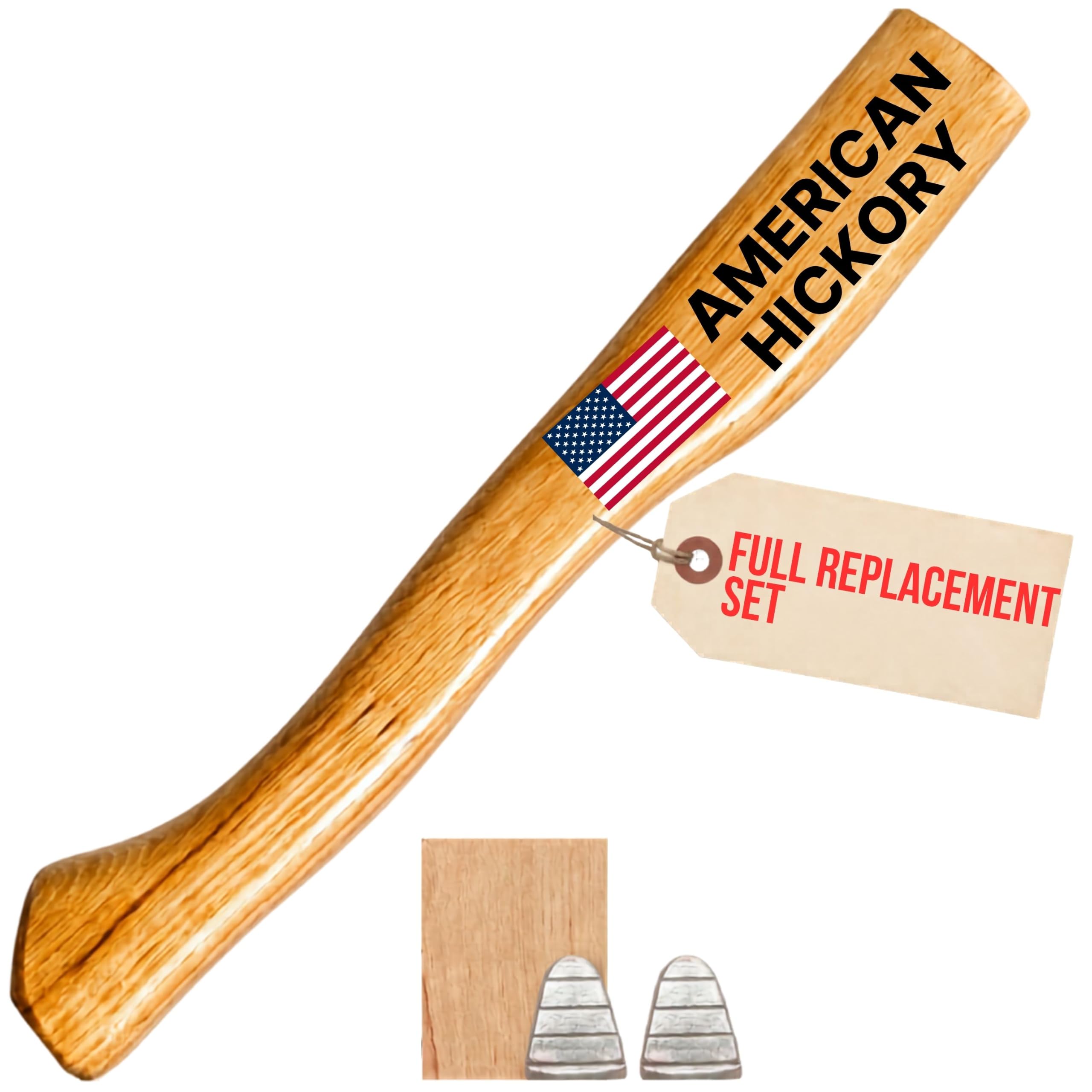
Blacksmith and engineer hammers punish a bad handle. The head is heavy, the strike is repetitive, and every ounce of vibration that gets past the wood lands in your wrist. This Seymour handle is cut from American hickory — a dense, fibrous wood that soaks up the shock instead of transmitting it — and carries a clear lacquer with a fire finish over the grain.
The eye is oval at 1-inch by 3/4-inch, which is the shape most engineer’s and blacksmith’s hammers use at the socket. The full length is 16 inches, giving enough swing arc to generate force without turning your hammer into a sledge. It is rated for 3 to 4-pound heads — lighter than that and you lose control, heavier and the wood is doing work it was not cut for.
What owners talk about is fitting. People are replacing old handles and the thing that keeps coming up is how well the handle seats and how solid the hickory feels once it is in. The catch is the sock and the timber: some find the wood gives out faster than expected, and a few note the end runs small. When you seat the head, drive the wooden wedge first, then the steel one, and check it again after a week of use.
oval eye forging: American hickory with a clear lacquer and fire finish absorbs shock under repeated strikes, so the handle stays comfortable through a full session at the anvil.
finish varies: durability is the mixed note in this handle’s feedback, so treat the wedge seating as the real install, not the slide-on.
blacksmith work: you swing a 3 to 4-pound engineer’s or blacksmith’s hammer with an oval eye.
cosmetic buyers: your hammer has a round eye or runs under 3 pounds.
3. Cuitáxi 1 Pack 14-Inch Axe Handle
A camp-hatchet handle with the wood and steel wedges already in the box.
Re-handling a hatchet is a two-part job: the handle and the wedges. Skip the wedges and you have a head that works loose on the first big chop. This Cuitáxi handle ships as a complete set — premium hickory, plus both the wooden wedge and the steel wedge you need to lock the head down. It fits a 1-3/4” x 3/4” eye and runs 14 inches, which is the right length for a compact camp axe rather than a full-size felling axe.
The ergonomic shaping is note even though it sounds like a marketing line: a smooth, polished surface with the weight balanced along its length makes a hatchet easy to control on one-handed swings. That balance matters on a 14-inch tool where your wrist is doing most of the work. Hickory is the traditional axe timber for exactly this reason — it carries shock well and stays stiff enough to transfer a clean strike.
Owners reach for this one to re-handle Norlund camp hatchets and report it fits the head properly — a fit on the ax head is the recurring theme, and there is a verdict in the reviews that it will outlast fiberglass. The one honest limit: its 1-1/4 pound head rating is a hard ceiling. If your axe runs a heavier bit, this is the wrong handle.
single hickory handle: a full install on day one — hickory handle plus wooden and steel wedges, sized for a 1-3/4” x 3/4” eye and a 14-inch axe.
light head only: rated for 1-1/4 pound heads, so a heavier felling axe needs a longer, thicker handle.
one-hand axes: you have a camp hatchet or small axe that needs a fresh hickory shaft and you want the wedges in the box.
heavy mauls: your axe head is bigger than a hatchet-sized bit.
4. CRKT Woods T-Hawk Replacement Handle, Hickory, 2730-2

Straight-grained Tennessee hickory, cut for the Woods T-Hawk and nothing else.
This one is a factory replacement, not a universal handle. It is cut for the CRKT Woods T-Hawk specifically and slides on with a friction-based fitting. Buy it as a spare, and you get the same Tennessee hickory the original came with — dense, straight-grained, and sealed under a lacquer coating so moisture stays out of the wood. It is made in the USA and backed by a limited lifetime warranty covering defects in materials and workmanship.
What wins people over is the grain. Straight grain is what you want in a striking tool because the fibers run the length of the handle and transfer energy without splitting down the side. The texture is smooth and finished, so it feels good in hand before you ever throw it. The lacquer seal helps here too — a tomahawk lives outdoors, and an unsealed handle drinks rain and swells.
Here is the honest part: the fit is the thing that splits opinion. Some find it perfect on the Woods T-Hawk, others find it does not seat and doubt the hickory is the real thing. This is a model-specific handle — if your tomahawk is not the CRKT Woods T-Hawk, this is the wrong path. Buy it as a direct replacement and you are getting exactly what the maker intended.
tomahawk hickory grip
- Tennessee hickory with a straight grain — dense and built to withstand hard throwing.
- Lacquer coating seals the wood against rain and humidity.
- Made in the USA, backed by a limited lifetime warranty on materials and workmanship.
- Model-specific friction fit, so it seats the way the factory handle did.
short handle reach
- Fit is the mixed note in this handle’s feedback — it is cut for the Woods T-Hawk, not a universal tomahawk shaft.
- No wedges in the box; the friction fit is the mechanism.
- Not the handle for a full-size axe or hammer.
throwing hawks: you own a CRKT Woods T-Hawk and want a spare that matches the factory shaft grain for grain.
full axes: your tomahawk is a different brand or you need a wedge-secured head.
5. Vaughan Straight Replacement Wood Hammer Handle, 18 Inch
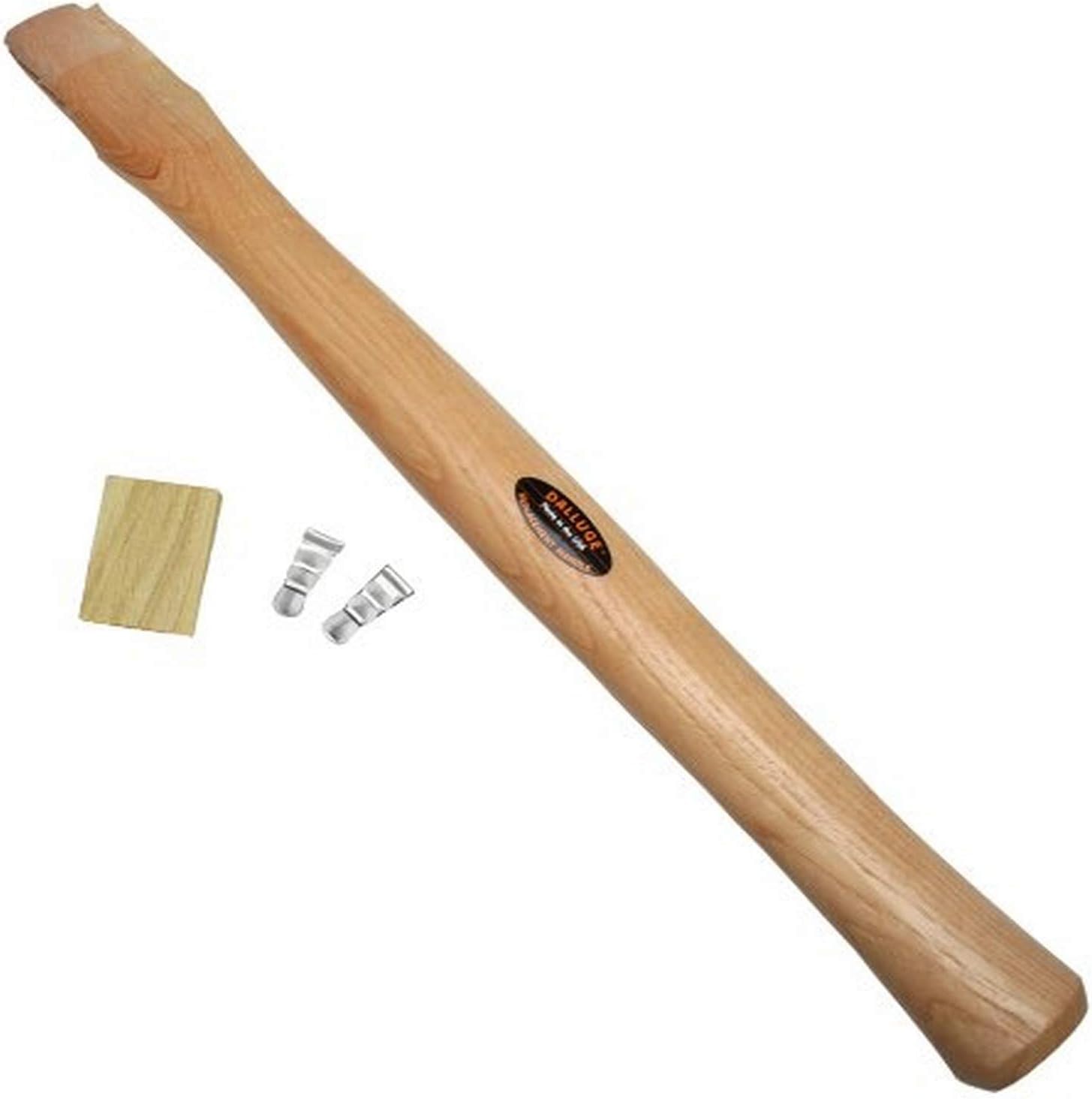
An eighteen-inch straight hickory shaft from a hammer maker that has been at it since 1869.
Straight handles are the simple case: a shaft, a head, and a wedge. Vaughan has been building hammers in the USA since 1869, and this is the direct-replacement straight handle from that line. It is genuine hickory with a painted finish, sized 18 inches long by 1.75 inches wide — enough length to swing a claw hammer properly without the shaft flexing under a hard drive.
Hickory keeps showing up on this list because of its fiber structure. Wood fibers flex along the grain and damp the vibration a steel handle would pass straight into your palm. On an 18-inch hammer handle, that flex is subtle but it is what separates a hammer you can swing all afternoon from one that stings after an hour.
The catch is compatibility. This is a model-specific handle for Vaughan hammers, not a universal shaft for any claw hammer. Check your head before ordering — the eye and the head’s weight rating have to line up, and Vaughan does not publish a weight range here, so match it against the hammer it came off. If it fits, you get a straight, traditional handle that feels like the original.
straight hammer grain: genuine hickory, painted finish, cut 18 inches long and 1.75 inches wide — a faithful replacement in the Vaughan tradition.
loose eye fit: model-specific to Vaughan hammers, so confirm your head’s eye before you commit.
claw hammer swap: you are restoring a Vaughan hammer and want the original straight-hickory feel back.
oversized eyes: your hammer is a different brand or you do not know the eye size.
6. Sledge Hammer Handle 2–4 lb
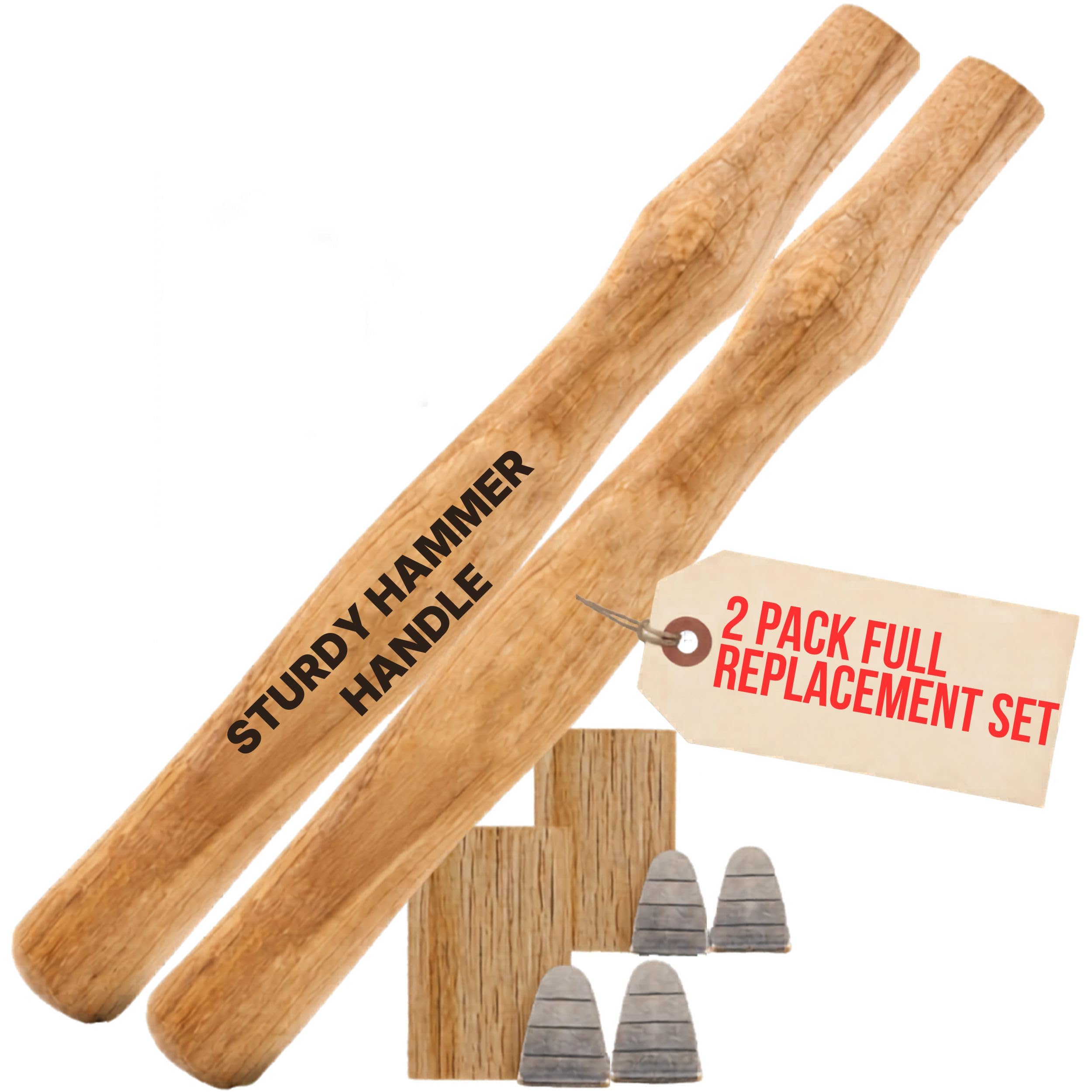
Two handles in one box, sized for the 2, 3, and 4-pound hammers most home workshops run.
Workshops break handles more than they plan to. This Cuitáxi pack is the answer to that: two wood handles in a single order, each rated for 2, 3, and 4-pound hammers, so you have a spare for the next head that works loose. Coming in pairs is the whole pitch — the listing bundles two so you can plan for the next replacement rather than make a second trip.
The numbers here are small but they matter. Each handle runs 12.5 inches, which is short — a compact sledge handle for choked-up control rather than wide-arc swinging. So this is the wrong choice for a full-size 10-pound sledge; it is right for a 2 to 4-pound hammer that you want to keep close and controlled. The set also includes wooden and steel wedges, so the install is complete from the start.
Buyers value the wood and the weight coverage — the 4-pounds-and-up capacity keeps coming up as the reason people buy. The one honest note: durability is the split verdict in the feedback, with some finding it rock solid and a few reporting a quick break. When you are putting two handles in the box at this price, that is a fair trade. Seat the wedge properly and the installed head does the rest.
two-pack sledge wood
- Two handles in one order, sized for 2, 3, and 4-pound hammers.
- Each handle is 12.5 inches — short and controlled for closer work.
- Wooden and steel wedges included, so both handles are install-ready.
- Weight capacity for 4 pounds and heavier is what the buyers keep pointing to.
compact length and durability
- At 12.5 inches it is a compact handle, not a wide-arc swinging shaft.
- Durability is the mixed note in the feedback — seat the head fully.
- Not the handle for a full-size 10-pound sledge.
spare handles: you keep 2 to 4-pound hammers around and want a spare handle waiting on the shelf.
single buyers: you need a long-arc handle for a heavy sledge.
7. AMES 36 in. Hickory Sledge Handle

Thirty-six inches of shock-absorbent hickory built to swing a 16-pound head all day.
A 36-inch handle and a 12.5-inch handle are not the same tool with different measurements — they are different disciplines. This AMES handle is the long-arc kind: 36 inches of hickory, rated for 6 to 16-pound sledge heads. That extra length gives you a full swing radius, which is where the force comes from on a heavy demolition sledge. You also get a single-use wood wedge kit in the box to lock the head down.
Hickory is the right material at this scale. A 16-pound head sends enormous shock back down the shaft, and hickory’s fiber structure soaks that up better than a dense straight-grain wood would. This one weighs 1.3 pounds on its own — heavy enough to counterbalance a big head without feeling like you are swinging the handle rather than the hammer.
Owners treat this handle as a resurrection kit for dead sledges. The recurring theme is that it gives a broken hammer a second life, and the fit on the 6 to 16-pound range lands right — the straight grain keeps coming up, and people fitting 10 to 14-pound heads report it works the way it should. For the money it is the standard pick at this length.
long sledge swing: 36 inches of straight-grain hickory with a single-use wood wedge kit, rated for 6 to 16-pound sledge heads.
heavy head only: that length and swing arc is not the right handle for a small hammer — you need the room to swing it.
sledging stone: you are re-handling a 6 to 16-pound sledge and want the long-arc control.
light hammers: your hammer is under a few pounds and you do not have the swing space.
8. Truper Replacement Handle for Sledge Hammers, 36-Inch Wood Handle with Wood and Metal Wedges

The matching Truper sledge shaft, with both wedges already in the pack.
If you own a Truper sledge, buying the matching handle is the cleanest path. This one is the factory part: wood, 36 inches (90 cm) long, rated for 6 to 16-pound Truper sledge heads, and supplied with both a wood wedge and a metal wedge for installation. The model code is MG-MD-6/16, with Truper code 15907 on the label — match it to your head and you are ordering the right part the first time.
The 36-inch length does two jobs. It gives you reach on high or deep strikes, and it gives you leverage on the swing so you are not muscling the head through the work. At 1.6 pounds the handle is substantial without being unwieldy. The textured grip type is worth mentioning on a long swing — a sledge handle needs something for your hands to hold onto when they are slick.
The handle and overall quality are the two things buyers pick it for, and the fit on the right Truper head is a clean match. The honest caveat is durability: while a lot of people find it strong, a portion report it giving out under a hard swing. On a heavy sledge that is the risk you take on any wood handle — seat the wedges fully, keep the head tight, and check it before every session.
Truper sledge match
- Factory Truper handle for 6 to 16-pound sledge heads — the part number removes the guesswork.
- 36-inch (90 cm) length gives both reach and leverage on heavy strikes.
- Both a wood wedge and a metal wedge are in the pack.
- Textured grip helps your hands hold on during a long swing.
model-specific fit
- Made for Truper 6 to 16-pound sledges — not a universal sledge handle.
- Durability is the split note in the feedback under heavy use.
- Wood needs care: seat the head tight and recheck it regularly.
Truper swaps: you own a Truper sledge in the 6 to 16-pound range and want the exact factory replacement and both wedges.
other brands: your sledge is a different brand or falls outside that head range.
9. TRUE TEMPER 2002400 36-Inch Sledge Hammer Handle

The one handle here rated for the monsters — 20 to 24-pound sledge heads.
Most sledge handles top out in the mid-teens. This True Temper handle is rated for 20 to 24-pound heads, the heaviest range on this list. At 36 inches it gives you the leverage to actually control that much iron, and the hickory absorbs the shock that comes back from a head that heavy. True Temper frames the length as a working-posture advantage: the reach lets you distribute force and precision without hunching over the strike.
Hickory is doing a lot of the work at this scale. A 20-pound head sends a vibration down the shaft that will numb your hands on a stiff handle. The fiber structure here flexes and takes the sting out. It also keeps the handle stiff enough that the head tracks to where you aim it — the two things you need on a heavy sledge.
Owners find this handle solid and functional, with a finished appearance that looks right alongside the heavy heads it fits. The honest limit is the fit question. Whether your head is 20 pounds or 24 pounds matters, and the head has to match the handle’s eye and rating — a few people find the fit is not quite what they expected. On a head this heavy, measure the eye and match it before you commit.
biggest head support: a 36-inch hickory shaft rated for 20 to 24-pound sledge heads — the heaviest fit on this list.
eye sizing guess: that weight rating means it is not the handle for anything smaller, and eye size is the match to check first.
heavy sledges: you are re-handling a 20 to 24-pound sledge and want a full-length hickory shaft behind it.
small heads: your sledge head is lighter than 20 pounds.
Know the Specs
Handle Length
Length is about the swing, not the tool. A short 12.5-inch handle keeps the head close for controlled short work, while a 36-inch handle gives you a full arc so you can build speed on a heavy sledge. A 28-inch shovel handle is measured for reach in a digging stance, not for swinging at all. Match the length to the motion your tool makes before anything else.
Head Weight Rating
Every handle here is rated for a head-weight range. That range is the amount of mass the wood was cut to carry. Fit a handle designed for 6 to 16 pounds under a 24-pound head and the forces go past what the handle was built for. Fit a heavy handle to a light head and the balance goes wrong. Treat the rating as a hard limit — check it against the tool you are re-handling first.
Wood Species and Grain
Hickory is the dense, shock-absorbent timber behind hammer and axe handles because its fibers take the sting of a strike. Ash is the classic shovel wood — springier, so the handle flexes on the drive and springs back on the lift. Straight grain along the length is what you want in any striking tool, since the fibers run the full length of the shaft and resist splitting. Lacquer, wax, and painted finishes all seal moisture out of the wood.
Eye Shape and Wedges
The eye is the socket in the head where the handle passes through, and it comes in specific shapes — an oval 1-inch by 3/4-inch, for example, or a 1-3/4” x 3/4” axe eye. Measure yours before ordering. Once the handle is seated, a wedge kit locks it in place: a wood wedge spreads the handle’s end inside the eye, and a metal wedge follows to drive the fit tight. Models that ship with wedges are the ones you can install without a second order.
Common Questions
How do I measure the eye on my hammer before buying a wooden handle?
Can I fit a 36-inch sledge handle to a smaller hammer?
Is hickory actually better than fiberglass for a hammer handle?
Do I need both a wood wedge and a metal wedge to seat a head?
How long does a wooden handle last before it needs replacing?
Can I use a hatchet handle on a full-size axe?
What does it mean when a handle is listed as model-specific?
How much longer is a 36-inch sledge handle than a short replacement handle?
Do I need to sand or finish a wooden handle before fitting it?
Can a wooden handle be re-used after the head breaks or works loose?
The Bottom Line
The best wooden tool handle for most people is the Truper Y-Grip Shovel Handle, because the anti-rotation fixing system solves the one thing that goes wrong on every digging job — the grip spinning loose under load. It is the pick that fits its tool properly and keeps its angle. If you need a striking tool, the Seymour Oval Eye Handle is the fit-first choice for a 3 to 4-pound engineer’s hammer, and for heavy sledge work, the AMES 36-Inch Hickory Sledge Handle gives you the reach and shock absorption a big head demands.
One honest nudge: a handle only works if the eye matches. Measure yours before you order, and the fit will be right the first time.
How we choose
We do not accept paid placement. Every pick is matched to a real buyer and a real use-case; we do not hands-on test units.
Sources
Specifications: manufacturer listings and product documentation. Review insights: verified customer reviews, as of November 2026. Pricing: not shown on this page (it changes often); check the current price via the retailer link.
As an Amazon Associate, Tactical Gear Guy earns from qualifying purchases. This does not affect which products we feature.