Specs are compiled from manufacturer listings and verified buyer reviews and can change over time — please confirm the key details on the product page before buying.
If your calf stretch has stopped improving, the problem usually isn’t your effort — it’s the flat floor under your foot. A wooden slant board raises your toes at a set angle so your ankle can bend further into a real stretch. The quick answer: the StrongTek 13-inch adjustable board is the safest all-round buy for most people, because it gives you five angles, a 13-inch-wide platform and a 350-pound limit at the entry level. Below you’ll find seven wooden boards ranked by who they actually suit, from a budget-friendly starter to a wide, heavy-load squat platform.
This guide is built by comparing the manufacturers’ published specifications and the patterns across verified customer reviews, so you get each pick’s real strengths and trade-offs instead of marketing spin.
Wooden boards matter here because they hold an angle without flexing, and the wrong width or weight limit turns a stretch into a balancing act. Here is what actually separates these seven picks, measured the way you would measure them at home with a hard floor and a bare foot: best wooden slant board.
Top Picks
How To Choose The Best Wooden Slant Board
Three things decide whether a wooden slant board helps you or sits in a corner: the incline range, the width of the platform, and how much weight it holds without bowing. Get those right and the rest is convenience. A board that wobbles mid-stretch makes you brace instead of relax, and a platform narrower than your stance makes squats feel unstable.
Angle range versus a single fixed slope
Adjustable boards let you start shallow and progress. The StrongTek 13-inch model runs 15° to 35° across five settings, while the Swara board offers four incline settings. A fixed board like the StrongTek 19.6-inch squat model locks at 25° — one steady slope for heel-improve squats and calf raises, with no dialing in. If you already know your working angle, fixed is simpler; if you are rehabbing or just starting, adjustable gives you room to grow.
Width, stance and weight capacity
A 13-inch-wide platform handles standard foot placement for squats, lunges and calf raises. The Swara stretches that to a 17-inch width, and the StrongTek squat board goes to 19.6 inches for a natural shoulder-width stance. Capacity matters too: the boards here are rated from 350 pounds up to 550 pounds and 1000 pounds on the heaviest squat model, so match the rating to the load you actually plan to put on it.
Surface grip, base padding and storage
A high-grip abrasive top keeps a bare foot from sliding at steep angles, and rubber pads or base strips stop the board creeping across hard flooring and scuffing it. Folding models with a carry handle flatten for a shelf or a gym bag. Non-folding boards stay assembled and live in one spot — a home gym or clinic floor.
Side-by-Side Comparison
| Model | Best For | Incline Angles | Weight Capacity | Platform Width | Amazon |
|---|---|---|---|---|---|
| StrongTek 13-Inch Adjustable★ Best Overall | All-round home stretching | 15°–35° (5 settings) | 350 lbs | 13.3″ | Amazon |
| KZEBRA Professional WoodenPremium Pick | Deep calf and Achilles work | 15°, 20°, 25°, 30°, 35° | 450 lbs | 12.5″ | Amazon |
| KIJO Studio 16-Level | Progressive overload lifting | 16 levels | 550 lbs | 11.8″ | Amazon |
| Swara 17-Inch Wide | Wide stance and rehab | 4 settings | 400 lbs | 17″ | Amazon |
| Rolling With It Wooden Slant Board | Travel and clinic use | 10°, 20°, 30°, 40° | 350 lbs | 13.6″ | Amazon |
| StrongTek 19.6-Inch Squat Board | Heavy heel-improve squats | Fixed 25° | 1000 lbs | 19.6″ | Amazon |
| Slant Board Guy AXIS | Athletes and lateral work | Dual-sided | — | — | Amazon |
Detailed Reviews
1. StrongTek Wooden Slant Board 13-Inch
Our pick — 4.5+★ from 900+ verified ratings; the strongest balance of quality and price.
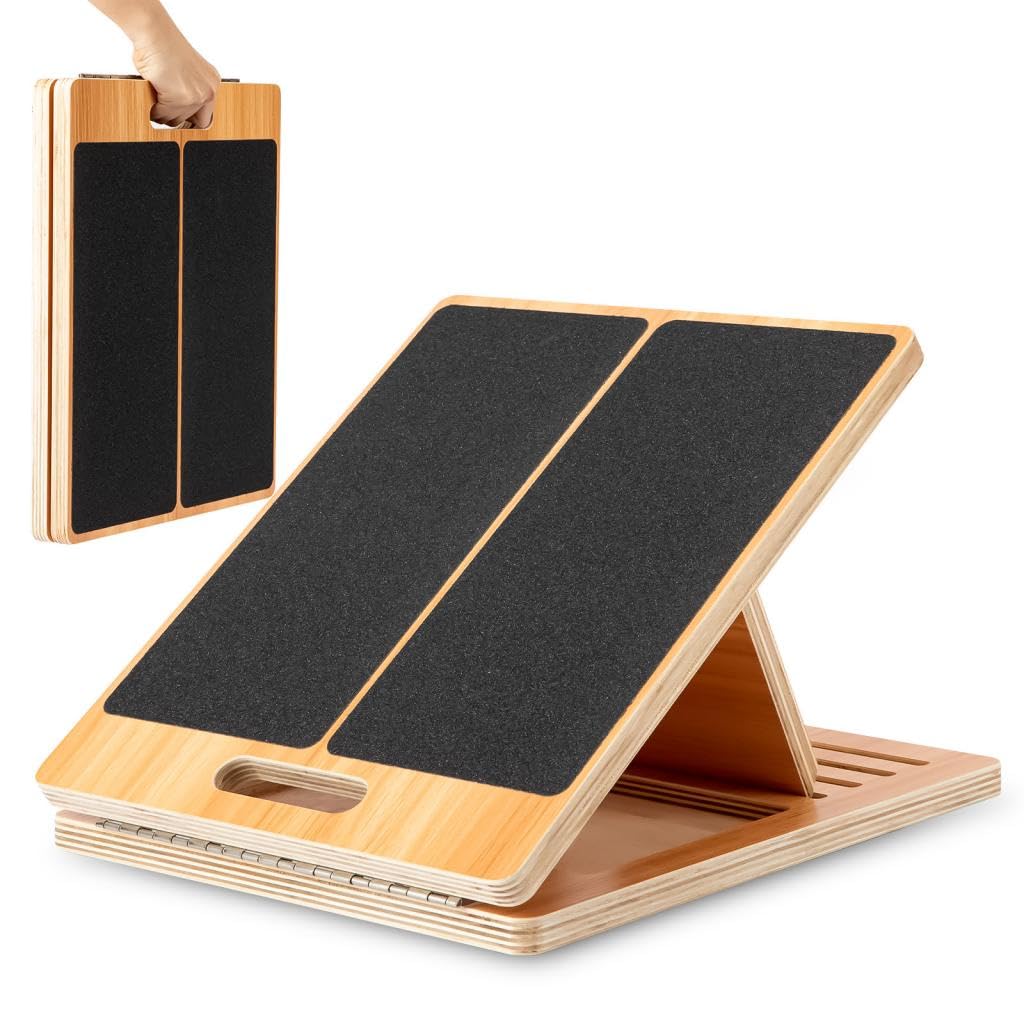
Five inclines, a 13-inch platform, and a fold-flat body that stores on a shelf.
The number that carries this board is the range: five settings from 15° to 35°. That means you can start at a gentle 15° while your ankle is tight and walk it up as your range opens, without buying a second board. The 13-inch-wide platform gives you room for a standard squat stance, a lunge or a calf raise with your feet landing naturally instead of pinched at the edges.
What wins people over is the laminated hardwood build. It reads as a solid, well-finished piece of wood rather than a wobbling wedge, and the laminated layers with sturdy hinges hold firm under repeated use. The top is a high-grip abrasive surface, and rubber pads on the bottom keep the board planted on hard flooring while protecting it from scuffs. One honest note on the spec sheet: the wood is rated to 350 pounds, and durability is the one area where feedback is mixed rather than glowing.
At 5.3 pounds versus 9.06 pounds for the Professional Wooden Slant Board, it is easier to move room to room. The foldable body and integrated carry handle flatten it for space-saving storage, which matters if your living room doubles as your stretching space. It is also the board most tested by everyday buyers rather than specialty athletes, and the crowd verdict is strong.
What earns its keep
- Five angles from 15° to 35° cover beginner through advanced stretching.
- 13-inch-wide platform fits a natural squat and calf-raise stance.
- Folds flat with a built-in handle — easy to store and carry.
- Grip surface on top, rubber pads underneath to protect hard floors.
Where it asks for care
- 350-pound rating is the lowest here; heavy lifters should size up.
- Foldable hinge design needs sensible handling over years of use.
Reach for this if: you want one adjustable board for home stretching, squats and mobility work without spending premium money.
Size up instead if: you plan to load hundreds of pounds on it — the 350-pound ceiling is the tightest in this lineup.
2. Professional Wooden Slant Board 5 Positions
A heavy, planted board that stays dead still under a deep calf stretch.
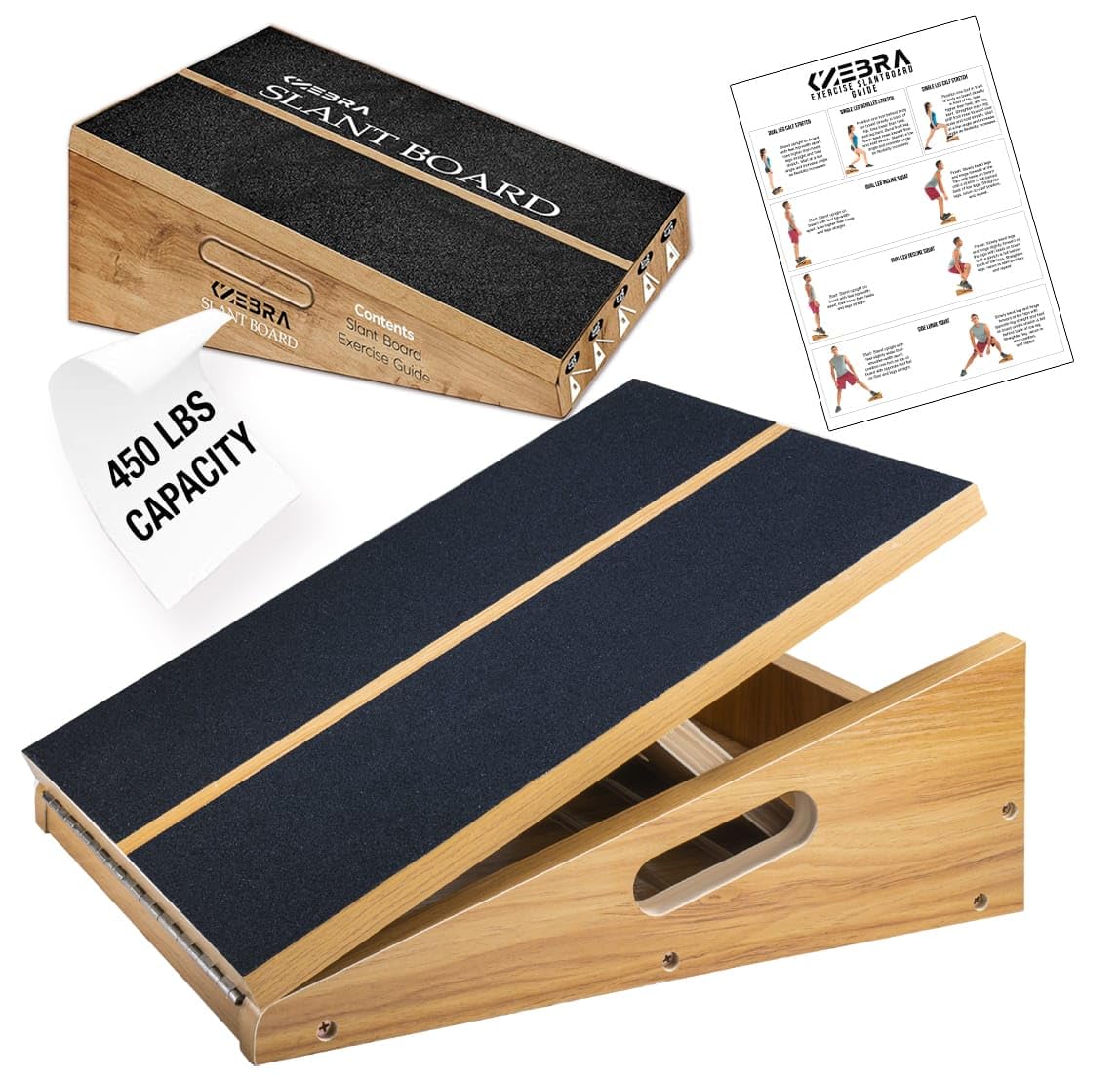
This is the board for someone whose calves and Achilles feel like steel cable first thing in the morning. The five positions land at 15°, 20°, 25°, 30° and 35°, and the 16-inch-deep by 12.5-inch-wide surface gives your foot somewhere solid to land. It holds up to 450 pounds, well above the 350-pound rating on the StrongTek 13-inch board, and the material is lauan hardwood plywood chosen for stiffness.
What you notice first is the absence of movement — no rock, no creak, no slide. The anti-slip safety treads run across the surface and the bottom, and the whole thing sits like it is bolted to the floor. That steadiness is the point — you can only sink into a calf stretch when the board under your foot isn’t shifting. The surface is also broad enough that you can work a calf raise or a heel-improve squat on the same board.
The trade-off is weight and footprint. At 9.06 pounds versus 5.3 pounds for the StrongTek 13-inch board, it is a leave-it-in-one-place tool rather than a gym-bag item. It also does not fold. If you want a board you can tuck behind a couch, this is not it; if you want one that refuses to budge, this is exactly it.
Built like furniture: the hardwood plywood and dual tread surfaces make this feel like a fixed piece of gym equipment, and the 450-pound rating backs that up.
Where it costs you: all that mass means a permanent spot on the floor — plan for it.
Go here when: your priority is a rock-steady surface for deep calf and Achilles work at home.
Two-finger carry test failed: at 9.06 pounds and non-folding, it stays put — keep that in mind if you train in several rooms.
3. 16-Level Adjustable Solid Wood Slant Board
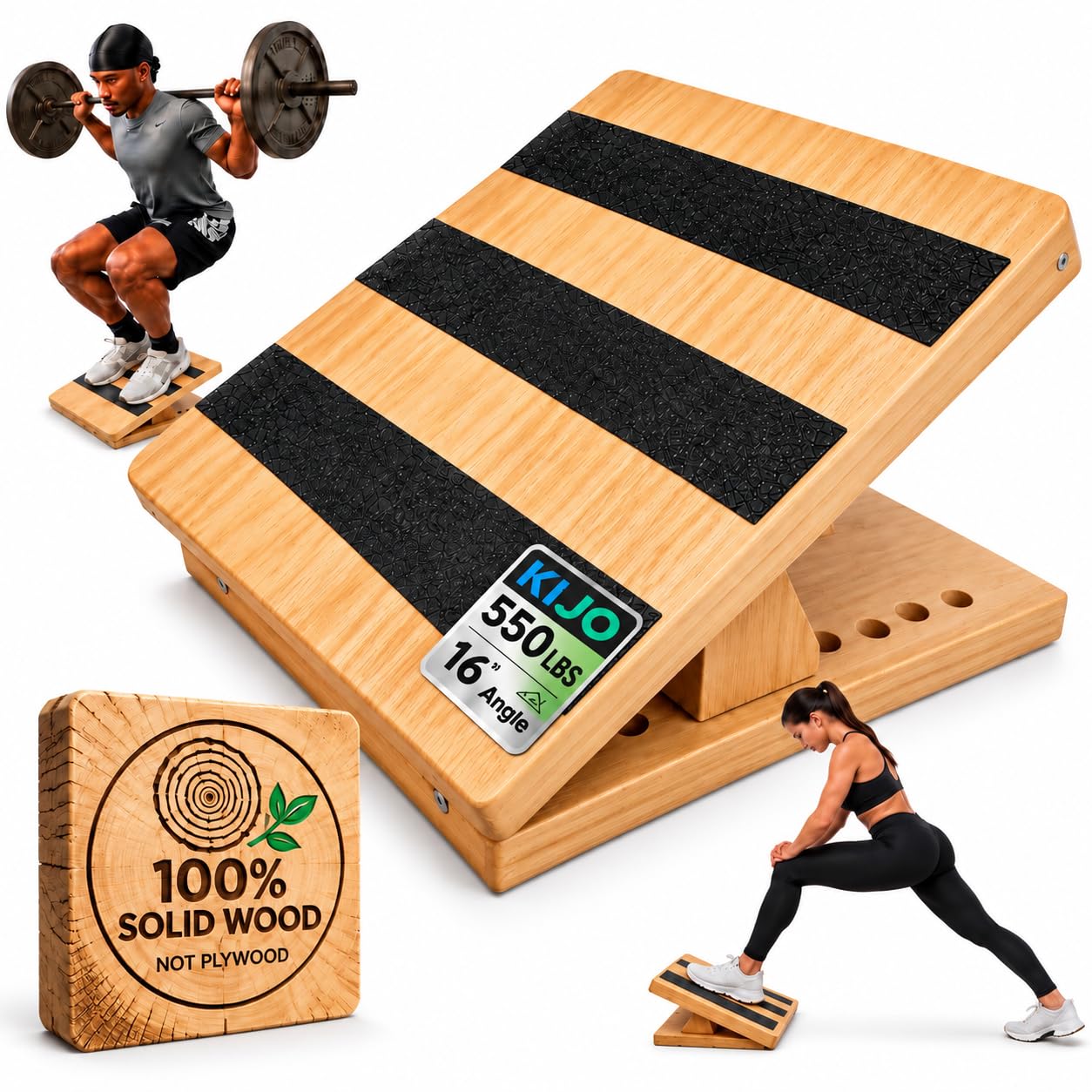
Sixteen micro-steps of incline for lifters who chase a little more depth each week.
Sixteen levels against four on the Swara board is the whole personality of this pick for lifters who progress in small increments. Solid hardwood sits on a reinforced triangular base, and the maker rates it to 550 pounds, above the 400-pound ceiling on the Swara wide board. The spec that sells it to a strength athlete is that stiffness: no flex, no give, no wobble mid-squat.
The adjustable design does exactly one job well: heel-improve squats. Elevating your heel keeps you upright through a squat, cuts the forward lean, and lets you reach depth your ankle would otherwise refuse. A non-slip surface and rubber feet hold the board still when you are moving real weight. For anyone working soleus and calf mobility between lifting sessions, the finer angle steps let you add a degree of difficulty without hunting for a new board.
Here is the honest catch: at 11.8 by 11.8 inches it is the smallest footprint in this lineup, so if you squat with a wide stance you may want more platform under you. And the deep-adjustment mechanism is more to learn than a simple five-notch board. Neither is a dealbreaker for a lifter — both are things to know before you buy.
The spec that matters: 16 angles and a 550-pound rating turn this into a progressive-overload tool rather than a one-angle stretch station.
Footprint trade-off: narrow at 11.8 inches square — perfect for calf work, snug for a wide squat stance.
Matches you if: you lift seriously and want to nudge your ankle mobility up in small, measurable steps.
Look elsewhere if: you need a wide platform for a shoulder-width squat stance.
4. Swara 17″ Wide Adjustable Wooden Slant Board
The extra-wide platform for feet that felt crowded on narrower boards.
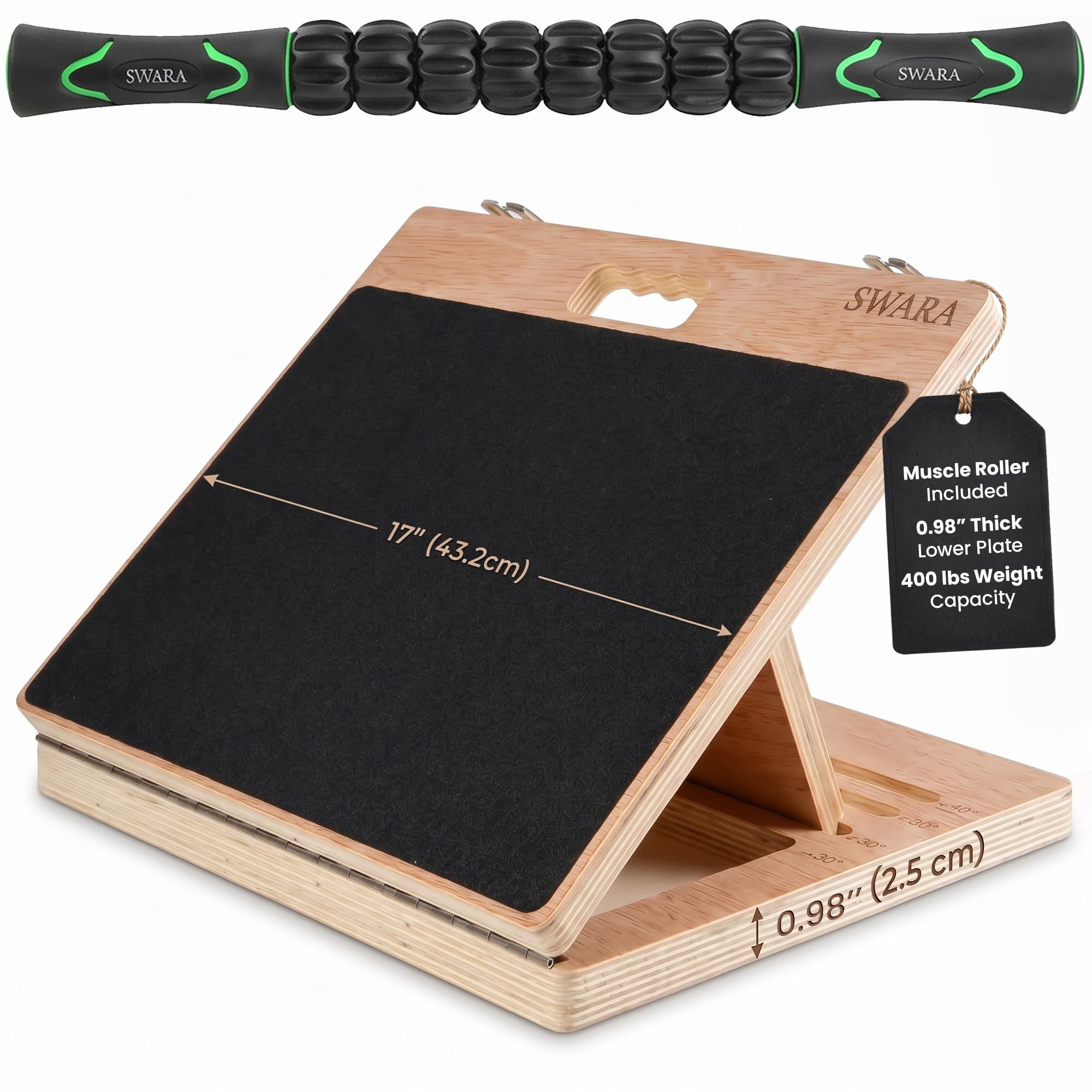
Start with the width, because that is the reason to pick this one. The 17-inch platform is wider than the 11.8-inch KIJO Studio board, and it gives your feet genuine room for a stable stance during squats and calf raises. It supports up to 400 pounds on a solid 0.98-inch (2.5 cm) eucalyptus plywood base, a construction choice aimed at stiffness rather than flex.
Four incline settings cover the beginner-to-advanced range, and precision-cut slots lock each angle so the board does not drift mid-stretch. The exterior-grade wood is built for daily use, and the foldable design plus the included massage roller stick and printed training guide make it a more complete starter kit than a bare board. What earns it fans is the grip — the non-skid base holds the floor instead of skating when you press into a deep calf stretch.
At 8.8 pounds it is heavier than a folding 5.3-pound board, and the footprint is the largest of the adjustable picks here. If you have the floor space and want a wide, planted surface, it earns its place.
Made for you if: narrow boards made your foot placement feel cramped and you want a wide, stable platform plus a starter kit.
Think twice if: you are short on floor space or want the lightest board to carry between rooms.
5. Rolling With It Wooden Slant Board 4 Angles

The one that goes to the gym, the office and the road with a carry bag.
Four angles on one board, set with a single quick-adjust movement: 10, 20, 30 and 40 degrees. That 40-degree top end is the steepest here, and the 10-degree bottom is gentle enough to start a tight ankle without a grimace. It is handcrafted plywood with a birch veneer, backed by a non-skid rubber base, and tested to support up to 350 pounds.
What buyers keep coming back to is the build holding up over time — the stress-tested quick-adjust locking system holds its angle under load, and the hinges stay tight rather than loosening. The full non-skid surface is gentle enough for bare feet while still keeping you planted at the steepest setting. A printed stretching guide is included, plus a premium oxford cloth carry bag, so the board travels to the gym or the office without a second thought.
The honest trade-off is the weight: at 9.85 pounds it is the heaviest board in this lineup, so “travel-ready” really means a bag in the trunk rather than a pocket item. It folds flat to 17 by 13 inches. It is also the board with the longest track record here, made by a company building recovery equipment since 2017.
Why it travels well
- Four angles from a gentle 10° to a steep 40° in one quick adjust.
- Includes an oxford cloth carry bag and a printed stretching guide.
- Non-skid surface and rubber base protect floors and keep the board planted.
- Backed by a lifetime warranty against manufacturing defects.
The honest caveats
- At 9.85 pounds it is the heaviest pick here — bagged travel, not hand-carry comfort.
- 350-pound capacity matches the entry board, not the heavy-lifter models.
Pick this when: you want a proven board with a carry bag that moves between home, gym and office.
Weight reality check: at 9.85 pounds with a lifetime warranty, treat it as equipment you bag up — not something you slip into a tote.
6. StrongTek Wooden Slant Board 19.6-Inch
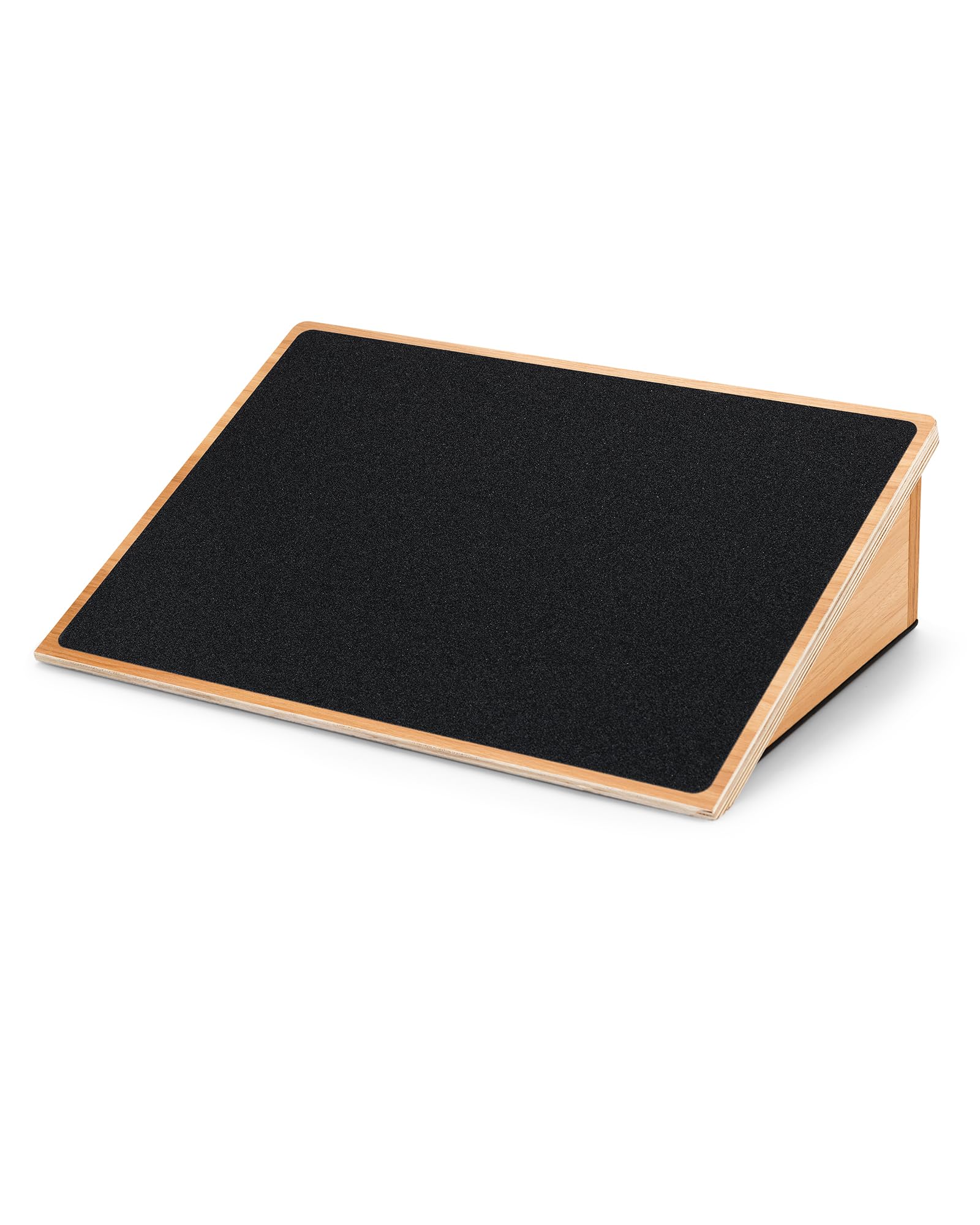
A fixed 25° platform built for weighted squats, not stretching in socks.
One number tells you who this is for: 1000 pounds. That is the highest capacity in this lineup by a wide margin — the next closest is 550 pounds on the KIJO Studio board — and it comes from hardwood plywood with an engineered three-point support structure. Set it under a loaded bar and it does not bow, flex or shift.
The 19.6-inch surface is the widest working platform here, sized for a natural shoulder-width squat stance. Unlike the adjustable boards, this one locks at a fixed 25° incline, which is deliberate: a steady slope gives consistent feedback for split squats, heel-improve squats and calf raises. A textured non-slip top and anti-slip base strips hold your feet and protect hard floors, and the grip works whether you are in socks, shoes or bare feet.
This is not a foldable board, and that is the trade. It is 7.7 pounds and built to live in one spot — a home gym, a studio or a clinic floor. If you want a board that adjusts to sixteen angles or folds behind the couch, this is the wrong shape. If you want the one board that will not flinch under your heaviest squat, it is the right one.
The load-bearing standout: a 1000-pound rating with three-point support makes it the only board here built for sustained heavy loading.
Fixed-angle reality: 25° and no adjustment — great for squats and calf raises, less flexible for a range of stretch depths.
Built for: lifters putting real weight overhead and wanting a wide, unshakeable squat platform at home.
Not the board for: anyone who wants to vary the angle day to day.
7. Slant Board Guy AXIS Dual Slant Board for Knees Over Toes
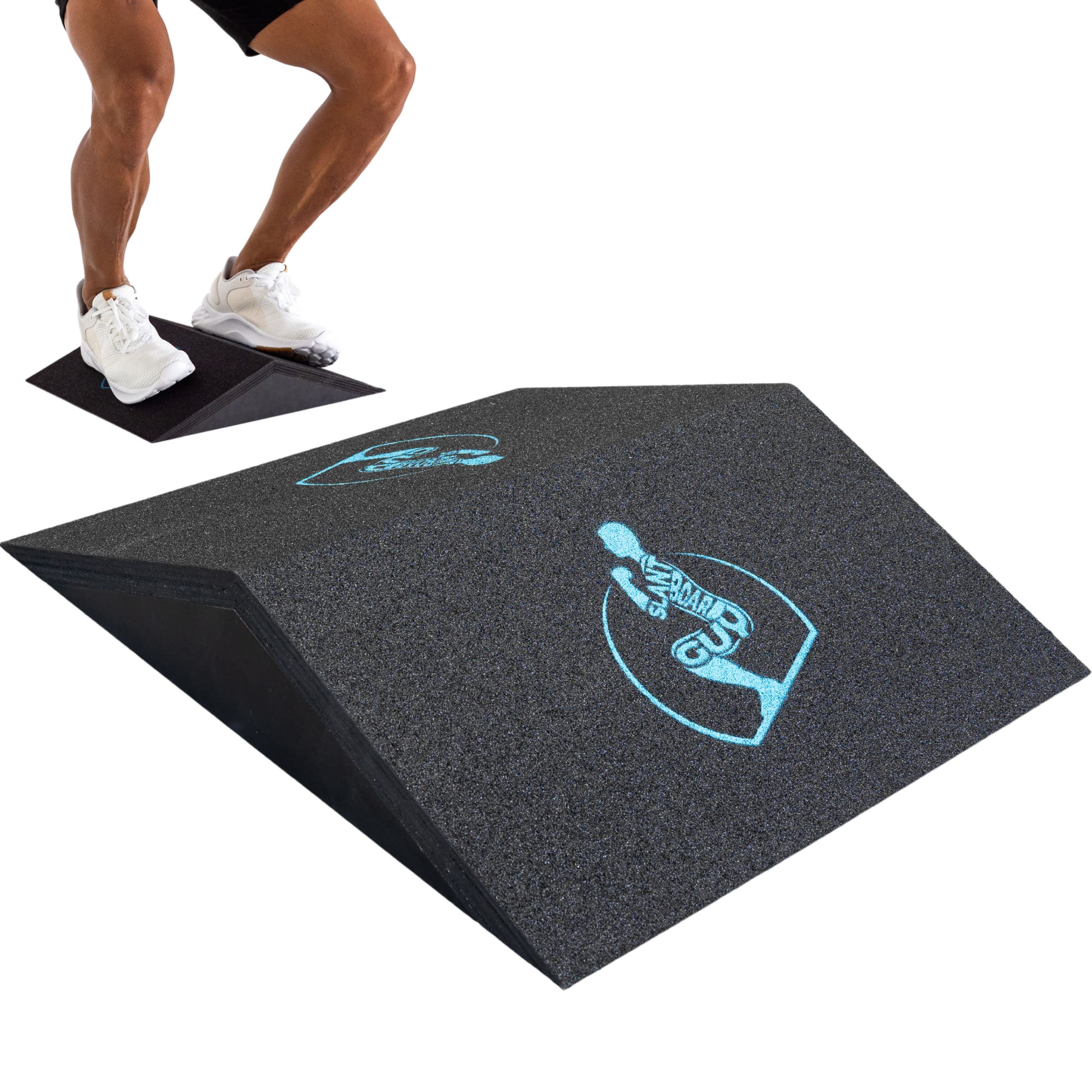
Two slopes in one board for athletes who train movement, not just a stretch.
The defining feature is the dual-sided shape. Where the StrongTek 19.6-inch board fixes a single 25° slope, this AXIS board gives you two working surfaces, so you can switch between functional mobility drills, lateral work and strength training without a second piece of gear. It is cut from high-quality structural plywood and made in Australia, a build aimed at athletes rather than casual stretchers.
This is a training tool for skiers, court players and anyone working explosive direction changes. The claim is that you can build balance, strength, speed and coordination, and the durability of the structural plywood is what makes it hold up to that daily punishment. For knees-over-toes and GOATA-style routines, the two angles let you move through positions a fixed board cannot offer.
The catch is that this is a sparsely documented board — the makers do not publish a weight capacity or a width, so heavy lifters have no number to check against the 1000-pound StrongTek squat model. It is also the most expensive pick here by a clear margin, which puts it in specialist territory. If you train athletic movement and want a dual-angle board, the premium buys you versatility; if you just need to stretch a tight calf, it is more board than you need.
Two angles, one tool: the dual-sided build suits athletes training balance, lateral power and direction changes.
What you give up: no published weight capacity or width — a specialist board for movement work, priced for the dedicated.
Worth it for: athletes and knees-over-toes trainees who want two working slopes and a made-in-Australia plywood build.
Overkill if: your goal is a straightforward seated calf stretch — the cost and complexity go unused.
Know the Specs
Incline Angle in Degrees
The angle tells you how much your toes rise above your heel, and that decides how deep a stretch you feel. A shallow 10°–15° suits a tight ankle and a gentle warm-up; 35°–40° pushes into a deeper calf and Achilles stretch and a more upright squat. Adjustable boards let you climb that ladder as your range improves, while a fixed board locks one slope for consistent feedback on lifts.
Weight Capacity in Pounds
Capacity is the load the wood and its supports are rated to hold without bending. A higher rating like 1000 pounds means the board is braced for loaded squats and repeated heavy use. A 350-pound rating is fine for bodyweight stretching and calf raises but the tightest margin here. Match the number to the load you actually plan to place on the board, and leave headroom.
Platform Width and Foot Placement
Width is how much room your feet get across the board. A 13-inch platform fits a standard stance for squats and calf raises. A 17-inch or 19.6-inch surface gives a wider, more natural shoulder-width stance, which is why wide-stance squatters and larger-footed users favor the wider boards. Narrower boards suit calf and single-leg drills.
Anti-Slip Surface and Base
Grip on top keeps a bare or socked foot from sliding at steep angles, and a rubber or non-skid base keeps the board from creeping across hard floors while protecting them from scuffs. Boards that combine a textured top with rubber underneath give you stability at both ends — the foot stays, the board stays, and you can relax into the stretch instead of bracing.
Common Questions
Will a wooden slant board hold up under weighted squats?
What incline angle should a beginner start at?
How wide should a slant board be for squats?
Will a wooden slant board slide on a hard floor?
Do I need an adjustable board or a fixed-angle one?
Can I fold a slant board for storage or travel?
Is a slant board useful for plantar fasciitis and tight calves?
What is the difference between a calf stretch board and a squat wedge?
Should I use a slant board barefoot, in socks or in shoes?
How much weight can a wooden slant board hold?
The Bottom Line
For most people, the best wooden slant board winner is the StrongTek 13-Inch Adjustable because five angles from 15° to 35°, a 13-inch platform and a fold-flat body cover stretching, squats and mobility work in one board. If your calves and Achilles need a rock-steady surface and 450 pounds of headroom, go with the KZEBRA Professional Wooden Slant Board. For loaded squatting on the widest, strongest platform here, the StrongTek 19.6-Inch Squat Board is the one to reach for. Any of these will outlast a flat floor — match the angle range and platform width to your training and start stretching.
How we choose
We do not accept paid placement. Every pick is matched to a real buyer and a real use-case; we do not hands-on test units.
Sources
Specifications: manufacturer listings and product documentation. Review insights: verified customer reviews, as of July 2026. Pricing: not shown on this page (it changes often); check the current price via the retailer link.
As an Amazon Associate, Tactical Gear Guy earns from qualifying purchases. This does not affect which products we feature.