Specs are compiled from manufacturer listings and verified buyer reviews and can change over time — please confirm the key details on the product page before buying.
A wooden outdoor cat house only earns its place in your yard if it keeps a cat dry through a real storm and warm through a hard frost. The balconies, stairs, and escape hatches only count once the wood is thick enough, the roof sheds water, and the floor sits off the damp ground. This guide sorts the eight strongest candidates by exactly those points, then tells you which cat, climate, and backyard each one actually suits.
This guide is built by comparing the manufacturers’ published specifications and the patterns across verified customer reviews, so you get each pick’s real strengths and trade-offs instead of marketing spin.
Insulation thickness, roof type, and raised-floor height decide whether a shelter survives a wet winter, and the wrong pick leaves a cat sitting in a soggy box by February. Below is a clear, honest ranking of the best wooden outdoor cat house options you can buy right now.
Top Picks

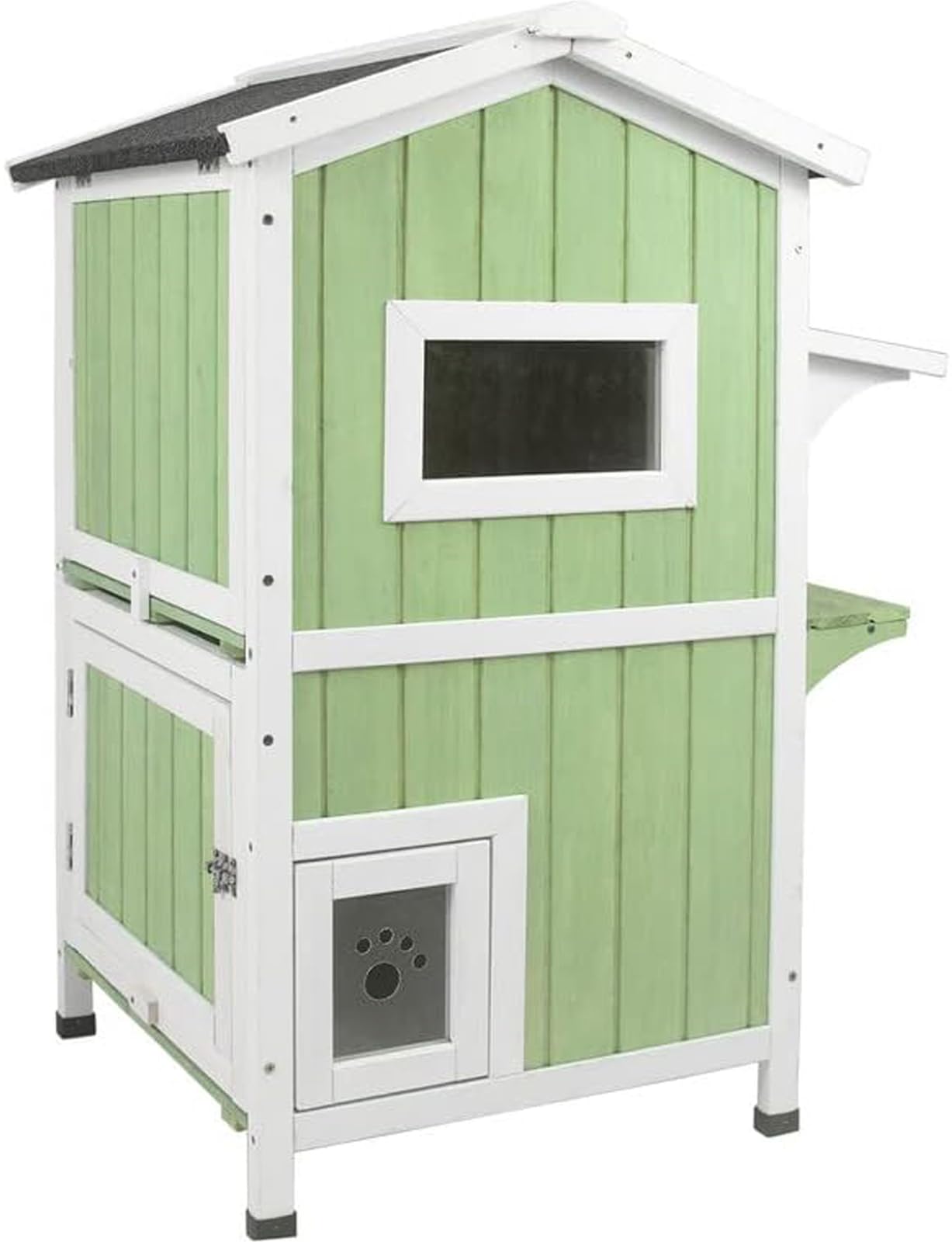
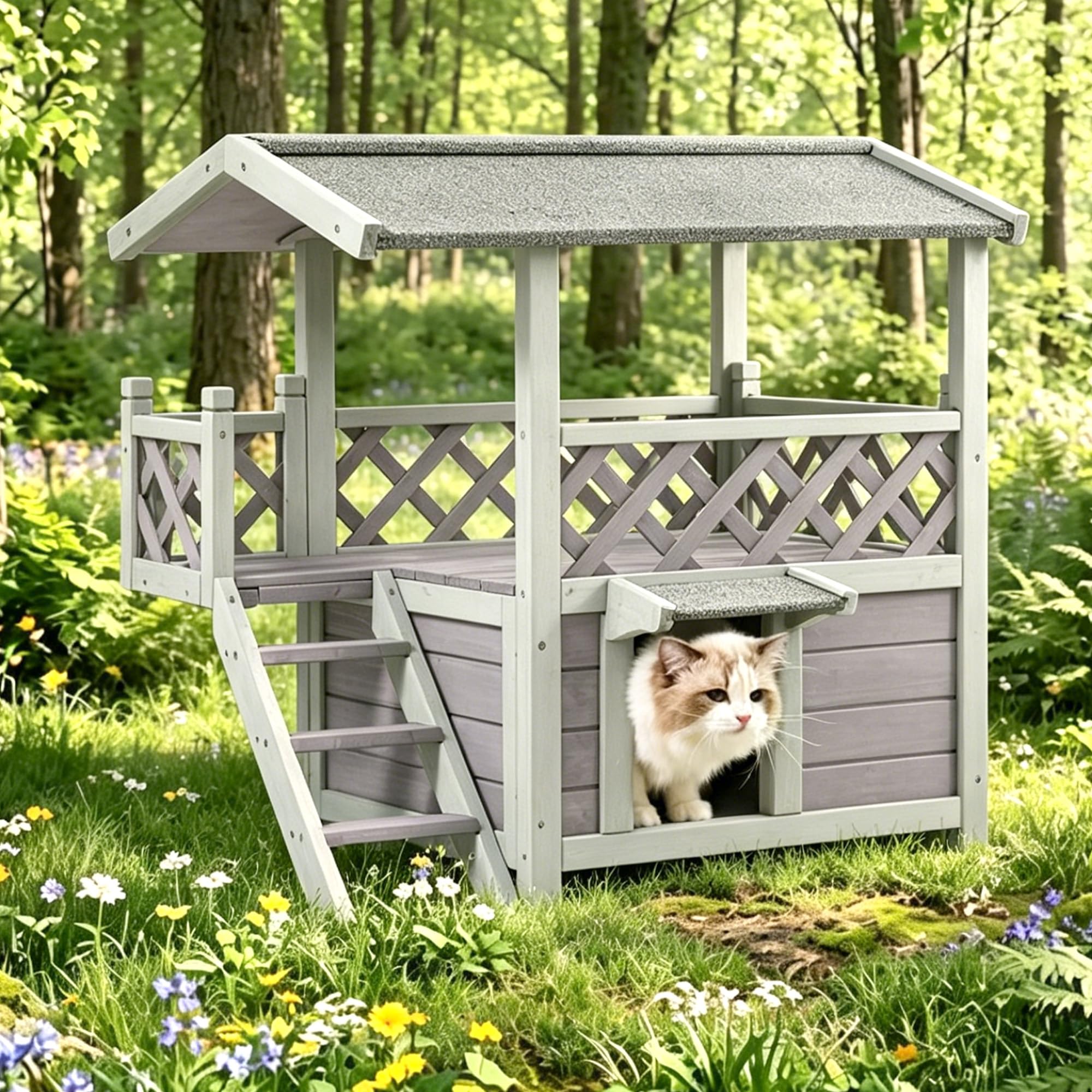
How To Choose The Best Wooden Outdoor Cat House
A cat shelter sits outside through every season, so wood thickness, roof slope, and floor height matter more than the paint color. Fir wood is the common frame here, and the roof is almost always asphalt — the same shingle material on a house. What separates a shelter that lasts from one that warps is how thick that wood is, how far the floor sits above the ground, and whether the roof is slanted to dump rain instead of pooling it.
Raised floors and why they beat a flat base
A floor sitting directly on soil pulls ground dampness straight up into the bedding. An improve floor with feet or a raised base lifts the sleeping area clear of puddles. The picks here range from a 2.95-inch raised base to an 8-inch improve floor, and that height is your first defense against a wet interior.
Insulation: foam panels versus bare wood
Some models are single-wall fir wood with no insulation at all. Others sandwich styrofoam or foam between outer fir and inner plywood, sealing a thermal layer inside all six sides. In a cold climate, the six-sided foam builds hold warmth noticeably better than single-wall fir. In a mild climate, single-wall fir with good bedding does the job and costs less.
Doors, curtains, and escape routes
A PVC curtain is a flexible clear or tinted flap over the doorway that blocks wind while still letting a cat push through. An escape door is a second exit, so a cat cornered by a predator or another animal has a way out. For feral cats and shared colonies, prioritize a second opening so a cornered cat has a way out.
Side-by-Side Comparison
| Model | Best For | Material | Footprint (D x W x H) | Insulation | Amazon |
|---|---|---|---|---|---|
| Gowoodhut 2-Story P14★ Best Overall | One or two cats wanting a balcony | Fir wood, asphalt roof | 29.5″D x 33″W x 22″H | None (liner space) | Amazon |
| PetsCosset 2-StoryBest for Feeding | Feeding station plus sleeping den | Solid fir wood | 27.3″D x 23.5″W x 37.8″H | None | Amazon |
| Aivituvin Kitty ShelterMost Stylish | Wide views and easy setup | Solid fir wood | 30″D x 22.2″W x 30.4″H | None | Amazon |
| Rockever with Soft Mat | Compact patios and one cat | Wood | 25.4″D x 20.5″W x 25.2″H | None | Amazon |
| Aivituvin 2-Story 34.4″H | Multiple cats, three to four | Wood, PVC, plastic | — | None | Amazon |
| BRIOPAWS Insulated | Thin or injured strays | Engineered wood, fir | 21.6″D x 34.7″W x 27.1″H | 6-sided foam | Amazon |
| VEVOR All-Round Foam | Multi-cat colonies, rabbits too | Fir, asphalt, foam | 34.25″D x 21.65″W x 27.17″H | 6-sided foam | Amazon |
Detailed Reviews
1. Gowoodhut Outdoor Cat House Weatherproof 2-Story P14
Our pick — 4.5+★ from 300+ verified ratings; the strongest balance of quality and price.
A twin-level fir wood shelter with escape routes that a nervous cat can actually use.
The two-story layout is the reason this one tops the list for most yards. You get a lower privacy room, a jumping platform, and a big balcony for sunbathing, all in one 29.5″D x 33″W x 22″H footprint. For one or two cats (the maker puts the range at roughly 20-40 lbs), that means a place to hide, a place to watch the yard, and a place to nap without ever leaving the backyard. It is also the heaviest build here at 21.5 kg — the Large Outdoor Cat House with Soft Mat runs 12.7 kg, so you are moving a considerably more planted structure into place.
Weatherproofing is handled the standard way but done thoroughly: a water-based fir wood frame, an asphalt roof, a PVC curtain at the entrance, and feet with covers that lift the base clear of wet ground. What wins people over most is the construction quality — the fit of the panels and the solid shingle roof come up again and again as the thing buyers didn’t expect at a mid-range price. Assembly lands a close second. The openable roof and a removable floor between the two levels make cleaning a matter of lifting a lid rather than reaching through a doorway.
Here is the honest part. There is no insulation sealed into these walls, so in a hard freeze you are relying on the open space the maker leaves for adding your own liner. The size also splits opinion — plenty big for a kitten or a single adult cat, tighter than some expect when two full-grown cats want the same level. Expect a slight wood smell on arrival that fades outdoors.
What earns the top spot
- Two full levels plus a balcony for play and lookout
- Water-based fir wood, asphalt roof, and a PVC entrance curtain
- Escape doors give a cornered cat a second way out
- Openable roof and removable mid-floor for quick cleaning
Where it asks a little more of you
- No built-in insulation — plan a liner for cold months
- Roomiest for one cat or a kitten rather than two large cats
- At 21.5 kg it is not a shelter you move around often
Go for it if: you want a sturdy two-level wooden house with real escape routes for one or two cats.
Think twice if: winters run below freezing and you’d rather not add your own insulation layer.
2. PetsCosset Outdoor Cat House Shelter Weatherproof 2-Story
An upper feeding station and a lower sleeping den — two jobs, two floors, one shelter.
Most cat houses give you sleeping space and nothing else. This one splits the job: an upper feeding station up top, a resting area below, and 4.8 sq. ft. of total usable floor space (about 2.4 sq. ft. per level). That split is genuinely useful for a stray colony, because cats that share a shelter often don’t want to eat where they sleep. The 27.3″L x 23.5″W x 37.8″H frame is the tallest here, so it takes up less patio width while standing taller than the wide Gowoodhut build.
Weather protection covers the basics well. Flexible PVC door curtains cut the cold draft at the entrance without blocking a cat’s path, the asphalt roof sheds rain and snow, and a 2.95-inch raised base keeps the lower den off damp ground. Solid fir wood holds the structure together. The thing buyers praise loudest is the overall quality of the build, with assembly close behind — pre-drilled holes and clear instructions make the tall two-level frame less fiddly than its height suggests. An escape door plus an exterior perch round it out, so a cat can watch the yard and still bail out fast.
The catch sits under the paint, not in the layout. Sturdiness and weather resistance both draw divided feedback — some buyers report a season of hard weather with the structure fine, others feel the material weathers faster outdoors than they hoped. Treat the wood annually and set it somewhere the roof can actually drain, and this is a solid shelter for two or three visiting cats.
Closest rival on size: the 4.8 sq. ft. of usable floor beats the compact Rockever’s footprint, and the feeding-station split is a feature none of the single-room shelters here offer.
Fair warning: this is a fair-weather-to-moderate-climate build. If your winters are long and wet, the insulated FunXplore or VEVOR is the safer bet.
Reach for this if: you feed strays and want eating and sleeping on separate floors.
Look elsewhere if: you need walls that carry their own insulation through a deep freeze.
3. Aivituvin Outside Cat House Wooden Outdoor Kitty Shelter
Side stairs, a balcony, and an extended door overhang that keeps the entry shaded in summer.
If the shelter sits on a porch where people actually see it, this is the one that looks like garden furniture rather than a box. Solid fir wood, a water-based paint finish, and smooth even surfaces give it a tidy, deliberate look. The layout is a condo rather than a plain den: a balcony, a resting room, and side stairs that let a cat climb to the upper level instead of hopping. The 30″D x 22.2″W x 30.4″H frame runs wider and taller than the Rockever’s 25.4″D x 20.5″W x 25.2″H build, so it suits a bigger cat or a pair that tolerates each other.
Two practical touches stand out. The asphalt roof has an extended door overhang that keeps the entrance dry in rain and shaded in sun — a small thing that keeps bedding from soaking. And the parts arrive pre-stamped with screw holes that line up, so the build goes together in minutes rather than an afternoon. Buyers consistently flag both the assembly and the looks as reasons they’d buy again.
The honest trade-off is the wood itself. This is thin fir, and while the finish looks good new, outdoor durability is the recurring complaint — panels that split or don’t hold up over a full winter of exposure. It’s a fine shelter for a covered patio or a mild climate. Put it out in open weather and expect to baby it with a sealant each year.
Design that earns its keep: the extended overhang beats a flush entry on the Aivituvin 2-Story here, because the doorway itself stays shaded and dry.
The catch: thin fir in open weather demands seasonal sealing — plan for it or pick an insulated build.
The right fit: a covered porch or patio where looks count and the wood stays out of direct weather.
Not the fit: open exposure with no overhang above it and no plan to seal the wood seasonally.
4. Rockever Large Outdoor Cat House with Soft Mat
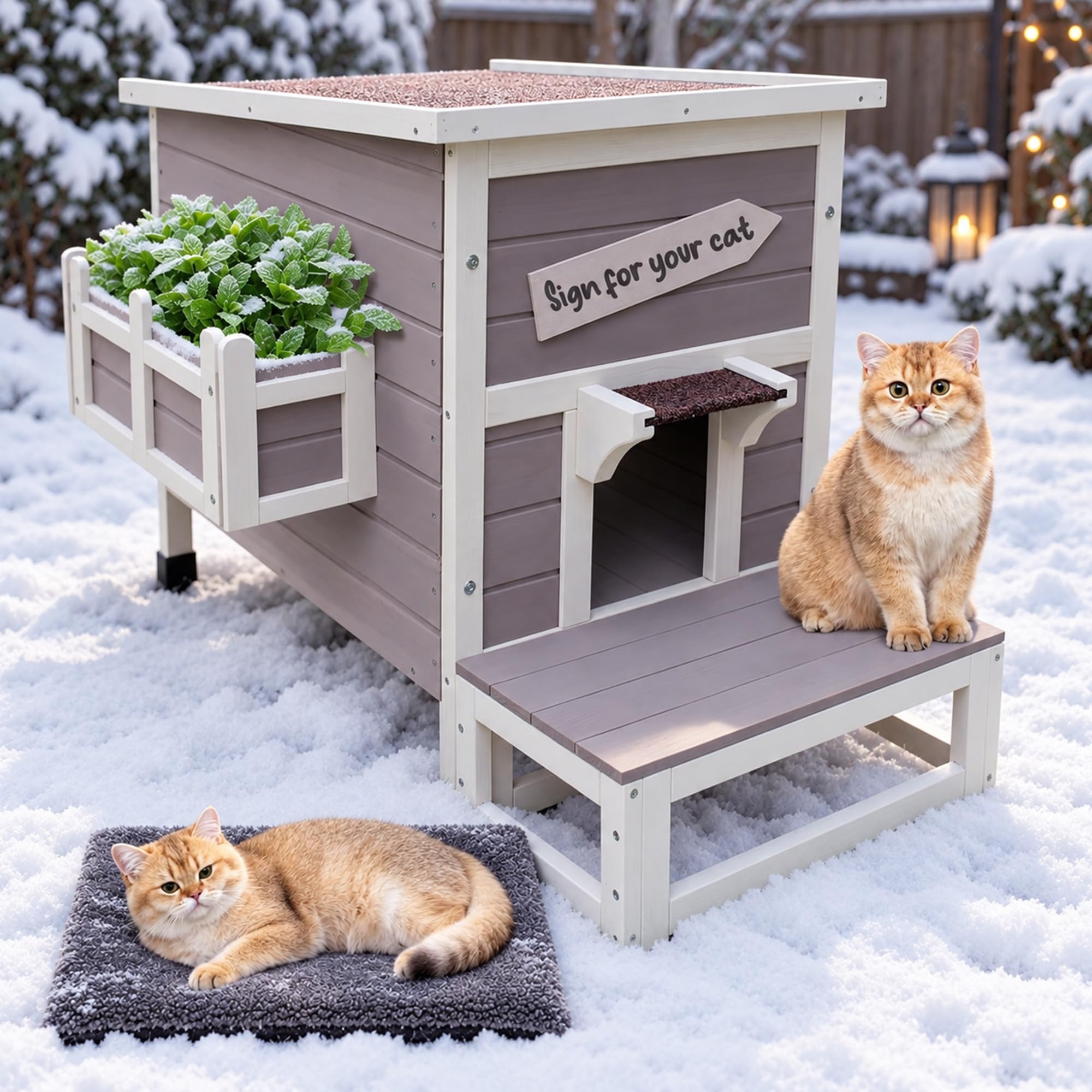
A one-story shelter that arrives with the mat already in the box.
Not every yard needs two floors. This single-level design keeps things simple: a sleeping area, a sunny balcony, a side storage shelf for supplies, and a mat included so the cat has a bed from day one. The three-hole ventilation design on the right side doubles as a cable port for an electric heating pad in winter — a clever way to warm the interior without cutting holes yourself. At 25.4″D x 20.5″W x 25.2″H and 12.7 kg, it’s the most maneuverable house in the group and easy to shift between porch and patio as the seasons change.
The weather package is well thought out for the size. A sloped roof with asphalt shingles stops water pooling, the front entrance is shielded by an awning and a windproof PVC curtain, and the rear exit has a transparent acrylic flap. Two exits — a main door and an emergency escape door — give a cat an out if it feels cornered. Set-up is the part buyers talk about most: parts are pre-drilled, hardware is included, and a Phillips screwdriver is all you need. The appearance also lands well, with a look that fits a patio rather than a barn.
Where it asks patience is durability in prolonged rain. Some report the interior staying dry through storms, others find water getting in when rain drives sideways. Sealing the seams and giving it a roof that drains properly covers most of that. For a single cat in a mild-to-moderate climate, it’s a tidy, low-fuss pick.
The heating-pad port: the three-hole side design is the standout feature — it lets you run a warming cable in winter without drilling a single hole.
Sized for one: it’s a one-cat shelter. A two-cat household should look at the roomier Gowoodhut or PetsCosset.
Pick this for: a single cat, a covered spot, and a shelter that fits a small footprint.
Pass on it if: you need to shelter two cats or expect driving rain against the entry wall.
5. Aivituvin Outdoor Cat House Weatherproof 2-Story 34.4″H

A four-cat, multi-level shelter for households where the colony keeps growing.
When one house has to serve a whole crew, this is the one that plans for it. The maker rates it for up to four cats under 15 lbs each, with an upper balcony for lounging and lookout and a lower den for privacy. That vertical split matters for a group — cats that can separate into different levels fight less over the same patch of floor. Alongside the levels, there’s a raised feeding station and jumping platforms, so the whole structure works as a small cat apartment block.
Weatherproofing covers the essentials: water-resistant wood, an asphalt roof, and an improve moisture-proof floor that keeps ground dampness out. An escape door on the side plus multiple entry points means every cat has a route out and the interior stays ventilated. Buyers praise the build quality and the straightforward assembly — pre-drilled holes, clear instructions, no special tools, and a removable floor panel for cleaning.
Know the weak spot before you buy. Wood thickness is the recurring theme: some owners find the wood thin and the shelter not built to last many seasons outdoors. It holds up fine on a covered porch; in open weather, treat the surfaces and inspect the joints each year. Rated for cats, but the maker lists it for rabbits and other small pets too.
Room to share: the four-cat capacity and multi-level layout beat the single-den designs for a yard that harbors several strays.
Wood thickness is the caveat: solid for a porch, less so for years of open exposure — sealing it annually is the move.
The one to choose: a multi-cat yard that needs separate levels and a feeding station in one structure.
Be cautious of: placing it in full open weather with no cover and no intent to seal the wood.
6. BRIOPAWS Large Insulated Outdoor Cat House, Brown

A foldable ladder that becomes a locked door — made for cats that struggle to climb.
Most shelters help cats that jump well. This one is designed for the ones that don’t. The extended ladder gives a thin or injured stray cat an easy path up and in, and it folds up and locks as a door to keep other animals out. Six-sided foam is sandwiched between plywood and fir, forming a thermal barrier across the walls, roof, and floor. At 34.7″W x 21.6″D x 27.1″H and 35 pounds, it’s a broad, planted build that comfortably houses three or four kittens and suits multiple stray cats.
Weather protection is thorough for the price band: a leak-proof sloped asphalt roof, an improve 8-inch floor that keeps the base above rain and snow, and a hydraulic cylinder that lets the roof open safely without pinching hands. A removable divider makes separate sleep and dining areas. The appearance also gets its share of attention — the acrylic side window gives a clear view of the cat inside and lets you check on it without opening anything.
The honest limit is insulation consistency. Some describe it as wonderful for winter warmth, others say it’s not as well insulated as the layer count suggests. Set it in a sheltered spot, add bedding, and it performs. Put it in the path of freezing wind and you’ll notice the gaps.
Built around the strays: the ladder-door and 8-inch improve floor put this ahead of the low-floor builds for a cat that needs help getting in.
Where bedding helps: insulation is the part to watch — bed it well and shelter it from wind.
Built for you if: you’re caring for thin or injured strays that need an easier entrance and a locked door.
Less ideal if: the house will face wind head-on with no cover between it and the weather.
7. VEVOR Outdoor Cat House Weatherproof All-Round Foam

Six-sided foam, a roof that lifts off for cleaning, and room for rabbits as well as cats.
This is the all-seasons pick. Insulation foam on six sides sits between the wooden panels, so your cat stays warmer in cold and cooler in heat. A waterproof sloped asphalt roof with eaves over the door keeps rain out, so the inside stays dry. improve feet lift the base off rain and snow. The whole thing is built from fir wood, which the maker describes as resistant to cracking and warping. At 34.25″D x 21.65″W x 27.17″H and 29.1 pounds, it gives one to three cats room to move. The maker also lists it for rabbits and guinea pigs, so it works if you keep small pets.
The cleaning design is the standout. Instead of a fixed roof, the top lifts open and the bottom removes, so you can reach every corner without negotiating a doorway. The thickened PVC door flaps come out for summer ventilation and go back in for winter warmth and wind protection. Buyers praise the easy assembly and the good construction — a solid, well-explained build that goes together without fuss.
Two things to weigh. Size is a matter of opinion: some buyers find the layout generous for outdoor use, while others feel it’s tighter than expected. And like any sealed wooden shelter left in damp, moisture can work its way in over time if you don’t air and clean the interior. Keep the bedding dry and lift the roof on mild days to let it breathe. The natural fir smell on arrival is normal for the wood and fades.
Clean-out champion: the lifting roof and removable floor make this the easiest shelter here to deep-clean, which is what keeps mold from getting a foothold.
Size is debatable: plan for one to two cats comfortably; the “three” is optimistic unless they’re small.
Worth choosing when: you want insulation, easy cleaning, and a shelter that also suits rabbits or guinea pigs.
Second-guess it if: you’ve got three big cats — the space is honest, but not lavish.
Know the Specs
Floor area and how size is really measured
What your cat can actually use depends on the interior floor, not the outer box. The PetsCosset lists 4.8 sq. ft. total across two levels (about 2.4 sq. ft. each), while other builds quote overall dimensions only. As a rough guide, one adult cat needs a den it can turn around in. Two cats want at least two separate levels or a divider, so they aren’t sharing a single patch of floor. Check the door size too: a 9.1 inch by 7.1 inch door (as on the BRIOPAWS) is roomy for most cats.
Insulation and the raised floor
Insulation comes in two forms here: sealed foam sandwiched between wood panels (as on the FunXplore, BRIOPAWS, and VEVOR builds, all six-sided) or none at all, relying on you to add a liner or bedding. The raised floor is the other half of the warmth equation — a base lifted 2.95 inches or a full 8 inches keeps ground dampness and cold from rising into the bedding. In freezing weather, foam plus a lifted floor is the combination that holds heat.
Common Questions
Will an insulated wooden cat house keep a feral cat warm through winter?
What is an escape door and does my cat actually need one?
Do I need to treat or seal the wood every year?
How many cats fit in each size of house?
What is the difference between insulated foam and a liner?
Can these wooden houses be used indoors?
Will the asphalt roof survive snow and heavy rain?
How long does assembly take on these shelters?
Do the PVC door curtains need to come off in summer?
Will a wooden house work for rabbits or small pets too?
The Bottom Line
Most yards are best served by the Gowoodhut 2-Story P14 — two levels, escape doors, a fir wood and asphalt build, and the strongest construction reputation in the group. It’s the safest all-round call for one or two cats. If you’re sheltering strays through a cold climate, the insulated six-sided FunXplore puts real foam in the walls for the winter. And if you’re feeding a rotating colony and need eating and sleeping split apart, the PetsCosset 2-Story with its upper feeding station is the one that fits. Match the shelter to your climate and cat count, seal the fir wood each season, and it will hold up in the yard for years.
How we choose
We do not accept paid placement. Every pick is matched to a real buyer and a real use-case; we do not hands-on test units.
Sources
Specifications: manufacturer listings and product documentation. Review insights: verified customer reviews, as of November 2026. Pricing: not shown on this page (it changes often); check the current price via the retailer link.
As an Amazon Associate, Tactical Gear Guy earns from qualifying purchases. This does not affect which products we feature.